Portable Power Stations
DJI Power 1000 Review: A 1,024Wh Power Station for Car Camping
A practical look at the DJI Power 1000, a 1,024Wh portable power station with a 2,200W inverter and LiFePO4 battery, and the camping jobs it handles well.
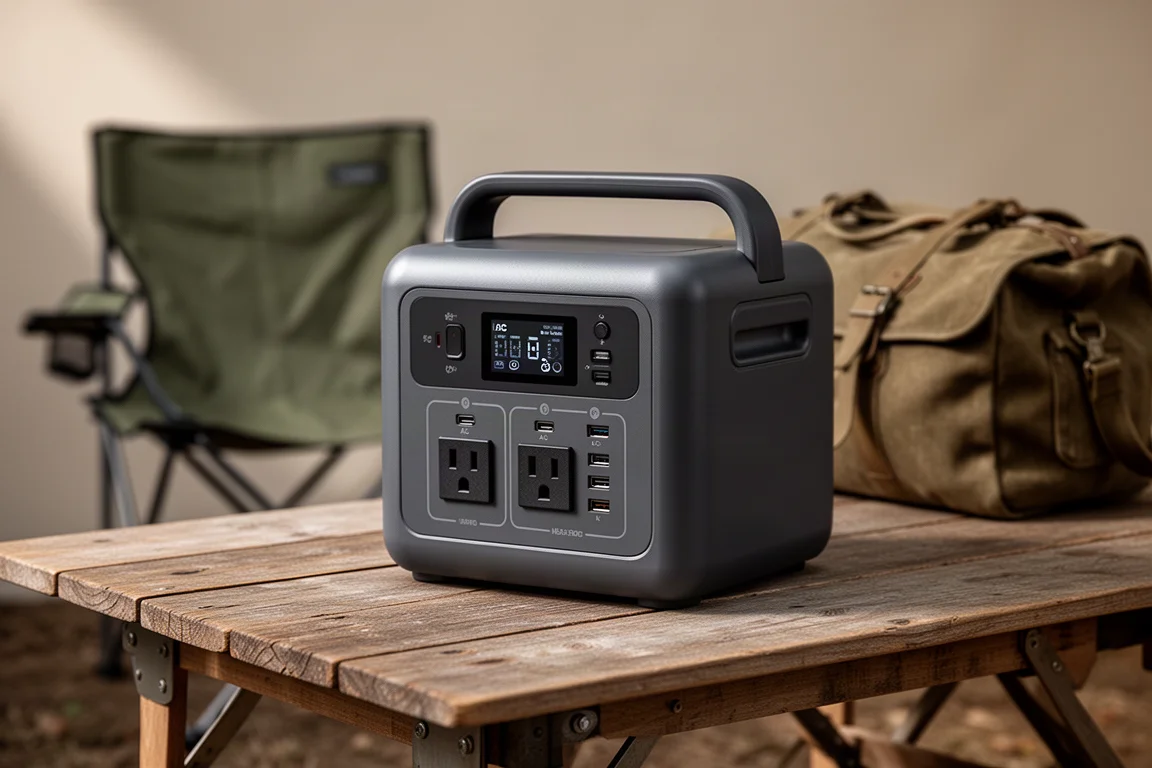
Introduction
Car camping tends to involve more electronics than people plan for: phones, tablets, camera batteries, drone packs, and often a 12V fridge that needs to run all weekend. A portable power station is the simplest way to keep all of it running without idling the vehicle or buying ice every morning.
The DJI Power 1000 is a 1,024Wh power station built around a lithium iron phosphate battery and a 2,200W inverter. It sits in the capacity class that can carry a fridge through a full weekend while still topping up smaller devices, which makes it a useful reference point when working out how much power a trip actually needs.
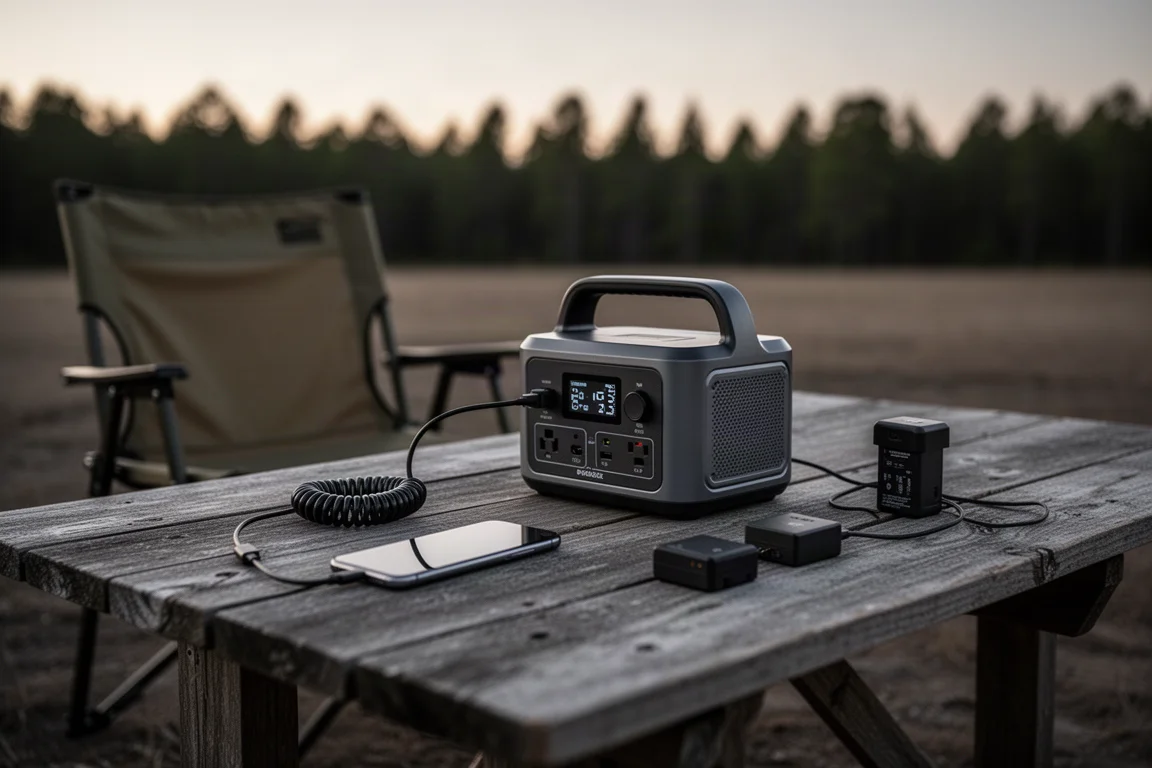
Capacity is the first decision in this category, and it drives everything else. Around 1,000Wh is enough to run a 12V fridge for a weekend and charge electronics alongside it. If a fridge is not part of the plan, a 200Wh to 500Wh station is usually enough and costs considerably less. The Power 1000 is aimed squarely at the first group.
Who This Power Station Is For
For campers who run a 12V fridge, this is the size that makes sense. It keeps food at a consistent temperature without ice, and it still has enough headroom to charge phones, tablets, and camera batteries at the same time.
It also suits photographers, videographers, and drone pilots who need continuous power in the field. A powered slider for time-lapses, a stack of drone batteries, or a long night of shooting all depend on reliable power, and carrying one large battery is easier than carrying many small ones.
Families camping with children are another good fit, particularly for evening lighting or a small projector for a movie night outside the tent.
It is less compelling if the goal is simply to top up a phone and a headlamp. In that case, a smaller station is lighter, cheaper, and easier to live with.
Main Strengths
The Power 1000 covers the practical side of camp power well: a large battery, a strong inverter, fast USB charging, and a clear path to solar.
Portable Power for Everyday Devices and Cameras
Four USB ports sit on the front panel, split into two USB-A and two USB-C. Each USB-C port delivers up to 140W, which is enough to charge a laptop or tablet quickly, and it works just as well for camera batteries and drone packs that accept USB-C charging.
Because the station handles this in one place, the number of chargers and spare batteries packed for a trip goes down. Cameras, drones, and phones can all be topped up from the same unit, and the internal battery keeps working long after a car battery would have been drained.
Running Small Appliances and a 12V Fridge
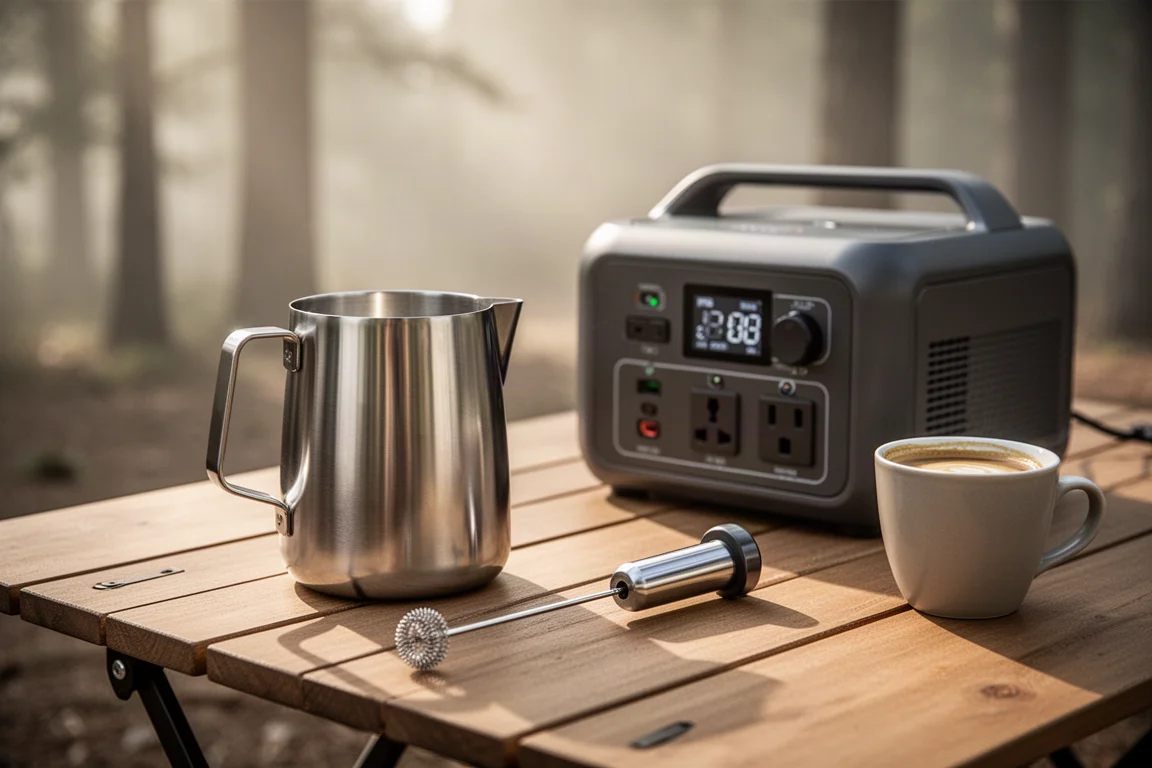
The 2,200W inverter is the headline feature for anyone who wants home conveniences at camp. Two AC outlets deliver a stable 2,200W, and a boost mode provides extra output for short periods. That is enough for the small appliances that genuinely make sense on a car camping trip: a coffee maker, a milk frother, a small fan, or a projector.
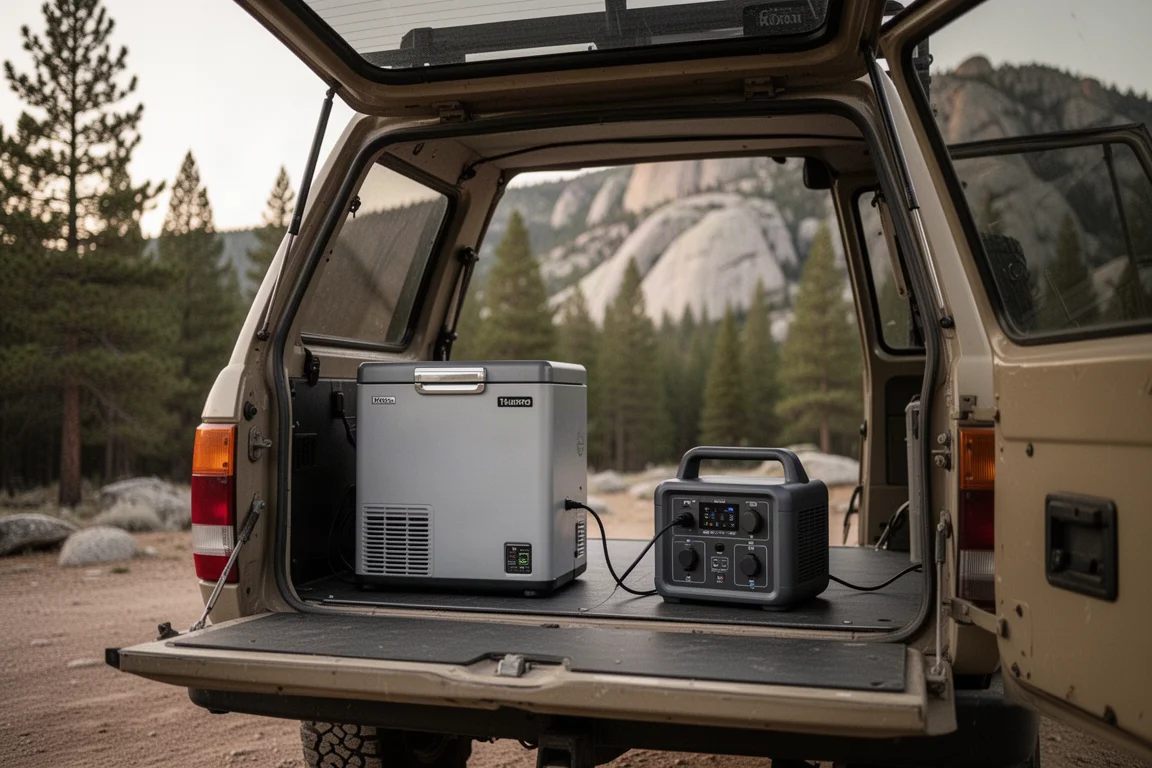
There is no 12V socket on the unit itself. A dongle that plugs into one of the SDC ports provides a 12V connection, which is what a 12V fridge needs. Fridge owners are the group this capacity is really built for, since a fridge running across a full weekend is the load that defines how large the battery has to be.
Running a fridge while charging a phone is exactly the kind of mixed load this station handles without effort, and the fridge no longer depends on ice, pre-chilling, or the vehicle battery.
Solar Charging and Expandable Power Inputs
Solar charging is handled through an MPPT controller accessory that plugs into an SDC port and can also mount to the side of the station. It adds three charging ports, so several solar panels can be linked together for faster charging.
That arrangement turns the station into something closer to continuous power. With panels in the sun, a fridge can keep running day after day without starting the car to recharge the station, which matters on longer stays in remote places.
Camp Lighting, Emergency Gear, and Family Evenings
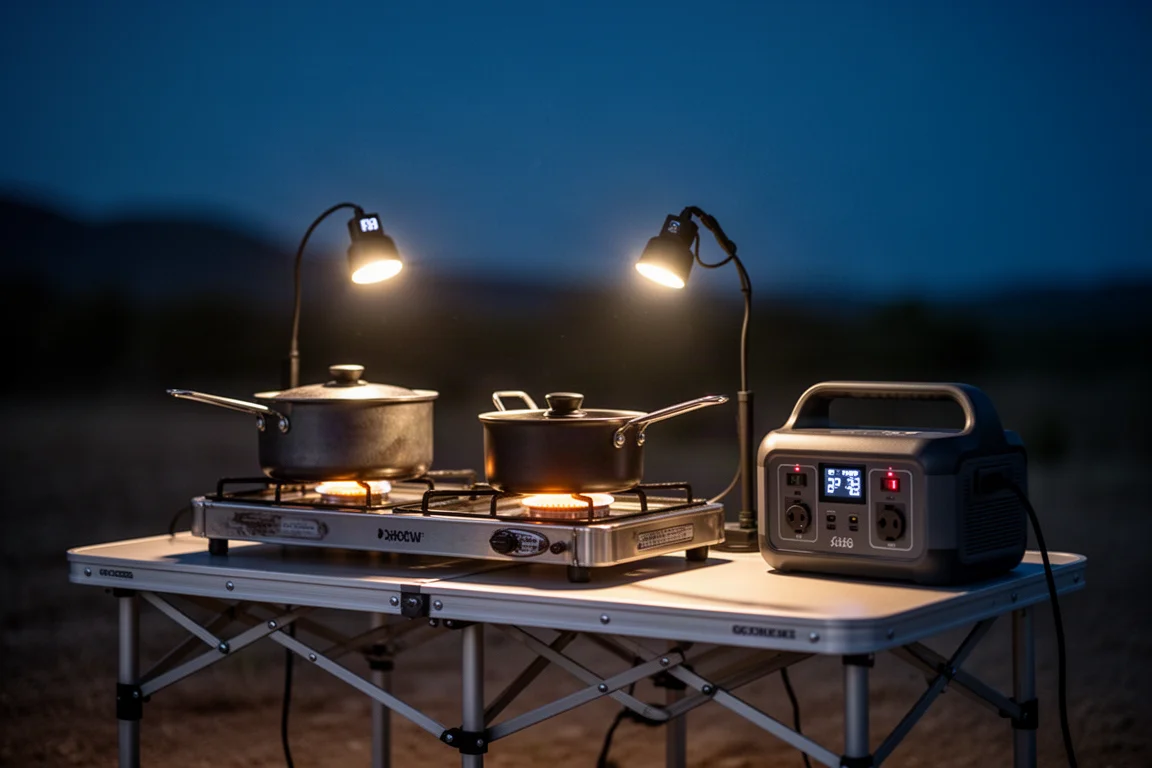
USB camp lighting is one of the simplest wins. Several lights can run at once from the station, which lifts a cooking area out of headlamp-only territory and makes evenings outside far more comfortable.
The same capacity covers emergency gear. A tire inflator or compressor draws real power, and a jump starter pack that has sat unused for months can be recharged from the station rather than left flat. With solar input, those backup devices can be kept ready without returning to a power point.
For families, a small projector is another option worth considering. A movie under the stars keeps everyone outside a little longer on warm evenings, and the station has more than enough output to run one.
The result is a campsite that stays lit, charged, and comfortable well after dark, without stringing everything from a single headlamp.
Battery Chemistry and Longevity
The Power 1000 uses a lithium iron phosphate battery, the chemistry most stations in this class have moved toward. It is rated to hold up to 70 percent of its capacity after 4,000 charge cycles, so the station should stay useful across years of regular trips rather than fading quickly after a few seasons.
Things to Consider Before Buying
The main trade-off is capacity against need. A 1,024Wh station is genuinely useful when a fridge is part of the setup, but it is more than many campers require. If the plan is only to charge phones, tablets, and a few camera batteries, a 200Wh to 500Wh station covers it for less money and less packing space.
The second consideration is accessories. There is no built-in 12V outlet, so a 12V fridge needs the dongle that plugs into the SDC port, and solar charging needs the MPPT controller. Both are separate items, and it is worth budgeting for them if either use case matters.
Boost mode is designed for short bursts of extra output rather than sustained loads, so it is best treated as headroom for the start-up surge from a small appliance rather than as a higher continuous rating.
Finally, this is a car camping product rather than a backpacking one. The capacity that makes it useful for a fridge is also what makes it a basecamp item rather than something to carry on a trail.
Buying Advice
Choose capacity first. If a 12V fridge is coming along, a 1,000Wh class station is the sensible starting point, and the Power 1000 fits that brief with a 1,024Wh battery, a 2,200W inverter, and two 140W USB-C ports for everything else.
If the trip is mostly electronics and lighting, a smaller station will do the job and save both money and packing space. Either way, decide early whether a 12V fridge or solar charging is part of the plan, because those two accessories shape which ports and inputs actually matter to you.
The Power 1000 makes the most sense for campers who want one unit to run a fridge, charge cameras and drones, and light an evening campsite, with the option to add solar later for longer trips.
Conclusion
A power station earns its place on a car camping trip by removing small daily frustrations: no ice runs, no dead camera batteries, no cooking by headlamp, and no idling the car to keep a fridge cold.
The DJI Power 1000 covers those jobs with a 1,024Wh lithium iron phosphate battery, a 2,200W inverter, fast USB-C charging, and an expandable path to solar. It is the right size for fridge-based weekends and mixed electronics, and it is easy to justify for anyone who wants a campsite that works as smoothly as the kitchen at home.
Product link
View more details for DJI Power 1000
This product is mentioned in the review. Check the specifications, options, and compatibility before buying.
View more details for DJI Power 1000Further reading
Related Reviews

Portable Power Stations
Anker SOLIX F3000 Review: A Powerful Portable Power Station With a Few Design Quirks
The Anker SOLIX F3000 delivers strong performance, fast charging, and a competitive price, but a few design choices may give you pause.

Portable Power Stations
EcoFlow Delta 3 Series: Five New Power Stations Previewed
EcoFlow expands the Delta 3 lineup with five models, from the compact Classic to the flagship Ultra Plus. Here is what each one offers.
Portable Power Stations
Oscal Power Max 6000 Review: A Large Solar Generator With Real Trade-Offs
A week of off-grid use shows what the Oscal Power Max 6000 handles well, where it falls short, and when a fuel generator still makes more sense.