Action Cameras
DJI Osmo Action 6 vs Insta360 Ace Pro 2: Which Action Camera Wins?
A detailed comparison of two flagship action cameras with innovative features, strong image quality, and distinct trade-offs in design, battery life, and accessories.
Introduction
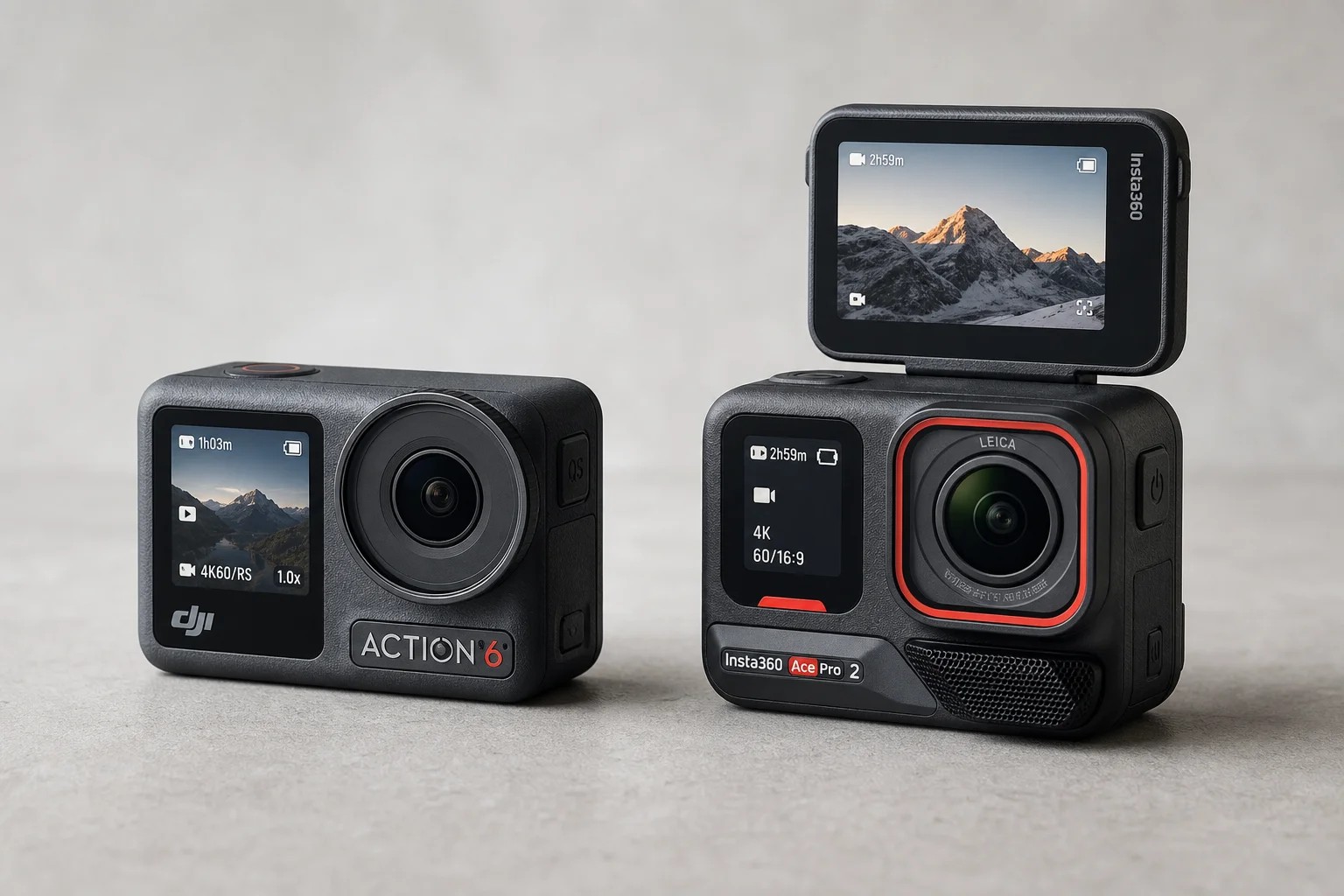
DJI released the Osmo Action 6 as its latest conventional action camera, introducing two features never before seen in this category: a square sensor and a variable aperture. To determine whether it stands as the best action camera available, this comparison examines how it performs against the Insta360 Ace Pro 2, a camera that has set a high standard for the category. Both cameras deliver strong image quality and innovative capabilities, but each excels in different areas.
Square Sensor and Custom Mode
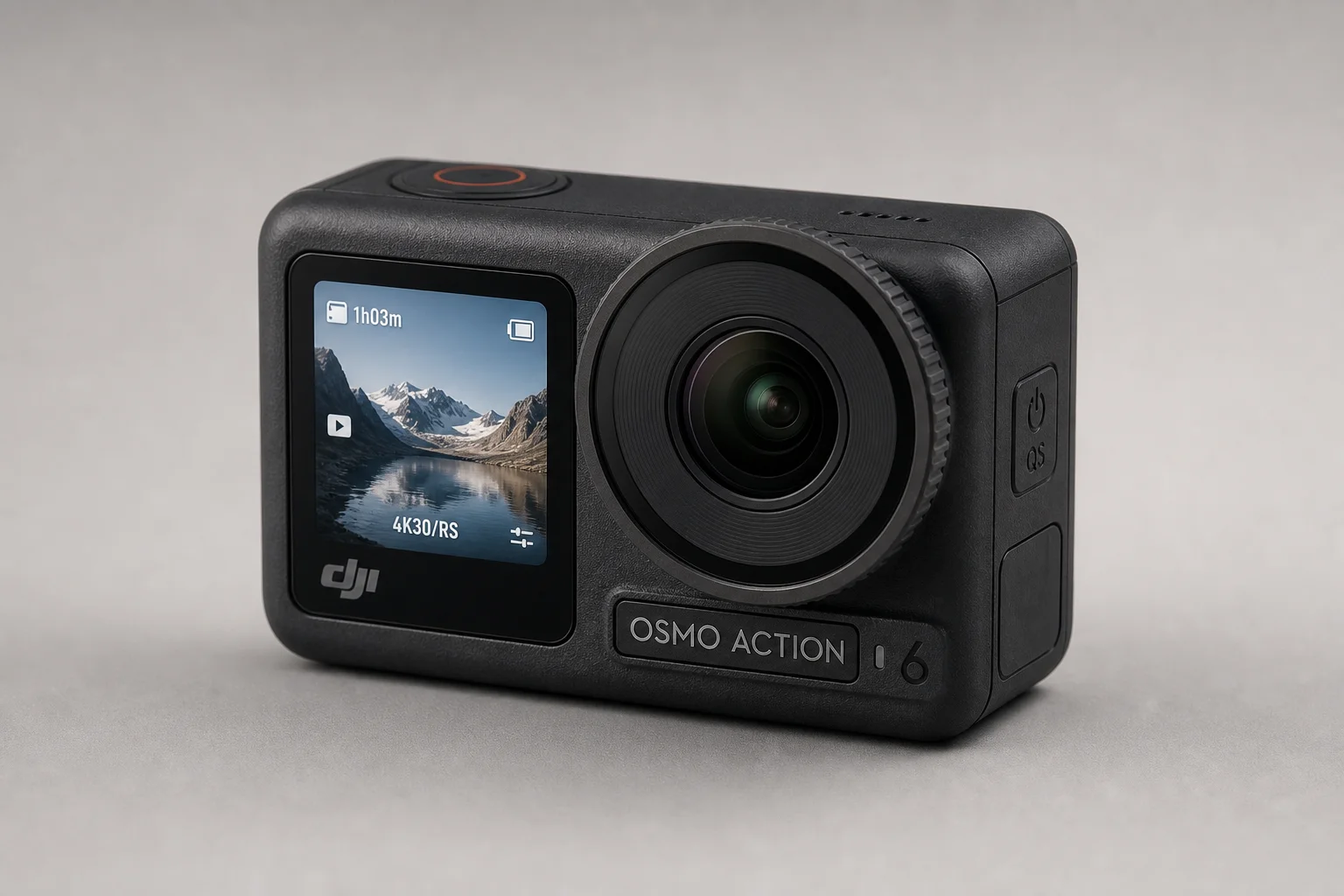
The Action 6 features a 1/1.1-inch square sensor, larger than the Ace Pro 2’s 1/1.3-inch sensor in a 4:3 format. A larger sensor typically captures more light and delivers better image quality, especially in low-light conditions. However, the square format presents a trade-off: standard video recording uses 16:9 or 9:16 aspect ratios, leaving a significant portion of the sensor unused during normal recording. When accounting for the actual sensor area used in standard video, the Ace Pro 2’s smaller sensor captures roughly the same field of view as the Action 6.

The Action 6’s Custom Mode allows recording in a true square format, which can then be adjusted in post-production to vertical or horizontal framing. This feature proves particularly valuable for social media content, and unlike the Ace Pro 2’s FreeFrame Video Mode, the square footage arrives stabilized in-camera. The trade-off is that Custom Mode crops the recording, reducing the field of view compared to standard mode. Additionally, every Custom Mode shot requires post-production editing and cropping before use, making the workflow less immediate than traditional recording.
Variable Aperture Implementation
The Action 6 introduces an adjustable aperture ranging from F2 to F4, compared to the Ace Pro 2’s fixed F2.6 aperture. In theory, this offers clear advantages: a larger aperture (F2) admits more light for low-light shooting, while a smaller aperture (F4) enables closer focus and can create sunburst effects with point light sources. An automatic mode adjusts aperture dynamically based on scene conditions.
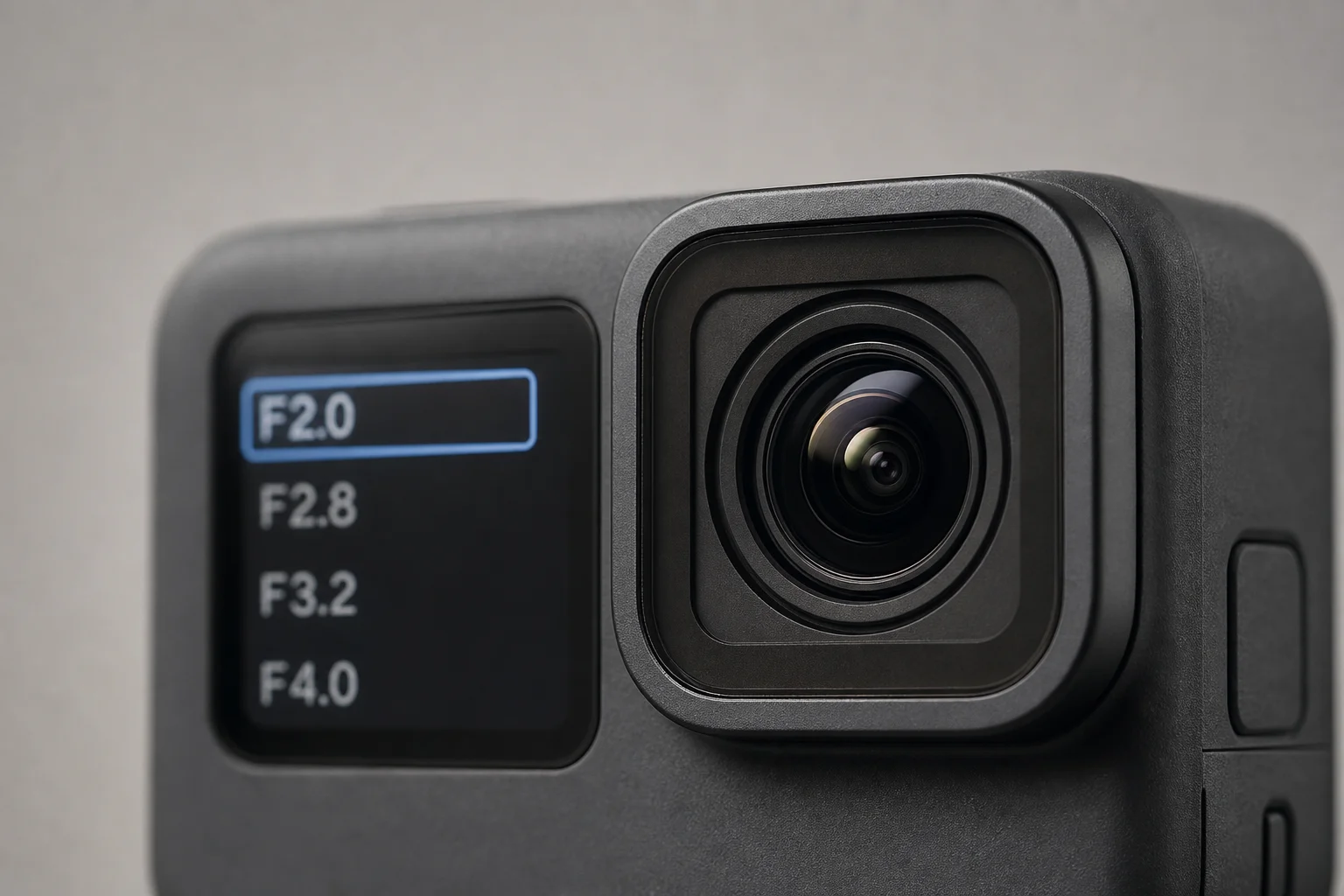
In practice, the variable aperture delivers limited real-world benefits. The F2 setting does not produce noticeably better low-light performance than the Ace Pro 2, partly because the larger sensor advantage is negated by the square format. The F4 aperture does enable better close-up shots for B-roll footage, but sunburst effects are subtle and rarely noticeable. When the entire sun fills the frame, the effect appears slightly frayed rather than crisp. Despite these limitations, the variable aperture remains a welcome innovation that demonstrates DJI’s commitment to advancing the action camera category.
Image Quality and Color Science
Both cameras deliver excellent image quality with distinct characteristics. The Ace Pro 2 produces slightly sharper footage with more visible detail, while the Action 6 renders a softer, more refined look. The difference is minor and largely a matter of preference.

Color rendering differs noticeably between the two. The Action 6 exhibits a slight greenish-blue tint, while the Ace Pro 2 leans toward magenta tones, likely influenced by Leica’s involvement in its development. Taken individually, both cameras produce beautiful, well-balanced images; the differences become apparent only in direct comparison.
The Ace Pro 2 uses face recognition for automatic exposure, delivering superior results in backlit situations where faces are present. The Action 6 sometimes renders faces slightly blurred in these conditions, though the reason remains unclear. Conversely, the Action 6 occasionally produces brighter, better-exposed footage in overcast conditions.
Both cameras offer portrait modes for improved skin tones and cinematic color profiles. The Action 6 provides 10-bit color depth for its LOG profile, enabling more sophisticated color grading compared to the Ace Pro 2’s 8-bit LOG. For most users who make only minor color corrections, this difference is negligible.
Dynamic range performance is comparable between the two. The Ace Pro 2 applies HDR processing by default, though it can be disabled. The Action 6 also performs HDR processing but does not allow disabling it.
The Action 6 recently gained 8K recording capability at up to 30 frames per second, matching the Ace Pro 2’s existing feature. The Action 6’s implementation is superior: 8K recording does not crop the image or degrade stabilization as it does on the Ace Pro 2. However, 8K introduces significant drawbacks: substantially larger file sizes, reduced dynamic range, and diminished image quality. The additional resolution provides meaningful advantages only when heavily cropping footage in post-production.
Both cameras excel at 4K 120fps slow-motion recording, essential for action cameras. At this frame rate, the field of view difference between the two narrows. Both also support 1080p at 240fps, though image quality at this setting is poor and not recommended.
In low-light conditions, the Action 6’s larger sensor and wider aperture offer theoretical advantages that do not materialize in practice. Neither camera is designed for extreme low-light scenarios, yet both produce acceptable results when pushed to their limits. The Ace Pro 2 maintains slightly better color accuracy and highlight protection, making it marginally superior in very dark conditions, though the difference is minimal.
Both cameras feature excellent image stabilization. The Action 6’s Rocksteady Plus and the Ace Pro 2’s stabilization both handle extreme camera shake effectively. The Ace Pro 2 may provide slightly stronger stabilization recovery, but this difference is not relevant in typical use.
Design, Battery Life, and Accessories
The Ace Pro 2 is noticeably thicker and 28 grams heavier than the Action 6, primarily due to its flip-up display. This display is the Ace Pro 2’s greatest strength in this comparison. While the Action 6 includes a smaller front display, the Ace Pro 2’s flip-up screen can rotate 90 degrees for overhead viewing or flip completely for self-filming. This capability proved invaluable during testing and is a feature the Action 6 cannot match.
Battery life favors the Action 6 significantly. In 4K 30fps recording, the Action 6 achieved 2 hours and 27 minutes of continuous shooting, compared to the Ace Pro 2’s 1 hour and 42 minutes. Insta360 offers an Endurance Mode to extend battery life and sells a standard bundle with a second battery for an additional $20. Neither camera experiences overheating issues and both easily exceed one hour of 4K 60fps recording in office conditions.
Audio quality favors the Ace Pro 2, which includes a wind guard and superior internal microphone. Its voice enhancement mode significantly reduces background noise. The Action 6 is compatible with DJI microphones such as the Mic Mini or Mic3, though audio quality is inferior on the Ace Pro 2 when using these accessories. For the Ace Pro 2, the Mic Air provides better audio quality without requiring a receiver.
The Action 6 includes 50 gigabytes of internal storage, eliminating the need to carry SD cards for casual shooting. It also features a pressure gauge for measuring altitude in mountains or depth when diving. The Ace Pro 2 offers a Free Frame Video mode allowing field-of-view adjustment in post-production and an AI Highlights Assistant that automatically detects special moments in longer footage. An underwater mode on the Ace Pro 2 improves color accuracy below the surface.
Accessory availability strongly favors the Ace Pro 2. Exclusive accessories include a cinematic lens for anamorphic footage, the XPlorer Grip Pro that transforms the camera into a point-and-shoot device with integrated battery, a pocket printer with leather case for instant photography, a mini remote for placement anywhere, a preview remote with live image display, and the new FOMO Power Neck Mount, a chest mount with integrated battery. The Action 6 lacks comparable accessory options.
Both cameras feature replaceable lens covers and magnetic mounts compatible with standard action camera accessories. The Ace Pro 2 is available in white, offering an aesthetic option not available for the Action 6.
Pricing and Value
The Action 6 starts at $369, though availability in certain regions may vary. The Ace Pro 2 normally retails for $400 but is currently available at $309 for the single-battery version. With an exclusive offer, the Ace Pro 2 bundle includes the Mic Air (valued at $50) and a Dupont tote bag (valued at $30) at no additional cost, though this promotion has limited duration.
Conclusion
Both the DJI Osmo Action 6 and Insta360 Ace Pro 2 represent excellent choices for action camera users, each with distinct strengths. The Action 6 excels with its innovative square sensor, extended battery life, and internal storage. The Ace Pro 2 stands out for its versatile flip-up display, extensive accessory ecosystem, and superior audio quality. The choice ultimately depends on individual priorities: prioritize the Action 6 for longer shooting sessions and creative square-format content, or choose the Ace Pro 2 for self-filming capability and accessory flexibility.
Further reading
Related Reviews
Action Cameras
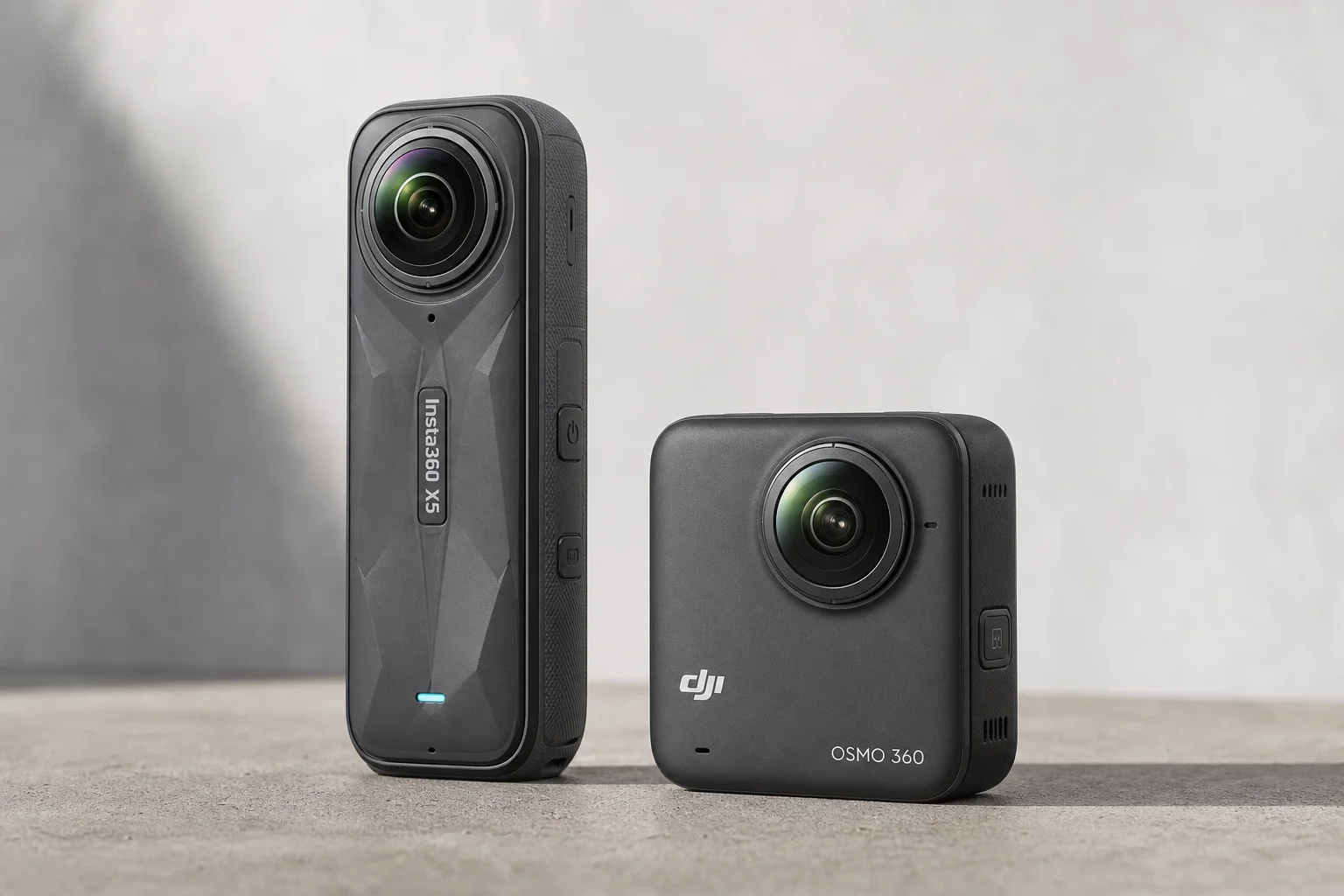
360 Cameras for Adventure Motorcycling: Insta360 X5 vs DJI Osmo 360
Two 360-degree action cameras designed for off-road and adventure riding. A detailed comparison of features, stabilization, and real-world performance for motorcycle touring.
Action Cameras
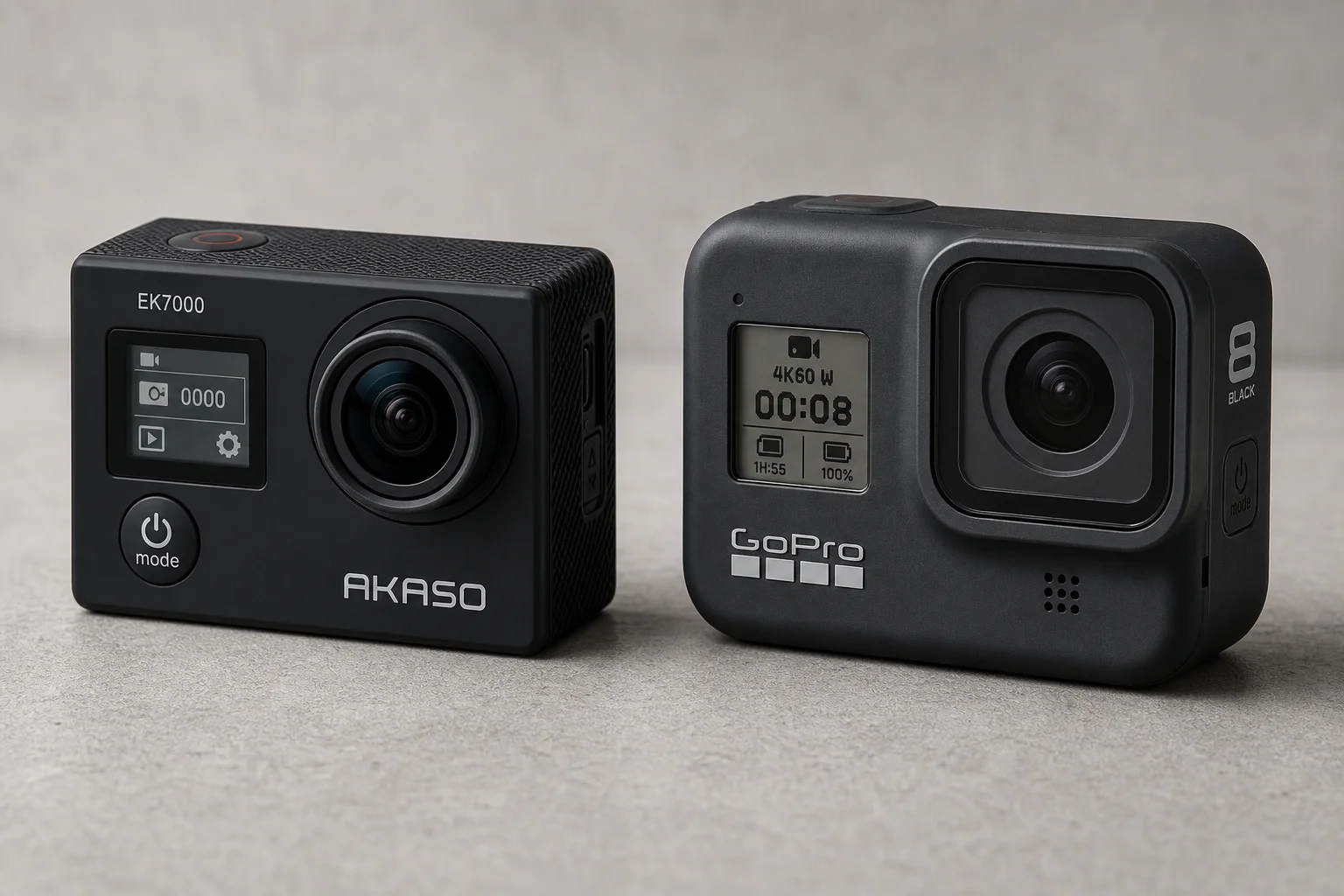
Akaso EK7000 vs GoPro Hero 8 Black: Budget Action Camera Tested
A $50 budget action camera faces off against the GoPro Hero 8 Black. Here's how the Akaso EK7000 really performs in video, audio, and photo quality.
Action Cameras
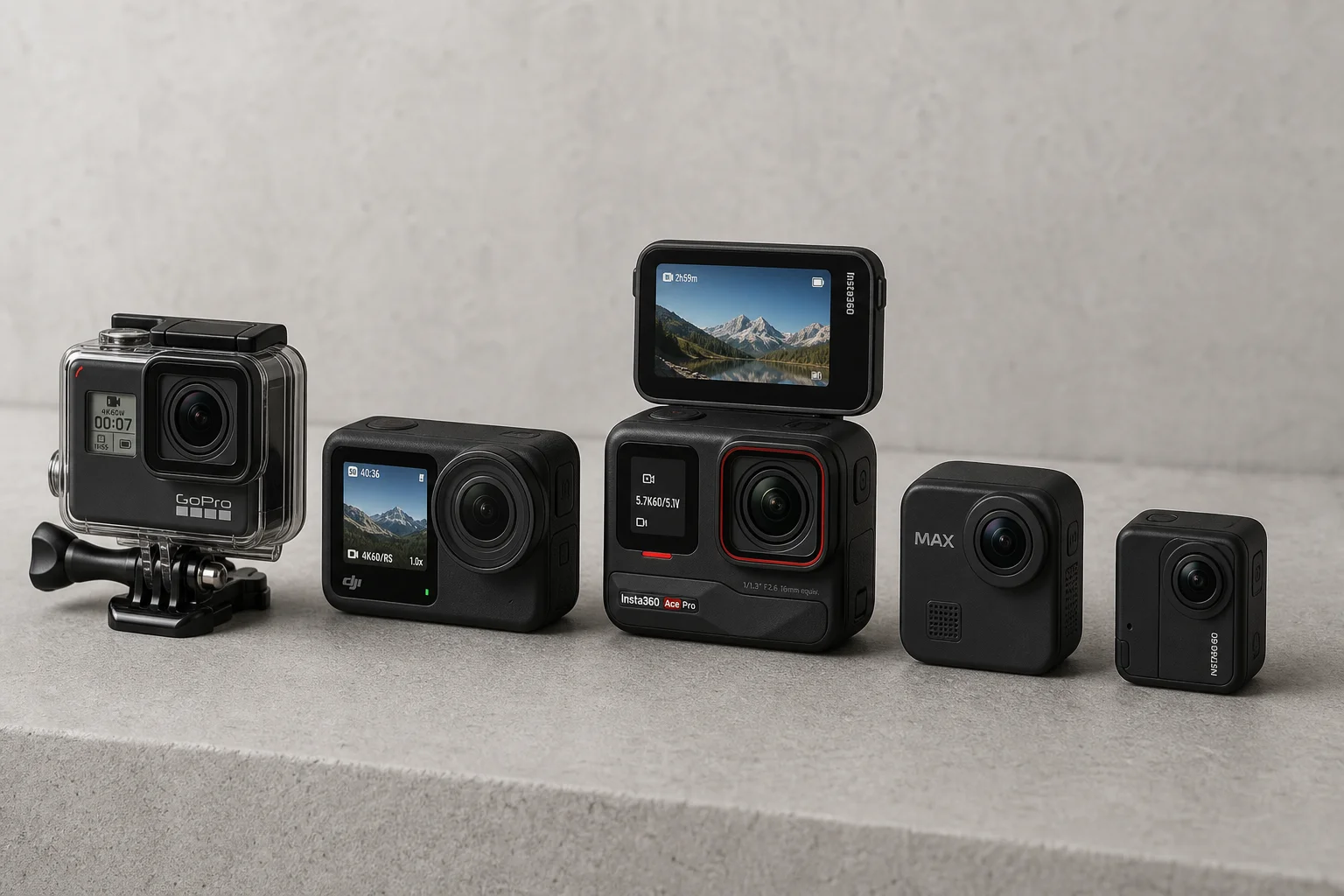
Best Action Cameras 2026: Five Top Picks Ranked
A comprehensive ranking of five action cameras from budget-friendly to premium, covering durability, video quality, stabilization, and low-light performance.