Action Cameras
DJI Osmo Action 4 vs GoPro Hero 11 Black: Low Light Video Compared
A dusk-to-darkness look at how the DJI Osmo Action 4 and GoPro Hero 11 Black handle low light video, stabilization, and real-world shooting.
Introduction
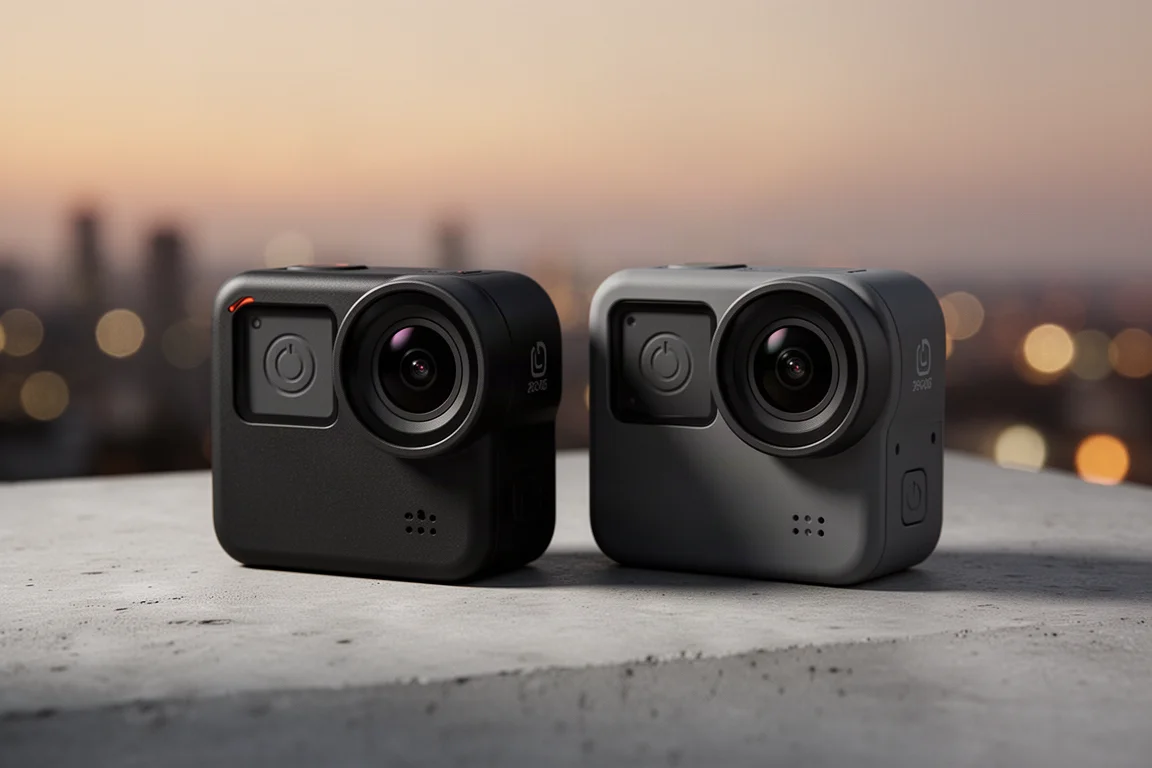
Low light is where action cameras live or die. Most of the year, they shoot in bright daylight where every current model looks good, but the moment the sun goes down, the differences show. This comparison follows the DJI Osmo Action 4 and the GoPro Hero 11 Black through a full dusk-to-darkness shooting session, from an hour before sunset through the fading evening and finally into near-total darkness.
Before the details, one general point worth keeping in mind: sensor size is just one component of the entire digital image pipeline. It is easy to overthink sensor specs, but what actually matters is how the final image looks on the screen you will watch it on.
Dusk Shooting: First Impressions
Testing started in the trees on an overcast, dim afternoon, with both cameras mounted side by side on a single handle. Both ran stock settings: the Action 4 in ultra-wide at 4K60 with RockSteady+, and the GoPro in SuperView. Stabilization on both held up well while walking through the fading light.
As the sun set, a quick handheld test showed a small but telling difference. The Action 4’s image looked a touch dark on its display, and its front screen turns off under load, which makes framing harder in the moment. The GoPro’s screen stayed usable, and its image looked pleasant even as the light dropped.
A short jog test with the cameras facing the person moving showed both struggling a bit more as the light faded, which is expected behavior for small-sensor cameras at this time of day.
Stabilization While Moving
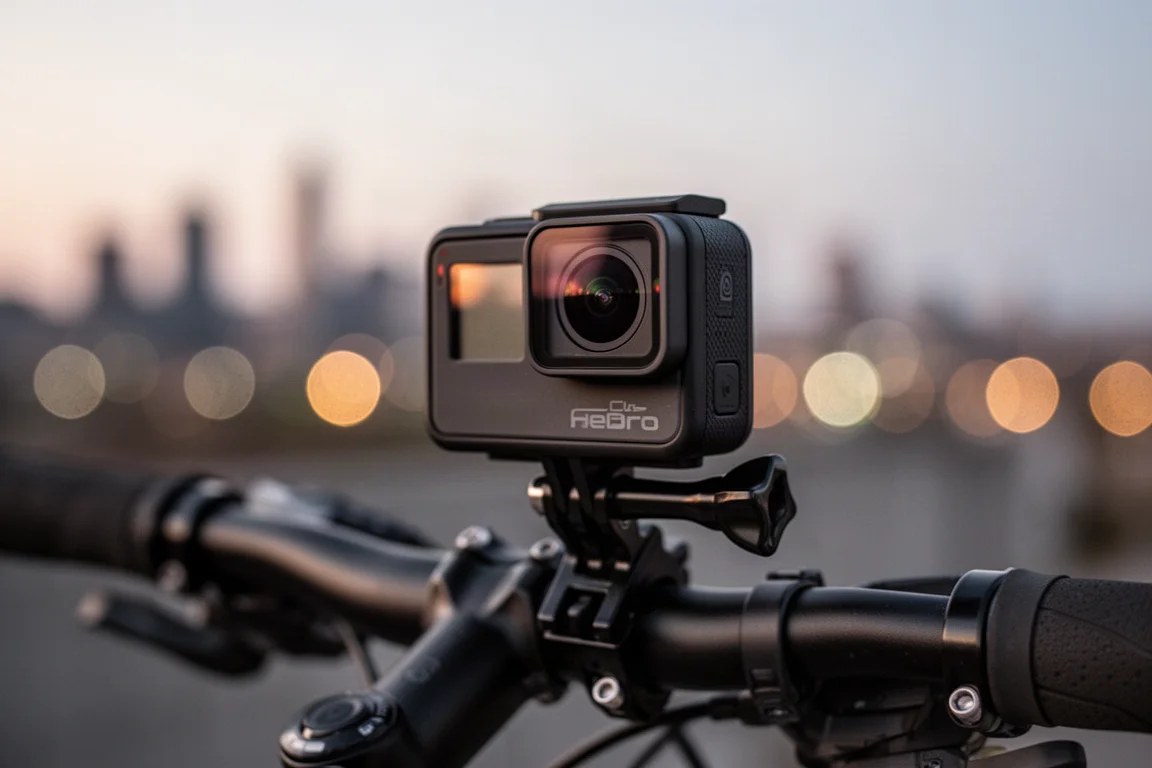
An action camera earns its name when it moves, so the next round clamped both cameras to a bike mount, where they take the full brute force of road vibration rather than having a body absorb some of it. Mounted on the bike, both cameras produced noticeably rougher footage than when handheld.
Handheld walking shots looked considerably better on both. The practical takeaway: if your low-light footage involves vibration, expect both cameras to work harder, and consider whether a softer mount or body-mounted framing fits your use case better.
Mixed Lighting and Exposure
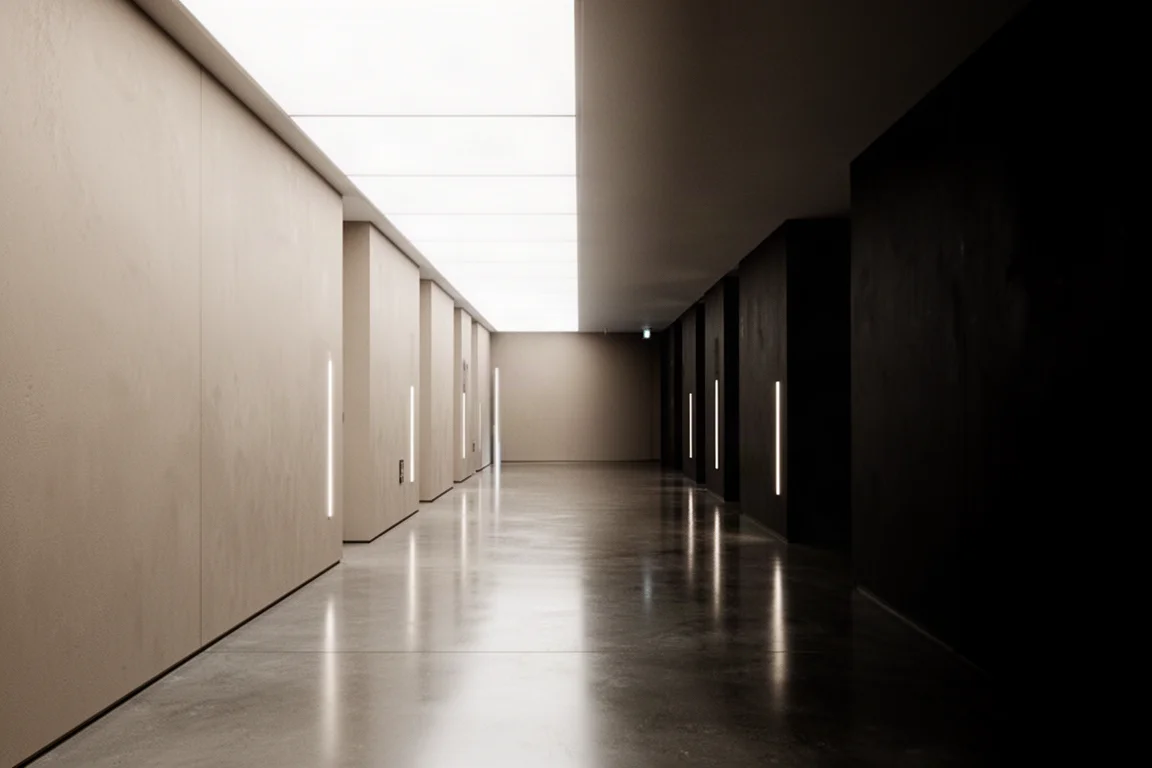
In a very well-lit indoor corridor, both cameras looked strong, and panning toward the darker end of the corridor gave a clean sense of how each handled a rapid brightness drop. The Action 4 produced a noticeably brighter image, though in one well-lit scene it appeared to overexpose very slightly, while the GoPro looked closer to correctly exposed in actual brightness levels.
The trade-off is hard to judge on a small screen. The Action 4’s brighter image looked appealing, but grain and fine detail were difficult to assess without viewing the footage larger, and it was equally hard to tell whether either camera was trading darkness for stabilization or the other way around.
Pure Darkness: The Real Test
After sunset deepened into full darkness, the picture changed. Footage captured from roughly ten or fifteen minutes after official sunset onward turned out to be genuinely rough from both cameras. On a phone screen, it looks acceptable. On even a small computer screen, a tablet, or certainly a large TV, the noise level becomes hard to ignore, and the footage is essentially unusable except when you absolutely must tell that part of the story.
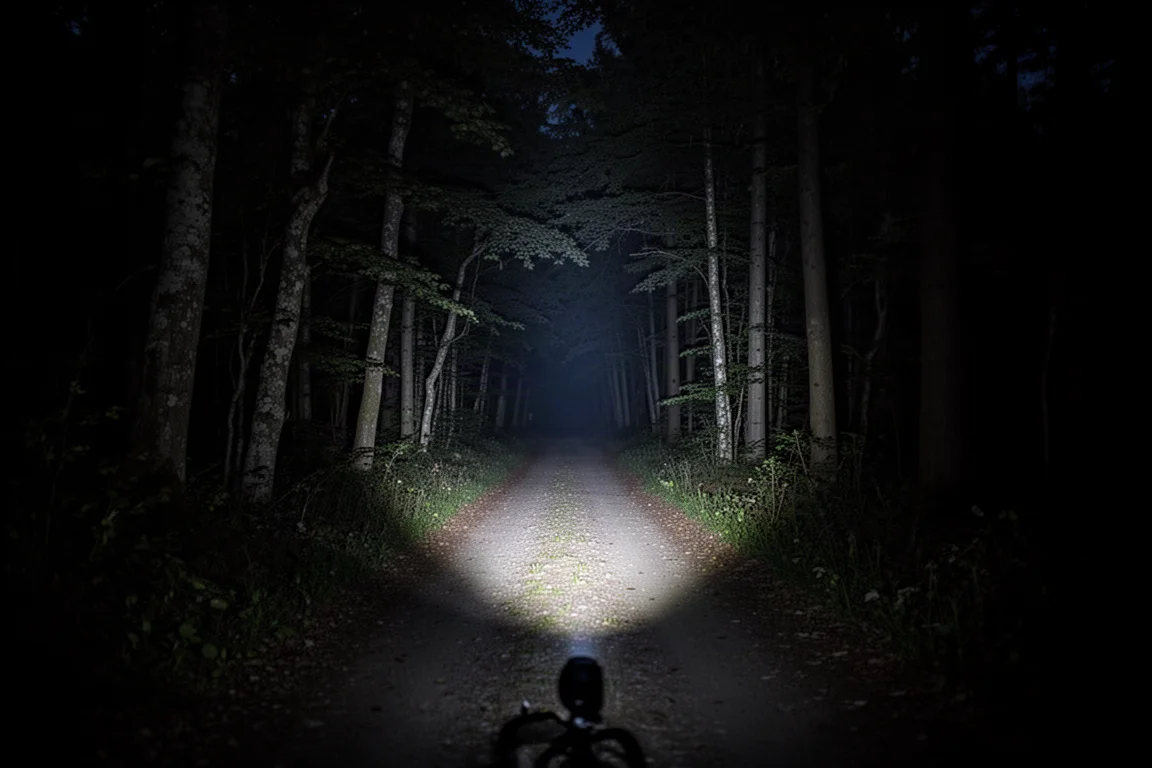
Out in the dark woods with no city lights at all, neither camera had enough light to work with, and the only illumination came from a bike light. Once city lighting was removed from the equation, results became hit or miss: in some cases the GoPro looked better, in others the Action 4 did, and stabilization quality had to be factored in each time.
Which One Should You Buy
If your shooting is mostly evening city videography, where ambient street lighting is doing most of the work, the Action 4 is clearly producing better-looking video than the Hero 11 Black in those conditions. Its brighter output makes dusk scenes feel more watchable, and that matters for anything you plan to show on anything larger than a phone.
If your use case is more varied, or you value a usable front screen while filming in fading light, the GoPro remains a strong all-rounder. It also looked more correctly exposed in some bright-but-challenging scenes, which can reduce grading work later.
Neither camera is a magic night tool. In genuinely dark environments, a phone often outperforms both for still images, and neither action camera produces footage you would want on a big screen. Decide what you actually want the camera for before choosing.
Conclusion
The clearest result of this dusk-to-darkness comparison is that low light performance depends heavily on context. In city lighting, the DJI Osmo Action 4 comes out ahead for video quality. In pure darkness, both cameras struggle and the gap narrows into a coin flip. Match the camera to the light you realistically shoot in, and both are capable tools.
Product link
View more details for DJI Osmo Action 4
This product is mentioned in the review. Check the specifications, options, and compatibility before buying.
View more details for DJI Osmo Action 4Further reading
Related Reviews
Action Cameras
360 Cameras for Adventure Motorcycling: Insta360 X5 vs DJI Osmo 360
Two 360-degree action cameras designed for off-road and adventure riding. A detailed comparison of features, stabilization, and real-world performance for motorcycle touring.
Action Cameras
Akaso EK7000 vs GoPro Hero 8 Black: Budget Action Camera Tested
A $50 budget action camera faces off against the GoPro Hero 8 Black. Here's how the Akaso EK7000 really performs in video, audio, and photo quality.
Action Cameras
Best Action Cameras 2026: Five Top Picks Ranked
A comprehensive ranking of five action cameras from budget-friendly to premium, covering durability, video quality, stabilization, and low-light performance.