Action Cameras
DJI Osmo 360 Review: A Compact 8K 360 Camera Built for Riding
The DJI Osmo 360 pairs a 1-inch square sensor with native 8K capture, 105 GB of built-in storage and a magnetic mount, in a body smaller than most 360 cameras.
Introduction
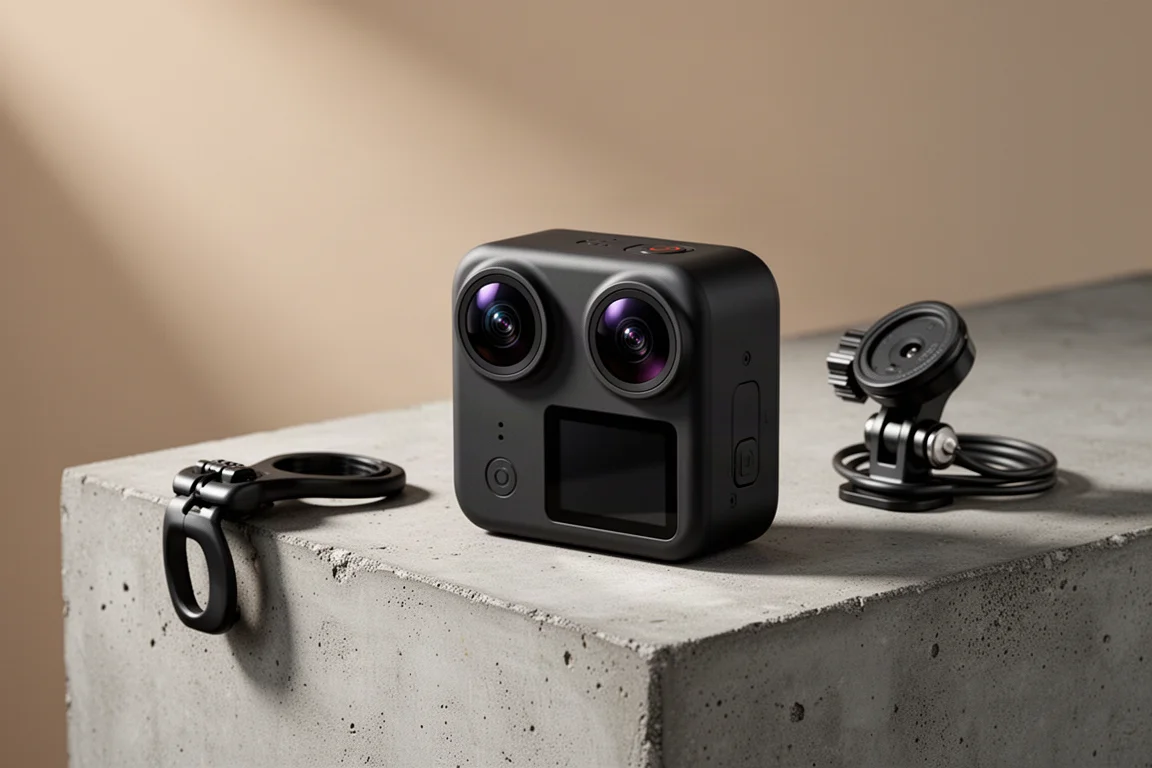
The DJI Osmo 360 is DJI’s first dedicated 360 camera, and it arrives with a specification list that reads more like a flagship action camera than a niche accessory. The headline item is a 1-inch square 360-degree imaging sensor paired with an f/1.9 aperture, the first time that sensor format has appeared in a 360 camera. Around it sit native 8K recording at up to 50 frames per second, 4K slow motion at up to 120 frames per second, 105 GB of built-in storage, a magnetic mounting base, and a body that weighs 183 g.
For anyone who films rides, the appeal of a 360 camera is simple. With a lens on each side of the body, the camera captures everything around it, so there is no longer any risk of a shot being ruined because the camera was angled too high or too low. Fix it to a handlebar, a helmet, or a chest harness and the shot is there. That freedom is why 360 cameras have become so interesting over the last few years, with DJI and Insta360 pushing each other forward while GoPro is no longer the automatic default.

The Osmo 360 is small, noticeably more compact than other 360 cameras in the same class, and it borrows several ideas from DJI’s action camera line rather than starting from scratch. The result is a camera that feels familiar in the hand and quick to live with on a ride.
Who this product is for
This camera suits riders and travellers who want one device that can shoot panoramic footage and conventional wide-angle clips. In single-lens mode it records up to 5K at 60 frames per second with a 170-degree field of view, which puts it in the same territory as the DJI Osmo Action 5 Pro. In dual-lens mode it captures full 360 footage that can be reframed afterwards, so the same body covers both jobs.
It is also a sensible addition for anyone already inside DJI’s ecosystem. The Osmo 360 uses the same battery as the Osmo Action 5 Pro, so existing owners do not need a second set of cells, and the optional battery case charges three batteries at once through a single USB-C port. The magnetic base is shared with the Osmo Action 5 Pro as well, which means existing mounts keep working.
Riders who only ever want straight-ahead footage may still prefer a conventional action camera. The Osmo 360’s advantage is flexibility, and that flexibility comes with a reframing step in post-production. It is a trade-off worth understanding before buying.
Main strengths
A 1-inch square sensor with a bright f/1.9 aperture
The 1-inch square sensor is the foundation of the Osmo 360’s image quality. Combined with the f/1.9 aperture, it holds up across a wide range of lighting. That matters on rides where conditions change constantly: overcast woodland, deep shade under trees, then bright open sunlight a few seconds later. Footage does not break up or deteriorate in low light, and dynamic range, contrast, and saturation all look strong.

For riders in places where cloudy and overcast weather is the norm, that low-light performance is arguably the most useful improvement over earlier 360 cameras. Bright sunlight is handled well too, and the camera copes with the shift between shade and open sun without the image falling apart.
Native 8K capture and slow motion
Native 8K recording runs at up to 50 frames per second, and 4K slow motion reaches up to 120 frames per second. There is 10-bit recording and D-Log support as well, which means more potential image quality and more room to grade footage later.
8K is more than most people need, but the headroom is genuinely useful: you can shoot in 8K and crop into the footage afterwards, or simply record in 5K or 4K and keep file sizes manageable. Battery runtime is around 100 minutes, and an endurance mode extends that to roughly 185 to 190 minutes.
Dual-lens and single-lens versatility
The two lenses handle panoramic video and photos, but the camera also works as a single-lens action camera. In that mode it shoots up to 5K at 60 frames per second with a 170-degree wide angle, essentially matching the field of view and image quality of the Osmo Action 5 Pro. The obvious advantage is that one body covers both styles of filming, so you choose how you want to shoot on the day.
Storage supports that flexibility. There is 105 GB of built-in storage, plus an SD card expansion port if you need more. A DJI Mic connection is available for cleaner audio.
Magnetic mounting and quick-start usability
The magnetic base is the same design used on the Osmo Action 5 Pro, and it opens up a lot of mounting options. Attached to the handlebars it stays put, holding securely across mountain bike, gravel, and road rides. Removing it and moving it to a chest mount or helmet takes a moment, which makes it easy to change the angle mid-ride.
A dedicated mount adds a tripod thread on the bottom and an adjustable angle. On bikes with a one-piece carbon fibre handlebar and stem and an out-front computer mount, that mount screws into place underneath, letting the camera frame the road or trail ahead or look back at the rider. It is a clean angle for recording a ride or an event. Swapping in a selfie stick gives the full tourist-mode setup, or the camera can be pointed forward on the handlebars for a fake drone angle.
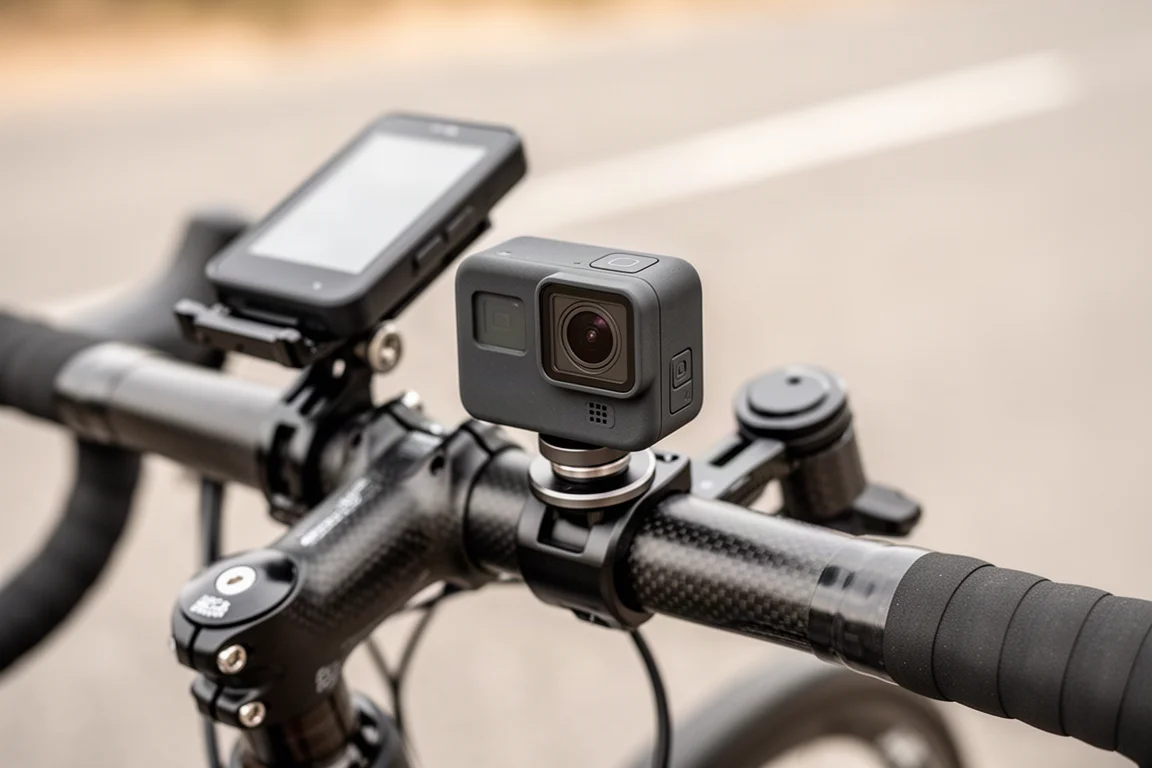
Usability is a strong point. A button press powers the camera up and starts recording straight away with no delay, and the startup mode and settings can be chosen in advance. Press the button again and it stops recording and shuts down. Riding along, you can fire off 20 or 30 seconds of a good descent, then shut the camera down to preserve battery life and card space. The screen is large enough to work through the menus, the interface is responsive, and navigation is intuitive enough that no manual is needed.
Reframing and editing in the DJI app
Once the ride is over, 360 footage is edited in the DJI app on a computer or a smartphone. You add clips, choose the angle you want, zoom in and out, and reframe the shot. Keyframes record different views and the video transitions smoothly from one keyframe to the next. Intelligent tracking is available as well, which makes cutting a ride into a finished clip a fuss-free process.
Things to consider before buying
8K is more than most people need. The upside is headroom, since you can crop into 8K footage or record in 5K or 4K to keep files smaller. It is a capability you may rarely use at full stretch.
360 footage has to be reframed before it becomes a watchable clip. The app makes that straightforward, but it is still an extra step compared with a standard action camera that produces a finished frame.
Standard battery runtime is around 100 minutes. Endurance mode roughly doubles that, but it is a mode you need to select rather than the default.
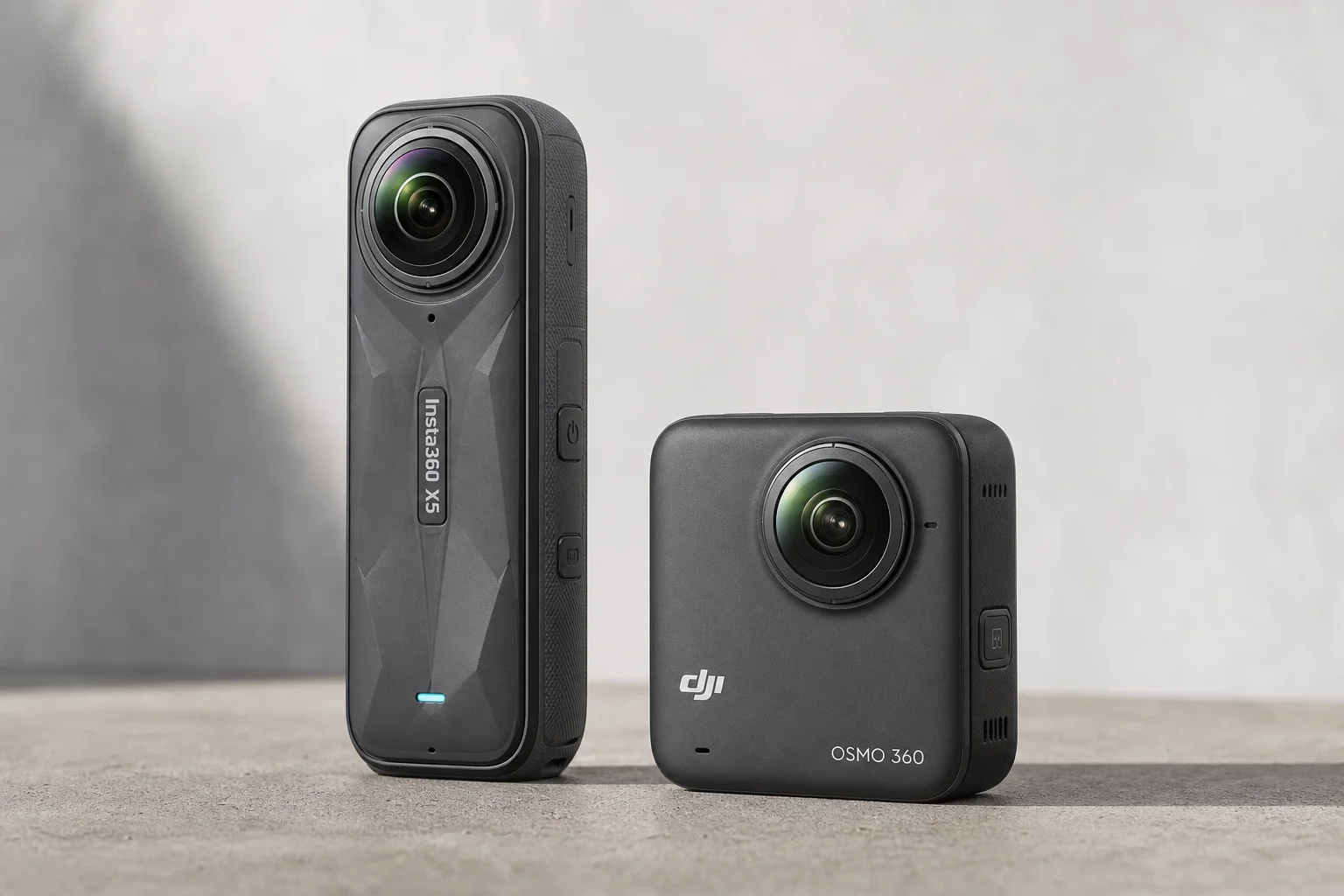
The Osmo 360 weighs 183 g. The Insta360 X5 is around 200 g, so the weight difference is small in the hand, although the Osmo 360 is clearly the smaller of the two bodies. Battery compatibility cuts both ways: sharing cells with the Osmo Action 5 Pro is convenient for DJI owners, while the Insta360 X5 uses a different battery. Both cameras accept SD cards, and the Osmo 360 adds 105 GB of built-in storage on top.
Buying advice
The decision comes down to how you film. If you want a single camera that covers panoramic and standard wide-angle footage without carrying two bodies, the Osmo 360 handles both. If you already own a DJI Osmo Action 5 Pro, the shared battery and shared magnetic mount make it an easier addition to an existing kit. If you mostly want simple point-and-shoot clips and never reframe your footage, a conventional action camera remains the simpler tool.
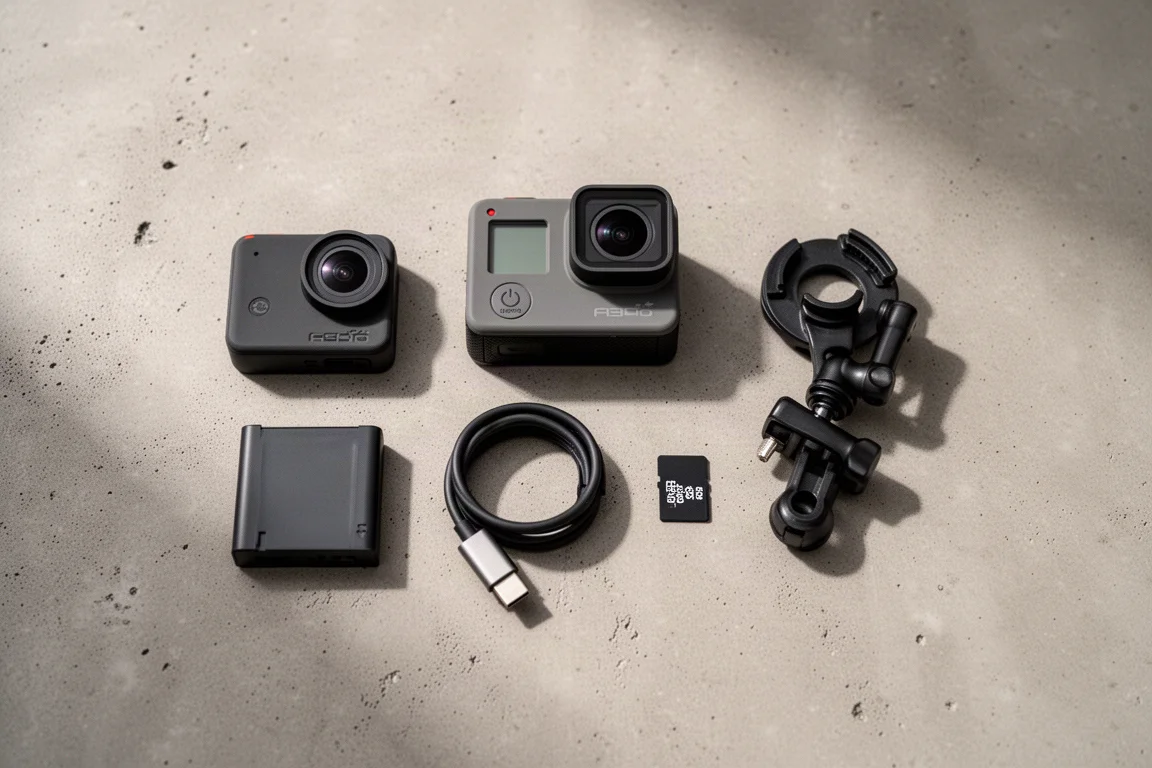
Weigh the storage and battery story as well. Built-in storage of 105 GB is convenient for a day out, but the SD card expansion port means you are not locked into it. The three-battery charging case is a practical extra for longer trips and events. Pricing and availability are worth confirming before you commit, and it is also worth deciding whether you want the camera on its own or with the mount and battery accessories.
Conclusion
The DJI Osmo 360 is a compact, capable 360 camera that doubles as a conventional wide-angle action camera. The 1-inch square sensor, the f/1.9 aperture, native 8K capture, 105 GB of built-in storage, and the magnetic mount add up to a flexible tool for filming rides and travel. The main trade-offs are the reframing step in post-production and resolutions that go well beyond what most people will use. For riders who want creative freedom without worrying about camera angle, it makes a strong case.
Product link
View more details for DJI Osmo 360
This product is mentioned in the review. Check the specifications, options, and compatibility before buying.
View more details for DJI Osmo 360Further reading
Related Reviews
Action Cameras
360 Cameras for Adventure Motorcycling: Insta360 X5 vs DJI Osmo 360
Two 360-degree action cameras designed for off-road and adventure riding. A detailed comparison of features, stabilization, and real-world performance for motorcycle touring.
Action Cameras
Akaso EK7000 vs GoPro Hero 8 Black: Budget Action Camera Tested
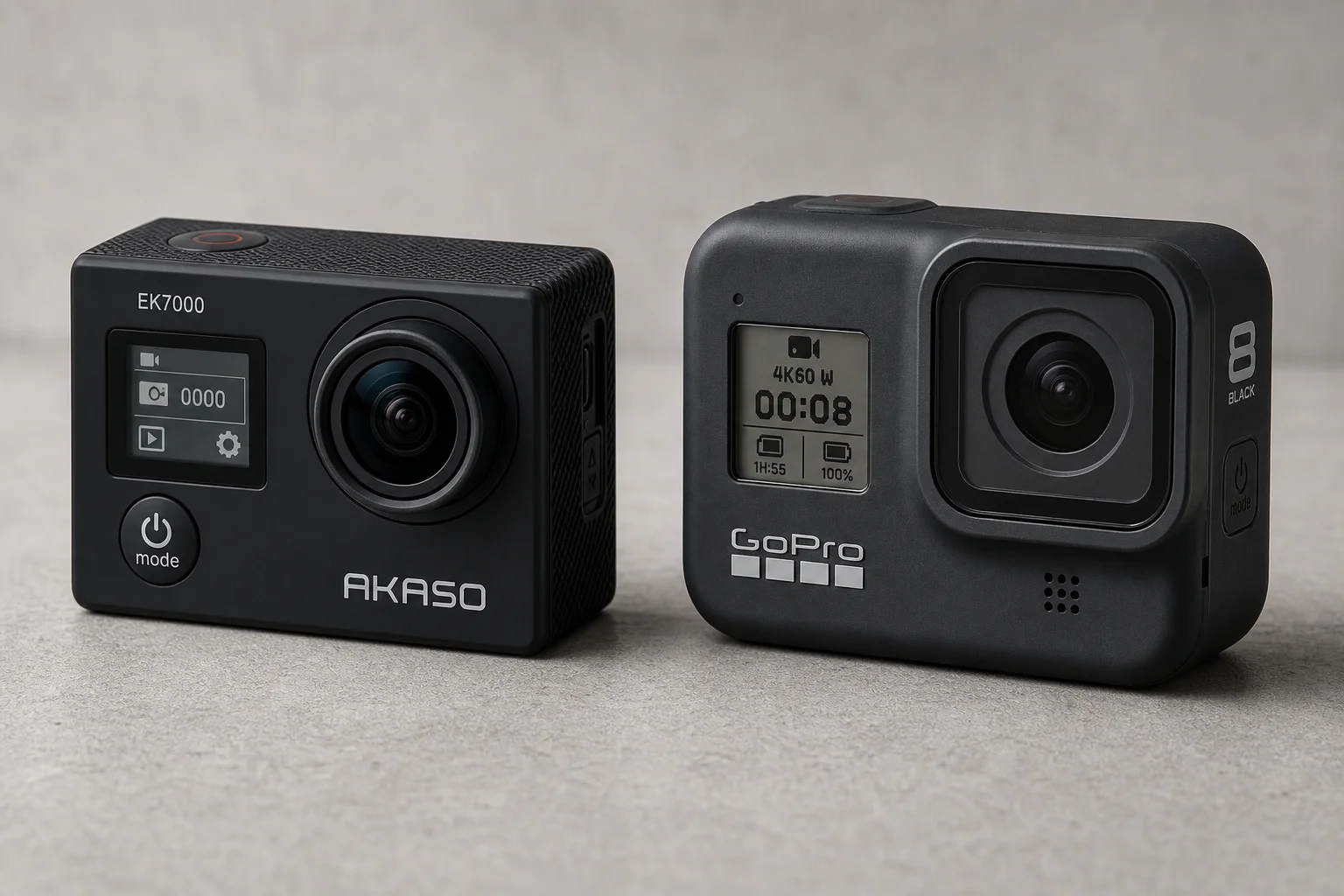
A $50 budget action camera faces off against the GoPro Hero 8 Black. Here's how the Akaso EK7000 really performs in video, audio, and photo quality.
Action Cameras
Best Action Cameras 2026: Five Top Picks Ranked
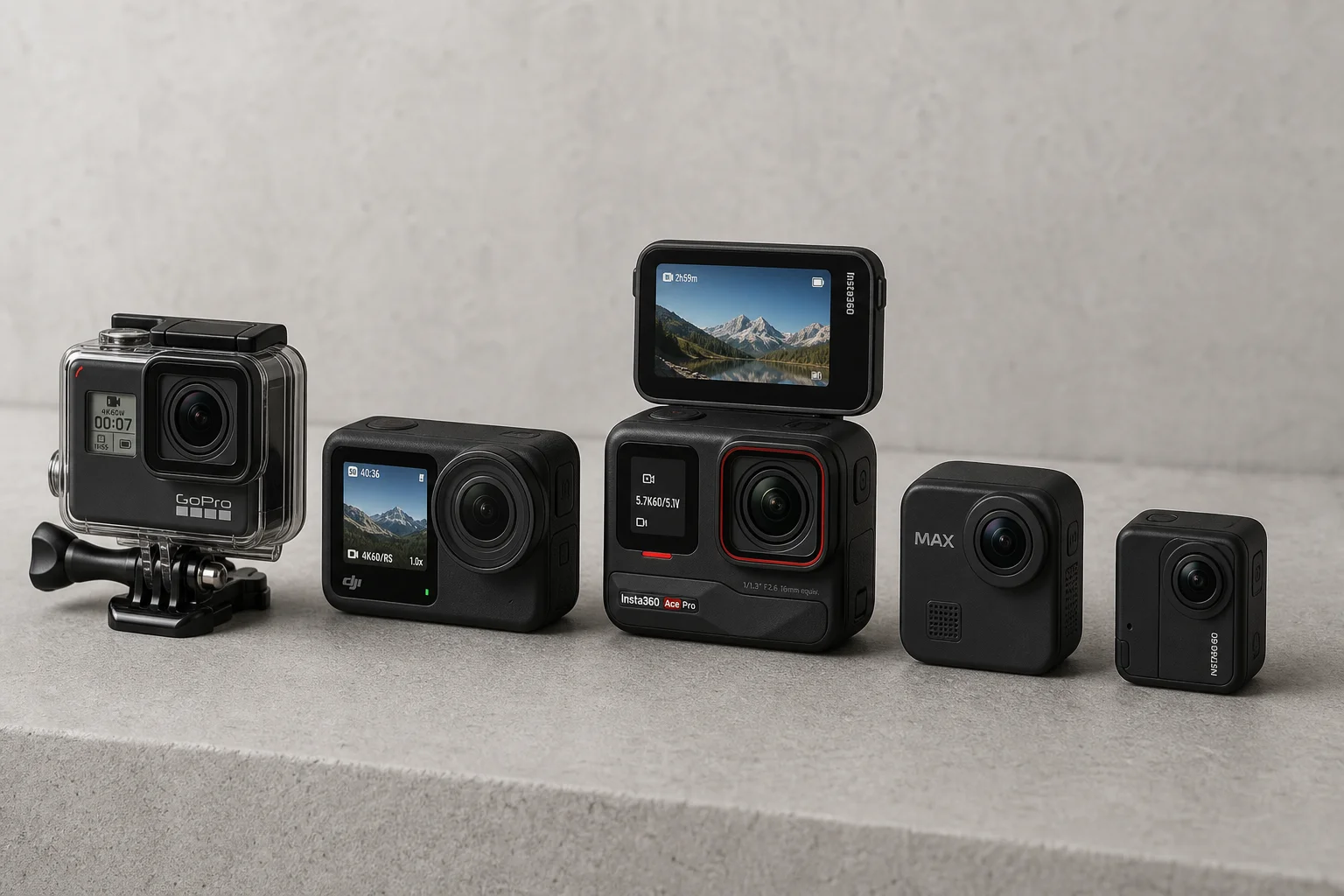
A comprehensive ranking of five action cameras from budget-friendly to premium, covering durability, video quality, stabilization, and low-light performance.