Sim Racing
Direct Drive Wheelbase Technology Explained: What You Need to Know in 2026
A practical breakdown of direct drive wheelbase technology, from torque and dynamic range to telemetry force feedback, LF effects, and more.
Introduction
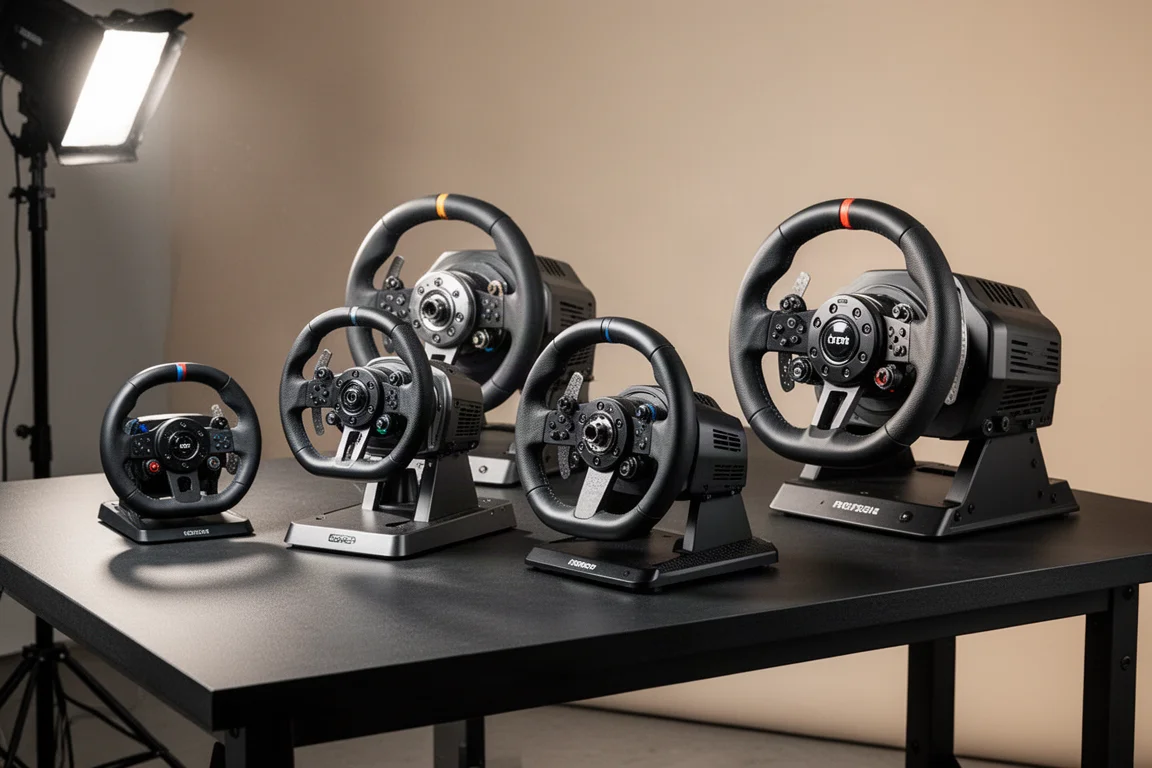
Direct drive wheelbase technology has become significantly more complex in recent years. With brands introducing proprietary force feedback systems, telemetry-based effects, and a growing list of technical specifications, it can be difficult to understand what actually matters when choosing a wheelbase. This guide breaks down the key technologies, explains the terminology, and helps you make an informed decision based on what you actually need.
How Much Strength Do You Actually Need?
The most commonly misunderstood topic in sim racing is how much torque a wheelbase needs to deliver. While there is some subjectivity, the answer is fairly straightforward. You need enough dynamic range to produce the forces necessary to communicate what the car is doing underneath you, without requiring explosive muscle input and without compressing the weaker forces.
For most adults, the sweet spot falls somewhere between 10 and 14 Newton meters of constant force. That does not mean you need to rush out and buy a wheelbase in that range. A 5 Newton meter wheelbase is absolutely fine, as are 6, 7, 8, or 9 Newton meter units. The 10 to 14 Newton meter range is simply the point where most people will never feel compelled to upgrade again because the wheelbase is giving them all the strength they could ever need.
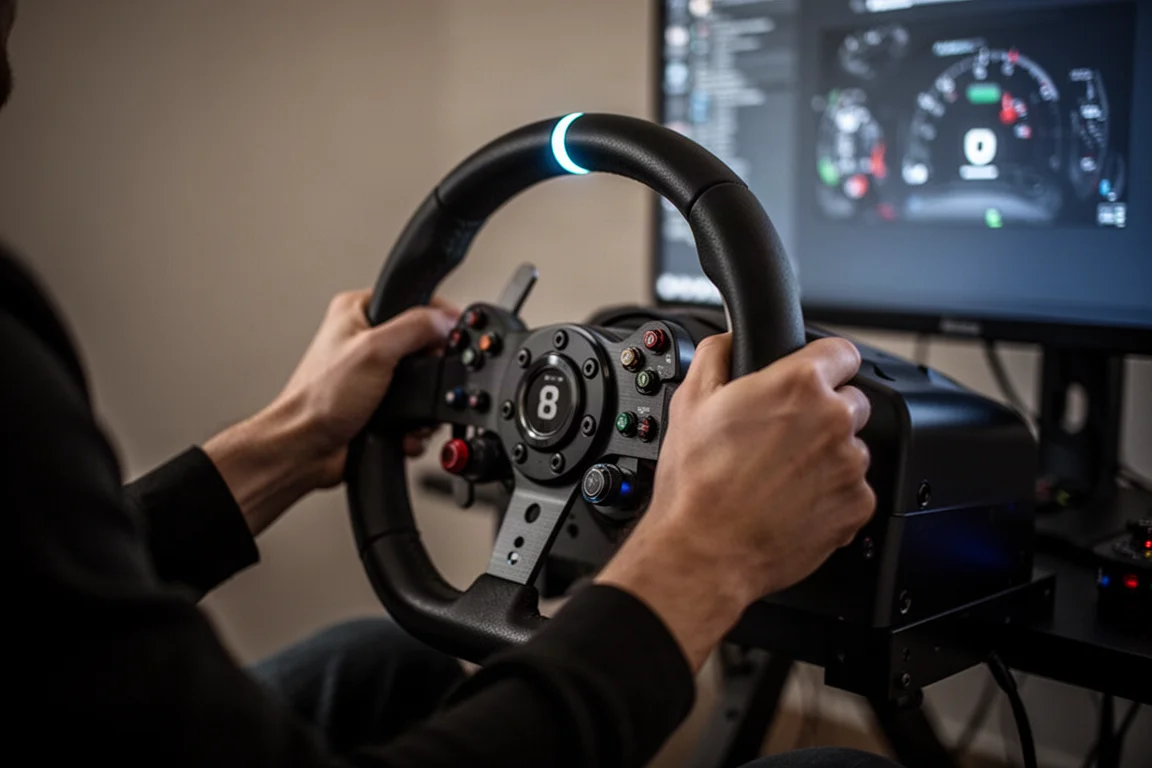
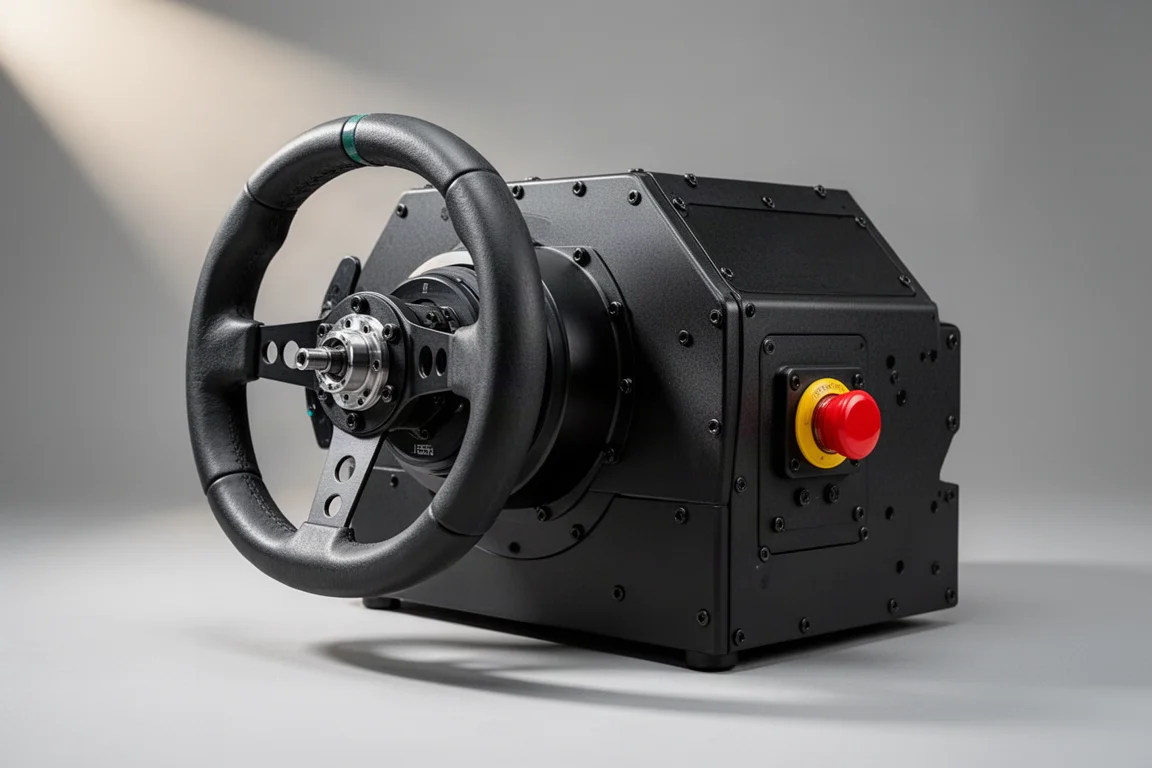
For younger children under about 12 years of age, nothing over 5 Newton meters is recommended unless they are particularly strong or used to real-life karting or racing. Even entry-level direct drive wheelbases are serious pieces of equipment with real potential to injure, so an emergency stop button is something worth looking for.
Most street cars produce the equivalent of about 7 to 10 Newton meters of strength through the steering wheel. Even an IndyCar can output up to 30 Newton meters, but most people are not built like professional athletes. Around 15 Newton meters of strength is more than enough for the vast majority of sim racers, and there should be no desire to upgrade beyond that except for fear of missing out.
Dynamic Range and Clipping
Dynamic range is simply the range of force a wheelbase can produce between nothing and its maximum available torque. Think of it like an audio system: the more you can turn up the volume before distortion starts, the more dynamic range you have available. The more dynamic range a wheelbase has, the wider the strength levels you can experience through the steering, from tiny details like road texture all the way through to sustained cornering forces and impacts.
There is a range of usefulness before diminishing returns set in. Beyond the 10 to 15 Newton meter sweet spot, additional strength becomes overkill. Larger motors required for higher torque tend to have more rotating mass, larger magnets, and larger coils. Running a super powerful wheelbase at just a fraction of its available dynamic range can actually result in a worse driving experience than a motor designed to run at the strength level you want.
Clipping occurs when the input signal fed to the motor exceeds the device’s ability to produce it. Just like a stereo system distorting at high volume, clipping on a wheelbase results in force feedback flatlining and losing all fidelity during the event. In practice, this can make the car feel like it is understeering mid-corner. A little bit of clipping during a collision is acceptable and can even be beneficial, but you absolutely do not want clipping while driving around a circuit, including over curbs, because you will be losing detail and your connection with the car.
What Makes a Good Direct Drive Base?
To understand what makes a good direct drive base, it helps to look back at the history of force feedback. DirectInput, the API developed by Microsoft, was designed to handle force feedback for devices like joysticks and early steering wheels. It was never intended to deal with direct drive wheelbases that mechanically connect your hands to the motor shaft without any cogs, belts, or pulleys in between.
Even with filters turned down in your force feedback settings, there is all kinds of signal processing going on behind the scenes at a software and firmware level. This baked-in processing is why a simple firmware update can completely transform how a wheelbase feels. Recent examples include the Simagic Evo bases, where a firmware update completely changed how the base felt at a fundamental level, and the Simucube 3 bases. The Moza R25 Ultra is another example where the difference between one firmware and another was actually more profound than the difference between driving that wheelbase and a Simucube 3.
This is one of the reasons it is difficult to review direct drive wheelbases, and why reviews can differ dramatically if they were not conducted with the same firmware and software. The idea of running no filters to feel what the game developer intended is fundamentally flawed when you understand everything happening behind the scenes.
A quality direct drive wheelbase will always have an innate ability to produce smooth and accurate force feedback without needing so much filtering that you numb the overall driving feel. This is probably the only remaining differentiator between a good and a great direct drive wheelbase when talking purely about force feedback.
Telemetry Based Effects and Force Feedback
Historically, DirectInput has been used to produce all force feedback effects. Most sim racing titles use the constant force effect to generate their force feedback, allowing the wheel to be pushed in either direction with a force percentage anywhere within the dynamic range. This can be updated up to a thousand times per second using the DirectInput protocol, which is why manufacturers advertise 1000 Hz sample rates. In reality, the sample rate coming out of the game is often much lower than that mark.
Manufacturers are now looking for ways to overcome DirectInput’s limitations. In 2020, Logitech introduced True Force with the G923. It was somewhat of a meme at the time because the G923 is an old-style cog driven wheelbase not conducive to making proper use of the effects. When Logitech later released the G Pro, it became clear what True Force was actually capable of.
True Force uses an API developed by Logitech that must be integrated into each game to support those effects. Logitech launched with a lot of games already supported on both consoles and PC. However, relying on a third-party API means game developers are being asked to support potentially 20 or 30 different APIs, which becomes a large task and can result in inconsistent feelings between titles.
Fanatec’s Full Force is another example. When the ClubSport DD and ClubSport DD Plus launched, there were no games supporting Full Force at all. It took almost 18 months before even one title, iRacing, supported it. For 18 months, the main advertised feature could not be used with any sim racing title.
LF Effects and Telemetry Based Force Feedback
LF, or low frequency effects, works similarly to True Force and Full Force but interfaces with the wheelbase or other haptic devices like an audio device. Multi-channel effects can be generated by the game’s physics or triggered by telemetry-based events like ABS kicking in, engine RPM, or gear shifts.
Game physics-based effects are generated by the physics itself. For example, when hitting a curb, the frequency and vibration you feel are based on the game’s physics and the actual texture mapped into that track. Canned effects, on the other hand, are triggered by telemetry events and tell the software to generate an effect that feels like a curb or gear change. Programs like SimHub allow you to tweak how those effects feel.
LF achieves a very similar thing to Full Force and True Force but without relying on a third-party API that needs to be integrated. As long as the game supports LF effects, or you have telemetry output that can be intercepted with a program like SimHub, you can generate those effects. The new Moza R25 Ultra and R21 Ultra support LF, so you can get those kinds of effects through the wheel without reliance on a third-party API.
LF does have a slight delay compared to API integration, and because it treats the device as an audio device, you are limited in producing multiple effects at the same time. This is why manufacturers use third-party APIs, which give more granular control.
Telemetry based force feedback is different from API-level telemetry force feedback. Most sim racing titles output telemetry data that can be intercepted by the wheelbase’s software and firmware to generate additional effects on top of DirectInput. Telemetry output is generally handled via UDP protocol or shared memory, with a typical 15 to 30 millisecond latency involved. This latency is noticeable to some people but not others.
One brand, VNM, has taken matters into their own hands with their Extreme wheelbase. They have introduced a feature that allows you to adjust the ratio with a slider between DirectInput and telemetry-based effects to dial in your exact sweet spot. If you run purely on telemetry-based effects, you will have a wildly different experience depending on the sim. Blending it a little allows you to get things dialed in well. This approach has the disadvantage of depending on the telemetry the game outputs and the slight latency, but it does not require a third-party API integration.
Sample Rate and Interpolation
Sample rate has a large impact on what a wheelbase feels like in your hands. DirectInput has a maximum sample rate of 1000 Hz, but many sim racing titles cannot generate force feedback that quickly. iRacing’s physics engine runs at 60 Hz, meaning the next packet of force feedback data is output 60 times per second, though iRacing does some interesting things to get up to 360 Hz.
Interpolation is essentially creating packets of data artificially between the real packets. If you are outputting a new packet of force feedback data 60 times per second, there will be slight jumps between those packets. Wheelbase manufacturers can interpolate or simulate data in between those packets to smooth things out. The quality of the algorithms responsible for creating this interpolated data is an important differentiator between brands. Some brands have more resources to do clever things, while others simply take an average between two packets.
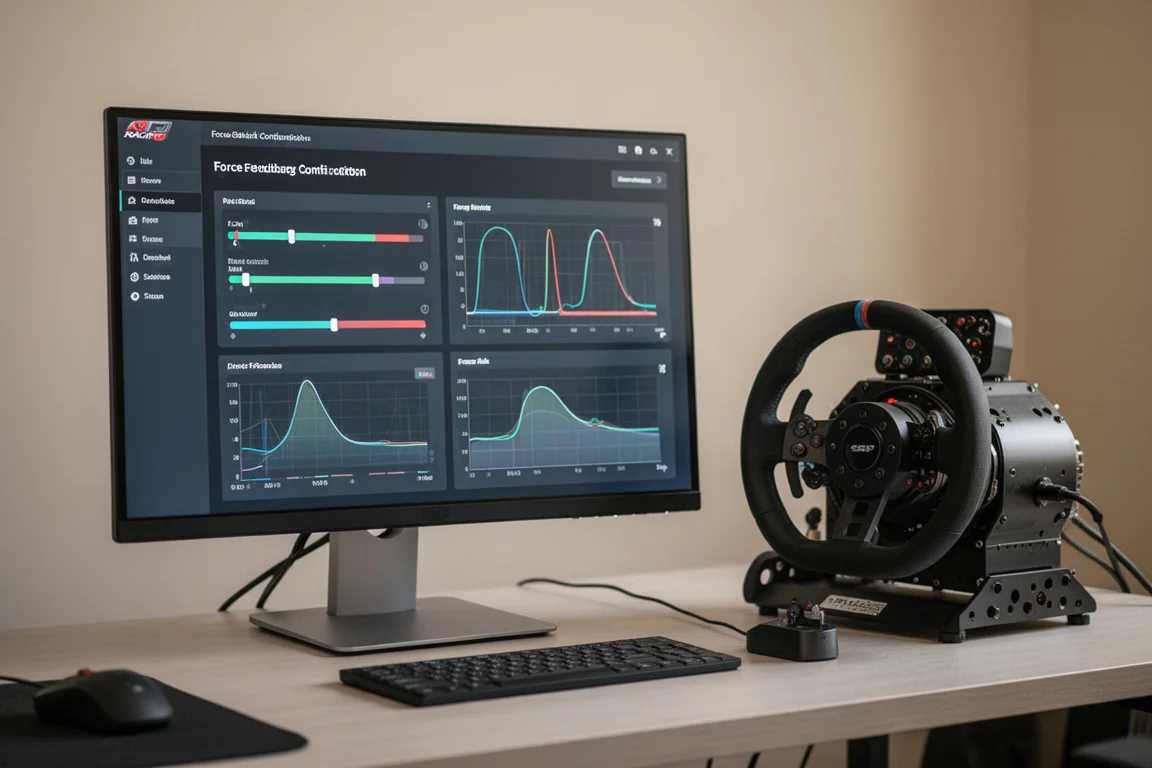
Interpolating what the wheelbase should be doing between actual samples is tricky to get right, and some manufacturers do a better job than others. This is one of the key areas where subtle differences between brands can be quite noticeable outside of overall strength and responsiveness.
Slew Rate and Rotating Mass
Slew rate is a measurement of the maximum rate at which the motor can respond to a large change in state, such as a sudden spike in force feedback or a sudden change in direction. All other things being equal, a wheelbase with a higher slew rate will provide a more lively, more reactive feeling wheel with sharper and finer detail. However, there is absolutely a sweet spot. A higher number does not necessarily mean better beyond a certain point, and most people end up capping the slew rate on high-end wheelbases because it can become overreactive and hyperactive.
As long as the slew rate is sufficient to allow the wheel to react to what the car is doing quickly enough that it does not feel disconnected, you have adequate slew rate. This is not really a problem on any modern-day direct drive wheelbase and should not be a massive point of decision when choosing one.
Rotating mass is simpler to understand. The more mass a motor has to deal with, the more motor strength is required to achieve the same feel. Weaker motors may be fine with lighter wheels but will struggle to respond quickly enough with heavier wheels, resulting in numb and sluggish force feedback. Reducing the rotating mass that the motor has to deal with results in less effort required and sharper, more responsive force feedback.
Fanatec’s CSL DD, a relatively weak direct drive wheelbase at 5 Newton meters without the boost pack or 8 Newton meters with it, uses a composite carbon and plastic material for its shaft to reduce rotating mass. This allows them to get away with a less powerful motor while achieving the same responsiveness, though it comes at the cost of rigidity and flex.
The diameter of the wheel also matters. The larger the diameter, the more leverage you have on the motor, which makes the force feedback feel weaker and less responsive. A more powerful motor is generally larger and has more rotating mass, so running it at lower strength levels means it is fighting against itself. A motor designed to operate within that range may actually feel more responsive and powerful.
Encoder Resolution
Every direct drive wheelbase needs to know its physical position throughout its rotation to achieve two things: its own feedback loop for things like cogging and torque ripple reduction, and relaying your physical steering inputs back into the sim. The encoder is responsible for determining the wheel’s physical position.
Encoder resolution is usually listed in bits. A 16-bit encoder has a resolution of 65,536 individual points throughout a 360-degree rotation. A 24-bit encoder can measure 16.7 million points. Manufacturers argue that higher encoder resolution allows for finer control of the force feedback, which is true. Whether it is noticeable to the driver is debatable.
In practice, wheelbases with higher encoder resolutions tend to feel a little smoother. The steering input part is only a small part of the picture. When processing force feedback, working with feedback loops, filtering, and interpolation, higher encoder resolution can play a significant and noticeable role. A higher encoder resolution is technically better, but there will be a point where it becomes imperceivable.
Cogging and Torque Ripple
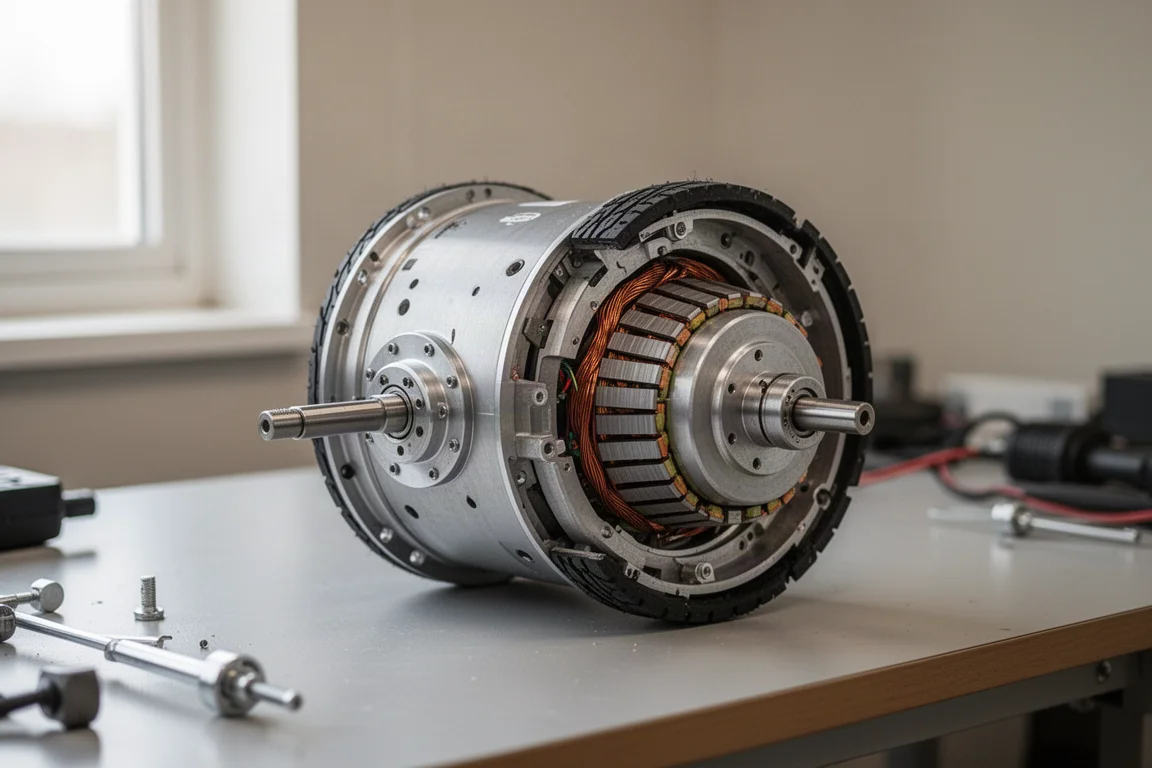
Cogging and torque ripple refer to a slight sensation of notches when you rotate the wheel, feeling like weak and hard spots as you go around the rotation. All electric motors rely on electrified coils passing through an electromagnetic field to produce movement, which by nature means variations in magnetic attraction as the motor shaft rotates.
More expensive motors minimize this at a hardware level by increasing the pole count, using smaller magnets with more throughout the rotation. Cheaper wheelbases have bigger jumps and more of this effect. This can also be mitigated through software and firmware by varying the amount of power output by the motor as it rotates through each individual magnetic field. This is why many wheelbases ask you to run through a calibration sequence after a firmware update, mapping those magnetic fields and calculating how much power is needed to overcome the sensation.
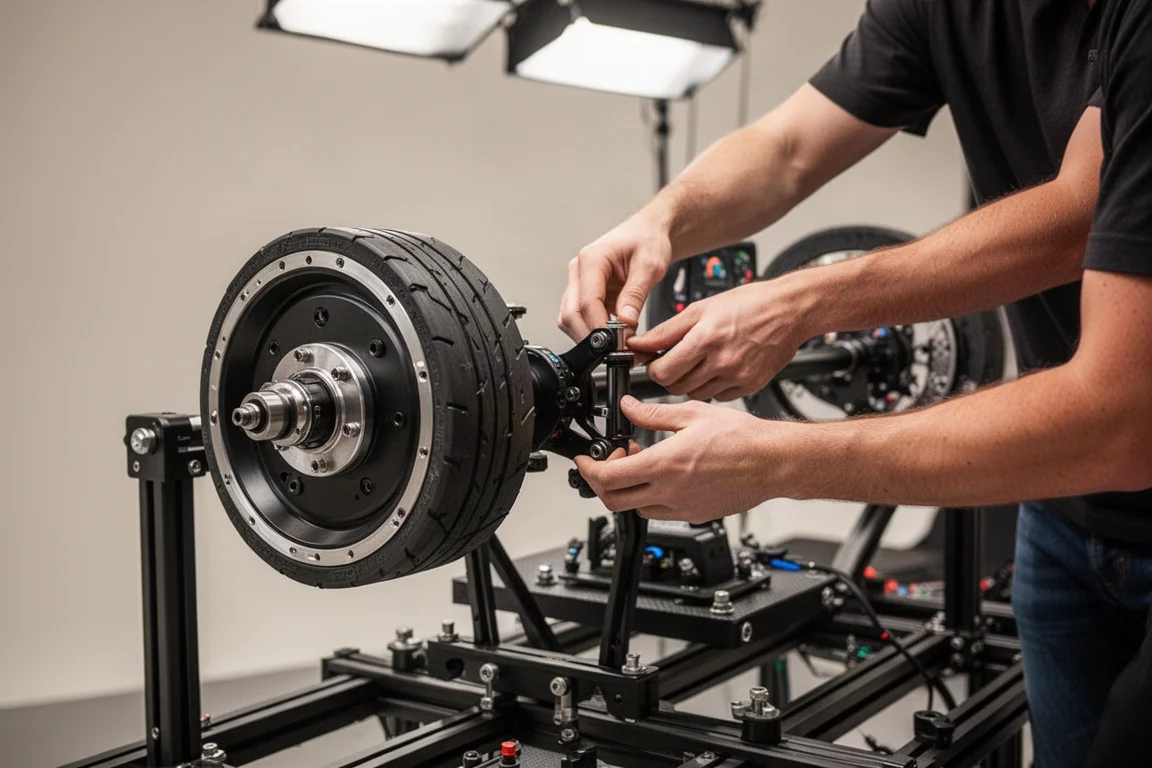
Manufacturers do an amazing job of achieving smooth rotation these days. A motor shaft can feel quite notchy when spun freely without being energized, but that completely disappears when switched on. One important thing to keep in mind is that anytime the motor’s magnetic field is used for anything other than generating force feedback, it takes fidelity away from the force feedback to some extent. This is one of the reasons why one brand’s 15 Newton meter direct drive wheelbase might be more expensive than another’s.
Buying Advice
While all of this technology is important, there are not massive differences in the overall driving experiences at any particular price point in the market. The things that ultimately matter most when choosing a direct drive wheelbase are what the software is like to use, what the ecosystem is like, what other peripherals are available, how many wheels are offered, and whether you can easily and cheaply use third-party wheels or have to spend a lot of money for every compatible wheel.
Start with minimal filtering in the software to establish a baseline understanding of how your device performs. Then introduce filters one at a time to find your subjective sweet spot. This allows you to understand how each filter impacts the driving experience and how they interact with each other.
Conclusion
Direct drive wheelbase technology has evolved significantly, with brands introducing proprietary systems and new features. Understanding the fundamentals, such as dynamic range, clipping, slew rate, rotating mass, encoder resolution, and the various force feedback methods, will help you make an informed decision. The most important factors are often the software ecosystem and peripheral compatibility rather than raw specifications. Focus on what suits your needs and budget, and you will find a wheelbase that delivers a great experience.
Further reading
Related Reviews
Sim Racing
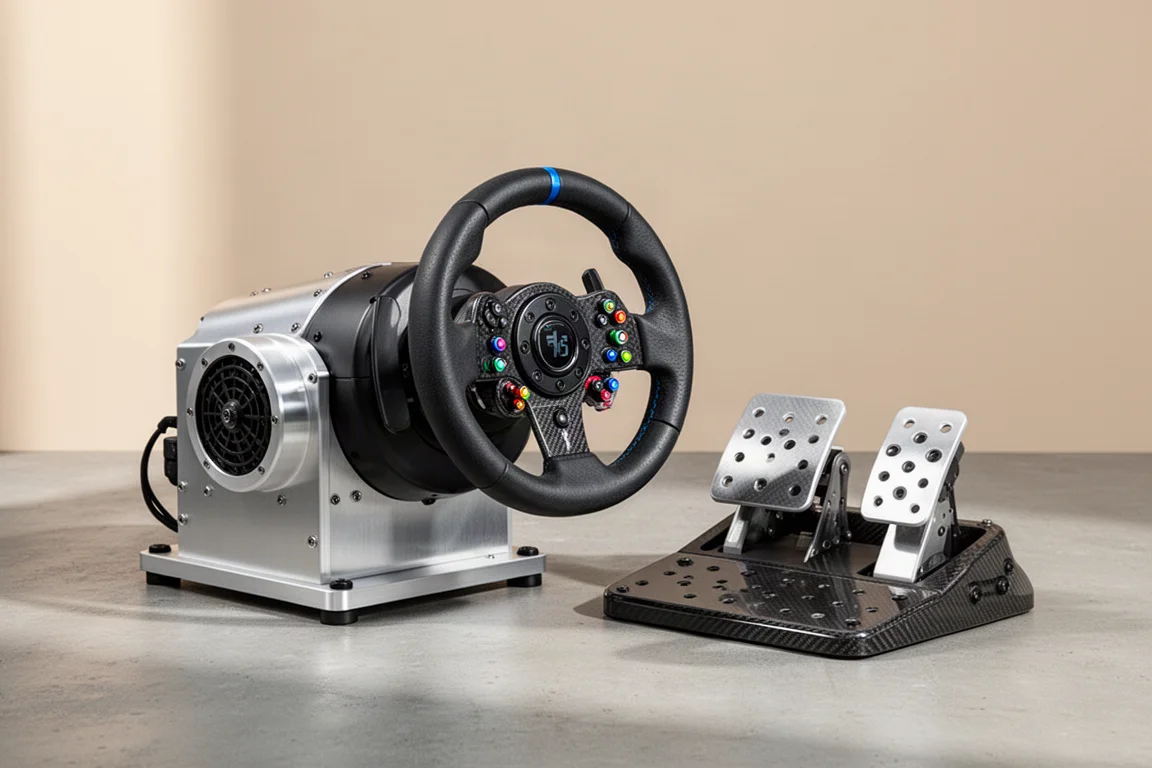
Asetek Initium Direct Drive Bundle Review: A Strong Entry Point With a Standout Pedal Set
The Asetek Initium bundle brings a 5.5 Nm upgradeable wheelbase, a functional round wheel, and a surprisingly capable pedal set to a crowded entry-level direct drive market.
Sim Racing
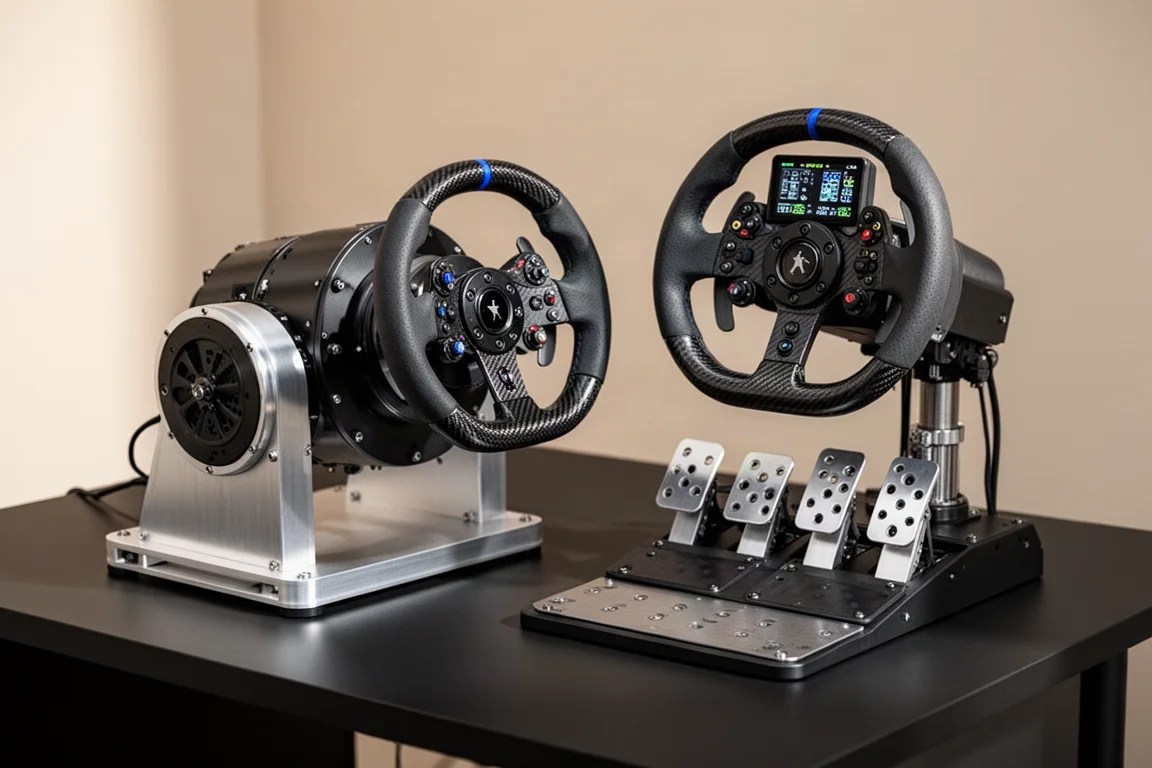
ConSimPit Ecosystem Overview 2026: Wheelbases, Pedals, and Wheels
A detailed look at ConSimPit's sim racing ecosystem, covering wheelbases, pedals, and steering wheels with honest observations on quality and value.
Sim Racing
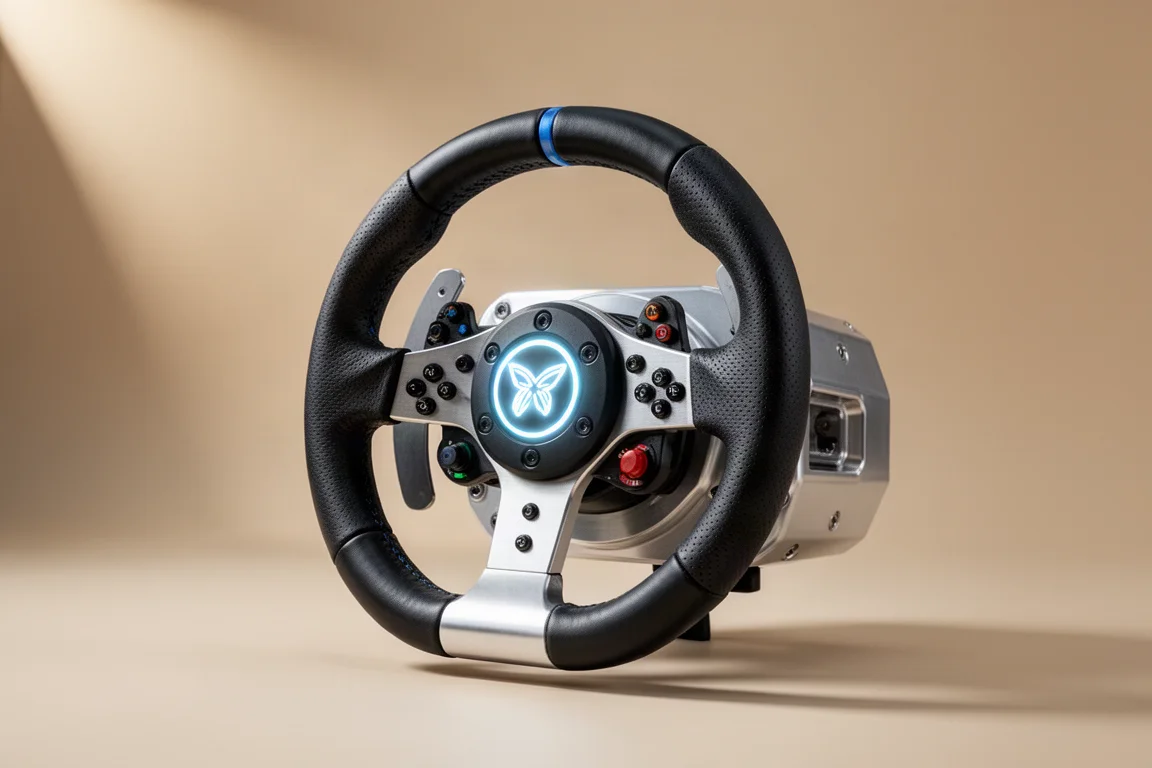
Cube Controls Astra Review: A Lightweight Sim Racing Wheel That Nails the Fundamentals
The Cube Controls Astra is a lightweight aluminum sim racing wheel that focuses on build quality and driving feel over extra features.