Work Lights
DeWalt vs Milwaukee Underhood Light: Which Hood Light Wins for Mechanics?
Two cordless underhood lights face off on brightness, battery flexibility, and build quality, with real workshop input on which one is worth your money.
Introduction
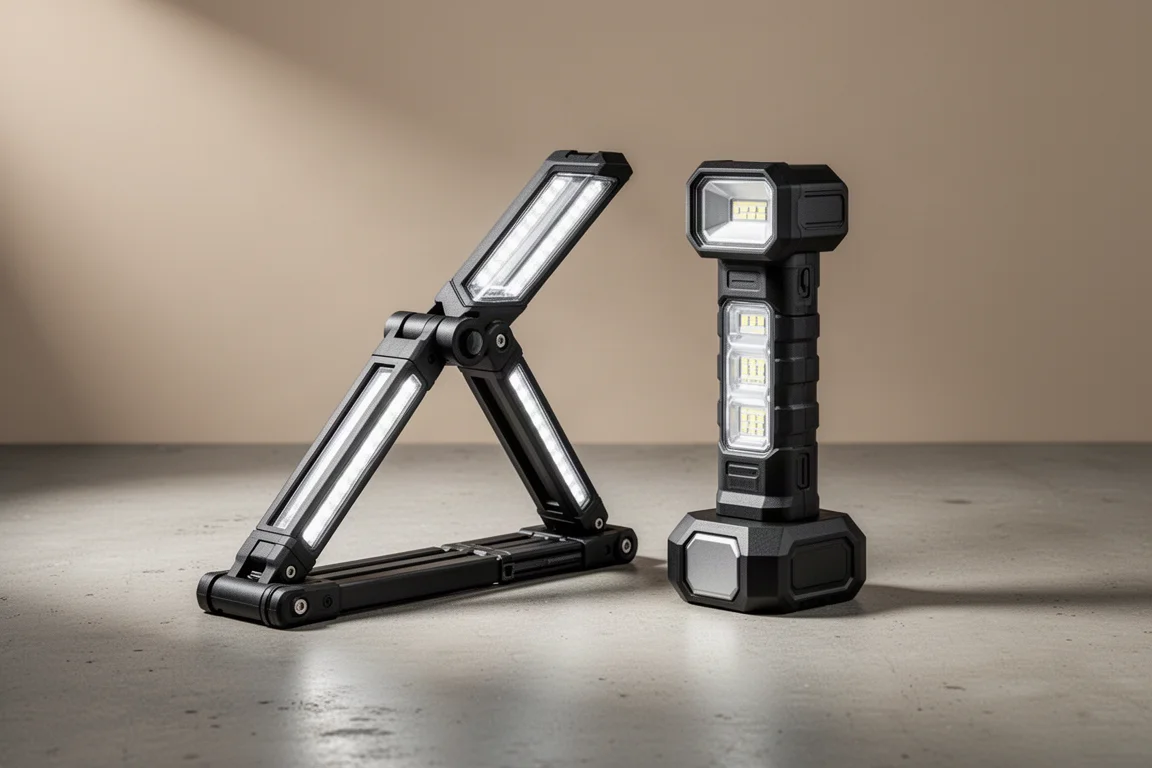
Underhood lights have quietly become one of the most popular upgrades for working auto mechanics, and two models dominate the conversation: the newer DeWalt underhood light and the tried-and-tested Milwaukee M12 underhood light. Both hook over the hood to flood an engine bay with cordless light, and both have real strengths and real trade-offs. Here is how they compare on brightness, battery compatibility, build quality, and everyday usability.
Why Underhood Lights Took Over
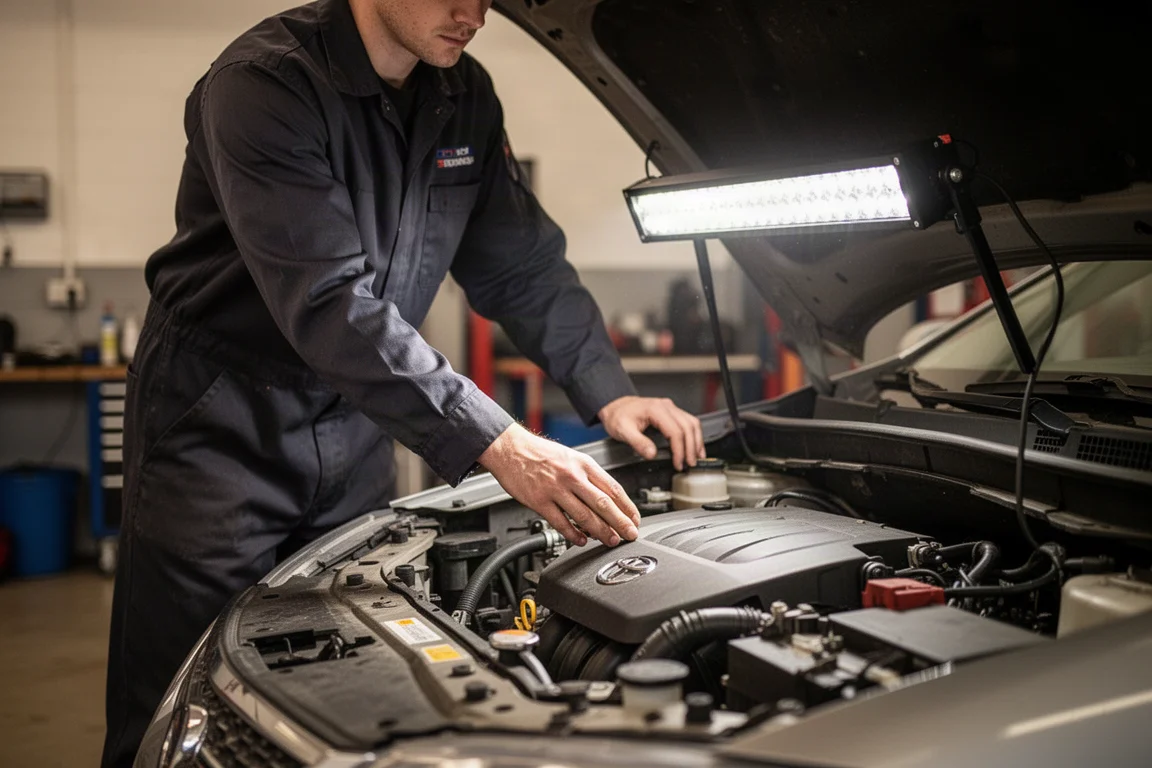
Twenty years ago, engine bay lighting meant that round caged trouble light that would bust its bulb if you dropped it, and hanging it dangerously around gas fumes was never ideal. The cord was always in the way too. Modern underhood lights eliminate all of that: no cords, no fragile bulbs, and a bar that hooks directly over the hood edge.
One honest caveat: if you work on high-end vehicles like a Rolls-Royce, you would probably want to protect the paint with a towel before hanging either light on the hood. For everyday shop work, though, both are well suited.
DeWalt Underhood Light
The DeWalt is the newer of the two and puts out 1,700 lumens, running for about $179. Its standout feature is flexibility: it can run off either a 20-volt or a 12-volt DeWalt battery. If you are invested in the 12-volt line you can use this light, and if you are invested in the 20-volt line you can still use it. Pair it with a large 12 amp hour battery and it will run far longer than Milwaukee’s option can.
Each side of the light can be switched on independently, which is handy when you only need to light up one side of the car. It also folds up, making it easier to pack away or squeeze into tight spaces like a closet when you are working on a water heater.
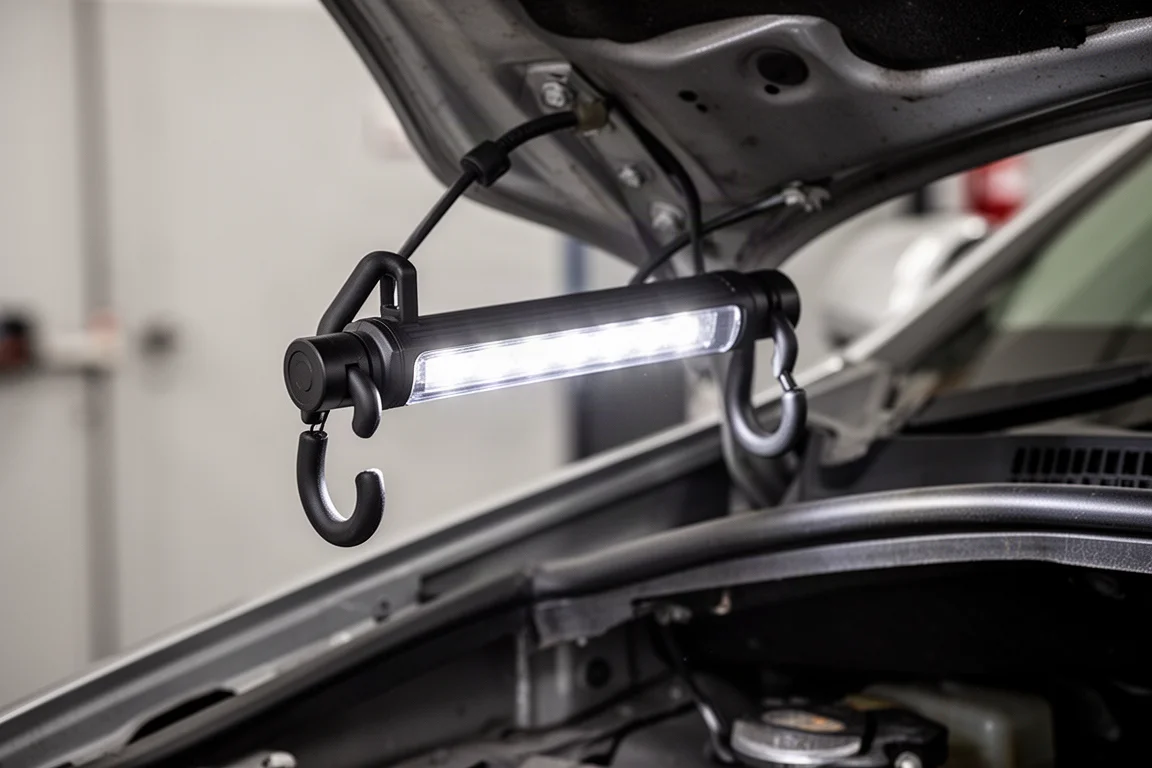
The downsides: it is somewhat heavy, and the middle section has noticeable flex. When you are a one-person shop hooking it over the hood, catching the far side and walking back around, that flex can make the whole thing feel flimsy. A fully rigid design would have been preferred. On the plus side, the grip surface area is smaller than Milwaukee’s, meaning less rubber touching the vehicle to scratch paint.
Milwaukee M12 Underhood Light
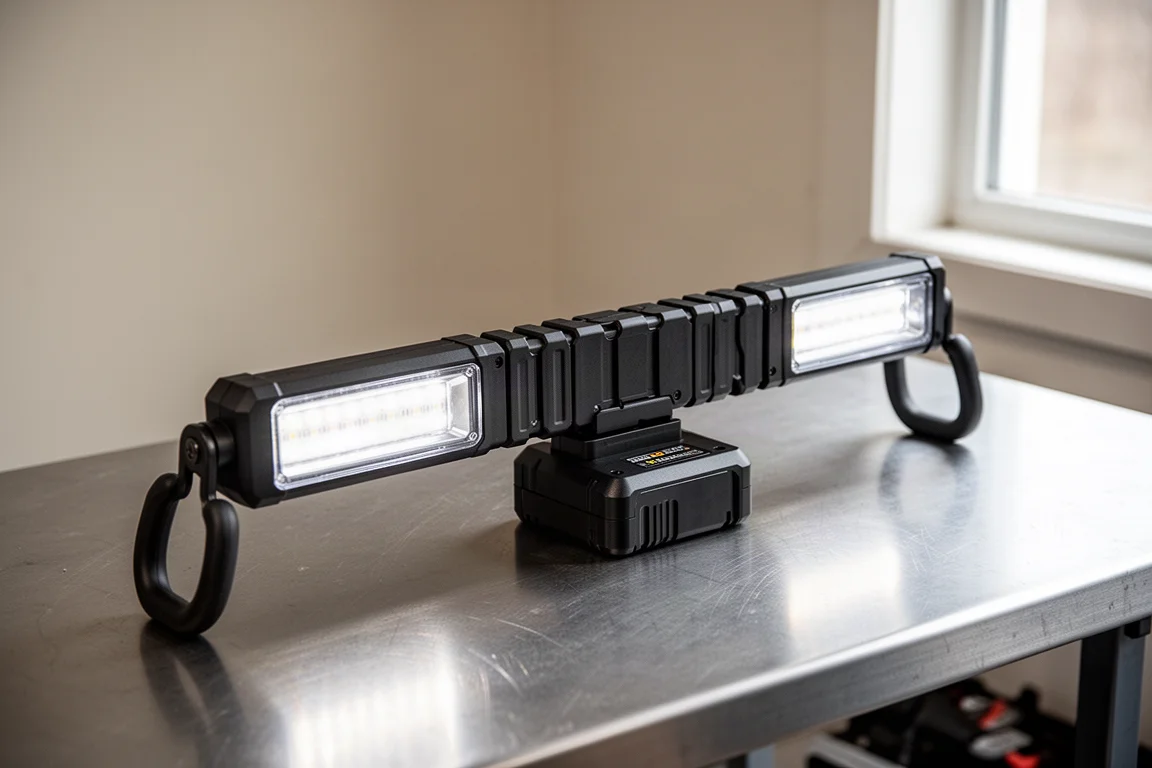
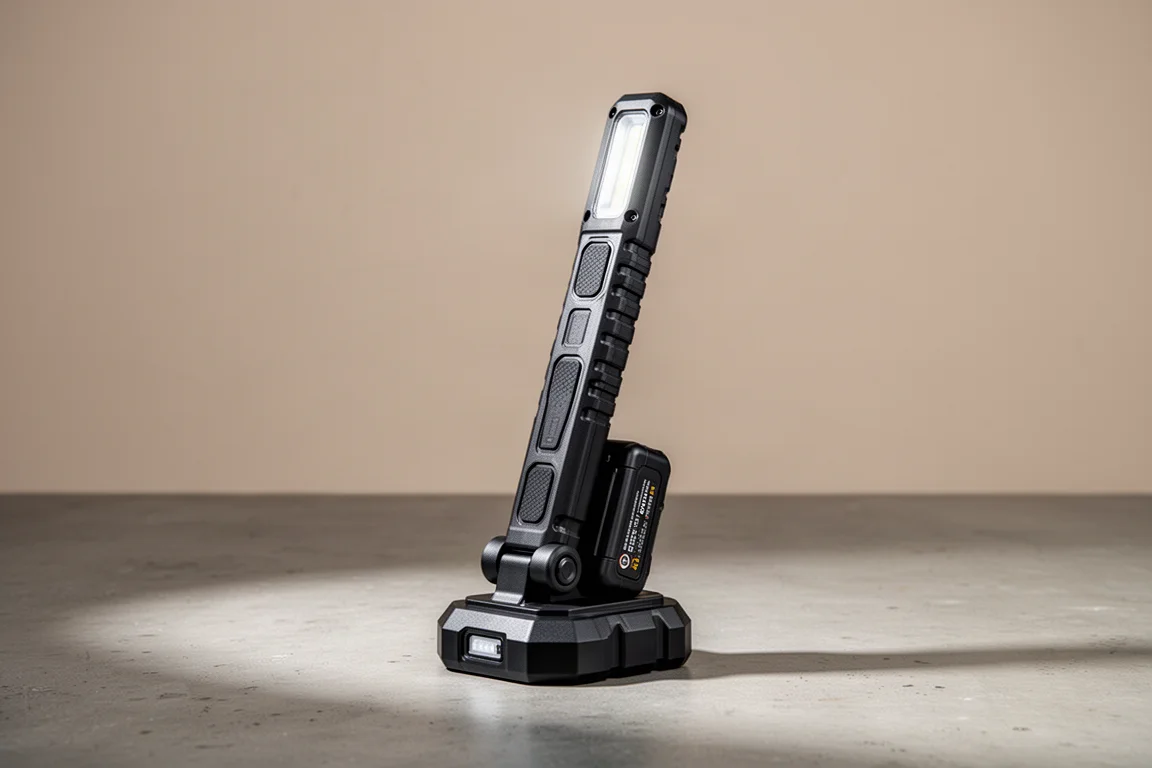
The Milwaukee puts out 1,350 lumens, so a bit less than the DeWalt, and it costs $199, so $20 more. It only runs off the 12-volt battery, which matters if you are invested in Milwaukee’s 18-volt line but do not own M12 packs.
Where it fights back is versatility of a different kind: it comes apart. Detach the sections and you can stand it on its own using the octagonal base, angling light upward wherever you need it. It also has a hanging hook, and the rigid body does not move once hung over the hood. Milwaukee also dominates the 12-volt mechanic platform, which matters if you are building out that line.
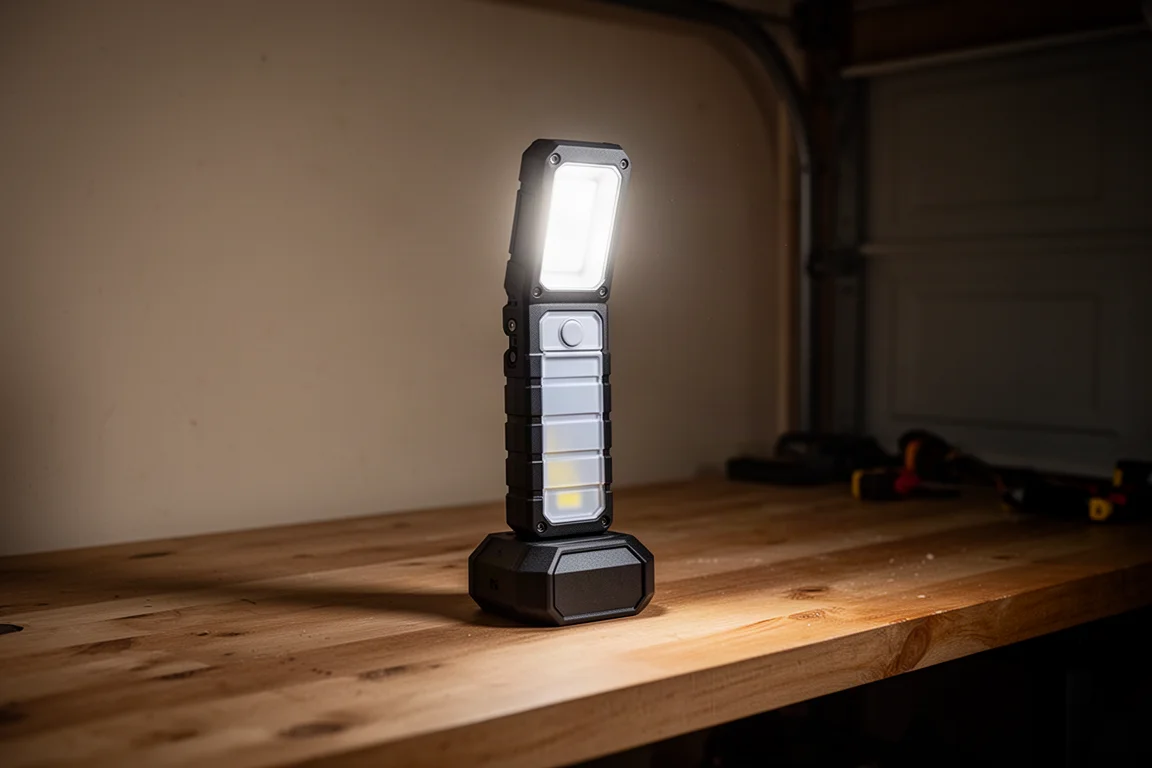
At 74 inches, its reach is slightly shorter than the DeWalt’s 78 inches, and whether that extra stretch matters probably depends on whether you work on wide truck hoods.
What Working Mechanics Prefer
Opinions in the shop split along familiar lines. One mechanic preferred the DeWalt for being lightweight, while another leaned Milwaukee simply because more Milwaukee tools were already on the bench. The broader lesson held up: once you have invested in a battery platform, you tend to stay with it, because buying into another line means new batteries and another charger.
One of the two actually liked the DeWalt’s middle flex once the light was hung, even while admiring the dual-battery trick, and preferred the Milwaukee’s modularity for jobs beyond the engine bay, like lighting a dark closet or attic corner.
Which One Should You Buy?
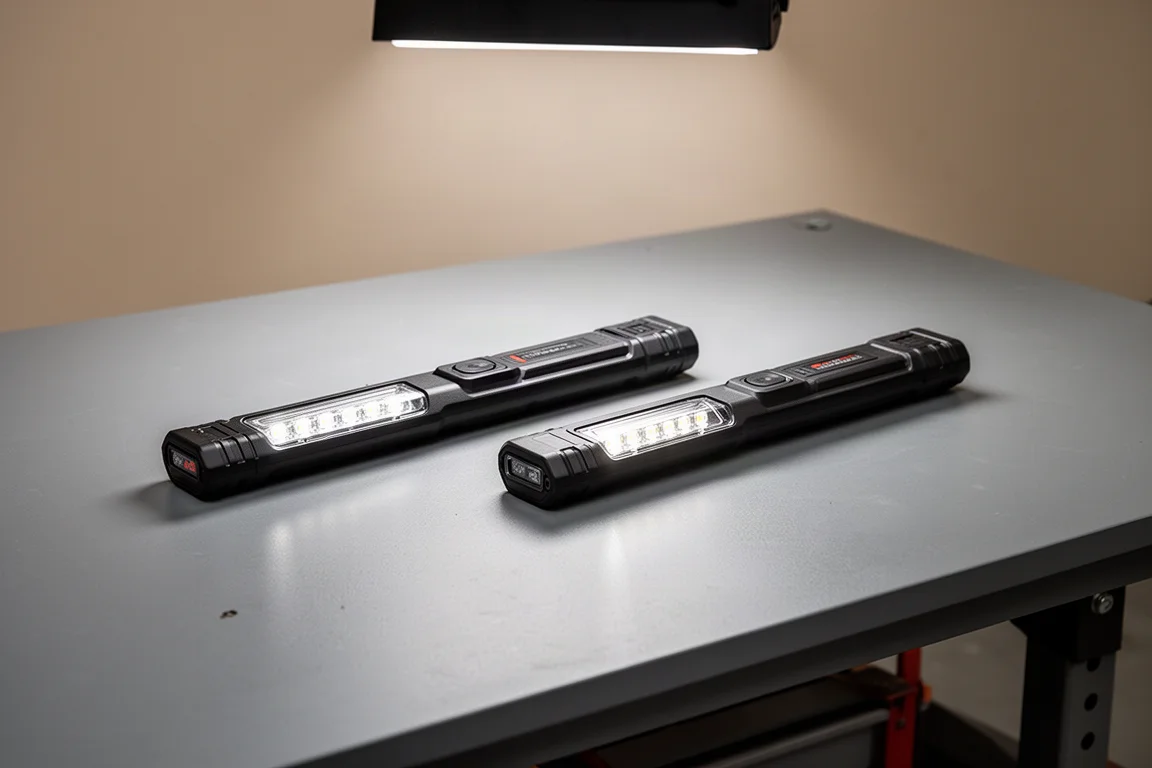
If the middle flex bothers you, Milwaukee wins. Even starting from scratch with no battery investment, one pick went Milwaukee purely because of the DeWalt’s flex, the bulkier feel, and the depth of Milwaukee’s 12-volt automotive tool line. DeWalt is catching up fast, though, and if you are invested in DeWalt’s 20-volt line, the dual-battery compatibility and 1,700 lumen output make the DeWalt genuinely appealing.
Conclusion
Both are capable cordless underhood lights. The DeWalt offers more brightness, dual battery compatibility, and folding convenience at a lower price, while the Milwaukee offers a rigid, modular design that comes apart for standalone use. Match the choice to your battery platform and how much the flex in the middle bothers you, and either one will light up your engine bay without a cord in sight.
Further reading
Related Reviews

Work Lights
Milwaukee M12 Rover Review: A Compact Work Light That Goes Where You Do
The Milwaukee M12 Rover is a compact, versatile work light with three brightness levels, multiple mounting options, and USB-C charging for your devices.
Work Lights
Best Folding Work Lights Compared: Budget Picks to Tool Truck Tough
Seven folding work lights tested for real lumen output, runtime, charging, and drop durability, from a $20 Amazon seller to Snap-on.
Work Lights
Best Hinged Work Lights: 7 Options for Aiming Light Exactly Where You Need It
From classic Maglite designs to modern dual-hinged stick lights, seven work lights that make it easy to aim a beam into tight spaces.