Power Tool Batteries
DeWalt PowerStack vs Milwaukee CP3 High Output: Which Compact Battery Delivers More Power?
Two compact cordless tool batteries put head to head in drilling tests, revealing clear differences in raw output, runtime, and how each pack behaves under sustained load.
Introduction
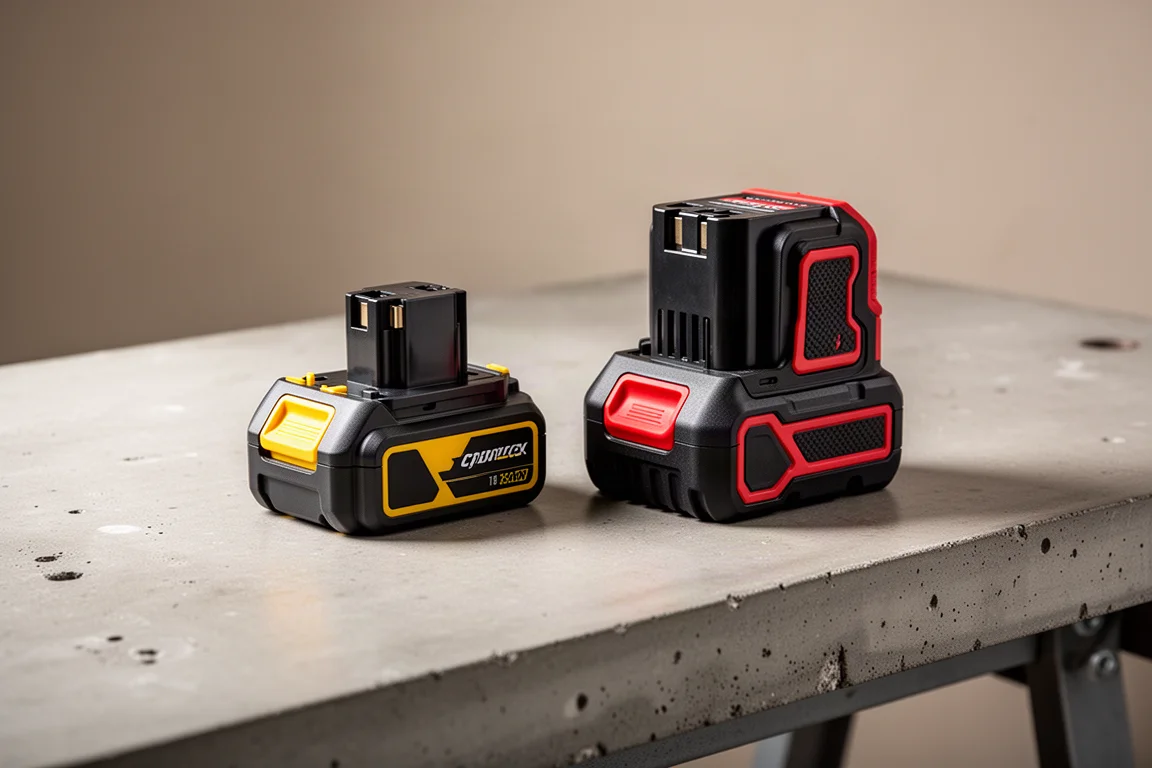
Few tool-brand debates come up as often as this one: which compact battery pushes more power, the DeWalt PowerStack or the Milwaukee CP3 High Output? The two packs are very different sizes, and that shapes everything about how they perform. The DeWalt is a 1.7Ah pack, while the Milwaukee sits at 3Ah, so a straight runtime comparison was never going to be fair. Instead, the more useful question is what each pack can do to boost the standard 2Ah batteries that most tool owners already own, using two very similar drills as the test platform.
What follows is a practical, hands-on look at how each battery handled repeated drilling tasks, where each one excelled, and the one surprising behavior that turned the whole comparison on its head.
The Test Setup
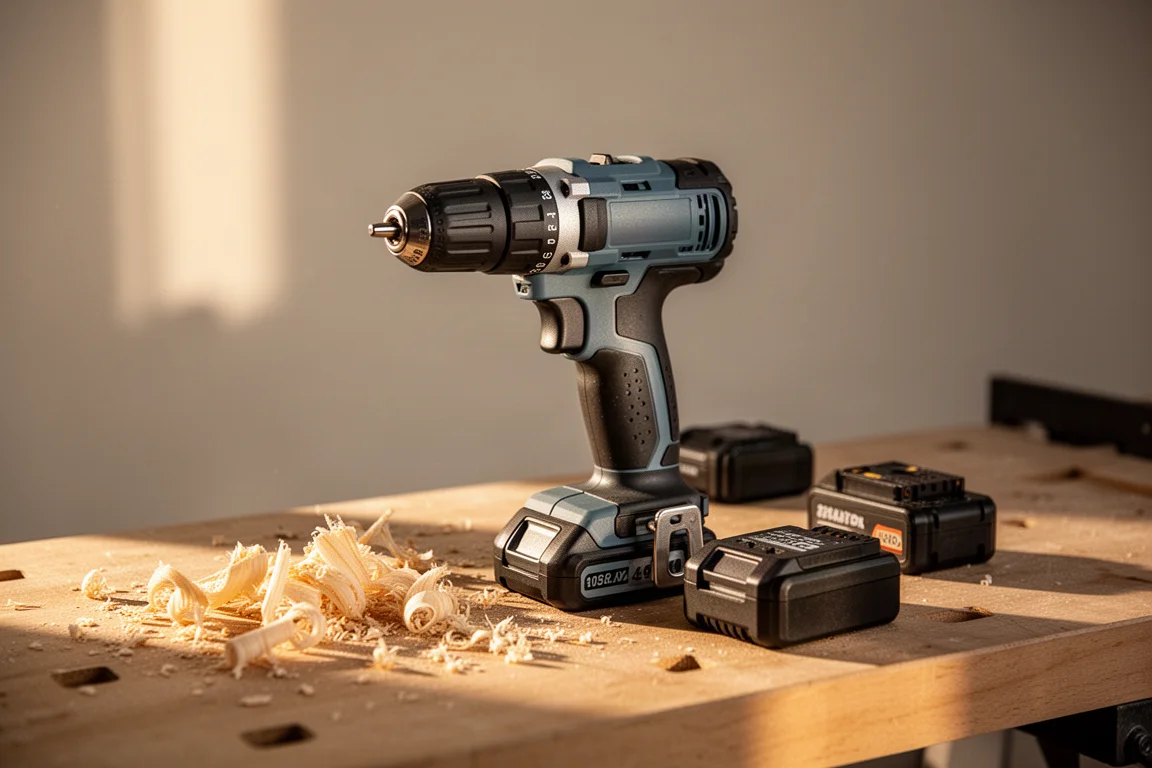
The comparison used the DeWalt DCD998 and the Milwaukee 2804, two drills that are close enough in performance that the batteries become the main variable. Every test started with a standard 2Ah battery as a baseline, then swapped in the PowerStack or the CP3 to see what difference the upgraded pack made.
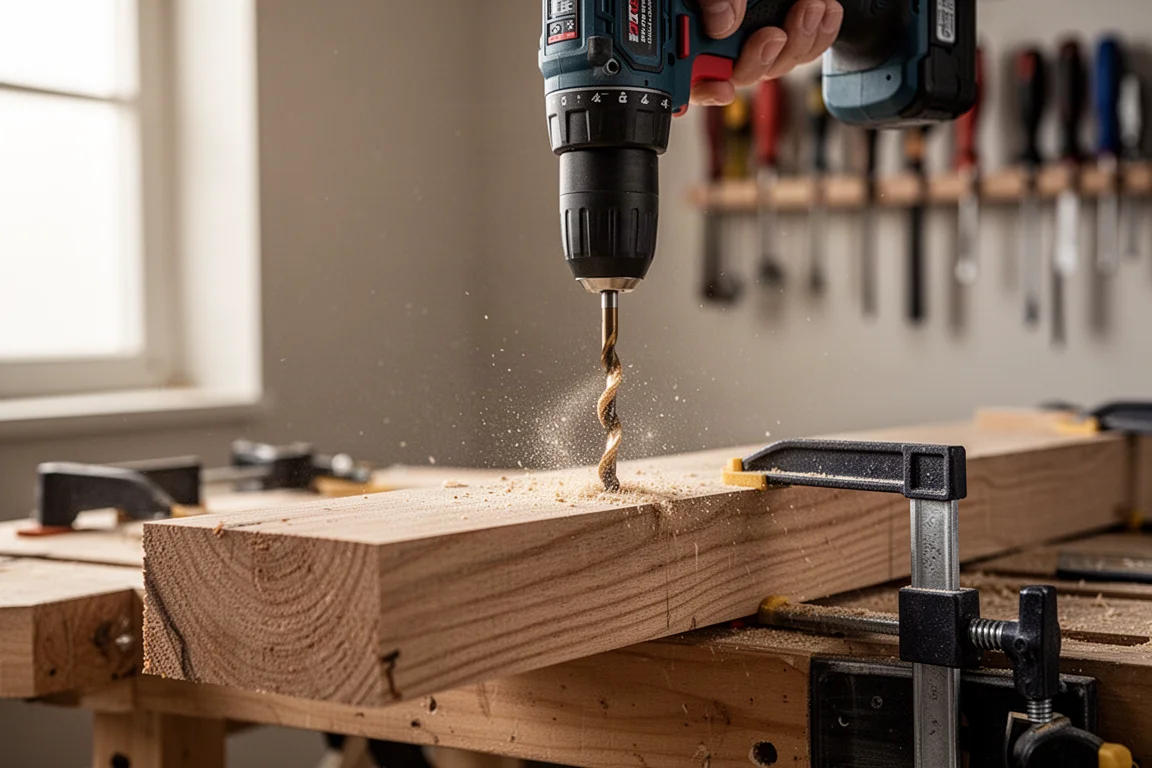
Tests covered three drilling scenarios: boring through dimensional lumber with a 1.5-inch spade bit on high, working a 3-5/8-inch bore bit on low, and a depth endurance test with a 2-5/8-inch bit. It is worth stressing that these were practical, workshop-style tests rather than lab measurements, and wood density played a role in some results.
The Spade Bit Test: The Clear Differentiator
The 1.5-inch spade bit test turned out to be the most telling result of the day. On high, with a standard 2Ah battery, the DeWalt DCD998 made it roughly three quarters of the way through the wood. Swapping in the PowerStack produced exactly the same result: no full breakthrough.
The Milwaukee told a different story. Starting with the same 2Ah standard battery produced much the same partial result, but once the CP3 was installed, the drill punched all the way through the spade-bit hole cleanly and repeatedly.
On this opening test, the CP3 had the clearer edge in raw output. If the comparison had ended there, the verdict would have been simple, but the later tests complicated the picture in an interesting way.
Deep Boring on Low: A Closer Call
With a 3-5/8-inch bore bit on low speed, the gap narrowed. The DeWalt with the 2Ah battery hit a knot in the test piece, and even after repositioning away from it, the pack did not add much progress. The PowerStack eventually got through, but it needed the operator to work around dense spots in the wood.
The Milwaukee CP3 handled the same bit and drilled all the way through with less fuss, reinforcing the impression that it carries more sustained output for heavy boring work.

Deep Boring: Longevity of Output
A simpler endurance test followed: a 2-5/8-inch bit driven on level one, measuring how deep each setup could go before giving out. Both packs pushed deep into the wood. The DeWalt audibly clogged near the end but still had enough power to pull the bit back out without issue.
The Milwaukee actually cut deeper, but largely because of how the wood chips piled up in the hole rather than a decisive power advantage. The CP3 timed out and cut out at the end of its run, so calling this a clean win for either pack would be misleading. Both batteries completed the test, and both showed strong output longevity for their size.
The Twist: The PowerStack Warms Up
Here is where the comparison got genuinely interesting. When the spade bit test was repeated at the end of the session, the DeWalt PowerStack that had failed the same cut at the start now drilled all the way through with no trouble. The pack seemed to generate a bit more power as it warmed up, an effect the tester could actually feel during use.
That behavior has a practical implication: the PowerStack may deliver its best performance once it has some heat in it, which makes it a candidate for cold-weather testing in the future. It also means early-test results on a cold PowerStack may undersell what the pack can really do once it is working.
Battery Fuel Gauges: What Was Left in the Tank
After all the drilling, the DeWalt PowerStack was down to one bar of charge. The Milwaukee CP3 also dropped to one bar, but notably recovered to two bars as it came back down from temperature, and started the tests with three bars showing.
The runtime math is not really a contest. A 1.7Ah pack cannot keep up with a 3Ah pack over a long session, whether the tool is drawing hard on high or cruising on low. Even so, what the PowerStack manages to deliver from its size is genuinely impressive, and it hints at what could be coming next from compact battery technology.
Which Battery Should You Pick?
Both batteries held one bar of charge at the end of testing, but the CP3 bounced back to two and clearly offered more holes drilled over the long run, despite a brief cutout at the very end of one test.
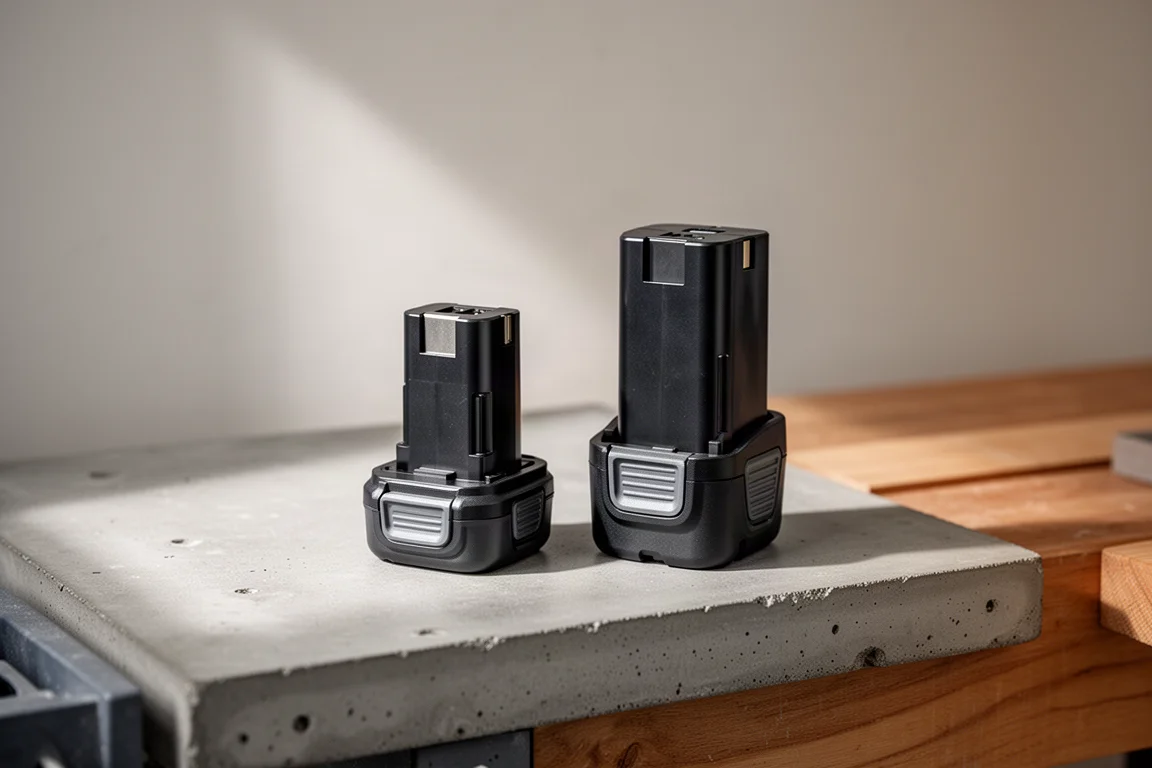
If raw, sustained output and runtime are the priority, the CP3’s larger 3Ah capacity makes it the stronger long-session performer. If pack size matters most and your work comes in shorter bursts where the battery can warm up between tasks, the PowerStack is remarkably capable for its footprint, and its warm-battery behavior is worth factoring in.
Conclusion
On the evidence of these drilling tests, the Milwaukee CP3 High Output delivers more sustained power and significantly longer runtime, drilling more holes over the session. The DeWalt PowerStack kept up far better than its small size suggests, especially once warmed, and showed it can handle demanding cuts when heat is on its side. Neither pack is a bad choice; the right pick comes down to whether you value compact size with surprising output, or longer runtime with more consistent heavy-duty performance.
Product link
View more details for DEWALT PowerStack Battery
This product is mentioned in the review. Check the specifications, options, and compatibility before buying.
View more details for DEWALT PowerStack BatteryFurther reading
Related Reviews
Power Tool Batteries
9Ah M12 Batteries Tested: Which Aftermarket Pack Is Actually Worth Buying?
We measured real capacity, voltage sag, and tool performance from four aftermarket 9Ah M12 batteries against Milwaukee's XC 5.0 High Output pack. One budget option stands out.
Power Tool Batteries
DeWalt DCBP520 5Ah PowerStack Battery Review: Big Power in a Pouch-Cell Pack
The largest PowerStack battery yet promises pouch-cell output with 5Ah of capacity. We break down its size, weight, voltage sag, and real tool performance.
Power Tool Batteries
DeWalt PowerStack 5Ah vs XR 5Ah: What a Heat Gun Runtime Test Revealed
Two DeWalt 5Ah batteries ran a DeWalt heat gun back to back. Same capacity, very different power delivery, heat, and voltage behavior.