Power Tool Batteries
DeWalt PowerStack 1.7Ah vs DeWalt 4Ah Compact: Which Battery Should You Buy?
Two DeWalt compact batteries put through real cutting and drilling work to see where the tiny PowerStack matches the 4Ah compact and where runtime still wins.
Introduction
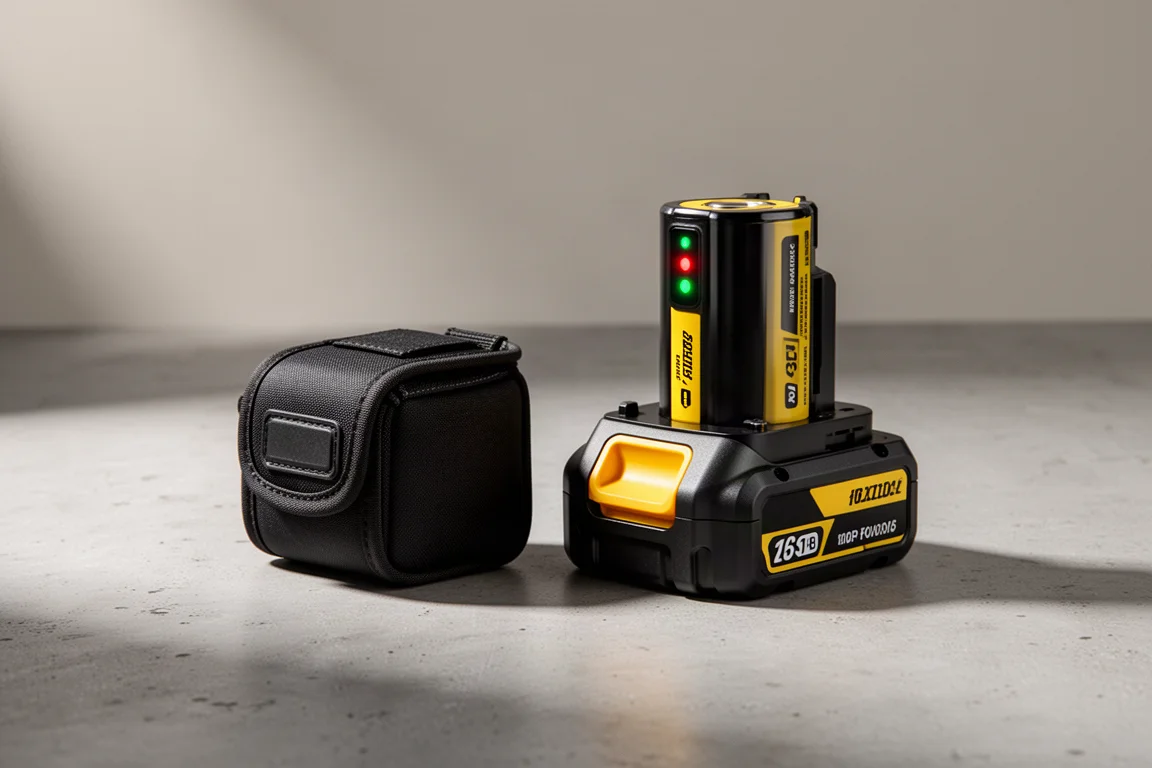
DeWalt’s PowerStack 1.7Ah is one of the most interesting compact batteries to arrive in the cordless tool world, packing surprisingly strong output into a very small pouch-style pack. But it has a serious rival from inside the same brand: the long-standing 4Ah compact, which uses larger cylindrical cells and promises much better runtime for similar money differences that often amount to about ten dollars in a two-pack.
After running both through cutting and drilling tests in cold, windy conditions, a clear picture emerged about who each battery is really for.
Size and Design
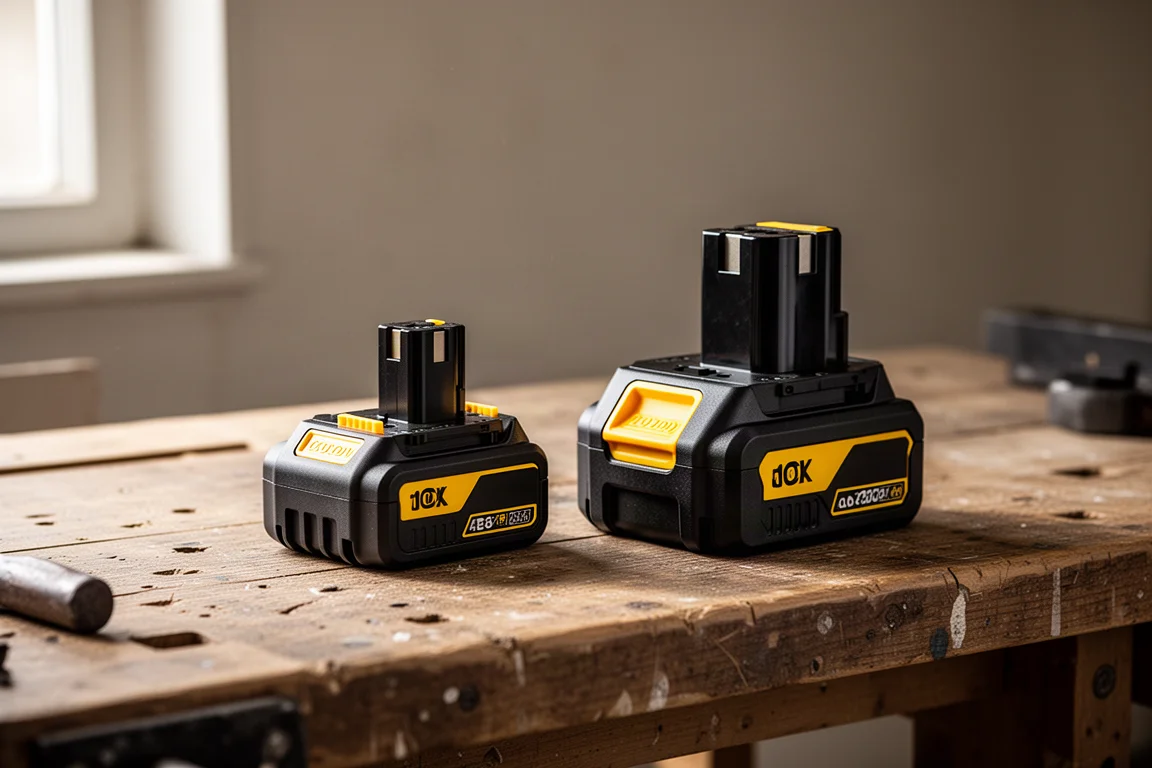
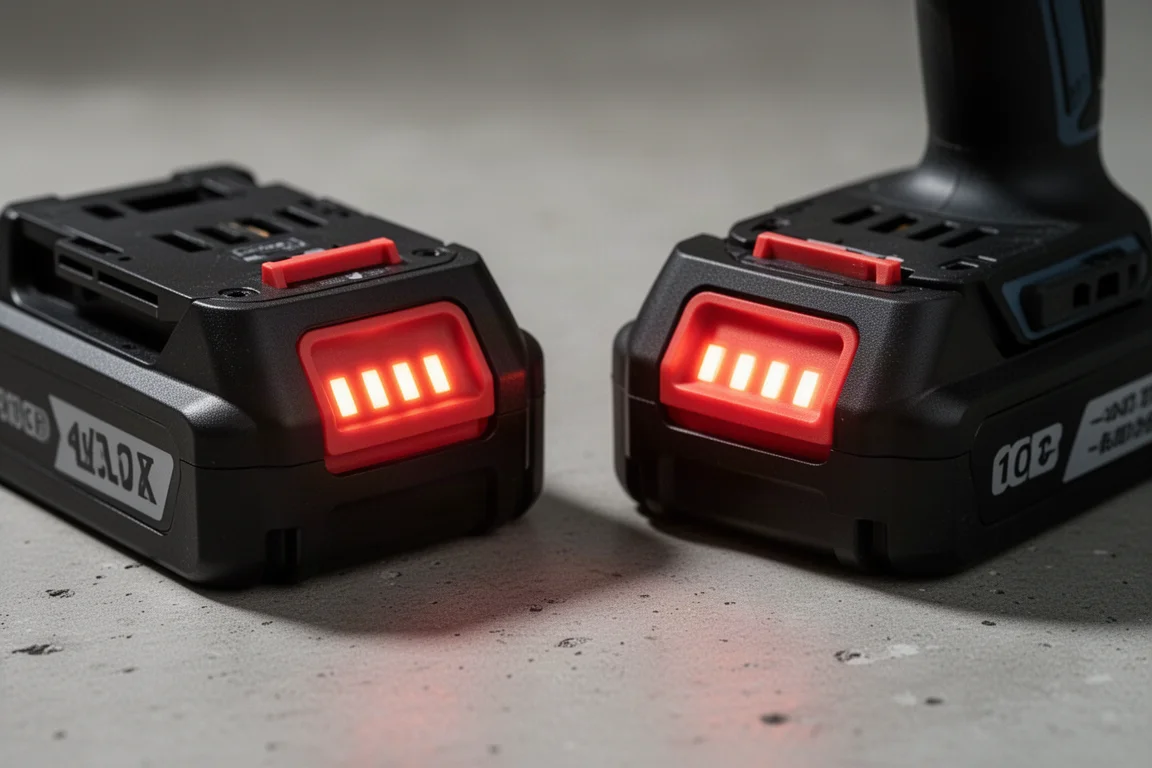
The PowerStack is dramatically smaller than the 4Ah compact, and the difference is obvious the moment you hold both. On a small impact driver, the PowerStack fits perfectly and keeps the tool compact enough to get into tight spaces. On a full-size drill, it looks and feels a little undersized, while the 4Ah compact balances better.
There is also a significant capacity gap: 1.7 amp hours versus 4 amp hours. The 4Ah pack will outlast the PowerStack every time, and that is not a small margin.
Power Output in Real Tools
On a 6 1/2-inch saw, the first cut with the cold PowerStack felt noticeably weaker, but once the pack warmed up, its cuts became very comparable to the 4Ah compact, and in some runs the 4Ah compact edged slightly ahead. Overall power output between the two is close to identical once the PowerStack has settled in.
One consistent quirk showed up: the PowerStack likes to be warmed up with a cut or two, and it also likes to rest between hard uses. Under load it can dip to one charge bar, then bounce back up to two after a short breather. It is not a dealbreaker, but it is a behavior worth knowing about.
Spade Bit and Hole Saw Testing
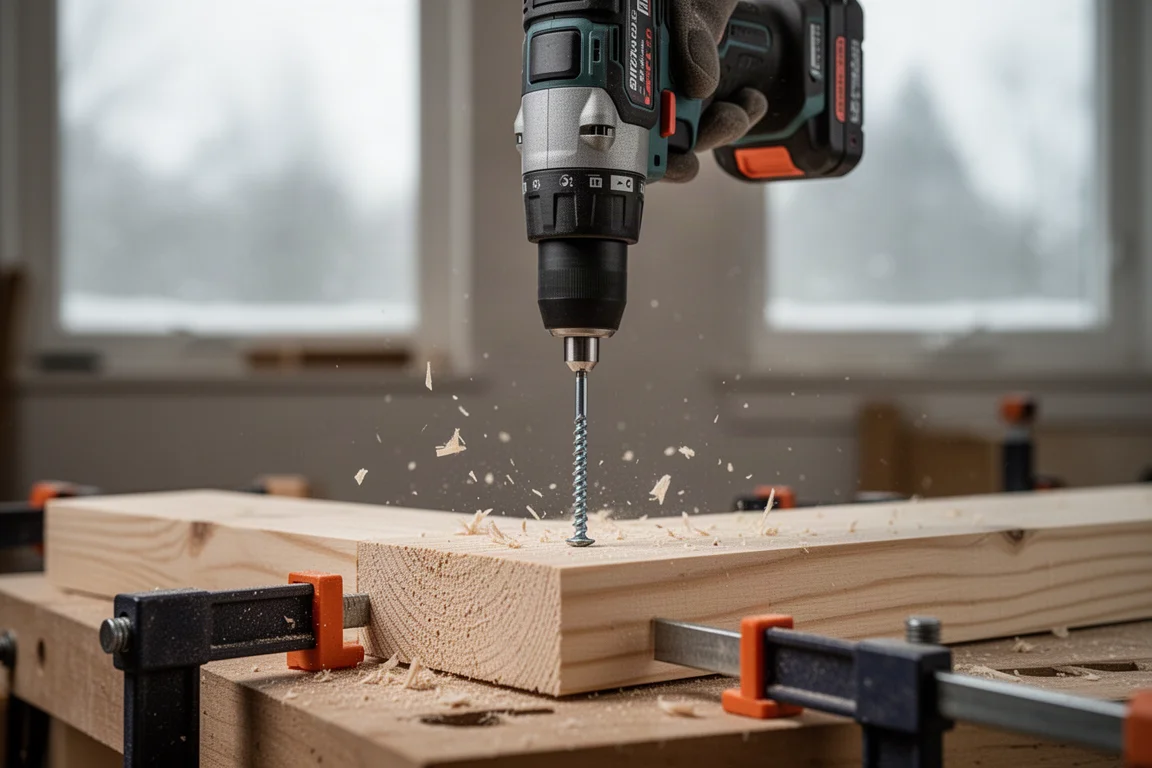
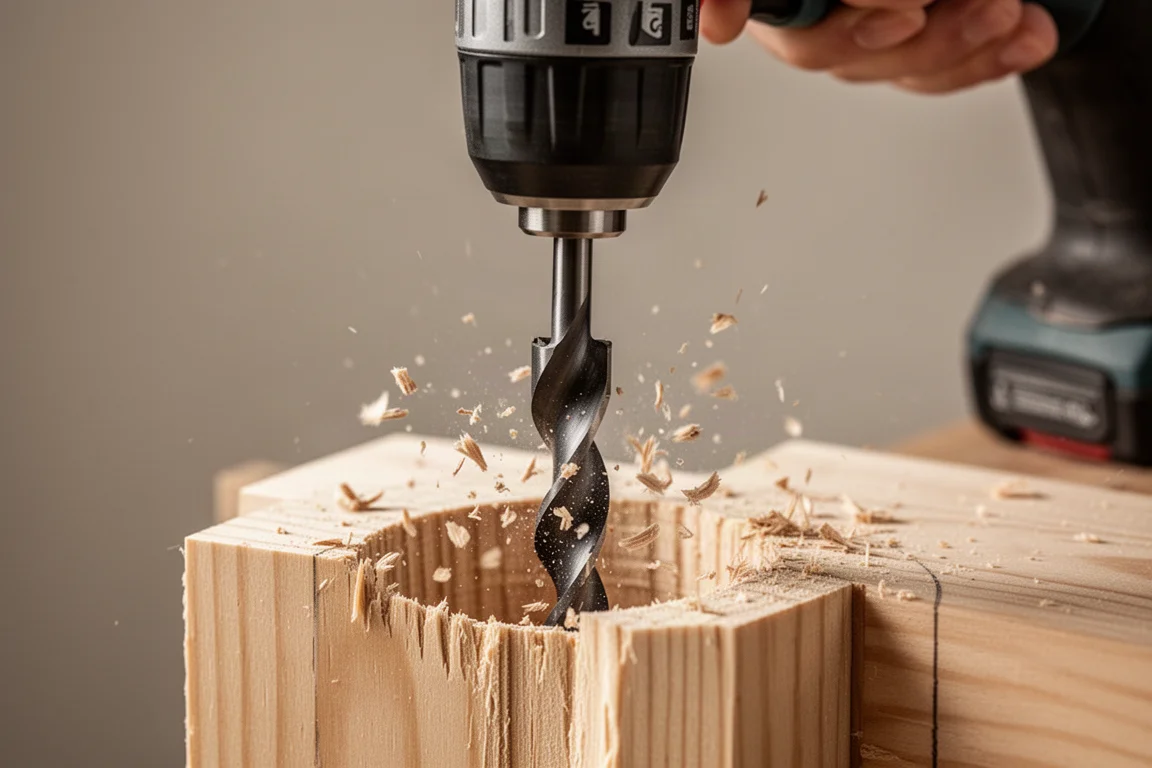
Drilling with a 1 1/2-inch spade bit told a similar story. Early holes were close, with the 4Ah compact arguably just a touch stronger on some cuts. But the deeper into the session, the clearer the difference became: after roughly six holes, the PowerStack was already down to one bar and clearly slowing, while the 4Ah compact held two bars and kept chewing away steadily.
Charging behavior also differed. During one recharge the PowerStack charged without issue, but the 4Ah compact hit a thermal timeout and needed to cool before accepting a charge. Both packs run warm after hard work, so plan accordingly.
Amp Hours vs Real Power
It is easy to assume a higher amp-hour battery simply lasts longer while delivering the same power, but pack construction matters. Higher-capacity packs are often built with more cells wired in parallel, spreading the load and potentially holding voltage higher under discharge. The 4Ah compact here even uses larger cells than a comparable 5Ah pack, in a simpler one-parallel configuration.
That is why the tiny PowerStack can output about as much power as larger packs: it is a matter of what is inside, not just the number printed on the label.
What We Learned
The PowerStack is genuinely impressive technology, and it hints at what is coming: the same small-format pack once held 3 amp hours and now holds 4 in the larger compact, so higher-capacity PowerStack variants seem plausible down the road. For short bursts of demanding work, it delivers.
But today, the practical answer for most people is the 4Ah compact. It holds the same power for longer, costs roughly ten dollars more in a two-pack, and avoids the PowerStack’s rest-and-recharge quirks. The PowerStack makes the most sense if you want the smallest possible footprint on a compact impact driver and can live with shorter runtime. One more note from testing: neither of these small batteries is our first choice for a circular saw, even though their power output proved very similar.
Conclusion
Both batteries deliver near-identical power output; the difference is runtime, size, and behavior under sustained load. Choose the PowerStack 1.7Ah for maximum compactness on tight-space work with a small impact driver. Choose the 4Ah compact for better runtime, steadier performance over long sessions, and a friendlier price in a two-pack.
Product link
View more details for DeWalt PowerStack 1.7Ah Battery
This product is mentioned in the review. Check the specifications, options, and compatibility before buying.
View more details for DeWalt PowerStack 1.7Ah BatteryFurther reading
Related Reviews
Power Tool Batteries
9Ah M12 Batteries Tested: Which Aftermarket Pack Is Actually Worth Buying?
We measured real capacity, voltage sag, and tool performance from four aftermarket 9Ah M12 batteries against Milwaukee's XC 5.0 High Output pack. One budget option stands out.
Power Tool Batteries
DeWalt DCBP520 5Ah PowerStack Battery Review: Big Power in a Pouch-Cell Pack
The largest PowerStack battery yet promises pouch-cell output with 5Ah of capacity. We break down its size, weight, voltage sag, and real tool performance.
Power Tool Batteries
DeWalt PowerStack 5Ah vs XR 5Ah: What a Heat Gun Runtime Test Revealed
Two DeWalt 5Ah batteries ran a DeWalt heat gun back to back. Same capacity, very different power delivery, heat, and voltage behavior.