Soundbars
Devialet Dione Review: A Bass-Forward All-in-One Soundbar and Four Alternatives
A close look at the Devialet Dione's bass-forward tuning and Dolby Atmos strengths, plus four all-in-one soundbars that take a very different approach.
Introduction
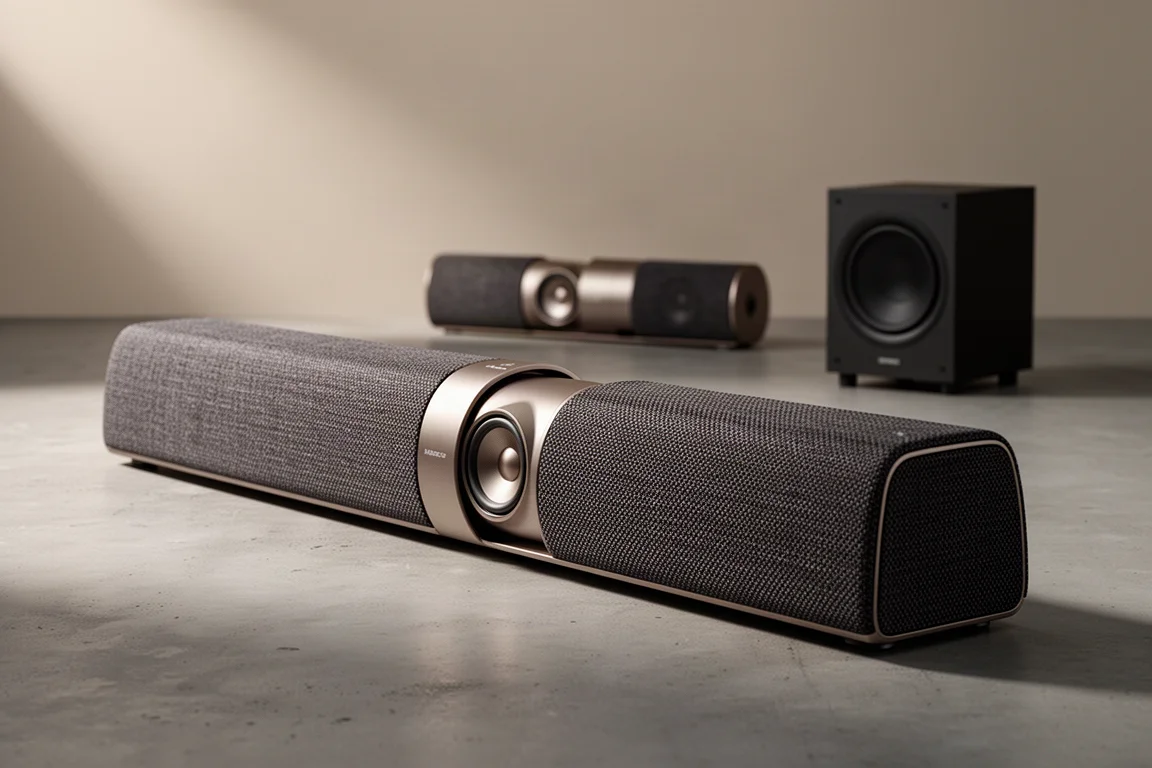
The Devialet Dione is an all-in-one 5.1.2-channel Dolby Atmos soundbar that arrives with a striking design and an unusually strong low-frequency claim. Inside the bar there are 17 drivers, eight of which are aluminum long-throw woofers, backed by 950 watts of total amplification. Devialet reports a frequency response of 24 Hz to 21 kHz and a maximum output above 100 decibels.
In practical terms, that means the Dione is built as a full-range bar. It does not need surround speakers or a separate subwoofer to cover the low end, and it can reach near cinema-level volume on its own. The question is whether that approach produces a balanced result, and that is where the Dione becomes a more complicated proposition.
What Matters in an All-in-One Soundbar
An all-in-one soundbar trades flexibility for simplicity. There is no subwoofer to place and no surrounds to wire, so everything depends on how the bar itself is voiced and how much control it gives you over that voicing.
Three things tend to decide whether that trade works. The first is bass behavior. A bar that reaches deep without a subwoofer saves space and money, but low-frequency output interacts heavily with the room, and rooms differ enormously. The second is adjustability. Tone controls, profile switching, and effective room correction are what let a bar fit a specific space rather than an idealized one. The third is connectivity, because an all-in-one bar often becomes the hub for a television, a console, and a phone.
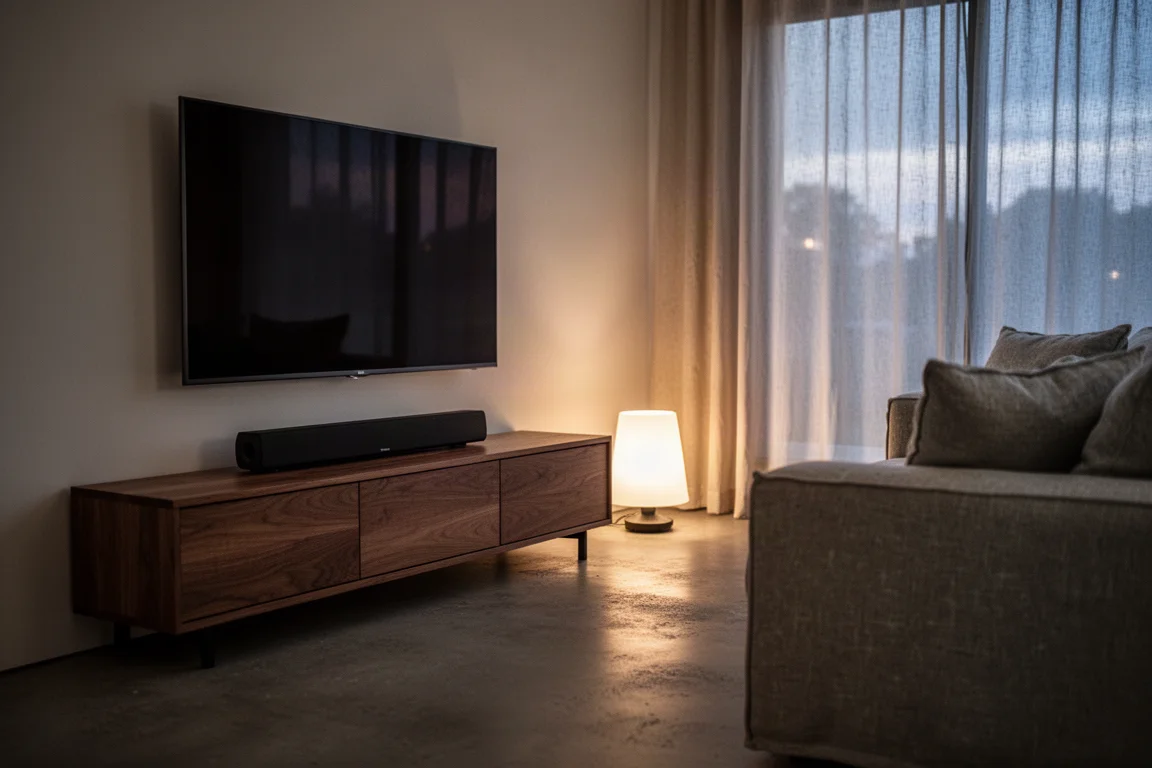
Devialet leans hard on the first of those and much less on the second. The Dione’s app offers three sound profiles, movie, music, and speech, along with automatic room correction, and there is no physical remote. Wireless support covers dual-band Wi-Fi, Bluetooth 5.0, Apple AirPlay 2, universal plug-and-play streaming, and Spotify Connect. Physical inputs are limited to HDMI 2.1 with eARC, an optical audio input, and an ethernet port, which is a short list for a bar in this class.
Devialet Dione: Bass-Forward Power and a Striking Design
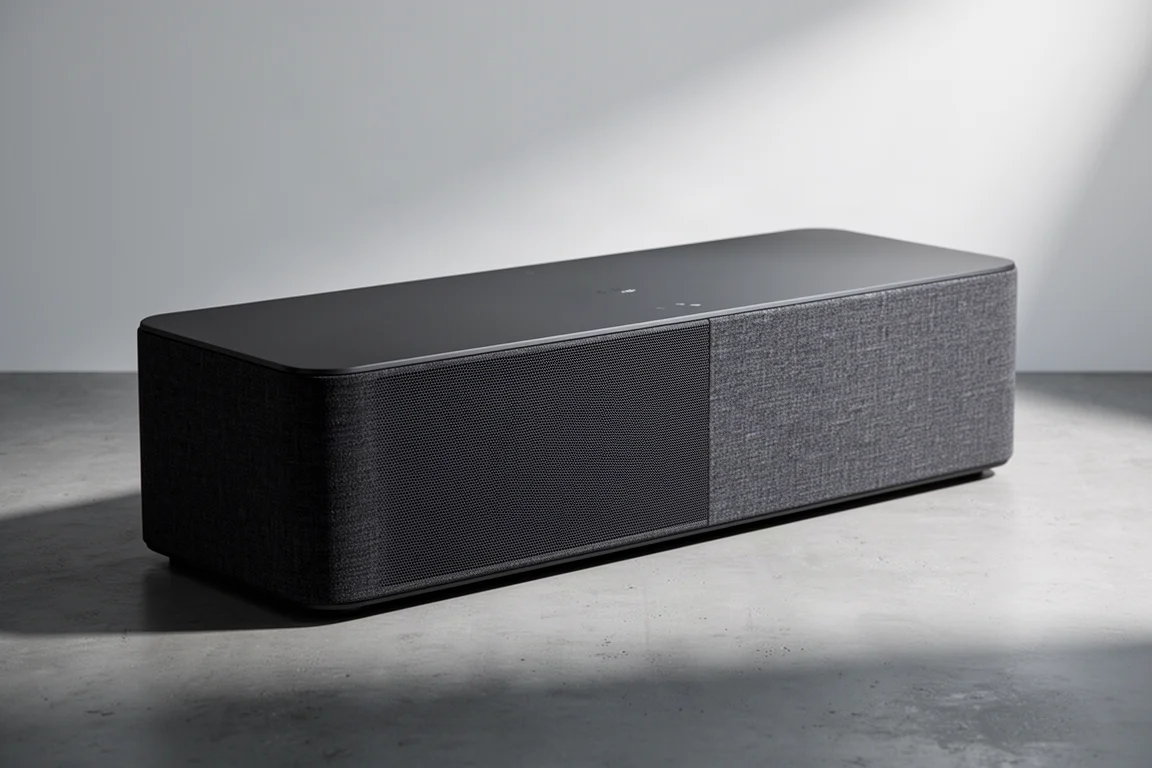
Start with the hardware, because it is genuinely distinctive. The Dione arrives in packaging that is nicer than most, and the bar itself looks high-end whether it sits on a table or is mounted to a wall using the included bracket. The rotating center speaker is the visual signature, and the overall finish stands apart from the uniform black slabs that dominate the category.
The sound is where the story changes. Across multiple listening sessions and two different rooms, the Dione measured and sounded decidedly bass heavy, to the point that the low end overshadowed the mid-range and treble. Two separate units behaved the same way, and in-room measurements confirmed a consistent picture: a rise in the bass beginning in the low mid-bass, with the movie profile peaking in excess of 15 dB around 40 Hz.
That is a lot of low-frequency energy, and there is no way to reduce it. The music and speech profiles carry less bass than the movie profile, but none of the three comes close to a neutral balance, and automatic room correction does little to address the imbalance even after repeated calibration runs. The result is that vocals take on added weight and lose their natural tone. Instruments and voices that are not bass leaning start to sound as though they are, and detail and inflection get buried under mid-bass energy.
The foundation underneath is sound, though. The Dione plays down to 25 Hz with real authority, and if the woofers could be tamed it would be largely linear between 500 Hz and 2 kHz, the region where most vocals and instruments live. Above that, the bar appears to roll off around 10 kHz, and a mild boost around 2 kHz is not enough to let the tweeter overcome eight woofers. On the plus side, the bar never becomes fatiguing, which makes it forgiving with lower-quality recordings.
Content matters enormously here. With non-Atmos material, dialogue comes across as overly chesty while mid and high-frequency information is masked. Faux surround processing on two-channel or Dolby Digital content never produces a convincing soundstage. Feed the Dione Dolby Atmos, however, and it transforms the front of a room into an impressively large wall of sound, with close to 180 degrees of immersion and height that reaches near the ceiling. It is big, bass rich, and dynamic, and it plays loud without strain. It is also a blunt instrument with limited sonic contrast, so moments that should carry drama land as one note.
For non-Atmos listening, switching to speech mode and enabling night mode curbs the bass substantially and brings the response closer to neutral. With Atmos content there is no equivalent adjustment beyond volume.
JBL Bar 5.1: Adjustable Low End for Less
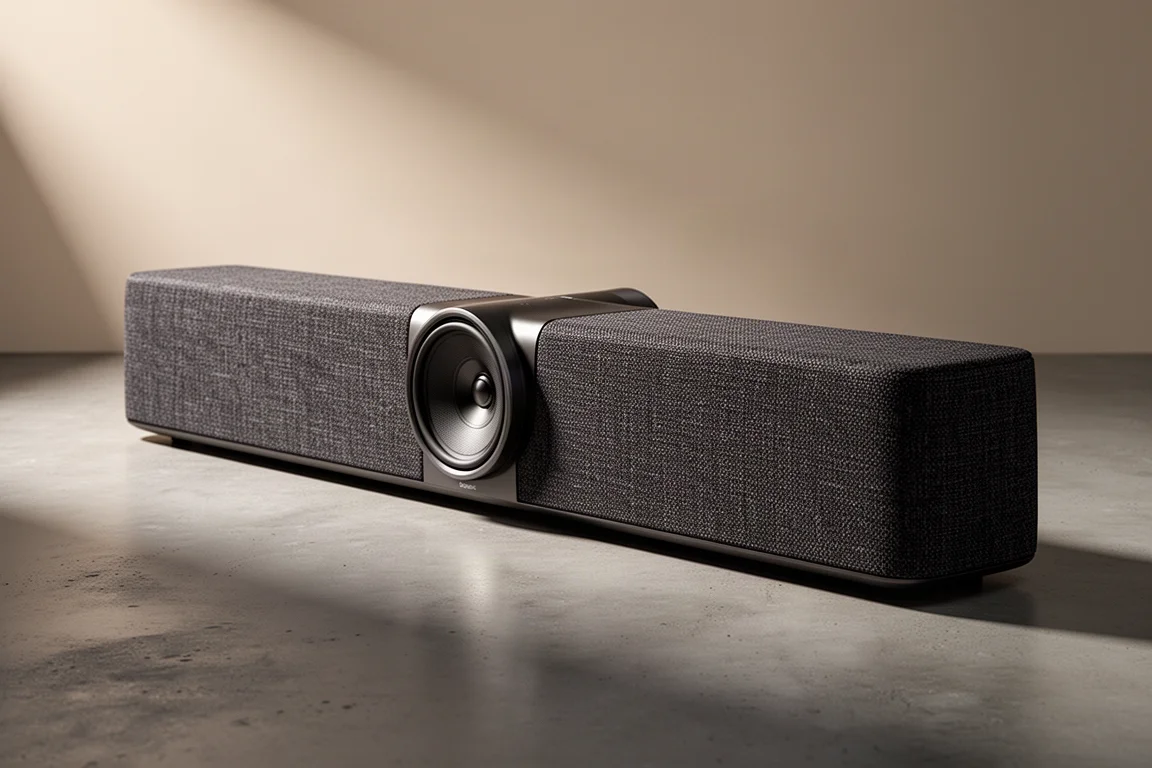
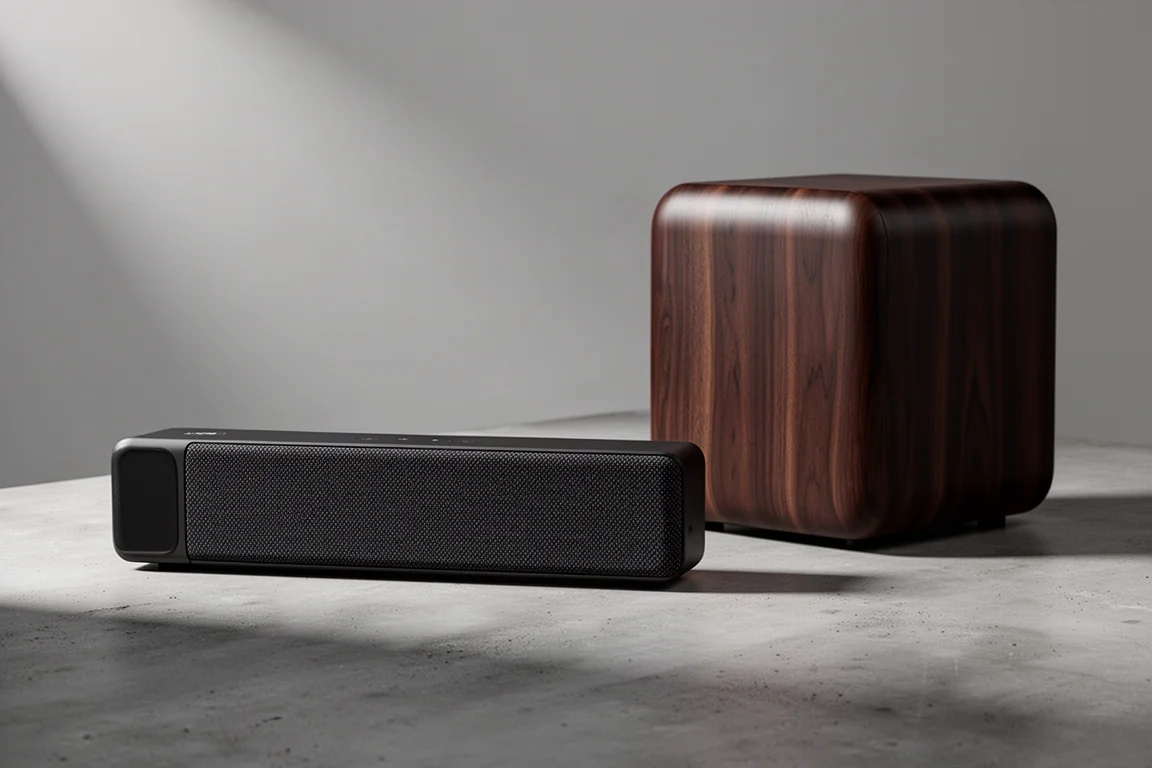
The JBL Bar 5.1 costs a fraction of the Dione, typically landing somewhere between $500 and $600 depending on where you shop, and it takes the opposite approach to bass. Its low-frequency output comes from a separate wireless subwoofer, which means the bass can be dialed up or down and the subwoofer itself can be placed where it performs best in the room.
In a direct comparison, that flexibility translated into a more balanced and more detailed presentation. Background vocals, the trailing edges of effects, and subtle ambient sounds were easy to pick out through the JBL, while the same cues were glossed over by the Dione because its bass swallowed them. Even a deep, dramatic roar came across as flat and one note on the Devialet.
The JBL is not flawless, and any emphasis in its low end can be traced to the subwoofer rather than the bar itself. That is precisely the point: because the bass is adjustable, the listener keeps control.
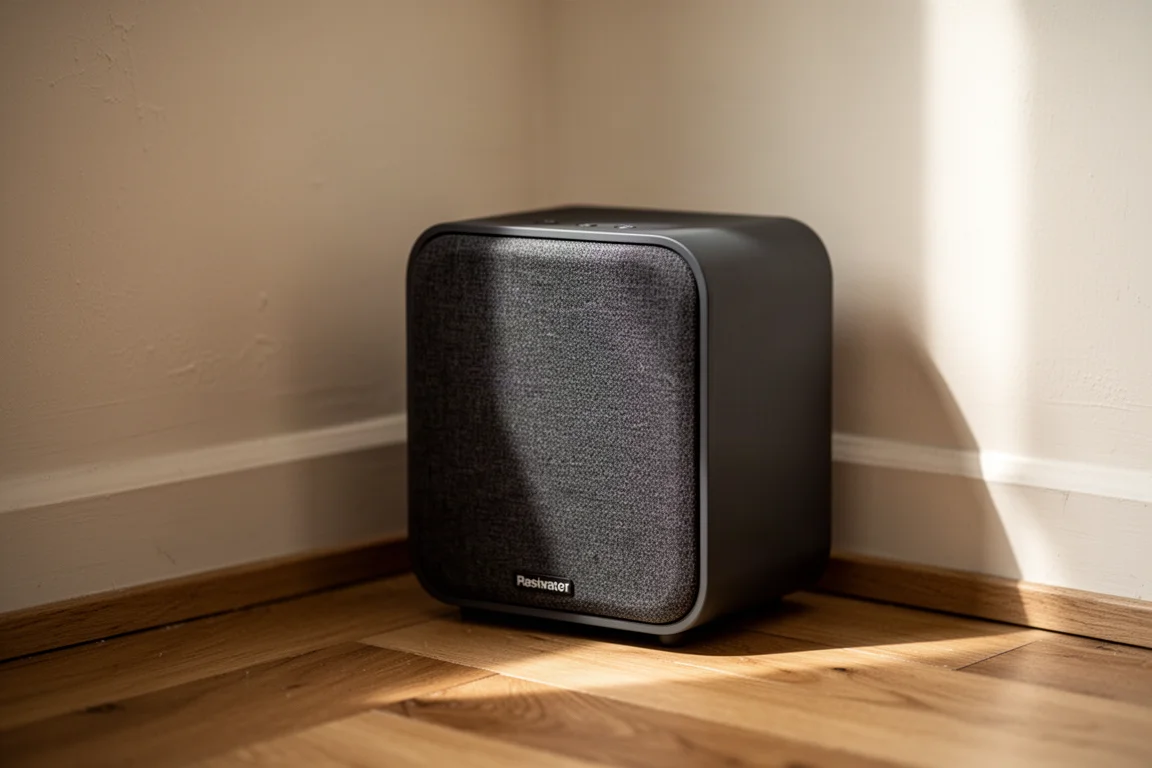
For anyone who wants strong low-frequency output without giving up the ability to tune it, this is the more practical arrangement, and the wireless subwoofer adds placement freedom rather than clutter.
Bowers & Wilkins Panorama 3: Accuracy First
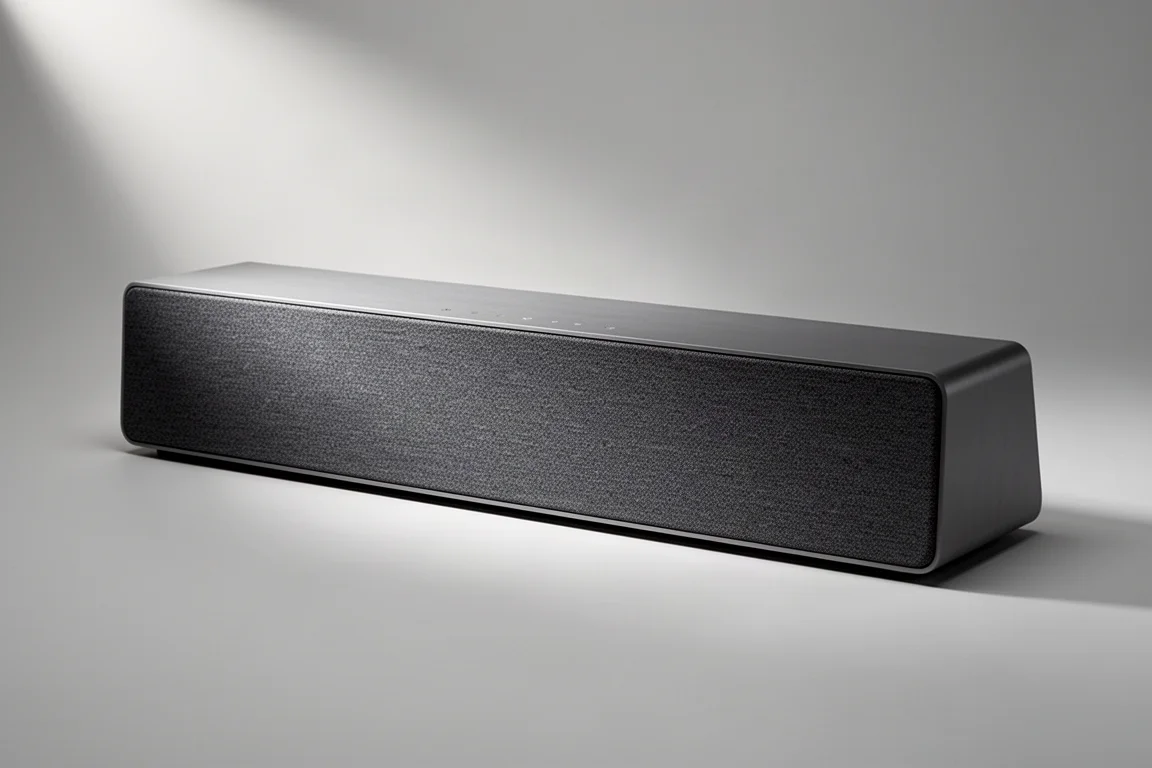
The Panorama 3 gives up the Dione’s bass output in exchange for a more accurate frequency response. The practical benefit is a more intelligible, better balanced performance from top to bottom, which matters most for dialogue and for material that relies on subtlety rather than impact.
Like the Dione, the Panorama 3 performs at its best with Dolby Atmos content, and it is similarly limited in features, connections, and adjustability. At just under $1,000, it is the smarter buy for listeners who prioritize accuracy over sheer low-frequency weight.
Bang & Olufsen Beosound Stage: Style and Adjustability
The Beosound Stage sits in a similar price bracket to the Dione and matches it on style, but it is considerably more versatile. It may not play as low as the Devialet, yet from about 40 Hz upward it is the superior bar.
The bigger difference is control. The Stage offers almost infinite adjustability through its app, along with a wider set of features and connection options. Weighing price against performance, that combination makes it the strongest pick of the premium all-in-one group.
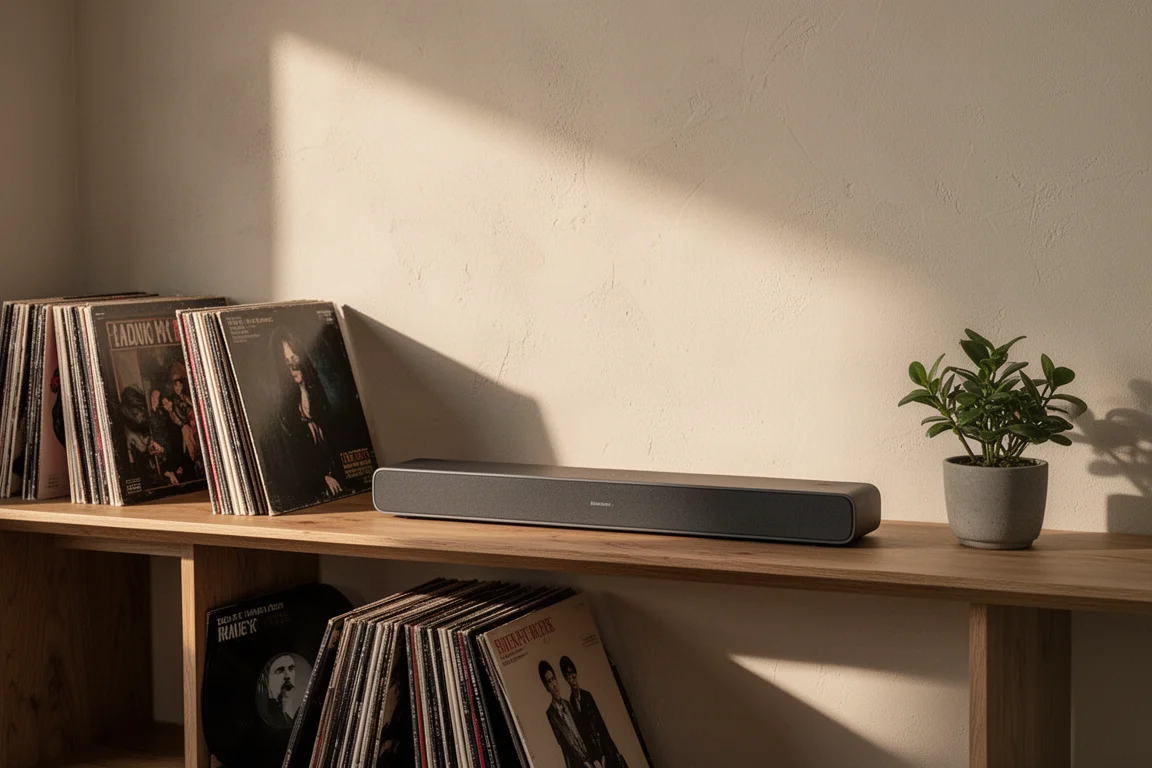
In practice, that adjustability is what allows the Stage to suit a wider range of rooms. A bar that can be tuned to the space it lives in will sound more consistent from one home to the next than one that cannot.
Sennheiser Ambeo Soundbar: The All-in-One Benchmark
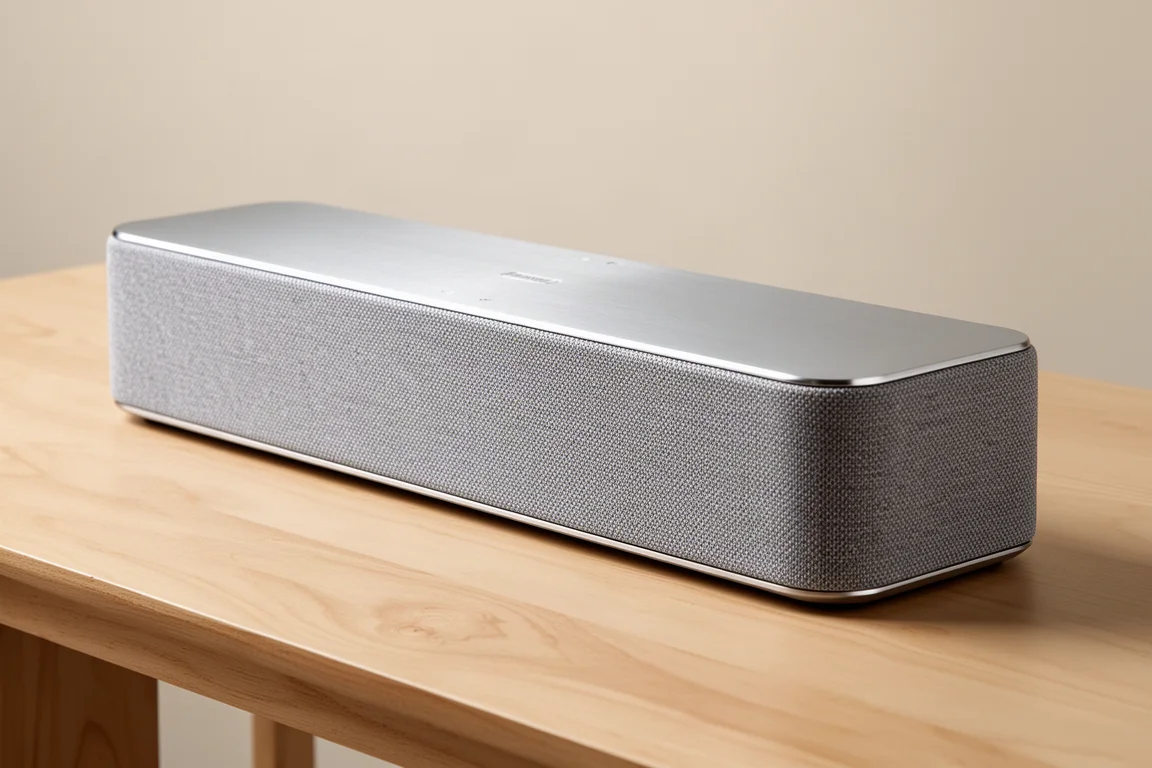
The Ambeo remains the reigning king of all-inclusive soundbars and the all-in-one to beat. Unless looks are the only consideration, it wins this comparison outright, and there is very little left to argue about.
Buying Advice
If bass is the single most important thing and a separate subwoofer is out of the question, the Dione is arguably the only bar built around that priority. It delivers deep, authoritative low-frequency output from a single enclosure, and nothing else in this group does quite the same thing.
If nuance and accuracy matter more, every alternative here is a better fit. The JBL Bar 5.1 offers adjustable bass and a separate subwoofer for considerably less money. The Panorama 3 delivers a more balanced response for listeners who value intelligibility. The Beosound Stage pairs premium build quality with genuine adjustability. The Ambeo remains the reference point for the category.
One lesson carries across all of them: automatic room correction is not a substitute for tone controls. Because bass behaves differently in every room, a bar that lets you shape its low end will fit more homes than one that does not. It is also worth remembering that a firmware update adding tone controls could change the picture for the Dione entirely, since the hardware capability is clearly there.
Conclusion
The Devialet Dione is a beautifully made, genuinely distinctive soundbar with exceptional bass output and a real talent for Dolby Atmos content. What holds it back is that the same bass energy cannot be reined in, and it colors everything else. Buyers who want depth above all else and never want to add a subwoofer will find a lot to like. Buyers who want balance, detail, and control have several better options in this group.
Further reading
Related Reviews
Soundbars
Bang & Olufsen Premiere Review: A Compact Soundbar Built to Last
A close look at the Bang & Olufsen Premiere, a compact soundbar with deep bass for its size, automatic sound profiles, and a clear modular upgrade path.
Soundbars
Best Dolby Atmos Soundbars: Six Picks for Movies, Music, and Small Rooms
A practical roundup of six Dolby Atmos soundbars, from compact dialogue-focused bars to expandable systems and an all-in-one flagship.
Soundbars
Bluesound Pulse Cinema Review: A Music-First Soundbar With a Software Catch
A close look at the Bluesound Pulse Cinema, a 3.2.2 soundbar with a genuinely expressive midrange and natural tone, plus the app and expansion limits worth knowing before you buy.