Vinyl Care
Degritter Record Cleaning Machine Review: Automated Ultrasonic Vinyl Care
An ultrasonic record cleaner with a 120 kHz cleaning module, one-click operation and a premium price. Here is what it does well and what it will not fix.
Introduction
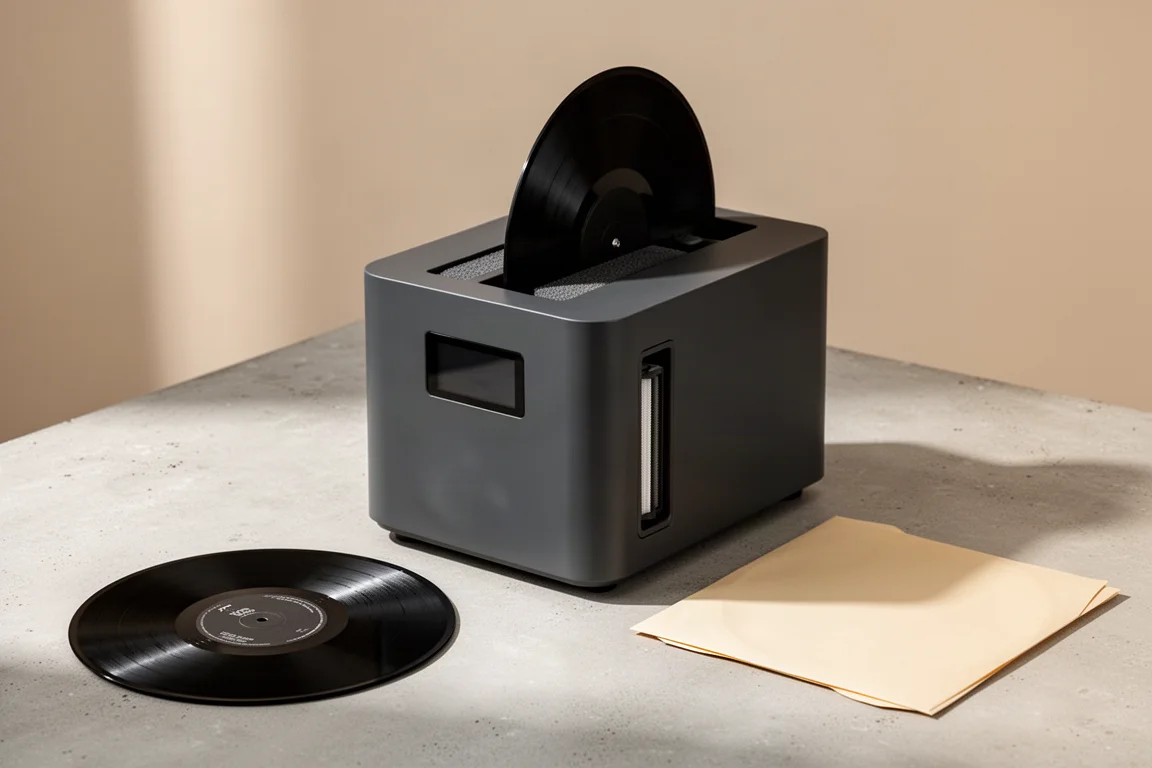
Secondhand records are one of the genuine pleasures of collecting vinyl, and also one of its most common frustrations. Years of dust, dirt and casual mishandling leave a layer of surface noise that a good cartridge and a revealing system will happily point out. The Degritter is an ultrasonic record cleaning machine built in Estonia, designed to take the manual labour out of that job. It first reached the market through a Kickstarter campaign and has since developed into a full retail product. At around €2,700 it sits firmly at the premium end of vinyl care, so the real question is whether the method and the convenience justify the outlay.
What the Degritter Actually Does
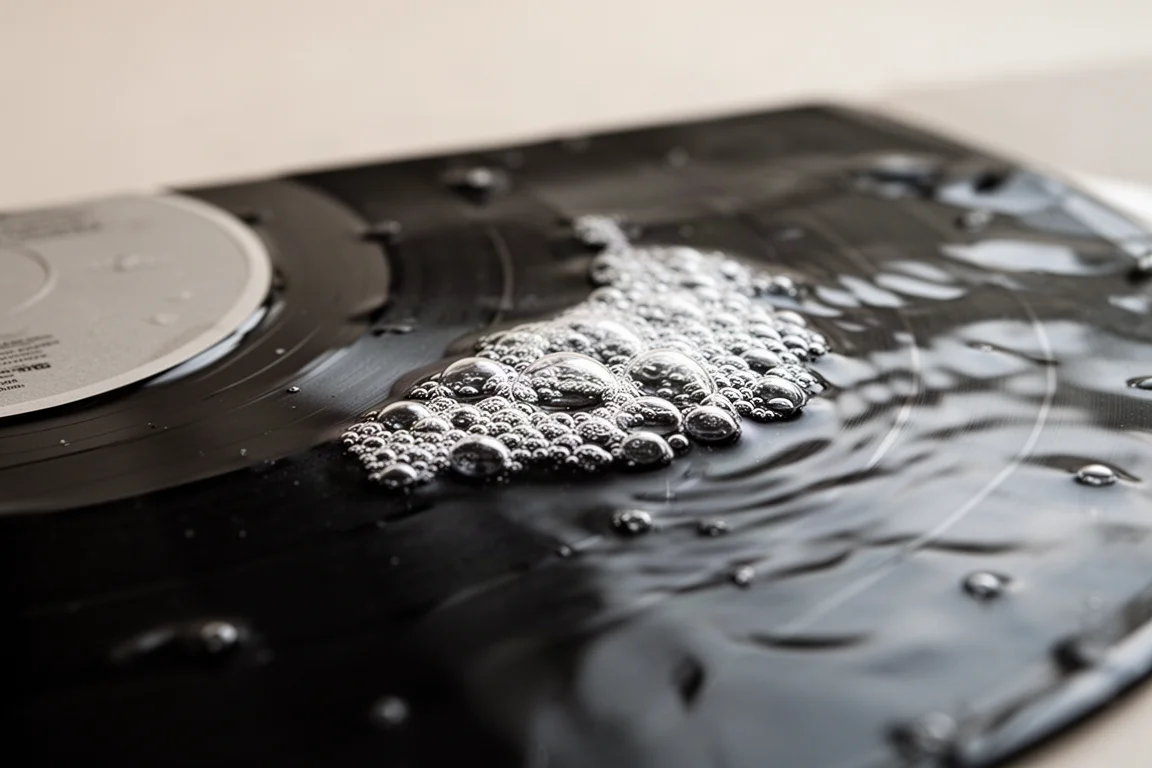
Rather than scrubbing a record with a brush and fluid, the Degritter works by cavitation. A 300 watt amplifier drives four transducers, two on each side of the record, and the resulting frequency generates millions of tiny bubbles. When those bubbles collapse, ideally inside the groove itself, the released energy dislodges dust and dirt from the record surface.
The cleaning module is not an off-the-shelf ultrasonic unit. Most such modules operate somewhere around 40 kHz, while this one runs at 120 kHz. The higher frequency produces much smaller bubbles, which are more likely to reach into the narrow channel of a record groove, a space roughly the width of a human hair.
Water drained away from the cavitation bath is filtered before it returns to the reservoir tank. That filter sits on the side of the machine, where it can be removed and cleaned, and the software will indicate when it needs attention.
Who This Machine Is For
The Degritter is not aimed at listeners who are perfectly content with a manual cleaning routine. It is aimed at people who dislike that routine. Owners with a good turntable, a quality cartridge and a sizeable collection of used records are the natural audience, especially anyone who buys secondhand vinyl regularly and wants cleaning to be quick and repeatable rather than a weekend project.
It is also a machine for people who care about how their equipment looks. It is designed to sit out near the turntable rather than being tucked away in a cupboard, and that visibility is part of the point. Keeping it within reach turns cleaning records into a habit instead of a chore.
Main Strengths: Automation, Feedback and Firmware Updates
Operation is genuinely one-click. A record drops into the slot and sits securely, a cleaning program is selected, and the machine handles the rest: it pulls distilled water from the reservoir into the internal cleaning tank, rotates the record backwards and forwards, then dries it. A quick program runs for around seven minutes, which leaves time to do something else while a record is being cleaned.
Everything inside is run by software, and the firmware is upgradeable. A new version can be downloaded, written to an SD card, inserted into the back of the machine and installed on reboot, which keeps the unit current without a return to the factory.
The software layer also handles practical maintenance. Sensors report back to the operating system, which flags an insufficient water level in the reservoir tank or a tank that has not been seated correctly. The machine indicates when the water needs changing and when the filter needs cleaning, and it will not allow normal record cleaning until that filter has been dealt with. The visible dirt collected by the filter, along with the discoloured water in the reservoir, is useful confirmation that a cycle is doing real work.
Cleaning Performance in Practice
The results are best described as a steady improvement rather than a transformation. Across roughly 60 records cleaned with this machine, surface noise on the running groove was reduced, but it did not amount to a dramatic change in sound quality. No veil was lifted, and the effect was no more obvious on new records than on old ones.
Where the machine impressed most was on a deliberately filthy record. An ambient album was coated in cumin and paprika, smeared across the surface and left caked on. Two cycles, a quick one followed by a heavy one, added up to about 20 minutes of cleaning, and the grooves came out clean. The running groove was quieter afterwards, and a couple of rotational clicks present before cleaning were gone. Ambient music is a demanding test for surface noise, which makes that outcome more meaningful than it might first appear.
Things to Consider Before Buying
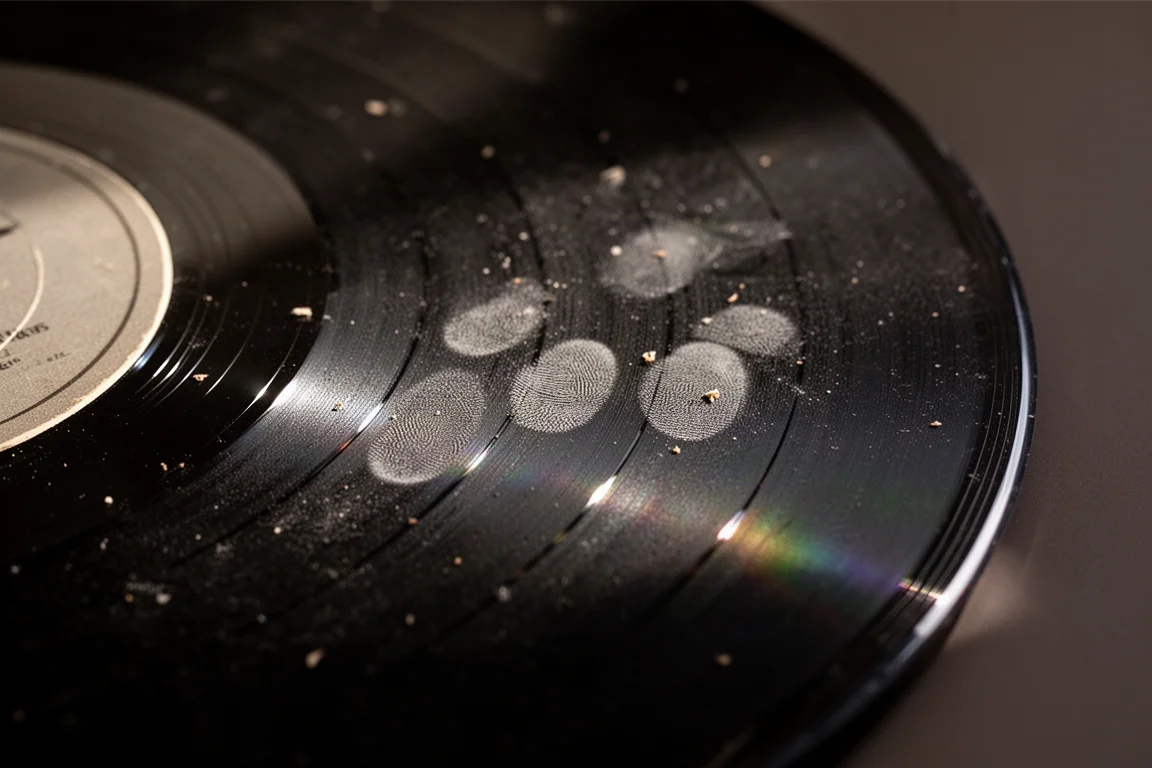
Set expectations carefully. The Degritter removes dust, dirt and general detritus. It does not remove scratches, and it cannot rescue every problem record. A sticky residue on a picture disc survived two cleaning cycles, one quick and one heavy, and the record remained effectively unplayable.
There is also routine upkeep to plan for. The reservoir needs distilled water rather than tap water, mixed with a few drops of the supplied cleaning fluid, and the water has to be degassed before use through a menu option. Drying behaviour is adjustable across 20 settings, letting owners choose between a longer, quieter dry and roughly three minutes of high fan noise. Water level can be set to one of three positions depending on how close the grooves run to the label.
Comparing the Degritter With Vacuum Cleaning
A vacuum-based machine such as the Pro-Ject VCS can deliver comparable or at least similar cleaning results, and it costs considerably less. The difference is the process. Fluid has to be applied to the record surface and worked into the grooves with a brush, a single record can take around 15 minutes to clean and dry, and the machine runs noisily with no automation at all. That workload is exactly what the Degritter is designed to remove, and the gap is real, but the sonic difference between the two approaches is not as wide as the price difference might suggest.
Buying Advice
This is a specialist product for a specialist audience, and the price of around €2,700 reflects that. It makes sense for someone who already owns a good turntable and cartridge, buys used records regularly and finds manual cleaning tedious enough to avoid it altogether. In that situation the Degritter earns its place, because a machine that is pleasant to use and easy to leave on display is a machine that actually gets used.
For buyers who want the cleaning capability without the full outlay, shared ownership is a sensible route. Two or three collectors living near each other can split the cost, roughly €900 each, and move the unit between homes every few months.
Conclusion
The Degritter is an attractive, well-behaved and genuinely convenient record cleaning machine. It automates a job many collectors quietly dread, it handles seriously dirty records well, and its software layer keeps maintenance straightforward. What it does not do is transform the sound of a collection or repair damaged vinyl. Buyers who understand that, and who value the automation, will find it a rewarding piece of equipment.
Product link
View more details for Degritter Record Cleaning Machine
This product is mentioned in the review. Check the specifications, options, and compatibility before buying.
View more details for Degritter Record Cleaning MachineFurther reading
Related Reviews
Vinyl Care
Best Record Cleaning Machines: Four Vinyl Care Options Worth Considering
Four record cleaning machines for different budgets and habits, from a low-cost manual washer to a premium ultrasonic cleaner, plus practical advice on keeping clean records clean.
Vinyl Care
Record Doctor 20th Anniversary Edition Review: Affordable Vacuum Vinyl Cleaning
A practical look at the Record Doctor 20th Anniversary Edition, a compact vacuum record cleaning machine that revived a noisy used LP for around $220.
Hi-Fi Audio
Accuphase C-57 vs Allnic H-7000V: Two High-End Phono Stages Compared
A fully balanced solid-state phono stage with a pitch-black noise floor meets a tube design built for well-loved records. Here is how to choose between them.