Vinyl Care
Best Record Cleaning Machines: Four Vinyl Care Options Worth Considering
Four record cleaning machines for different budgets and habits, from a low-cost manual washer to a premium ultrasonic cleaner, plus practical advice on keeping clean records clean.
Introduction
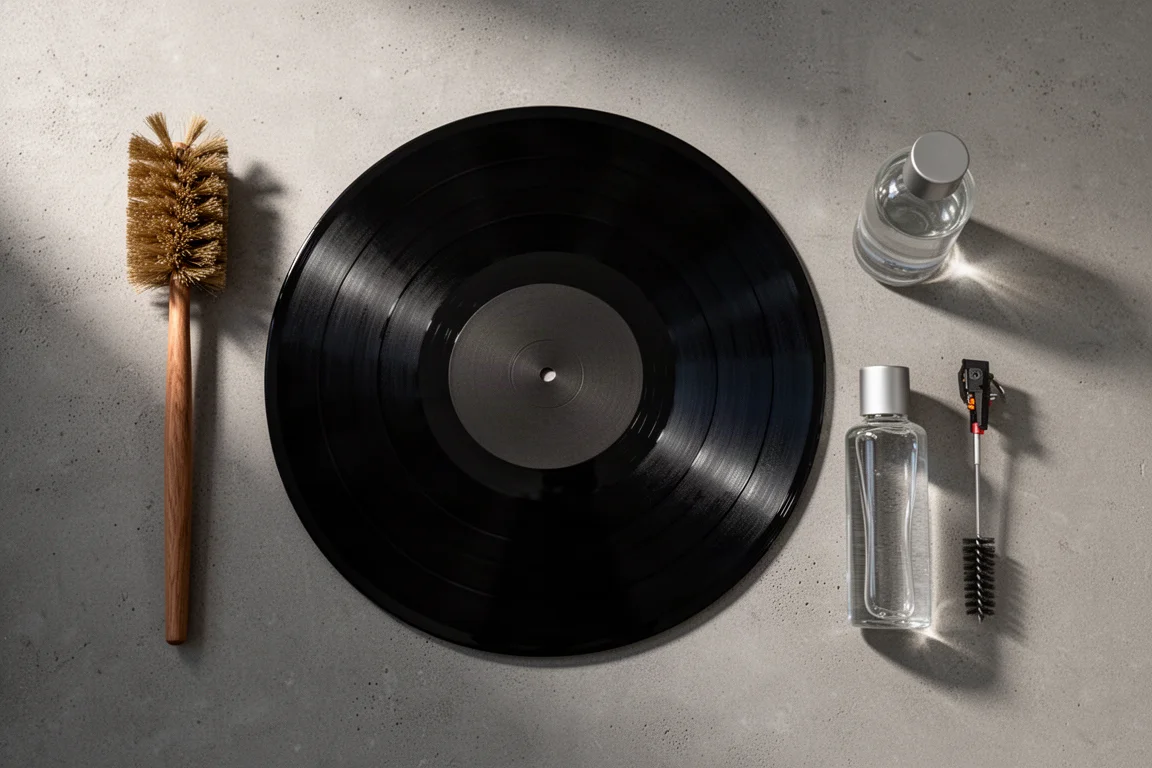
A vinyl collection tends to grow faster than the shelf space set aside for it. Between new pressings, used finds and the occasional reissue, the total outlay adds up quickly, and that investment deserves more than a quick pass with a dry brush.
Dry brushing lifts loose surface dust, but it does not deal with the residue, oils and grime that settle down in the grooves. Wet cleaning does, and the machines that handle it range from a manual basin that costs very little to a fully automatic ultrasonic unit built for serious collectors. Four options stand out for different budgets and cleaning habits, and each one is worth understanding before you choose.
It also helps to think about cost per record. If a machine works out to roughly a dollar or two per record across an entire library, the purchase is easier to justify than the sticker price alone suggests.
What Proper Vinyl Cleaning Involves
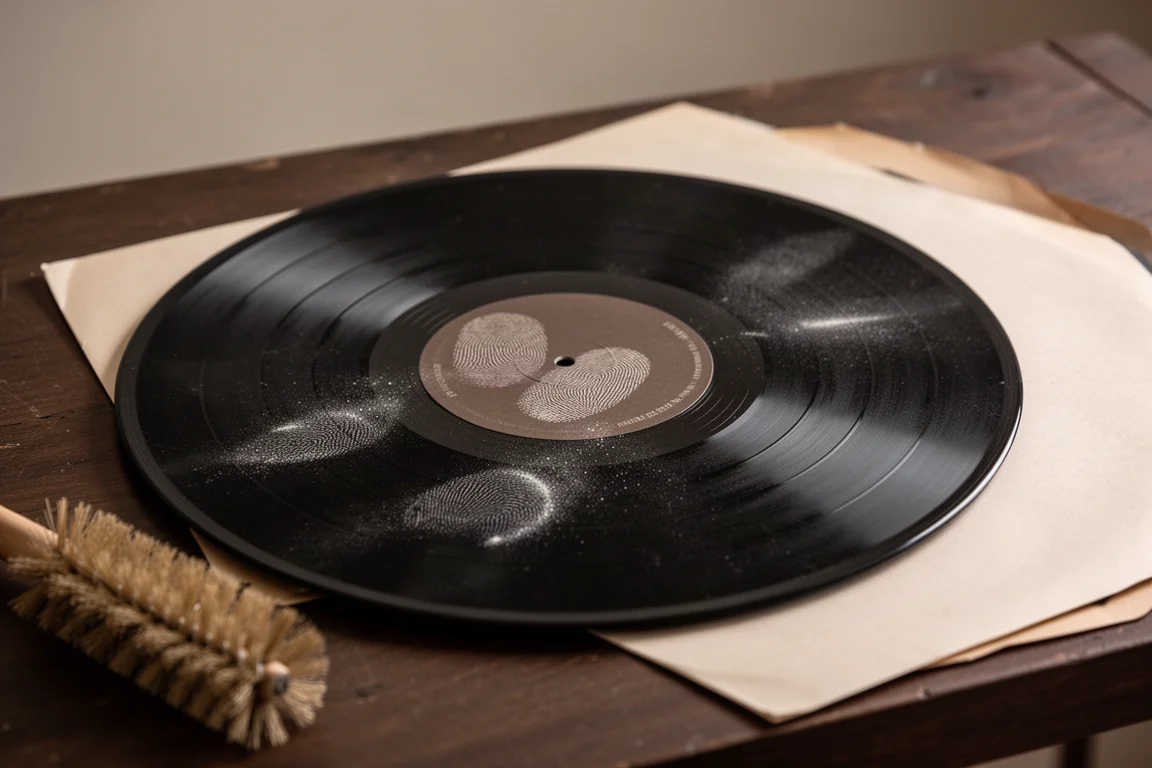
Brand new records are usually in excellent condition, but they are not necessarily clean. During pressing, a metal stamper is pressed into the vinyl. Some pressing plants spray a mold release compound onto the stamper, while others build an anti-stick compound into the vinyl itself. There is no reliable way to tell from the outside which method was used, and in some cases that compound can slightly reduce audio quality. Static can also hold small dirt particles against a new record’s surface.
Used records are a different proposition. Surface scratches and visible grime are obvious, but what sits in the grooves is not. A previous owner may have cleaned a record with tap water, which leaves residue behind, or the record may have picked up finger oils, smoke, or a spilled drink that was simply wiped away.
The practical conclusion is the same either way: if you want records genuinely clean, wet cleaning is how you get there. A dry record brush still has a role. If a record looks visibly dirty, brush the surface first so the cleaning fluid does not become dirty faster than it needs to.
How deep you go is up to you. A manual system with careful technique will handle a large collection, while a vacuum machine removes the fluid completely and leaves the record dry and ready to play straight away.
Spin Clean: The Best Budget Manual Washer
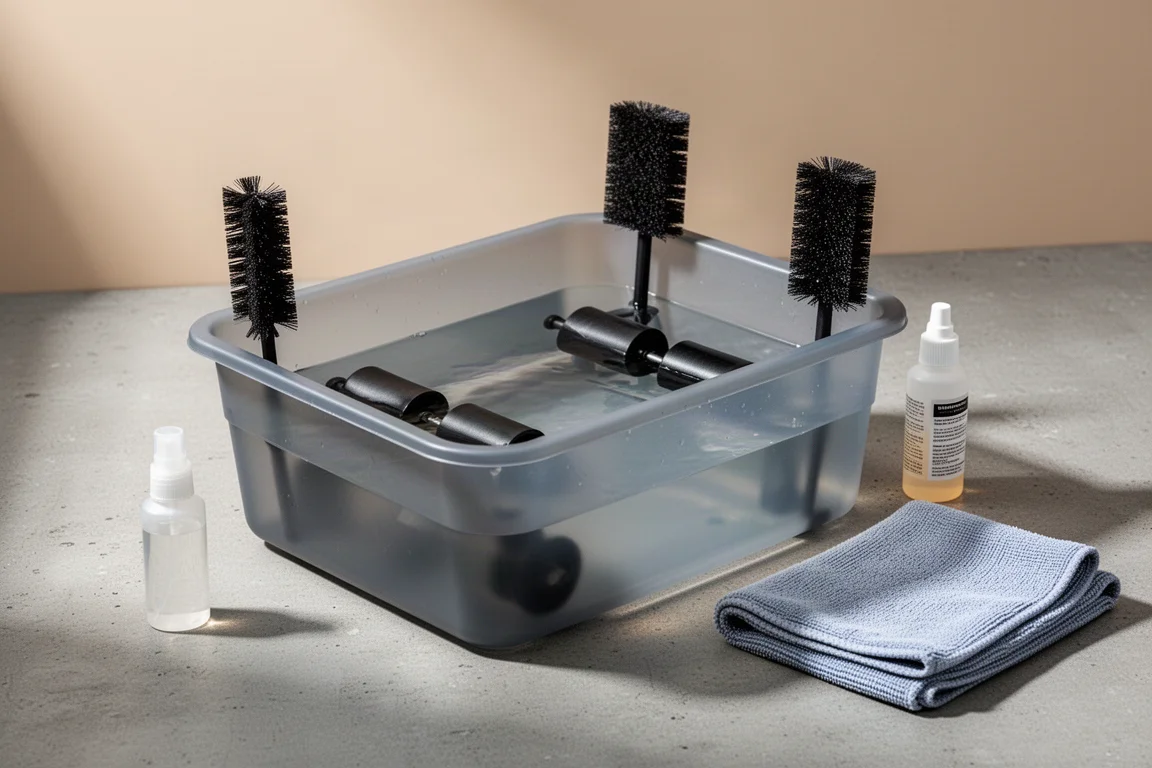
The Spin Clean is a fully manual system, and that is both its appeal and its main compromise. It has been in production since 1975 and is made in the United States. Setup is straightforward: the rollers drop into the basin, the outer positions take 12 inch records, and two brushes slot in one way only, after a quick brush-off to clear any debris. Distilled water goes in up to the marked line. Tap water can leave a residue, so distilled is the safer choice even where the instructions allow otherwise.
A capful of the supplied fluid goes over the rollers, then the record drops in and you turn it by hand, roughly three rotations in each direction. It takes some effort, and rubber gloves help if you want to spin more vigorously. Lift the record out, let it drip, then dry it in a circular motion on the cleaning cloth and repeat for the second side.
The fluid is the clever part. It is formulated to capture dirt and let it settle to the bottom of the basin rather than staying suspended in the liquid. A batch will handle somewhere between 20 and 50 records depending on how dirty they are, and it should be replaced once it starts to look cloudy. Clean thinner records first and leave 180 gram pressings until the end, since heavier records push the brushes apart. When you finish, pull the brushes out to air dry and cover the machine or drain the fluid for a fresh batch.
The one real shortcoming is drying. The cloth does not get a record as dry as a vacuum machine does, so air drying is part of the routine, and a dish rack that holds records safely makes that easier. There is a small risk of dust settling during air drying. The base of the machine also needs cleaning eventually, which is a chore, but at this price it is a fair trade.
Pro-Ject VC-E: The Best Value Vacuum Cleaner
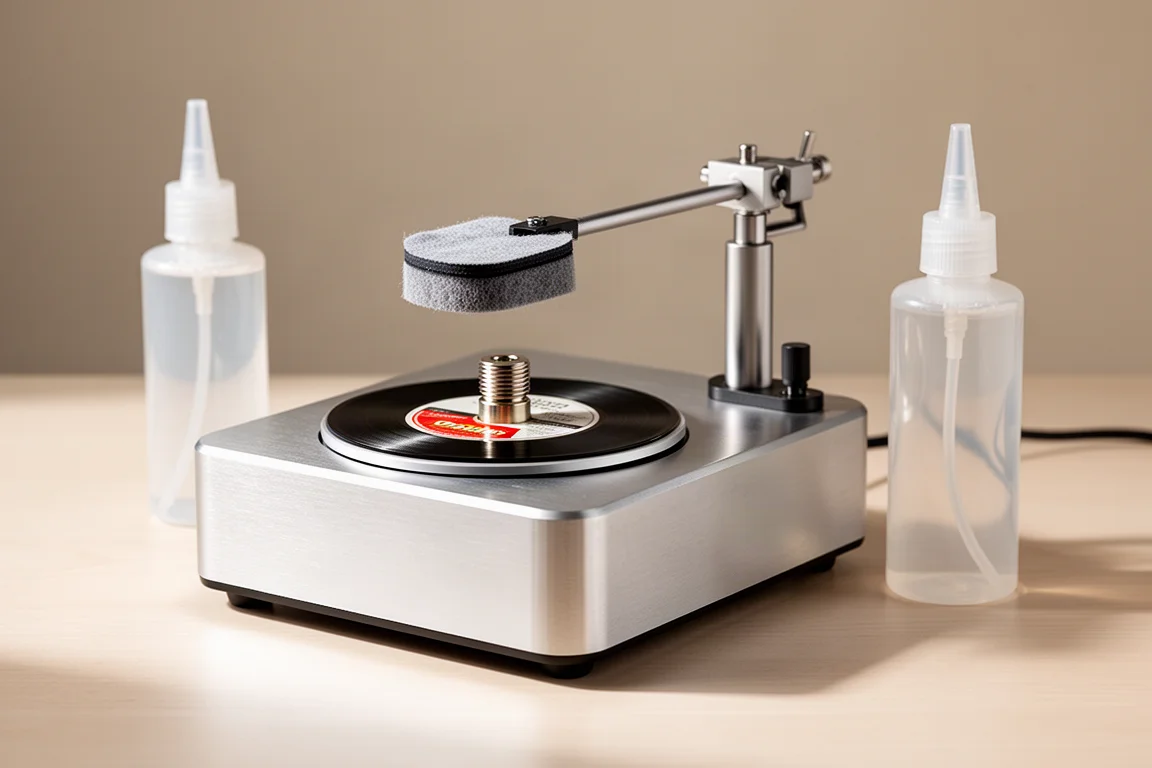
The Pro-Ject VC-E takes a different approach. Fluid goes on, the record spins, and a vacuum arm removes the liquid and leaves the record dry. The housing is clad in aluminium, so spills are not a worry, and the record rests on a small platter only the size of the label, which keeps the playing surface away from anything dirt could cling to.
Setup matters here. One side of the small platter has a recessed hole for the single retaining screw, and if the screw head sits proud the record will not lie flat. The machine ships with a starter bottle of concentrated cleaning solution, mixed with distilled water at 20 to 1 for normal records and 10 to 1 for very dirty ones. A mixing bottle is included, though two old-style squirt bottles and a kitchen scale set to grams make it easy to keep both ratios on hand.
The process is simple. Clamp the record with the threaded clamp, apply fluid to the brush and to the record, spin for two or three revolutions, then reverse. Letting the fluid sit for 20 to 30 seconds allows it to do its work. Move the brush aside, start the platter again and switch on the vacuum, and a couple of turns leave the record completely dry. A second rinse with plain distilled water and a dedicated brush is optional, but it is the surest route to a genuinely clean record.
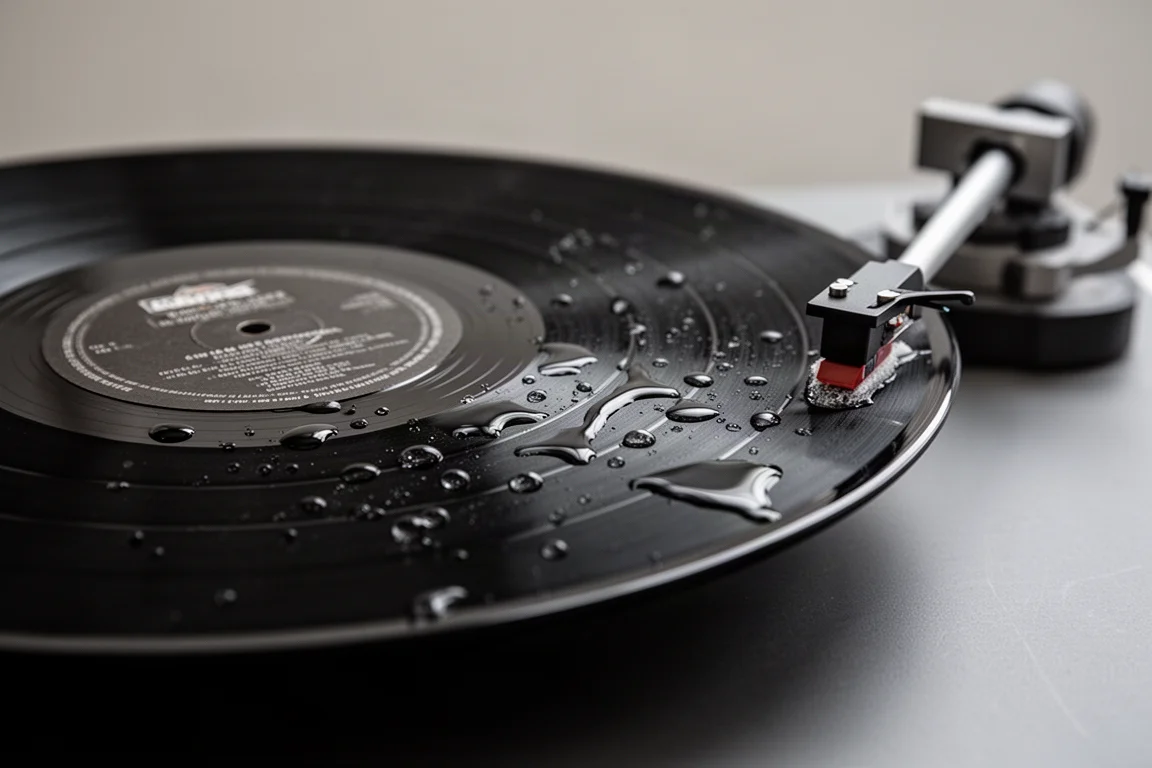
The trade-off is the exhaust port, which sits on top of the machine. After roughly six to eight sides, a little moisture can blow back out and wet the underside of a record. A small disc is supplied to sit under the record and block it, though resting a clean record on a disc that will itself get dirty is not ideal. Both this model and the larger one run quietly in normal use.
For cleaning records as you play them, or a couple at a time, this is the best value vacuum cleaner of the group.
Pro-Ject VC-S2: For Larger Cleaning Sessions
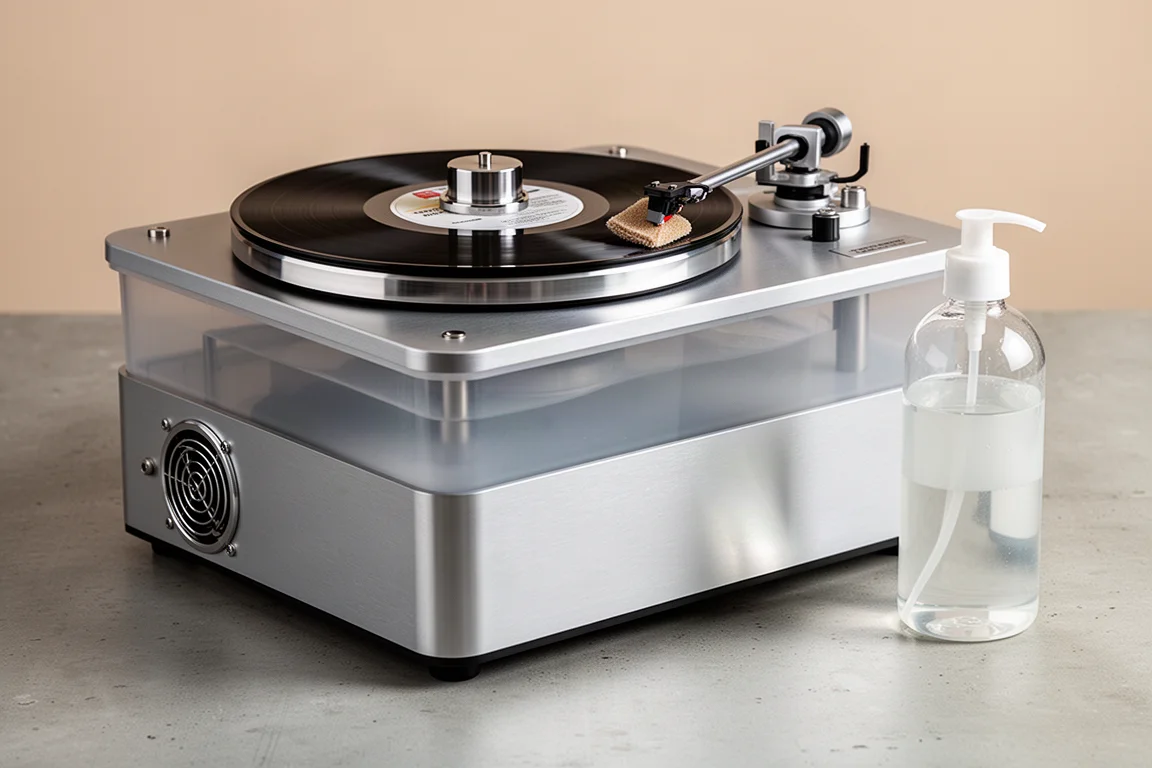
The VC-S2 cleans in exactly the same way as the VC-E, with the same aluminium-clad housing, the same label-sized platter and the same vacuum arm with replaceable fabric pads. The differences are practical rather than fundamental. It uses a nicer metal clamp, its exhaust port sits on the side rather than the top, and its fluid reservoir is larger.
That side exhaust is the meaningful change. Because moisture is not vented upward, the blowback that can dampen a record’s underside on the smaller machine is not an issue here. The larger reservoir also means fewer refills during a long session.
The case for the VC-S2 comes down to volume. If you clean records in batches, or plan to run a two-bottle rinse routine across more than two or three records at a time, the bigger machine earns its place. If you clean one or two records at a time, the VC-E covers the same ground for less.
Audio Desk Ultrasonic: Premium Ultrasonic Cleaning
The Audio Desk sits in a different class on price, and it is aimed at the very serious collector. It comes from the same part of the world as the Pro-Ject machines, and watching it work is genuinely part of the appeal.
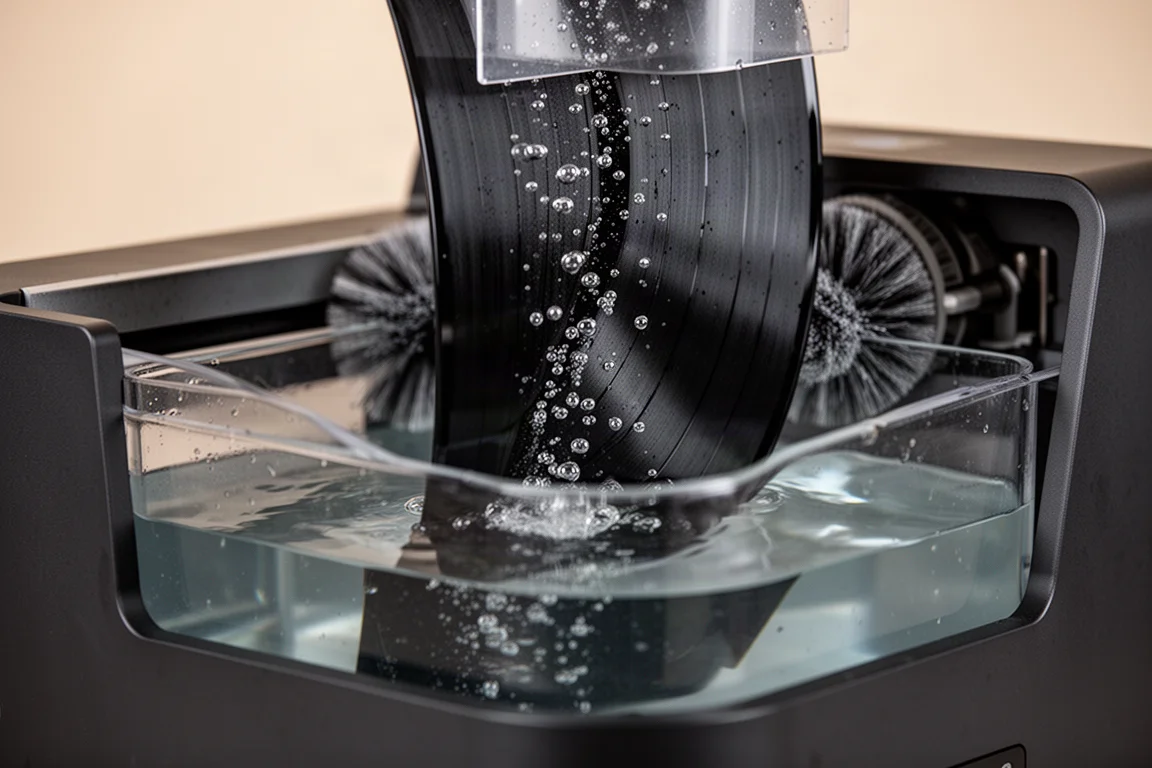
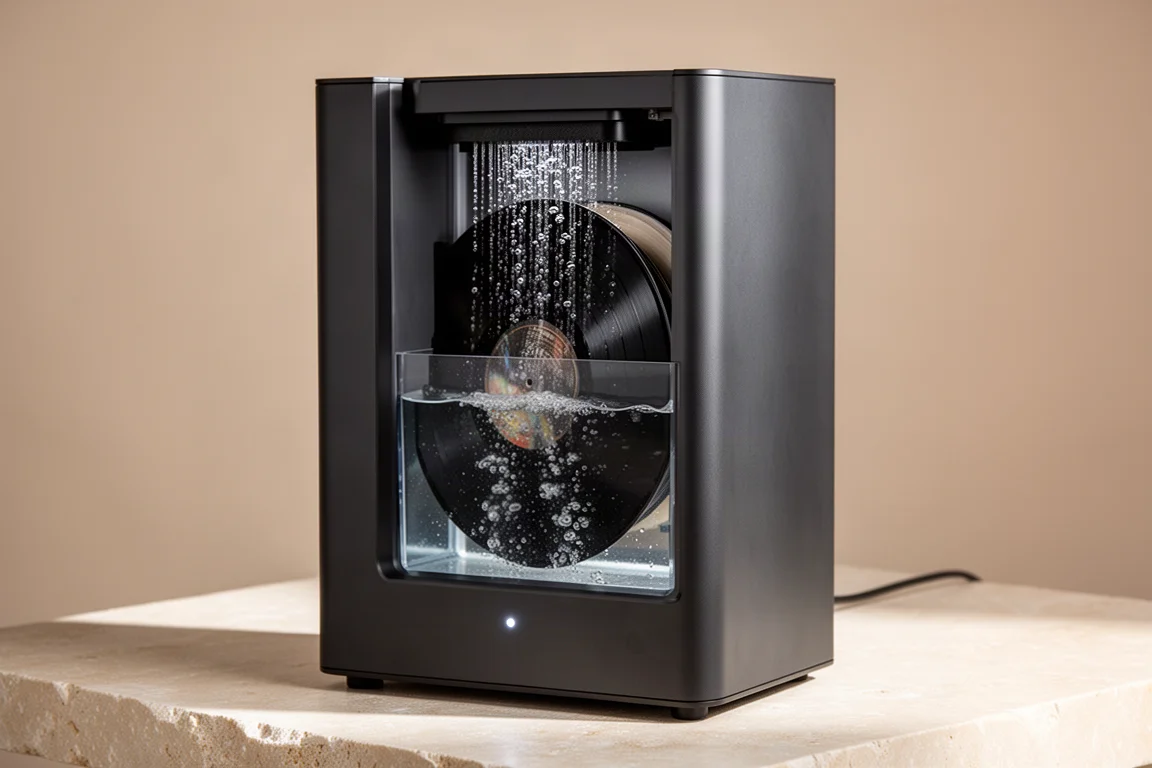
Fill it with distilled water and a bottle of the matching cleaning solution, and an indicator on the front shows when the water level is right. Drop a record in and press start: the reservoir fills with fluid, the brushes begin to turn, and the record spins while both sides are cleaned by the combination of brush action and an ultrasonic system. Occasionally a record needs a small push to seat properly before it starts spinning. When the cycle ends, the water drains automatically and the vacuum system dries the record as it continues to rotate.
Drying is usually complete, and if a record comes out slightly damp you can run a second drying cycle by holding down the start button until you hear six beeps. Parts are replaceable, and draining the fluid reservoir is easy, something worth doing after roughly every 5 to 100 records depending on how dirty they are. It is not a bargain by any measure, but records that come off it are as clean as any you are likely to see.
Where it makes sense is a large collection that justifies the outlay, or a collector who wants the cleaning process to be as automatic and consistent as possible.
Everyday Care After Cleaning
Cleaning a record is only half of keeping it clean. The inner sleeve a used record arrives in often holds a surprising amount of dirt, so moving a freshly cleaned record into a new sleeve protects the work you have just done. Before each play, an anti-static brush clears the dust that has settled since the last clean.
Storage matters too. Records should stand vertically rather than leaning, which keeps them from warping under pressure. On the turntable side, a dedicated stylus brush keeps the needle free of the debris that accumulates as it tracks. These small habits cost very little and they extend the life of both your records and your stylus.
Overall Buying Advice
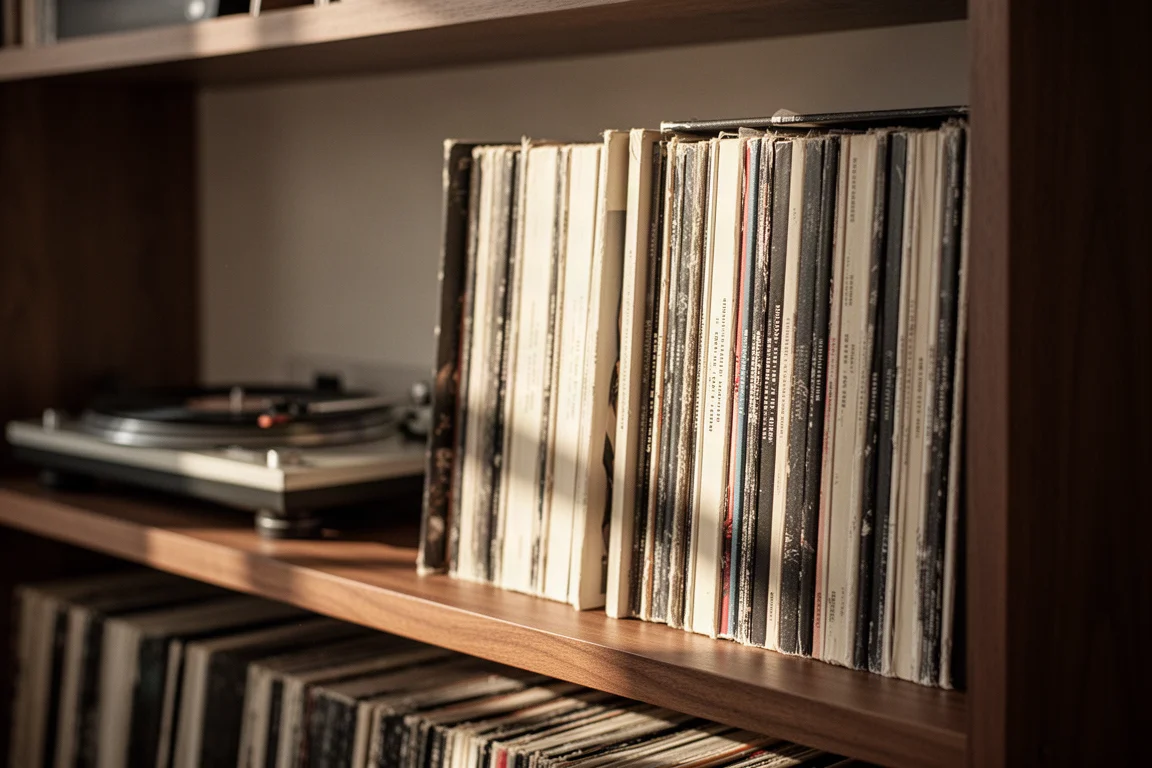
Start with how you actually listen. If you buy a handful of records at a time and clean them as you go, a manual system like the Spin Clean keeps costs low and does a genuinely good job, provided you are set up to air dry several records at once. The main limitation there is drying, not cleaning.
If you want records dry and playable immediately, a vacuum machine is the step up. The VC-E is the best value of the group for cleaning a record or two at a time. Move to the VC-S2 if you clean in batches, want the side-mounted exhaust and the larger reservoir, and do not mind paying more for those conveniences.
At the top of the range, the Audio Desk is a serious purchase for a serious collection. It is the most automatic of the four and its results are the cleanest. It makes sense when the collection is large enough that the cost per record becomes reasonable, and when the convenience of a hands-off cycle is worth paying for.
Whatever you choose, the routine around the machine matters as much as the machine itself: brush off visible dirt before wet cleaning, use distilled water rather than tap, move clean records into fresh sleeves, and store them upright.
Conclusion
A clean record is quieter, and a collection that is looked after holds its value. A manual washer covers the basics at very low cost, a vacuum machine adds speed and a properly dry finish, and an ultrasonic cleaner handles the job automatically for collectors who want the best result with the least effort. Match the machine to the way you listen, and the rest is simple routine.
Further reading
Related Reviews
Vinyl Care
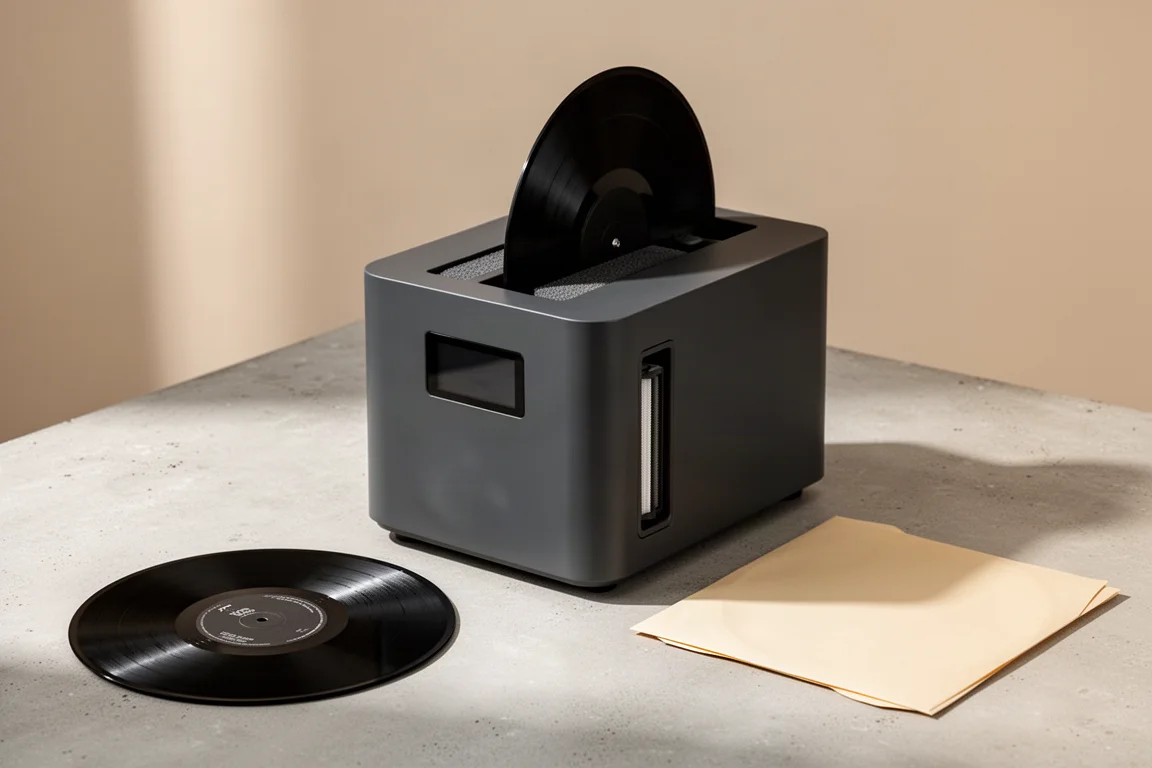
Degritter Record Cleaning Machine Review: Automated Ultrasonic Vinyl Care
An ultrasonic record cleaner with a 120 kHz cleaning module, one-click operation and a premium price. Here is what it does well and what it will not fix.
Vinyl Care
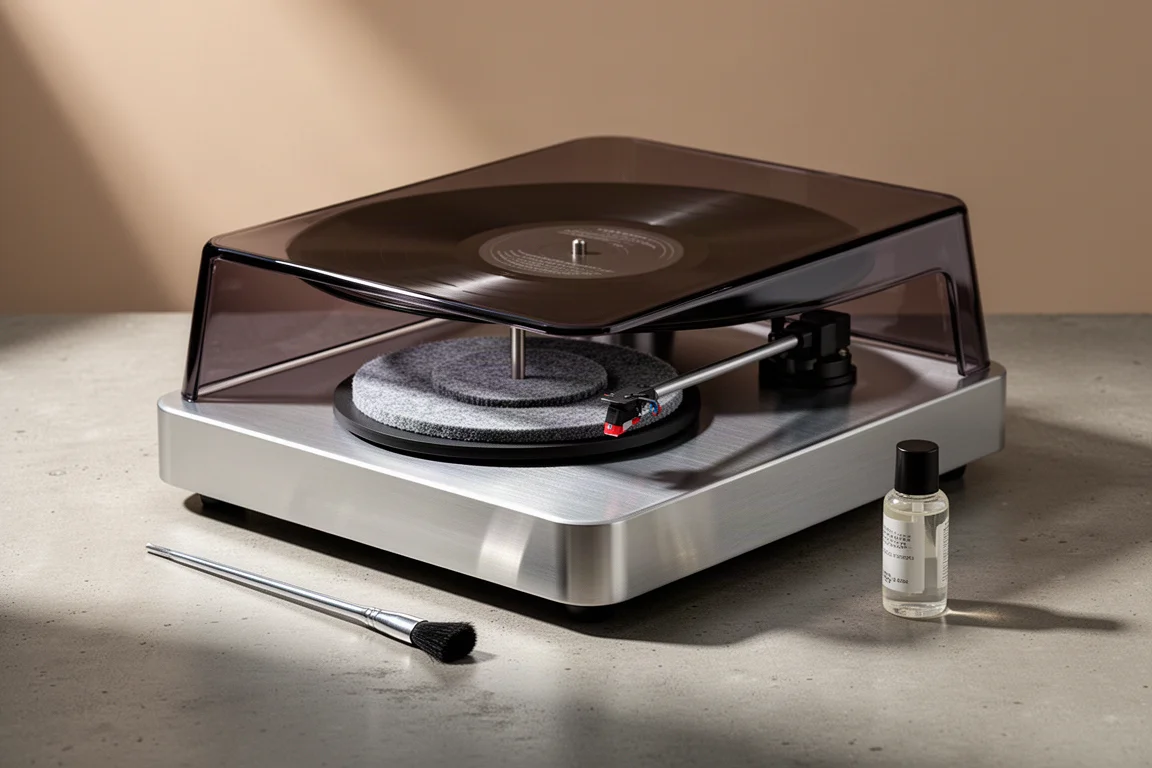
Record Doctor 20th Anniversary Edition Review: Affordable Vacuum Vinyl Cleaning
A practical look at the Record Doctor 20th Anniversary Edition, a compact vacuum record cleaning machine that revived a noisy used LP for around $220.

Backpacking Gear
Building a 10 lb Base Weight: An Ultralight Backpacking Gear List
A practical walkthrough of the ultralight pieces behind a 10 lb base weight, from a 765 g pack and a roomy one-person tent to a full camp chair and a dependable water filter.