Down Jackets
Decathlon Trek 100 vs Mountain Hardwear Ghost Whisperer: Which Down Jacket Is Worth It?
A practical comparison of the Decathlon Trek 100, the Mountain Hardwear Ghost Whisperer 2 and Ghost Whisperer UL, and the Ewol Pro heated vest, covering weight, durability, warmth, and price.
Introduction
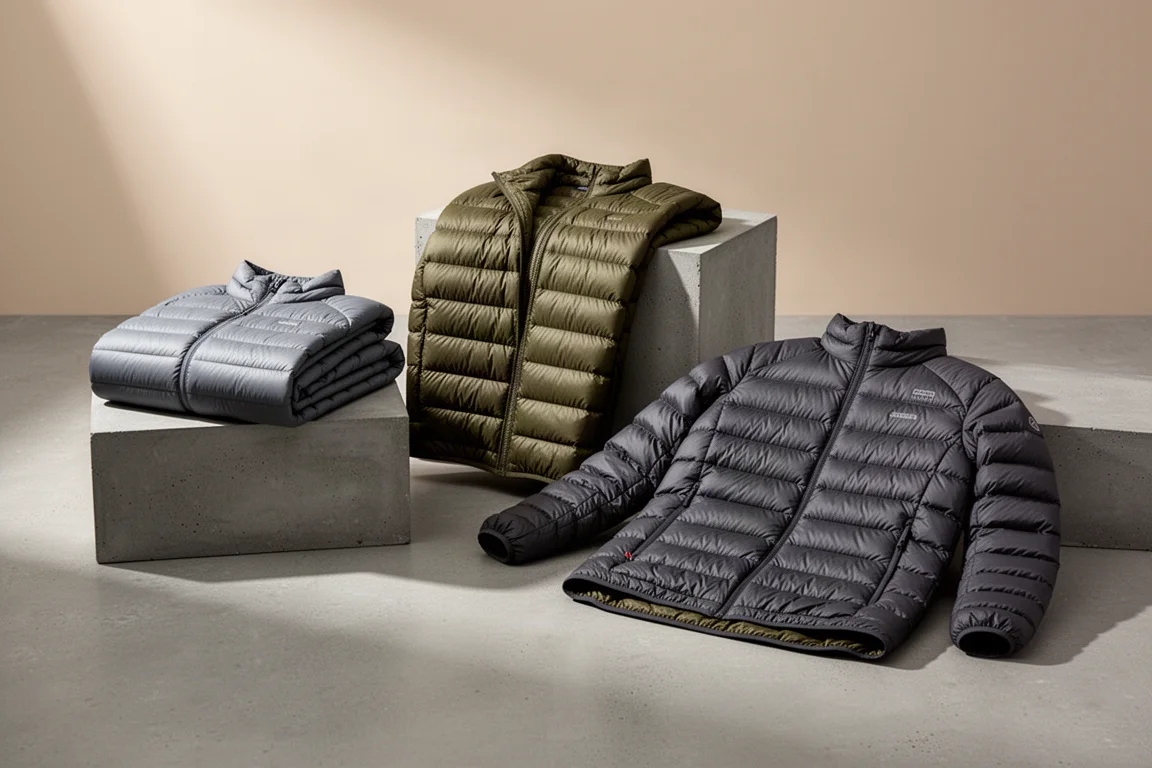
Ultralight down jackets can look almost interchangeable on a shop rack, and the spec sheets rarely explain what actually changes as the price climbs. The short answer is shell fabric, down fill, and how much you are willing to pay for a small reduction in grams.
This comparison covers four options: the Decathlon Trek 100, the Mountain Hardwear Ghost Whisperer 2, the Mountain Hardwear Ghost Whisperer UL, and the Ewol Pro heated vest. The original Ghost Whisperer has been a long-term favorite in this family of jackets, and the newer versions build on the same formula of a very thin shell wrapped around high fill power down.
For most weekend hikers, the Trek 100 is the clear value pick. For anyone counting ounces on a long-distance route, the Ghost Whisperer versions make a stronger case, provided the higher price and thinner fabric are acceptable.
How These Jackets Compare
The single biggest difference between these jackets is the shell fabric. The Trek 100 uses a 15 denier nylon shell, the Ghost Whisperer 2 uses a 10 denier shell, and the Ghost Whisperer UL drops to 7 denier. Lower denier means a thinner, lighter fabric, and it also means a shell that is easier to snag or tear.
Down fill follows a similar pattern. The Trek 100 and the Ghost Whisperer 2 are both 800 fill, while the Ghost Whisperer UL steps up to 1000 fill. Higher fill power describes a puffier plume, which allows a jacket to reach the same loft with less down inside. It is not automatically a warmer jacket. It is a lighter way to achieve similar warmth.
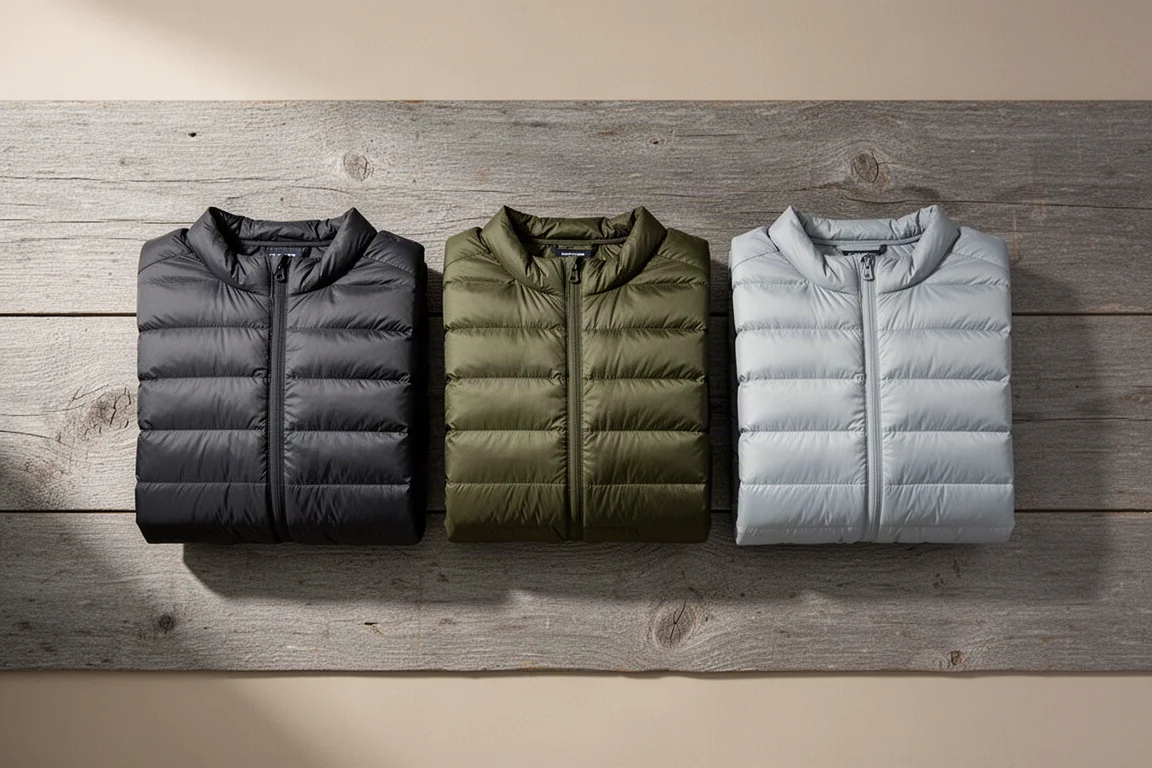
The down blend differs slightly between models, with the Trek 100 using a duck and goose mix while the Ghost Whisperer jackets lean more heavily on goose down. All of the down here is RDS certified and ethically sourced, which means it is collected after the animals have died rather than being live-plucked.
The three down jackets also share the same practical feature set: a hood, hood adjustment, elastic cuffs, and the ability to pack into their own pocket. In use, there is no noticeable difference in warmth between them.
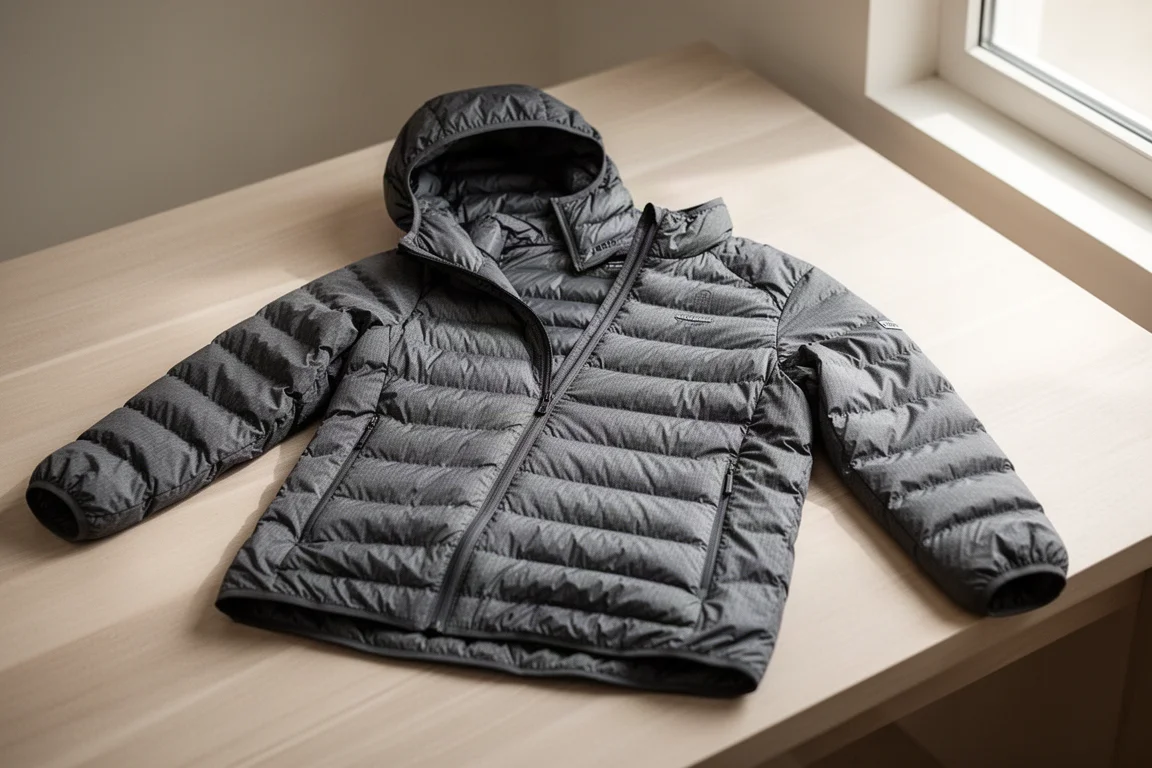
Decathlon Trek 100: The Best Value Down Jacket
The Trek 100 is the heaviest jacket in this group, and it is also the one that costs the least by a wide margin. At roughly $80, it undercuts the Ghost Whisperer 2 by about $245. What you get for that money is a 15 denier shell, 800 fill down, and the same hood, cuffs, and packability as the more expensive options.
The extra weight is the trade-off. For a weekend trip or a day hike, that difference is unlikely to be noticeable on your back. The thicker shell is also the most forgiving of the group, which matters if you tend to brush against branches or rock while wearing your insulation.
Mountain Hardwear Ghost Whisperer 2: A Lighter Alternative
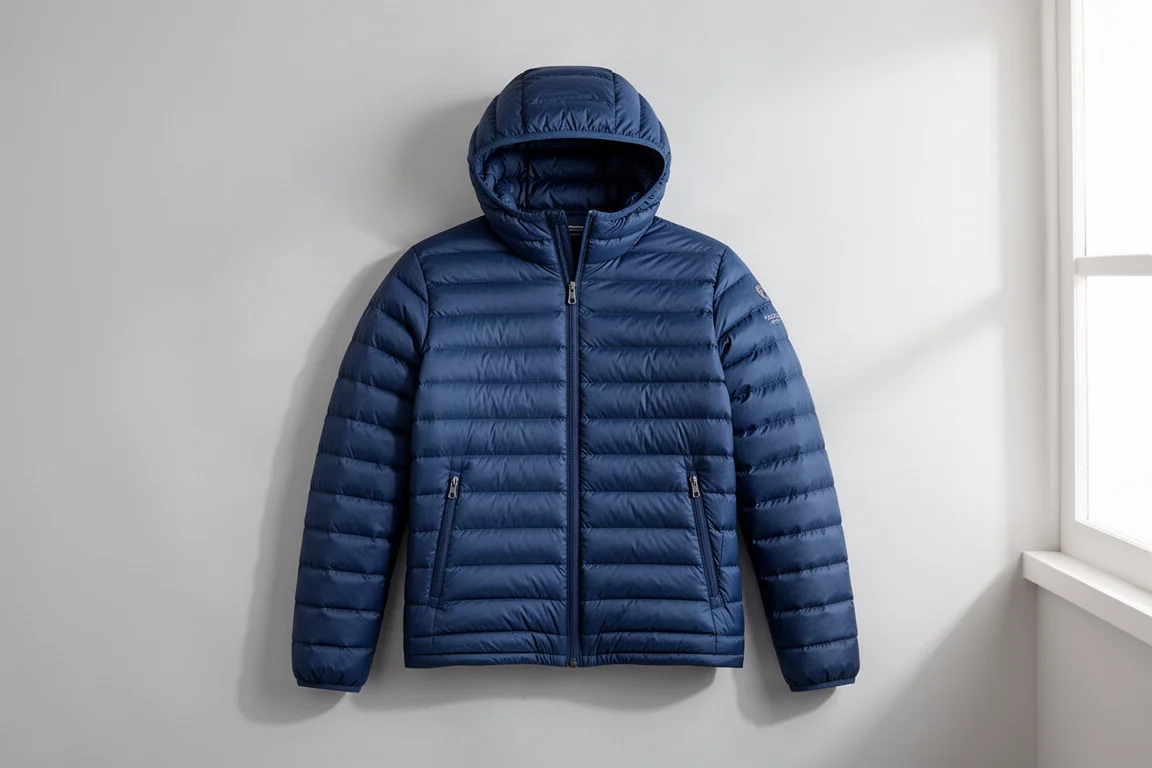
The Ghost Whisperer 2 swaps the 15 denier shell for a 10 denier one and drops roughly an ounce and a half compared with the Trek 100. It keeps the same 800 fill down, the same hood and hood adjustment, the same elastic cuffs, and the same ability to pack into its own pocket.
That ounce and a half is essentially the entire practical difference, and it comes at a cost of around $245. Whether that trade makes sense depends on how much you value weight. For high-mileage hikers, an ounce and a half on the torso can matter over a long day. For everyone else, it is a small saving in grams for a much larger outlay.

The thinner shell is also more delicate than the Trek 100, so it is worth treating with a little more care around thorns, branches, and rough rock.
Mountain Hardwear Ghost Whisperer UL: The Ultralight Option
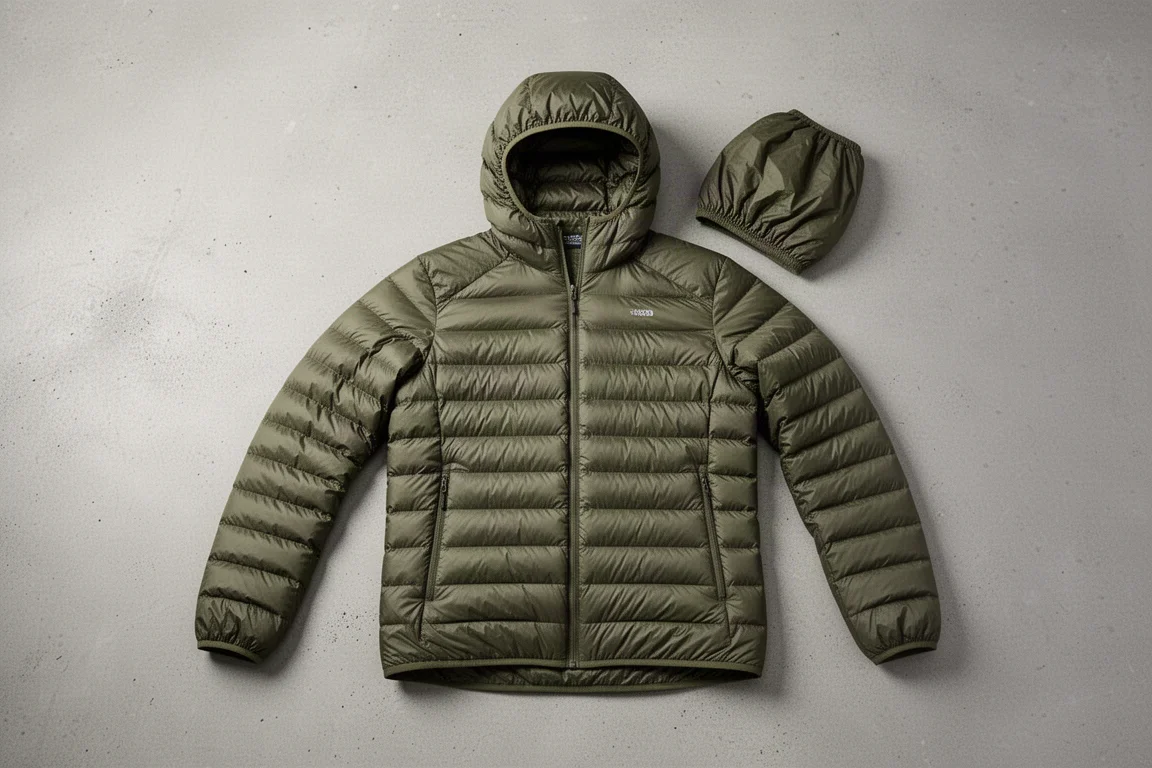
The Ghost Whisperer UL takes the same approach further. The shell drops to 7 denier, the down steps up to 1000 fill, and the jacket comes in close to four ounces lighter than the Trek 100. It costs around $300 more than the Trek 100.
This is the jacket for people who track base weight carefully and are willing to accept a fragile shell in exchange. It is the least durable option here, and it is the most expensive. It keeps the hood, hood adjustment, elastic cuffs, and the same pack-into-its-own-pocket design as the rest of the family.
Ewol Pro Heated Vest: Extra Warmth on Demand
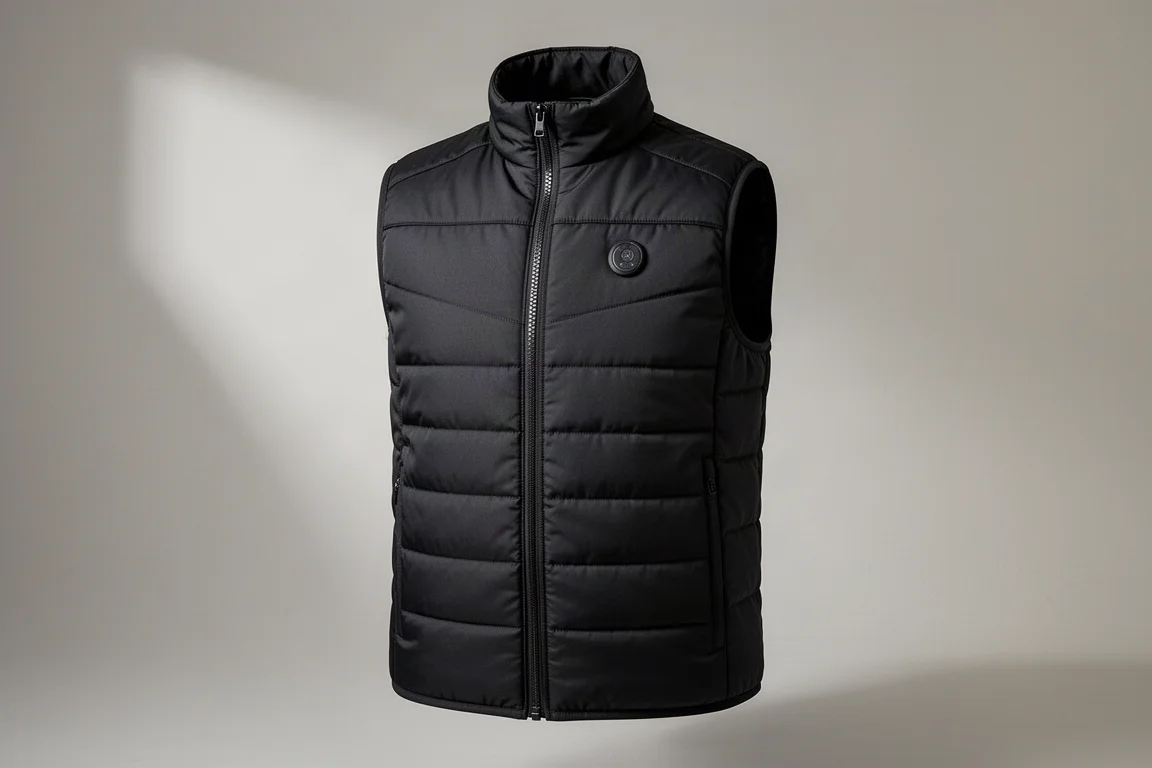
If a down jacket alone is not enough on the coldest days, a heated layer underneath can close the gap. The Ewol Pro heated vest warms up in about three seconds on its high setting. High delivers roughly two hours of heat, medium around four hours, and low up to eight hours, which makes medium the most practical everyday setting for most conditions.
Charging is straightforward. There is no battery to remove, you simply plug the vest in. It has been used at outdoor soccer and baseball games, on base camping trips, and on RV camping weekends with family, which says a lot about how flexible a heated layer can be.
This is a layering piece rather than a replacement for a down jacket. Think of it as insurance for the days when the temperature drops further than expected.
What Fabric Weight Means for Durability
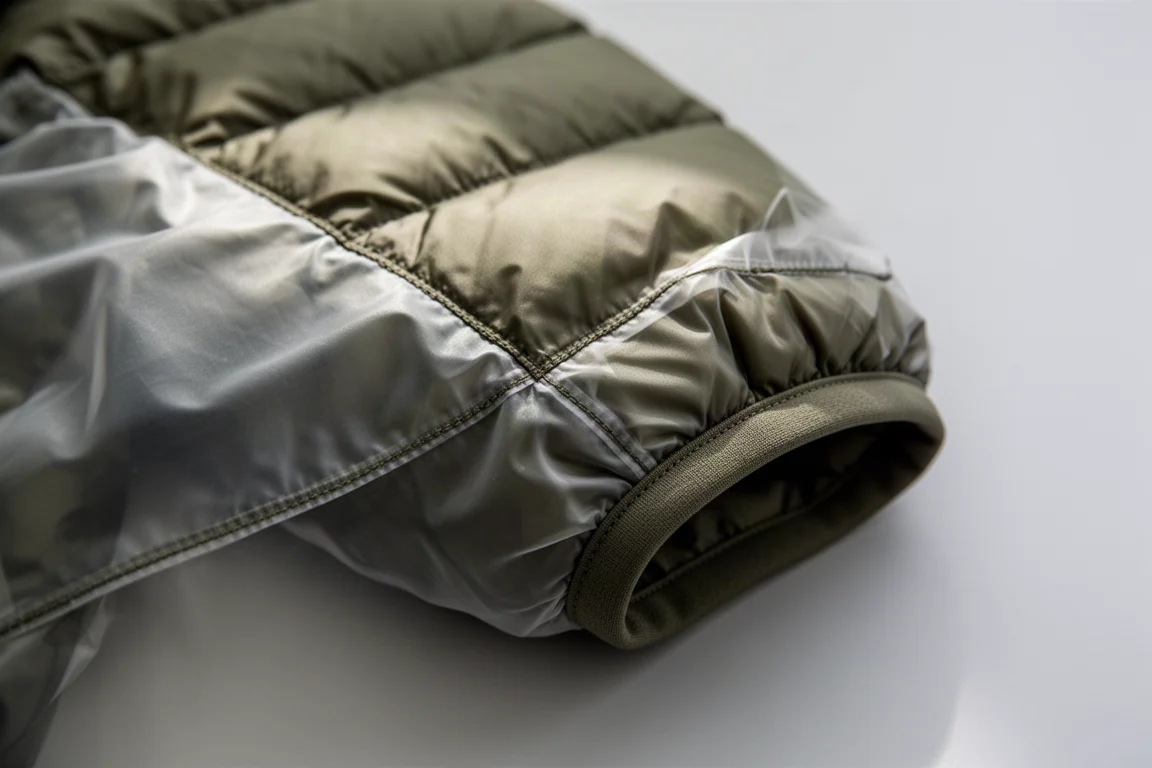
Denier describes the thickness of the nylon yarn used in the shell, and it is the clearest guide to how tough a jacket will be. A 15 denier shell is thicker than a 10 denier shell, which in turn is thicker than a 7 denier shell. In practice, any of these jackets can tear if it catches on a branch or a thorn, so none of them should be treated as a hard-wearing outer layer.
That is the honest trade-off at the heart of this comparison. Lighter fabric costs more and survives less. A heavier fabric costs less and takes more abuse, which is why the cheaper jacket is often the easier one to live with.
Buying Advice
Match the jacket to how you actually use it. If you hike on weekends, want a warm layer for camp, and would rather keep your money, the Decathlon Trek 100 is the sensible choice. It is the heaviest jacket here, but the weight penalty is small and the shell is the most durable of the three down jackets.
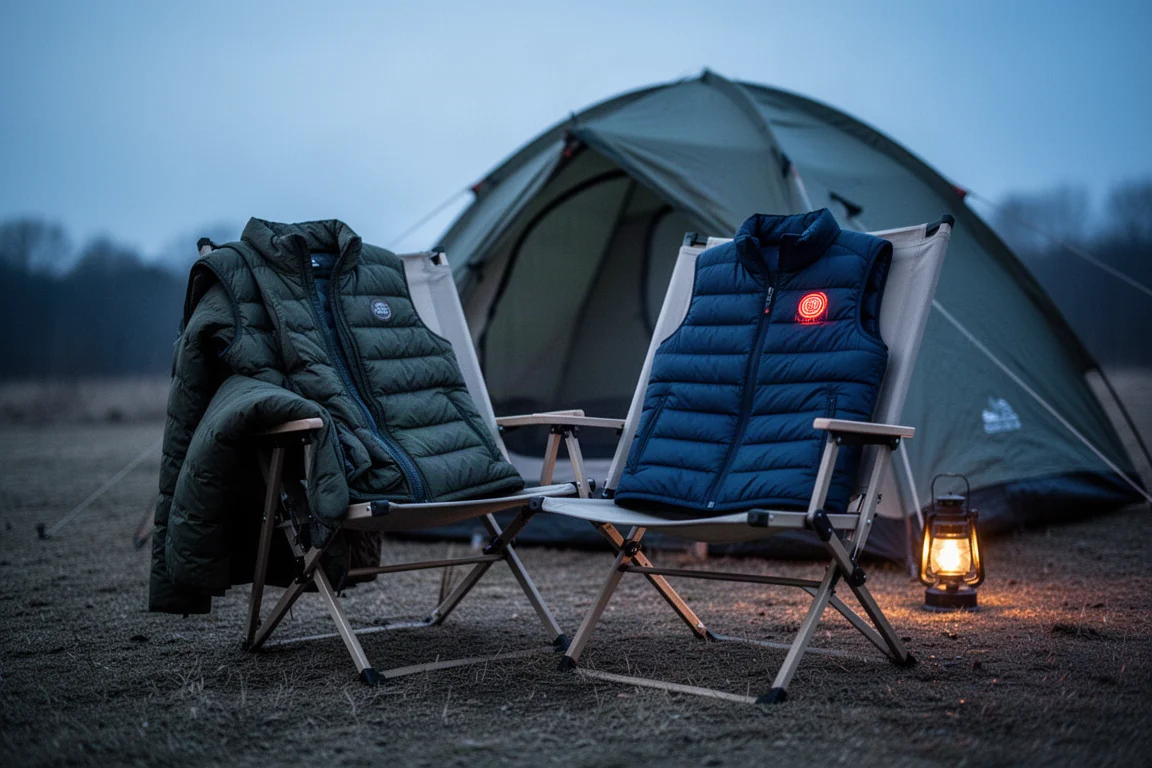
If you cover long distances and every ounce counts, the Ghost Whisperer 2 is the middle step and the Ghost Whisperer UL is the extreme one. Both are lighter than the Trek 100 and both cost considerably more, and the UL in particular asks you to accept a very thin shell in exchange for the lowest weight in the group.
If you already own a down jacket and simply want more warmth on cold evenings, the Ewol Pro heated vest adds heat on demand without replacing anything in your kit. It is the one item here that layers underneath everything else you already carry.
Conclusion
There is no single winner here, only the right trade-off for your trip. The Trek 100 gives you most of the performance for a fraction of the price, the Ghost Whisperer 2 trims weight without going to extremes, the Ghost Whisperer UL is built for people who count every gram, and the Ewol Pro heated vest is the extra layer for the coldest days. Decide which of those descriptions fits your hiking, and the choice becomes straightforward.
Further reading
Related Reviews
Down Jackets
Best Budget Down Jackets 2026: Three Picks Worth Considering
A practical look at three budget down jackets between $80 and $150, compared on warmth, features, build quality, and weight.
Down Jackets
Best Down Jackets 2026: From Budget Warmth to Extreme Cold
Nine technical jackets compared by warmth, weight, price, and availability, from an affordable $120 layer to a 537 g expedition jacket worn down to -30°C.
Down Jackets
RAB Mythic G vs Decathlon MT500: What a $525 Down Jacket Actually Buys You
Two down jackets with similar warmth on paper and a price gap of nearly $400. Here is where the money goes and which one suits which kind of buyer.