Camping Shelters
DD Hammocks Erakko Tarp Review: A Compact 8.2 ft Shelter for Short Stops
A detailed look at the DD Hammocks Erakko tarp: a small, light 8.2 ft square shelter with a 3,000 mm waterproof rating and nine tie-out points, plus the build and value questions worth checking first.
Introduction
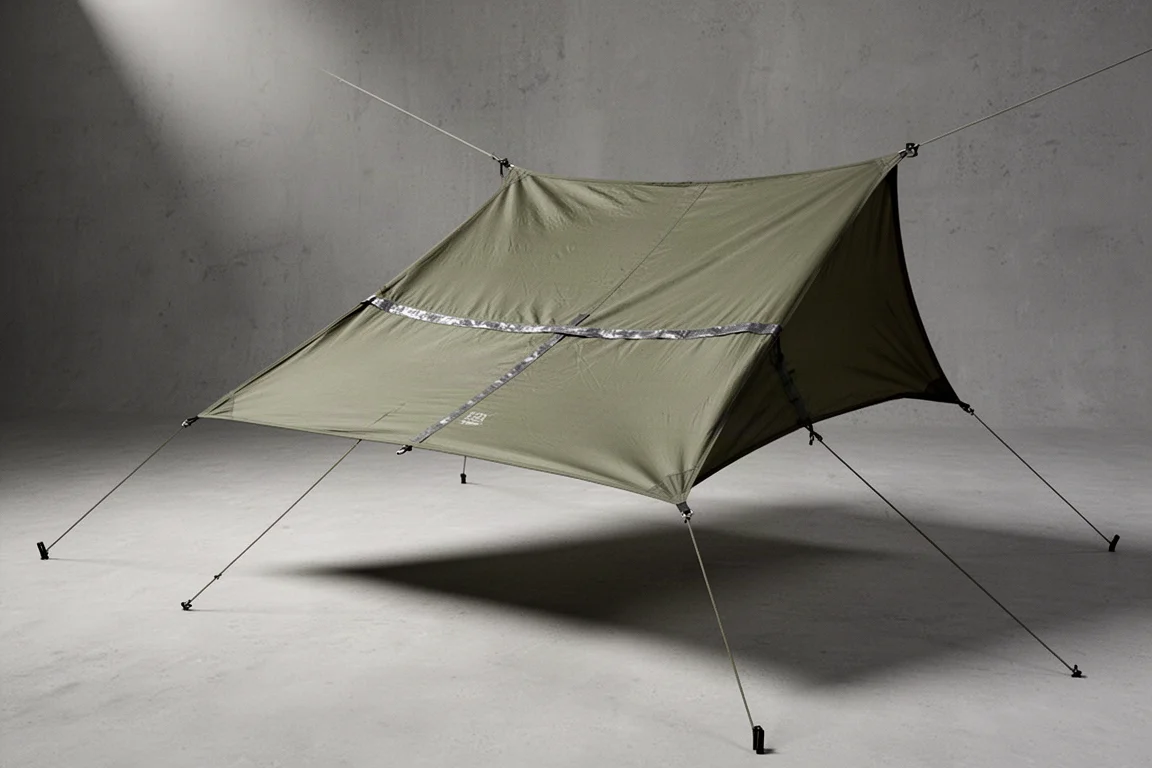
The DD Hammocks Erakko tarp is an unusual piece of kit. It measures 8.2 ft by 8.2 ft (98.5 in by 98.5 in), a size that sits well outside the mainstream of camping tarps, and it was developed as a collaboration between DD Hammocks and a smaller outdoor brand. The name comes from the Finnish word for hermit, which tells you most of what you need to know about the intent: a single-person shelter that stays light and packs small.
DD Hammocks positions the Erakko as a simplified, smaller version of its established 3m x 3m tarp. To get there, the brand trimmed some tie-out points, left guy lines and tent stakes out of the box, and kept the packed size down. The tarp itself is made from 190T polyester with a polyurethane coating and a stated waterproof rating of 3,000 mm. Nine tie-out points are fitted, including one in the centre, and the whole package weighs around 1.2 lb with its storage bag. It sells for around $60.
That combination of a small footprint, a fairly ordinary material specification, and a $60 price is what makes the Erakko worth a careful look before you buy. This review covers what you get, where the tarp works well, and the trade-offs that matter.
Who This Tarp Is For
The Erakko is built as a single-person tarp, and its 8.2 ft square footprint is the defining feature. That is small for a shelter. It is best understood as a short-duration tarp: something you pitch quickly around yourself for a windbreak, a lunch stop, or a brief escape from rain or snow. It is not intended as an overnight camping shelter in rough conditions.
That distinction matters. A tarp this size blocks wind reasonably well, but it offers limited protection from rain and snow, particularly when either is driven by wind. Anyone considering it should already have a clear idea of how they will pitch it and in what conditions. If you need reliable, livable cover for a full night out, a larger tarp is the more sensible starting point.
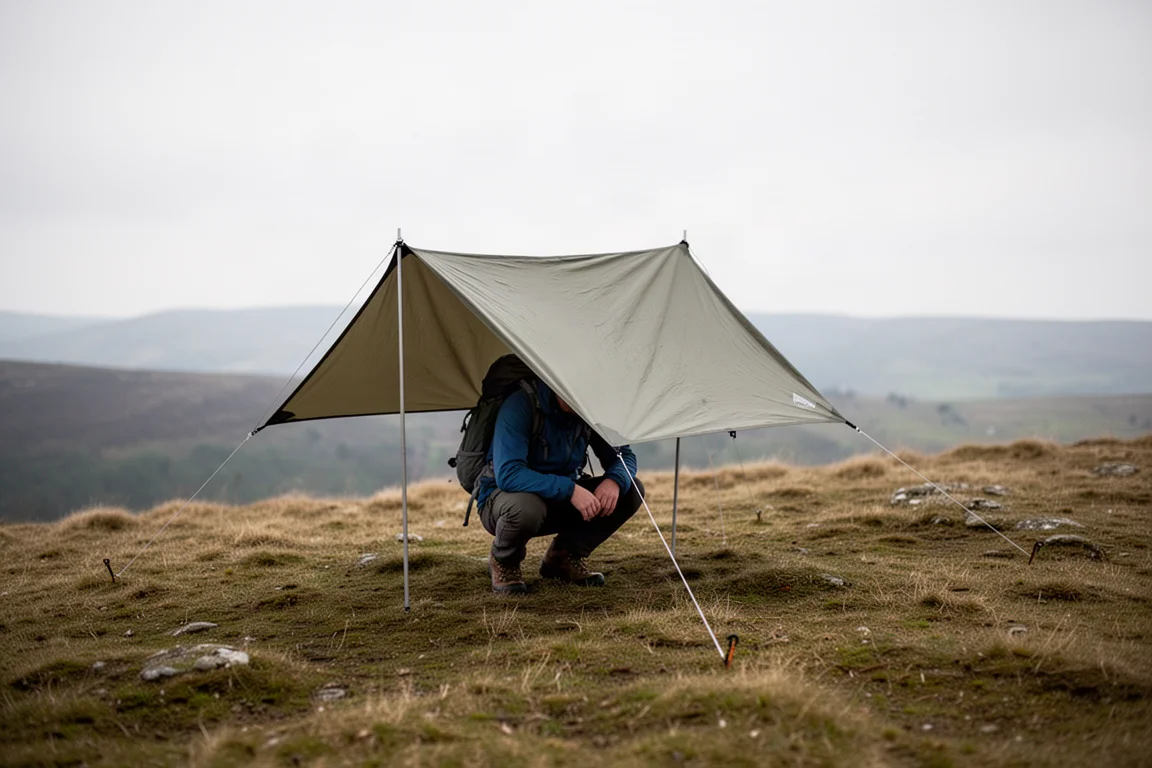
For hikers who understand those limits, the appeal is straightforward: a small, light sheet of coated polyester that takes up very little room in a pack and can be deployed in a hurry. For everyone else, the size is likely to be the deciding factor against it.
Design, Materials, and Build Quality
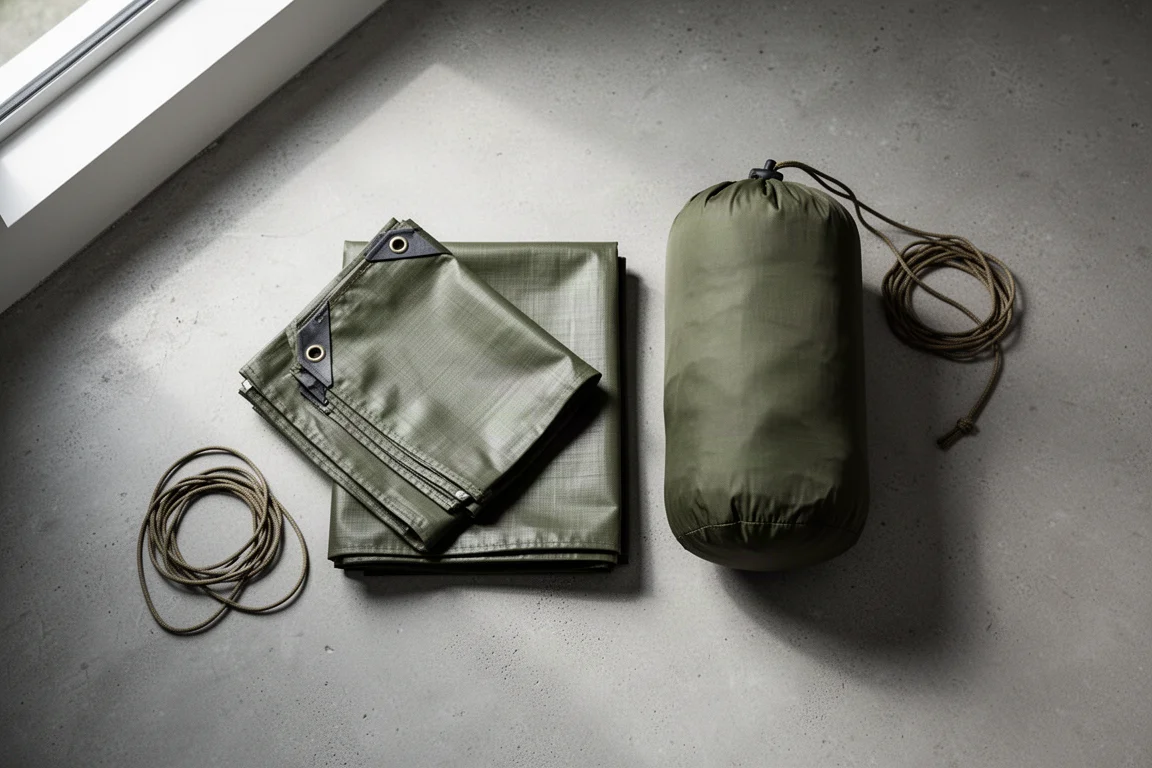
The fabric is 190T polyester with a polyurethane coating and a 3,000 mm waterproof rating. That is a serviceable specification, but 190T polyester is a heavier, thicker material than the fabrics used on lighter tarps, and it takes up more space as a result. The tarp packs down to roughly 10 in by 2 in in its storage bag and weighs about 1.2 lb with the bag.
Nine tie-out points are fitted, including one at the centre. The corner and edge tie-outs are reinforced with additional stitching, which is a sensible detail on a tarp that will be pulled taut, and a taped seam runs across the centre of the sheet.
Build quality is where the Erakko raises questions. Small holes in the fabric, separate from the stitching, act as weak points where water will eventually find its way through. Loose threads and a corner where the stitching has clearly been run over a second time point to inconsistent finishing. The centre tie-out is also arranged as two points of contact with a gap between them, which does not pull the fabric as cleanly as a single central attachment would.
Main Strengths
The first strength is simplicity. There is nothing complicated about the Erakko: a square sheet, nine attachment points, and a stuff sack. Pitching it is quick, and there are no extra components to lose or maintain.
The oversized storage bag is a genuinely useful touch. Folding a tarp back into a tight stuff sack is one of the small frustrations of tarp camping, and a generous bag makes the process much easier. If you fold the tarp rather than roll it, the packed size stays compact.
The reinforced tie-out stitching and the taped centre seam are the right instincts for durability, and the 3,000 mm coating is enough for the kind of short, light exposure the tarp is designed around. As a windbreak, it does its job. The material blocks moving air effectively, which is the main reason to carry a shelter this small.
Things to Consider Before Buying
Size is the first consideration, and it is not a minor one. An 8.2 ft square tarp has to be pitched low in rain to keep you dry underneath, and pitching low means very little usable space. Even in steady, non-driven rain, splashback and airborne mist will reduce the dry area under the sheet. In wind-driven rain or snow, the protection on offer is limited.
The number of tie-out points also restricts what you can do with the tarp. Nine is workable, but more attachment points mean more pitching options and more versatility. The centre attachment, with its two-point contact and central gap, does not pitch as neatly as a single point would.
Then there is the question of what is not in the box. The Erakko ships with the tarp and the storage bag only. No guy lines, no tent stakes. The reasoning is that users can carve pegs from sticks and will often replace stock cordage with their own, which keeps costs down. In practice, you will need to supply both before your first trip, and that should be factored into the decision.
Finally, the materials are budget-grade for this class of product, and the finishing issues noted above are a reminder that quality control is not guaranteed on every unit.
Weather Protection and Real-World Use
The Erakko’s performance splits cleanly along weather lines. Against wind, it works. The coated polyester stops moving air, and a low pitch creates a useful pocket of calm for a rest stop or a quick meal.
Against rain and snow, the picture is much less encouraging. A tarp of this size cannot be pitched high in wet weather without letting water in underneath, so you end up crouched under a low, tight shelter with limited headroom. Splashback from the ground and moisture carried through the air will both cut into the dry space, and wind-driven precipitation will find its way past the edges.

That makes the Erakko a fair-weather and short-duration shelter rather than a storm shelter. Used with those expectations, it can be a handy piece of kit: something that lives in the bottom of a pack for sudden showers or exposed ridgelines. Treated as a camping tarp for a full night in bad conditions, it will disappoint.
Value and Alternatives
At around $60, the Erakko sits in an awkward spot. For roughly $15 more, DD Hammocks’ own 3m x 3m tarp is considerably larger, includes tent stakes and guy lines, and offers more tie-out points. The OneTigris Bulwark tarp is another point of comparison at around $54: it comes with guy lines and stakes, covers a much larger area, and provides a long list of attachment points. Tarps costing around $90 push further still, with better materials, a higher waterproof rating, more tie-out points, and lower weight.
The Erakko’s argument for itself rests on being the smallest and most packable option in that group. If that specific combination is what you need, the price is easier to justify. If you are simply looking for a general-purpose tarp, the money goes further elsewhere.
Buying Advice
Buy the Erakko if you want a very small, light tarp for short stops, wind protection, and emergency cover, and if you already know from experience that a tarp this size suits the way you travel. Plan on supplying your own guy lines and pegs, and practice pitching it low before you rely on it in wet weather. Learning to adjust a tarp quickly is the skill that makes a small shelter work, and slip knots on your lines make those adjustments much faster.

If you are not certain that a small tarp will cover the conditions you actually camp in, spend the extra $15 on the larger DD Hammocks 3m x 3m tarp or look at the OneTigris Bulwark at around $54. Both include the accessories the Erakko omits, and both give you far more room underneath. The Erakko is a specialist tool, and it makes sense only when the specialist need is real.
Conclusion
The DD Hammocks Erakko tarp is a well-intentioned idea with a narrow use case. Its 8.2 ft square footprint, roughly 1.2 lb weight, and nine tie-out points make it a genuinely compact option for short-duration shelter and wind protection. Its 3,000 mm waterproof-rated 190T polyester is serviceable, and the oversized storage bag is a welcome detail.
What holds it back is the combination of a small footprint, a $60 price, no included guy lines or stakes, and build concerns such as fabric holes and loose threads. Larger tarps that come with more accessories cost only a little more. For the right buyer, the Erakko is a light, packable answer to a specific problem. For most campers, a bigger tarp will be the better purchase.
Product link
View more details for DD Hammocks Erakko Tarp
This product is mentioned in the review. Check the specifications, options, and compatibility before buying.
View more details for DD Hammocks Erakko TarpFurther reading
Related Reviews
Camping Shelters
Alps Mountaineering Stealth 1 Bivy Review: A Waterproof Claim That Does Not Hold Up
The Alps Mountaineering Stealth 1 Bivy carries a 2,000 mm hydrostatic head rating and a waterproof claim, but sustained rain exposure and build quality concerns make it difficult to recommend.

Camping Shelters
AquaQuest Safari Hybrid 20 ft x 13 ft Tarp Review: Two Years Under a Very Large Roof
A long-term look at the AquaQuest Safari Hybrid 20 x 13 tarp, covering build quality, weather protection, setup realities, and who should buy one.
Camping Shelters
Backcountry Light Mesa 3 Hot Tent and Floor SL Tarp Review
A practical look at the Backcountry Light Mesa 3 four-season hot tent and its optional Floor SL Tarp, covering materials, stove jack design, packed weight, pricing, and the trade-offs to weigh before buying.