Fountain Pen Inks
Top 5 Fountain Pen Inks for Dark Academia: Romantic, Gothic, and Mysterious
Five inks that capture the dark academia mood, from shimmering Egyptian black to a 300-year-old classic.
Introduction
Dark academia celebrates intellectual pursuits, esoteric knowledge, and the places many of us already love: museums, libraries, and cafes. It is an aesthetic that pushes you to read more, learn something new, and embrace the interior life. And few things underscore that mood better than the ink you put on the page.
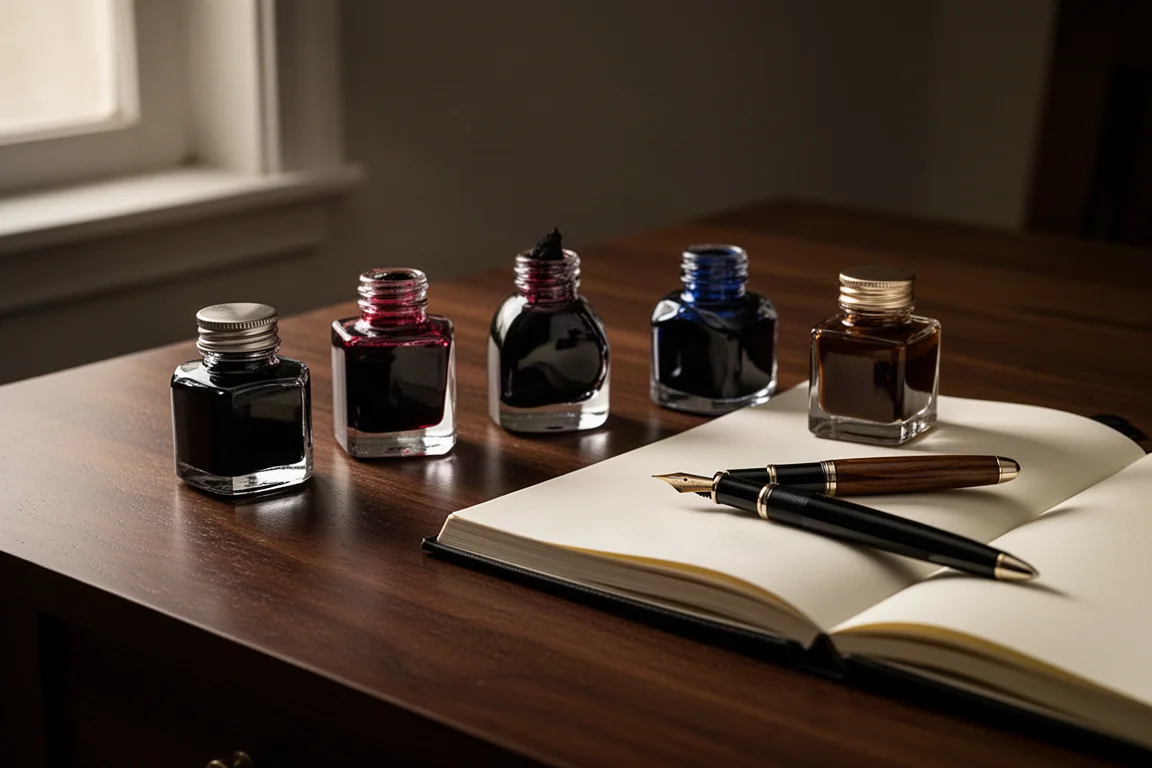
When choosing an ink for dark academia, you want something romantic, gothic, mysterious, and interesting. The five inks below each reflect a different corner of this aesthetic, from Egyptian mythology to medieval manuscripts to the cafes of 1920s Paris.
Wenceslaus Anubis: A Mysterious Egyptian Charcoal Black
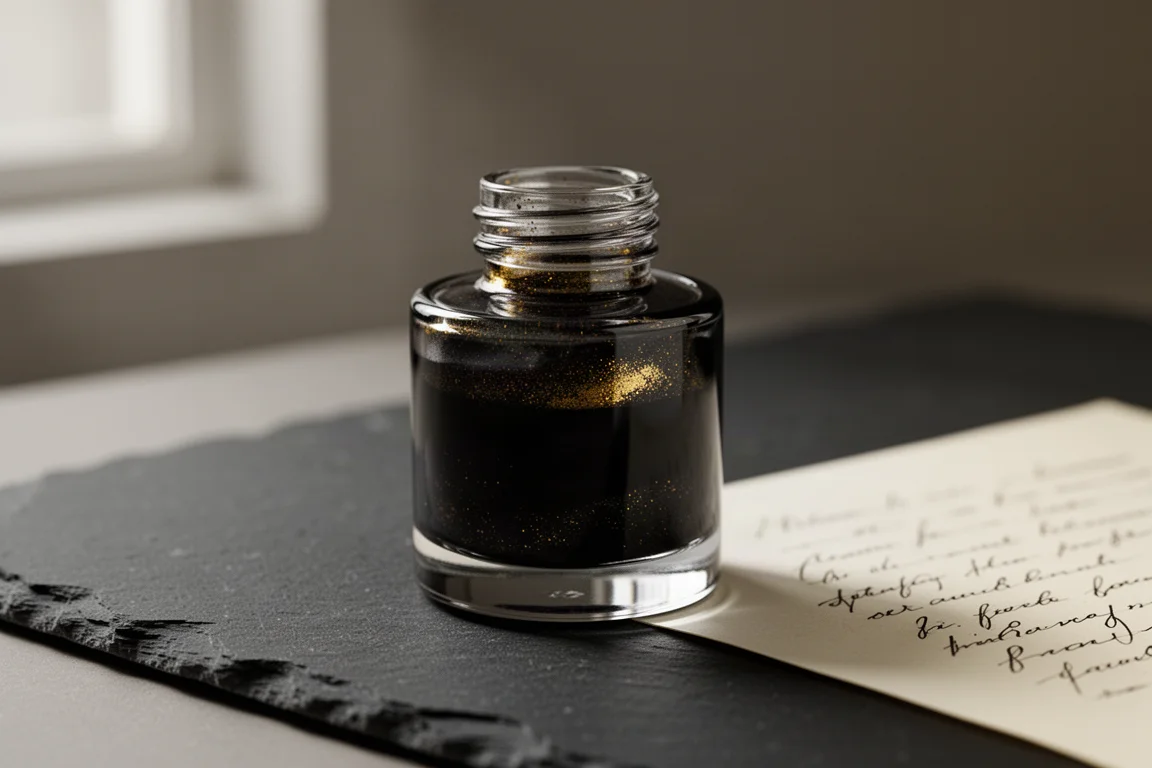
Wenceslaus Anubis distills the colors of ancient Egyptian idols into ink: a rich, deep charcoal black with hints of shimmering gold. Anubis, the Egyptian god of the dead with the head of a jackal, was central to egyptology, a popular theme of study within dark academia.
On the page, it offers fantastic contrast. The black base varies toward charcoal gray, with highlights of gold and copper that shimmer like the first light through a newly opened tomb. It makes for interesting notes, beautiful letters, and complements gold seals wonderfully.
One practical note: the ink is a touch dry, so it performs best in more free-flowing fountain pens.

Diamine Ox Blood: A Gothic, Visceral Red
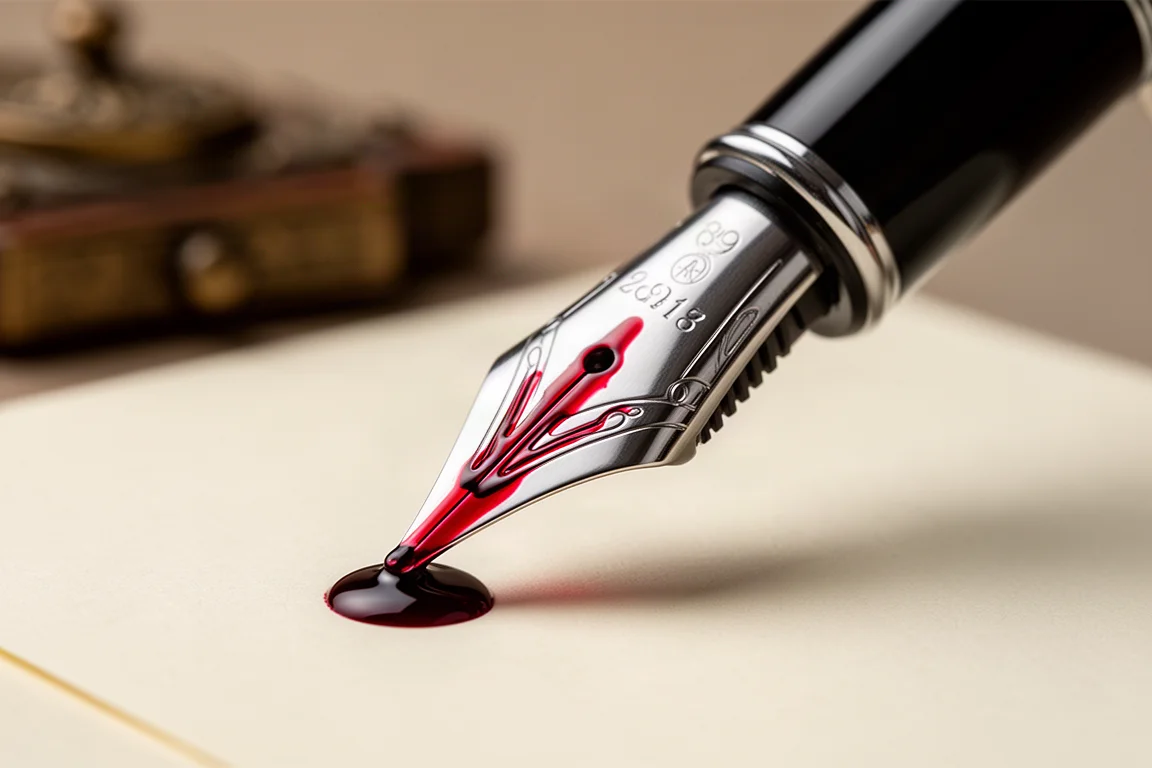
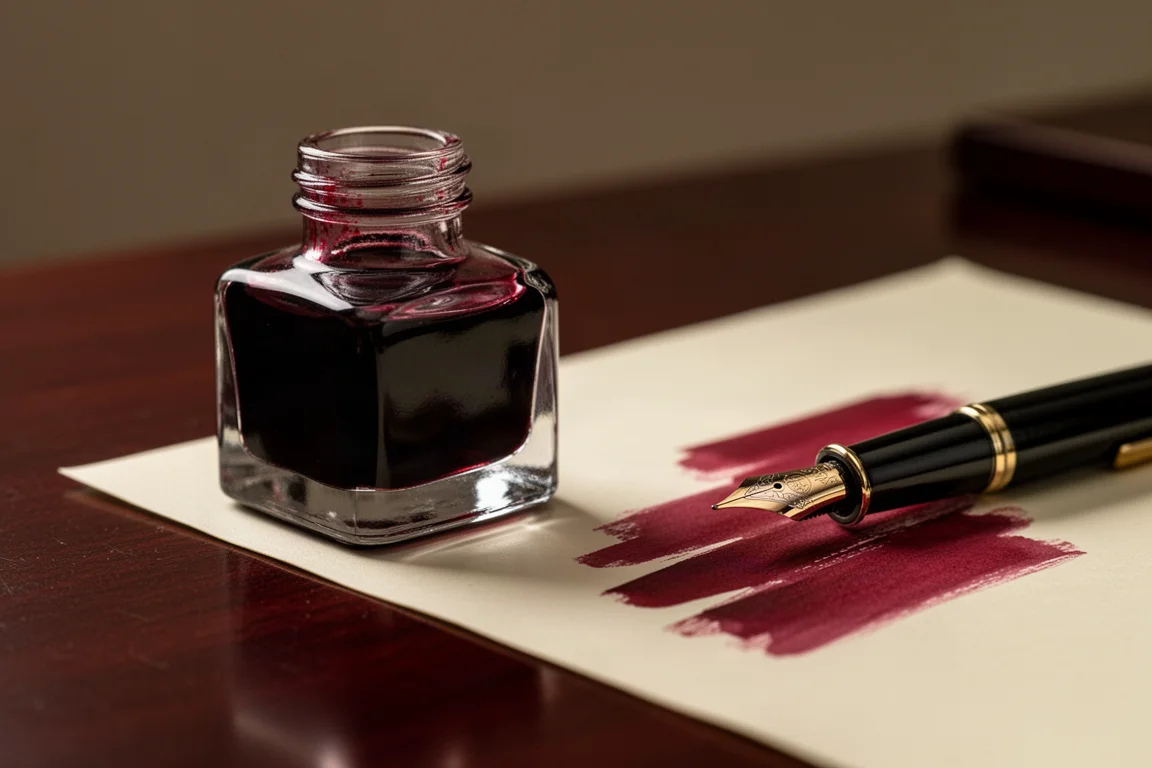
Diamine Ox Blood is a rich, visceral red with dark shading, giving it a wide range of color expression. It looks like writing in blood without opening an artery, and that suggestion gives any letter or note a dark, gothic, almost vampiric feel.
Writing in tones of blood suggests extreme commitment and passion, with an ancient and eternal quality to it. It will definitely make an impression.
It is also a wetter ink, suitable for all pens, and it carries no shimmer or affectation. It is simply perfect in its own right: purely sanguine and suggestive of sacrifice.
Montblanc Midnight Blue: A Nocturnal Blue in Disguise
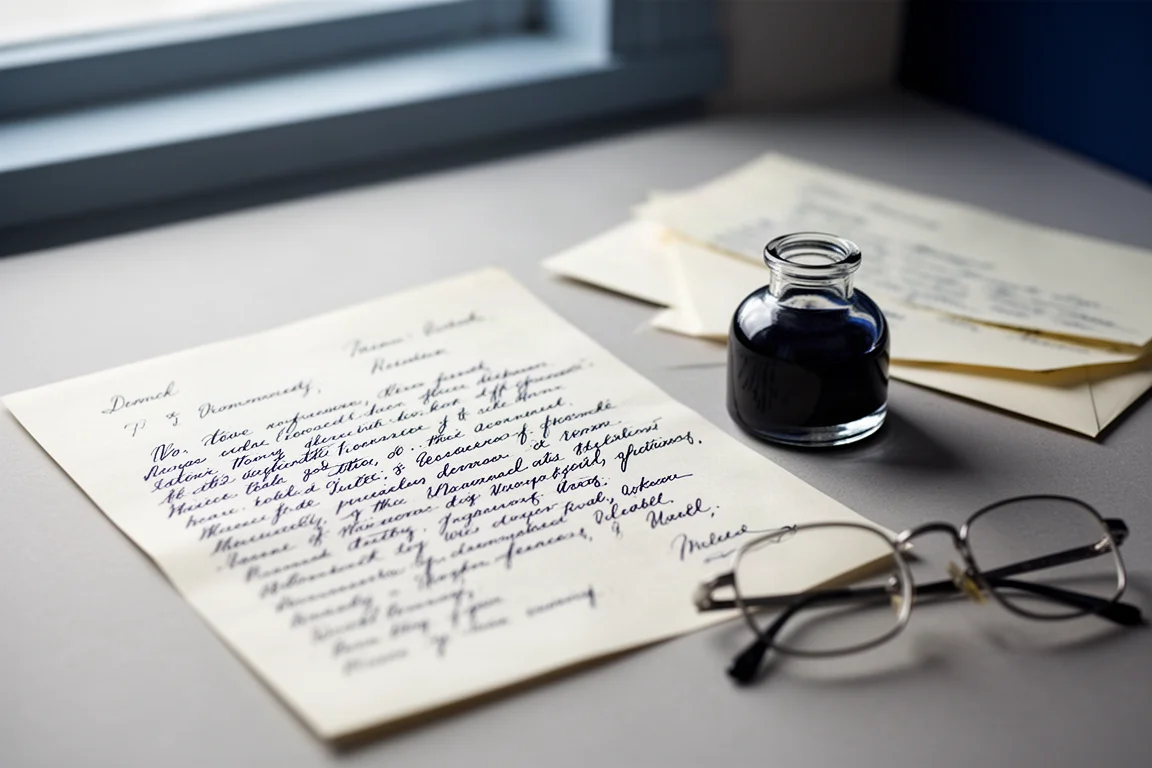
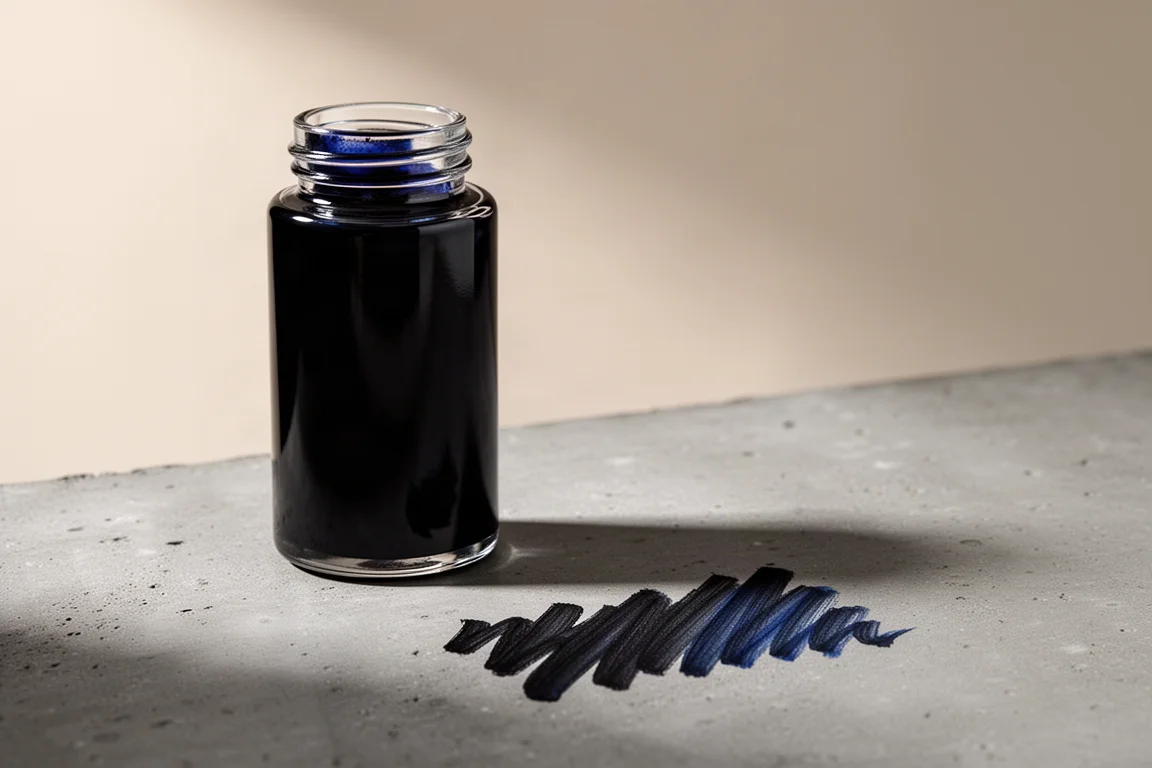
Montblanc Midnight Blue is a deep blue that is almost black, offering contrast while still giving a suggestion of color. It is easily taken for black, a blue in disguise: the color of night and the space between stars.
Blue inks once mattered for practical reasons. Before color copiers and printers, a blue ink signature proved a document was original, standing out from white paper and black print. Midnight Blue keeps that sense of mystery and authority.
This dark, mysterious blue is perfect for taking notes, writing letters, and general use, and it fits the dark academia mood effortlessly.
Anderillium Cuttlefish Brown: Sepia of Ancient Manuscripts
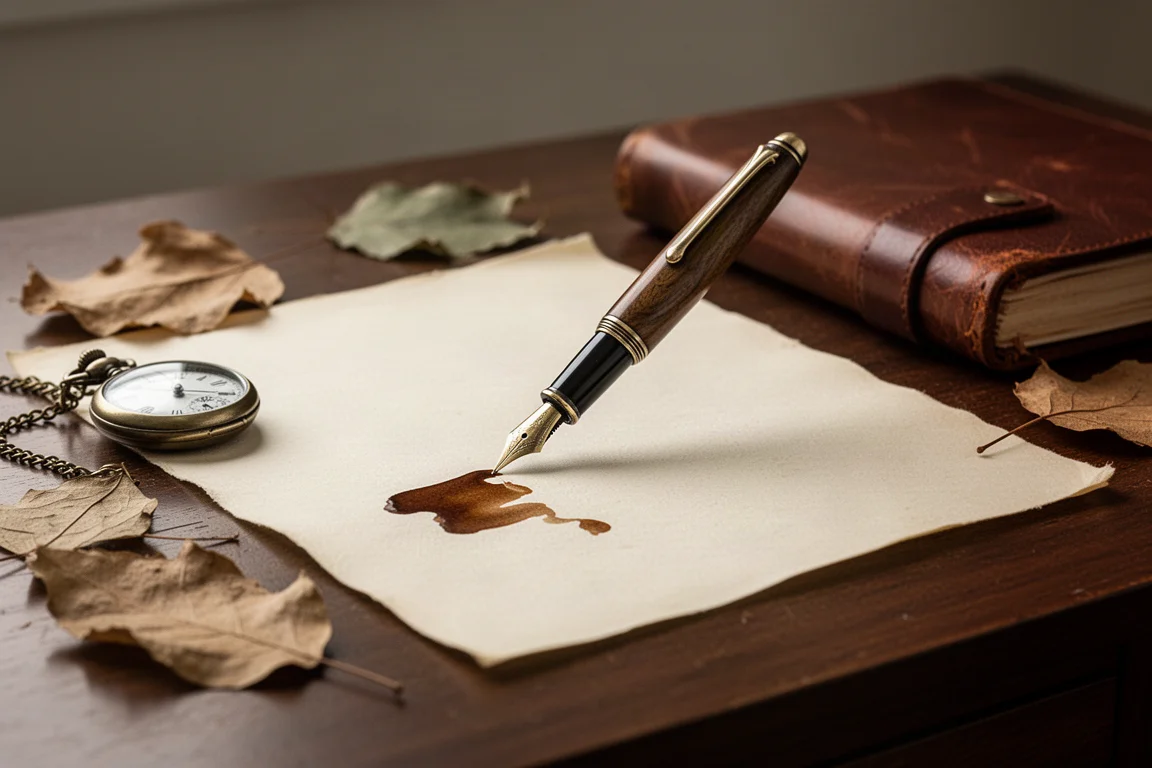
Anderillium Cuttlefish Brown is the perfect brown ink for evoking ancient manuscripts. Think of the notebooks of Leonardo da Vinci, or the writing on the Declaration of Independence, which now appears brown.
Historically, brown inks were made from the ink of the cuttlefish, a substance used to ward off predators, diluted and used to fill quills and inkwells in medieval and Renaissance Venice and England. Sepia tones imply age: vellum notebooks, ancient codexes, forgotten stacks in wood-paneled libraries.
Used for your notes, this deep brown with dark shading will look like an ancient grimoire, a 19th-century travel journal from the banks of the Nile, or the notes of a medieval alchemist. Whatever you write takes on a sense of permanence, and people will want to hold on to it.
J. Herbin Perle Noire: The 300-Year-Old Perfect Black
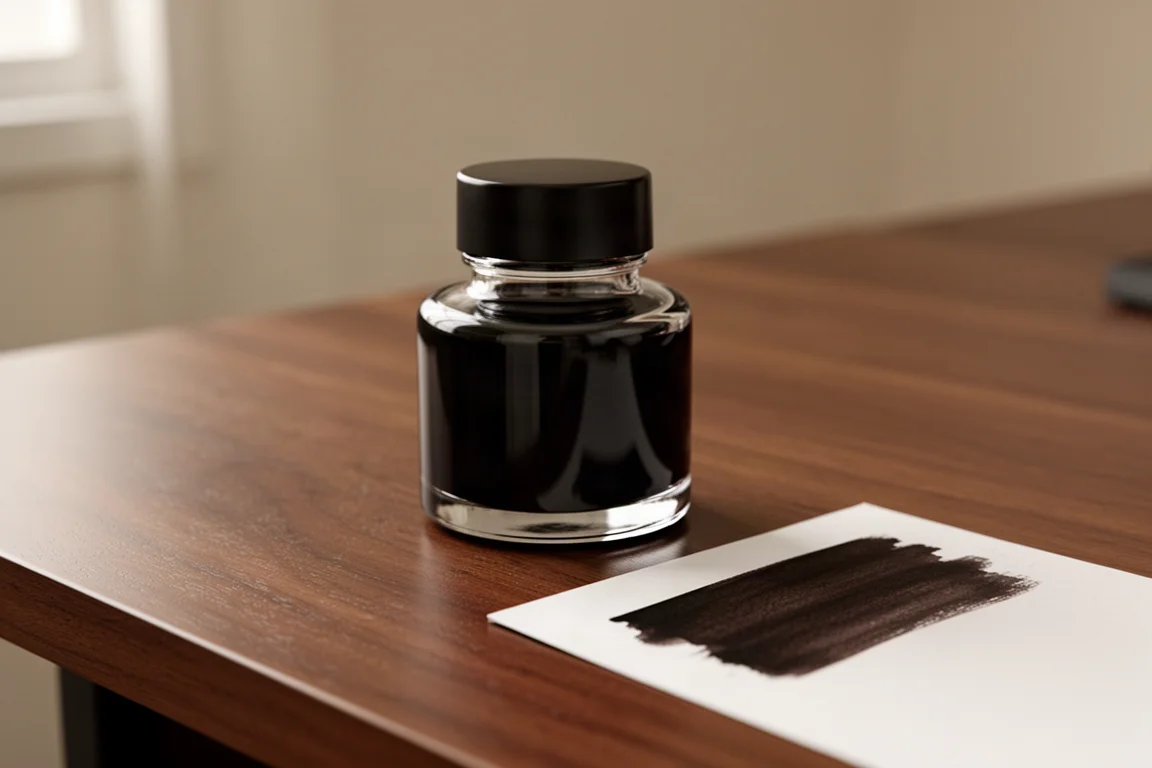
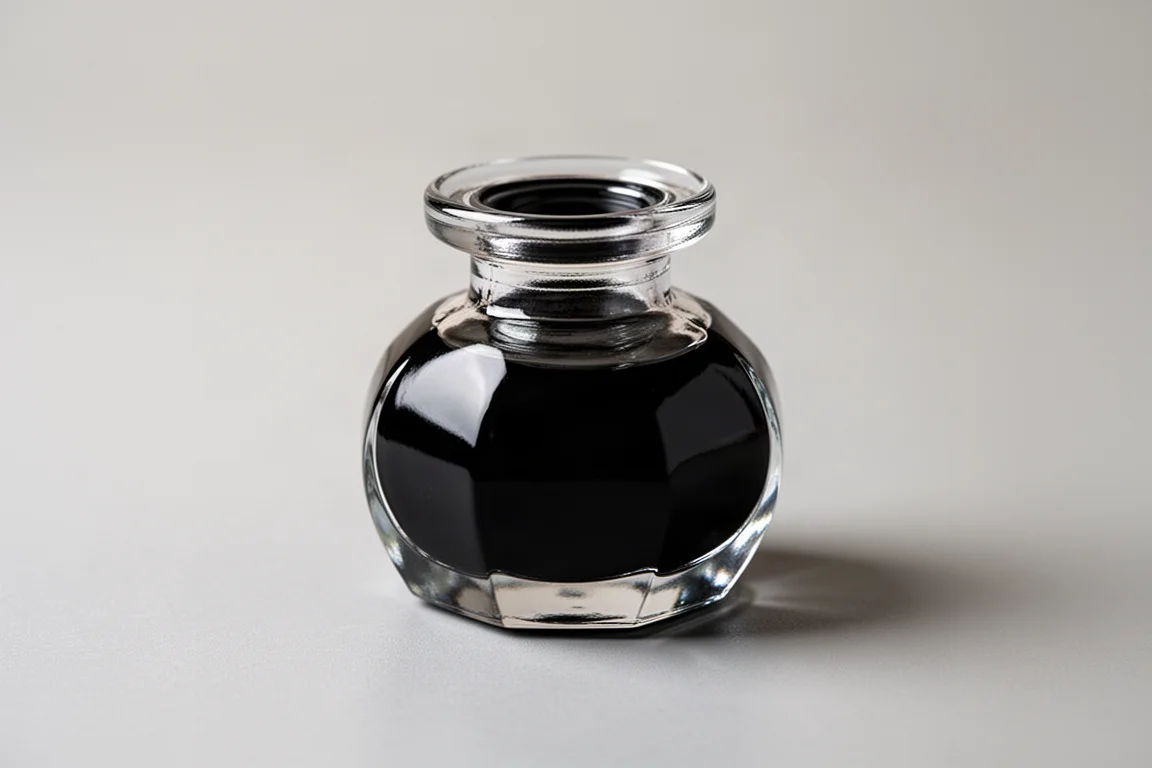
J. Herbin Perle Noire may very well be the first mass-market ink out there, coming from the ancient and venerable house of J. Herbin. It arrives in that charming little bottle with the integrated pen rest we all know so well.
Using it means jumping into a stream that traces back 300 years of writers, thinkers, and diarists, from the cafes of Paris in the 1920s and beyond. It is a lovely, deep shade of black, a ribbon of obsidian tone contrasting starkly on the page.
Practically, it is a natural dye ink with a neutral pH, which qualifies it as one of those inks that can work in any pen, no matter how delicate, including your vintage pens. And since vintage pens are a huge part of dark academia, that matters. Black has authority, mystique, and intrigue, and this is a commanding example of it.
Nib Choice: Getting the Best From Your Ink
The best expression of an ink really comes out in nibs of medium and above. You need a bit of line width to see the full character of whatever ink you are using. Extra fine and fine nibs are still fantastic and can show it too, but if you really want to delve into the unique characteristics of an ink, try a stub. It gives incredible line variation, which is held in very high esteem in dark academia.
Conclusion
Each of these five inks captures a different facet of the dark academia aesthetic: the golden shimmer of Egyptian myth, the gothic drama of blood red, the nocturnal mystery of a blue in disguise, the sepia permanence of ancient manuscripts, and the commanding authority of a centuries-old black. Choose the one that matches your mood, and let your penmanship do the rest.
Further reading
Related Reviews
Fountain Pen Inks
Six Fountain Pen Day Ink Picks Worth a Second Look
From a true sepia to a soft Delft blue, these six inks cover browns, greens, oranges, and blues with shading worth watching.
Fountain Pen Inks
Pelikan Edelstein Golden Lapis Review: A Deep Blue Ink Loaded With Golden Shimmer
Pelikan's 2024 Ink of the Year delivers a true medium blue with an enormous amount of gold shimmer, with a few practical trade-offs to weigh before buying.
Fountain Pen Inks
Kittywink Pot Ink Samples: 23 Shades Swatched and Reviewed
A full first look at 23 Kittywink Pot fountain pen inks, from muted greens and smoky browns to dual-shading purples, swatched and compared on paper.