Floorstanding Speakers
Dali Rubicon 8 Review: A Wide-Dispersion Floorstander for Real Rooms
A close look at the Dali Rubicon 8, a $12,000-per-pair floorstander engineered for wide dispersion, easy placement, and punchy dynamics in large rooms.
Introduction
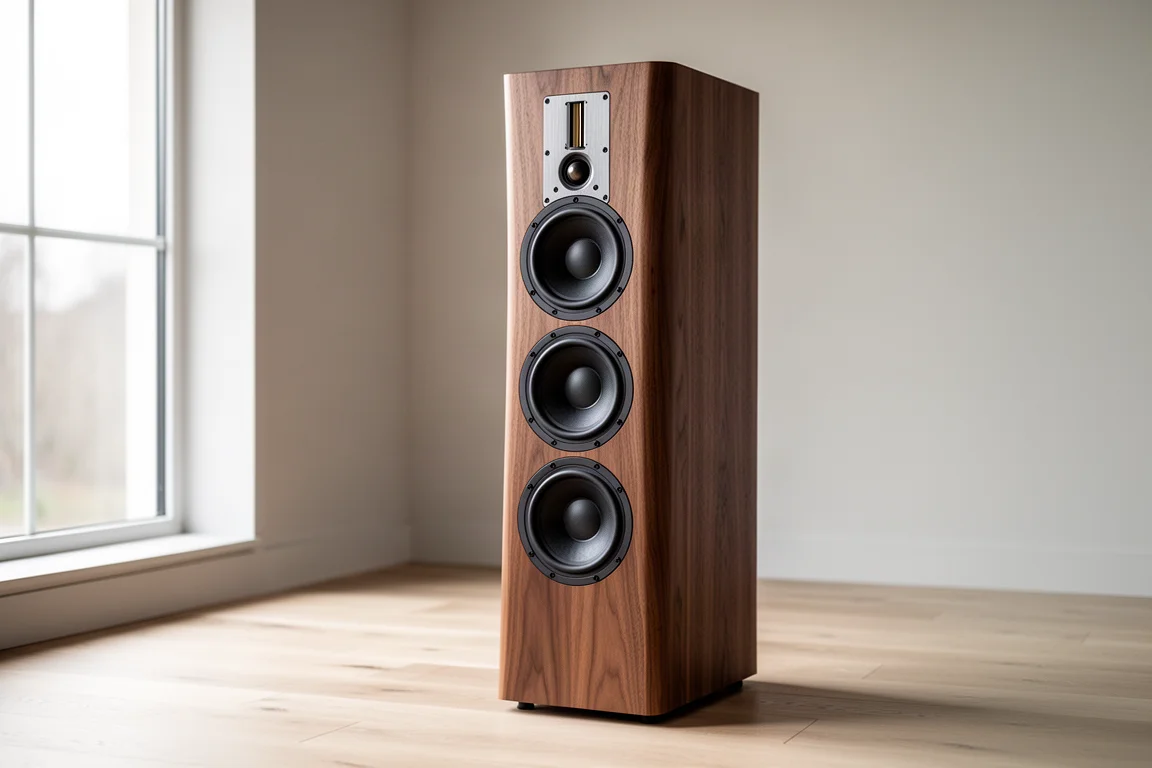
The Dali Rubicon 8 is a floorstanding loudspeaker built in Denmark and sold at around $12,000 per pair. It sits at the top of the Rubicon range and pairs three dedicated bass and midrange drivers with a two-part hybrid tweeter. That tweeter combines a 1 1/8 inch soft dome with a 2 inch planar ribbon element, and the crossover hands the top octave to the ribbon at 14 kHz.
The design goal behind it is unusually specific: keep dispersion wide at every frequency, so the speaker sounds consistent across a broad listening area rather than in one narrow sweet spot. The ribbon helps here, continuing to radiate high frequencies at wide angles where a dome on its own would begin to beam. The practical result in a room is a speaker that stays balanced for listeners sitting well off to the side, not only for the person in the centre seat.
Who the Dali Rubicon 8 Is For
This is a speaker for listeners with a reasonably large room and enough space to let a full-size tower breathe. Its measured sensitivity of around 90 dB, combined with a mild 4 ohm impedance curve, means it does not demand an exotic amplifier. A wide range of amplifiers can drive it comfortably.
It also suits people who would rather not fuss over toe-in. The manufacturer’s guidance is to place the speakers facing straight ahead rather than angled toward the listening position, and the measurements support that approach. If your speakers live in a shared living space and are set up once and then left alone, the Rubicon 8 is designed around exactly that habit.
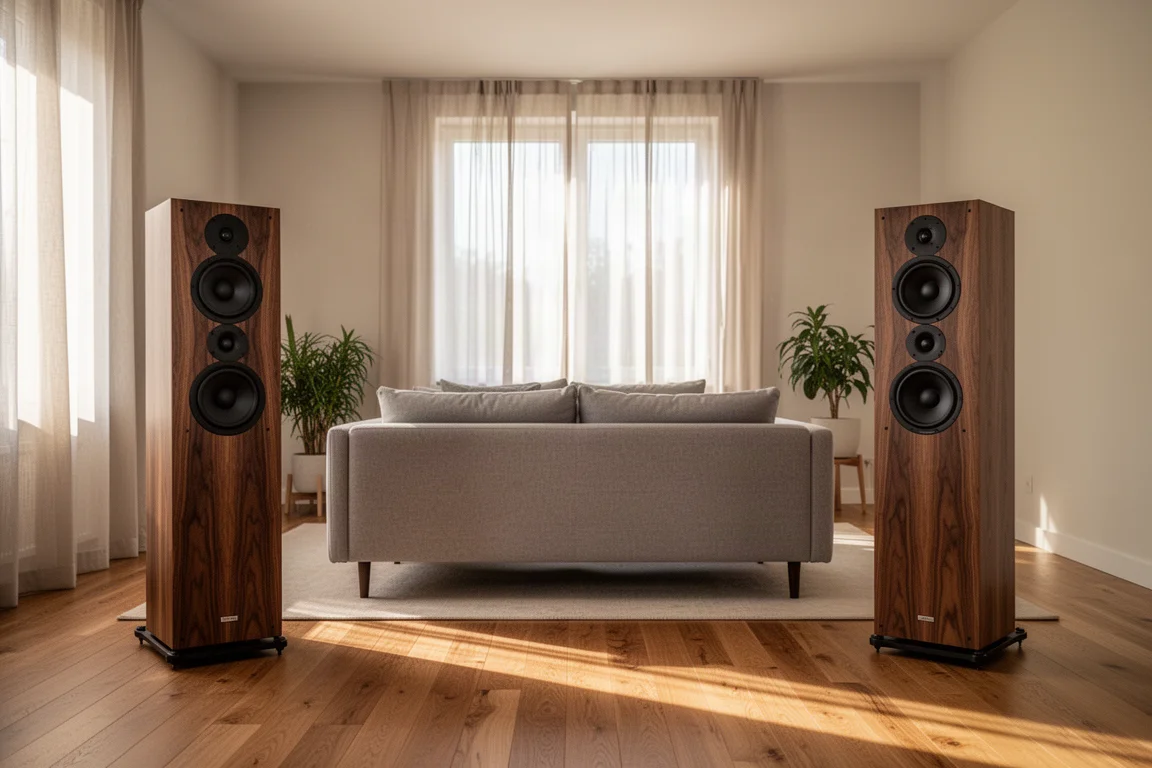
Where it makes less sense is a small room or a nearfield desktop setup. A tower of this size, with three 6.5 inch woofers and a ported cabinet, needs distance and volume to sound its best, and it rewards listeners who can give it both.
Main Strengths
The most striking quality is the size of the presentation. Wide dispersion and strong high-frequency detail combine to create an enveloping stage that feels larger than the physical distance between the two cabinets. On well-recorded material with plenty of decorrelated information, the effect is genuinely room-filling without any surround processing.
Imaging holds up well despite the broad radiation pattern. Speakers that spread sound widely sometimes blur the position of instruments, but the Rubicon 8 keeps performers anchored and specific.
Dynamics are another strength. The drivers are built to take power, and the speaker stays composed and punchy when asked to play loudly. In a large listening space it filled the room with tight, deep bass and never sounded strained.
Tonal balance is good once the speakers are positioned as intended. Placed straight ahead, the treble settles into a neutral, even character, and the midrange stays linear through the critical 2 to 4 kHz region.
Driver Design and Cabinet Construction
The Rubicon 8 is a 2.5 plus 0.5 plus 0.5 way design, which is a compact way of describing three woofers handling progressively narrower bands. The lowest driver runs from port tuning up to 500 Hz, the second up to 800 Hz, and the third up to 2.4 kHz, where the dome tweeter takes over until 14 kHz. Above that, the planar ribbon carries the highest frequencies.
The 6.5 inch cones use a treated wood and paper composite with a shaped profile. Moulded ridges divide the cone surface into five stiffened sections instead of the usual four, which raises the frequency at which the cone breaks up and lets each driver cover more ground before handing off to the next.
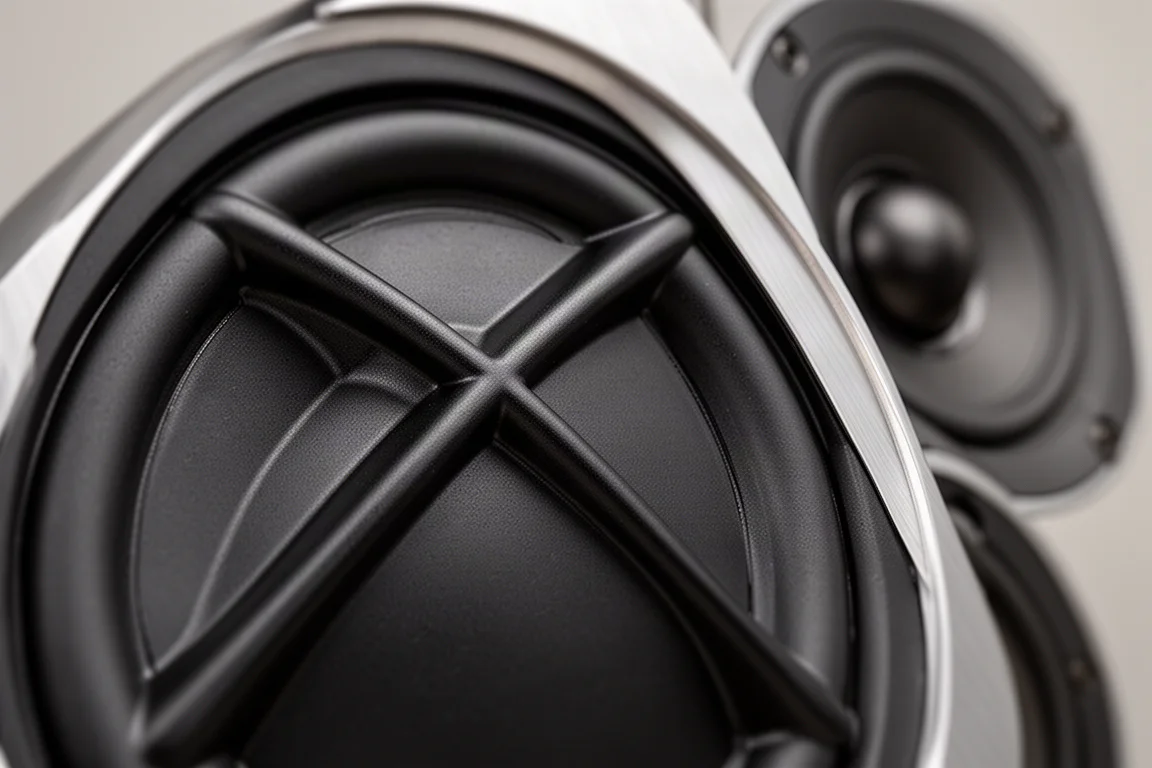
The dome tweeter is deliberately built without ferrofluid in the gap. Ferrofluid assists with cooling and centring, but it also adds drag to the voice coil, and leaving it out is intended to give the driver slightly quicker transient and impulse response.
Each driver has its own port positioned directly behind it, and the port geometry is shaped to reduce chuffing and turbulence. The cabinet also carries a rear bucking magnet that focuses the magnetic field and raises driver sensitivity. The crossover network is a substantial one, using air-core inductors and quality capacitors, and the binding posts accept bi-wiring or bi-amping.
Sound Characteristics and Room Placement
Measured in free air, the on-axis response runs a little hot in the treble, with some midrange bloom. Move off axis and that energy smooths out. Measurements taken in 5 degree steps out to 25 degrees show a progressively flatter and more neutral balance, with the 2 to 4 kHz range in particular becoming more linear.
That behaviour is exactly why no toe-in is recommended. Listeners who angle the speakers inward sit in the brighter on-axis region. Listeners who leave them facing forward sit in the smoother off-axis window, and they gain a wide sweet spot as a bonus.
Bass is a strong point. Port tuning sits at roughly 40 Hz, with the response rolling off gradually around 50 Hz before falling more steeply. In a real room, boundary reinforcement fills that in: in-room output stayed strong down to almost 30 Hz. The low end is tight and deep rather than soft or bloated.
Things to Consider Before Buying
At $12,000 per pair, the Rubicon 8 competes in a crowded segment. There are many well-regarded floorstanders at or near this price from other established brands, so an audition against at least one alternative is worth the effort.
Size is the second consideration. This is a full-size tower with three woofers, and it needs a room that can accommodate it both physically and acoustically. Buyers who cannot give it space, or who sit close to the speakers, will not hear what the design is capable of.
Finish expectations deserve a note as well. The walnut veneer is real wood rather than a vinyl imitation, and it is applied so cleanly that it can initially read as synthetic. Buyers who prefer a more obviously grained look may want to consider one of the other available finishes.
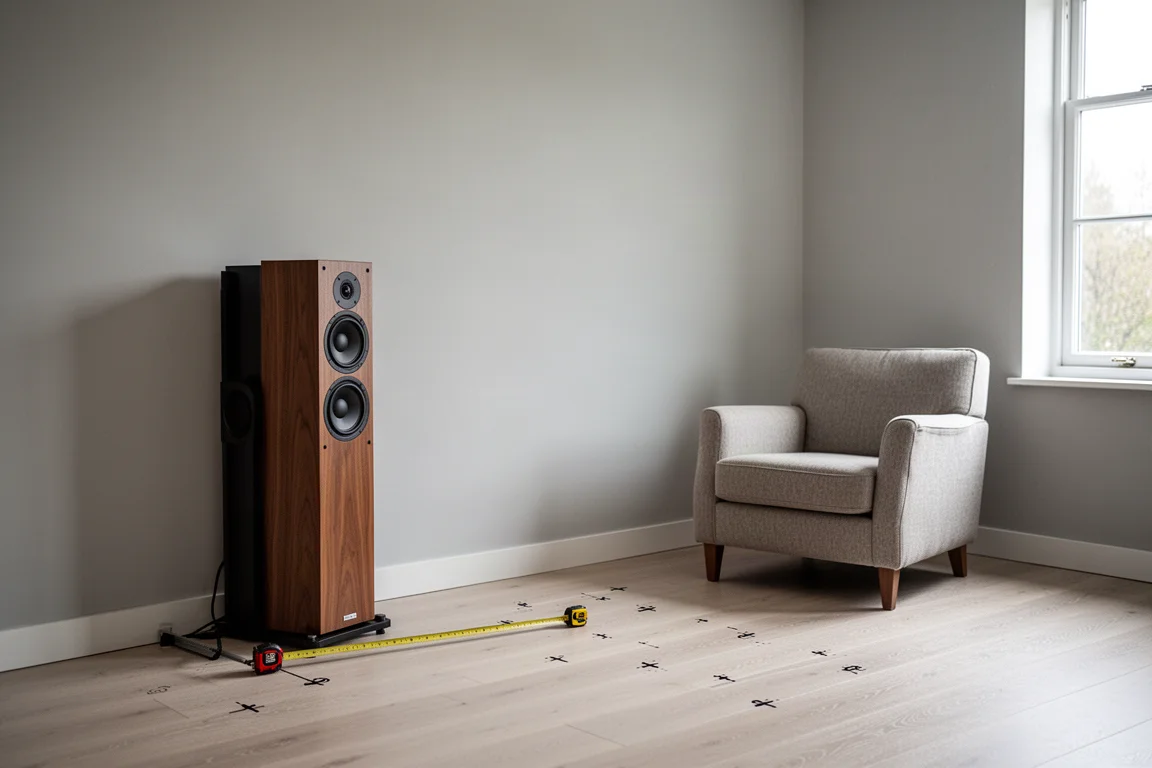
Finally, the speaker rewards correct placement. If your room forces heavy toe-in or a very tight listening triangle, you lose the off-axis advantage that makes this design distinctive in the first place.
Where It Sits in the Market
This is the upper tier of the floorstanding market, where craftsmanship and driver engineering matter as much as raw output. The Rubicon 8 brings European build quality, a genuinely sophisticated driver and crossover package, and a dispersion philosophy that is unusual at any price.
What it does not do is undercut its rivals. Buyers in this bracket are choosing between several accomplished speakers, and the decision usually comes down to the room, personal taste, and how a given speaker behaves in a specific space.
Buying Advice
If you have a large room, a flexible amplifier, and a preference for speakers that stay flat against the wall without toe-in, the Rubicon 8 makes a strong case. The combination of high sensitivity, an easy 4 ohm load, and wide dispersion means it is forgiving of both electronics and seating position.
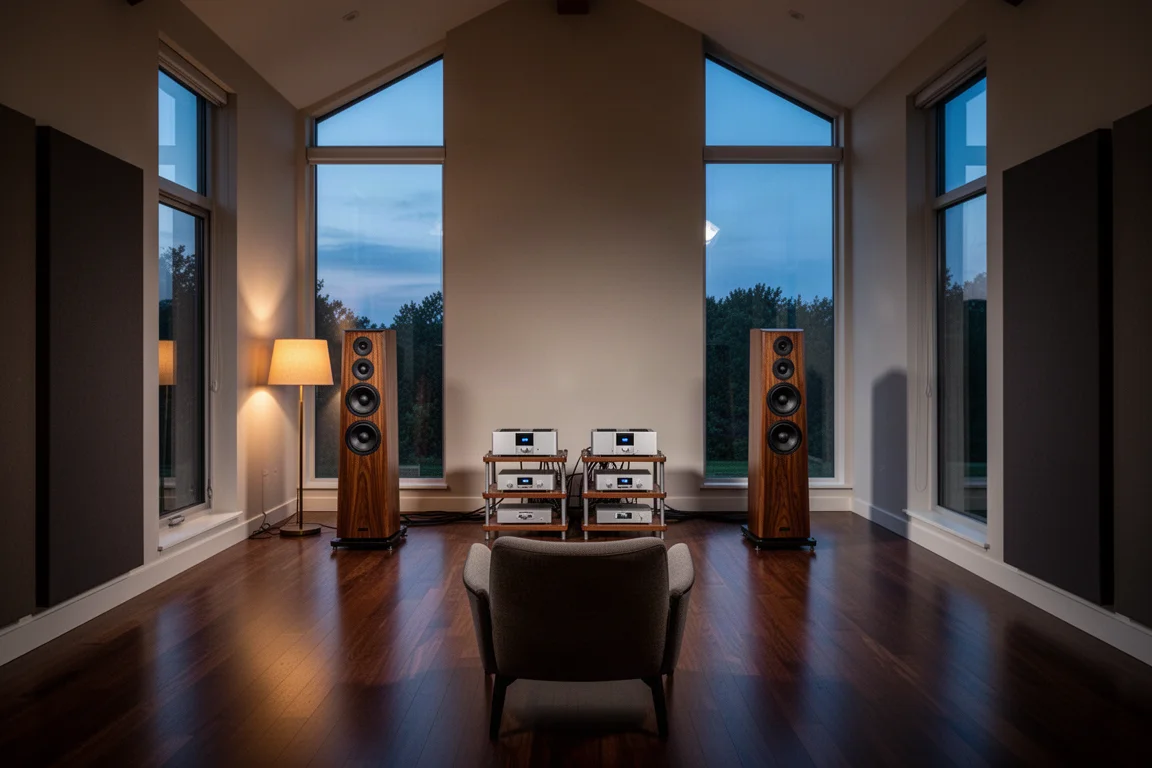
Listen to it with material you know well, ideally in a room similar in size to your own, and pay attention to how the treble behaves as you move from the centre seat toward the sides. If the sound stays consistent as you move, the design is doing what it was built to do.
Conclusion
The Dali Rubicon 8 is a thoughtfully engineered floorstander that trades a narrow audiophile sweet spot for a broad, even listening window. Its hybrid tweeter, five-section cone geometry, and driver-aligned porting all serve that goal, and the payoff is an enveloping, dynamic, well-balanced sound in a large room. It is expensive, and it keeps capable company at its price, but for the right room and the right listener it delivers a genuinely distinctive experience.
Product link
View more details for Dali Rubicon 8
This product is mentioned in the review. Check the specifications, options, and compatibility before buying.
View more details for Dali Rubicon 8Further reading
Related Reviews
Floorstanding Speakers
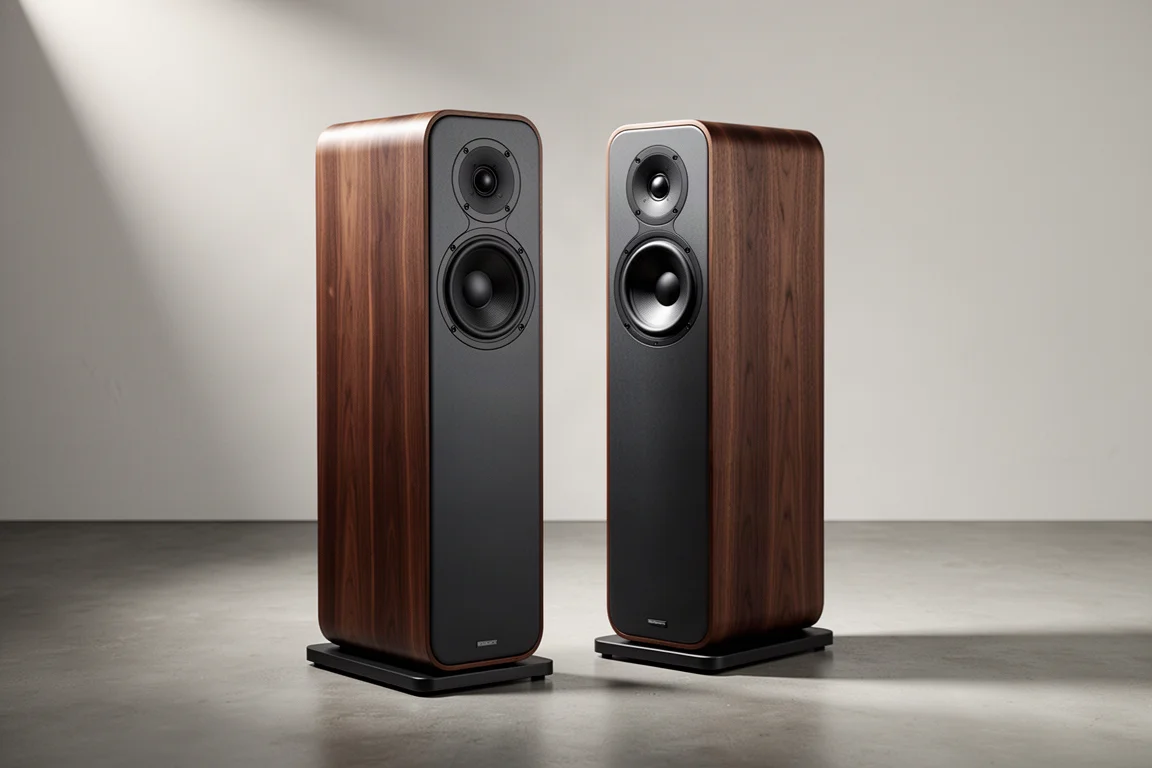
Acoustic Energy AE109 Mark II Review: A Refined Floorstander at £699
The Acoustic Energy AE109 Mark II is a slim, warm sounding floorstander that delivers clarity, midrange body and strong imaging in small to medium rooms.
Floorstanding Speakers
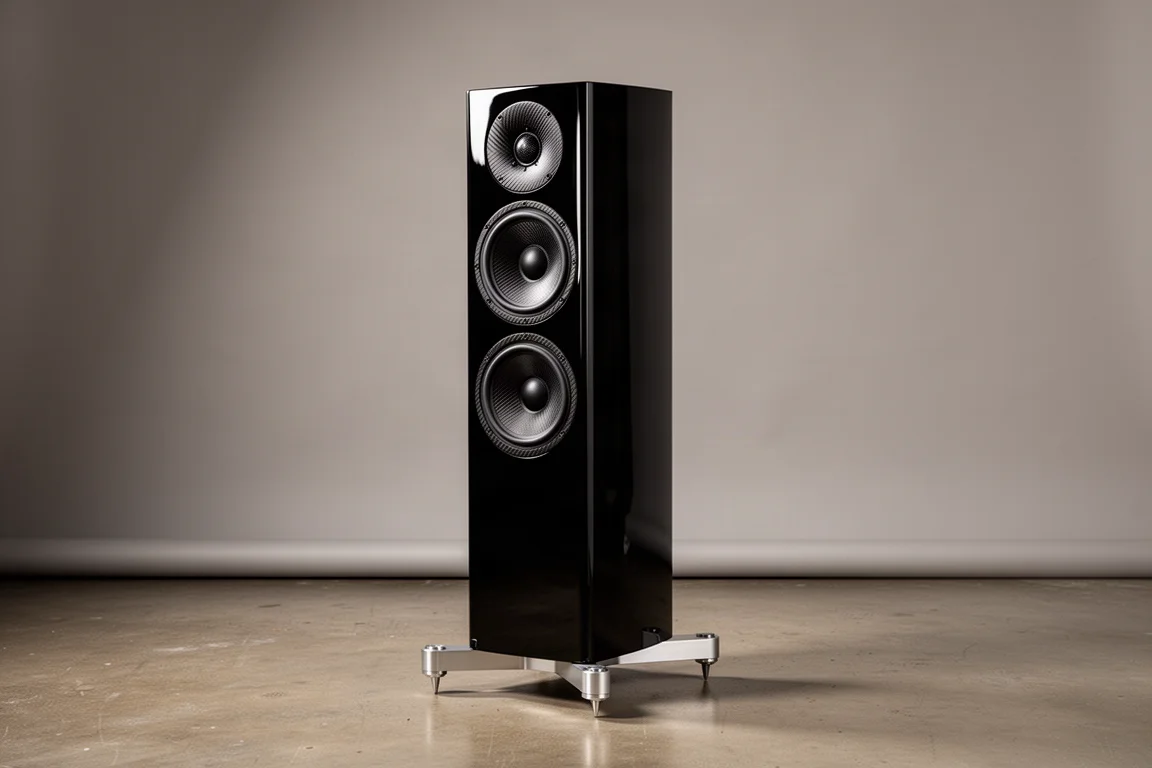
Acoustic Energy AE509 Review: A Slim Floorstander With Deep, Defined Bass
A practical look at the Acoustic Energy AE509, a slim floorstanding speaker with carbon fibre drivers, deep and well-defined bass, and an easy-going character that rewards careful system matching.
Floorstanding Speakers
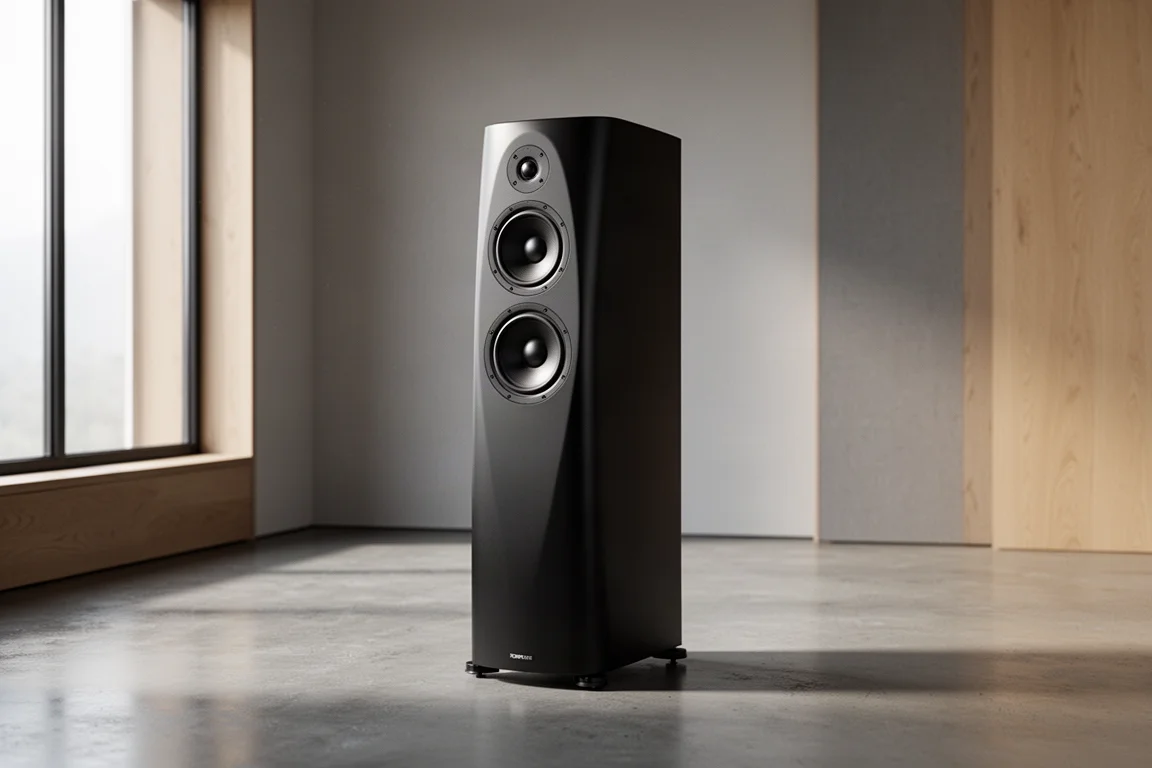
Arendal 1528 Tower 8 Review: Reference Neutrality With Real Demands
A close look at the Arendal 1528 Tower 8, a nearly five-foot, 200-pound floorstander that rewards generous space, serious power, and high listening levels with reference-grade neutrality.