Ski Boots
Dalbello DS AX 120 Review: A Wider Forefoot With Expert-Level Flex
A close look at the Dalbello DS AX 120, a 120-flex ski boot with a 102 mm last, a lower instep, and GripWalk soles aimed at advanced and expert skiers.
Introduction
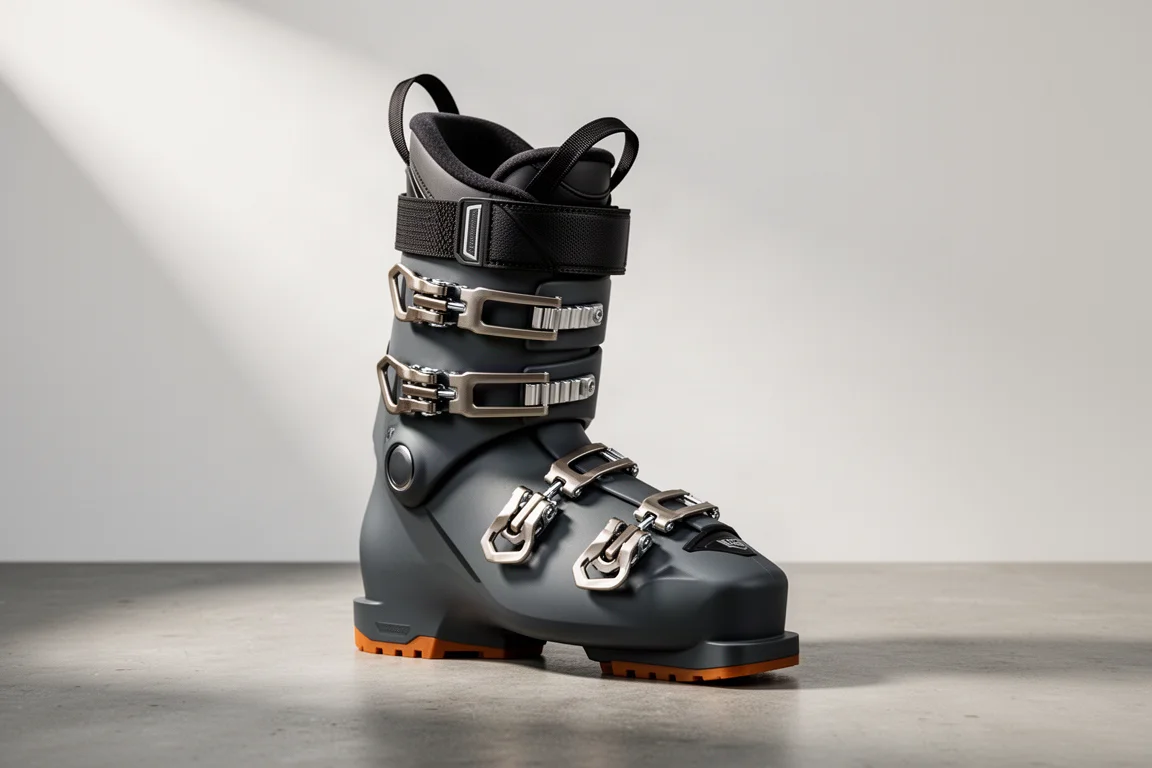
The Dalbello DS AX 120 is built for skiers who want a stiff, aggressive boot without stepping all the way down to a narrow race last. It uses a 102 mm last, so there is more room across the forefoot, paired with a 120 flex that places it firmly in advanced and expert territory. The instep sits relatively low, and that detail changes who the boot will feel comfortable for.
That combination is worth understanding before you buy, because the DS AX 120 is not simply a wide boot or simply a stiff boot. It is a specific shape aimed at a specific kind of skier, and the details around the buckles, cuff, and sole all support that intent.
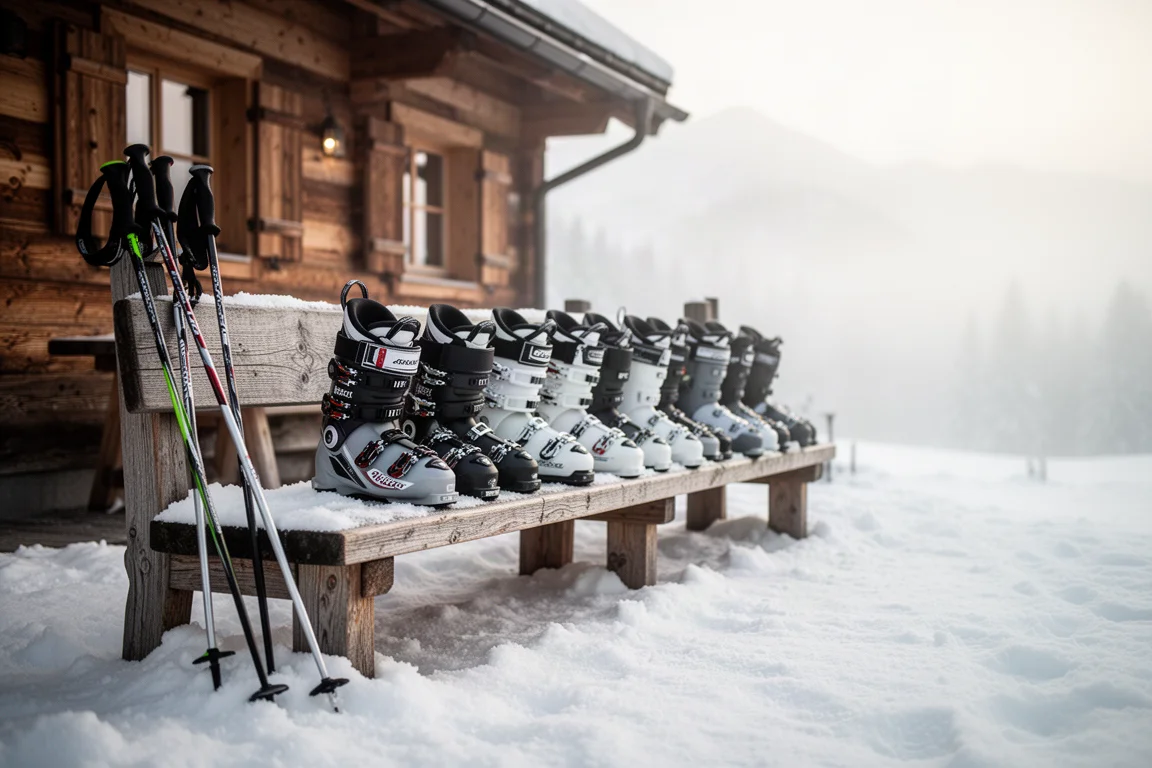
This review covers the fit profile, the features that matter once you are on the hill, and the practical points to weigh before committing to a pair.
Who This Boot Is For
The DS AX 120 is aimed at advanced and expert skiers. The 120 flex gives it enough backbone to drive a modern wider ski, and the shell is stiff enough that a lighter or less aggressive skier may find it unforgiving.
On fit, the 102 mm last is wider than a race-oriented shell but still reads as a snug boot once you are clicked in. If your forefoot has been the problem area in narrower boots, this last gives you more space there. The trade-off is the lower instep, which suits skiers with a shallower foot profile rather than a high-volume one.
GripWalk soles come pre-installed, so walking from the lodge to the lift line is easier than with a flat, hard plastic sole.
Main Strengths
Flex and fit work together here. A 120 flex means the boot holds its shape when you pressure the front of the ski, and the shell plastic and the liner tongue are designed to feel directly connected to your leg. That translates into better lateral movement for edging and a stiffer fore-aft feel for driving the ski.
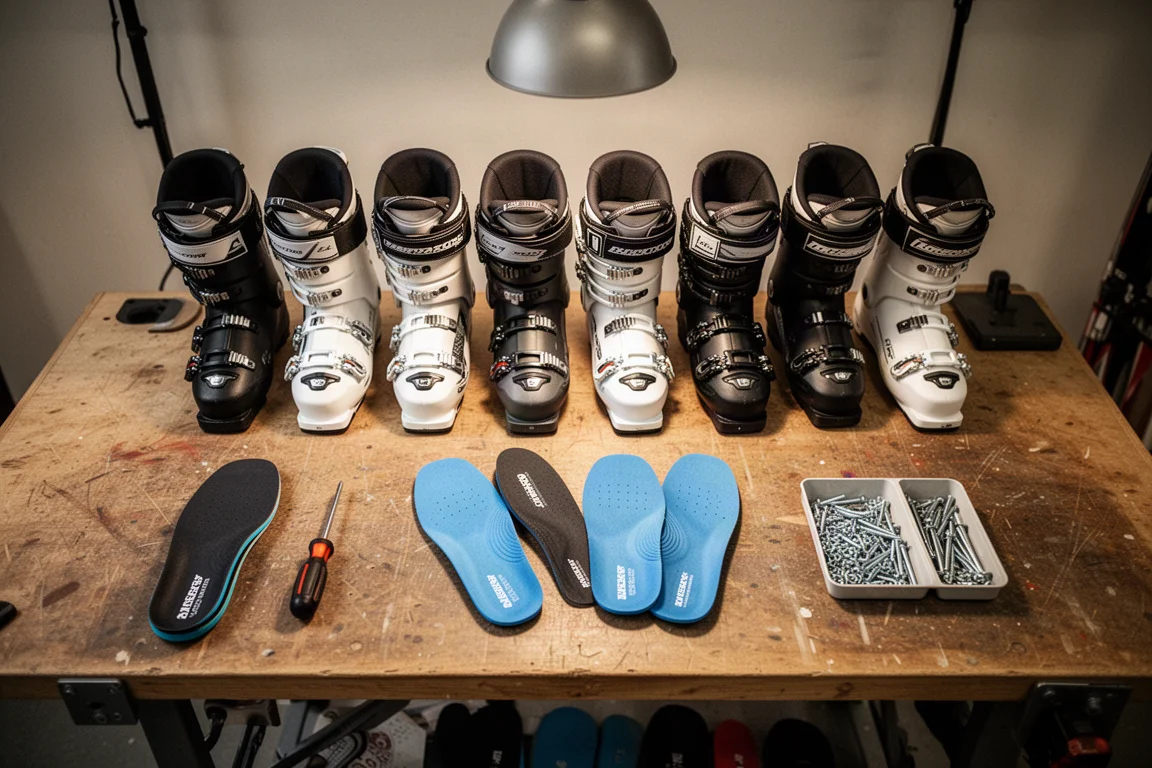
Hardware is unusually friendly for a performance boot. There are four micro-adjustable buckles, plus macro adjusters on the top catches, so a fitter can move the catches across rather than relying on buckle tension alone. The hardware uses Phillips head screws, which makes the boot straightforward to work on at the bench.
Up top, a power strap keeps the upper cuff locked in. At the back you get flex adjusters, an upper cuff adjustment, and a spoiler that adds forward lean and pushes you into a more aggressive stance.
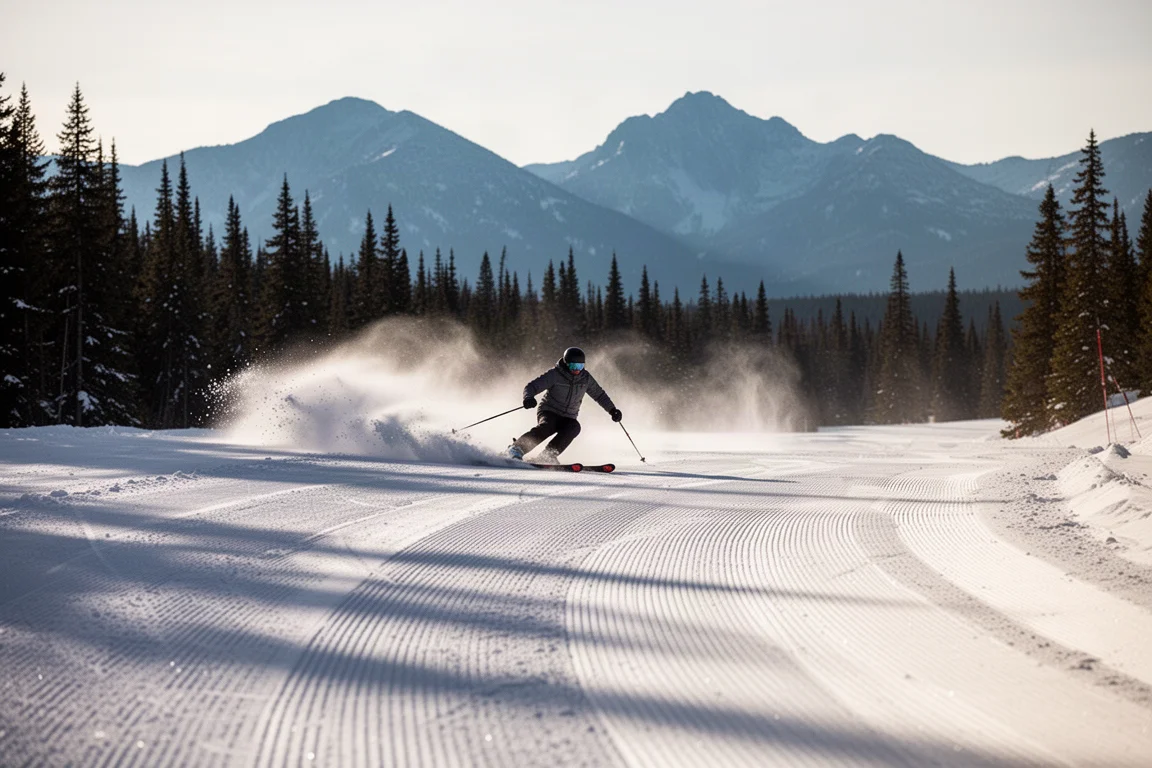
The result is a boot that feels snug around a moderately wide forefoot while still responding sharply when you load it, which is the balance most strong skiers are chasing.
Things to Consider Before Buying
The lower instep is the main thing to check. If you have a high instep or need volume over the top of the foot, this shell is likely to feel tight there, and buckle adjustment alone will not change the shell shape.
The 120 flex is a genuine consideration as well. It is intended for advanced and expert skiers, so if you are still building confidence or you are on the lighter side, a softer flex may serve you better.
Finally, the 102 mm last is wider than a race fit but it is not the widest option available. Skiers with a very wide forefoot should treat the fit as something to confirm with a proper shell check rather than assume it will work.
Buying Advice
Start with the shell fit rather than the flex number. Put the boot on without the liner and check how much space you have around the forefoot and over the instep. The DS AX 120 rewards skiers whose foot shape matches its profile, and no amount of liner work fixes a shell that is wrong at the instep.
From there, look at how you actually ski. The boot is designed to work with the construction of modern, wider skis, so it makes most sense if that is the kind of setup you are on. If you are on a narrower carving ski and stay mostly on groomers, the stiffness still works, but fit remains the deciding factor.
Sizing and Shell Fit
Bring the socks you actually ski in, and be honest about your instep height. The lower instep is a defining trait of this boot, so it is the first thing to test. The 102 mm forefoot should feel snug rather than roomy once the liner is in place.
The macro adjusters on the top catches and the Phillips head hardware make it easier for a fitter to fine-tune buckle position, so it is worth asking for that adjustment rather than simply tightening the buckles.
Terrain and Flex Considerations
The 120 flex and rear spoiler push you forward into an aggressive stance, which suits skiers who like to pressure the front of the boot and work the ski. Flex adjusters at the back let you soften the feel, and the upper cuff adjustment lets a fitter tune how the cuff sits around your leg.
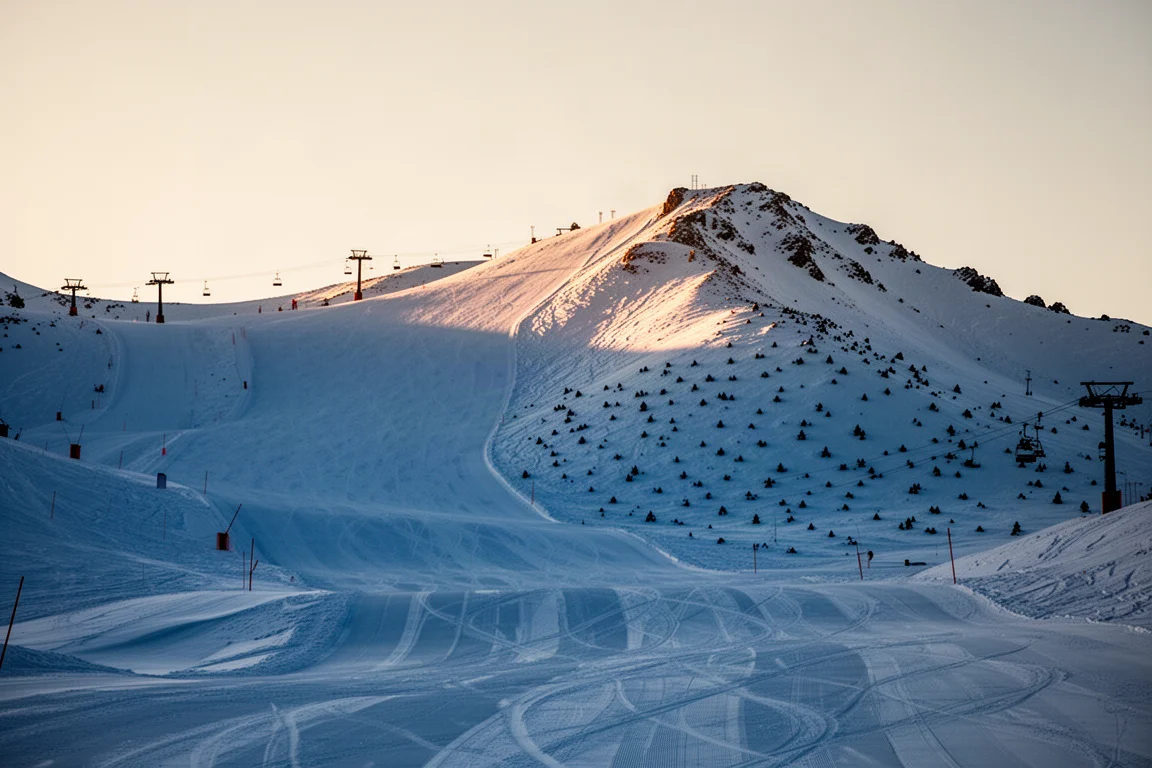
GripWalk soles are pre-installed, so if you spend a lot of time walking between the car park, the lodge, and the lift, that is a practical bonus rather than a performance compromise. Just confirm your bindings are compatible with GripWalk soles before you commit.
Conclusion
The Dalbello DS AX 120 makes sense for advanced and expert skiers who want a stiff, responsive boot with more forefoot room than a race last allows. Its 102 mm last, 120 flex, lower instep, and fitter-friendly hardware add up to a focused package rather than an all-rounder.
If your foot matches the shape, it is a boot that rewards an aggressive, forward-driving style. If your instep is high or your flex needs are moderate, try before you buy, because the fit profile is the whole point of this model.
Product link
View more details for Dalbello DS AX 120
This product is mentioned in the review. Check the specifications, options, and compatibility before buying.
View more details for Dalbello DS AX 120Further reading
Related Reviews
Ski Boots
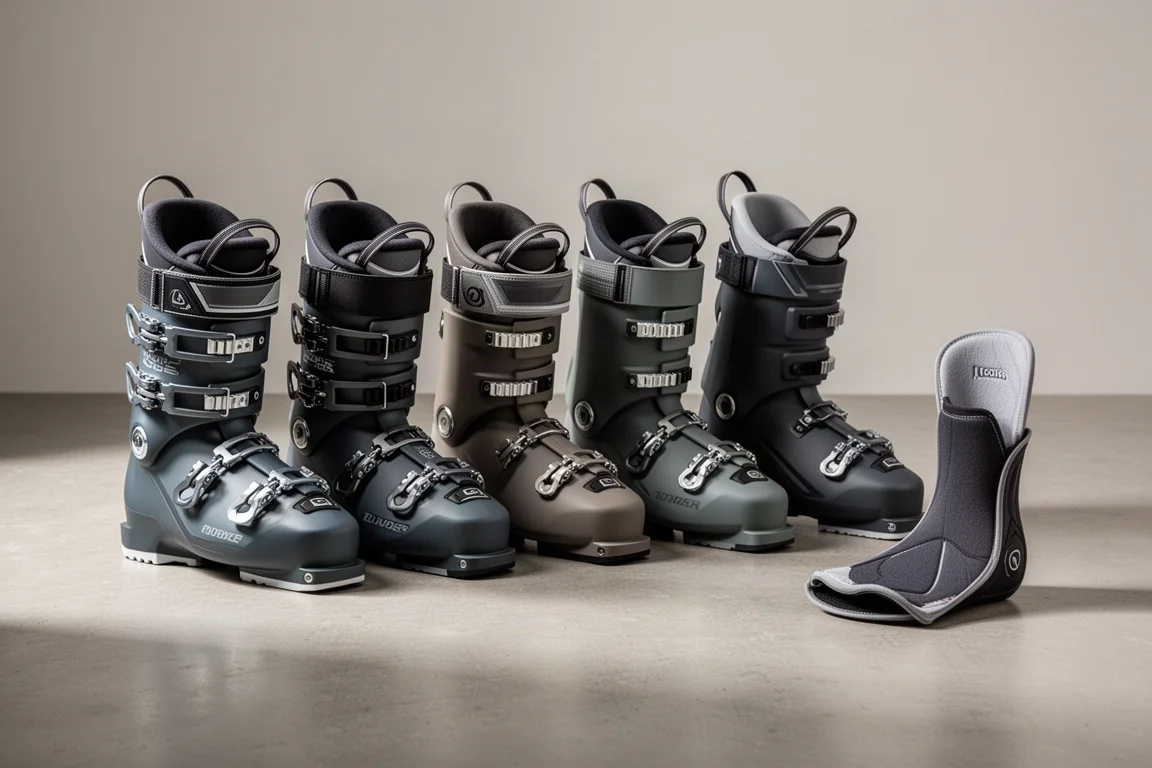
2027 Ski Boot Roundup: Six 130-Flex Boots Worth Knowing
Six 130-flex ski boots for 2027, plus a low-volume liner upgrade, compared on weight, fit, flex feel, and ease of use.
Ski Boots
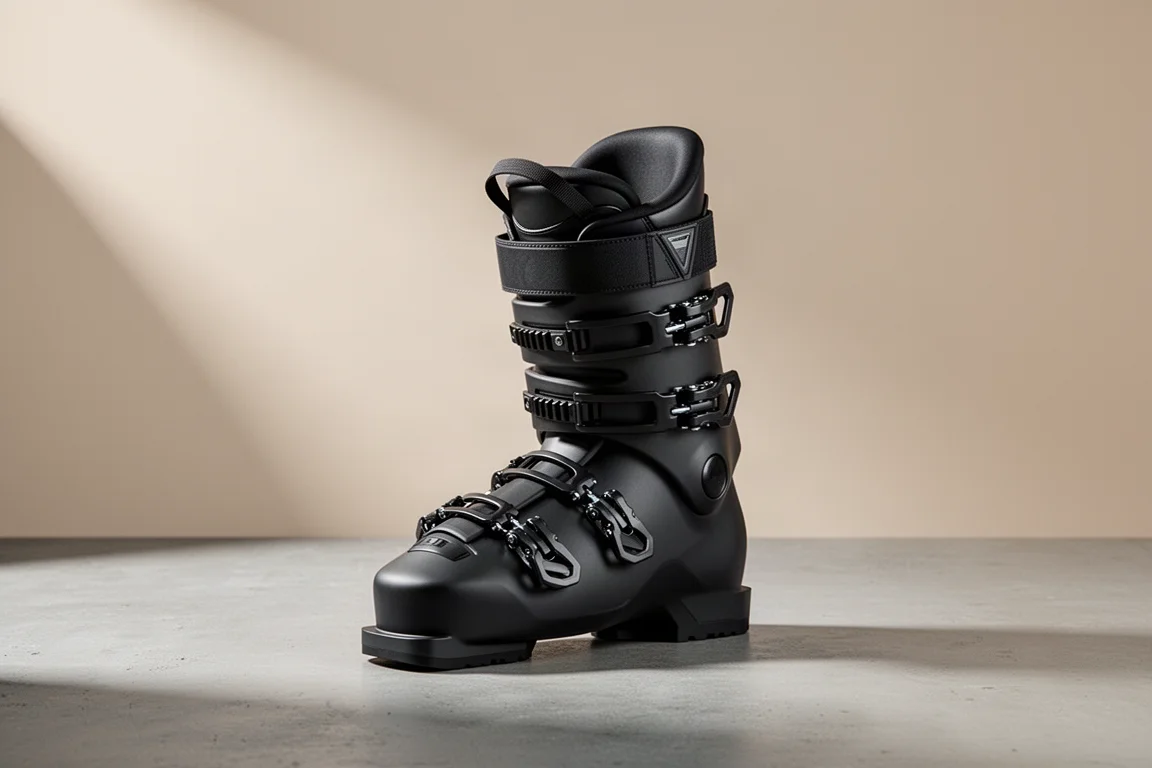
Armada AR One Ski Boot Review: A Three-Piece Cabrio That Finally Gets It Right
Armada's first ski boot blends three-piece Cabrio design with Atomic engineering, a heat-moldable shell, and a 100mm last that fits better than any Cabrio before it.
Ski Boots
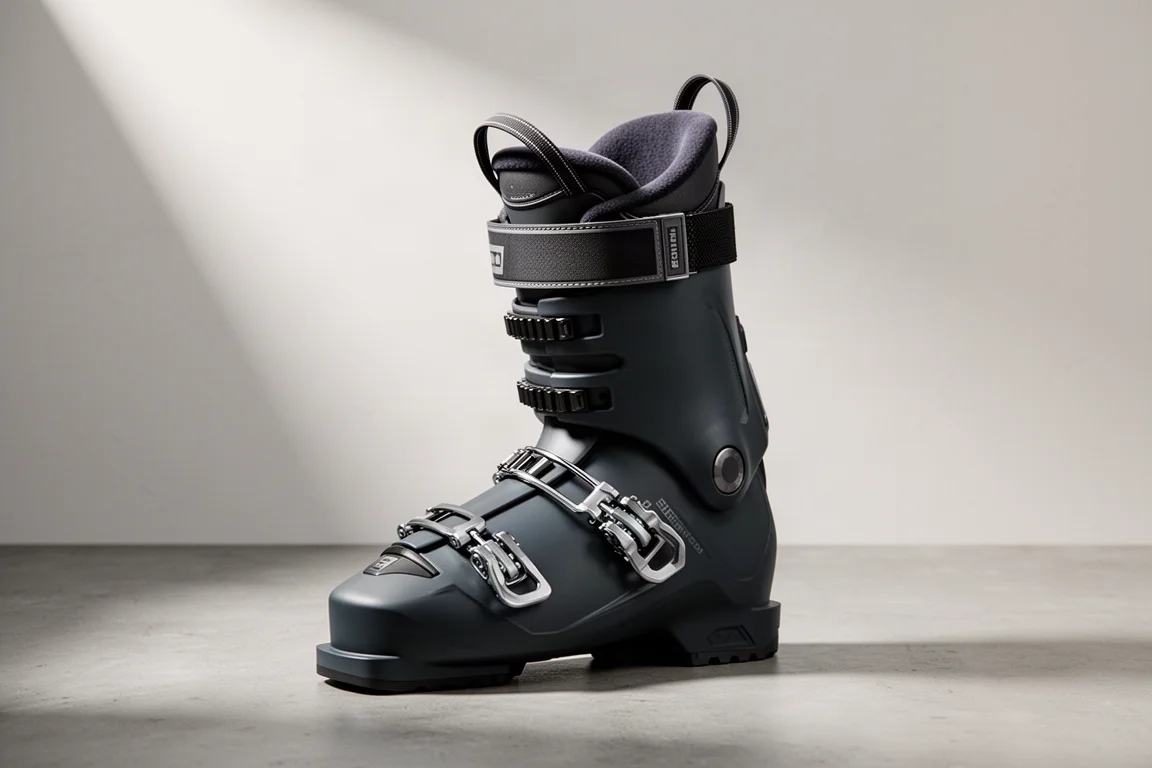
Armada AR1 Ski Boot Review: A Cabrio and Overlap Hybrid for Park and Freeride Skiers
Armada's first ski boot pairs a three-piece cabrio shell with overlap-style buckles and a cable-driven slingshot buckle. Here is where it shines, and what to weigh before buying.