Hypercars
Czinger 21C Spider: A Roofless, 3D-Printed 1,250 hp Hypercar
Czinger's 21C Spider takes the wildest middle-seat hypercar on sale and removes the roof. Here's what makes it genuinely different from every other hypercar.
Introduction
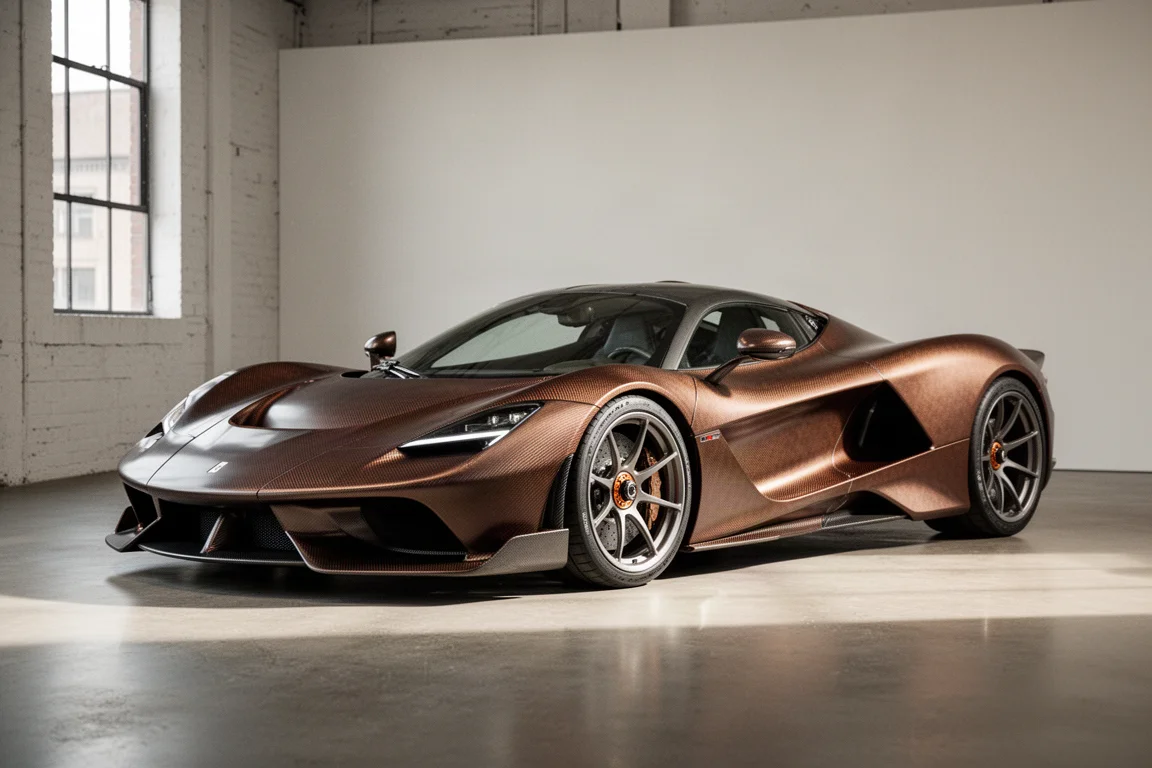
Most new hypercar manufacturers struggle to earn the benefit of the doubt. Many appear, promise the world, and quietly disappear without shipping anything. Czinger is the exception. Its 21C is real, in production, holds lap records, and uses technology you simply will not find anywhere else in the industry. The 21C Spider is the newest evolution: the same 11,000 rpm-screaming, 1,250 hp machine, but with the roof taken off.
The result is, in the company’s own framing, the most exhilarating version of the 21C yet. This article breaks down what the Spider changes, what the engineering underneath actually involves, and who this car is really for.
What Is the Czinger 21C Spider?
The 21C is a completely bespoke middle-seat hypercar with over 1,200 horsepower. The Spider is its roadster evolution, and Czinger has made a deliberate and slightly surprising choice: rather than basing it on the more road-focused, top-speed-oriented VMAX variant, the Spider is built on the high-downforce version, complete with a big wing and splitter. That means you get all the downforce performance of the 21C in an open-air package.
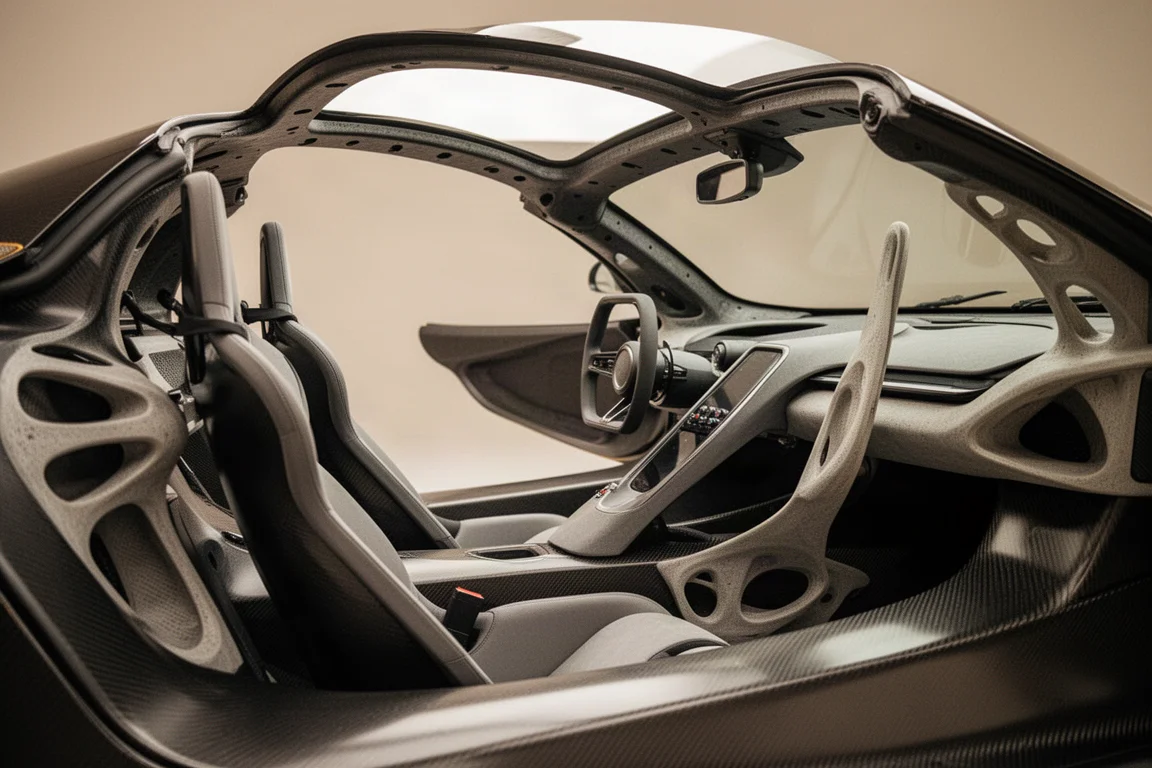
The thinking behind it is the tension itself. A roadster would more naturally suit a grand touring character, but taking something as aggressive as the high-downforce 21C and opening it up makes for a far more visceral driving experience. With no roof, the large intake for the engine sits right behind the passenger’s head, and the induction noise is a major part of the experience, alongside pops and bangs from the exhaust.
The Spider is more about track performance than straight-line speed, but the numbers are still extreme: 0 to 60 mph in 1.9 seconds, a quarter mile in 8.7 seconds, and a 205 mph top speed. At 150 mph with the roof fitted, the car generates roughly its own weight in downforce, around one and a half tons.
The Roof: Manual, Simple, Deliberate
The Spider uses a fixed carbon fibre removable roof panel, with the option of a soft top stored within the vehicle for when the weather turns. The soft top is fully manual: you secure a couple of latches and move the roof into place. It is not one-button convenience, but once you know the procedure it is described as incredibly straightforward.
That manual approach is a design decision, not a cost-cut. There is no complicated electronic mechanism, nothing to break, and no added material weight. The chassis itself needed only slight iteration to work without a roof, having largely been strong enough already, with changes to the rear bolster and an elongated front area tied to the roof mechanism.
Engineering: Generative Design and the Brake Node
Peel back the bodywork and the 21C reveals why it is so unusual. The car is built around a carbon structure, but the most conventional part is arguably the tub itself. Move forward or rearward and the structures become alien and organic, with skeleton-like shapes and no straight lines. That is the result of Czinger’s in-house manufacturing process: computer-generated design creates shapes with the optimum stiffness and properties for each application, which are then 3D-printed in metal.
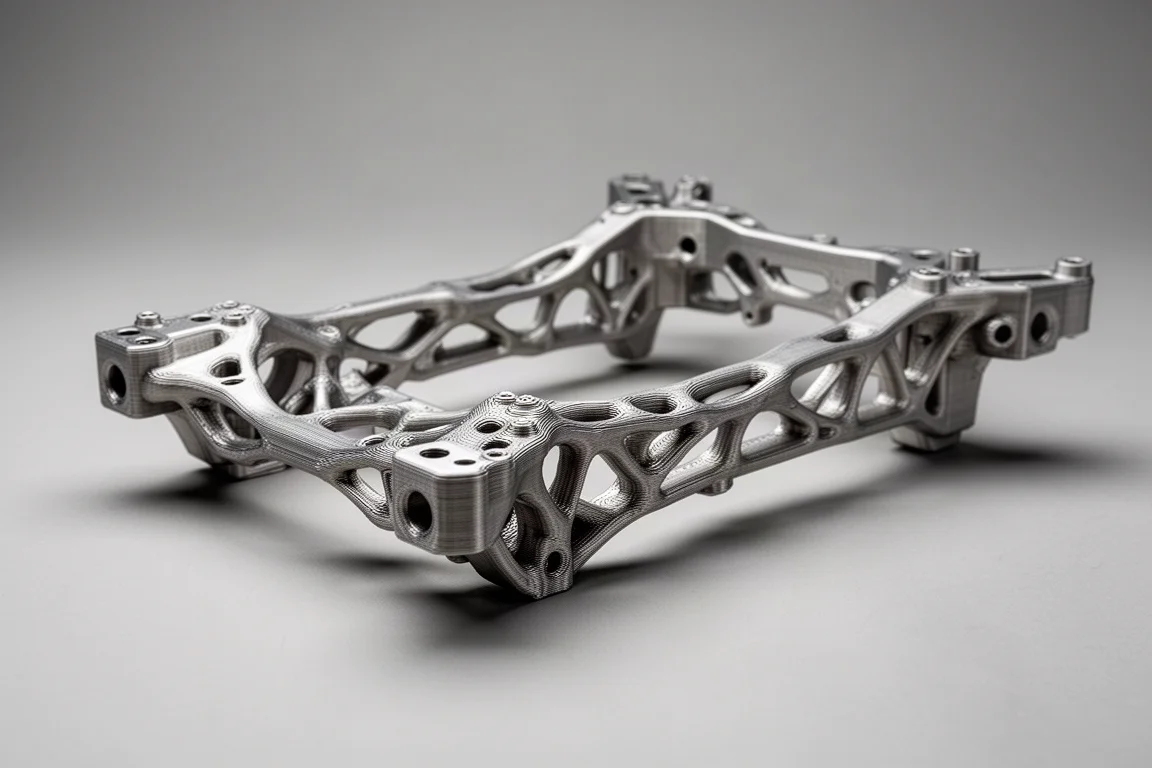
This process is a significant part of why Czinger is being taken seriously. It was developed entirely in-house, and it has attracted attention from others in the industry, including McLaren and Bugatti, who now use the process in their own hypercars. The main benefit is lighter components, although the Spider itself is still 1,620 kg dry, which is a little more than a Ferrari 849 Testarossa.
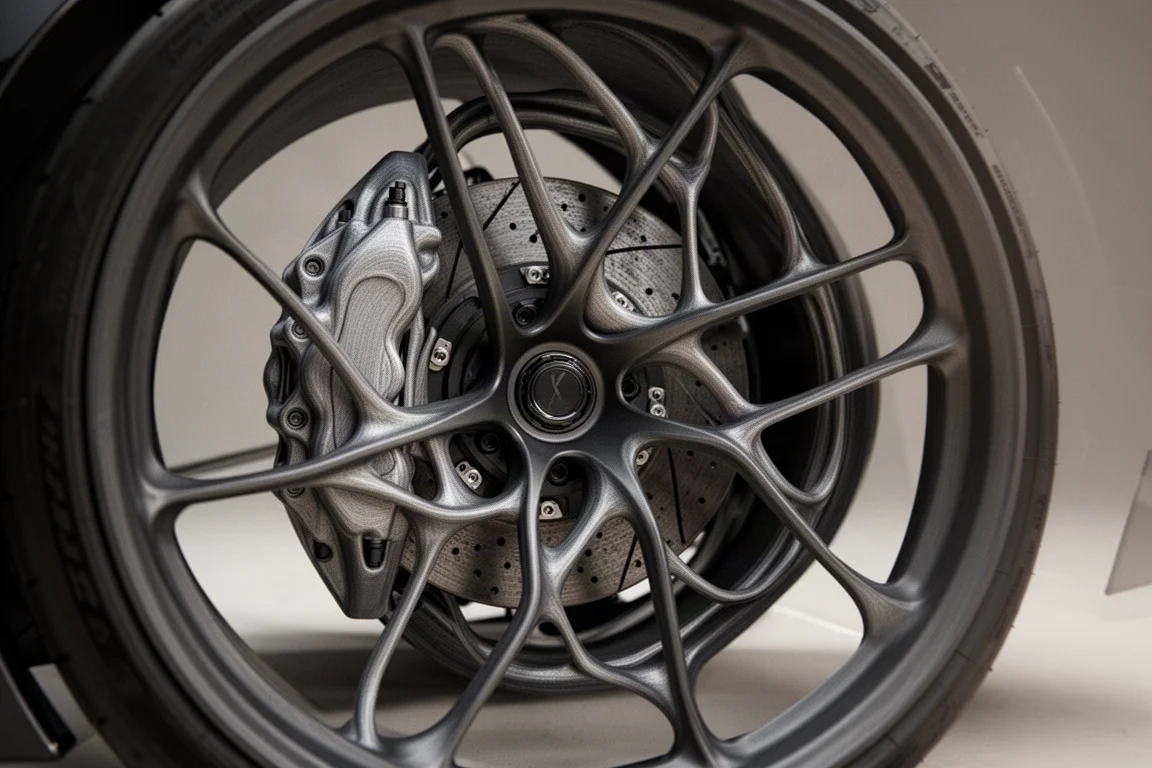
The clearest example of this approach is the brake node, introduced to the market with this car. It is a fully additively manufactured caliper integrated into the wheel upright as a single component. The claimed gains are substantial: roughly 30% better overall mass compared with a standard braking system, over 6 lb of unsprung mass saved on the 21C, and 15% better brake distance performance.
Powertrain: 11,000 rpm and Hybrid Turbos
The packaging is radical. The inline seating layout leaves a very small space at the rear for an engine, but Czinger has fitted a compact 2.88-litre twin-turbo V8 producing 750 horsepower on its own. It is also a hybrid, with one motor at the back and two separate motors at the front, combining for 1,250 horsepower.
The headline figure is the 11,000 rpm redline, which gives the car its distinctive screaming character. Power flows through a seven-speed single-clutch gearbox, a more compact and lighter solution than a dual-clutch that helps everything fit into the tight space. From the cabin, the induction system is said to sound like it is pulling every molecule of air from around you.
Living With It: Cabin, Seating and Usability
Getting in takes practice. The door release opens what is described as the biggest door seen in any car, after which you sit on the wide carbon sill, aim your feet at the pedals and slide in. Once seated, the car feels surprisingly narrow from inside, roughly two feet of car on either side of you, closer in feel to a Lotus Elise than the physically wide machine it actually is.

The cabin is functional rather than plush, with plenty of exposed carbon tub and some 3D-printed parts that feel a little rough and plasticky up close. It is unusual, quirky and purposeful. The squared-off steering wheel with a thin rim carries more 3D printing, and the dash features small control pods on either side for engine start plus drive mode controls. Everything looks as organic as the exterior does, which makes the interior feel genuinely special.
Buying Advice
The 21C Spider is not a practical purchase by any conventional measure, and it is not trying to be. It is aimed at buyers who want an experience that has no equivalent: a raw, physical, strangely analog road car that feels closer to a road-legal race car than anything else on sale, with the sensory overload of open-top motoring on top. If your priority is straight-line speed or luxury refinement, the VMAX direction makes more sense. If you want maximum track-focused theatre with the roof off, the Spider is the version that was always planned to be the most exhilarating.
Conclusion
The Czinger 21C Spider takes a hypercar that was already one of the wildest on sale and makes it more intense by removing the roof. Its generative 3D-printed construction, integrated brake node and 11,000 rpm hybrid V8 make it a genuine technical outlier, and the fact that other major manufacturers have adopted its manufacturing process underlines the point. For buyers seeking something with absolutely no equivalent, the Spider makes a compelling case.
Product link
View more details for Czinger 21C Spider
This product is mentioned in the review. Check the specifications, options, and compatibility before buying.
View more details for Czinger 21C SpiderFurther reading
Related Reviews
Hypercars
Ferrari F80 Review: Ferrari's 1,200-HP Special Series Hypercar Driven
The Ferrari F80 pairs a 900-hp e-turbo V6 with a hybrid system, active suspension, and massive downforce. Here is what it is like on track and on the road.

Hypercars
Rimac Nevera vs Bugatti Chiron Super Sport: Two Hypercars, Two Very Different Ideas of Speed
A 1,888bhp electric hypercar and a 1,600PS quad-turbo W16 icon go head to head in Croatia, and the gap between them is bigger than you might expect.
3D Printing
3D Printing Trends 2026: Multi-Material Systems, Stronger Filaments, and Desktop Metal Casting
FormNext 2025 revealed the direction of 3D printing in 2026: accessible multi-material printers, high-strength filaments, and innovative software solutions that bring industrial capabilities to the desktop.