Art Books
Cynthia Knox Painting in Colored Pencil: Favorite Things Book Review
A close look at Cynthia Knox's Painting in Colored Pencil: Favorite Things, six detailed tutorials covering glass, porcelain, fur, feathers, florals, and more.
Introduction
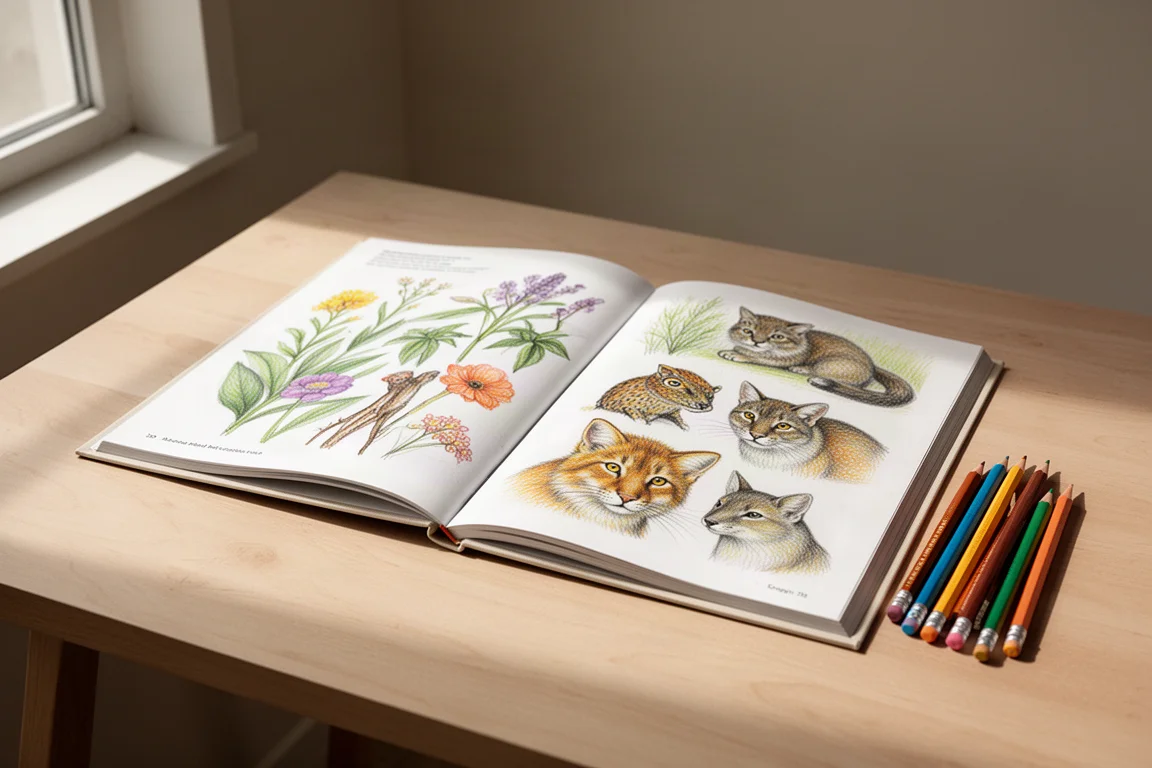
Painting in Colored Pencil: Favorite Things is one of Cynthia Knox’s recent instructional books, and it carries the hallmarks that have made her one of the most respected teachers in the colored pencil community. Six complete tutorials walk you through finished, gallery-worthy drawings, each packed with techniques you can carry into your own work long after the lesson is done.
The title itself raises a fair question: how can colored pencil be called “painting”? Spend any time watching how a skilled colored pencil artist works, with layered techniques, blending, and various tools building up a final image, and the result genuinely does look like a painting. The same is true for pastel artists, who commonly describe their work as paintings. Modern colored pencils are a long way from the school-grade pencils of decades past, and the term is accurate.
What’s Inside the Book
Chapter one covers materials and techniques, which is where every Knox book starts. She has worked predominantly with Prismacolor pencils over the years, and many tutorials in this book use them, but she deliberately branches out here with Caran d’Ache Luminance, Caran d’Ache Pablo, and Faber-Castell Polychromos. The message is clear: you do not need a specific brand to follow along. The techniques transfer to whatever set of pencils you own.
The book contains six classes:
- Catch a Fallen Star, a still life full of glass and texture challenges
- Precious Pop, a puppy tutorial
- Splash, a glass of water with lemon and fruit
- Spring Blooms, flowers in a white porcelain vase
- Spring Blooms 2, flowers in a glass vase
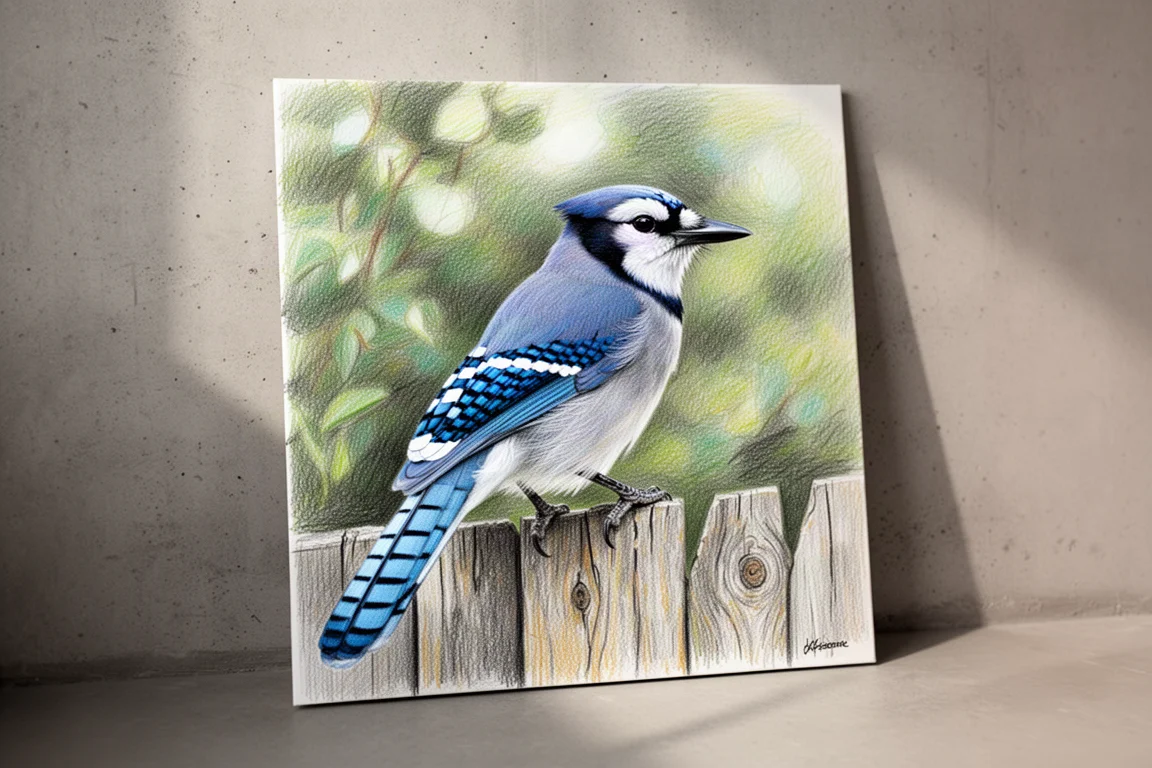
- The Gatekeeper, a blue jay on a fence
Each tutorial opens with a full materials list naming the specific pencils used, plus additional supplies such as Clairefontaine Pastel Mat paper alongside the Strathmore 300 series Bristol smooth paper Knox often uses. Large, ready-to-print line drawings are also available as a quick-start pack, which can be purchased and emailed to you for transferring onto your paper of choice.
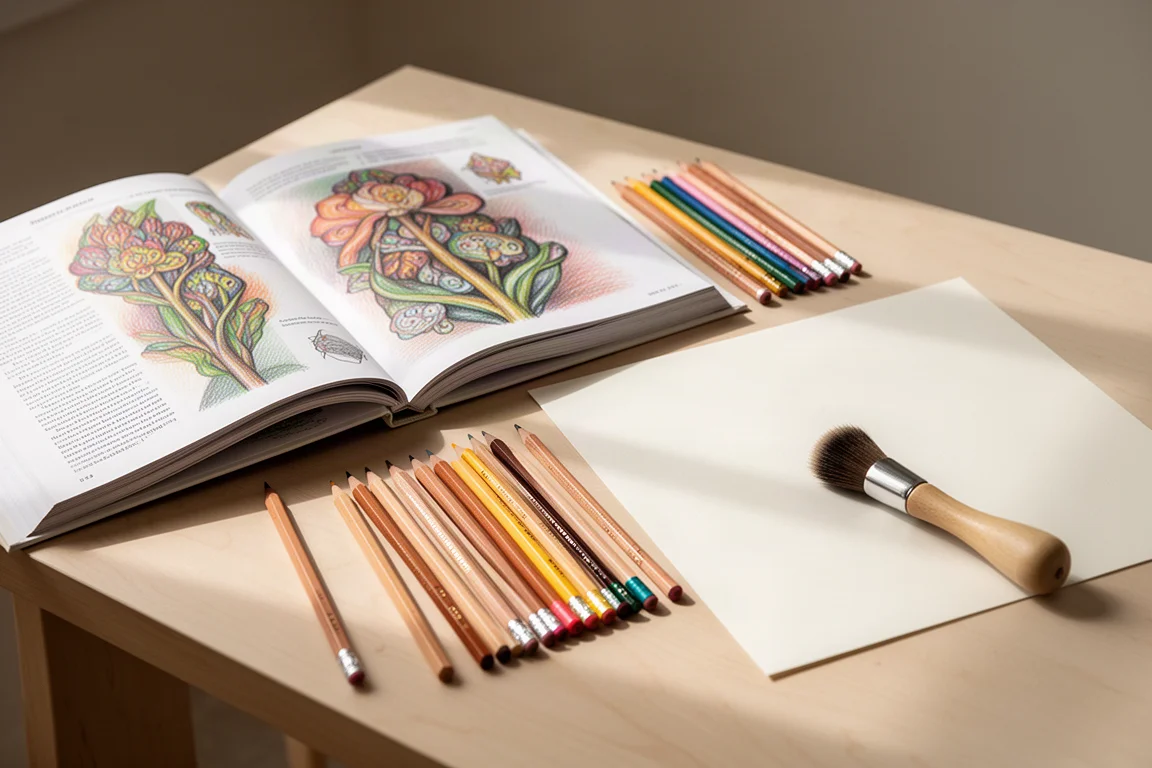
That breadth of subjects is the real strength here. Pets, florals, glass, porcelain, feathers, wood grain, fabric, and reflective surfaces all appear across the six lessons, and after working through them there are very few genres you would not be equipped to attempt.
Catching a Fallen Star
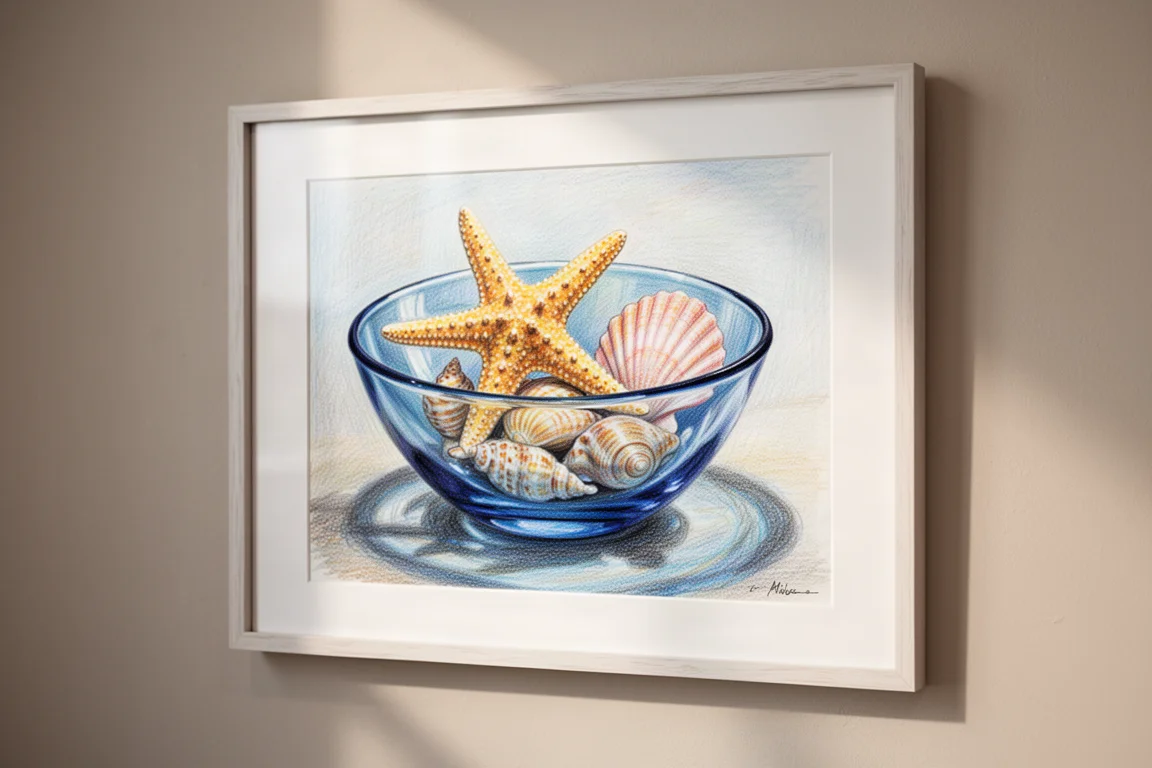
The first tutorial is a still life with an enormous amount going on: light and shadow across a background, a blue glass jar alongside clear glass, a tealight in the background, small jars, and a textured patio table surface. Glass is one of the subjects colored pencil artists struggle with most, especially when something sits inside it. Learning to portray a glass bowl containing a starfish and shells, rather than just a ring around some objects, is exactly the kind of skill this lesson teaches.
Fur, Eyes, and Blending with Precious Pop
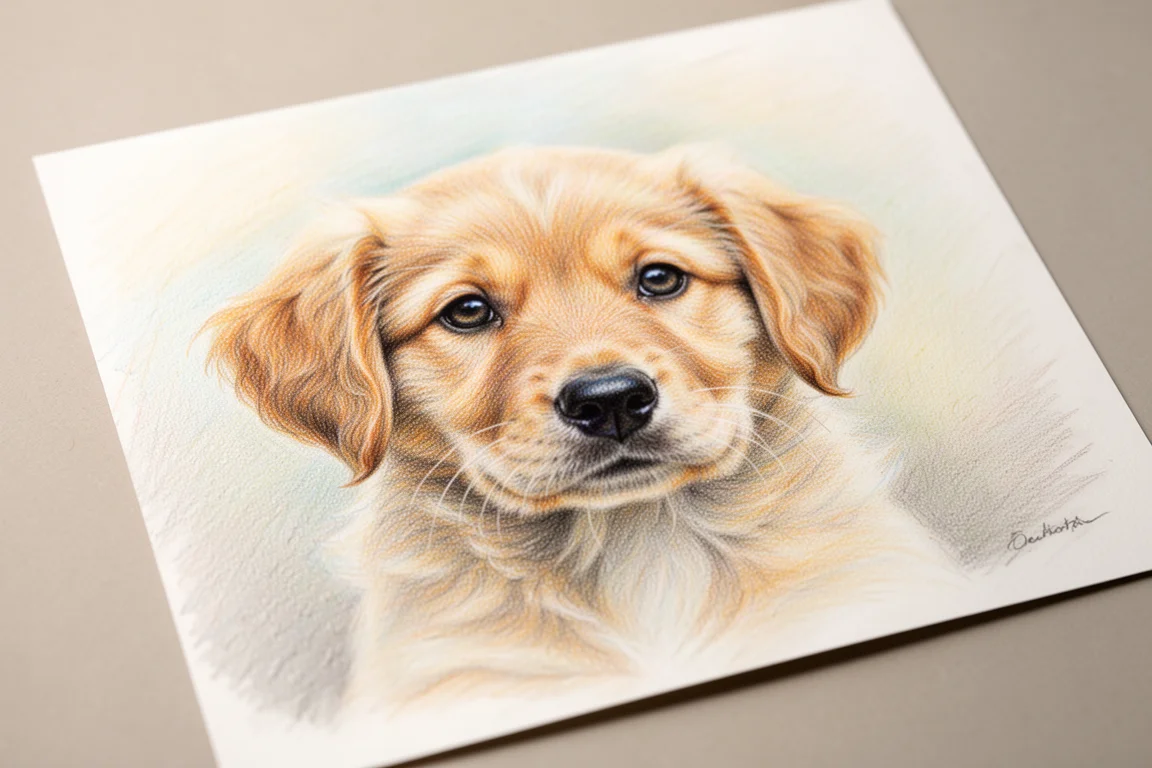
The puppy tutorial demonstrates how Knox structures every class in the book: a materials list, a reference image, and step-by-step instruction through to the finished drawing. The seemingly simple background is anything but, with a bright spot on the wall fading into darker areas of slightly different hues, requiring careful blending. A reflection and cast shadow beneath the puppy ground it on the surface. And of course, there is fur and those gorgeous eyes, the detail that gives any portrait, human or animal, its life.
Splash: Glass, Water, and Reflection
The glass with lemon and fruit may look straightforward, but it is a serious study in values. The blue table surface carries reflections and shadows cast by the water, and the drawing has to convincingly read as glass rather than a box with two circles in it. The water splashing from the glass is also covered. These are techniques you can transfer directly to any future drawing.
Porcelain, Wood, and Fabric in Spring Blooms
The Spring Blooms tutorial tackles a white porcelain vase, one of the hardest surfaces to render believably, where the highlights and shadow placement are everything. The table beneath it is not just a wood effect: the grain is sharp at the front of the table and fades blurred toward the back, creating genuine perspective so the vase sits on something rather than floating against a backdrop. The blue ribbon on the vase adds fabric wrinkles and a three-dimensional effect, all dependent on getting highlights and darks in the right places.
The Gatekeeper: A Blue Jay Study
The final tutorial is a blue jay perched on a fence, with blurred greenery in the background creating depth of field that keeps the focus on the bird. You will learn feather work, the bird’s head, highlights on the beak, and the grain of the fence boards.
How Knox Teaches
If you have used any of Knox’s books before, you will know her teaching method is genuinely effective in book form. One of the hardest things to convey on paper is pencil pressure: how hard to press at a given point in a drawing. The way Knox explains and illustrates pressure in this book is exceptional, and it is a technique she applies across many of her classes. Reference images appear throughout, so you always have something to draw from directly.
Who This Book Is For
If you are new to colored pencil, Knox has other books geared specifically toward beginners, but an ambitious beginner could still make good progress here given how thoroughly she leads you through each drawing. Realistically, you will not match the finished images in the book on your first attempt, and that is fine. For anyone who has been drawing with colored pencils for a few years and wants to sharpen existing skills, this is a fantastic book. The six lessons cover so many subjects, including several the colored pencil community finds genuinely difficult.
Things to Consider Before Buying
- The tutorials are detailed but not beginner-trivial; expect to invest real time per project.
- Specific brands like Prismacolor, Faber-Castell Polychromos, and Caran d’Ache are named, though substitutions work.
- Optional line drawing quick-start packs are sold separately.
- If you want live instruction, Knox occasionally runs Zoom classes lasting around six hours with a lunch break, including the reference image, printable line drawings, a sectioned PDF, and a recording sent afterward by email.
Buying Advice
The book is available both from Ann Kullberg’s website and from Amazon. If you prefer a printed copy you can keep flat on the desk while drawing, either route works. Given the sheer range of techniques packed into six tutorials, it offers strong value for anyone serious about improving their colored pencil work.
Conclusion
Painting in Colored Pencil: Favorite Things is a rich, generously detailed instructional book from one of colored pencil’s most experienced teachers. Glass, porcelain, fur, feathers, florals, and fabric all get their due, and the techniques carry well beyond the six projects themselves. For improving intermediate artists, and even for patient beginners, it is an easy recommendation.
Product link
View more details for Cynthia Knox Painting in Colored Pencil: Favorite Things
This product is mentioned in the review. Check the specifications, options, and compatibility before buying.
View more details for Cynthia Knox Painting in Colored Pencil: Favorite ThingsFurther reading
Related Reviews
Art Books
Best Sketching Books: A Field-Tested Guide to the Books Worth Your Shelf Space
From a 1980 classic that shaped modern sketching to pocket-sized urban sketching references, here are the sketching books that earn a permanent place on the desk.
Art Books
The Artist's Guide to Sketching (2025 Reissue): A Field Sketching Classic Returns
James Gurney and Thomas Kinkade's long out-of-print sketching guide returns in 2025 with new high-res scans, color artwork, and fresh insights for a new generation of artists.
Art Books
7 Art Instruction Books That Actually Teach You to Draw and Paint
Seven highly regarded art books covering everything from art terminology to figure drawing, classical technique, watercolor light and composition.