Cycling Gear
Cycling Starter Essentials 2026: 12 Pieces of Gear Worth Buying First
A practical starter kit for new cyclists, from patch kits and multi-tools to helmets, locks, pedals and saddles, with the trade-offs that matter before you buy.
Introduction
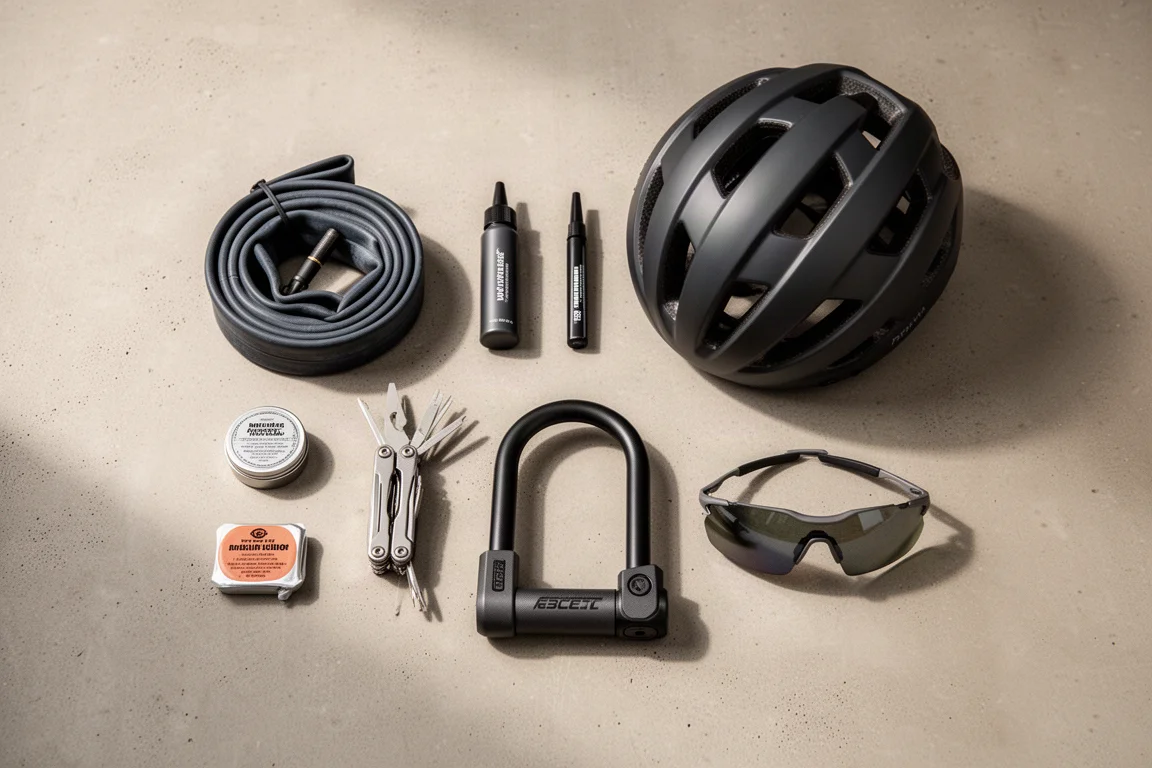
Almost every ride that ends badly ends badly for a small reason. A thorn through an inner tube, a bolt that worked loose, a chain that has run dry, a lock that was not quite good enough. The bike itself is rarely the problem. The gaps around it usually are.
This guide covers twelve pieces of gear that close those gaps. Most of them cost very little, all of them are easy to store, and several will pay for themselves the first time they save a ride from turning into a long walk or an expensive lift home.
What to Look For Before You Buy
Three things decide whether a purchase is worth it: material, fit and compatibility. Tools made from stainless steel or aluminium resist rust and hold their edges, which is what stops a cheap multi-tool from rounding off a bolt head. Helmets and shorts live or die on fit. Consumables such as patches, lube and inner tubes are worth buying in sensible quantities, because running out halfway through a season is one of the most common reasons people ride less.
Compatibility is the quiet trap. Chain speed, wheel size, valve type, valve length and rim depth all determine whether a spare part will actually work, and most of that information is printed on the sidewall of your tyre or etched into your chain. When in doubt, a local bike shop can confirm it in a minute.
Tire Repair Essentials
A puncture is the single most likely thing to interrupt a ride, and the fix is cheap. Two approaches cover almost every situation: glued patches for a permanent repair, and self-adhesive patches for speed at the roadside. Some kits also include a tyre boot, a patch that goes inside the tyre when the cut is large enough that the inner tube would otherwise push through.
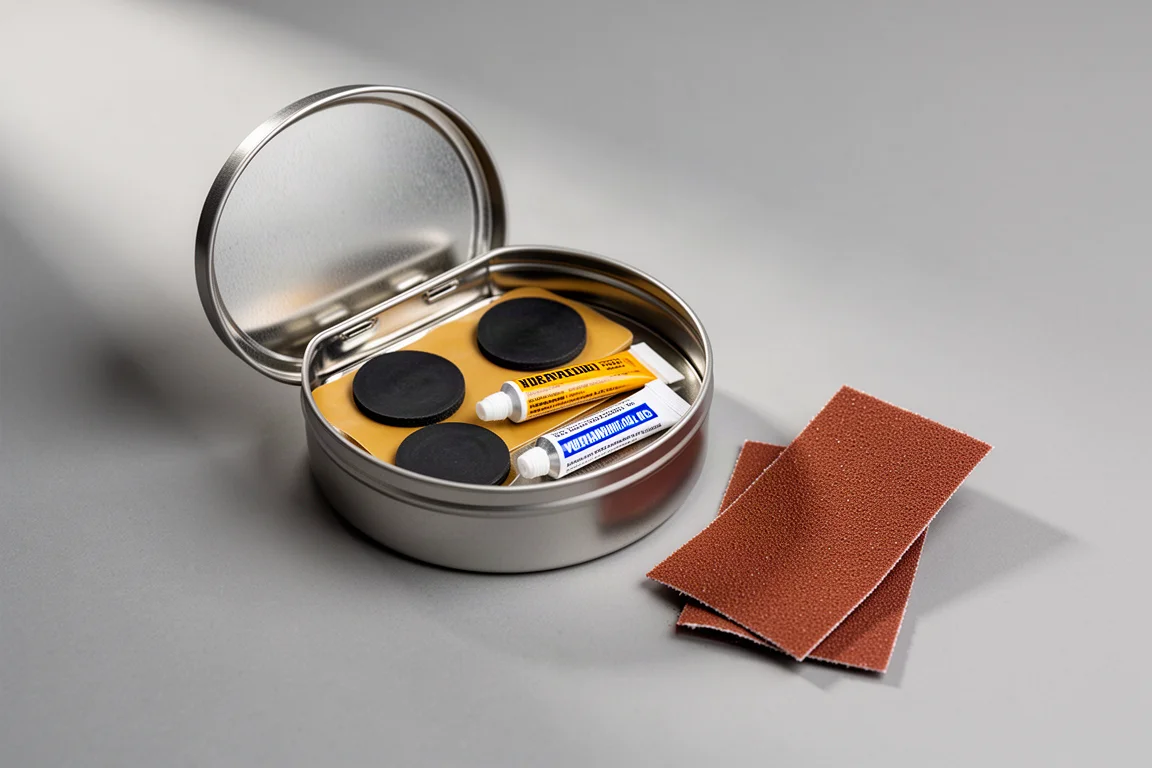
Park Tool Vulcanizing Patch Kit
The traditional workshop solution. The kit contains four round patches, a small tube of vulcanizing fluid and a square of sandpaper for roughing up the tube so the patch bonds properly. Repairs done this way are durable enough to put the tube back into service, which saves money over time and keeps usable rubber out of the bin.
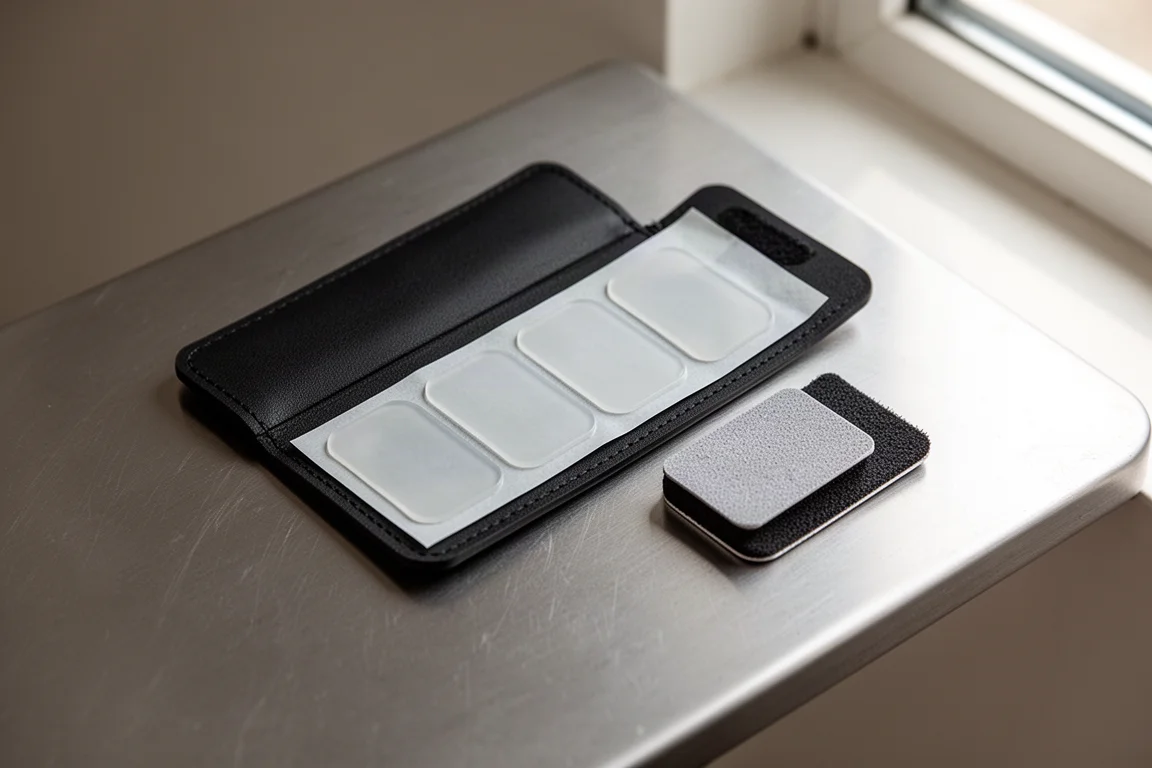
Park Tool Self-Adhesive Patch Kit
Self-adhesive patches peel off and press on like a sticker, with no glue, no scraping and no waiting. They are the quickest option when your fingers are cold and the light is going. Early versions had a reputation for lifting, and that reputation has largely faded as the adhesive has improved. At around £4 for a Park Tool kit, it is a small amount to carry for a large amount of convenience.
Trailside Tools
A multi-tool is the item that turns a ride-ending annoyance into a two-minute fix. It covers the small jobs that appear on almost every ride: a rattling bottle cage, a seat post that has slipped, a brake that rubs, a loose headset, a saddle height tweak, a cleat adjustment. On a disc brake bike you will also need to remove a wheel at some point, which is another job for the same tool.
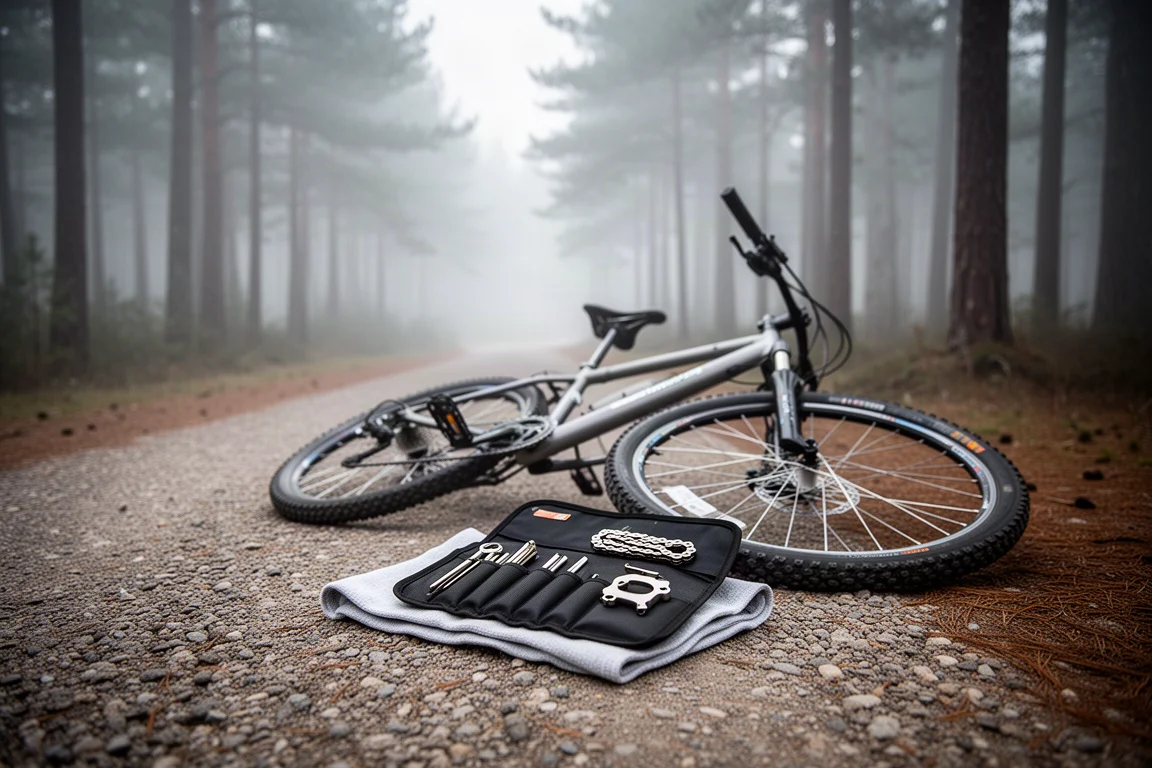
Choose one built from stainless steel or aluminium so it does not rust, and look for clean machining, since poorly cut tools are what round off bolt heads. Chain breakers inside multi-tools deserve a caveat. Most are made for 8 to 11 speed chains, so riders on 12 or 13 speed drivetrains need a tool rated for those chains. Buying a compact tool and a separate chain breaker is a legitimate route, and often the cheaper one.
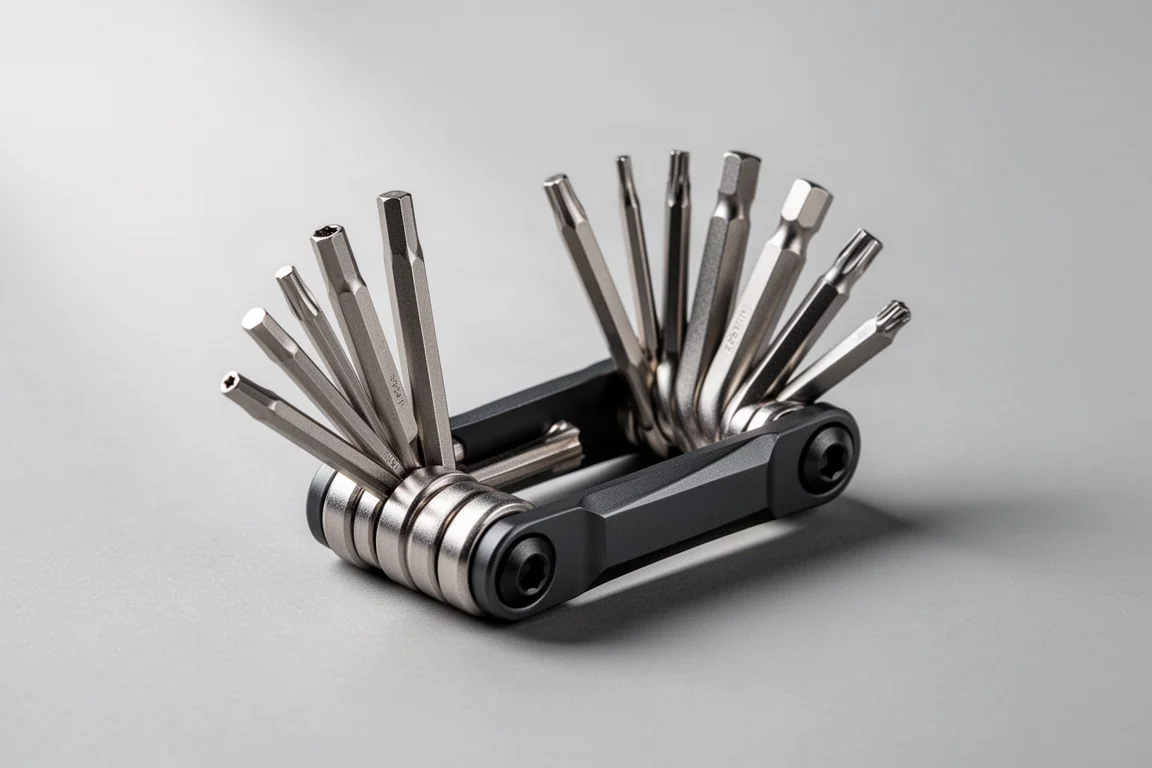
Decathlon Multi-Tool 900
The Decathlon Multi-Tool 900 is a practical choice for riders who want one compact tool that handles routine adjustments without fuss. It is the kind of tool that lives in a saddle bag and gets used more often than most people expect.
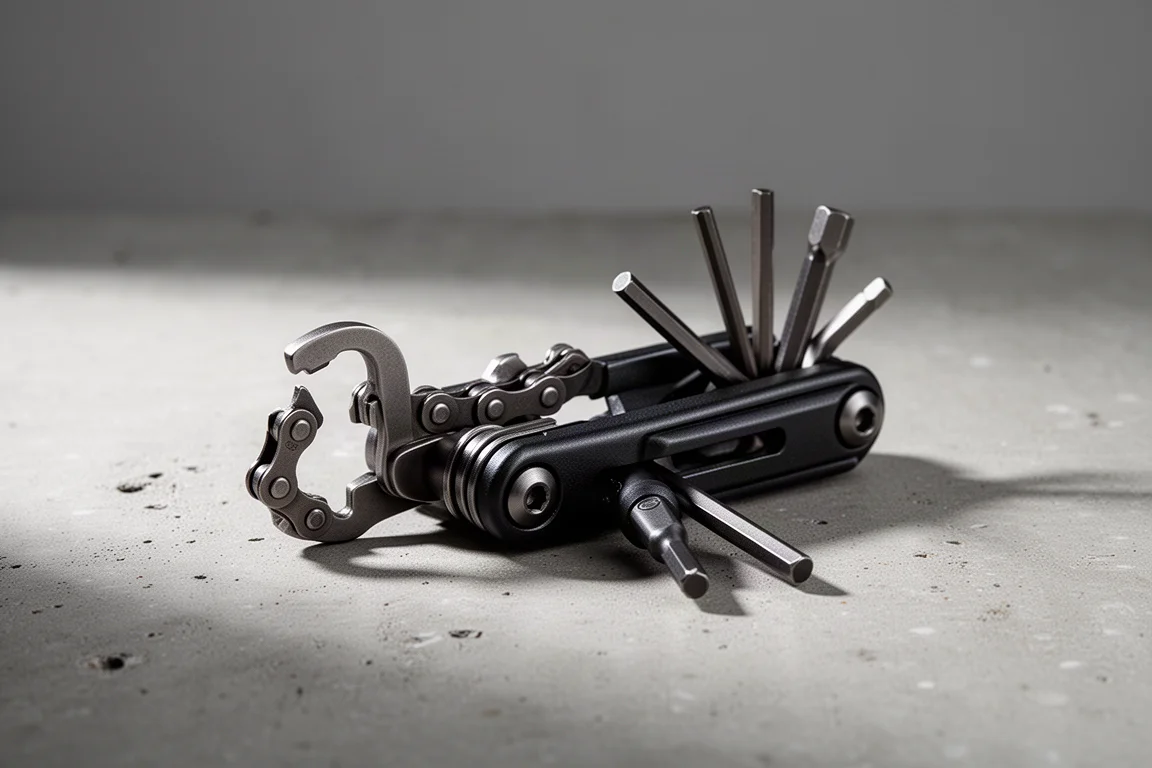
Topeak Hexus 10
The Topeak Hexus 10 is another well-liked option. Topeak also sells the parts separately, with a compact tool around £10 and a universal chain breaker around £5, so two separate items can cover the same ground as a multi-tool with an integrated chain tool.
Chain Care
Chain lube protects the chain from the weather and reduces friction between the chain, cassette and chainrings. An all-condition oil-based lube is the most versatile option, because it works across wet and dry conditions without needing a second bottle for each. Clean the chain first, apply the lube, then wipe off the excess so it does not collect grit.
Quick links are worth understanding before you need one. A quick link replaces an outer chain link with two interlocking plates on fixed pins that lock under chain tension and release when squeezed together. Match it to your chain speed, which is usually etched onto the chain itself or can be worked out by counting sprockets, and never fit the wrong link for your drivetrain. Quick links from the main drivetrain and chain manufacturers typically cost between £3 and £8 each.
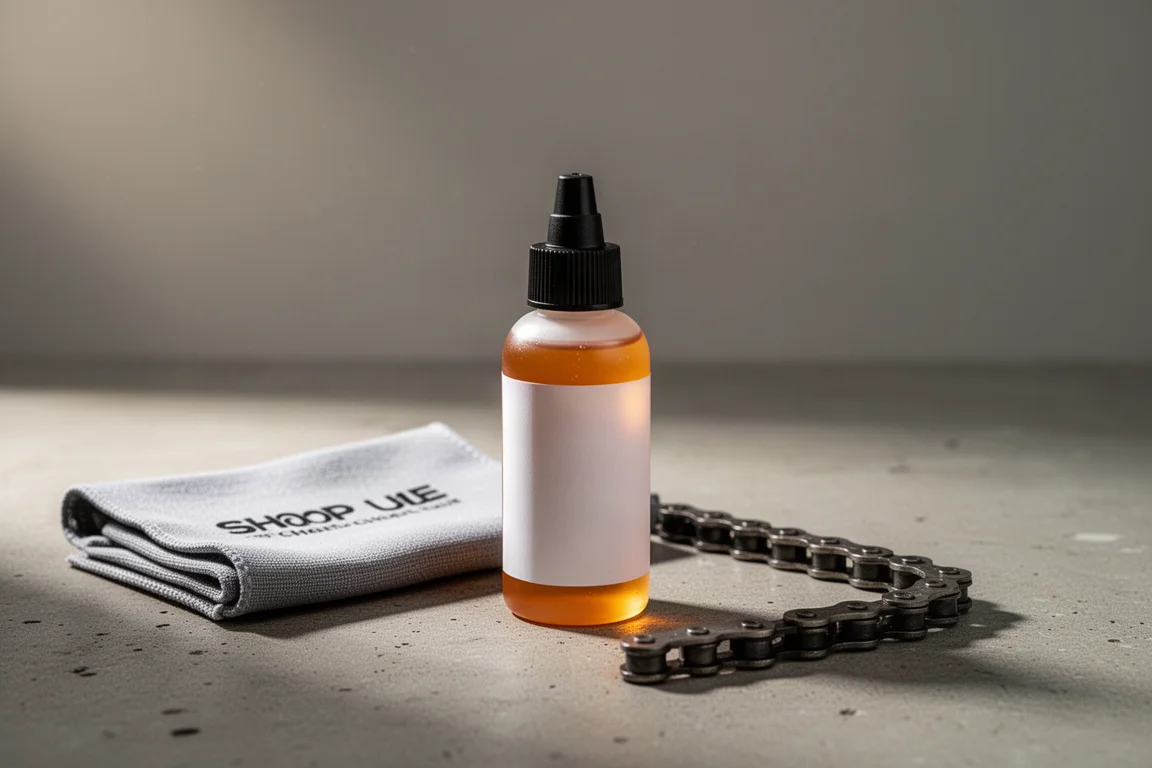
Fenwicks All Condition Oil Lube
Fenwicks All Condition Oil Lube is a good example of the versatile all-condition formula, at around £6 a bottle. It is the sort of consumable worth keeping a spare of, because a dry chain wears faster and saps more of your effort than almost anything else on the bike.
Safety Gear
Helmets and locks are the two purchases where the consequences of getting it wrong are hardest to undo, and both are areas where spending more does not automatically buy more protection.
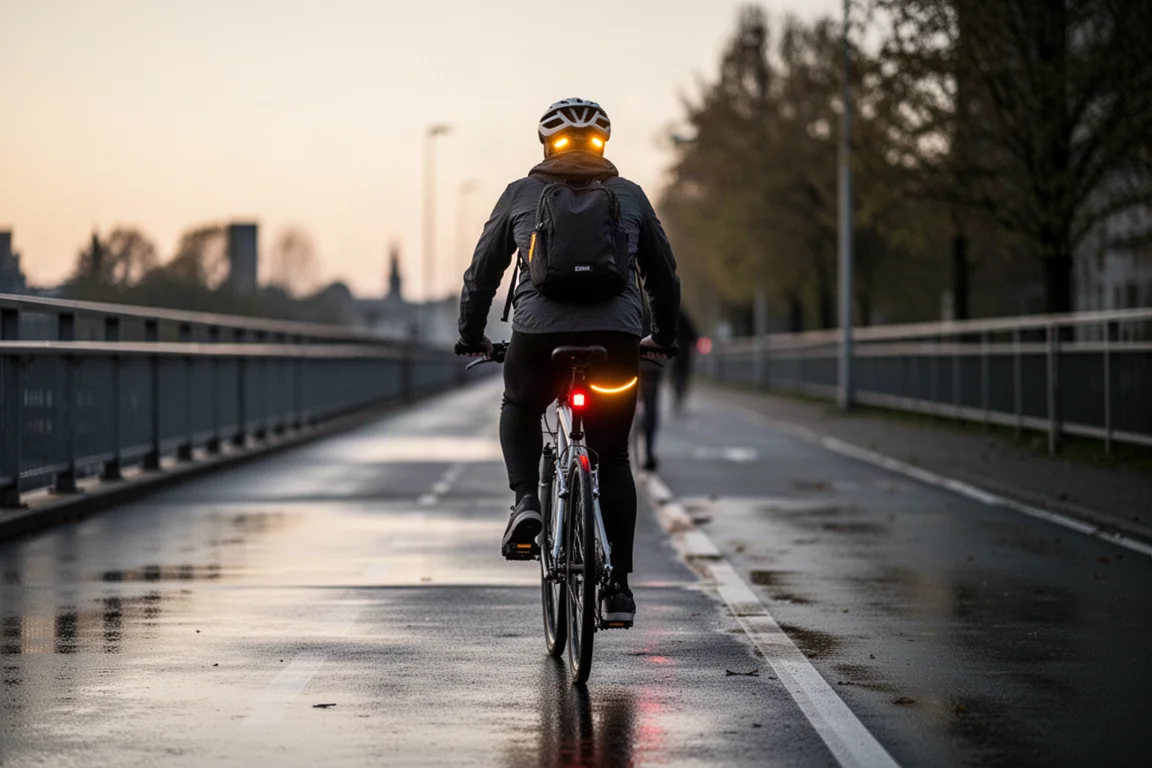
A helmet has to fit. Too large and it will not stay in place in a fall, too small and it will be uncomfortable enough that you leave it at home. Second-hand helmets are best avoided, because you cannot know what they have been through or how old they are, and helmets generally need replacing a set number of years after first use, with different brands giving different guidance. Beyond that, comfort and looks matter more than price, because a helmet you enjoy wearing is a helmet you will actually wear.
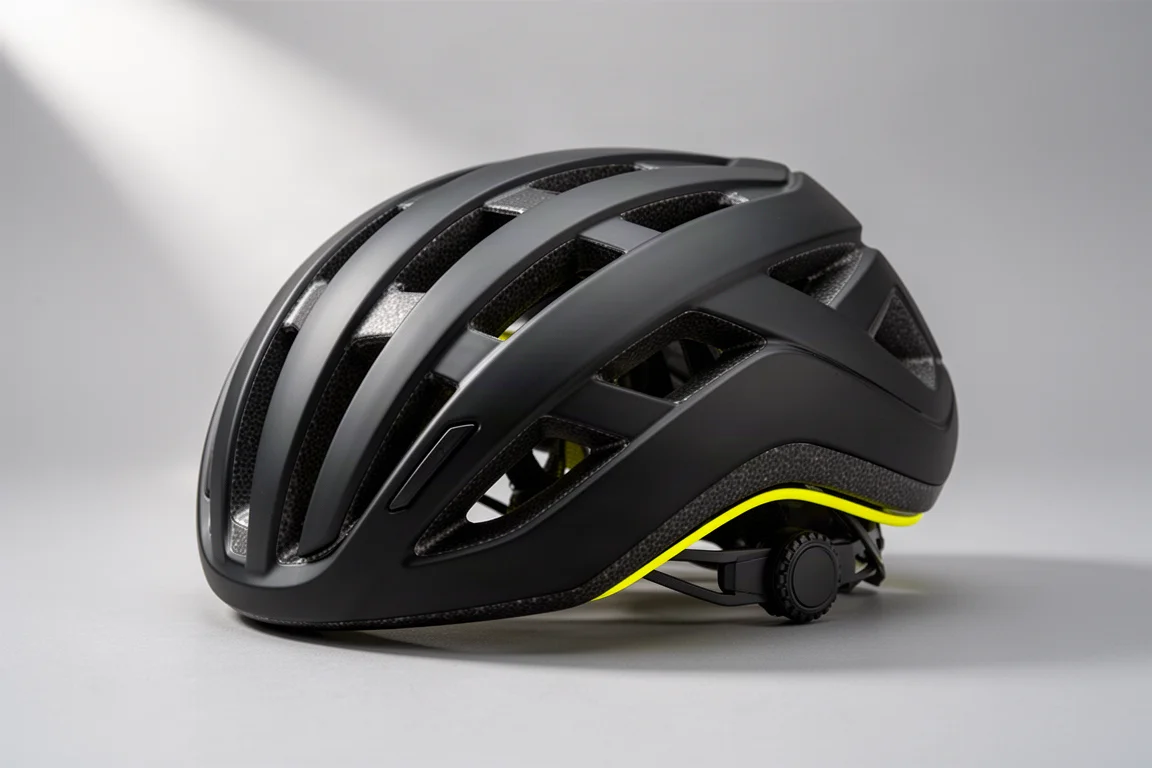
Specialized Align 2 MIPS
The Specialized Align 2 MIPS is one of the strongest value picks at around £38. Virginia Tech rates it 31st out of 284 helmets tested, ahead of a number of helmets that cost two or three times as much. MIPS is the low-friction layer found inside some helmets, designed to reduce rotational impact. As with any helmet, the fit on your head matters more than the specification sheet.
OnGuard Pit Bull
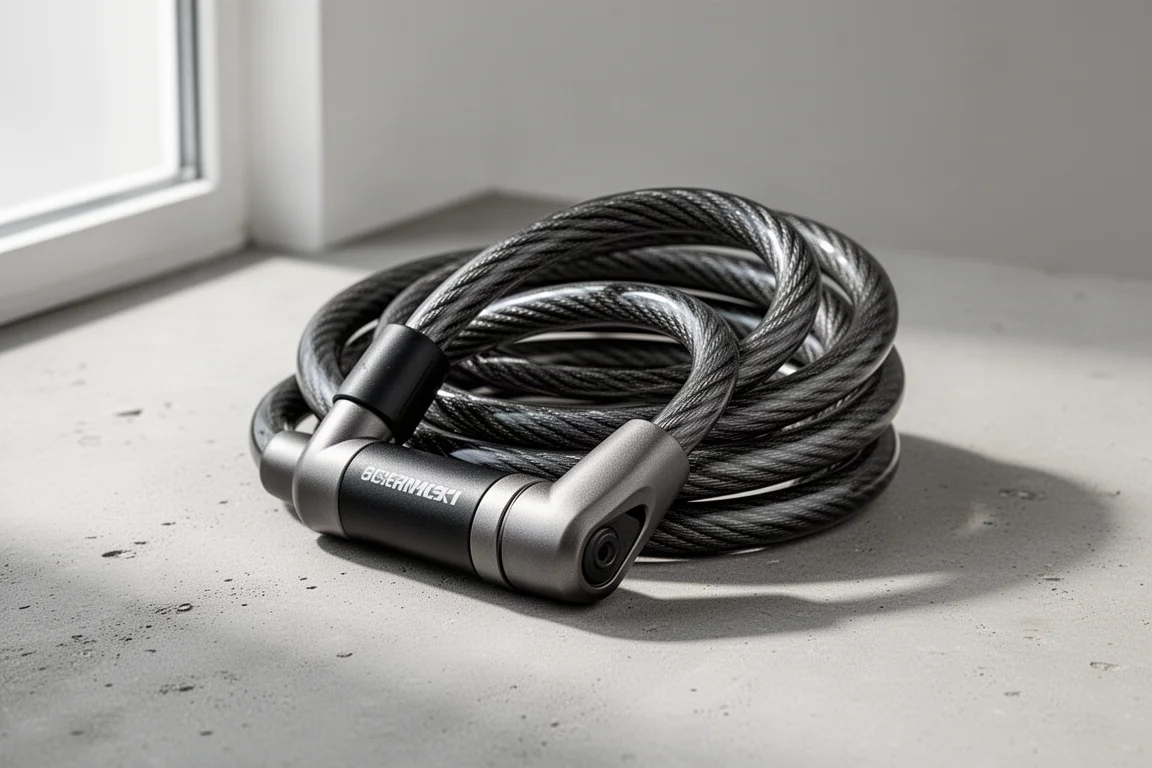
If your bike is insured, check what your policy requires before buying a lock, because an insurer may not pay out for a lock that does not meet its standard. Sold Secure ratings of gold or diamond are the ones to look for. The OnGuard Pit Bull carries a diamond rating at around £30, roughly half the price of some other diamond-rated locks, and in cut testing it lasted 3 minutes and 2 seconds. For the money, that is a serious result.
Pedals and Shoes
Clipless pedals have a confusing name, since clipless means clipped in. A cleat on the sole of the shoe snaps into a spring-loaded mechanism on the pedal, which creates a much more connected feel and can help you put more power through the pedals. The trade-off is a learning curve. Almost everyone falls over once while learning to twist a foot out, and most pedals have adjustable tension so you can start loose and build confidence.
Off-road or mountain bike style pedals are the more practical choice for most riders. They are double-sided, so you can clip in from either side, they are smaller, and their recessed cleats make walking far easier. Road systems are mostly single-sided and prioritise stiffness and low weight, which is why walking in road shoes is an awkward business.
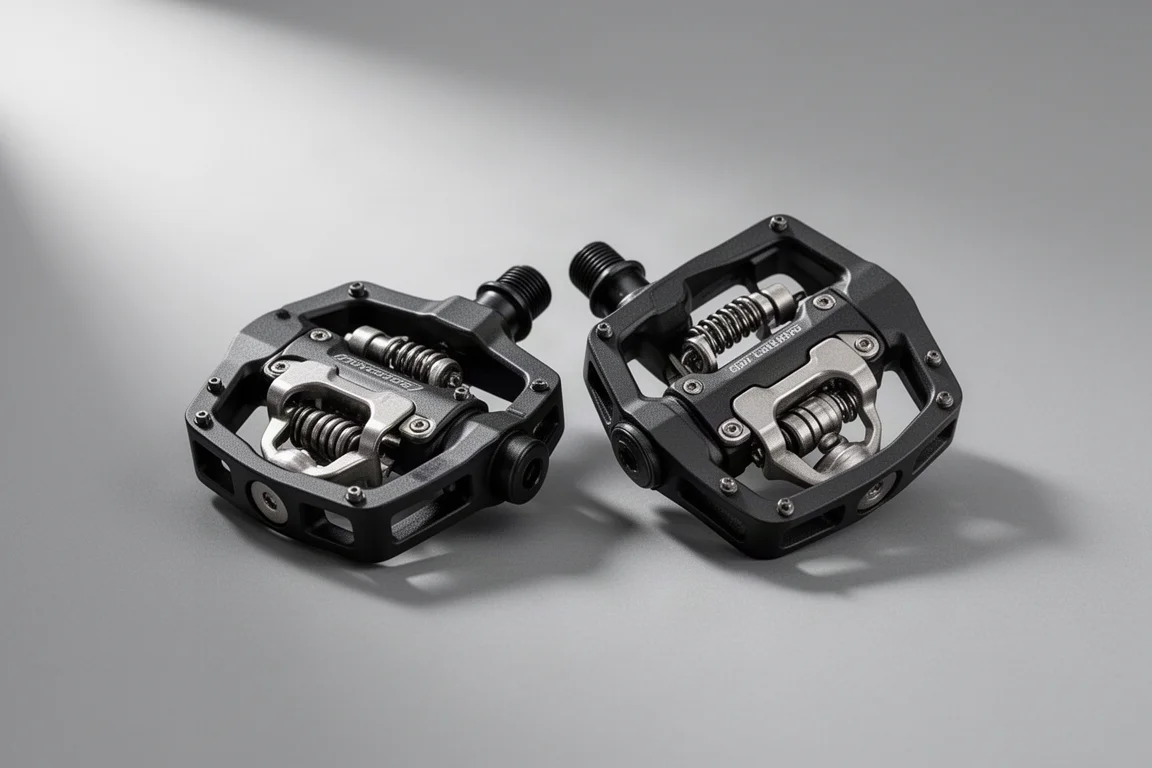
Shimano PD-M520
Shimano has a long-standing reputation for durable pedals, and the PD-M520 is a very good starting point for anyone moving away from flat pedals. Cleats are included in the box, which makes it an easy first purchase.
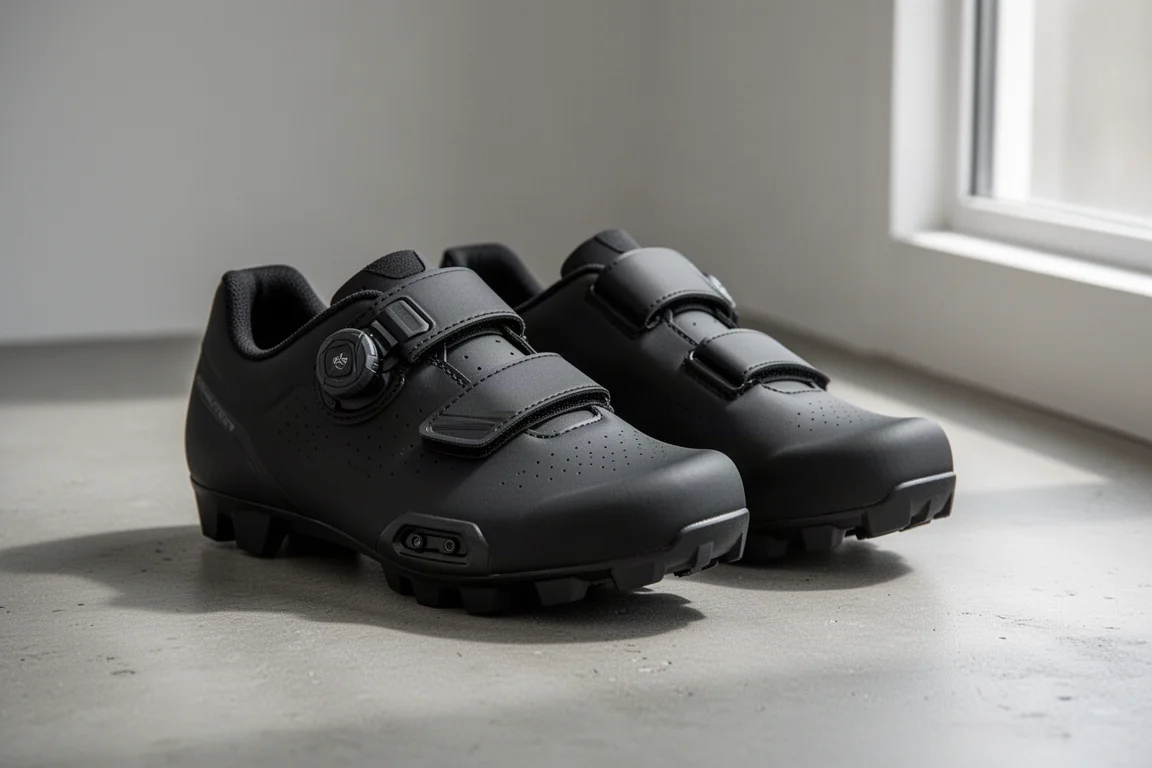
Shimano XC
Shimano’s cross country, or XC, shoe range spans several price points and the shoes are frequently discounted online. Pairing a set with an off-road pedal system gives you the practical combination: recessed cleats for walking and a double-sided pedal for easy entry.
Saddles
Saddle choice is deeply personal, and no single shape works for everyone. The one feature that makes a noticeable difference for most riders is a pressure relief cutout, which is usually shaped differently for men and women, though plenty of riders end up preferring the shape marketed to the other group. The only real drawback is a wet saddle after rain.
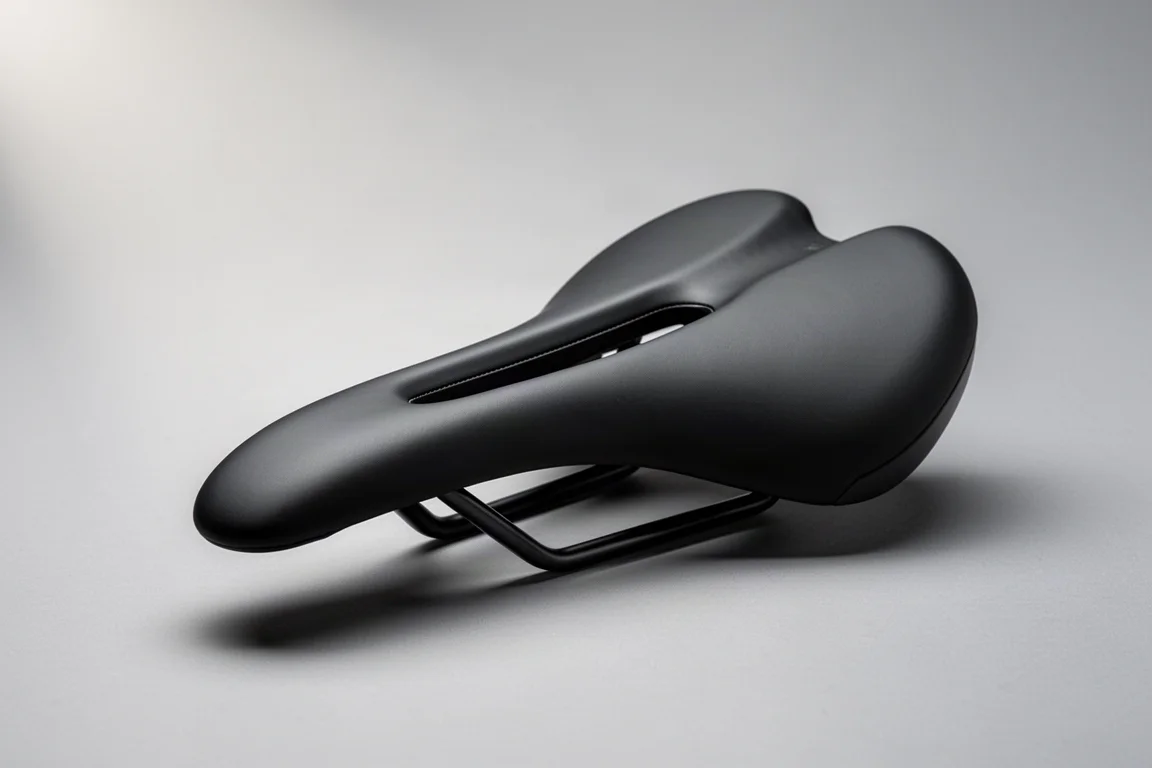
Selle Italia SLR Boost
The Selle Italia SLR Boost is a long-standing favourite for riders who want a compact, performance-oriented saddle. If your riding is fast and forward-leaning, this is the kind of shape to try.
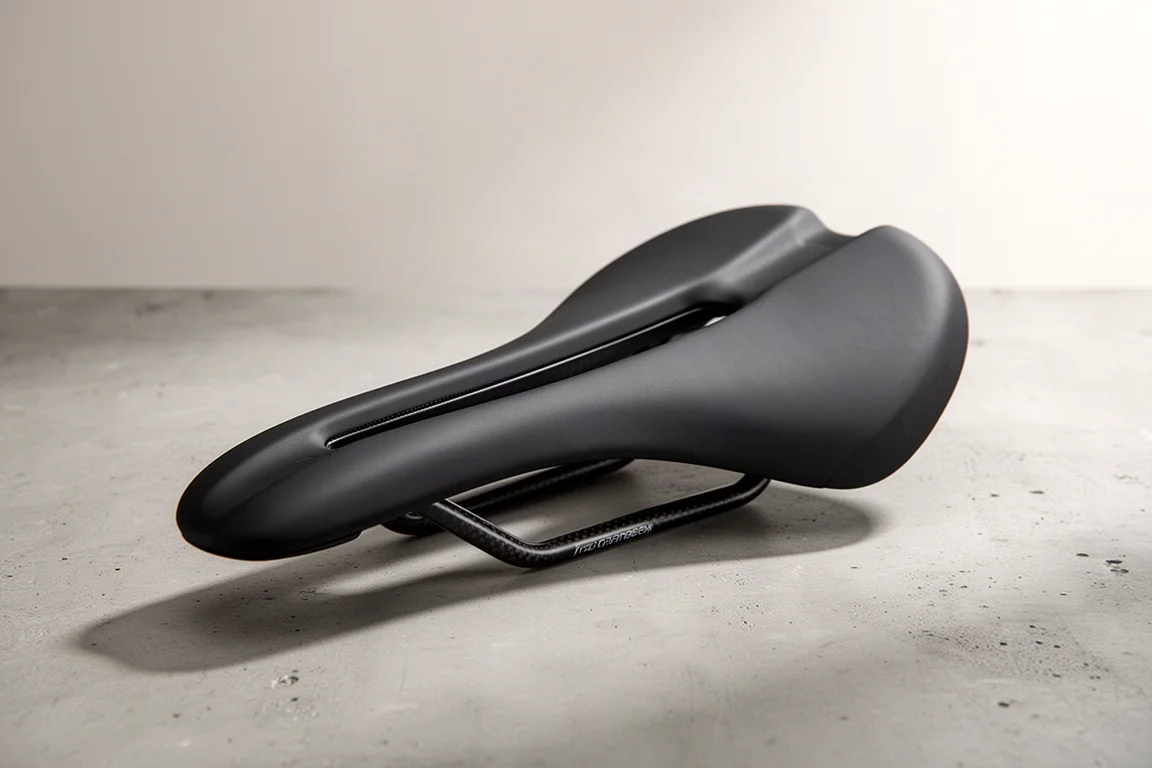
PRO Griffon
The PRO Griffon is another widely used saddle shape and a reasonable alternative to try if a compact race saddle does not suit your position on the bike.
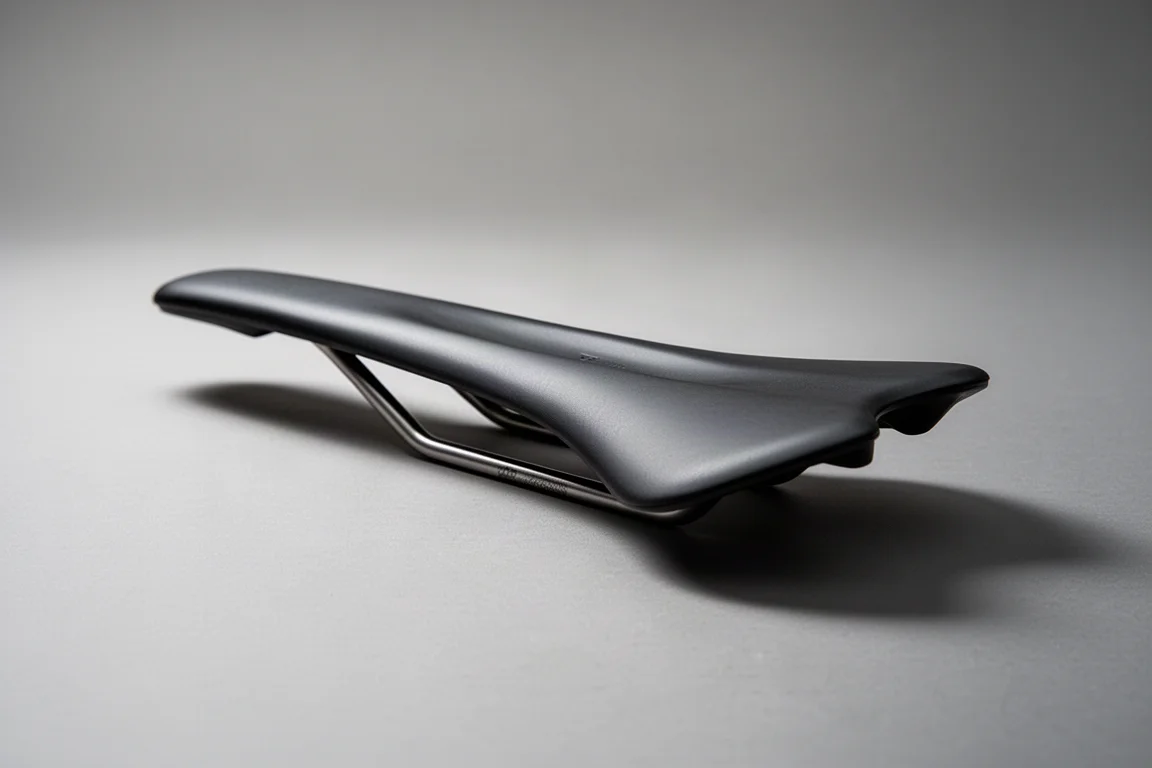
Fizik Arione
The Fizik Arione has a long, flat profile and has been on the market for years. It divides opinion sharply: some riders find the flat platform ideal for aggressive positions, while others find it uncomfortable over distance. That is true of every saddle on this list, which is why buying from a shop that lets you try before you commit is worth the small inconvenience.
Buying Advice: What to Prioritise First
If you are starting from nothing, buy in the order that prevents a ride from ending early. A spare inner tube or a patch kit, a multi-tool, a pump and a bottle of chain lube cover the majority of roadside problems for very little money. Safety gear comes next, and here fit beats features: a helmet that fits properly and a lock that satisfies your insurer will do more for you than a lighter helmet or a heavier lock.
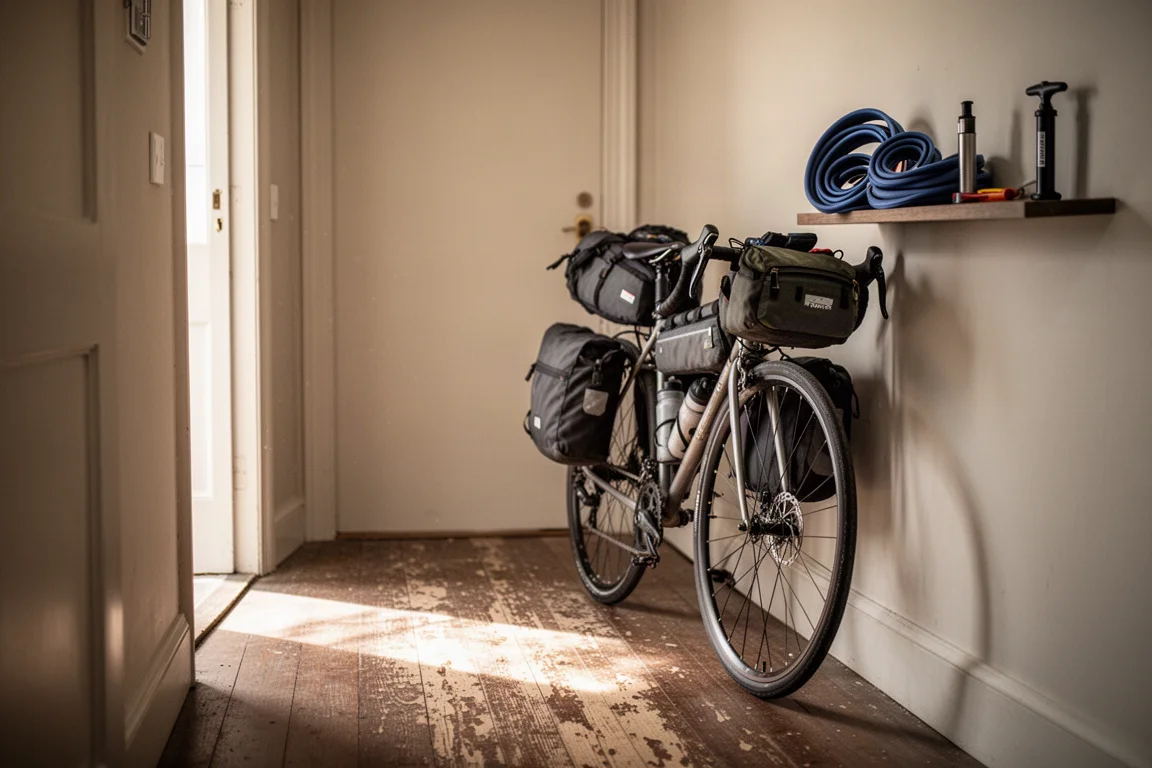
Buying habits matter too. Inner tubes and other consumables are usually cheapest online, especially in bulk, while local bike shops are often the better place for bundles, compatibility questions and anything you want to see in person. Whatever you carry, keep it together: a water resistant saddle bag or top tube bag is neater and more comfortable than full pockets, and it keeps patches and tools dry when the weather turns.
Conclusion
None of this gear is exciting, and that is the point. The patch kit, the multi-tool, the lube and the lock exist so that a small problem stays small. Add a helmet that fits and a pair of pedals you can trust, and the bike stops being the thing you worry about and becomes the thing you look forward to.
Further reading
Related Reviews
Cycling Gear
8 Cycling Products Riders Keep Coming Back To
Eight cycling components and accessories with clear strengths, honest trade-offs and long-standing reputations among riders and mechanics.
Cycling Gear
Aero Helmets and Bottle Setups Tested: Six Options Ranked by Measured Watt Savings
Wind tunnel data on six aero helmets and bottle setups, with real watt savings, practical trade-offs, and guidance on what is worth buying first.
Cycling Gear
Aero Road Bikes and Fast Tires Worth Watching in 2026
Four aero road bikes and one fast road tire, with the real strengths, the open questions, and what to check before you buy.