GPS Sports Watches
Coros Vertix 2 Review: Huge Battery, Big Ambitions
A rugged GPS sports watch with standout battery life, offline maps, dual-frequency GPS, and music storage, but a few features still need refinement.
Introduction
The Coros Vertix 2 is the brand’s most ambitious outdoor watch yet, built to compete at the high end of the GPS sports watch market. It arrives with headline features that look like a complete package on paper: offline maps, dual-frequency GPS, 32 GB of music storage, an ECG-based HRV test, and truly enormous battery life. In daily use, though, the story is more mixed. The battery and build quality are genuinely excellent, while the maps, GPS pacing, and music experience still feel a step behind the most polished competitors. Priced at £599 in the UK and $699 in the US, it sits in the same ballpark as the Garmin Fenix 6 Pro and 6X Pro, which makes the trade-offs worth examining carefully.
Who This Watch Is For
The Vertix 2 is aimed at runners and adventurers who spend long days out: ultrarunners, mountain athletes, and anyone training for multi-day events. Its rugged build, water resistance to 100 meters, and coated titanium alloy bezel are designed for hard use in the mountains. It also suits runners who simply never want to think about charging, and who want the full suite of Coros EvoLab training tools on the wrist. If you are a road runner who trains on flat loops and cares deeply about real-time pace accuracy, some of its headline features may not deliver what you hope, so it is worth reading the details below before buying.
Design, Build, and Everyday Comfort
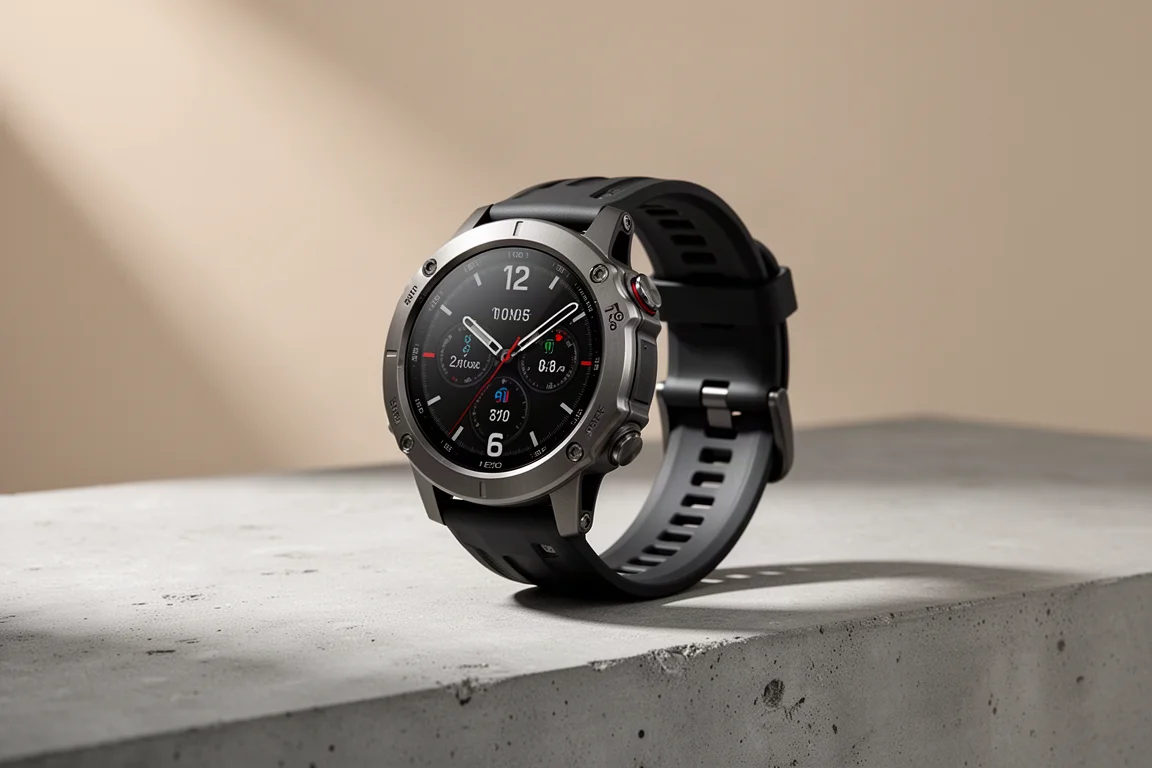
This is a chunky watch. At 89 g it is heavier than the original Vertix and heavier than every Garmin Fenix 6 model except the largest 6X Pro, which weighs 93 g. The 1.4-inch 280x280 display is the biggest screen Coros has made, larger than the Vertix 1, and it can show up to eight customizable stats at once. Durability is a strong point: water resistance to 100 meters, a diamond-like carbon coated sapphire display, and interchangeable 26 mm silicone or nylon straps.
{{image:1}}
In everyday wear, comfort divides opinion. Compared with a Garmin Enduro, the Vertix 2 sits higher off the wrist and the wider silicone strap feels less comfortable, which matters if you want to wear it for sleep and activity tracking around the clock. The nylon strap is a clear improvement and is an easy recommendation for anyone buying this watch. One notable limitation is screen brightness: it is somewhat dim in many conditions and cannot be adjusted on the watch, which is partly why battery life is so exceptional. The available watch faces also lean busy, though a simpler option would likely arrive with updates.
Maps: Useful Context, Missing Navigation
Offline maps with topographic, street view, and hybrid layers are a major addition, but the execution has gaps. There is no turn-by-turn navigation, and the route experience is essentially a breadcrumb trail laid over a map. Street names are absent, which makes picking the right road harder in urban areas, and the screen’s limited brightness can wash out fine map detail in certain light.
Loading routes is also more fiddly than on rival platforms: you download a route, transfer it to your phone, and open it in the app, rather than creating a route directly in the app as on Garmin. The heading-up compass orientation took a long time to settle in early testing, though an update already improved it. One usability quirk to know: pressing the center button on the map screen opens the zoom function rather than pausing your run. The elevation profile view, by contrast, works nicely, showing your upcoming route and how much climb remains, even if it is less advanced than Garmin’s ClimbPro.
{{image:2}}
Dual-Frequency GPS: Ambitious, Imperfect
Dual-frequency GPS across all satellite systems is the flagship tracking feature, borrowed from technology once reserved for commercial aviation, and it promises a leap in accuracy in built-up areas and under tree cover. In practice, results were mixed. Overall distance came within an acceptable margin of error, and on general runs the track often landed on the correct side of the road. In one big city race through a dense commercial district, the track was clearly better than a standard GPS watch.
Real-time pace accuracy, however, did not improve over other watches, and on repeated loops the watch cut corners through aggressive smoothing, producing short reps and inconsistent pace. Comparable tracks from other watches proved more faithful. Dual-frequency mode also costs battery life, dropping the GPS-only figure from roughly 90 hours to about 45 hours. If your priority is hitting exact rep paces, this feature does not yet solve that problem, though software refinement seems likely over time.
{{image:3}}
Battery Life: The Killer Feature
Battery is where the Vertix 2 genuinely delivers. Coros claims 140 hours of full GPS tracking, extendable to 240 hours in the lowest-power UltraMax mode, 90 hours in all-systems mode, 50 hours in dual-frequency mode, and 30 hours with all satellites plus music, plus around 60 days of general use. Real-world testing backed this up impressively. One tester ran 100 km per week in the highest-accuracy GPS mode and got 19 days per charge. Another took about two weeks to drain to 50%, including a four-hour run in max GPS mode that consumed only 7%, against 18% for the same run on a Garmin Enduro. Overnight drain was around 1%.
This is the watch’s clearest advantage. For daily training with a weekly long run of four to six hours, it will last about a month, and multi-day ultras pose no problem. It creates the rare luxury of zero battery anxiety, and that alone is worth serious consideration.
Music: A Step Back in Time
The 32 GB of music storage and offline playback lets you drag and drop MP3s from a laptop, pair Bluetooth headphones, and run phone-free. The experience, though, feels dated. You get a single flat list of tracks with no playlist ordering, no offline Spotify, and no ability to control Spotify on a paired phone. Podcast files work, but there is no fast-forward, and an early crash when running music and podcasts together has reportedly been fixed in updates.
For a one-off race where you load a few files in advance, it is serviceable. For anyone used to streaming services, the daily admin of managing files is a real friction point, especially since this watch’s adventure audience will usually be carrying a phone anyway.
Training Tools and Health Features
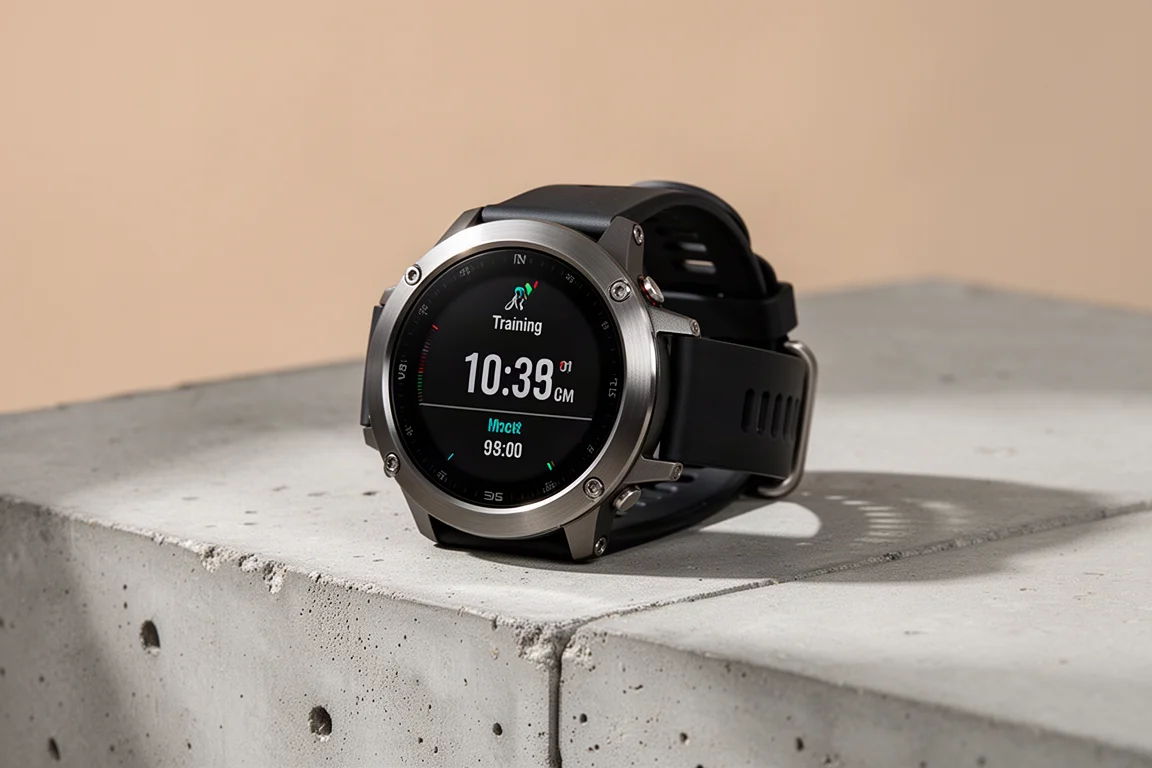
EvoLab brings Coros’s full training suite to the wrist: training load, fatigue, base fitness, running performance, race predictions, and recovery time, plus activity, sleep, and resting heart rate tracking. Training load is well implemented, race predictions proved notably more accurate than Garmin’s in testing, and you can even see your load building in real time during a session, which is genuinely useful for dialing a workout back. Recovery estimates are optimistic, however, sometimes declaring you ready for hard training the day after a hard 24-mile run.
The running performance metric is the weak link: it only appears on certain qualifying runs in specific modes on flat terrain, making it inconsistent and easy to ignore. EvoLab’s sheer breadth of overlapping stats can also be confusing if you are not already comfortable with this kind of data, and it is clearly tailored to road runners doing flat training. New physiological features include an ECG-based HRV reading taken by holding the bezel for a minute, which produces a benchmarking score out of 100, and an optical pulse oximeter for blood oxygen at altitude. The HRV feature is not medically approved yet, and it lacks a morning prompt to remind you to test. Optical heart rate showed typical lag and occasional overshoot at max effort; a chest strap remains the sensible pairing, and the watch supports Bluetooth 5.0 accessories and heart rate broadcasting, though not ANT+.
{{image:4}}
Buying Advice
The Vertix 2 is far better value than the original Vertix, and its battery life alone justifies serious consideration. But at £599 / $699 it competes directly with watches that have polished these same features over years. Garmin’s equivalents do maps, navigation, and music more smoothly, and even the pricier Enduro is more compact and comfortable while matching the battery story. If the Vertix 2 were cheaper, the recommendation would be much stronger. As it stands, buy it if extreme battery life, rugged build, and Coros’s improving software ecosystem matter most to you; look elsewhere if turn-by-turn navigation, refined GPS pacing, or streaming music are priorities.
Conclusion
The Coros Vertix 2 is a watch built for the future: a rugged, long-lasting platform whose headline features have room to mature. The battery life is exceptional, the build is adventure-ready, and EvoLab brings Coros’s training analytics up to a competitive level. The maps, dual-frequency pacing, and music experience need refinement before they become reasons to buy. If you can live with those rough edges in exchange for weeks between charges, this is a rewarding watch; if you want every feature polished today, the established alternatives still hold the edge.
Product link
View more details for Coros Vertix 2
This product is mentioned in the review. Check the specifications, options, and compatibility before buying.
View more details for Coros Vertix 2Further reading
Related Reviews
GPS Sports Watches
Polar Grit X2 Pro vs Vantage V3 vs COROS Vertix 2S: Which Flagship Adventure Watch Makes Sense
Polar's new flagship shares its internals with the Vantage V3 and goes up against the COROS Vertix 2S. Here is what two months of testing revealed about GPS, heart rate, navigation, and value.
GPS Sports Watches
Coros Apex 2 vs Garmin: Six GPS Sports Watches Worth Comparing
A practical look at the Coros Apex 2, Apex 2 Pro, Vertex 2, and three Garmin rivals, with what each does well and where the trade-offs sit.
GPS Sports Watches
Coros Apex 4 Hands-On: Titanium Build, Faster Mapping, and a Battery Built for the Mountains
A first look at the new Coros Apex 4 GPS sports watch, including its titanium construction, improved mapping, built-in speaker, and standout battery life.