Road Bike Tires
Continental vs Pirelli Road Tires Tested: Does Spending More Make You Faster?
A real world time trial comparison of Continental and Pirelli road tires at several price points, and what the time gaps really mean for triathletes, time trialists, and everyday road riders.
Introduction
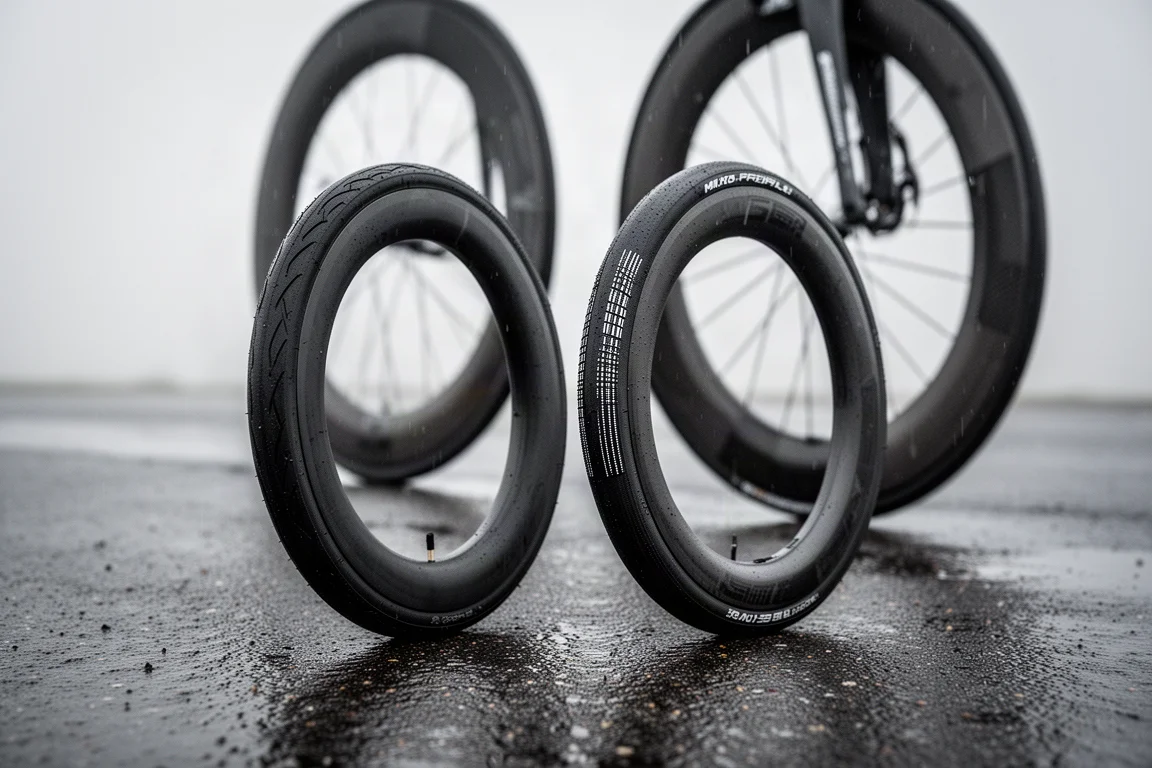
Tires are the only part of a bike that touches the road, and yet they are usually the last thing anyone changes. The marketing claims are enormous: seconds saved, watts freed, and the word “aerodynamic” printed across the sidewall. The obvious question is whether any of that shows up in the real world.
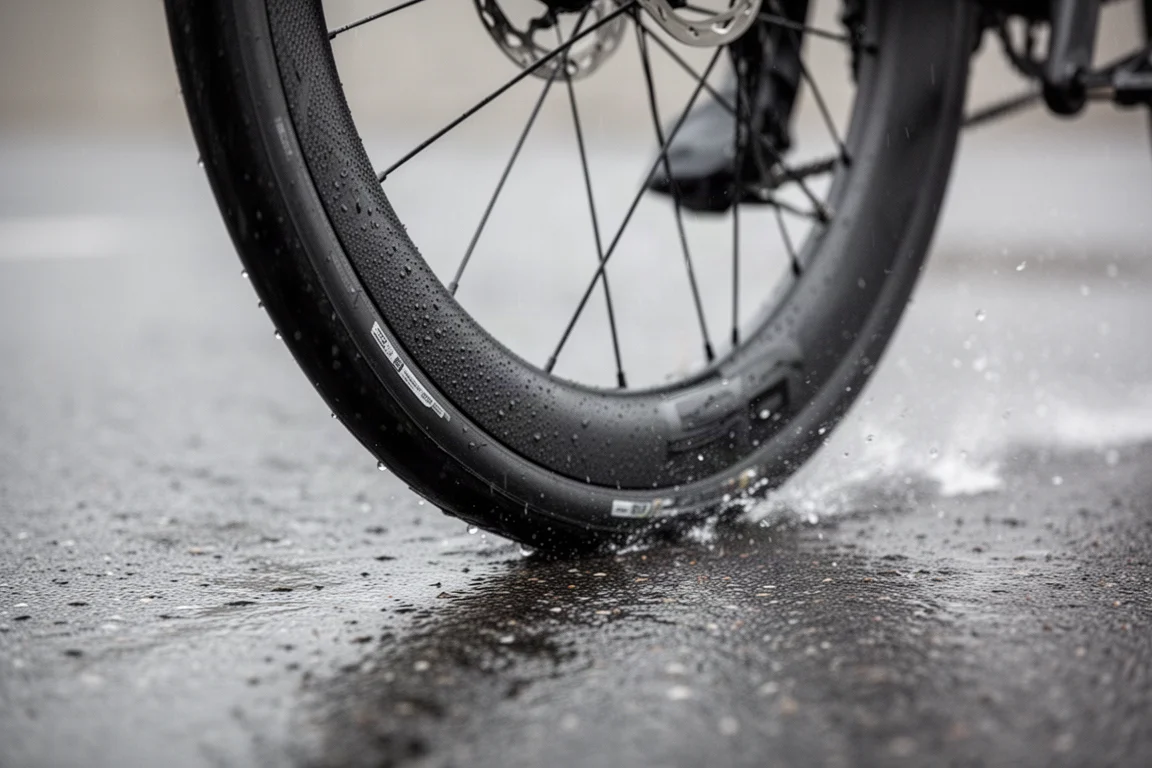
To find out, a head-to-head comparison was run on time trial bikes at three price points per rider, with every run held at a realistic, sustainable power output rather than pro-level numbers. The conditions were far from clinical: steady wind, constant rain, wet roads, standing puddles, and even a hedge being cut beside the course. Each rider completed one time trial per tire set while heart rate and power were logged to keep the comparison as fair as possible.
The contenders were two of the best known road ranges in cycling. Continental supplied the Grand Sport, the Grand Prix 5000 TR, and the Aero 111. Pirelli supplied the P7 Sport, the P0 Race, and the P0 Race RS. Between the cheapest and the most expensive tires on test sat a price gap of well over £100 per set, and the results were more dramatic than most riders would expect.
How We Evaluated These Tires
Three things decide how a bicycle tire performs: the casing, the puncture protection, and the rubber compound. A fourth factor, aerodynamics, becomes important once you are racing against the clock.
The casing is the fabric layer beneath the rubber. A more supple fabric deforms more easily over bumps, which reduces hysteresis, the energy lost every time the tire flexes. A stiffer casing has higher hysteresis and gives more of your effort back to the road as heat. High-end casings use a higher thread count, much like the difference between a coarse sheet and a fine one, and that extra suppleness is a large part of what the higher price pays for.
Puncture protection sits between the casing and the outer compound. Entry-level Continental tires use a nylon layer. Mid-range models step up to polyester fibre. The top end uses Vectran, a lightweight synthetic fibre spun from liquid polymer that stays flexible while resisting punctures. Pirelli uses a comparable system it calls Tech Belt. The trick is making protection that is light and supple rather than a stiff, heavy band that dulls the ride.
The compound is the rubber you can see, and it has to balance rolling resistance, durability, and grip at the same time. Budget tires use simpler, easier to source rubbers. Premium tires blend synthetic and natural rubber in far more complex recipes to dial in that balance.
Then there is aerodynamics. It used to be assumed that a perfectly smooth tire was fastest and that tread existed only for grip. That has changed: tread can help create laminar flow around the tire. The top-end Continental rear tire uses a laser-etched micro-profile tread, while the front tire carries small cavities developed with aerodynamicists to generate vortices that manage airflow around the leading wheel.
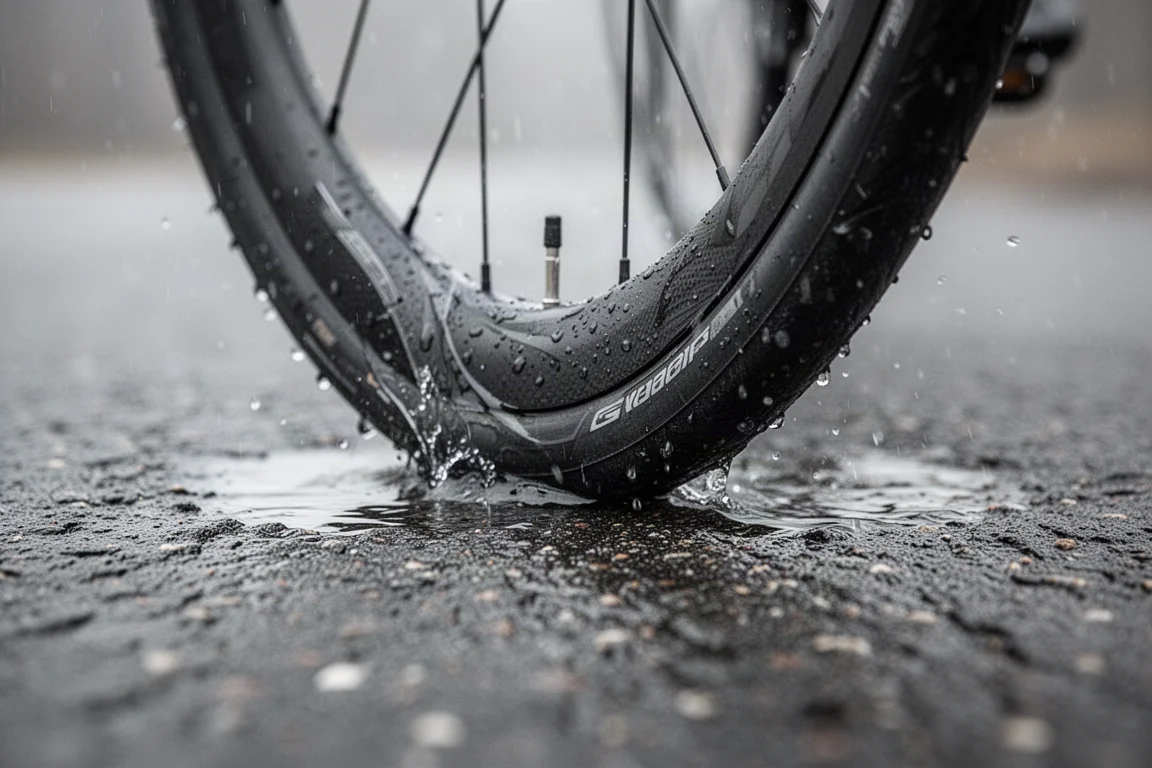
One more variable deserves attention before anything else, because it costs nothing. Tire pressure was matched to rider weight, bike weight, and road surface using an optimised pressure calculation, and it turned out to matter enormously. Differences in width and pressure between two tire sets were large enough to make a direct comparison misleading, which is why the headline numbers below should be read carefully.
Continental Grand Sport
The Grand Sport is the entry point to Continental’s road range at around £30 per tire. It uses a nylon puncture protection layer rather than the more sophisticated materials further up the range, and on this test it was run at 25 mm and 92 PSI, the pressure calculated for the rider and the surface.
It is a sensible, honest tire, and it was not disgraced. Against the most expensive setup on test, the entry-level set gave away 39 seconds over the course. That is the clearest illustration of the gap between a budget tire and a premium one, and it is a gap that grows the longer you ride.
For steady training miles, club runs, and general riding, the Grand Sport does the job at a price that leaves money for everything else. Riders chasing time, however, should understand exactly what they are giving up.
Continental Grand Prix 5000 TR
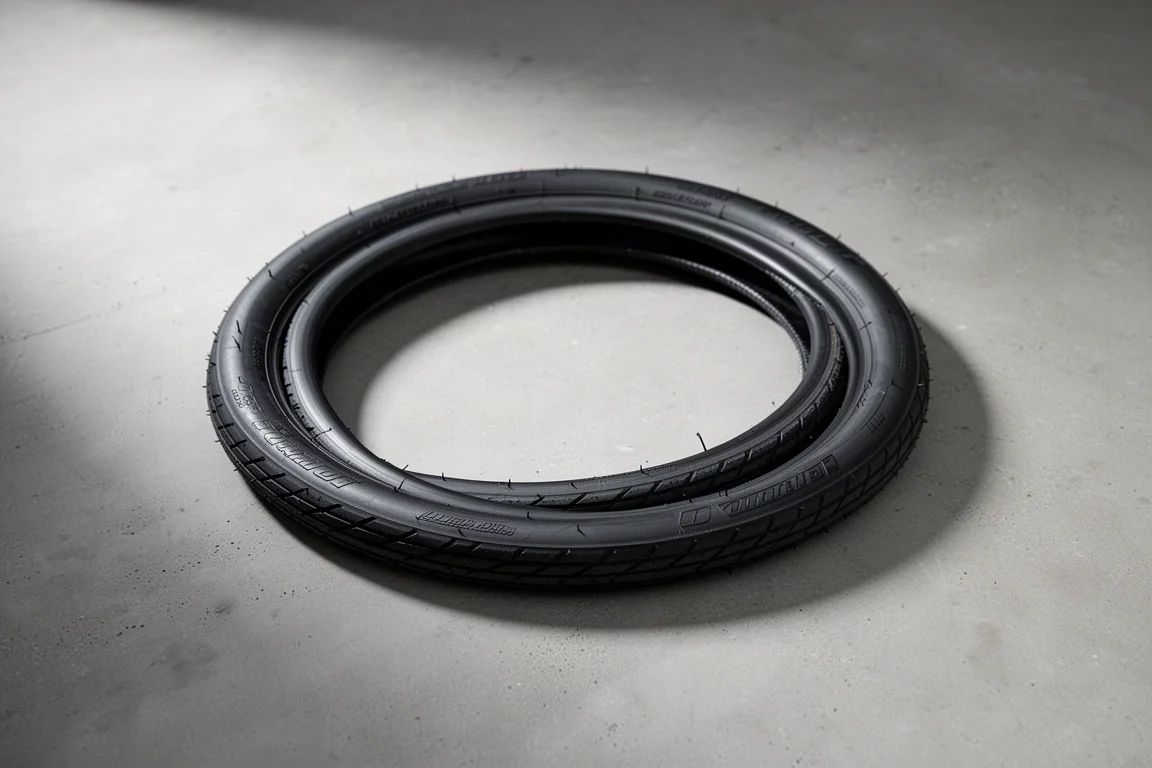
The Grand Prix 5000 TR sits at the top of Continental’s road range and was used on the rear wheel of the premium setup, priced at around £72 per tire. Its distinguishing feature is the laser-etched micro-profile tread, a pattern fine enough to be almost invisible from a metre away but designed to help airflow stay attached across the tire surface.
The casing and compound are the most advanced in the range, and the protection layer uses Vectran rather than nylon or polyester. Together with the front tire it formed a £164 set, by far the most expensive combination on test.
That price is what makes the result interesting. The premium Continental set was 39 seconds quicker than the entry-level set over a course that took roughly twenty minutes to complete, with the session held at consistent power and heart rate across all runs.
Continental Aero 111
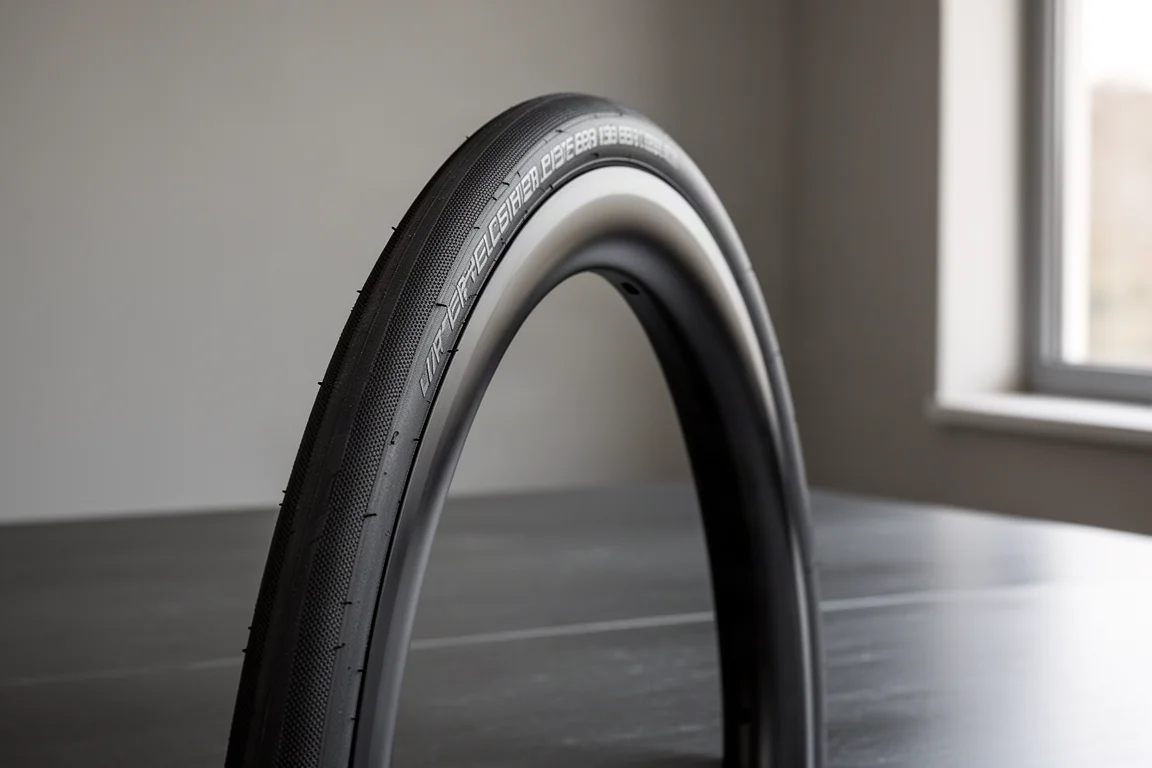
The Aero 111 is a front-specific tire and the most expensive single tire in this comparison at around £92. It was developed with aerodynamicists at Swiss Side, and rather than relying on tread alone it uses small cavities across the surface that deliberately create vortices, helping air reattach as it flows around the leading wheel.
Front-wheel aerodynamics matter because the front tire is the first thing the airflow meets, and it sits in disturbed air from the wheel and fork. A tire engineered specifically for that job is a narrow, specialist product, and it is priced accordingly. Paired with the Grand Prix 5000 TR on the rear, it completed the £164 set that produced the fastest Continental result.
It is aimed squarely at time trialists and triathletes, riders who are already optimising position, wheels, and clothing and who want the last few seconds to come from the tire.
Pirelli P7 Sport
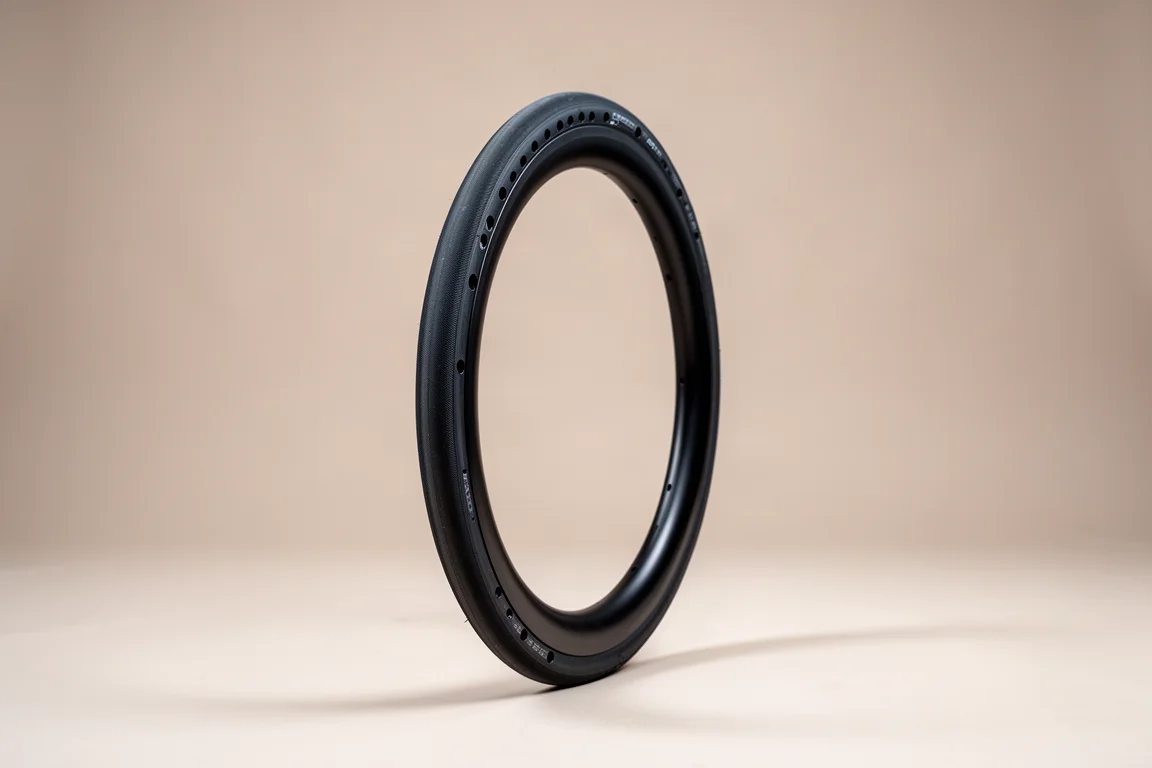
Pirelli’s entry point is the P7 Sport at around £20 per tire, the cheapest tire on test. Like the other Pirelli models it uses the brand’s Tech Belt puncture protection, and each step up the range brings a better compound, a better casing, and better protection, along with lower weight.
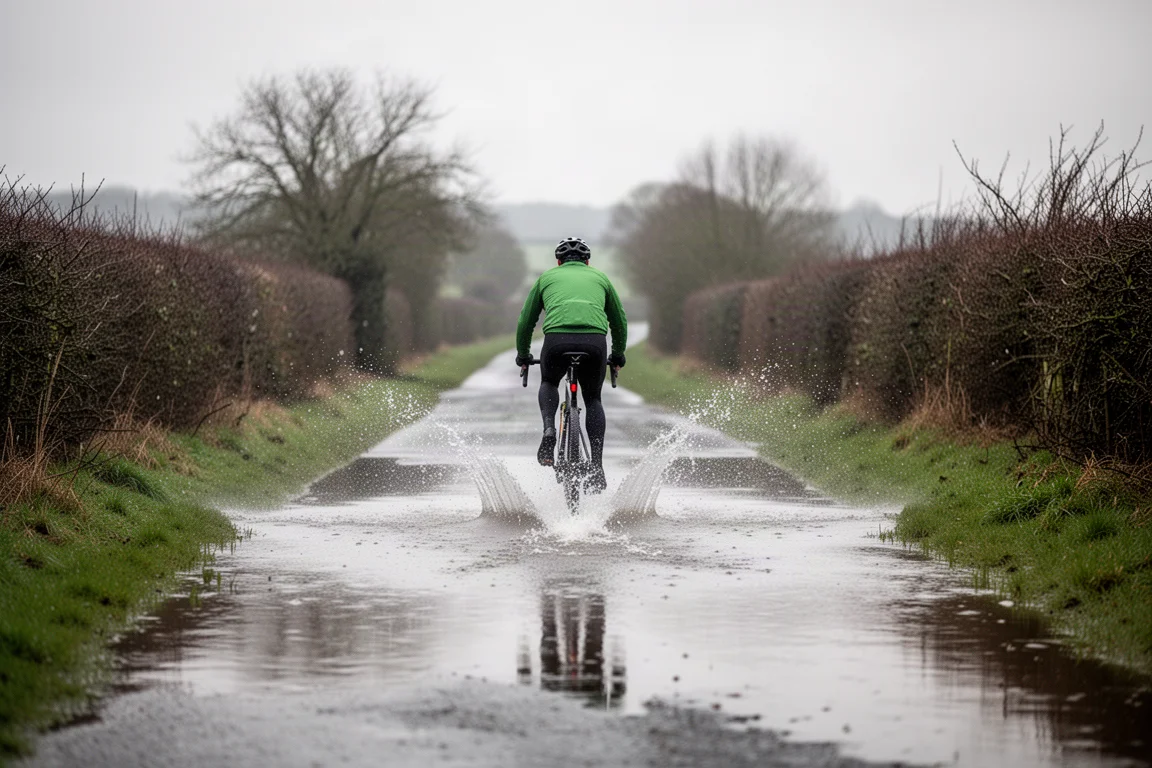
At this price the compromises are unavoidable, and they showed up in the timing. Compared with the fastest setup on test, the cheapest tires gave away 33 seconds over the course, which extrapolates to roughly 8 minutes 48 seconds over a longer race-distance effort.
For winter bikes, commuters, and turbo trainers, that trade-off makes perfect sense. For anyone chasing a personal best, it is time left on the table.
Pirelli P0 Race
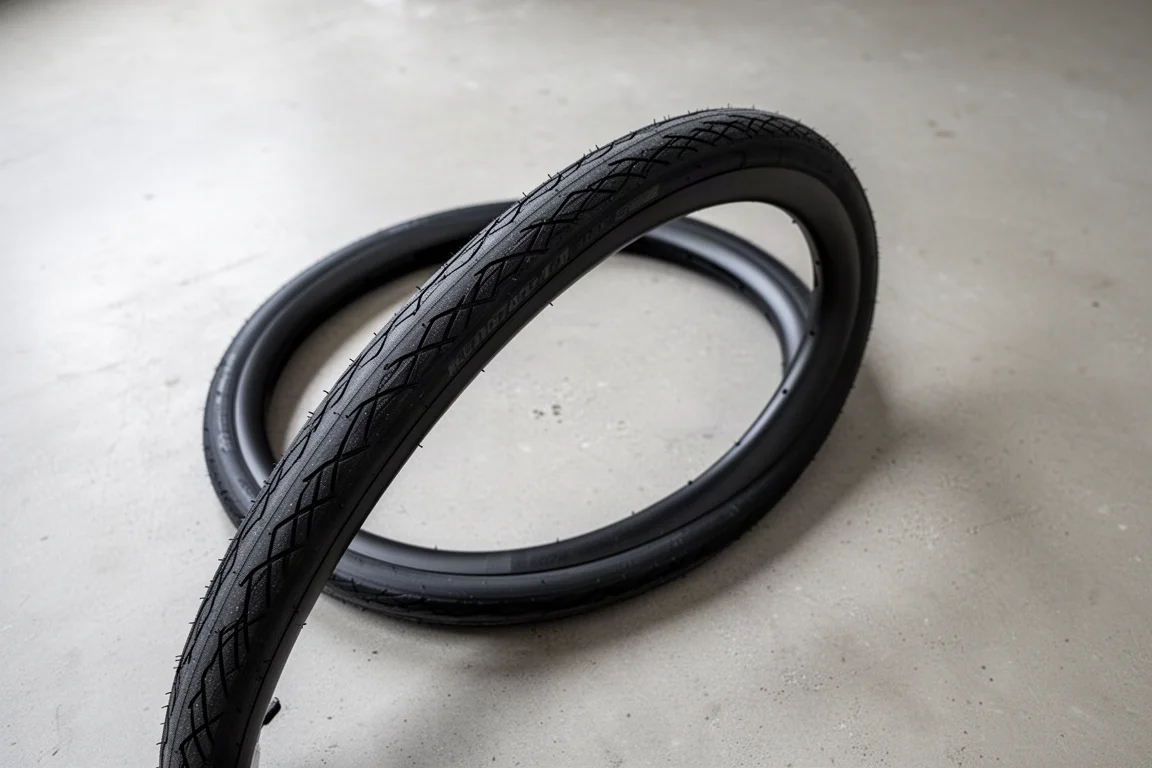
The P0 Race is the mid-range option at around £35 per tire, and it was the surprise of the test. It produced the single fastest run recorded at 20 minutes and 38 seconds, 13 seconds quicker than the top-of-range Continental setup.
That result comes with an important caveat. The P0 Race was run at 28 mm and 77 PSI, while the Continental tires were 25 mm at 92 PSI. On a rough, wet course, the wider, softer setup was likely doing much of the work, and the direct comparison between those two runs should not be read as a like-for-like verdict. It does, however, underline how much tire width and pressure influence speed on imperfect surfaces.
As a mid-range tire the P0 Race is a sensible step up: better materials than the entry model, noticeably lighter, and a price that is still approachable.
Pirelli P0 Race RS
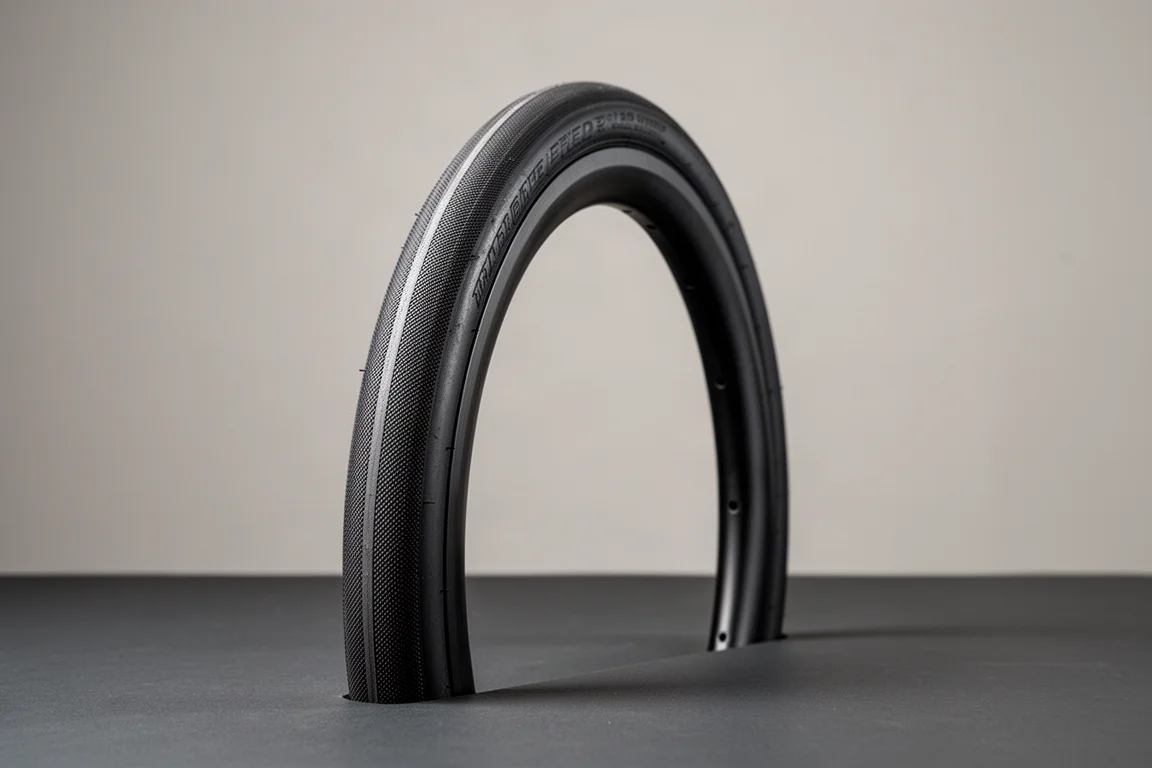
The P0 Race RS is Pirelli’s range-topper at around £55 per tire, with the best compound, casing, and protection in the line-up and the lowest weight. It also produced the largest extrapolated gain of the test.
Moving from Pirelli’s mid-range tire to the most expensive one accounted for 14 seconds over the course, which works out at roughly 3 minutes 44 seconds over a longer distance for a modest increase in spend. Measured from the cheapest tire to the fastest, the gap stretched to around 10 minutes 24 seconds over an Ironman-distance ride for roughly £100 more.
That is a striking return, and it is worth remembering that the runs were completed at near-identical effort, with average power between 272 and 273 watts and average heart rate between 120 and 127 beats per minute across the sessions. In other words, the time came from the tires rather than from a harder day on the pedals.
What the Numbers Mean for Real Riders
The headline comparisons look dramatic because the price range was so wide. Most riders are not choosing between a £20 tire and a £100 one; they are deciding whether to spend an extra £15 or £20 to move up a single step near the top of a range.
The test suggests that step is worth taking. Even the smaller jumps in the upper half of the range produced savings of more than three minutes when extrapolated over a long-distance effort, for a fraction of the cost of most other speed upgrades.
It is also worth putting the numbers next to training time. Finding ten minutes over an Ironman distance through fitness alone takes months of structured work. Finding it through tires takes an afternoon. Doing both is obviously the better answer, but the equipment half is the cheaper and faster one.
There is a limit to how far these results should be stretched. The test covered a short course, the surface was rough and wet, and the runs were completed at realistic amateur power rather than race pace. The direction of travel, though, was consistent across every comparison: better tires were faster, and the money spent bought a measurable return.
Buying Advice
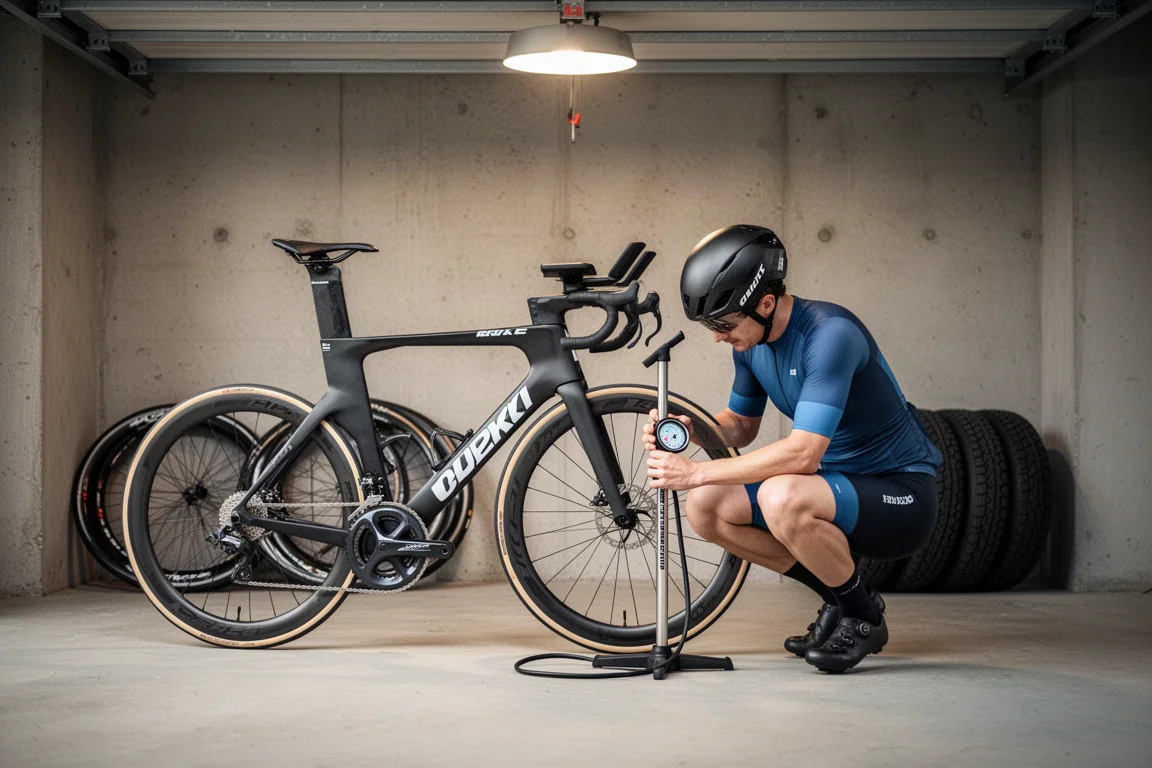
Start with pressure, because it is free and it can matter more than the tire itself. Matching pressure to rider weight, bike weight, and road surface is the single most cost-effective change available, and it is worth doing before spending anything on rubber.
Next, be honest about width. The fastest single run of the test came from a wider tire at lower pressure on a rough surface, and that combination has a real advantage on imperfect roads regardless of the brand printed on the sidewall.
Then work out where you sit on the ladder:
- If you ride for fitness, commuting, and social miles, the budget tier is entirely reasonable. The Continental Grand Sport and the Pirelli P7 Sport both do the job.
- If you ride regularly and want a clear step up in feel and pace without a big outlay, the mid-range Pirelli P0 Race is the value pick.
- If you race against the clock, the top of the range is where the real gains live. Pirelli’s P0 Race RS and Continental’s Grand Prix 5000 TR and Aero 111 pairing all delivered meaningful time savings.
Whatever tier you choose, buy the correct size for your rims, fit it properly, and set the pressure for the surface you actually ride on rather than the one on the label.
Nothing on this list is a bad tire. Each one is simply priced for a different rider, and the fastest way to feel good about the purchase is to match it to the way you ride rather than to the biggest number on a spec sheet.
Conclusion
Tires are one of the few places in cycling where the marketing claims survive contact with the road. Across every comparison in this test, faster tires were faster, and the differences were large enough to matter in a race result rather than just a spreadsheet.
The most useful takeaway is not which tire won. It is that the two biggest variables, pressure and width, are free to get right, and that beyond that the price ladder delivers a genuine return at every step. Budget tires remain perfectly sensible for the riding most people actually do. But if you are chasing time, the money is there to be spent, and it is spent well.
Further reading
Related Reviews
Road Bike Tires
Best Budget Road Bike Tires 2026: Nine 25c Tires Tested for Rolling Resistance
Nine budget road tires, all 25c and mostly around £20, went through the same rolling resistance protocol. Here is what the numbers say and which tire suits which rider.
Road Bike Tires
Best Road Bike Tires 2026: Six Options Tested From Budget to Premium
Six road tires across a wide price spread, from around £20 to £92, compared in real-world timed runs on wet roads to see what extra money actually buys.
Road Bike Tires
Best Road Bike Tires Compared: Continental GP 5000 S TR vs Vittoria Corsa Pro vs Pirelli P Zero Race RS
A back-to-back comparison of three 30 mm tubeless road tires, covering timed speed results, cornering feel, ride quality, and which one suits which rider.