Concrete Tools
Concrete Finishing Tools Worth Owning: Marshalltown Picks for New Hires and Homeowners
Two Marshalltown tools a seasoned concrete finisher recommends to anyone learning to catch edges, from the magnesium float to the forgiving short-shank laydown trowel.
Introduction
Concrete is doable, hard, and relentless, but the right tools make the difference between a pad you are proud of and a mess you regret. A longtime concrete finisher recently put together a short list of tools he would recommend to two very different groups: homeowners pouring their first small pad, and new hires who need to start pulling their weight on a crew. Two Marshalltown picks stood out for both audiences.
If you learn nothing else, the advice goes, learn how to catch edges. Catching edges means working the perimeter of a pour, cleaning up the interface between the top of the concrete and the form. Get good at that and, in the words of the man himself, you will always have a job.
Evaluation Criteria
The recommendations follow a simple logic. Bigger tools keep a surface flatter and are more forgiving; smaller tools are easier to keep level but punish sloppy hands. As concrete sets up, pressure per square inch matters, so stepping down in tool size keeps your wrist burden constant while your working pressure rises. The picks below reflect that thinking: start big and forgiving, finish tight and precise.
The Homeowner Starter Kit
For a small job, a hot tub pad, an AC pad, or a short stretch of sidewalk, three tools cover the basics: a float, an edger, and a trowel. If the pad is small, you may not even need a joiner.
The first step, once the concrete is rodded and struck off, is floating. A good all-around hand float in the 16 by 3-1/2 size range is the classic starter choice, and magnesium is the material most people reach for. Wood and fiber floats exist and each has pros and cons, but they get much more particular. Everyone, at any stage, ends up with a mag float.
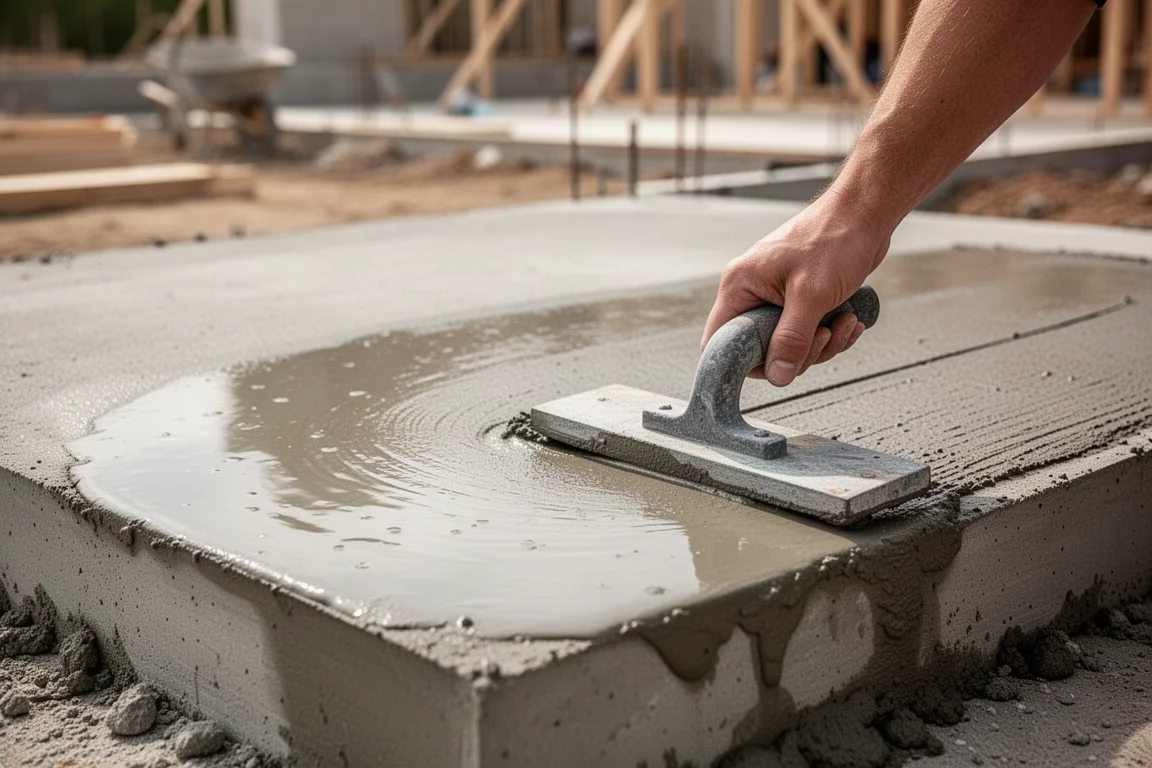
This is where the first Marshalltown pick comes in: the Dura Soft magnesium float. It is the handle preference here, comfortable through a full session and well suited to a homeowner who wants one float that lasts every stage of the hobby.
Edgers and Joiners: Getting the Details Right
After everything is floated and sealed up, edgers come out. Remember: the smaller the tool, the harder it is to keep it flat, and flat is generally the whole purpose. A larger edger can be run earlier in the set and floats across the surface like a snowshoe, while a badly used finishing tool can ruin everything you already made flat.
New hires have an extra job: find out which edger the crew is running. Edgers come in different radii, and every radius on a job needs to match. Homeowners only have to match themselves, which is a luxury.
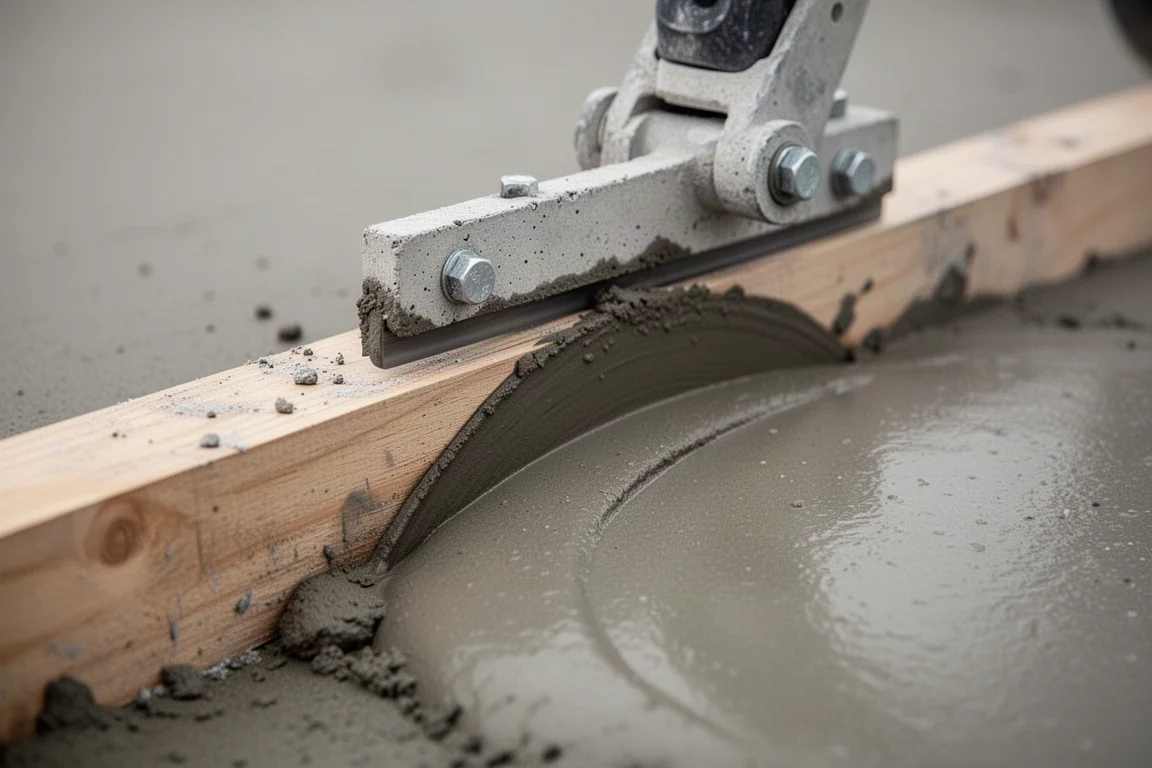
Joiners are typically brass, though zinc and stainless are options, and brass is the usual preference. The depth matters structurally: the groove should reach about 20 percent of slab depth in a perfect world, encouraging the crack to form there. A very shallow joiner makes a nice decorative strip with no structural value.
Why the Marshalltown 5x20 Laydown Trowel Works
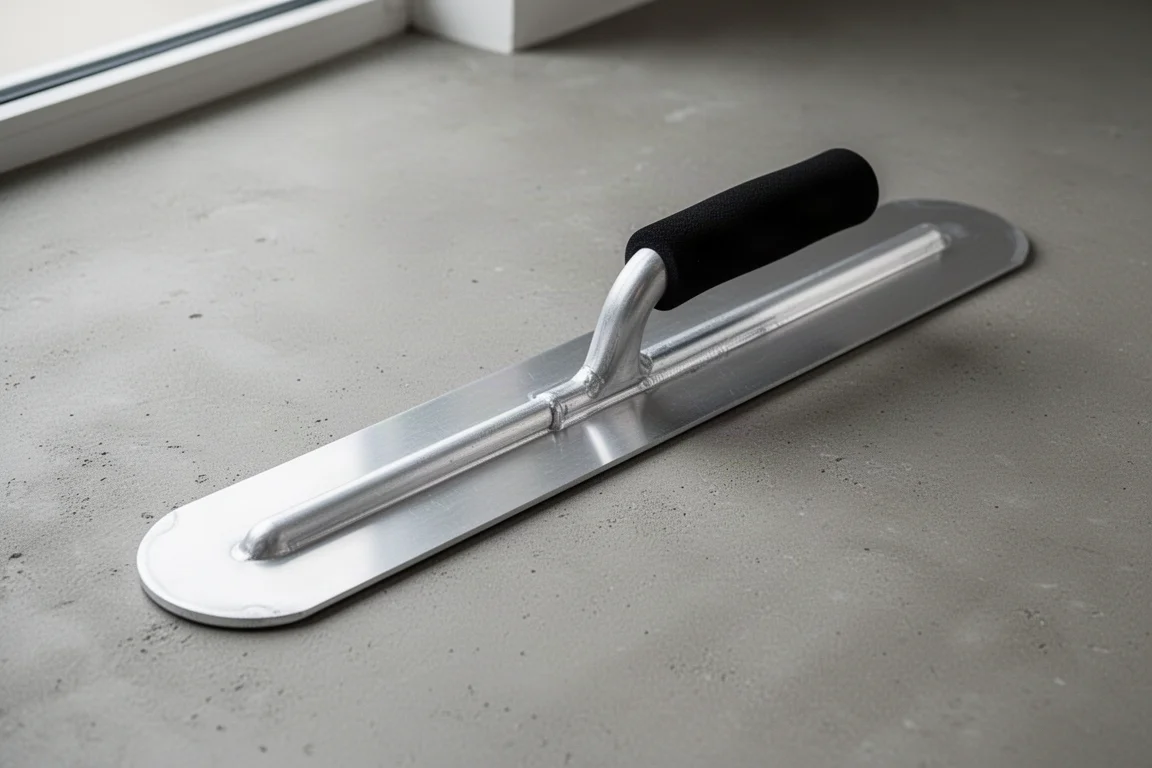
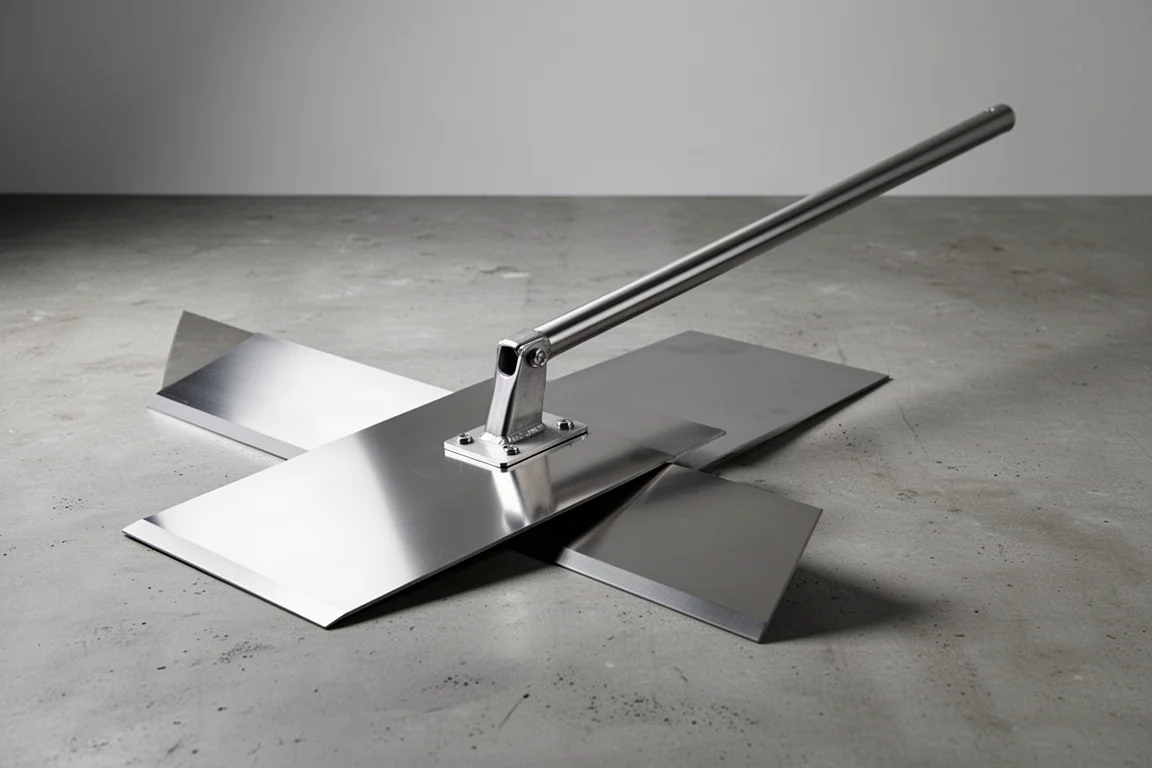
The laydown trowel is where technique shows. The Marshalltown 5x20 uses a short shank, meaning the shank sits much further back from the end of the blade than a standard trowel. That makes it far more forgiving for anyone new to the trade or short on experience: it does not tend to push a mark down at the front. A long shank makes the surface flatter and more accurate, but it demands more skill.
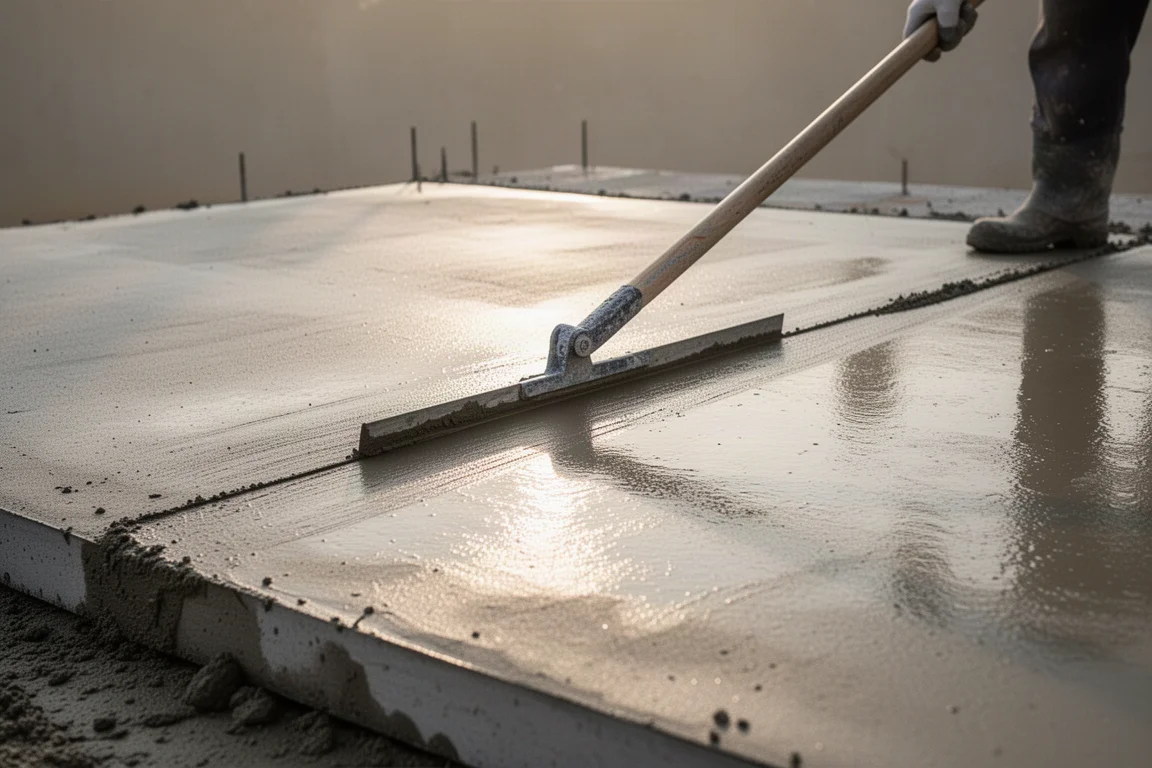
There is also a width lesson worth remembering. The extra-wide trowel is for when the concrete is not hard yet. As the slab sets up, you step down in size so the pressure per square inch rises while the load on your wrist stays the same. Thirty pounds over a 5 by 20 blade is roughly 100 square inches; the same body weight over a smaller blade delivers more PSI without more fatigue. Eventually the concrete gets so hard that nothing changes it, so you finish as you go rather than altering the shape later.
Essentials for the New Hire
A new hire should expect to buy or be asked to buy a few pocket-sized helpers. A margin trowel, sometimes called a pocket trowel, rides in your pocket and scrapes concrete off forms and tools you did not wash soon enough. It also reaches tight spots around pipes and plumbing where the big laydown trowel has no room to work.
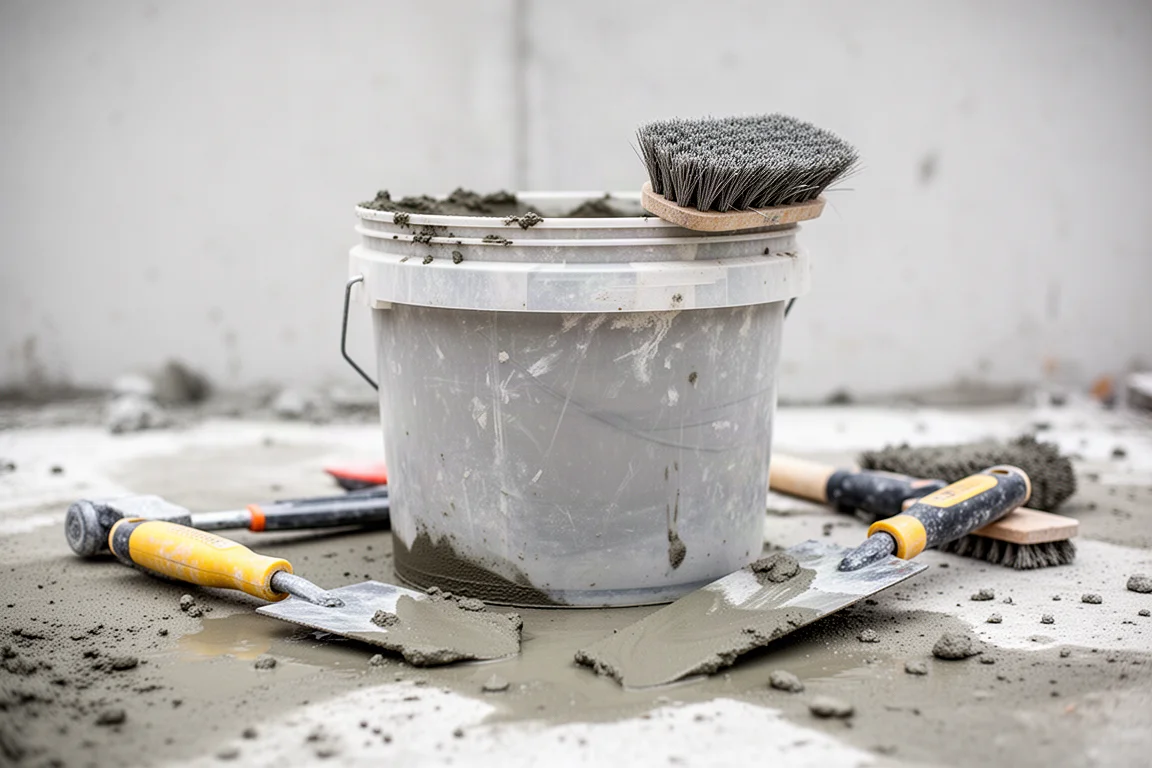
A pocket hook is a cheap addition: stick it in your back pocket and hang your float from it, so the float is always with you and one less thing to carry. A scrub brush and a bucket of water let you clean as you go, even when working your way down a road job.
When the concrete sets a bit harder and needs a tighter finish, smaller trowels come out, including for work against wall lines where a round trowel struggles. For the tightest finishes, like a garage slab, burn trowels deliver the extra PSI needed to seal the surface. When burn trowels come out, the rubber has hit the road.
Buying Advice
If you are a homeowner, you need three things for any pour: an edger, a float, and a trowel. The Dura Soft mag float handles the floating stage, the 5x20 short-shank trowel forgives early mistakes, and an edger with a radius you like finishes the slab.
If you are starting a job tomorrow, know that you will get strong, you will get tired, and your joints will eventually feel it. Progressively smaller tools keep the pressure per square inch up without grinding your wrists, and a pocket trowel with a hook keeps the small details under control. Concrete rewards confidence built one pour at a time.
Conclusion
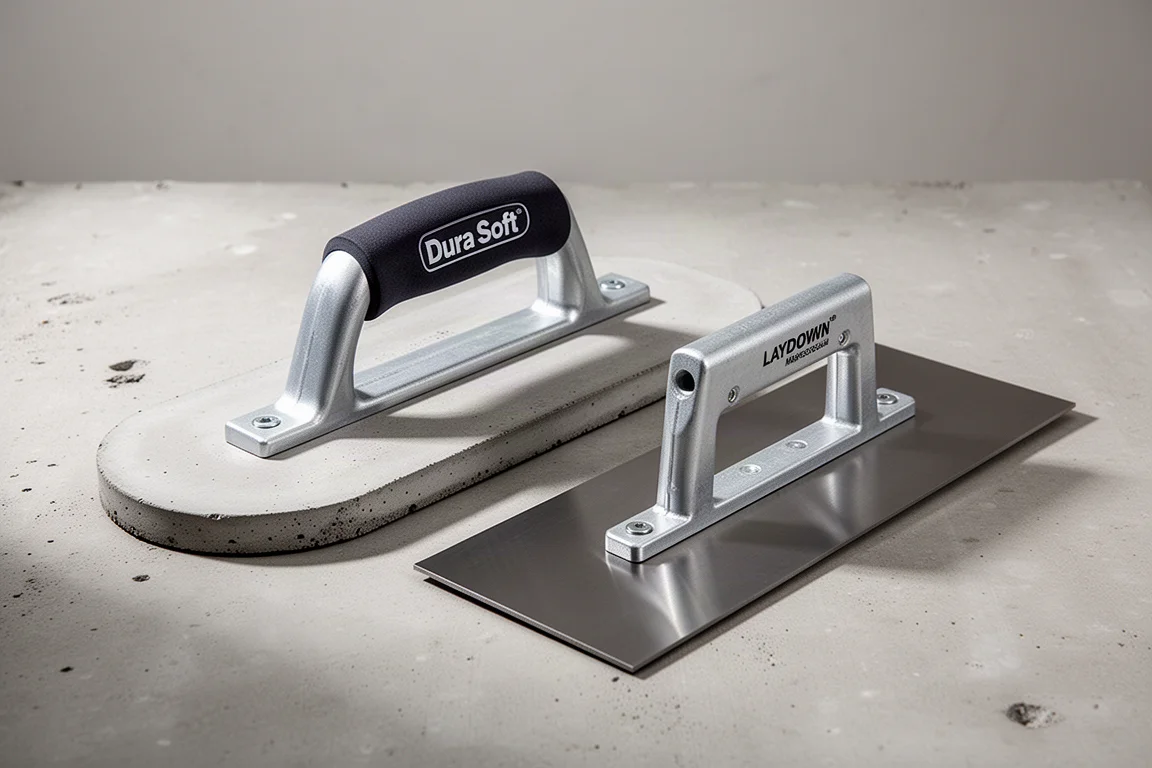
Two Marshalltown tools carry most of the weight in this list: the Dura Soft magnesium float for the floating stage every pour begins with, and the 5x20 short-shank laydown trowel that lets newer hands produce a flat surface without fighting the blade. Match them with an edger, a joiner for anything large, and a pocket trowel for details, and you have a kit that works whether you are pouring your own pad or showing up on someone else’s crew.
Further reading
Related Reviews
Concrete Tools
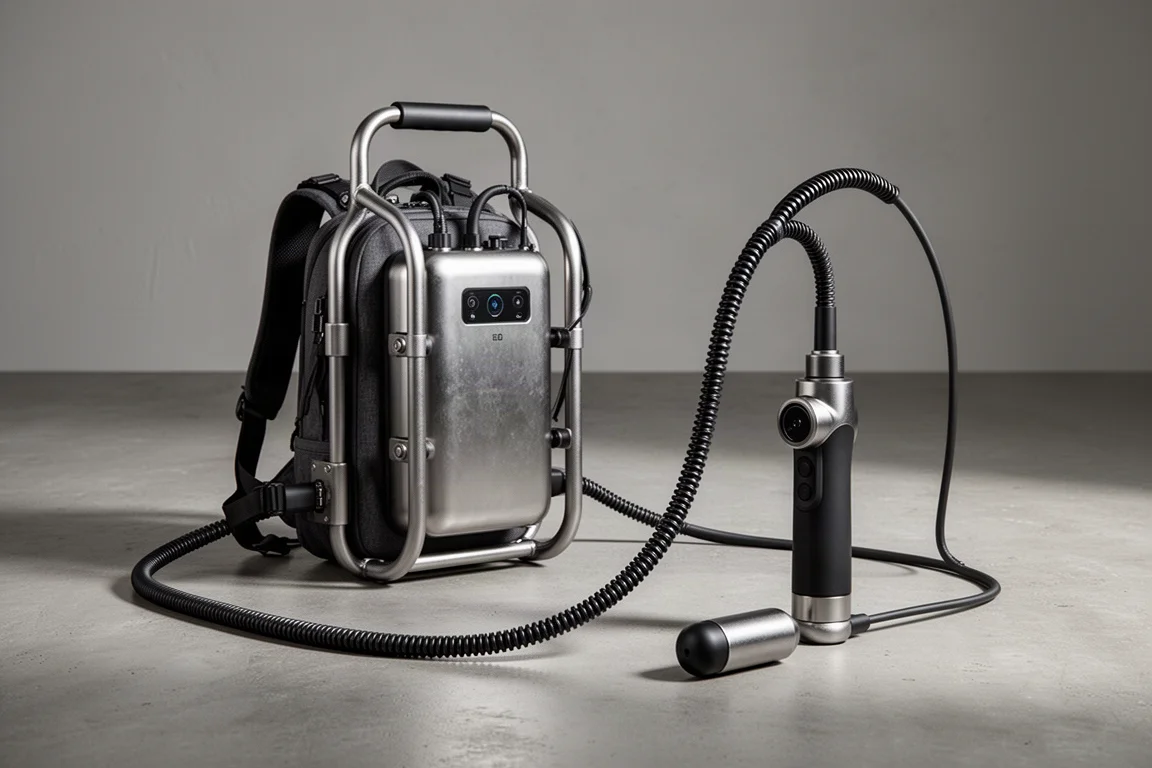
Hilti NCV Concrete Vibrators: Cordless Vibrating for Big and Small Pours
Hilti's battery-powered NCV system replaces cords and engine packs with vibration localized in the head. Here is how the backpack NCV 10 and compact NCV 4 differ.
Concrete Tools
Hogan Company Square Concrete Stakes: Why Square Beats Round
Square concrete stakes are hard to find, but Hogan Company still manufactures them domestically and ships them in a box. Here is why they belong in your kit.

Backpacking Gear
Building a 10 lb Base Weight: An Ultralight Backpacking Gear List
A practical walkthrough of the ultralight pieces behind a 10 lb base weight, from a 765 g pack and a roomy one-person tent to a full camp chair and a dependable water filter.