Road Bikes
Colnago V4 RS vs Cervélo R5: Two Lightweight Race Bikes Compared
A close comparison of the Colnago V4 RS and Cervélo R5 race builds, covering frame claims, gearing, wheels, tires, cockpit dimensions and measured weight.
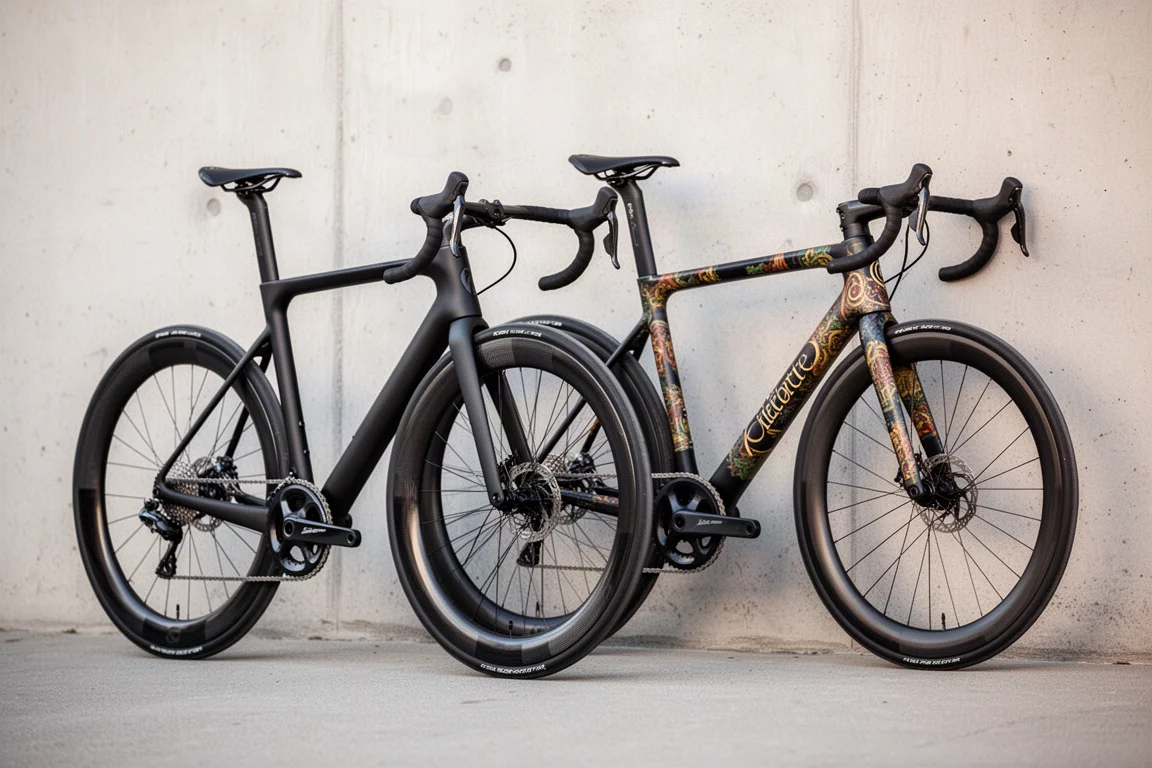
Introduction
Two lightweight race platforms sit at the sharp end of professional road racing, and they take noticeably different routes to the same goal. The Colnago V4 RS is an all-round aero platform that replaced the V3 RS in the Italian brand’s range, while the Cervélo R5 stays closer to a traditional climbing frame with a gently sloping top tube and round drop seat stays.
Both bikes are built for riders who care about weight, stiffness and aerodynamic efficiency, and both are finished with top-tier components. The differences that matter most show up in the details: frame shaping, gear ratios, wheel depth, tire width and cockpit dimensions.
This comparison works through both builds, looks at what each one does well, and helps you decide which of the two philosophies suits your riding.
How These Two Race Bikes Compare
Both bikes share the same broad brief. Each is designed to keep weight low while offering enough aerodynamic performance to matter over a long day on the road, and each is built around a carbon frame with disc brakes and an integrated cockpit.
Colnago claims a frame weight of 798 g for the V4 RS in a size 485, which is roughly equivalent to a size 53 from other brands, paired with a 375 g fork. The brand also claims the platform is around 13.2 watts more aerodynamic than the V3 RS it replaced, which positions it as a genuine all-rounder rather than a pure climbing frame.
The Cervélo R5 takes a more traditional approach. Its tube shapes are what Cervélo calls squoval, a truncated airfoil profile that adds some aerodynamic efficiency without the deeper tube sections used on the aero-focused S5. Riders with both frames available can pick the R5 for mountainous stages or the S5 for flatter and more rolling days, and wheels can be swapped between them as conditions change.
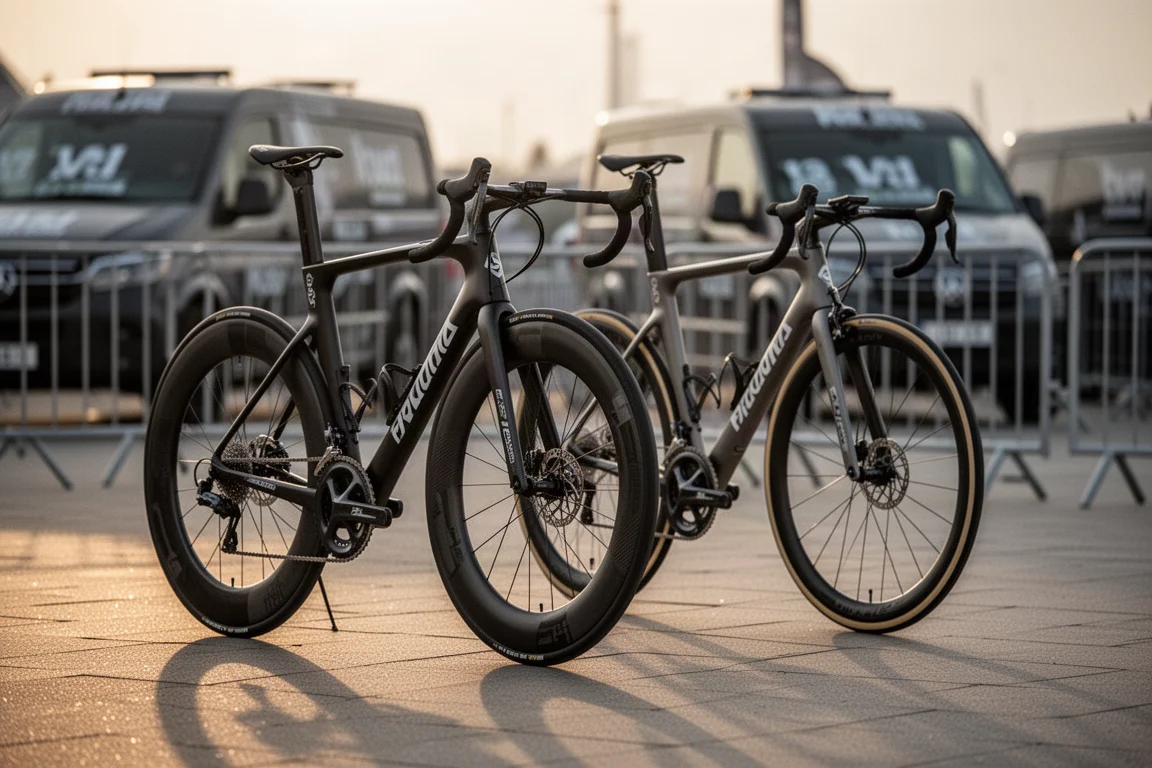
Beyond the frame, the two builds differ in almost every contact point. Gearing, wheel depth, tire width and handlebar dimensions all shape how a race bike feels, and those choices say more about intended use than any single frame statistic.
Colnago V4 RS: The All-Round Aero Platform
The V4 RS build runs Enve SES 4.5 wheels with a 40 mm deep rim at the front and a 50 mm rim at the rear. The rims are notably wide, and the Continental GP 5000 S TR tires fitted to them measure 32.6 mm at the rear and 33.2 mm at the front, which makes for a very wide race setup. Wider rubber at lower pressure is a recurring theme in modern racing, and this build leans into it.
Up front, an Enve one-piece integrated cockpit pairs a 130 mm stem with 36 cm bars. The lever hoods are tilted in, putting them roughly 31 cm apart, which lets a rider tuck into a narrow, efficient position on the flat. Shifting comes from a Dura-Ace groupset with 54/40 chainrings and a wide 11-34 cassette, plus sprint shifters mounted inside each drop for gear changes without leaving the bar.
The finishing kit is deliberately exotic. Carbon-Ti chainrings and brake rotors with carbon carriers keep rotating weight down, and Absolute Black brake pads use large cooling fins and a graphene-infused backing, with a claimed lifespan of around 8,000 km even in hilly terrain at roughly 50 euros a set. A ceramic bottom bracket from a Spanish specialist adds a further detail, and a Prologo Nago R4 saddle, Dura-Ace pedals and Elite Leggero carbon bottle cages complete the build. A Wahoo Elemnt Bolt computer sits on an Enve out-front mount that lines up neatly with the stem.
The frame is finished in matte black with team colours worked into the head tube and fork, a paint scheme that keeps added weight to a minimum. Measured on the scales, this particular build came in at 7.27 kg, and it is worth noting that it is not the primary race bike, so a couple of heavier components mean the first-choice build is likely lighter still.
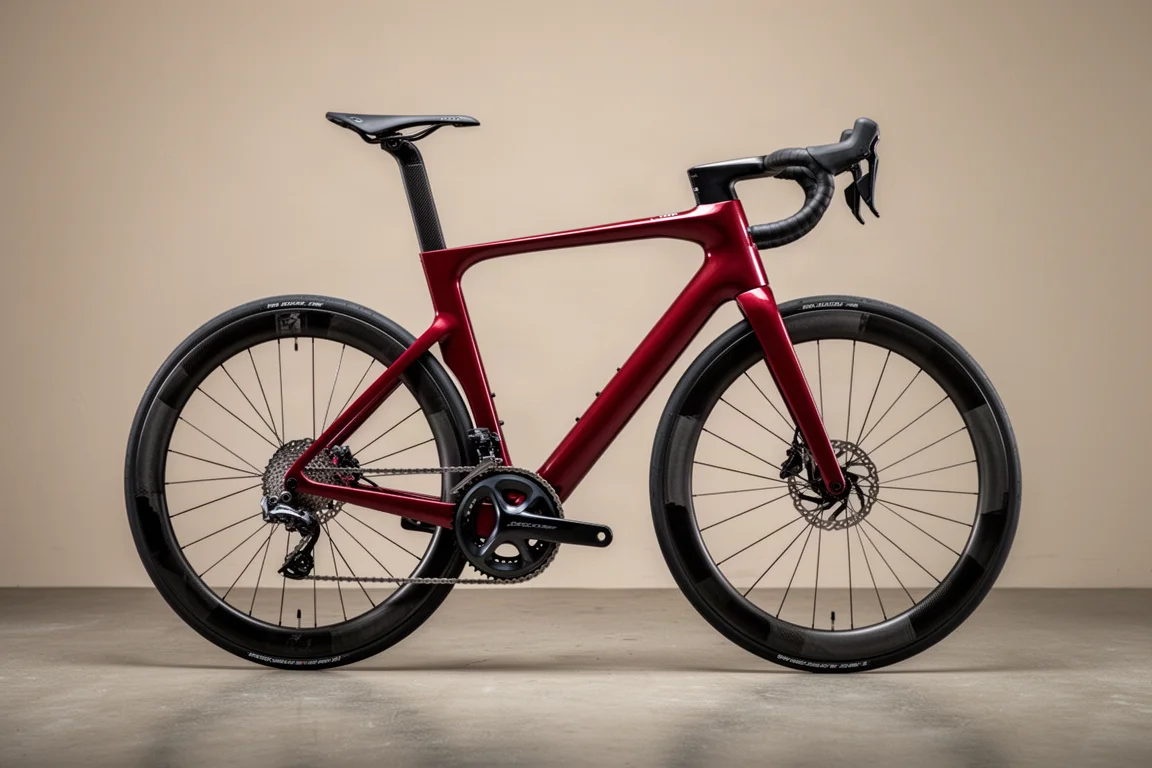
Cervélo R5: The Lightweight Climbing Option
The R5 arrives with a Renaissance-inspired paint scheme, a design described as a homage to a period of innovation and progress, with a pattern intended to reflect a mindset of continuous improvement. It is one of the more unusual finishes you will see on a race bike.
The frame itself is conventional in the best sense. A gently sloping top tube and round drop seat stays give it a classic silhouette, and the squoval tube shapes add a measure of aerodynamic efficiency without the deep sections of the S5. A Vision Metron 5D Evo handlebar brings a little flare at the hoods for a narrower position up top and slightly wider drops for control on descents, paired with a 120 mm stem and 38 cm bars.
The drivetrain is a SRAM Red AXS groupset with 52/39 chainrings and a 10-36 cassette. That bottom gear of 39x36 is one of the smallest you will find on a race bike, which makes sense on a build intended for long climbs. Because the groupset supports it, the same bike can be switched to a single chainring setup with an aero chainring and a chain guide for flat time trial stages.
Wheels come from Reserve, part of the same family as the frame, in a 42/49 depth with a 25 mm internal width. The Vittoria Corsa Pro TLR tires are 29c and are specified for 25 mm wide rims, a combination that reflects current standards for matching tire width to rim width. A carbon-railed saddle, Wahoo Speedplay Aero pedals with a dimpled underside and a waxed chain round out a build focused on marginal gains.
On the scales, this bike weighed 6.74 kg, which is under the 6.8 kg limit applied to race bikes. The small details matter here too: even the crank bolt hole and the stem cap bolt are covered with stickers, likely a final nod to aerodynamic tidiness.
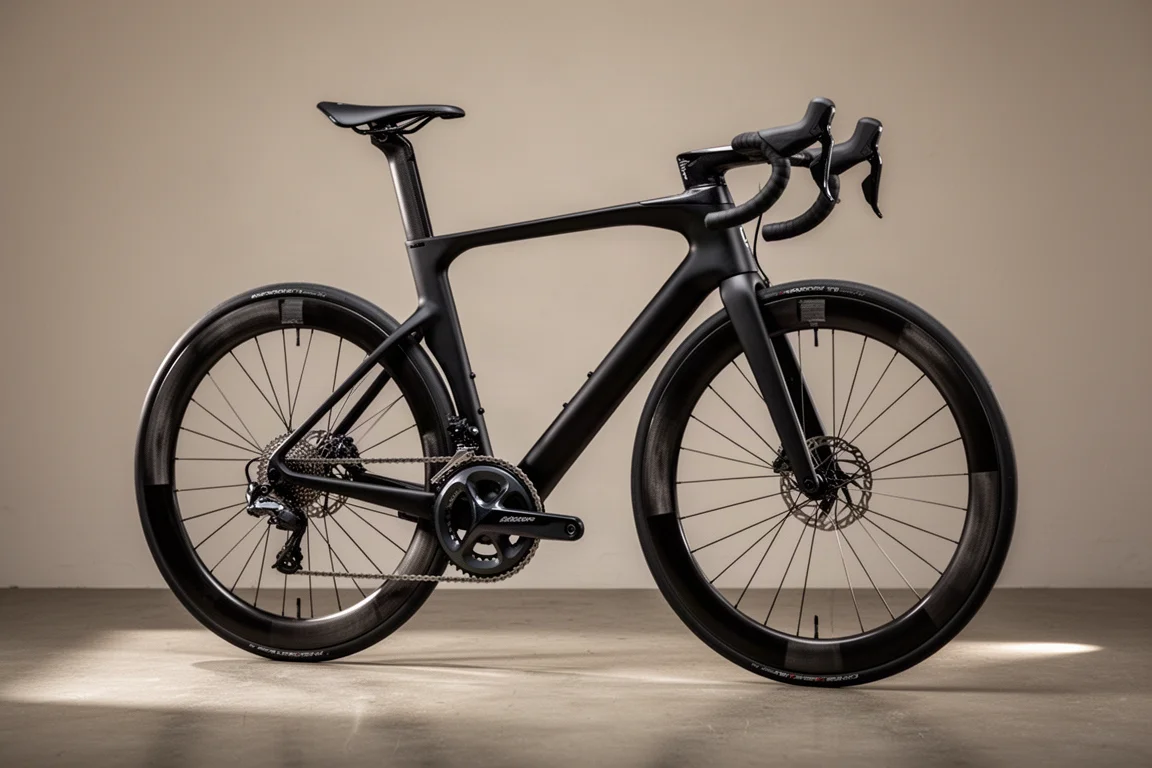
Where Each Bike Stands Out
The clearest difference between the two is weight. At 6.74 kg, the R5 build sits below the race weight limit, while the V4 RS build measured 7.27 kg. That gap is meaningful on a long climb, though part of it comes down to the specific build, since the Colnago measured here is a secondary bike with a few heavier components than the primary race machine.
Tire width is the second obvious split. The Colnago runs tires measuring over 32 mm on wide rims, which favours comfort and grip on rough surfaces. The Cervélo runs 29c tires on rims with a 25 mm internal width, a narrower setup that likely trades a little comfort for aerodynamic efficiency.
Gearing tells a similar story. The Colnago pairs a 54/40 chainset with an 11-34 cassette for top-end speed, while the Cervélo’s 52/39 with a 10-36 cassette gives a smaller bottom gear for steep gradients. Neither approach is better in the abstract, but each points clearly at the terrain it was chosen for.
Frame philosophy is the last piece. The V4 RS is positioned as an all-round aero platform that Colnago says is significantly faster than the model it replaced, while the R5 keeps traditional tube shapes and leaves the deepest aerodynamic work to the S5. Riders who want one bike to do everything will lean one way, and riders who can choose per stage will lean the other.
Drivetrain and Gearing Differences
Both groupsets are top-tier, but they are set up for different priorities. The Colnago’s 54/40 chainrings with an 11-34 cassette keep a big gear available for fast, flat roads and sprint finishes, and the sprint shifters inside the drops make it easy to change gear while holding an aerodynamic position. Some team bikes in the same stable also use direct-mount rear derailleur hangers, which stiffen shifting and make the rear wheel quicker to remove during a wheel change.
The Cervélo’s 52/39 chainrings with a 10-36 cassette trade a little top-end for a noticeably easier climbing gear. That is a sensible choice on a bike built for mountain stages, and the SRAM groupset’s support for single chainring setups means the same frame can be configured for flat time trials with an aero chainring and no front derailleur.
Chain care is another small difference. The Cervélo runs a waxed chain, a choice that offers a small efficiency gain but needs more attention, since regular washing strips the wax and the chain has to be removed and rewaxed.
Wheels, Tires and Cockpit Setups
Wheel depth is one of the most visible differences between the two builds. The Colnago runs Enve SES 4.5 wheels with a 40 mm front and 50 mm rear rim, a mixed-depth pairing that balances front-end stability with rear-end aerodynamic gains. The Cervélo runs Reserve 42/49 wheels with a 25 mm internal width, a similarly shallow-to-mid depth that suits climbing and rolling terrain.
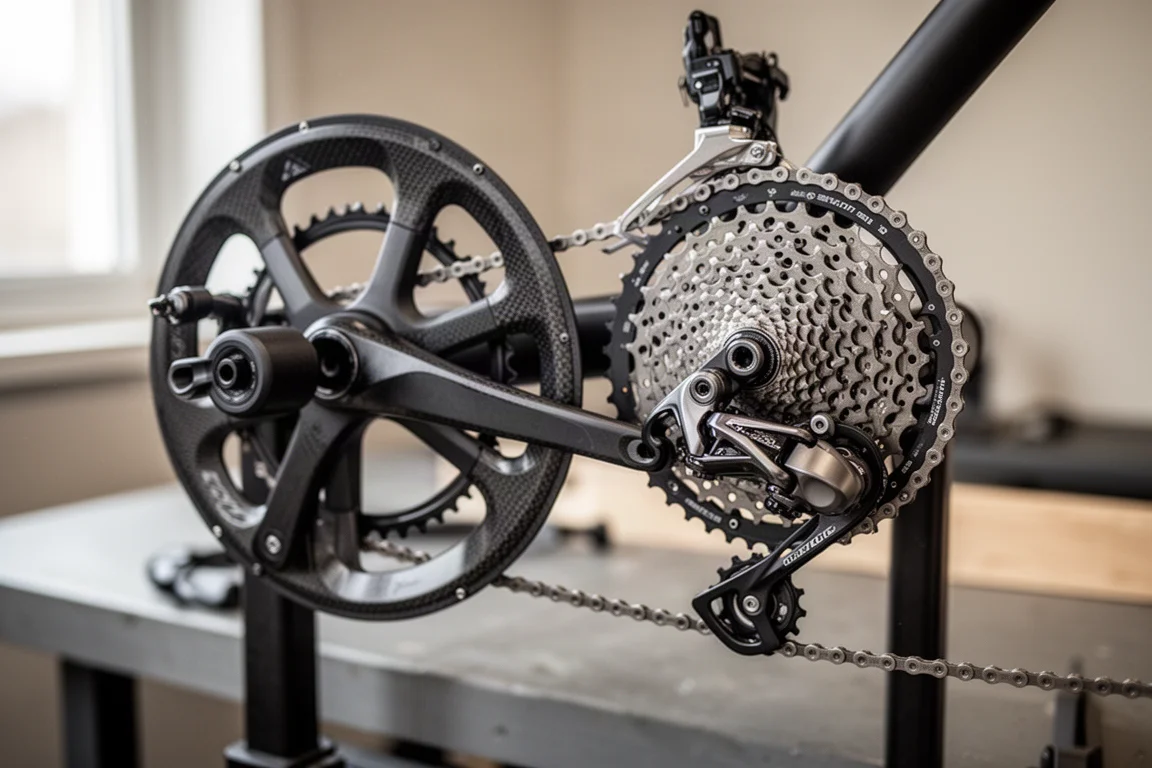
Tire choice follows from the rims. The Colnago’s GP 5000 S TR tires measure 32.6 mm at the rear and 33.2 mm at the front, making them the widest setup in this comparison by a clear margin. The Cervélo’s Vittoria Corsa Pro TLR tires are 29c and are specifically designed for 25 mm wide rims, a combination that reflects updated standards for tire and rim compatibility. Narrower tires on wide rims generally keep the aerodynamic profile cleaner, while wider tires on wide rims favour comfort and grip.
Cockpit measurements point in the same direction. The Colnago uses a 130 mm stem with 36 cm bars and hoods around 31 cm apart, a long and narrow front end built for an efficient, tucked position. The Cervélo uses a 120 mm stem with 38 cm bars, a slightly more traditional setup with a little more width at the drops for control.
Weight, Finish and the Small Details
Measured weight is the headline number. The Cervélo R5 came in at 6.74 kg, below the 6.8 kg limit for race bikes, while the Colnago V4 RS build measured 7.27 kg. The Colnago figure comes from a secondary bike rather than the primary race machine, so a lighter result is realistic for the first-choice build, but the Cervélo is clearly the lighter complete bike as measured.
Finish is a matter of taste. The Colnago wears a matte black paint scheme with team colours and extra detail around the head tube and fork, a restrained look that keeps paint layers to a minimum for weight reasons. The Cervélo’s Renaissance-inspired design is far more decorative, and the pattern is intended to carry a message about progress and improvement rather than simply to look different.
Small component choices separate them further. The Colnago uses Carbon-Ti chainrings and rotors with carbon carriers, Absolute Black brake pads with large cooling fins, and a ceramic bottom bracket. The Cervélo uses Wahoo Speedplay Aero pedals, a waxed chain and a carbon-railed saddle. These details rarely transform a ride on their own, but together they show how each build chases its own kind of performance.
Buying Advice: Which Bike Fits Your Riding
If you want one fast road bike that handles everything from flat sprints to long climbs, the Colnago V4 RS is the more versatile of the two on paper. Its frame is positioned as an all-round aero platform with a claimed weight and aerodynamic advantage over the previous generation, and the build favours speed on flat and rolling terrain with its deeper rear rim, larger chainrings and wide tires.
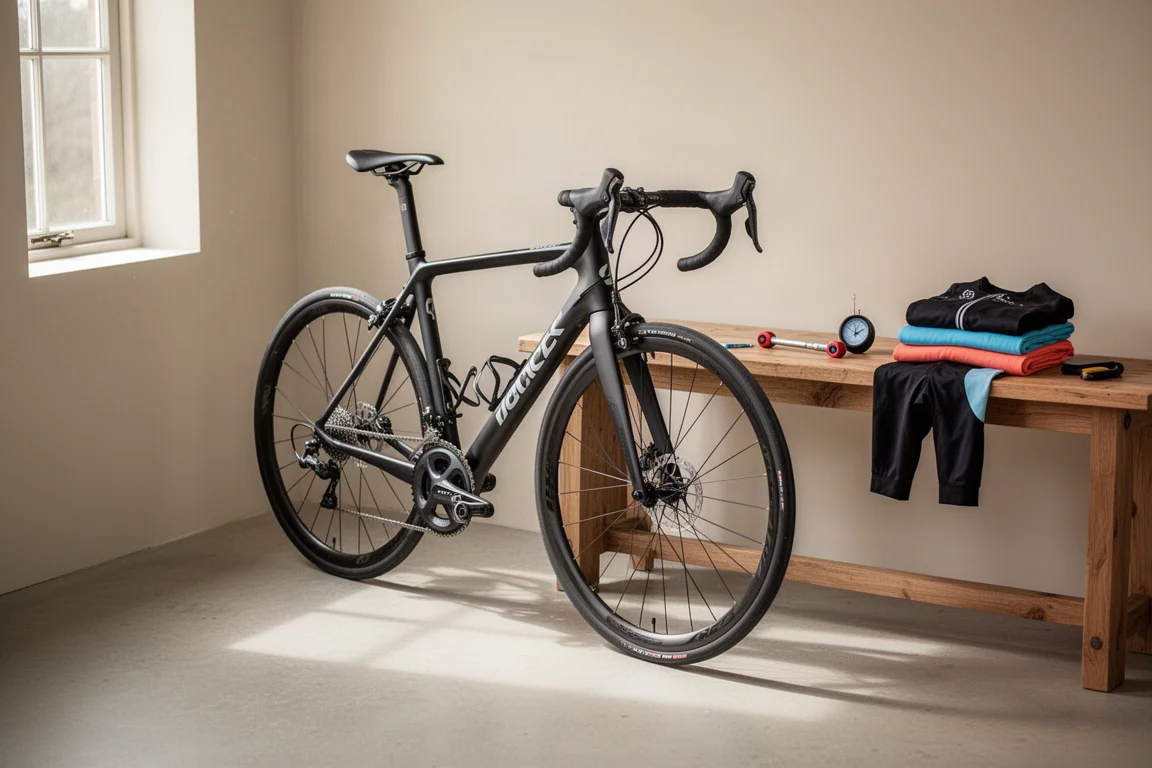
If climbing is your priority and you like the idea of a lighter, more traditional frame, the Cervélo R5 is the stronger match. It measured well below the race weight limit, runs a smaller bottom gear and pairs narrower tires with wide rims. The trade-off is a little less aerodynamic help than a dedicated aero platform, though the squoval tube shapes mean it is not giving away everything.
Whichever way you lean, the component spec matters as much as the frame. Wheels, tires, gearing and cockpit dimensions are what you feel on every ride, and both of these builds show how much those choices can change the character of a bike.
Conclusion
The Colnago V4 RS and the Cervélo R5 are both top-level race bikes, and the choice between them comes down to priorities rather than quality. The Colnago leans toward all-round aero performance with a wide-tire, big-gear setup, while the Cervélo leans toward low weight and climbing with a smaller bottom gear and a lighter measured build.
Pick the Colnago if you want one bike to cover a broad range of terrain quickly. Pick the Cervélo if low weight and climbing performance matter most, and you are happy to accept slightly less aerodynamic assistance on flat roads.
Further reading
Related Reviews

Road Bikes
10 New Road Bikes Worth Watching: Aero, Titanium, Steel and Endurance Standouts
A practical roundup of 10 new road bikes, from aero flagships chasing single-watt gains to titanium, steel and endurance platforms built for real roads.
Road Bikes
2026 Tour de France Road Bikes: Six Race Machines Worth a Closer Look
Six race bikes from the 2026 Tour de France grid, reviewed for paint, silhouette, wheels and the specification details that matter to buyers.
Road Bikes
3T Strada Italia Review: A Radical Aero Road Bike That Rides Smooth
A made in Italy carbon aero road bike with a deep head tube, wide tire clearance and a genuinely comfortable ride. Here is what to know before buying.