Road Bikes
Colnago V1-RS Review: A Race Bike With No Seat Tube
The Colnago V1-RS pairs a striking no-seat-tube frame with a highly proprietary front end. Here is what it does well and what to weigh before buying.
Introduction
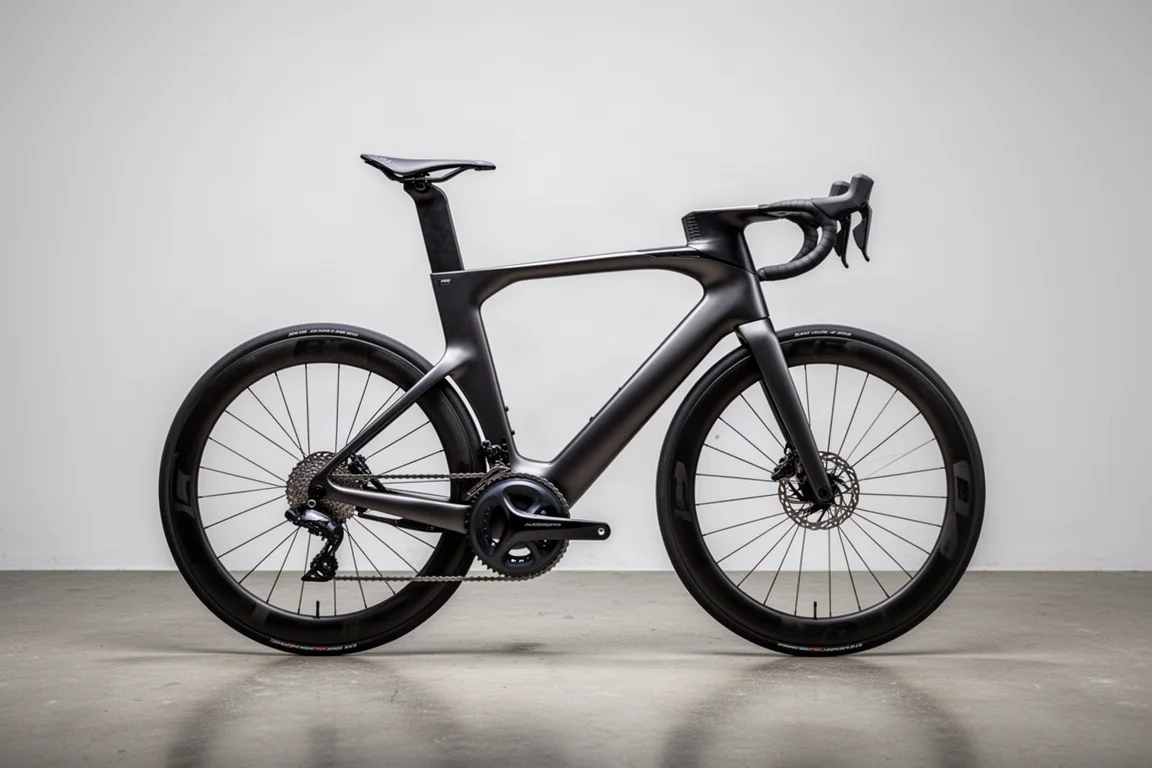
Some race bikes look fast. A few look strange enough that you have to walk around them twice. The Colnago V1-RS belongs firmly in the second group, and its most talked-about detail is also its simplest to describe: there is no seat tube.
This is the bike Tadej Pogačar rode to victory at the Tour de France, and it is arriving at dealers in very small numbers. Early examples have only recently started to reach riders, so there is not yet a large body of real-world fitting data behind it. What is clear from the machine itself is that Colnago has prioritised aerodynamic and structural ambition over the familiar layout most road bikes share.
The result is a bike that photographs badly and looks considerably better in the flesh. The frame reads as more coherent and more resolved once you are standing next to it, with the missing seat tube functioning as a deliberate design statement rather than a gimmick. It is unorthodox, but the underlying engineering logic follows the same fully integrated approach found on other top-tier race frames.
Who This Bike Is For
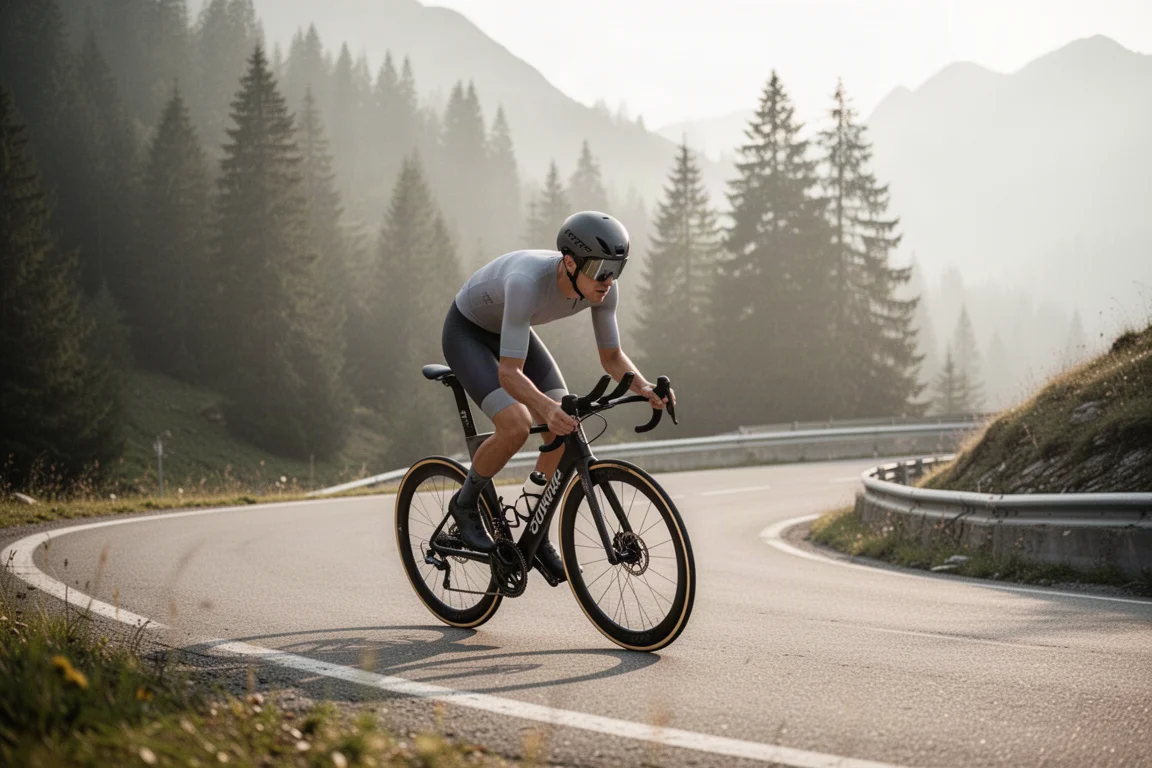
The V1-RS is aimed squarely at racing. For a rider chasing results on fast roads, the package makes sense, and the geometry supports that intent: a fairly steep 74.5 degree seat angle and a notably slack 71.9 degree head angle for a racing frame.
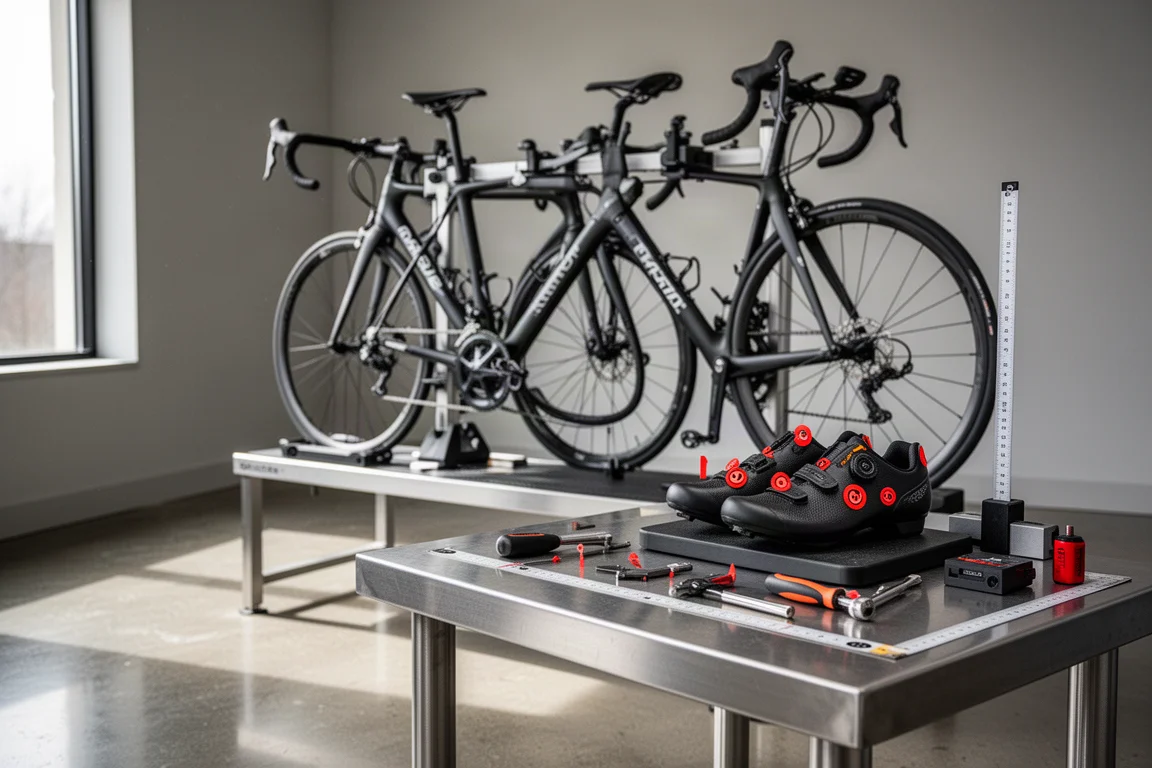
Interestingly, the bike is not harder to fit to a rider than many conventional race frames. Across the size range the geometry varies considerably from size to size, which is unavoidable given the frame layout, so components cannot be shared between, for example, a small and an extra large. That does not make it a worse platform for a bike fit. Position is determined by the rider, while geometry is a property of the frame, and the two are connected but not interchangeable.
Where it does narrow its audience is cost and intent. Most riders shopping at this level are not racing, and this is not a machine built around that reality. It is a competition bike first, and everything else second.
Main Strengths: A Distinctive Frame and an Adjustable Cockpit
The headline is the frame itself. Removing the seat tube gives the V1-RS a silhouette unlike anything else in the current race bike market, and the finish and tube shaping hold up to close inspection. It looks far better in person than in photographs.
The cockpit is more practical than the front end suggests. It attaches with four bolts into a metal plate, and it ships with 25 mm of spacers plus an adapter for every height so the stack sits flush. Different bolt lengths are supplied, so you can raise or lower the bar by unbolting, adding or removing spacers, and bolting it back up. A slammed position is not a permanent decision, which is a genuine advantage for anyone whose position evolves over a season. It works much like the rise kit on a time trial bike.
Stem options run from 85 mm to 135 mm, and team builds are set up with the longest of those. That matters when you read the geometry: handling is shaped by wheelbase, head tube length and stem length together, not by stem length alone. A long stem on a frame with a slack head angle will not behave like the same stem length on a steeper bike.
Living With a Proprietary Front End
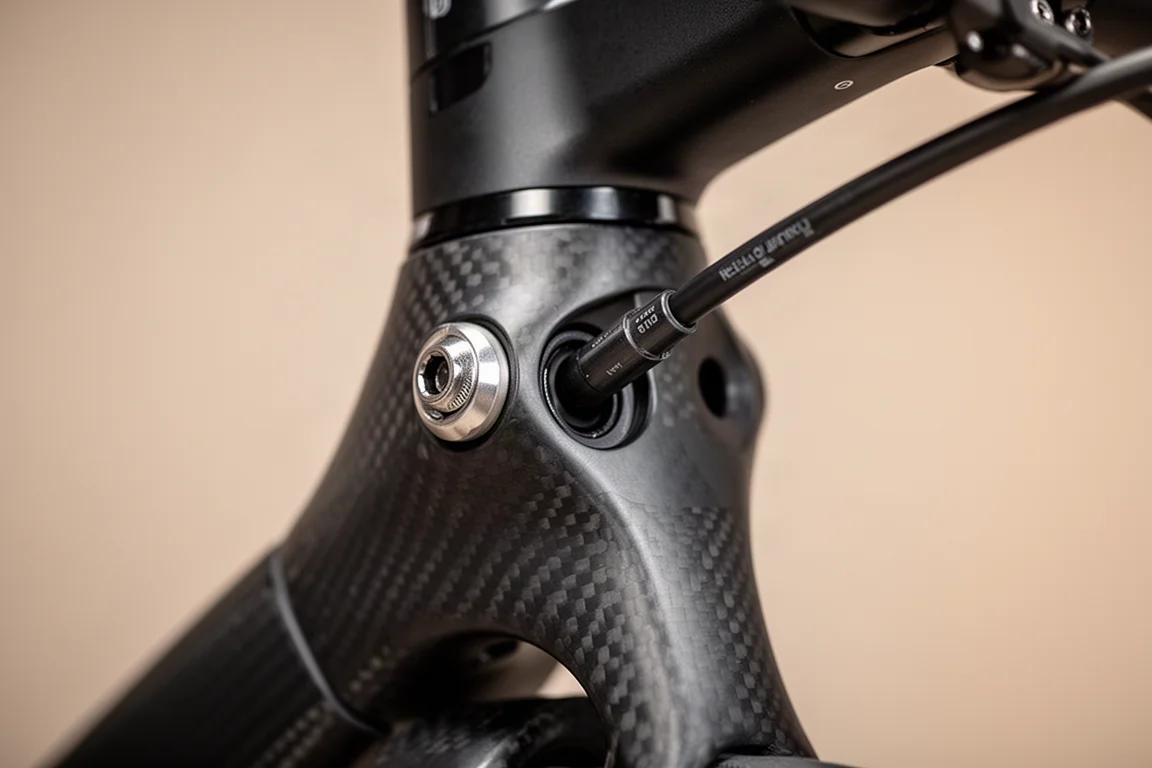
This is where the V1-RS asks the most of its owner. There is no conventional steerer running down through the head tube. Instead, a bolt at the bottom compresses the assembly, and tightening it properly requires a proprietary tool. Builders who have assembled the bike describe the front end as highly specific, and harder to put together than a V4RS. It is still a long way ahead of a time trial bike in assembly terms, but it is not a front end you improvise on.
Brake hose routing is the sharper limitation. The rear hose passes through the bolt that holds the front end together: the bolt has a hole through its centre, and the hose runs up through it and into a port in the bottom of the handlebar. That path is workable because the opening in the bar is reasonably generous. The front hose is the problem. It exits the fork through a hole barely wider than the hose itself, which leaves almost no margin during installation. The practical consequence is that front end changes generally mean re-bleeding the brakes.
The seatpost adds another proprietary wrinkle. The stock post has 15 mm of setback, and the frame can also be run with an inline post. It is short and must be cut to length, including an angled cut at the top, similar to the process on some other integrated road frames. That is not unusual at this end of the market, but it is another task best left to a shop with the right tooling.
Things to Consider Before Buying
Cost is the first consideration. The frame alone is listed at around 6,300 without a handlebar, and a fully built example with the extras added can approach 20,000. That places the V1-RS in territory where fully custom frames with bespoke geometry and layup are also available, which is a meaningful alternative for riders whose priority is a perfect fit rather than a production race platform.
Cockpit width is the second. The bar on this build measures 377 mm across, a width that sits outside current UCI rules, and there does not appear to be a way to specify a different cockpit when ordering. Riders who need a wider bar, or who race under equipment rules, should confirm what is actually available before committing.
Third, the proprietary parts and the tight hose routing mean servicing is specialist work rather than something most owners will handle at home. The same logic applies to supercars and other highly tuned top-end products: refinement and integration come with a maintenance premium.
Buying Advice
Buy the V1-RS if you race, you want a machine that looks like nothing else on the start line, and you have a shop you trust to service a proprietary front end. The adjustable cockpit, the distinctive frame and the geometry all support that use case, and the bike is more impressive in person than its photographs suggest.
If instead you want a race bike that is straightforward to work on, or you would rather spend the same money on custom geometry built around your own measurements, this is probably not the frame for you. Neither choice is wrong. They simply serve different riders.
Before ordering, confirm the cockpit width and stem length that will actually ship, check that your fitter is comfortable working with the front end, and budget for the fact that brake work involves more than a routine bleed. Riders who go in with those expectations tend to be the ones who enjoy owning a bike like this.
Conclusion
The Colnago V1-RS is a genuine race bike with a genuinely unusual design, and it is more convincing in person than the spec sheet implies. Its adjustable cockpit is a real practical strength, its no-seat-tube frame is a legitimate piece of engineering, and its proprietary front end is the price of admission. For a committed racer, that trade is reasonable. For everyone else, the money buys more conventional, easier-to-live-with options.
Product link
View more details for Colnago V1-RS
This product is mentioned in the review. Check the specifications, options, and compatibility before buying.
View more details for Colnago V1-RSFurther reading
Related Reviews

Road Bikes
10 New Road Bikes Worth Watching: Aero, Titanium, Steel and Endurance Standouts
A practical roundup of 10 new road bikes, from aero flagships chasing single-watt gains to titanium, steel and endurance platforms built for real roads.
Road Bikes
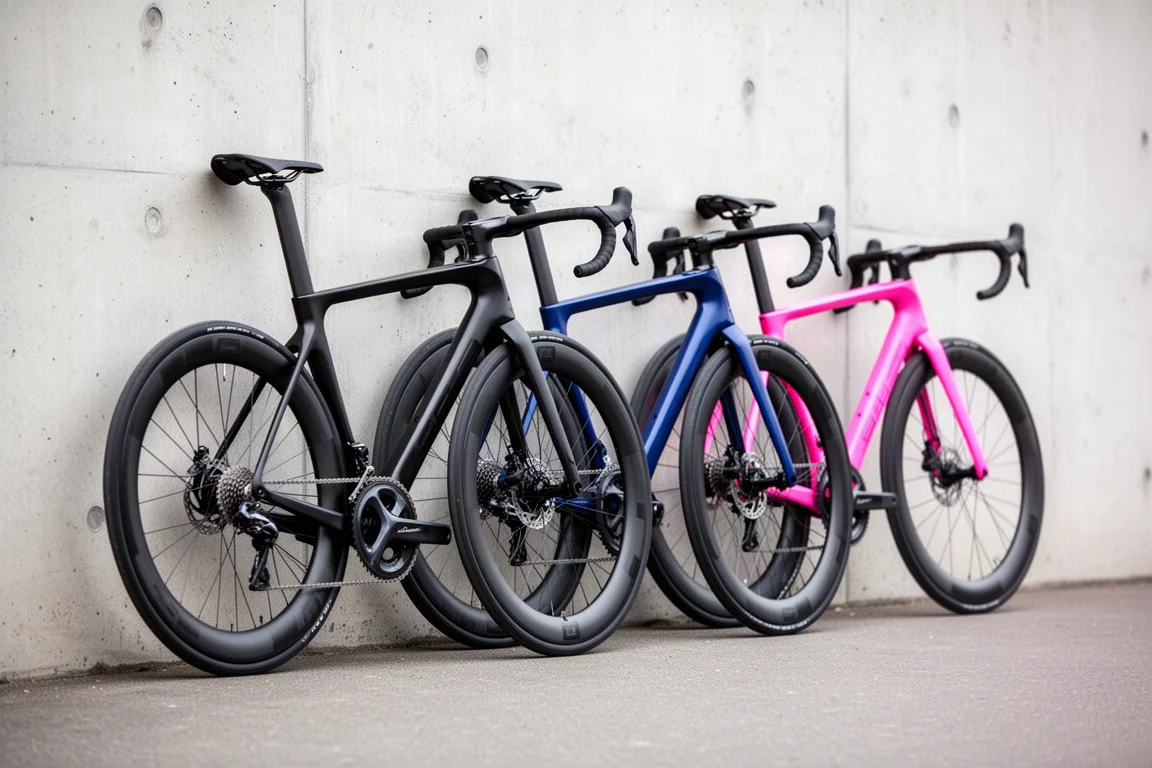
2026 Tour de France Road Bikes: Six Race Machines Worth a Closer Look
Six race bikes from the 2026 Tour de France grid, reviewed for paint, silhouette, wheels and the specification details that matter to buyers.
Road Bikes
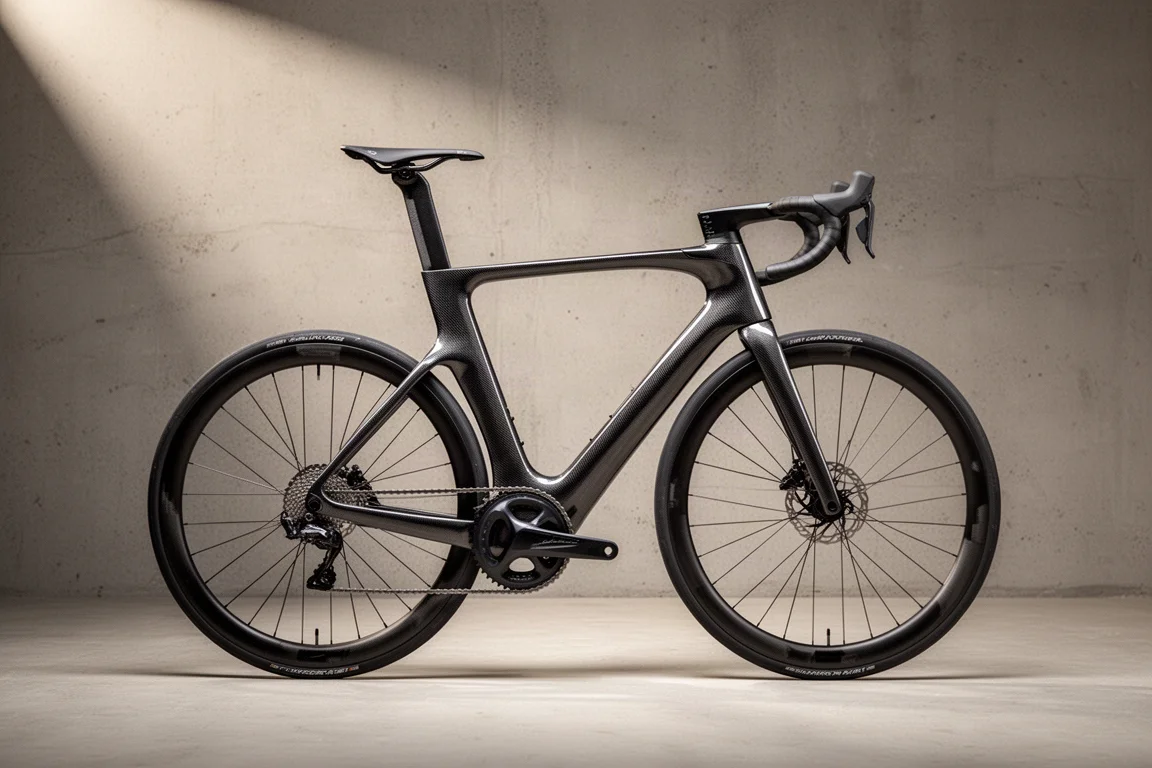
3T Strada Italia Review: A Radical Aero Road Bike That Rides Smooth
A made in Italy carbon aero road bike with a deep head tube, wide tire clearance and a genuinely comfortable ride. Here is what to know before buying.