Aquarium Filtration
Clearwater ATS CW Series Buying Guide: CW50, CW100, CW200 or CW300?
A detailed look at the redesigned Clearwater ATS algae turf scrubber and how the CW50, CW100, CW200 and CW300 models differ by rated aquarium volume.
Introduction
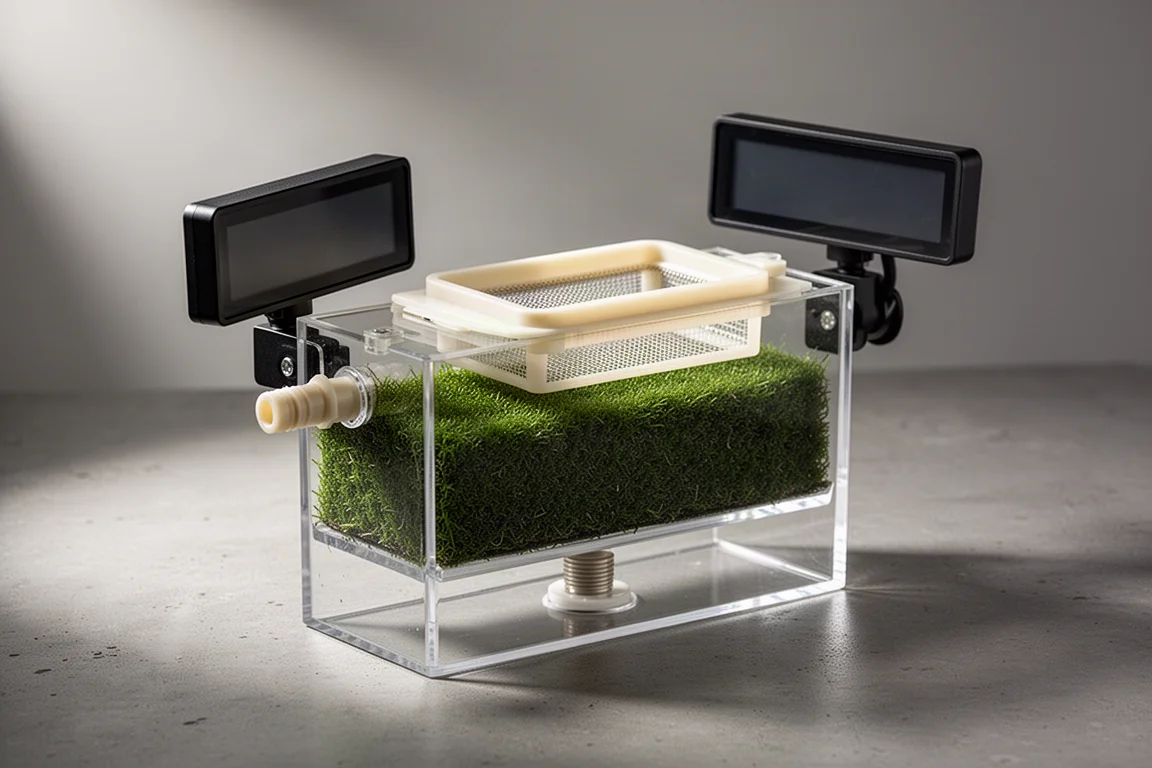
The Clearwater ATS has long been one of the best known and most trusted algae turf scrubbers for serious reef keepers, and the current generation is now manufactured by Adaptive Reef with a thorough overhaul. The new units are slimmer and more compact than the previous version, and they are faster and easier to harvest.
The job itself has not changed. Water is flushed over a screen that is given plenty of light, so algae can grow and take up excess nutrients from the aquarium. What has changed is how the unit accomplishes that, along with the range itself. The scrubber is now available in four models, the CW50, CW100, CW200 and CW300, rated for well-stocked aquariums up to 50, 100, 180 and 400 gallons respectively. All four share the same 3/8 inch barbed inlet and 1 inch outlet.
This guide covers what every size has in common, what each model suits, and how to pick the right one for your system.
What Every Model Shares
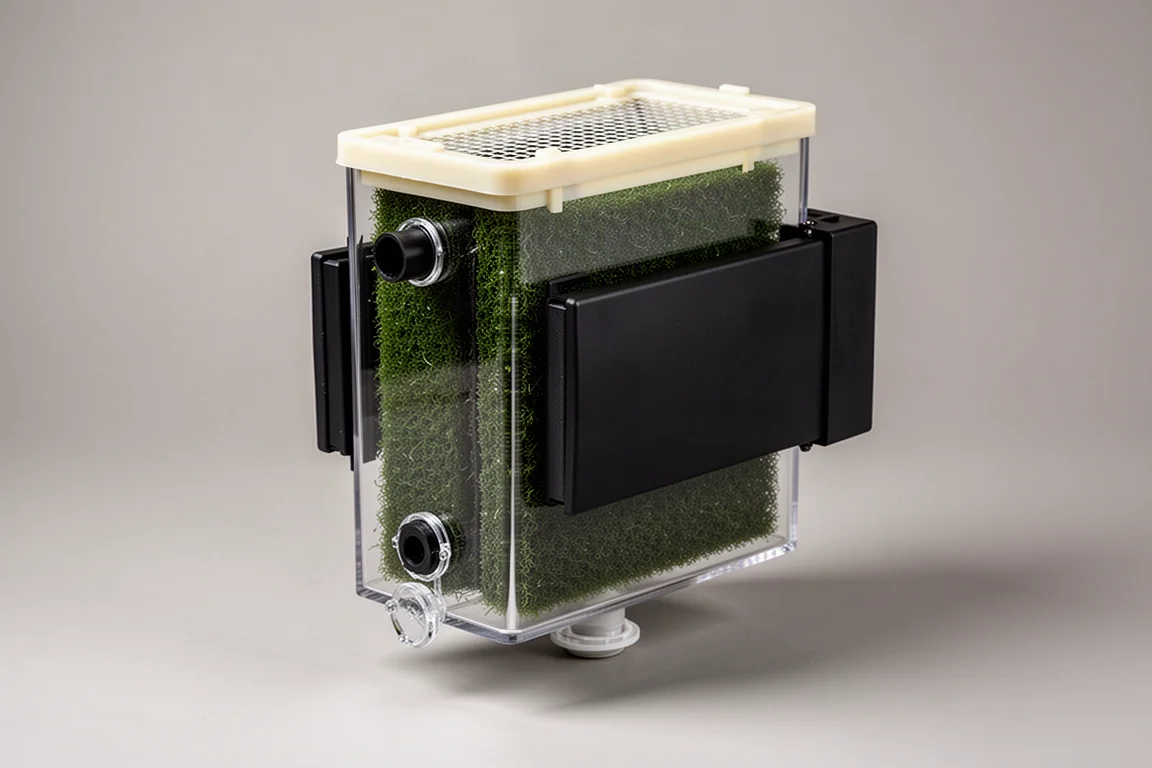
Every Clearwater ATS is built from high quality acrylic and PVC components and includes a pair of red heavy hydroponic spectrum LED light panels. Those panels are IP66 rated, and they are wired together to a single plug, so a simple outlet timer or one outlet on an aquarium controller can switch both on and off together.
In the box you will find the scrubber itself, the LED light panels, the light blockers, a threaded barbed fitting, a bulkhead fitting, plumber’s tape and a sample bottle of trace element solution.
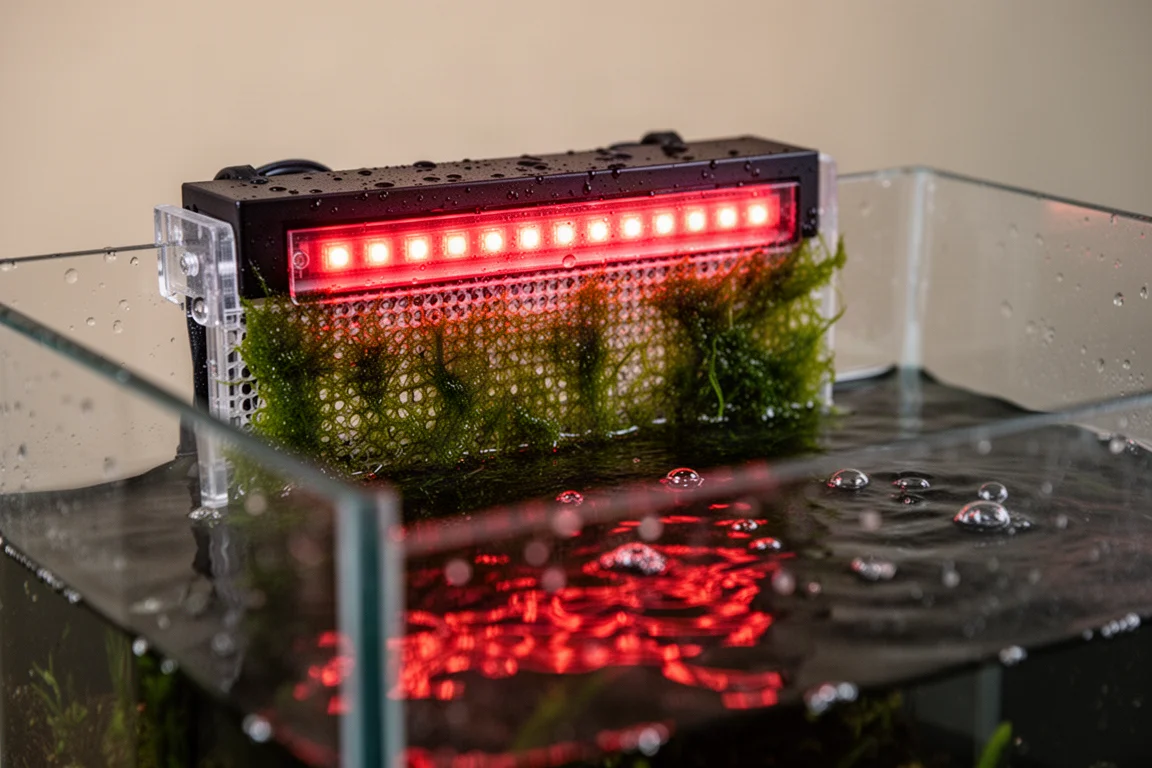
Several small refinements add up. The light blockers are now included with every unit instead of being sold separately, and they are made from lightweight PVC board rather than acrylic, so they are easy to remove whenever you want to check the algae growth inside. The light mounts take up less space than before and hold the panels in simplified brackets that you can lift out for a quick wipe of dust or salt creep.
Harvesting is noticeably simpler. Water no longer leaves a spray bar. It exits a slot in the side of the unit near the top, flows across the screen carrier and then down the screen. That means no pump shutdown and no union to unthread to harvest the algae, because you simply lift off the lid and lift the screen carrier out. Two thick bars on that carrier replace the small clips that used to hold the screen to the spray bar, which makes reattaching the screen far less fiddly.
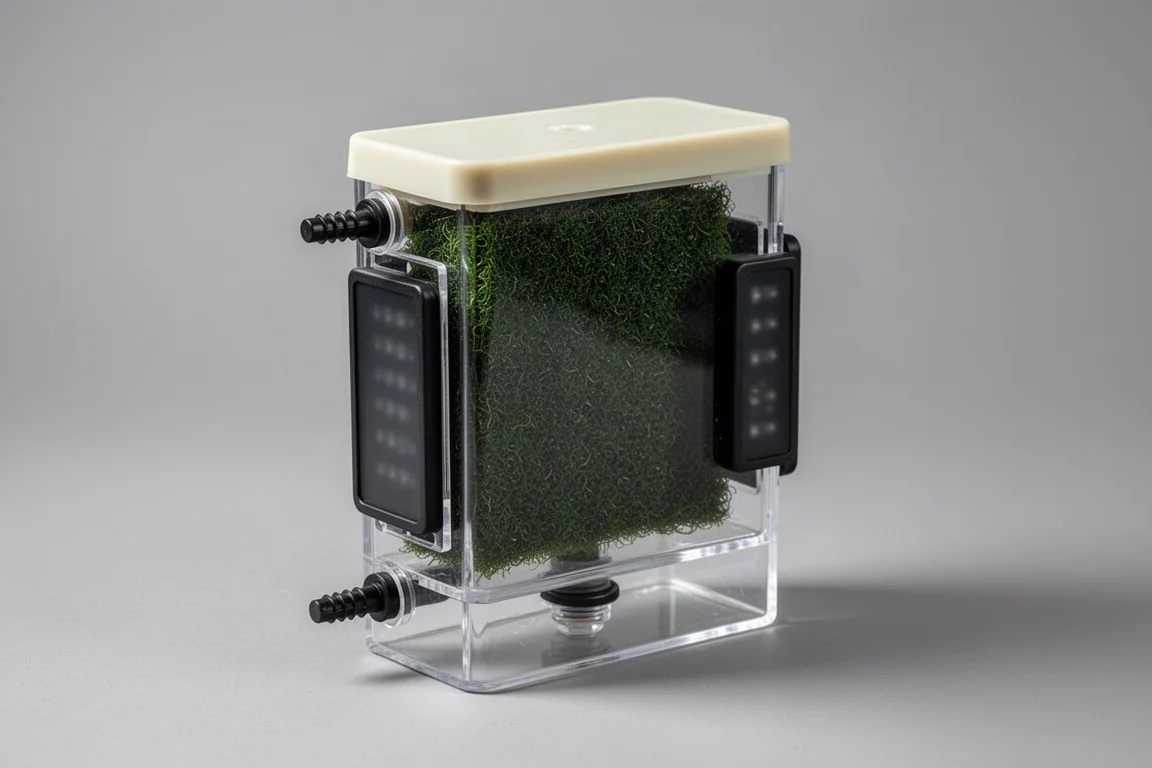
Plumbing has been trimmed down as well. The two PVC drain fittings that used to sit on the side of the unit have been consolidated into a single drain that exits from the bottom, and the external inlet is now a simple acrylic channel system with a barbed fitting rather than PVC pipe and fittings.
Clearwater ATS CW50
The CW50 is rated for well-stocked aquariums up to 50 gallons, which puts it in the right range for nano tanks and smaller reef systems where sump space is limited. Because it shares the slimmed-down body and the single inlet and outlet of the rest of the range, it slots into tight equipment compartments without the external PVC plumbing bulk of the older design.
It is the sensible starting point if your system sits at or under the 50 gallon mark and you want nutrient export that does not rely on a protein skimmer alone.
Clearwater ATS CW100
The CW100 roughly doubles the rated capacity, covering well-stocked aquariums up to 100 gallons. It sits in the middle of the range and is likely to be the most common fit for a mid-size reef system with a sump.
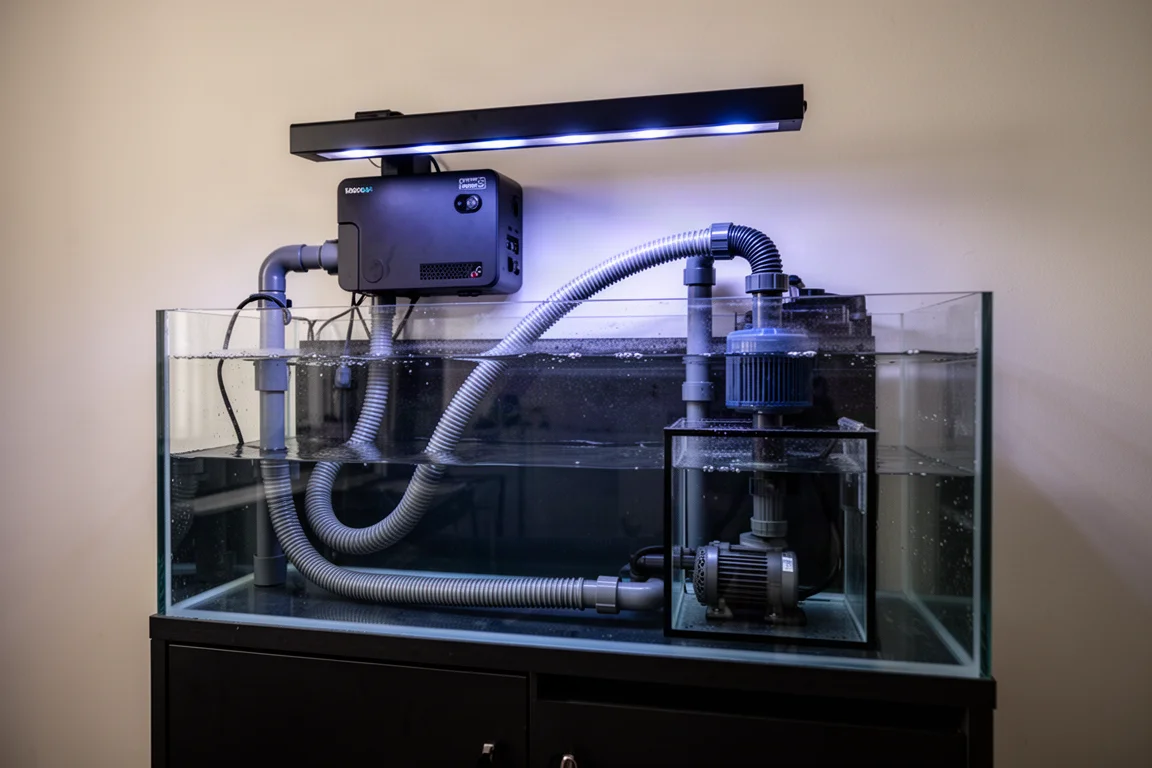
It carries the same acrylic and PVC construction, the same pair of red hydroponic spectrum LED panels on a single plug, and the same bottom-mounted drain. The difference between this model and its neighbours is how much water volume it is designed to keep clean, so the decision comes down to an honest accounting of your total system volume rather than any gap in features.
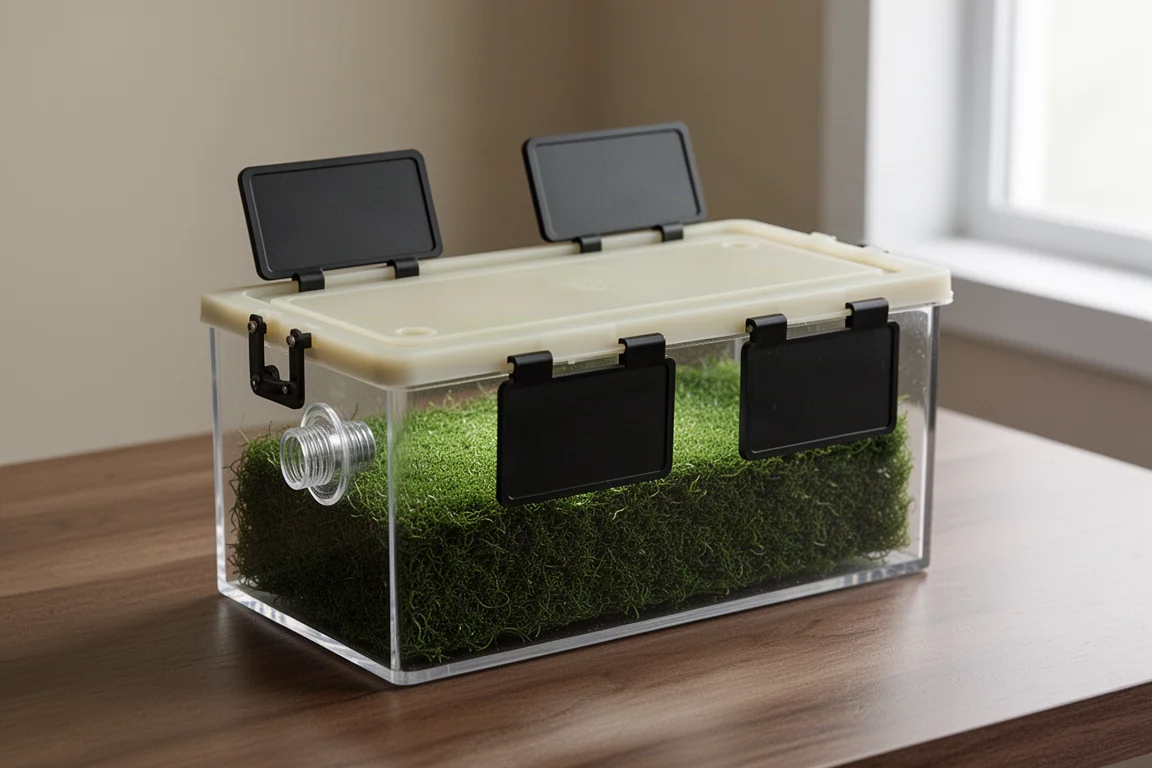
Clearwater ATS CW200
The CW200 is rated for well-stocked aquariums up to 180 gallons, stepping up to the larger end of the range without moving to the biggest body. Reef keepers whose combined display and sump volume sits comfortably under that figure should find the rating appropriate, and the compact footprint still helps in a sump that has to share space with a return pump and other equipment.
Because the design is shared across the range, nothing is lost by choosing this size: the removable light blockers, the slot-fed screen carrier with its two thick bars and the simplified acrylic inlet channel all carry over.
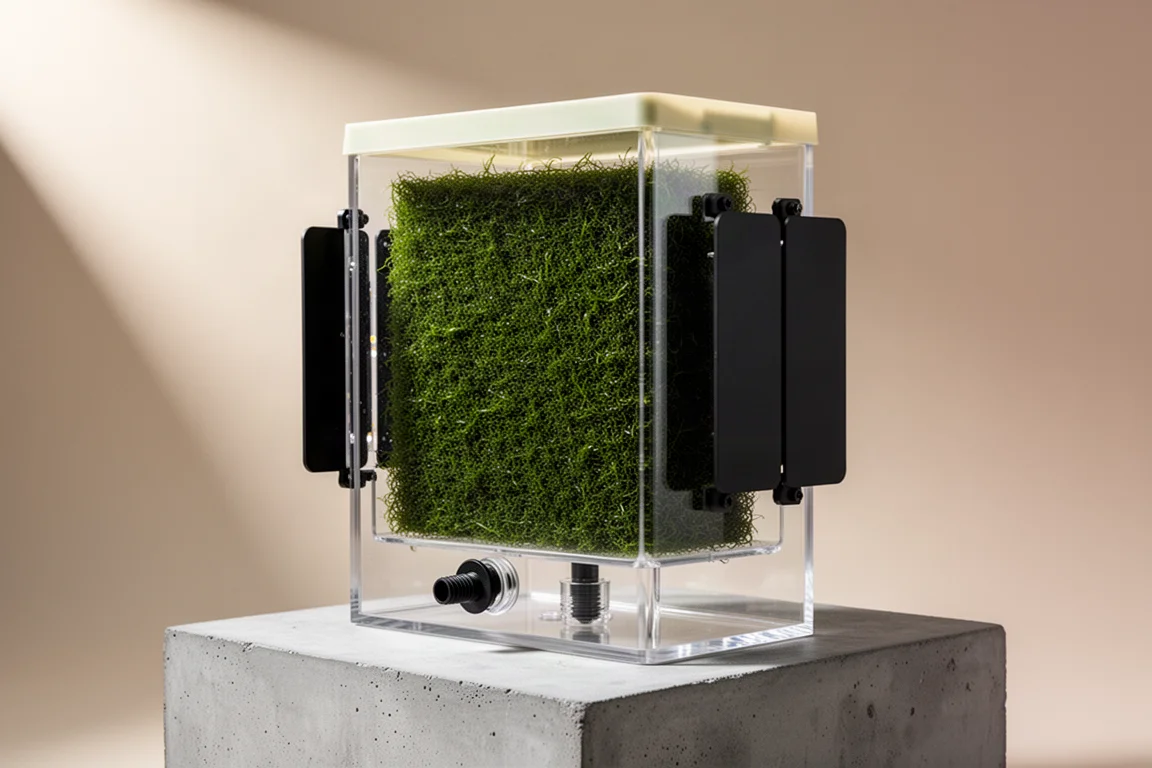
Clearwater ATS CW300
The CW300 is the largest of the four, rated for well-stocked aquariums up to 400 gallons. It is the model to consider when the rest of the range cannot comfortably match total system volume.
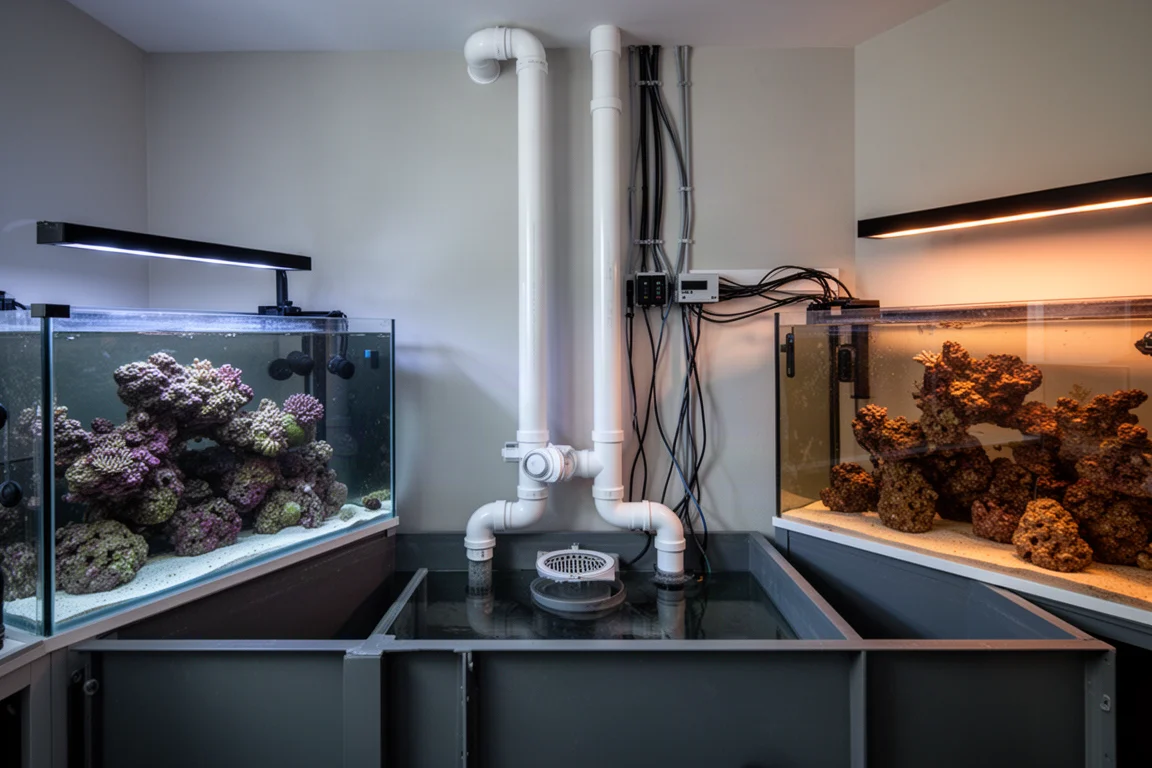
It keeps every change from the redesign: the removable PVC board light blockers, the screen carrier you can lift straight out for harvesting, and the single bottom drain paired with the simplified acrylic inlet channel. On a large system, the practical payoff is that you are still plumbing only one inlet line and one drain line.
Overall Buying Advice
Choosing between the four models comes down to a single number: the volume of your well-stocked aquarium. The CW50 covers up to 50 gallons, the CW100 up to 100, the CW200 up to 180 and the CW300 up to 400. Sizing to your real total system volume, rather than to the display tank alone, is the safest approach when a sump adds to the figure.
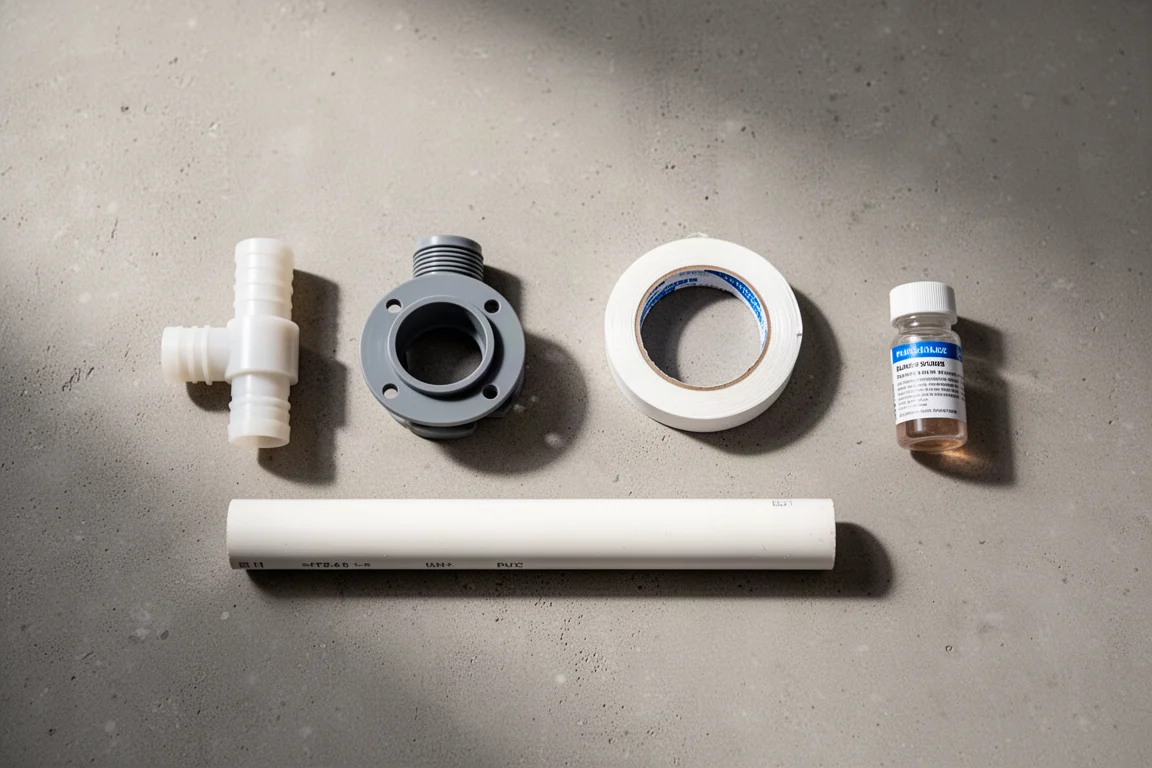
Installation is worth planning before you buy. Because the drain now exits from the bottom of the unit, the new versions cannot sit on a completely flat surface, and you should leave clearance underneath for a straight length of pipe running down into the sump. The upside is that you no longer need elbows or soft tubing to direct the water, and you have one less drain line to plumb. If you would rather not build a support yourself, an optional PVC board stand is available that lets you use the scrubber as a drop-in solution.
Routine care is also worth factoring in. The LED panels sit in brackets that lift out, which makes wiping off dust or salt creep straightforward, and the removable light blockers mean you can inspect algae growth without dismantling anything.
Conclusion
The redesigned Clearwater ATS keeps what made the original a trusted choice for serious reef keepers and removes much of the bulk and fiddling around the edges. Picking a model is the easy part: match the rated volume to your system, and the rest of the design is identical across the range.
Further reading
Related Reviews
Aquarium Filtration
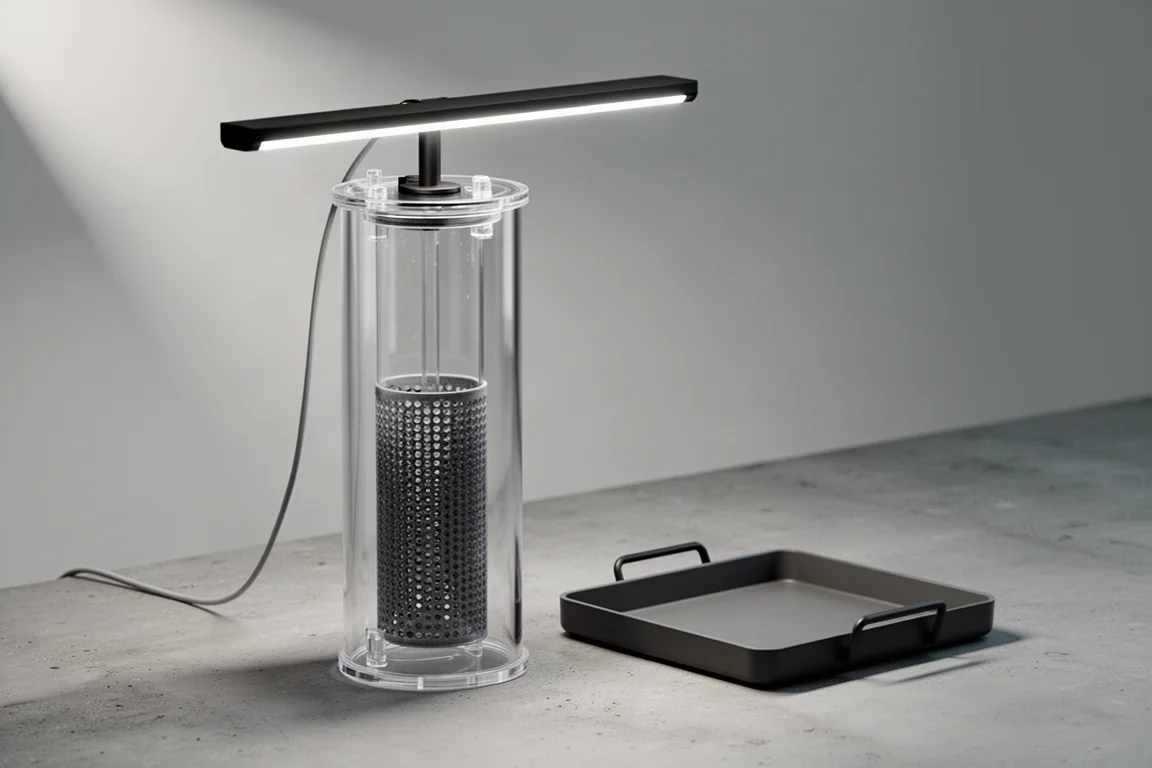
Adaptive Reef Refugium Reactor Review: A Simple Way to Grow Nuisance Algae Outside Your Display
A vessel designed to grow nuisance algae in a controlled space so it stops taking over the display tank, with an adjustable stand, a removable basket, and a single LED light on top.
Aquarium Filtration
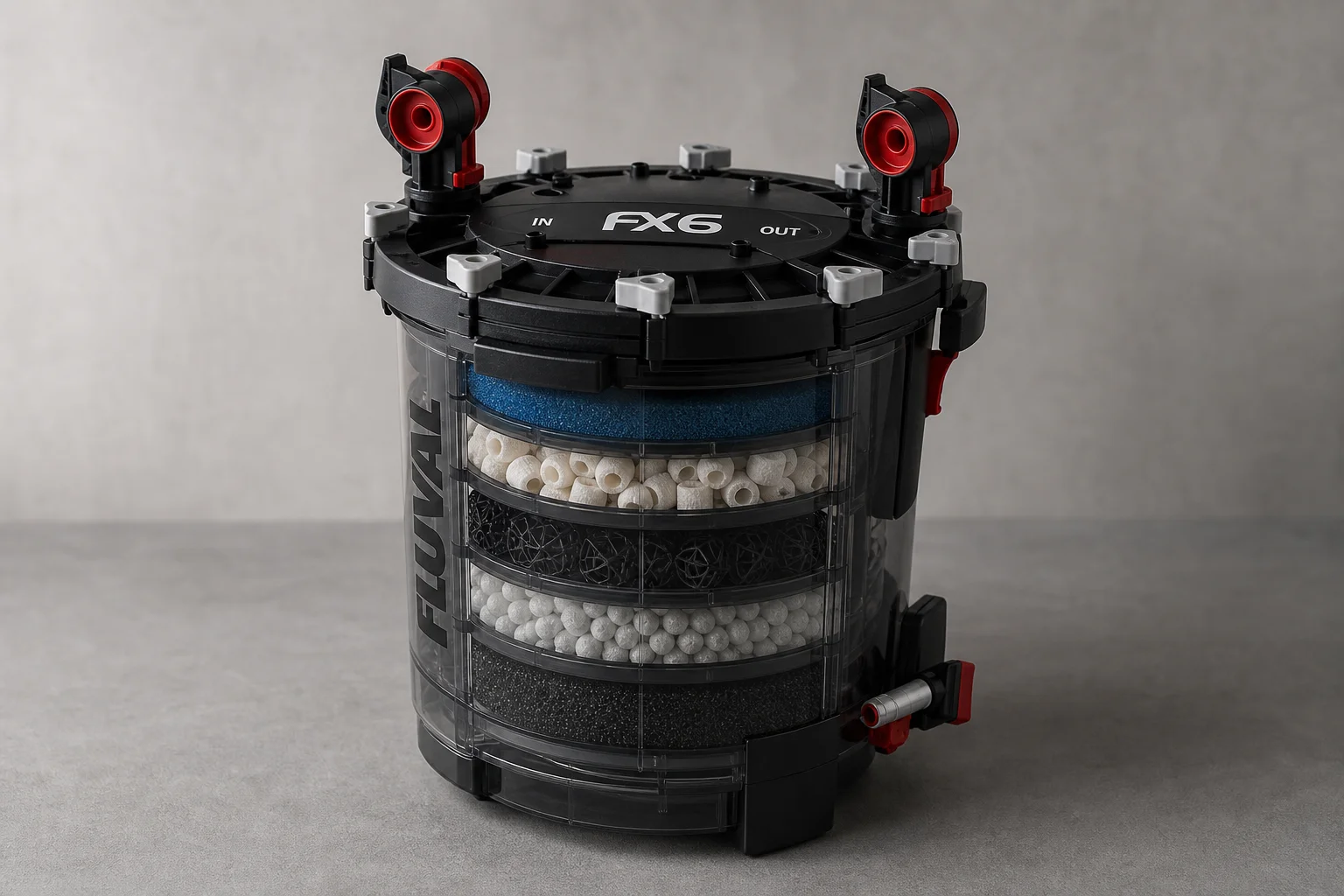
Affordable Aquarium Filter Media: Testing Budget Alternatives to Expensive Biomedia
Can cheap pot scrubbers replace expensive ceramic biomedia in a canister filter? One aquarist tests the theory on a heavily stocked 210-gallon tank.
Aquarium Filtration
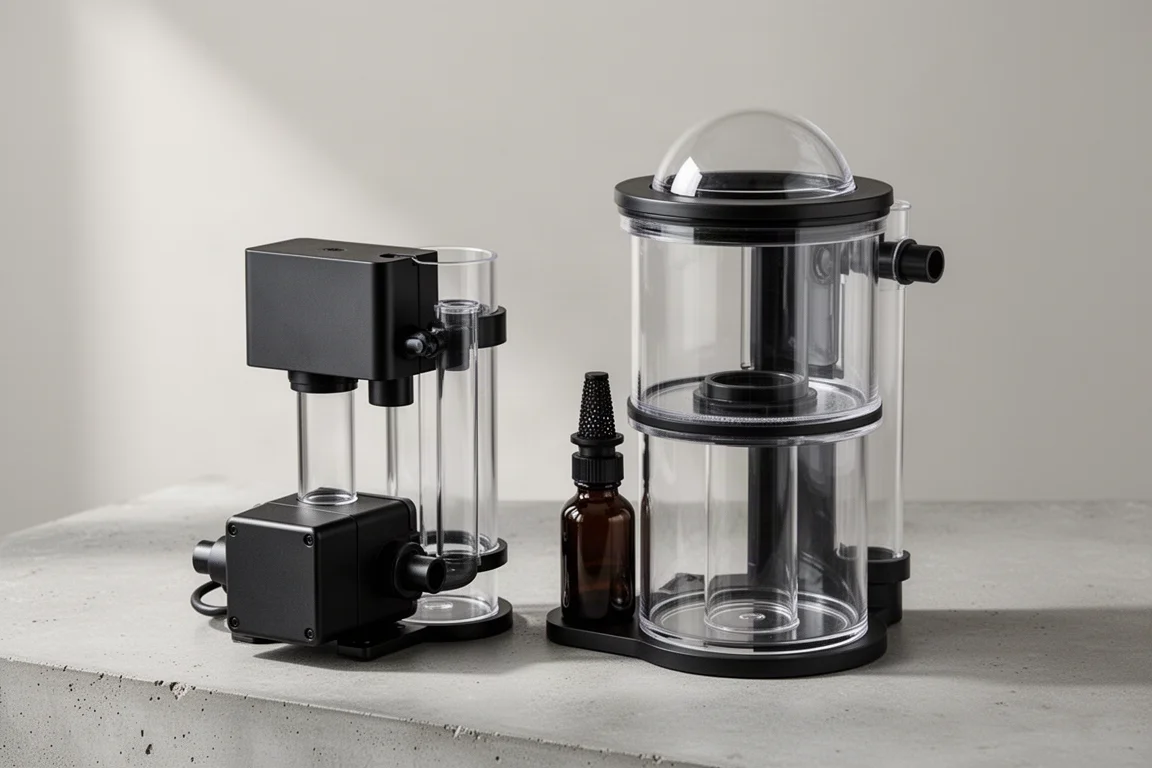
AquaMaxx Bullet 2 and Bullet 3 Review: Hang-On Protein Skimmers Compared
A closer look at two larger AquaMaxx hang-on protein skimmers, covering capacity ratings, clearance needs, and the design details that separate the Bullet 3 from the Bullet 2.