Bike Drivetrain
Classified Power Shift Hub Review: Two Gears Hidden Inside the Rear Wheel
A two-speed internal hub that replaces the front derailleur with instant wireless shifts and a cleaner chain line, plus the integration caveats worth knowing before you buy.
Introduction
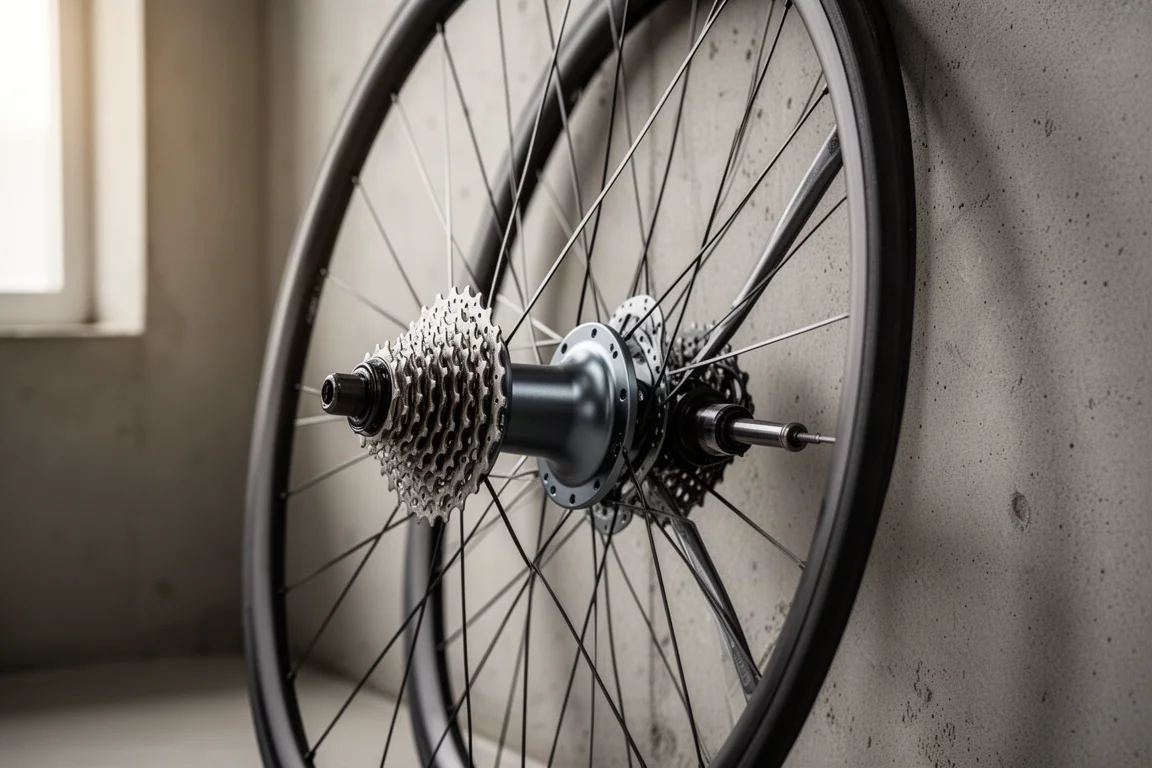
The Classified Power Shift hub does something simple to describe and unusual to ride. It puts two gear ratios inside the rear wheel, and a standard cassette still mounts to it. In effect, the front derailleur has been relocated into the hub shell, where the shift happens internally instead of by pushing a chain sideways between two chainrings.
Shifting is triggered by a handlebar button that communicates wirelessly with the hub. There is no cable pulling a derailleur cage and no chain being lifted onto a second ring, so the change arrives immediately and, in practice, silently. The step between the two ratios is 0.7, which deliberately mirrors the sort of drop most riders already know between a big and a small chainring. The intent is not to invent a new way of riding, but to reproduce a familiar one without the mechanical hardware hanging off the front of the bike.

That framing matters when you are deciding whether the system is for you. This is not a wider-range gearbox or an exotic new cadence band. It is a conventional two-by experience, rebuilt around a single chainring at the front and a hub that carries the second ratio inside the wheel.
Who This Product Is For
The clearest fit is a rider who wants the simplicity and cleaner look of a single front chainring but does not want to give up the range that a front shift provides. Classified positions the hub around road, gravel, mountain, triathlon and time trial use, and the 0.7 ratio is chosen to sit comfortably inside the expectations those disciplines already have.
It also suits riders who shift under load. A front derailleur normally rewards a moment of restraint at the pedals, a little like easing off a clutch so the chain can move across cleanly. The Power Shift hub is designed to accept a shift while you are driving hard, up to roughly a thousand watts, which means you can change ratio mid-effort without interrupting the rhythm of a climb or a sprint.
Finally, it is relevant to riders already running a Shimano Di2 groupset, because integration currently exists in a workable if improvised form. Riders on wireless SRAM groupsets are not served yet, and that is a genuine consideration rather than a footnote.
Main Strengths
The most striking quality is speed. Because nothing is being moved from ring to ring, the shift feels instantaneous in a way that catches riders out at first. There is no lag and no mechanical noise, and the usual pause before a front shift, the one that lets the chain settle across three or four pedal rotations, simply is not required. Riders who try it tend to describe shifting later and less often, because there is no penalty for waiting until the gear is genuinely needed.
Shifting under power is the second real advantage. With a front derailleur, a full-effort change is usually something to avoid. Here it does not matter. You can be pushing hard on a climb and still change ratio, which is exactly the scenario where a front shift is normally most awkward.
The third strength is chain line. Running a single chainring with the hub in its one-to-one ratio produces a straight, efficient chain path, with no cross-chaining to lose watts to. The step-down ratio does introduce some additional loss, but the claim is that it remains well below what a conventional two-by setup gives away when the chain is running at an angle. For a rider who spends most time in the direct ratio, that is a meaningful argument.
Weight is less of a concern than the raw numbers suggest. The hub shell and the Power Shift unit together come in around 581 grams, against roughly 218 grams for a standard rear hub. Set against that, the front derailleur, its cabling and the small chainring all come off the bike, which offsets a substantial part of the difference. On the road, the penalty is not something a rider is likely to perceive.

Things to Consider Before Buying
The most consistent criticism is the absence of any gear indication. There is currently nothing on the bike or in the system that tells you which of the two ratios you are in. On a climb, pressing the button is a gamble: it might get noticeably easier, or it might get noticeably harder, and you find out only after the shift. This is a solvable problem rather than a fundamental one, and integration with head units or shifters is the obvious route, but as it stands it is a real usability gap.
Button placement is the second practical point. The shifter runs through the handlebar to a transmitter unit at the bar end, which relays the signal down to the thru axle. That architecture means the button can be mounted almost anywhere, which is genuinely flexible. The catch is that a position that works well in the drops can be awkward to reach when your hands are on the tops. Better integration into existing shifters is understood to be in progress.
Groupset compatibility deserves a careful look. The system currently works with a Di2 setup, described candidly as something of a workaround, and it does not yet communicate with wireless SRAM groupsets. Whether that changes depends on the groupset brands as much as on Classified, and no firm commitment exists today. Riders who upgrade groupsets regularly should treat that as an open question rather than a settled one.
It is also worth knowing that Classified is a young drivetrain company rather than a wheel brand, with high-profile backers and ambassadors, and a reported ten million euros raised to develop this hub and whatever follows it. That suggests a healthy pipeline, and it also means the ecosystem around the product is still being built.
Buying Advice
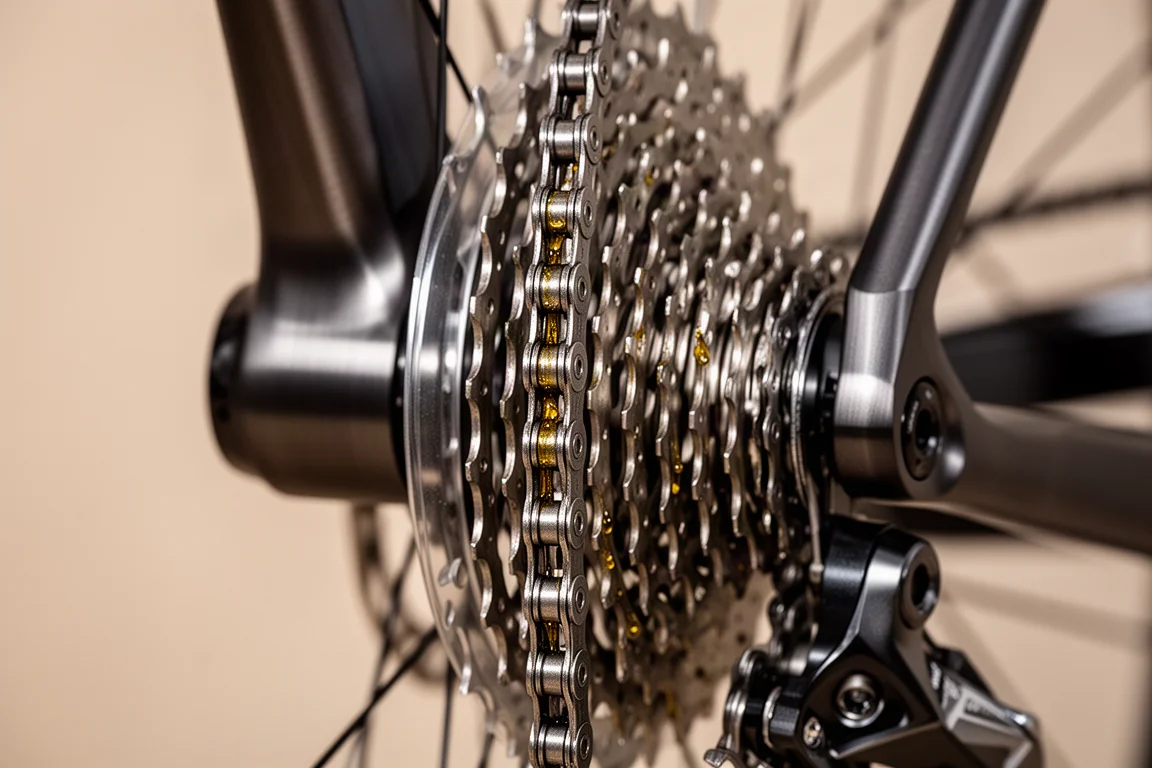
The simplest way to buy into the system is as a complete wheel, because several wheel brands now offer wheels configured and built ready for the Classified hub. Ordering that way removes the guesswork around shell fitment and takes the installation question off the table, which matters for a product whose internals are not user-serviceable in the ordinary sense.
Before committing, work through three questions honestly. First, which groupset are you on? If it is Di2, integration exists today in a functional form. If it is wireless SRAM, the answer is not yet. Second, how much do you rely on knowing your gearing at a glance? Riders who shift by feel and cadence will adapt quickly to the missing indicator. Riders who like confirmation will find it irritating until a display integration arrives. Third, do you actually ride in a way that benefits from shifting under full power and from a permanently straight chain line? If you rarely use the small ring, or rarely shift mid-effort, the case is weaker.
The weight question is the easiest to dismiss. The system adds mass at the hub, but the parts it replaces give most of it back, and on the bike the difference does not register in the way the numbers might imply. What you are really buying is shift behaviour, and that behaviour is genuinely different from anything a derailleur delivers.

For riders who want it, the decision is straightforward: this is a well-executed first-generation piece of drivetrain technology with a clear benefit and a short, specific list of caveats. For riders who are simply curious, there is no urgency. The most interesting part of the story is what the same approach could enable further down the line, and that story is only just beginning.
Conclusion
The Classified Power Shift hub delivers what it promises. It puts a front shift inside the rear wheel, it does so instantly and silently, it tolerates full-power changes, and it keeps the chain running straight. The gaps are equally clear: no indication of which ratio you are in, limited groupset integration for now, and a hub weight that is offset rather than eliminated by the parts it removes.
Do you need it? No. Is it an impressive piece of engineering that makes a real difference to how a bike shifts? Yes. For riders who value fast, uninterrupted ratio changes and a cleaner front end, it is an easy recommendation to investigate, ideally as a pre-configured wheel build. For everyone else, it is a technology worth watching rather than a purchase to rush.
Product link
View more details for Classified Power Shift Hub
This product is mentioned in the review. Check the specifications, options, and compatibility before buying.
View more details for Classified Power Shift HubFurther reading
Related Reviews

Backpacking Gear
Building a 10 lb Base Weight: An Ultralight Backpacking Gear List
A practical walkthrough of the ultralight pieces behind a 10 lb base weight, from a 765 g pack and a roomy one-person tent to a full camp chair and a dependable water filter.

Road Bikes
10 New Road Bikes Worth Watching: Aero, Titanium, Steel and Endurance Standouts
A practical roundup of 10 new road bikes, from aero flagships chasing single-watt gains to titanium, steel and endurance platforms built for real roads.

Saltwater Aquarium Setup
10 Questions About Cycling a Saltwater Aquarium: What You Need to Know
Essential questions and answers for cycling a reef tank or saltwater aquarium, from biome building to light management and bacterial supplements.