Aquarium Filtration
CJ Mega Filter Canister Filters: 650 vs 900 vs 950 SDC for Reef Tanks
A practical look at CJ's Mega Filter canister line for larger reef and saltwater aquariums, covering media capacity, quiet operation, tool-free maintenance, and the smart features reserved for the 950 SDC.
Introduction
Canister filtration and reef tanks have long been a debated pairing, and most of that debate comes down to how a filter is used rather than what it fundamentally is. CJ has been building canister filters for more than fifteen years, and the Mega Filter line is the company’s answer to a specific question: what does a canister look like when it is designed around the needs of today’s larger saltwater aquariums?
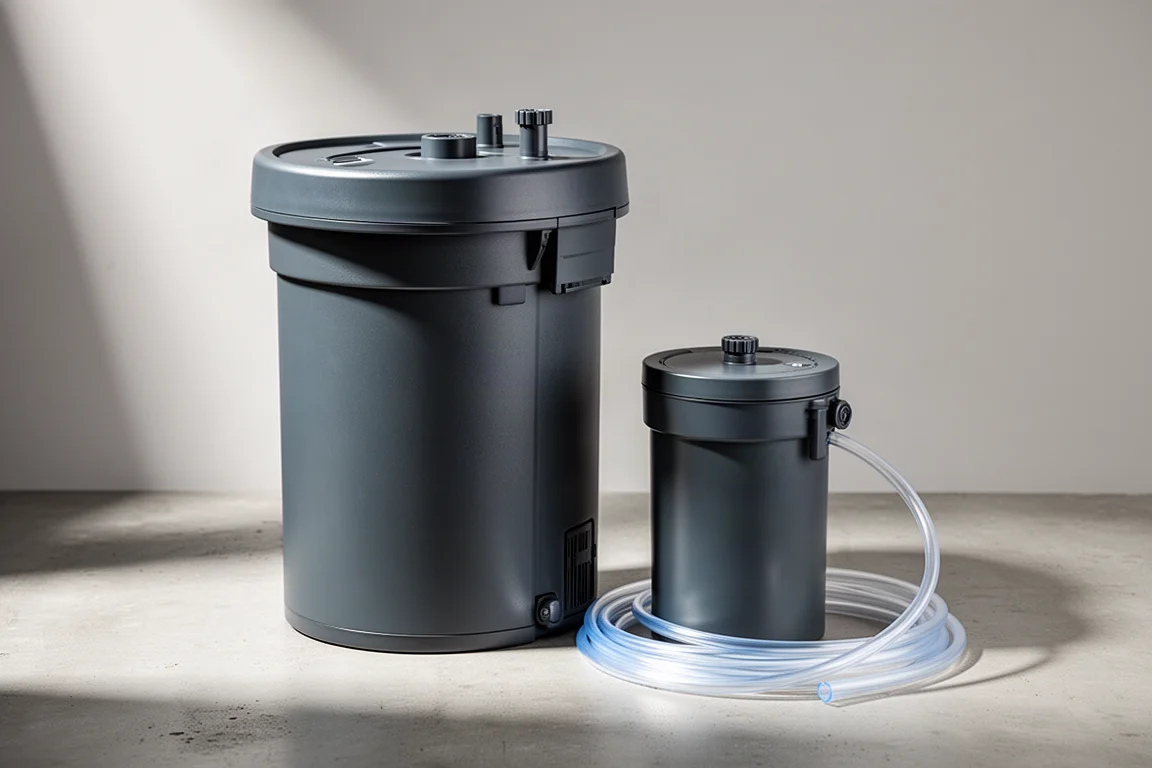
The range is aimed at what CJ calls the maximum average large aquarium, spanning roughly 170 gallons up to around 260 gallons. Three models make up the line: the Mega Filter 650, the Mega Filter 900, and the Mega Filter 950 SDC. All three share a reinforced housing, a tool-free maintenance approach, and a strong focus on quiet operation. They differ mainly in media volume and in how much electronic control they offer.
What Sets the CJ Mega Filter Apart
The Mega Filter replaces older CJ canister designs such as the Space Echo, Space Echo Plus, and The Whale, which had run their course. The brief was to build the largest, most powerful and most technologically advanced canister the company could produce in its own manufacturing facility, informed by feedback from a customer base spread across more than seventy countries.
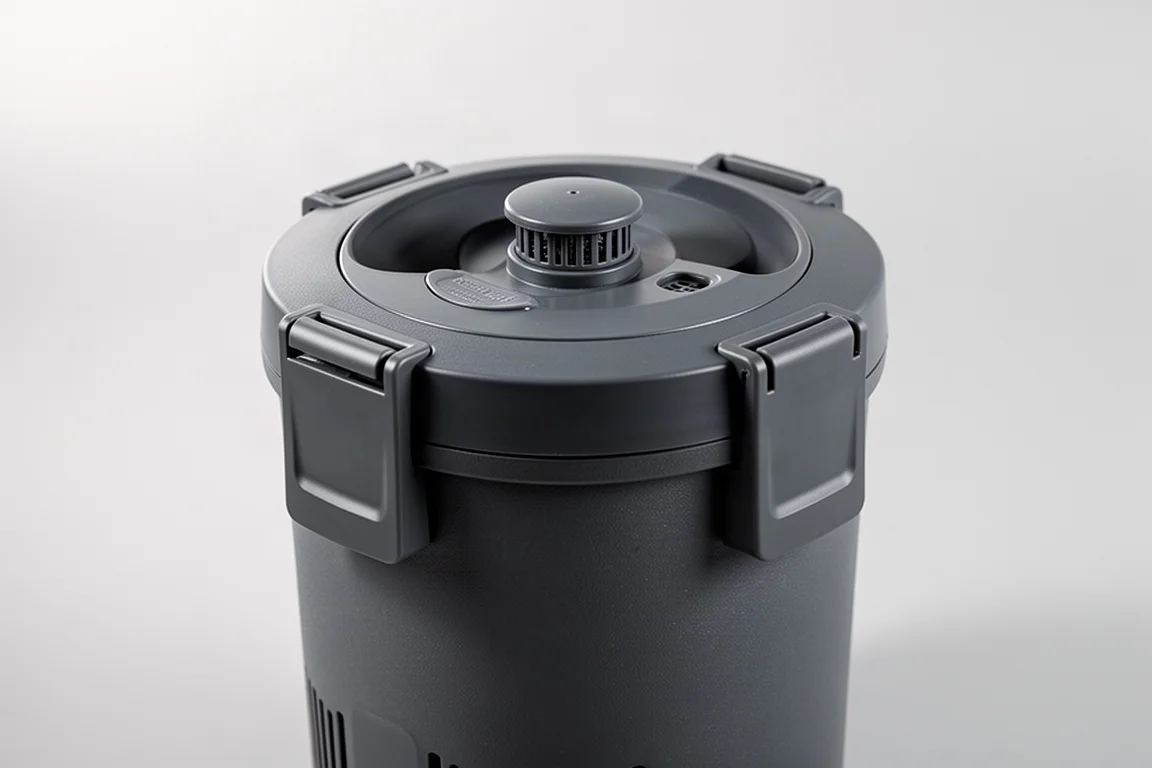
Durability and noise were designed in from the start rather than added afterwards. The housing uses reinforced plastic instead of standard plastic, with resin built into the bottom bucket, foam sound absorption to control vibration, and double-lined resin inside the pump chamber. The clips are fibre reinforced, which is why they have a slight sheen, and the lid gasket is unusually thick.
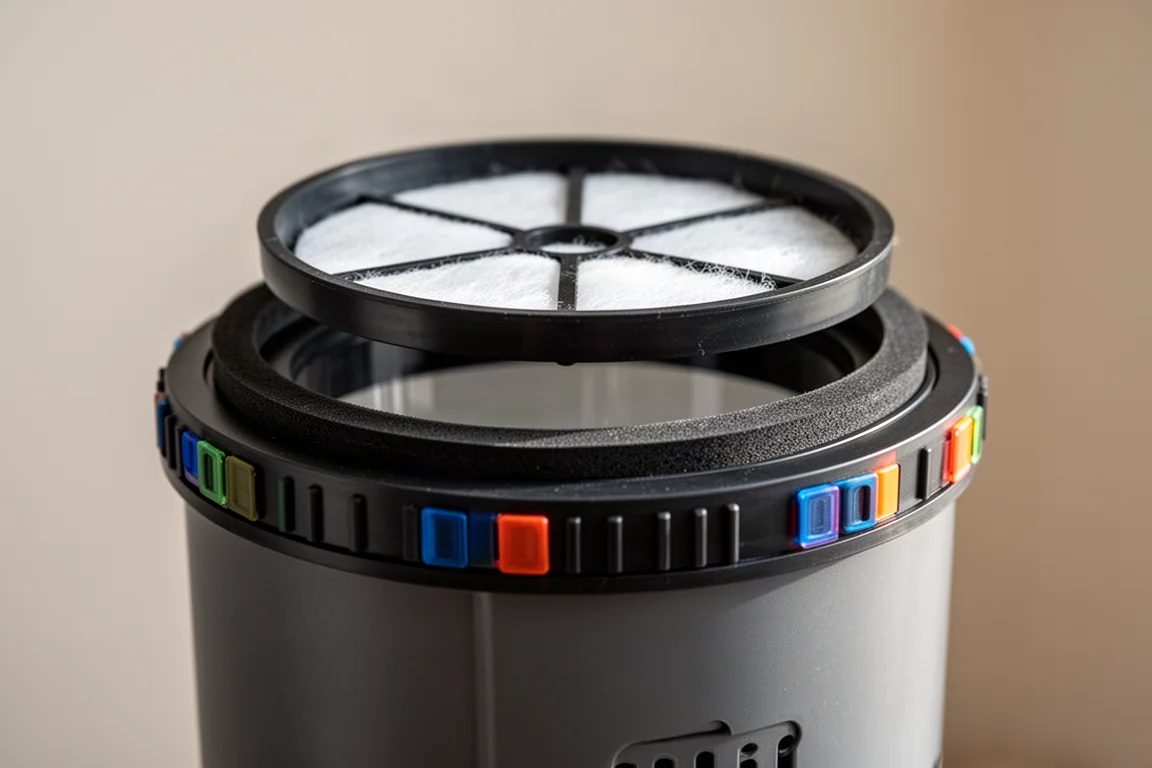
The top-mounted pre-filter is the part owners will touch most often. Pressing the red button and twisting releases the tray, and a safety button was added late in development so the lid cannot be opened accidentally, whether by a child or by someone helping with maintenance. A colour-coded black and blue locking ring guides the correct fit, and re-seating the tray produces an audible click. Flow has to be stopped before opening, otherwise water will escape, so the recommended routine is to unplug the unit or power it down through a Wi-Fi strip first.
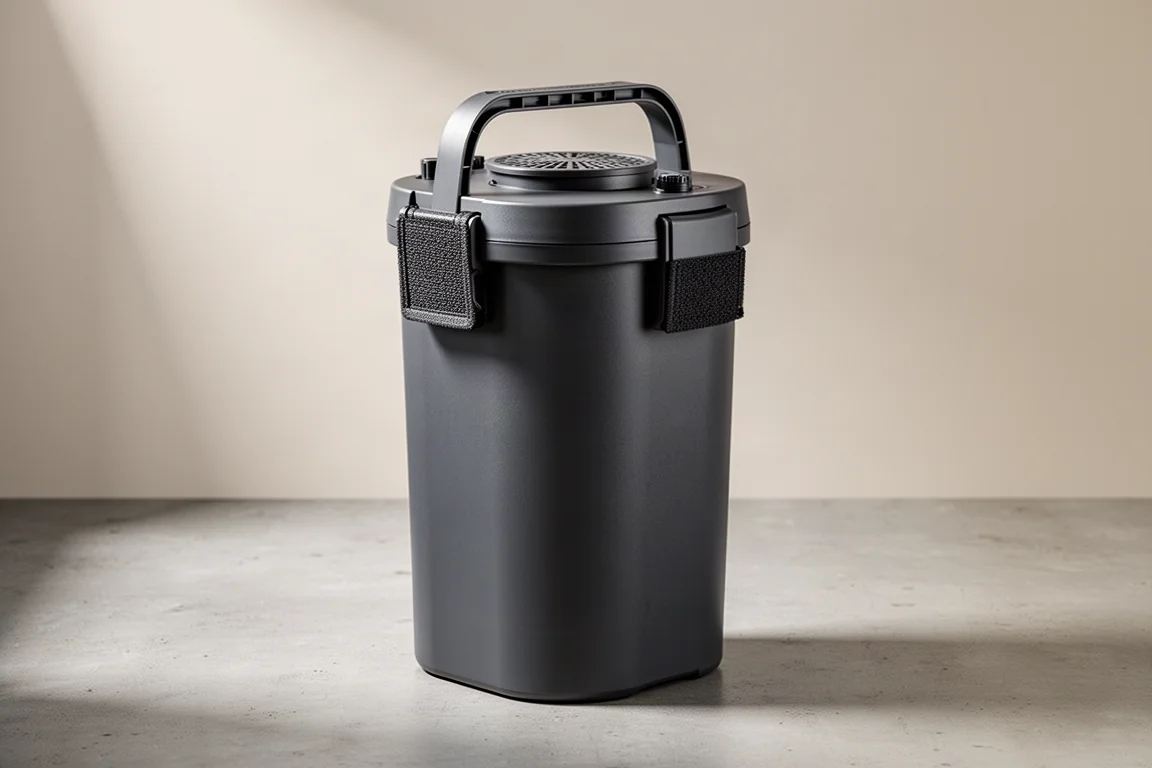
Several smaller details show the same intent. A rigid carry handle makes it practical to lift the canister even when it still holds water, which addresses a common complaint about getting a canister out from under an aquarium. A see-through window sits over an impeller that locks into place, a venturi-style tube purges air automatically over time, and the priming button needs only two or three light presses. The spring behind it is wider and the pressure required is low, so it stays usable for anyone who cannot apply much force. Outlet fittings rotate directionally and fit frames up to two inches, which means some euro-braced tanks will work too. The 900 and 950 SDC share the same physical body, while the 650 is the smaller of the three.
CJ Mega Filter 650
The 650 is the compact model. Its pre-filter tray takes two baskets and the media volume is around a gallon and a half. Those baskets are packed with foam of different PPI ratings alongside zeolite-style media, and carbon is included.
Water enters through the pre-filter tray first, travels down through the canister, and is pushed back up through the media before returning to the aquarium. The point of that path is maximum contact with as little bypass as possible. Flow is adjusted with a dial on the back of the unit, rotated toward plus or minus, and the outlets can be turned to suit the layout of the tank. For smaller systems where a manual dial is all that is needed, the 650 keeps the footprint and the media volume modest.
CJ Mega Filter 900
The 900 sits in the middle of the range and uses the same body as the 950 SDC, which makes it a meaningful step up from the 650 in physical scale. Media volume is close to two US gallons, so there is considerably more room for biological media, carbon, or GFO-style media.
Flow adjustment stays manual on this model, handled by the same rear dial as the 650, with rotating outlets for directional flow. That makes the 900 a straightforward choice for aquarists who want the larger body and the bigger media chamber without paying for electronic control they may never use.
Because the 900 and the 950 SDC are the same size externally, the decision between them is about control and data rather than cabinet space. If the aquarium has room for one, it has room for the other.
CJ Mega Filter 950 SDC
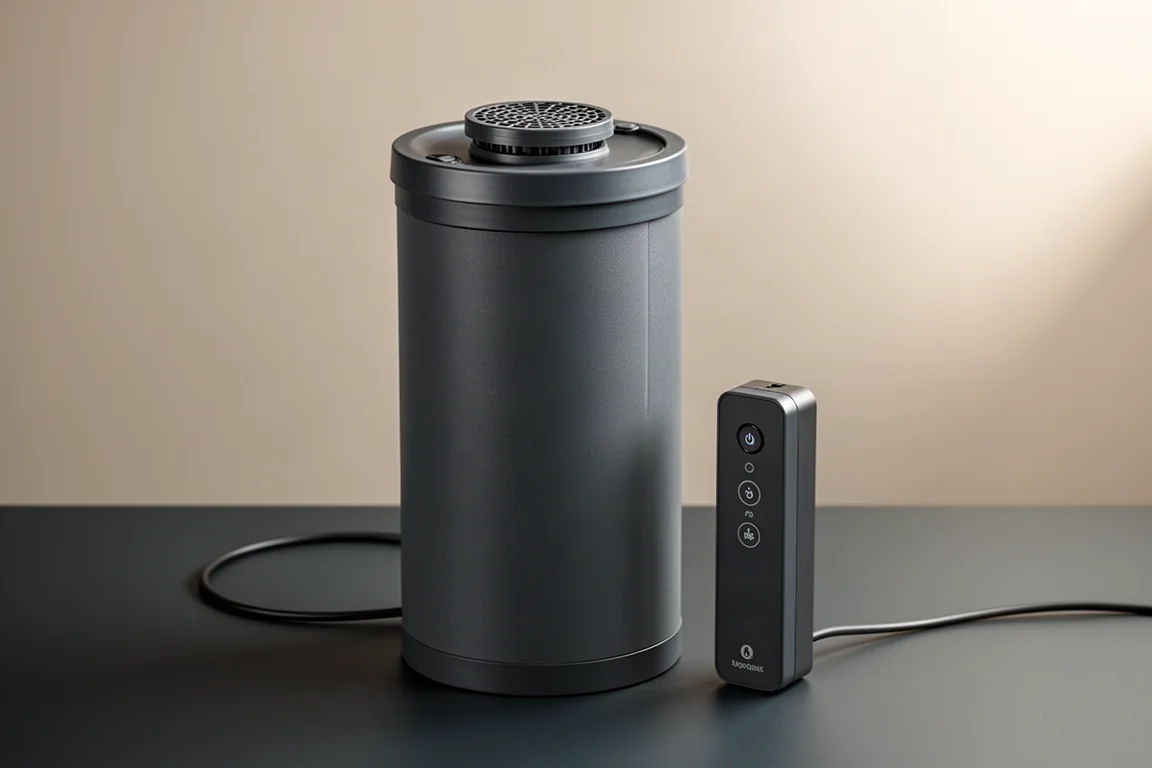
The 950 SDC is where the Mega Filter line becomes a smart filter. It runs on Wi-Fi, so flow can be adjusted from a controller or an app rather than a dial. A globally patented sensor reads water temperature directly from the canister and reports it in real time to a phone, which adds a useful layer of redundancy for aquarists who already monitor temperature elsewhere in the system.
The app also handles media management. Scanning a media barcode records what went in and when, reminders can be set, and the app advises when media is due for a change. Voice assistant control is supported as well. Because flow can be dialled to a specific percentage remotely, the 950 SDC pairs naturally with inline UV sterilisation, allowing flow to be slowed for a particular target or simply to keep water exceptionally clear. The model carries a 5-year warranty.
Sizing and Flow: Matching a Canister to Your Tank
Turnover figures get repeated constantly, whether ten times, fifteen, or twenty. Realistically, filtration flow lands closer to four to six times tank volume, and CJ designs around that range to support a stable bacterial colony. A canister is a closed environment, so contact time through the media stays consistent from one pass to the next, and the flow can be tuned rather than fixed.
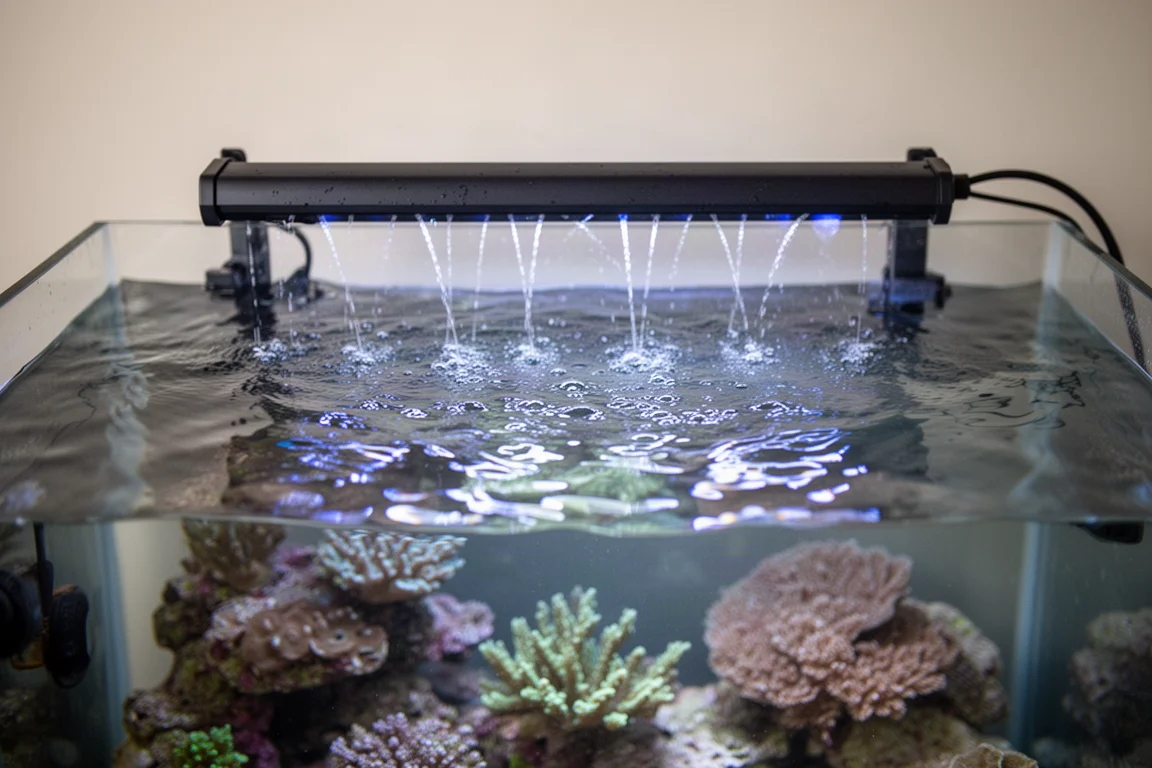
On the 650 and 900, that tuning is done by rotating the rear dial. A spray bar is included for aquarists who want wider surface movement and more gas exchange at the top of the aquarium, since a canister moves water at the surface rather than in a sump. The outlet can also be aimed directionally, which matters when rockwork or an unusual aquascape changes how water needs to travel through the tank.
Maintenance, Noise, and Daily Use
The pre-filter is the main routine job and takes about five minutes. Stop the flow, press and twist, lift the tray out, rinse or replace it, press it back until it clicks, and restart. Keeping a spare tray on hand means the dirty one can be swapped out immediately.
A full media service means popping off four clips and lifting out the baskets, with no tools required, and it can be finished in under ten minutes. One practical detail worth knowing: the canister does not need to be refilled with water after a full service. With the hoses connected, water flows in from the aquarium on start-up and an auto top-off handles the rest, which keeps the process cleaner than working on a sump. Anyone running a carbon-heavy setup will be inside the canister within six weeks anyway to change exhausted media, so the routine is not significantly different from servicing a media reactor.
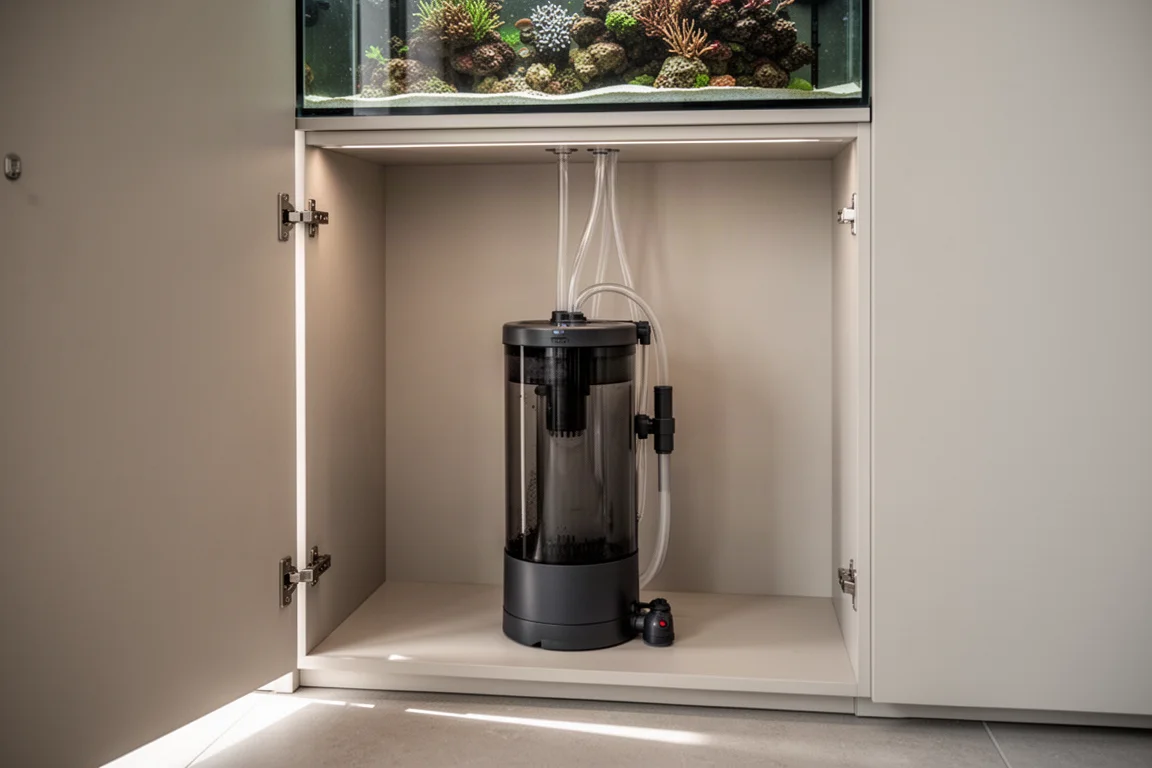
Noise is a clear design target, and a canister in good order can sit close to a bed with only the sound of water moving at the surface. For aquarists who are not comfortable with plumbing, who want UV sterilisation in a smaller footprint, or who simply want all-in-one filtration without overthinking it, this format has a real place. A clear outlet pipe add-on kit is also planned as an alternative to glass pipework, aimed at owners who want something lighter and less prone to breakage, and it doubles as a visual indicator of when deeper cleaning is due.
Buying Advice
Choosing within the line is mostly about the size of the aquarium and how much control is useful.
The Mega Filter 650 suits smaller systems and tighter cabinets, where around a gallon and a half of media and a manual rear dial cover everything the tank needs.
The Mega Filter 900 is the natural pick for aquarists who want the larger body and close to two US gallons of media capacity, without the app-driven features.
The Mega Filter 950 SDC makes sense for anyone who wants flow adjustment from a phone, real-time temperature data straight from the canister, media reminders, and the ability to pair the filter with inline UV and dial flow to a specific percentage. It is also the model covered by the 5-year warranty.
Regardless of model, the practical considerations are the same. Plan to stop the flow before opening the pre-filter, keep a spare tray if you prefer quick swaps, and remember that canister filtration responds well to routine maintenance. Neglect any filter and it will behave badly, but a well-maintained canister is affordable, consistent, and stable, and it can support the same corals as any other filtration method when it is set up properly.
Conclusion
The CJ Mega Filter line takes a format that many reef keepers had written off and rebuilds it around larger aquariums, quiet running, and maintenance that does not require tools or a hose-down. The 650 covers compact setups, the 900 adds the larger media chamber, and the 950 SDC layers Wi-Fi control, temperature monitoring, and media management on top. For aquarists whose tanks cannot run a sump, or who simply prefer a single enclosed unit over plumbing, the Mega Filter range is worth a close look.
Further reading
Related Reviews
Aquarium Filtration
Adaptive Reef Refugium Reactor Review: A Simple Way to Grow Nuisance Algae Outside Your Display
A vessel designed to grow nuisance algae in a controlled space so it stops taking over the display tank, with an adjustable stand, a removable basket, and a single LED light on top.
Aquarium Filtration
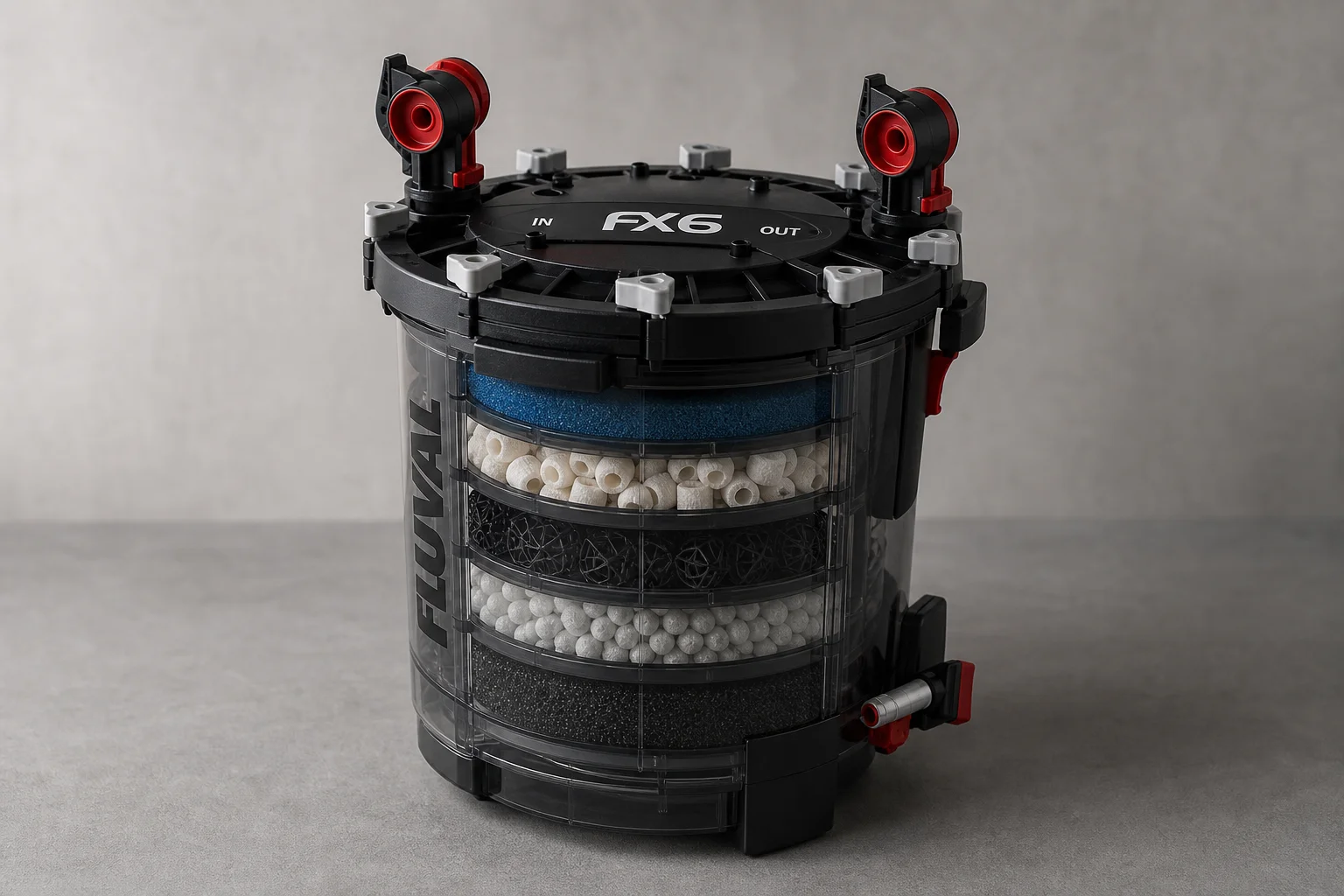
Affordable Aquarium Filter Media: Testing Budget Alternatives to Expensive Biomedia
Can cheap pot scrubbers replace expensive ceramic biomedia in a canister filter? One aquarist tests the theory on a heavily stocked 210-gallon tank.
Aquarium Filtration
AquaMaxx Bullet 2 and Bullet 3 Review: Hang-On Protein Skimmers Compared
A closer look at two larger AquaMaxx hang-on protein skimmers, covering capacity ratings, clearance needs, and the design details that separate the Bullet 3 from the Bullet 2.