Road Bike Tires
Cheap vs Premium Road Bike Tires: What the Price Gap Actually Buys
A $10 road tire and a $100 road tire do not ride alike. Here is what the price gap really buys, where the gains show up, and when a mid-range option makes more sense.
Introduction
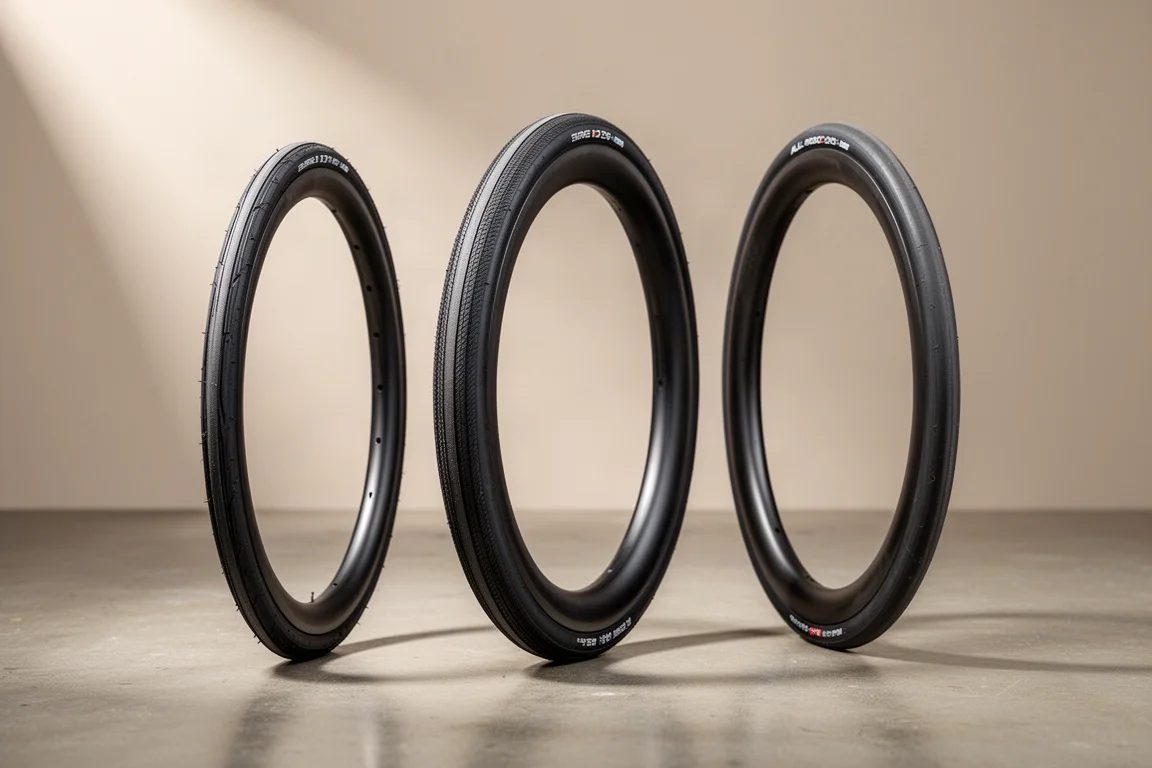
Road bike tires occupy one of the widest price ranges of any component on a bike. A basic tire can cost around $10, while a top-tier race tire can cost around $100 for a single tire. That tenfold gap raises an obvious question: what does the extra money actually buy, and is it ever worth spending it?
This comparison covers three tires across the spectrum. There is a budget option at the very bottom of the market, a premium tubeless race tire at the top, and a mid-range alternative that suits most riders.
How These Tires Were Evaluated
Each tire was ridden back to back on the same roads, with everything except the tire kept the same. A short hill lasting just under 200 m was used for timed runs, and the bike was fitted with a power meter crank so that pedalling effort could be kept consistent from one run to the next.
The same routes also included fast descents and a few corners with gravel scattered across the surface, which made it possible to judge grip and ride feel alongside raw speed. Keeping effort and terrain constant means differences in average speed can be attributed to the tires rather than to how hard the pedals were turning.
Five or so runs were completed on each tire to average out small variations in conditions.
The Budget Tire: Halfords Essential Road Bike Tire
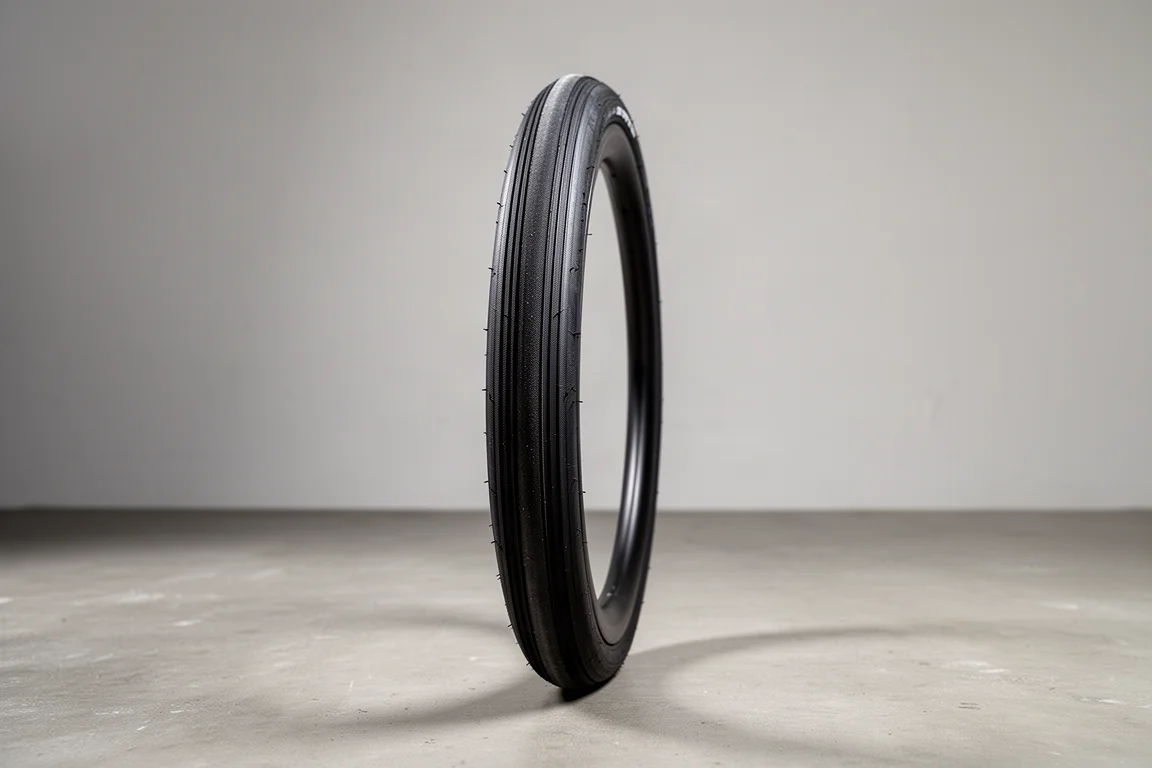
At roughly $10, the Halfords Essential Road Bike Tire sits at the very bottom of the market. It is not made by Halfords itself. The tire is produced by V Rubber in Thailand, a company that manufactures a large number of bike tires.
Size is the first thing to notice. This is a 23 mm tire, narrow by modern standards, and it is also heavier than expected for its width: over 400 g each, around 415 to 420 g, which adds up to roughly 800 g for a pair.
The ride is firm and somewhat wooden. The casing is not especially supple, so the tire transmits bumps and small road imperfections rather than absorbing them. The tread has a pronounced raised central section, which gives some cause for concern when leaning the bike over, though the transition onto the shoulders turned out to be less awkward in practice than it looked.
Grip is the more serious limitation. In corners with gravel on the surface, the narrow profile leaves very little margin, and the tire feels slow downhill, with a noticeable amount of effort being absorbed rather than converted into forward motion. Even so, it rolls, it holds air, and it does the basic job. Wider sizes are available in the range, but they cost more.
The Premium Tire: Pirelli P Zero Race TLR SLR
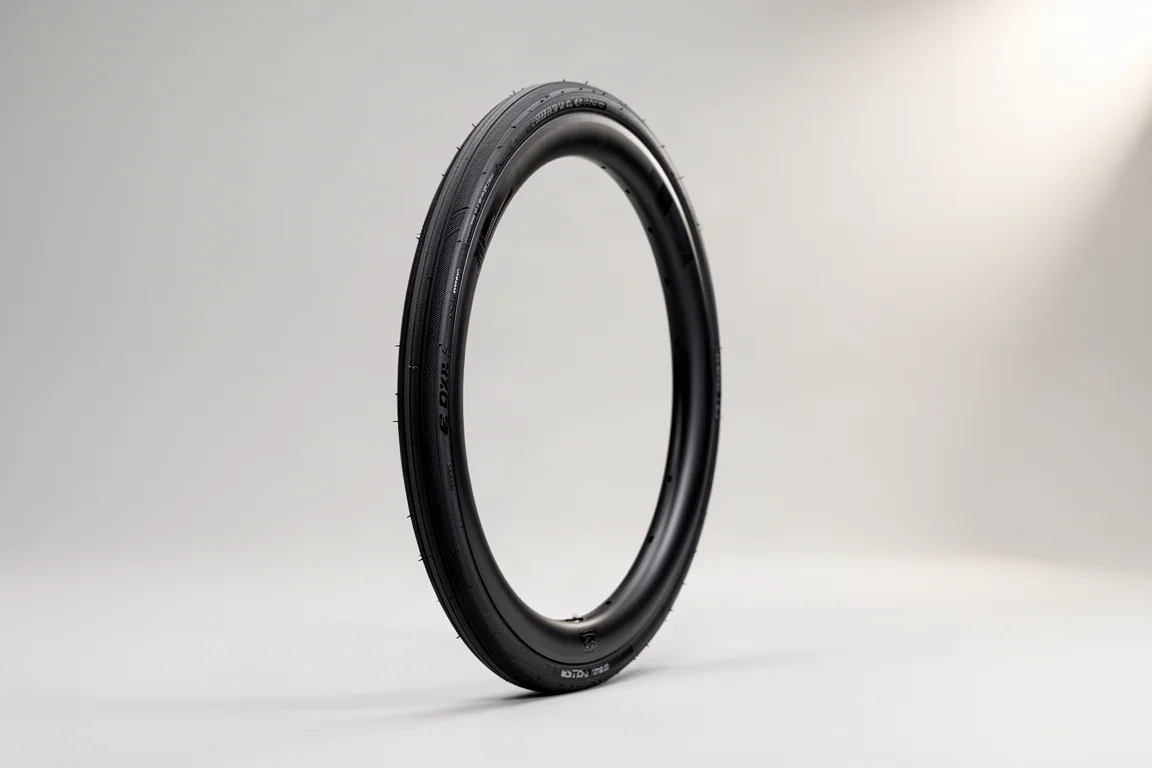
At around $100 per tire, the Pirelli P Zero Race TLR SLR is the Italian brand’s top-of-the-range road model. It is handmade in Italy, has been tested in a wind tunnel and in the lab for rolling resistance, and carries small aerodynamic details on the edge of the tread, including ridges and dots, intended to keep airflow attached to the rim.
The tire is tubeless, which means it can be run without an inner tube provided tubeless sealant is used inside. If a puncture happens, the sealant is designed to rush to the hole and plug it. Setup is a little more involved and can get messy if sealant escapes, but the system works well once it is in place.
On the road, the difference is immediate. The casing is thinner and far more supple, so the tire damps vibration instead of passing it through to the rider. The wider 28 mm profile adds grip, and because there are no obvious ridges or tread transitions, leaning into a fast gravelly corner feels consistent rather than nervous. Rolling resistance is lower as well, so pedalling effort translates into speed instead of being absorbed. The tire also sounds better on the road, a small detail that contributes to the overall sense of quality.
The Mid-Range Pick: Continental Grand Prix TR
Not every rider needs a race tire, and the Continental Grand Prix TR is the sensible middle ground. It is a mid-range option for riders who want dependable performance without paying race-tier prices. For fitness riding, commuting, and general road use, a tire from this part of the market is likely to offer the better balance of cost and capability.
Ride Feel, Damping, and Grip
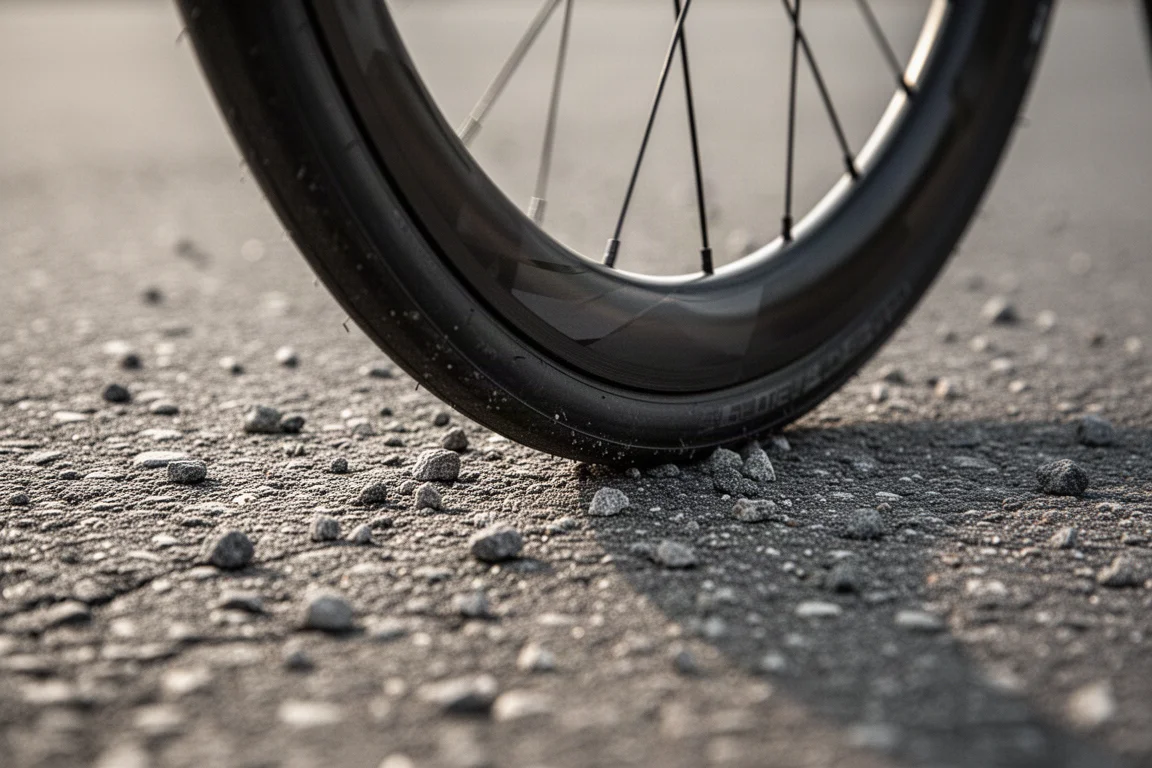
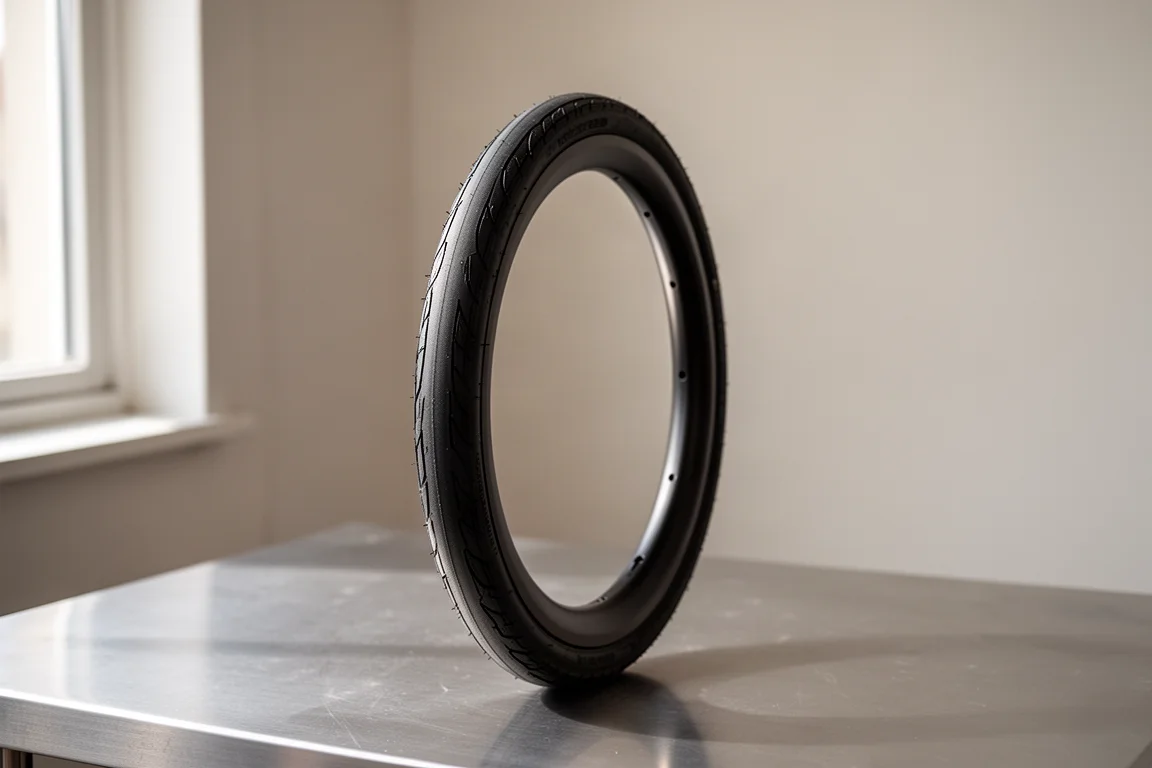
Price differences show up most clearly in the casing. Cheaper tires tend to use thicker, stiffer material, which passes vibration and small bumps straight to the rider. More expensive tires use thinner, more supple casings that deform over road texture, smoothing the ride and keeping more rubber in contact with the surface.
That translates directly into confidence. A supple casing allows the tire to conform to the road, so grip does not vanish abruptly when the surface turns rough or when a corner has gravel scattered across the apex.
Tire Width, Pressure, and Setup
Width matters as much as price. Most riders at the top of the sport now race on 28 mm, 30 mm, and even wider tires rather than the narrow 23 mm sizes that were once standard. Wider tires smooth out the road surface and, as a result, roll with less resistance. There is a small aerodynamic penalty, but for most riders it is a worthwhile trade.
Pressure deserves the same attention. On a 23 mm tire inflated to around 5 bar, roughly 70 PSI, every small bump in the road is felt, and the narrow casing offers little cushioning. If your frame can fit 30 mm or 32 mm tires, that is the width most riders should consider, because the added confidence and comfort outweigh the modest increase in weight and drag.
What the Hill Test Showed
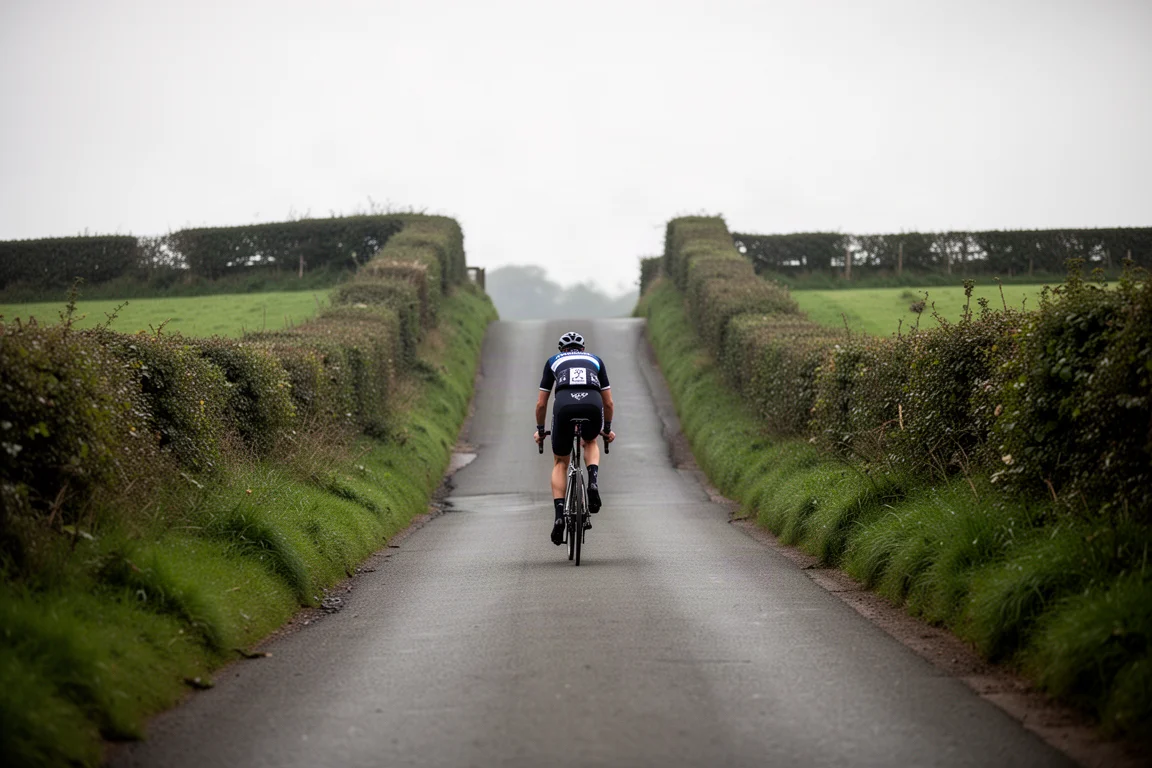
Measured over a short hill lasting just under 200 m, the premium tire was genuinely faster. Average speed rose by 0.375 km/h, which worked out to around 2.5 seconds saved on average across five or so runs.
Those gains look small in isolation, but they compound. On a longer climb, the same advantage accumulates quickly. It is also worth remembering that better tires are not only faster uphill. Because less energy is lost to friction and heat, more of your effort drives the bike forward on flat roads and descents too.
Who Should Spend More on Tires
The budget tire makes sense as a basic replacement or an emergency option when you simply need to get out and ride. It will not set records, and it is not especially pleasant on rough roads, but it is functional and extremely inexpensive.
The premium tire suits riders who want to go fast and have the budget for it. The differences in ride quality, grip, damping, and speed are clear enough that most riders would not be disappointed. For everyone else, the middle of the market is usually the smarter purchase. A mid-range tire delivers much of the benefit without the race-tier price.
Overall Buying Advice
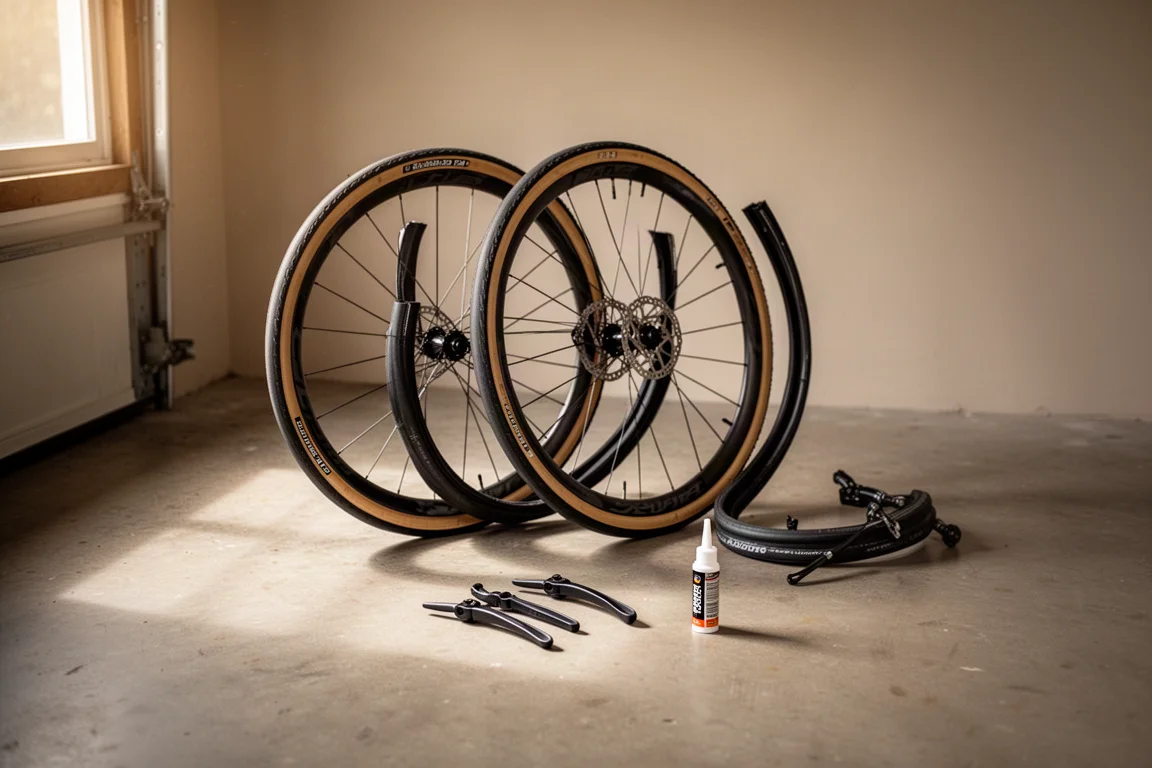
Spending $200 on a pair of tires may sound excessive, but it is far less than the cost of a new frame or a premium set of carbon wheels, and the improvement is noticeable from the first ride.
Two practical rules apply. First, choose at least a 28 mm tire, and go wider if your frame allows, because the narrowest sizes are the main source of discomfort on real roads. Second, avoid the very cheapest option unless your riding is limited to short, simple trips, since the ride quality and grip penalties are most obvious exactly where you need them least.
Conclusion
The price gap between a $10 tire and a $100 tire is real, and so is the performance gap. Thinner, more supple casings, wider profiles, and lower rolling resistance all show up on the road as quicker times, better grip, and a smoother ride. Most riders will find the best value somewhere in the middle, but if speed is the goal, tires remain one of the most effective places to spend.
Further reading
Related Reviews
Road Bike Tires
Best Budget Road Bike Tires 2026: Nine 25c Tires Tested for Rolling Resistance
Nine budget road tires, all 25c and mostly around £20, went through the same rolling resistance protocol. Here is what the numbers say and which tire suits which rider.
Road Bike Tires
Best Road Bike Tires 2026: Six Options Tested From Budget to Premium
Six road tires across a wide price spread, from around £20 to £92, compared in real-world timed runs on wet roads to see what extra money actually buys.
Road Bike Tires
Best Road Bike Tires Compared: Continental GP 5000 S TR vs Vittoria Corsa Pro vs Pirelli P Zero Race RS
A back-to-back comparison of three 30 mm tubeless road tires, covering timed speed results, cornering feel, ride quality, and which one suits which rider.