Hi-Fi Accessories
Cheap Hi-Fi Accessories That Modernize an Old Stereo System
Four affordable add-ons that bring HDMI, Bluetooth, streaming, room correction, and subwoofer output to a vintage two-channel system.
Introduction
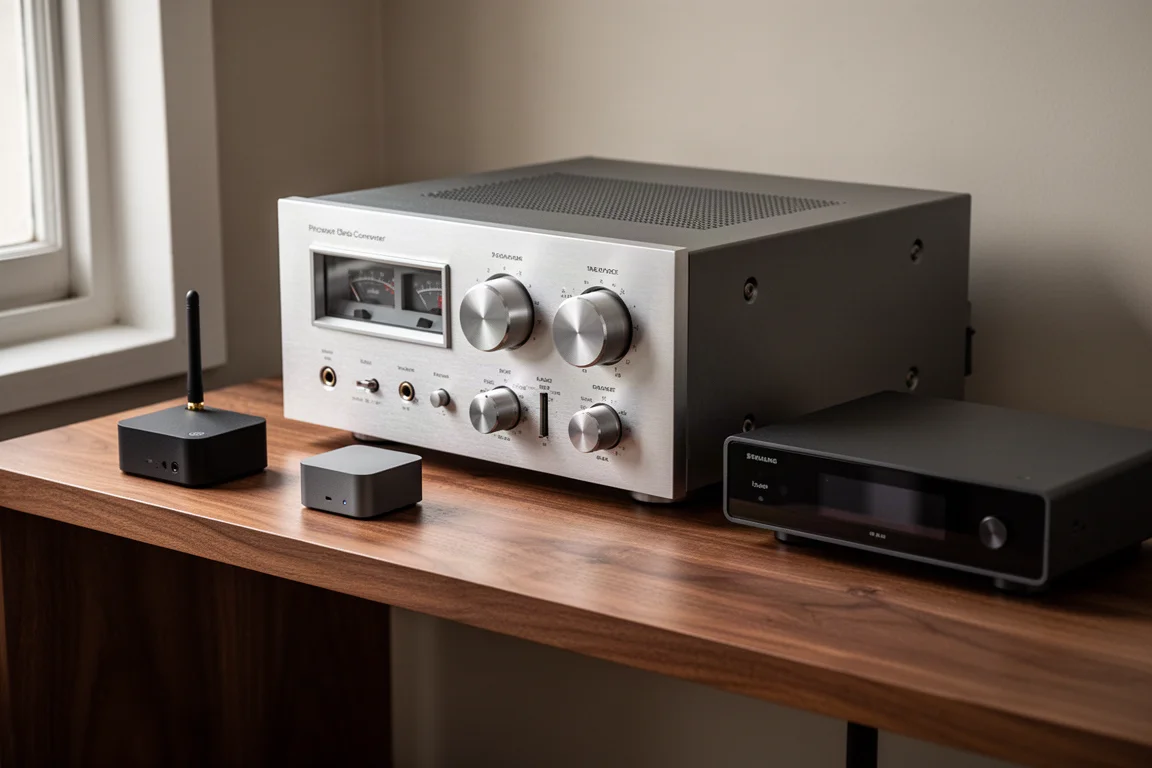
A well-kept vintage receiver or integrated amplifier can still sound lovely. What it usually cannot do is accept the inputs a modern household runs on: a television over HDMI, a phone over Bluetooth, or a streaming service that lives entirely inside an app. Replacing the amplifier is one answer. Adding a small, inexpensive box in front of it is often the better one.
This guide covers four accessories that bring older two-channel systems up to date. They range from a thirty dollar HDMI converter to a streaming preamp that handles room correction and subwoofer integration. Each one solves a different problem, and the right choice depends on which inputs your system is missing.
What to Look For in a Modernizing Accessory
Before buying anything, list the inputs your amplifier does not have. If the goal is television sound, HDMI ARC is the feature that matters most, because it carries the TV audio and lets the TV remote handle volume. If the goal is music from a phone, Bluetooth is the easy starting point, though it is rarely the best sounding option inside a given product.
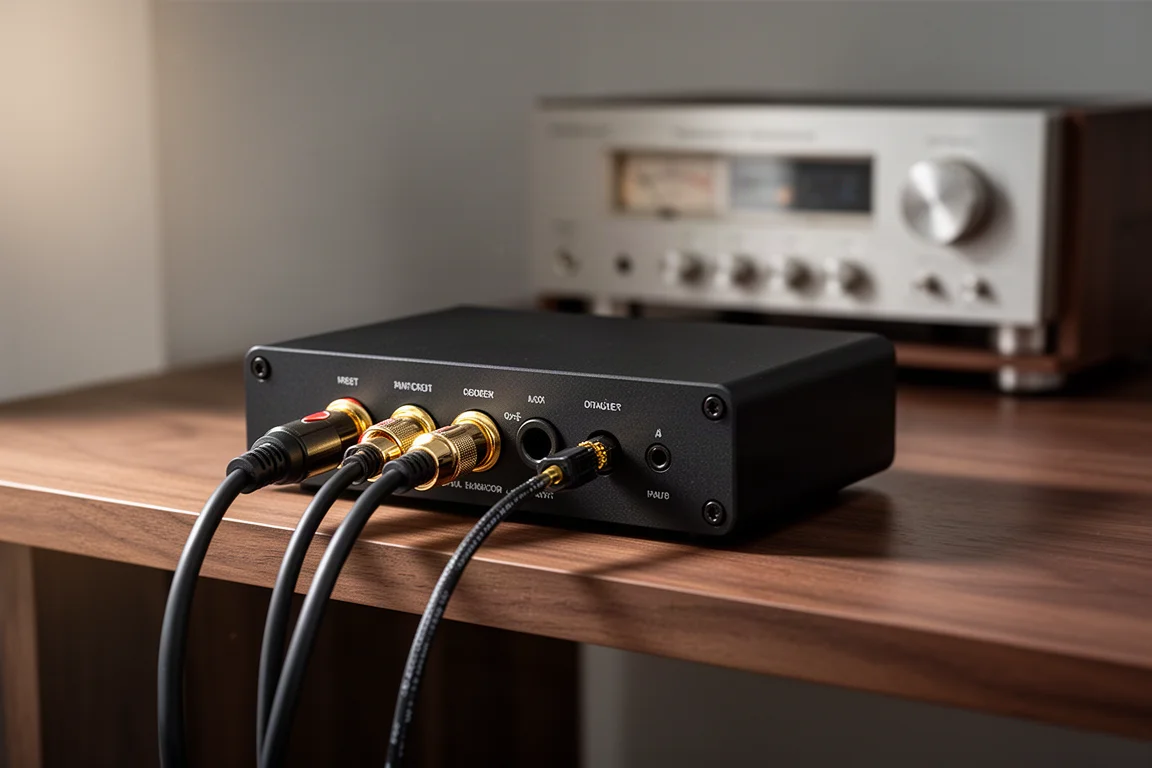
Volume control is the second thing to check. A device with its own volume control can be used as a digital preamp, which means it can drive a power amplifier directly or sit in front of an integrated amplifier whose volume knob you would rather leave alone. A device without volume control has to feed a line input and rely on the amplifier for level.
Two more details are worth checking. The first is whether the device offers a subwoofer output, since most vintage receivers have none and not every subwoofer accepts speaker-level signals. The second is whether the digital inputs match the gear you already own, such as a CD or DVD player with a coaxial or optical output.
Fosi Audio ZD3: The All-Rounder DAC and Digital Preamp
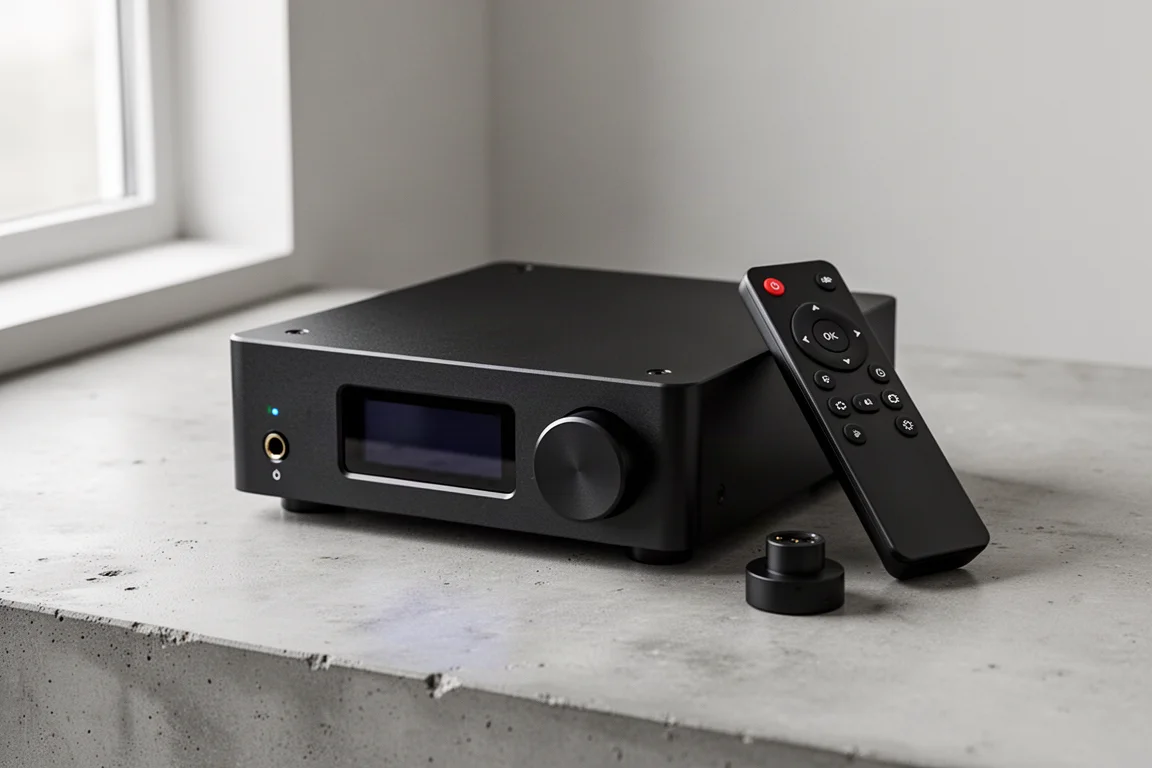
The ZD3 is a digital-to-analog converter that also works as a digital preamp, and it is the most flexible of the affordable options here. It accepts HDMI ARC from a television, coaxial, optical, and USB digital inputs, and Bluetooth from a phone or tablet. Outputs are RCA, with balanced connections available for the rare system that accepts them.
Because it has a remote control and its own volume control on digital inputs, it can serve as the volume stage for a power amplifier, or as an input hub in front of a vintage integrated amplifier. Anyone with an older CD player that has a coaxial or optical output can route that player through the ZD3 and use the converter inside it instead of the one built into a decades-old machine. A DVD player with a digital output can do the same job for very little money.
Power comes from an external 12V supply. That detail is worth noting because it leaves the door open to a linear power supply later if you want to experiment.
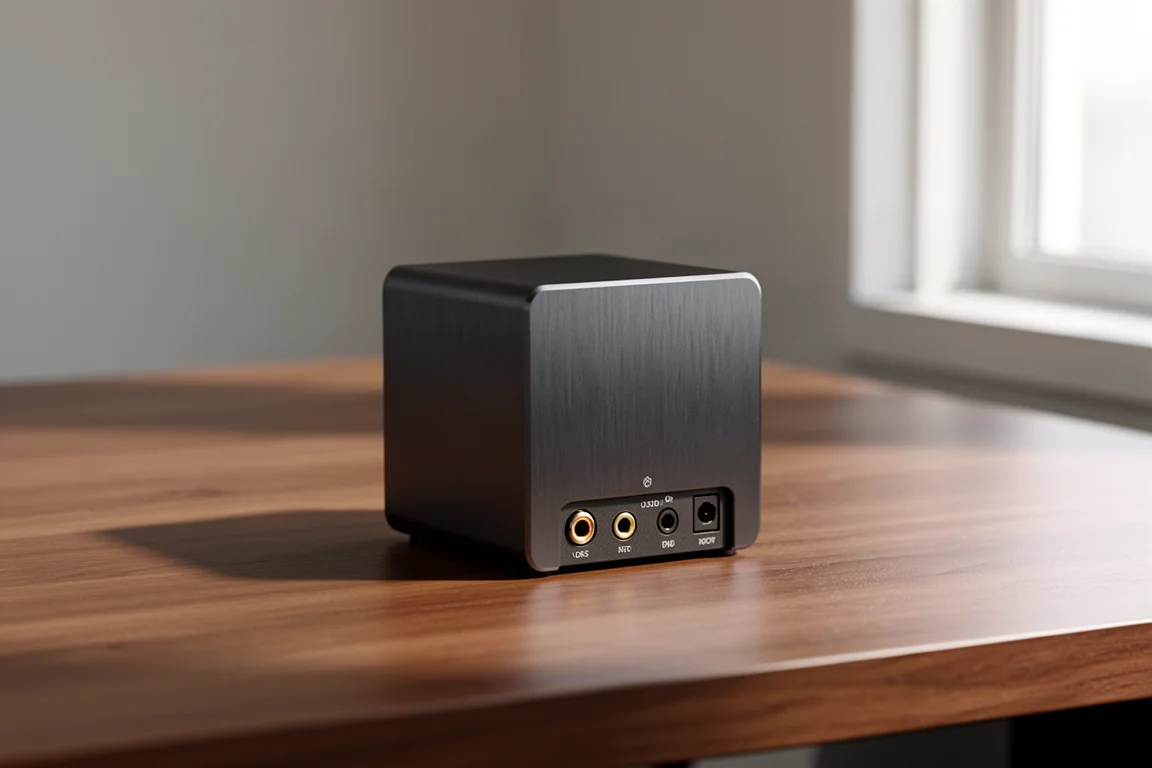
SMSL PS100: The Cheapest Way to Get TV Audio Into an Old Receiver
For around thirty dollars, the PS100 does one job: it takes HDMI, optical, or coaxial digital audio and converts it to analog for a line input on an old receiver. It is a very small unit, powered from a 5V supply such as a phone charger.
There is no volume control and no Bluetooth, so level stays with the amplifier. Sound quality sits below what the ZD3 delivers, which is expected at this price. What it does provide is television audio, and any streaming apps built into a smart TV, running through a vintage receiver. That is a substantial change in how the system gets used for the money involved.
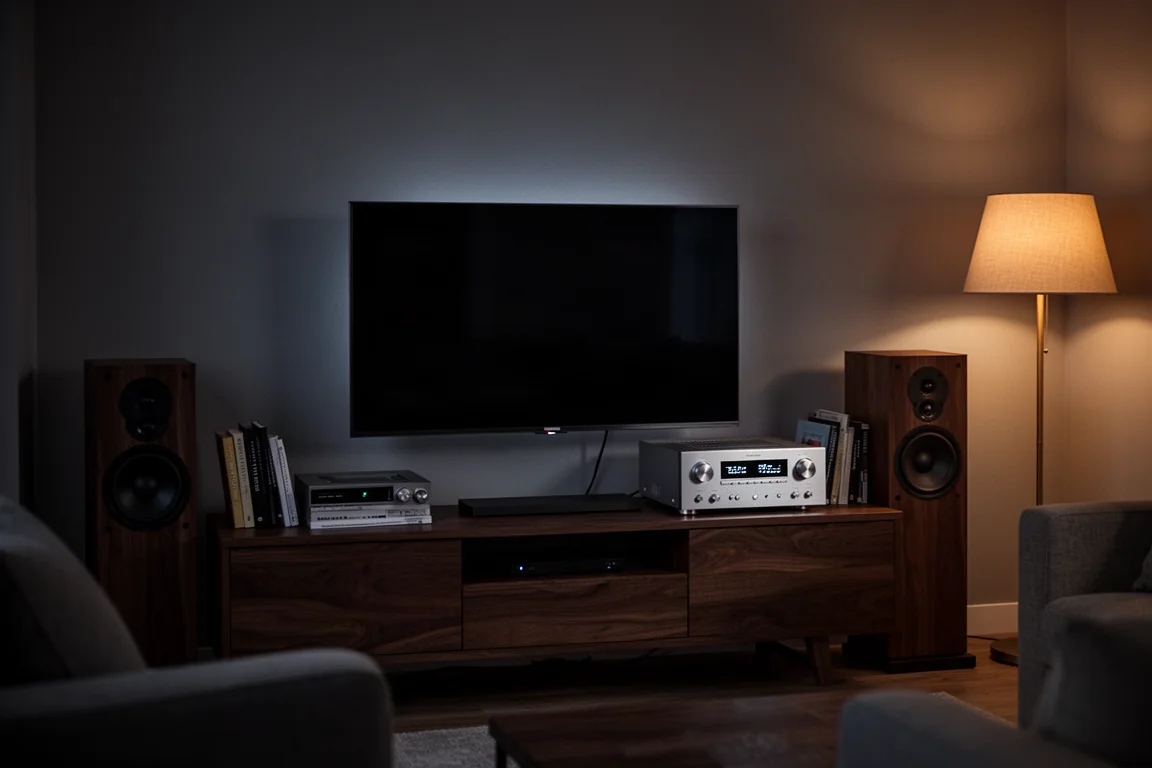
If a smart TV already hosts the music apps you use, the PS100 turns the television into the source and the old amplifier into the sound. For a second system, a bedroom setup, or anyone testing whether a vintage receiver fits their daily life, that is a sensible place to start.
WiiM Ultra: The Complete Streaming Preamp Upgrade
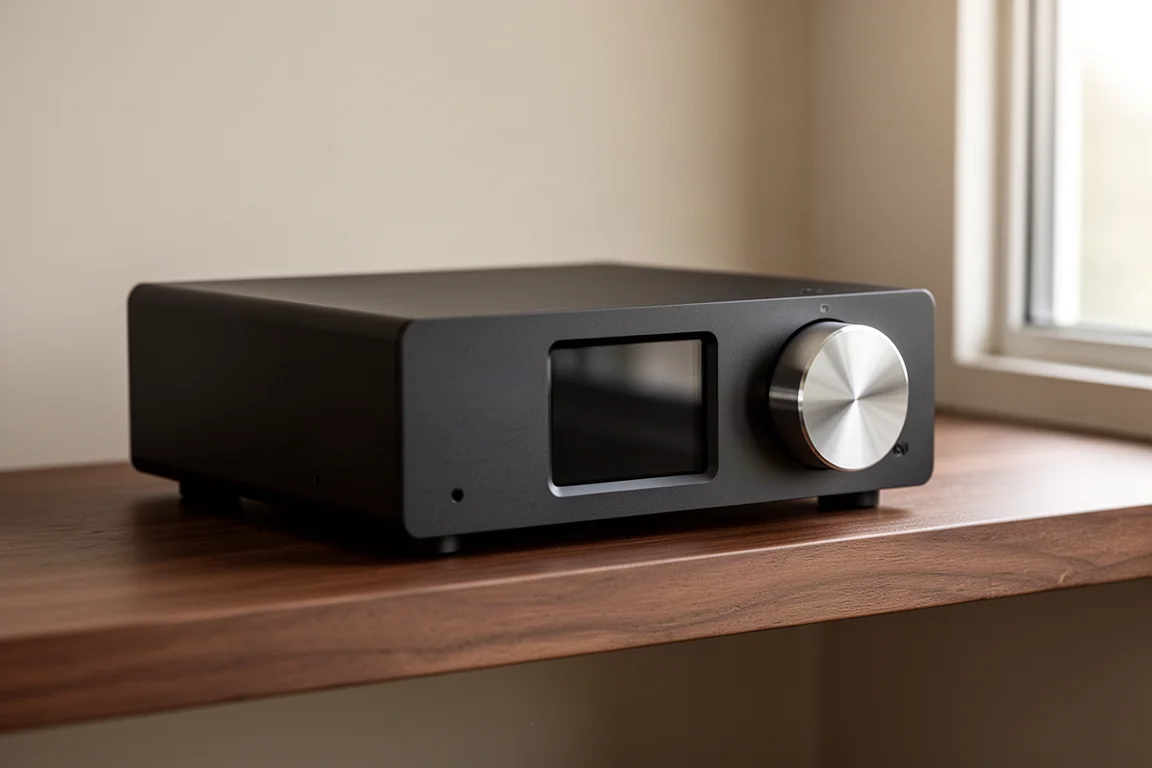
The WiiM Ultra is the step up from a simple converter. It is a true preamp with a streamer built in, so streaming services can be selected and played directly rather than pushed through a television or a phone. Spotify Connect and Tidal Connect are supported, which makes playback as simple as choosing the device inside the app. Apple Music is the notable exception.
The front panel screen shows album art. More useful for older systems is the processing: a 10-band EQ, a parametric EQ, and bass management that applies a high-pass filter to the speakers and a low-pass filter to the subwoofer output. That subwoofer output matters, because most vintage receivers have no way to connect a subwoofer other than speaker-level inputs, and not every subwoofer offers them. Room correction is included as well and runs using the microphone on a phone.
Inputs cover analog, a phono stage, optical, and coaxial, with Bluetooth on top. Digital outputs are available for anyone who would rather hand conversion to a separate DAC. Volume can be controlled in the digital domain, so the Ultra can connect straight to a power amplifier.
At $330 it is the most expensive item in this guide, and discount coupons have appeared on Amazon from time to time. Judged against other products that combine streaming, room correction, and bass management, it remains a reasonable ask.
MiniDSP: Flexible Processing for Hands-On Listeners
A MiniDSP is a processor rather than a source. A signal goes in, gets processed, and comes out, which allows equalization, bass management, and other adjustments. Pricing sits in the same range as the WiiM Ultra, or lower depending on the model.
The trade-off is complexity. Setup is not straightforward, and that flexibility is only useful if you enjoy measuring, tuning, and troubleshooting. For most people the WiiM Ultra covers the same ground with far less effort and adds a streamer as well.
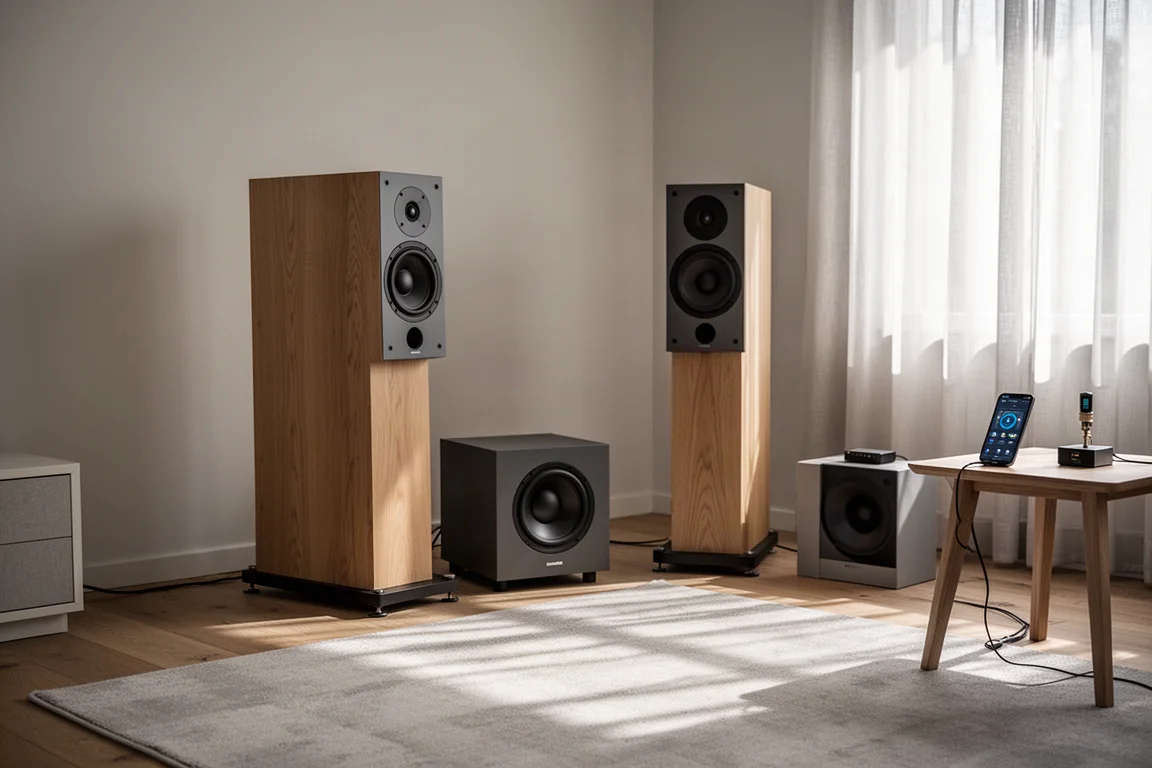
For listeners who want to shape the response of a room or integrate a subwoofer with more control than a standard menu allows, the MiniDSP family is worth investigating. It rewards patience.
Cables and Connectors: Small Fixes That Tidy Up a Vintage Rack
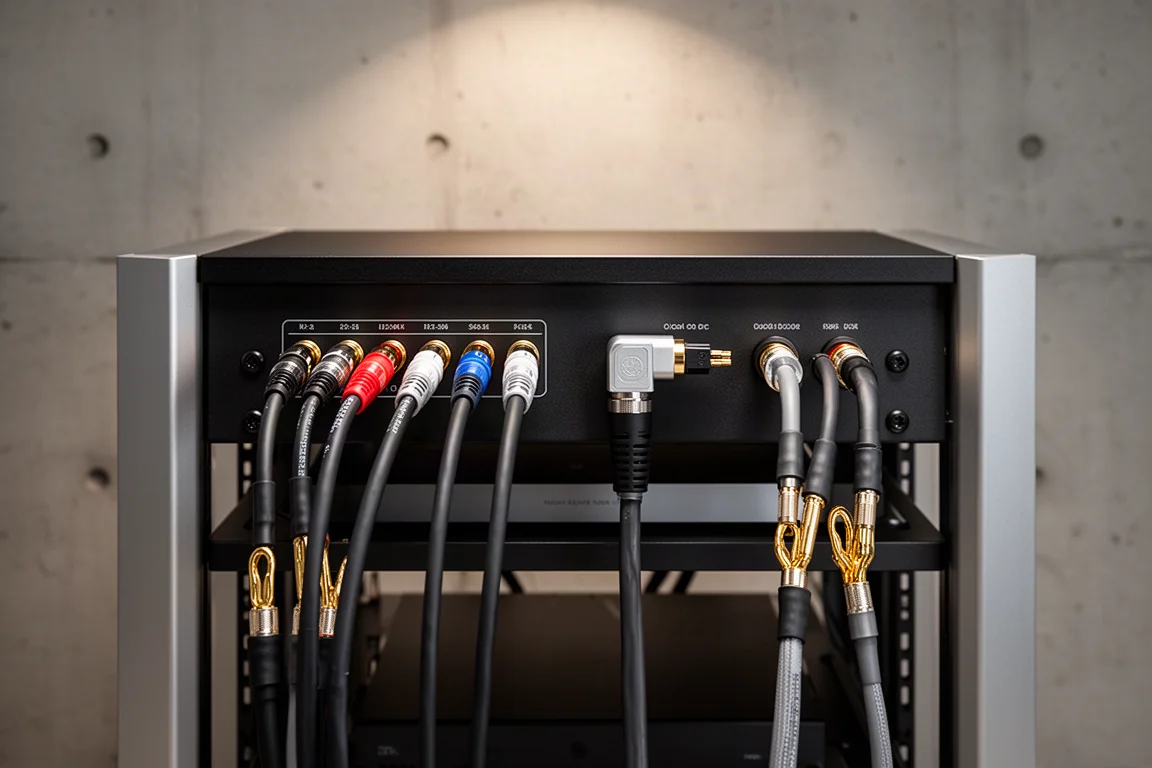
Not every improvement involves a new box. Vintage receivers often use small screw terminals for speakers that will not accept thick gauge cable. Spade-to-banana adapters slide under those screws and give the cable a banana plug connection instead, and similar pin-to-banana adapters exist for push-pin terminals. They cost very little and make swapping speakers or amplifiers far easier.
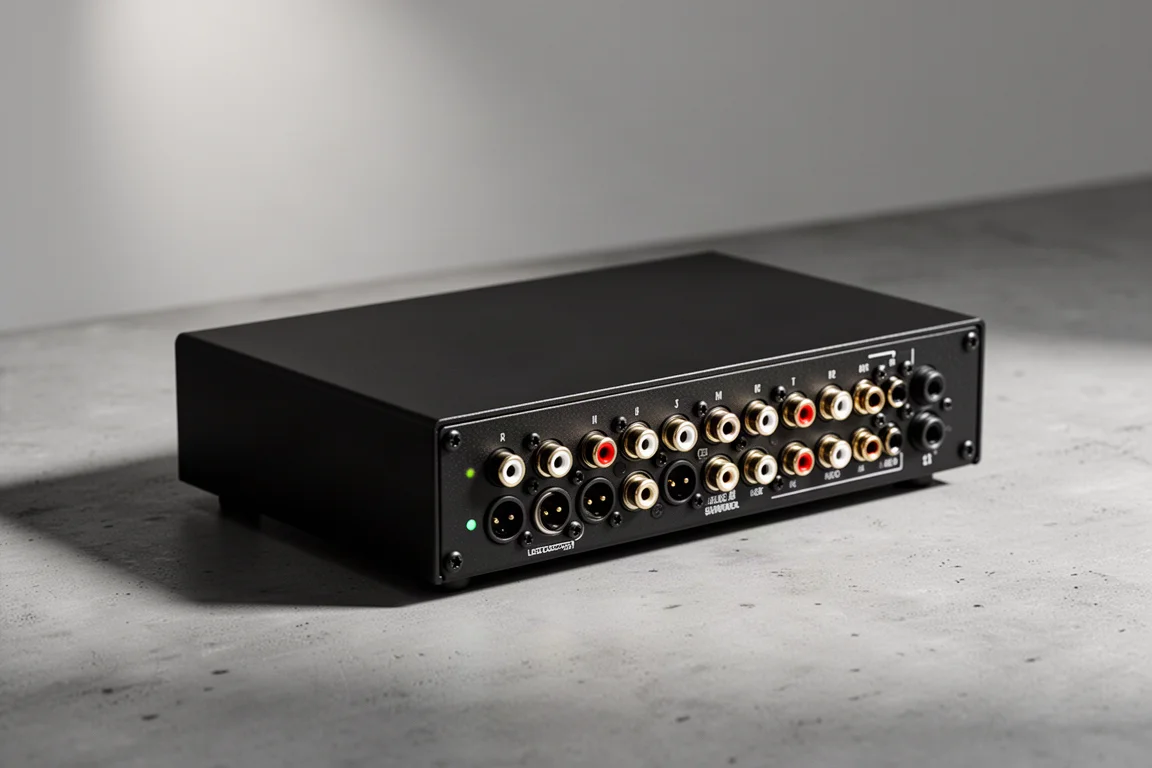
Behind the rack, shorter cables help more than expensive ones. RCA interconnects in a range of lengths let you avoid coiled loops of excess cable, and right-angle optical adapters let a cable turn 90 degrees at the socket instead of protruding into the space behind the rack. If your equipment uses IEC power connections, buying power cables in the correct length removes another tangle. Balanced-to-RCA cables are also available for connecting a modern device with balanced outputs to a vintage amplifier that only offers RCA inputs.
Buying Advice: Which Upgrade Fits Your System
Match the accessory to the missing input rather than to the longest feature list.
If television audio is the whole goal, the SMSL PS100 covers it for very little. If you also want Bluetooth, USB, and a converter that can act as the volume stage for a power amplifier, the Fosi Audio ZD3 is the broader tool at around $150.
For a system that should feel genuinely current, the WiiM Ultra is the one-box answer: streaming, EQ, room correction, a phono stage, and a subwoofer output that a vintage receiver cannot provide. Choose the MiniDSP instead only if hands-on processing is part of the appeal.
Conclusion
Modernizing an old two-channel system does not require replacing it. A converter, a streamer, and a handful of adapters are enough to bring HDMI, Bluetooth, streaming, and subwoofer control to equipment that still sounds good. Start with the input you miss most, and add from there.
Further reading
Related Reviews
Hi-Fi Accessories
Affordable Hi-Fi Accessories Under $100: A Practical Gift Guide
A practical guide to budget Hi-Fi upgrades, from 12-gauge speaker cable and isolation pads to affordable bookshelf speakers, a warm stereo receiver, and a vinyl anti-static device.
Hi-Fi Accessories
Five Affordable Hi-Fi Upgrades to Modernize a Vintage or Budget System
Five inexpensive add-ons that bring HDMI, extra inputs, phono support, and CD playback to a modest hi-fi setup.
Hi-Fi Accessories
Best Hi-Fi Accessories for Summer: Five Upgrades That Improve What You Hear
A free room-measuring app, a genuinely quiet fan, a serious Bluetooth speaker, and two vinyl essentials that make summer listening better.