Road Bikes
Cervélo S5 vs Colnago Y1 RS: Cutting-Edge Aero Race Bikes Compared
Two of the fastest aero race bikes in the professional peloton, compared on frame design, build specification, ride feel, and value.
Introduction
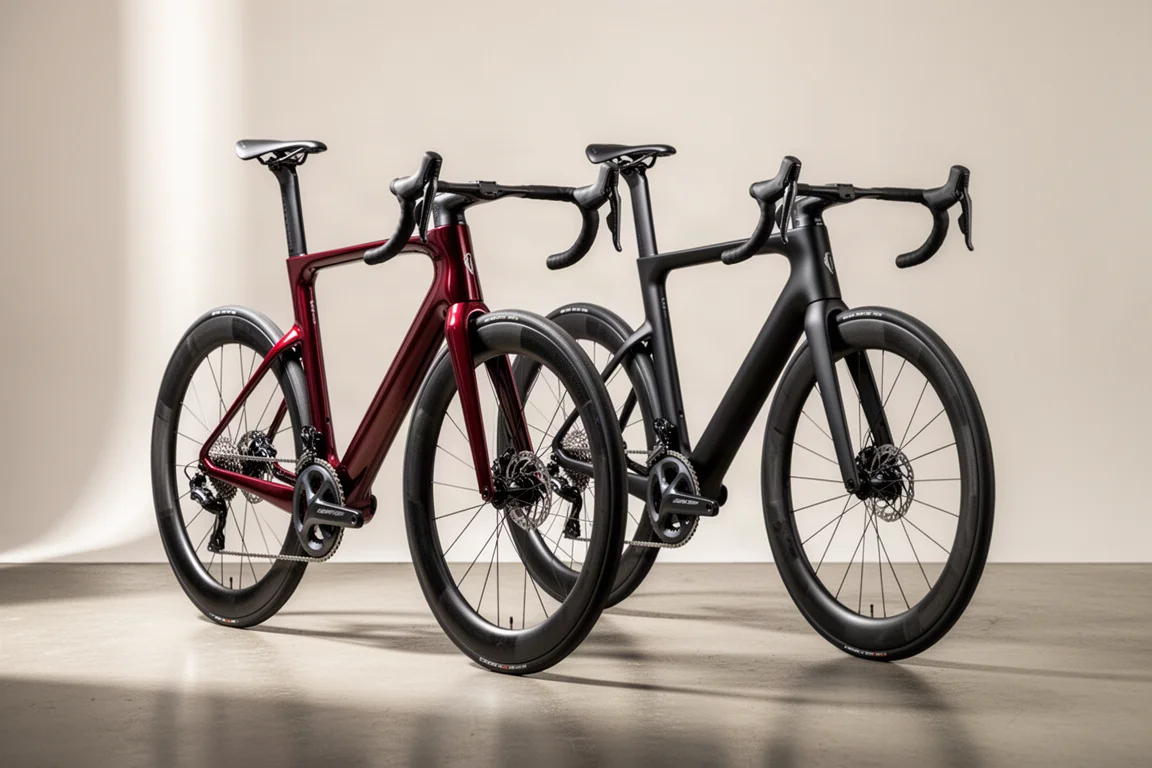
Two aero race bikes finished first and second on general classification at the 2025 Tour de France, and both of them represent the current state of aero road bike design. The Colnago Y1 RS and the Cervélo S5 were compared side by side, and they stood out clearly ahead of a deep field of modern race bikes. Neither is a compromise: they are built to be ridden hard, at speed, by riders who race.
That is the interesting part. Aero bikes have long carried a reputation for being difficult to live with, and these two largely dismantle it. What follows is a close look at how they differ, where each one gives you more, and which type of rider each bike suits.
Shared Design Thinking at the Front End
Look at the front of both frames and the similarities are obvious. Each uses a bayonet-style fork with a free-floating head tube section, which lets the head tube structure run longer without changing the effective steering position. In practice that should preserve the handling you would expect from a well-sorted all-rounder while managing airflow through a key area of the frame.
The cockpits follow the same logic. Both are one-piece designs with a two-prong stem section and a noticeable rise, shaped to sit flush with the frame when the bars are slammed. Both are proprietary, so you cannot fit a standard bar and stem, but both brands allow a free size swap at the point of purchase, which matters more than it sounds.
There are differences in the details. The Colnago uses a particularly small 19 mm upper bearing and a 1-1/8 in lower bearing with ceramic solid lubrication technology. The Cervélo is more conventional at 1-1/8 in and 1-3/8 in.
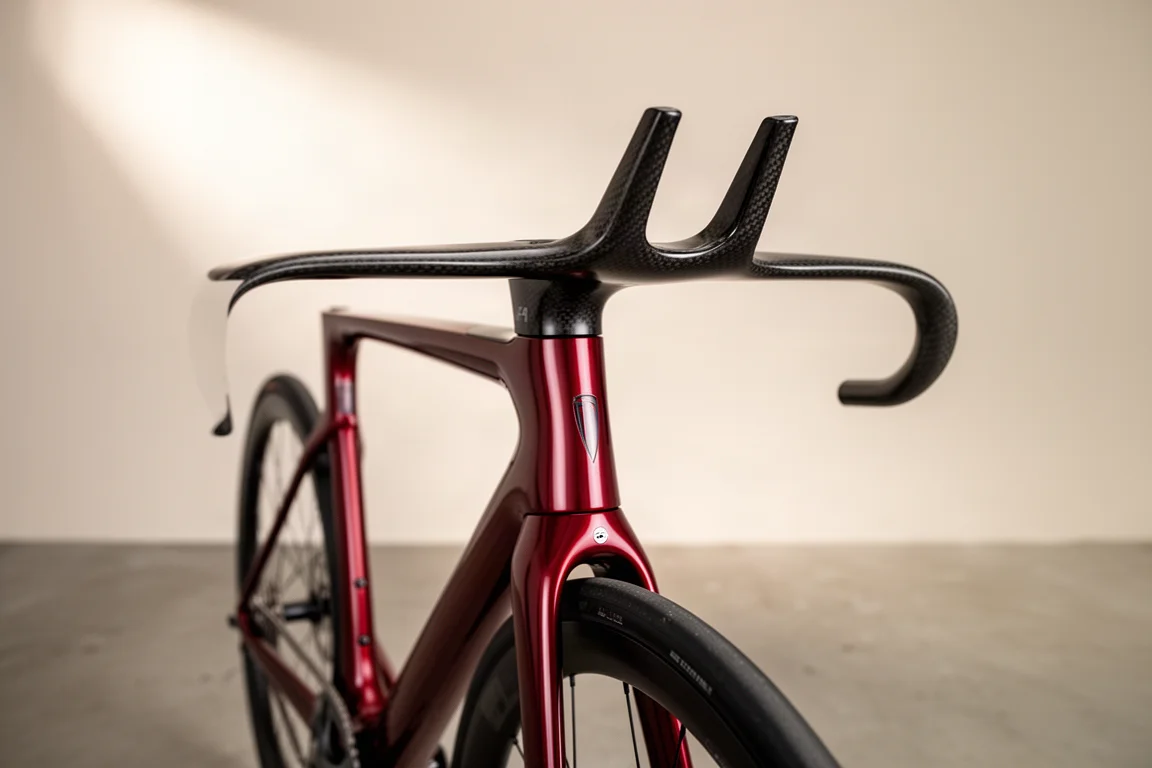
Aero claims deserve context. At launch, Colnago suggested the Y1 RS was the fastest bike in the professional peloton, beating its nearest competitor at the time by one watt at 50 km/h. The current S5, with its new Reserve wheelset developed alongside the frame, is claimed to save 6.3 W at 50 km/h. Test protocols differ, and those tests are usually carried out in different wind tunnels, so a correlation discrepancy is normal. The fair assumption is that both are competitive with the most aerodynamic bikes available.
Colnago Y1 RS: Offset Seat Tube and Race-Proven Speed
The Y1 RS was unveiled in December 2024 and went on to be the bike ridden to a fourth Tour de France title in 2025. Its most distinctive feature is the offset seat tube, which Colnago claims increases the effective top tube length for better air management while adding a measure of comfort through the saddle. It also pitches the rider forward slightly and makes the effective seat tube angle steeper at 73.7 degrees on a size large, which opens up the hip angle.
Specification is top tier only. Colnago offers the Y1 RS with 2x road groupsets including Campagnolo Super Record 13, SRAM Red AXS, and Shimano Dura-Ace Di2. Wheelsets range from mid-level Vision SC45 wheels up to a higher-tier Enve option, and the Shimano battery sits in a port under the down tube bottle cage. There is no power meter, which is a notable omission on a race bike at this level.
Where the Y1 RS gives something back is customization. Through the dealer program you can swap between inline and setback seat posts at no cost, and you can choose chainring size, crank length, and cassette to suit your riding. There are limits, but it is a genuinely useful program.
Cervélo S5: Deeper Profiles and a More Complete Build
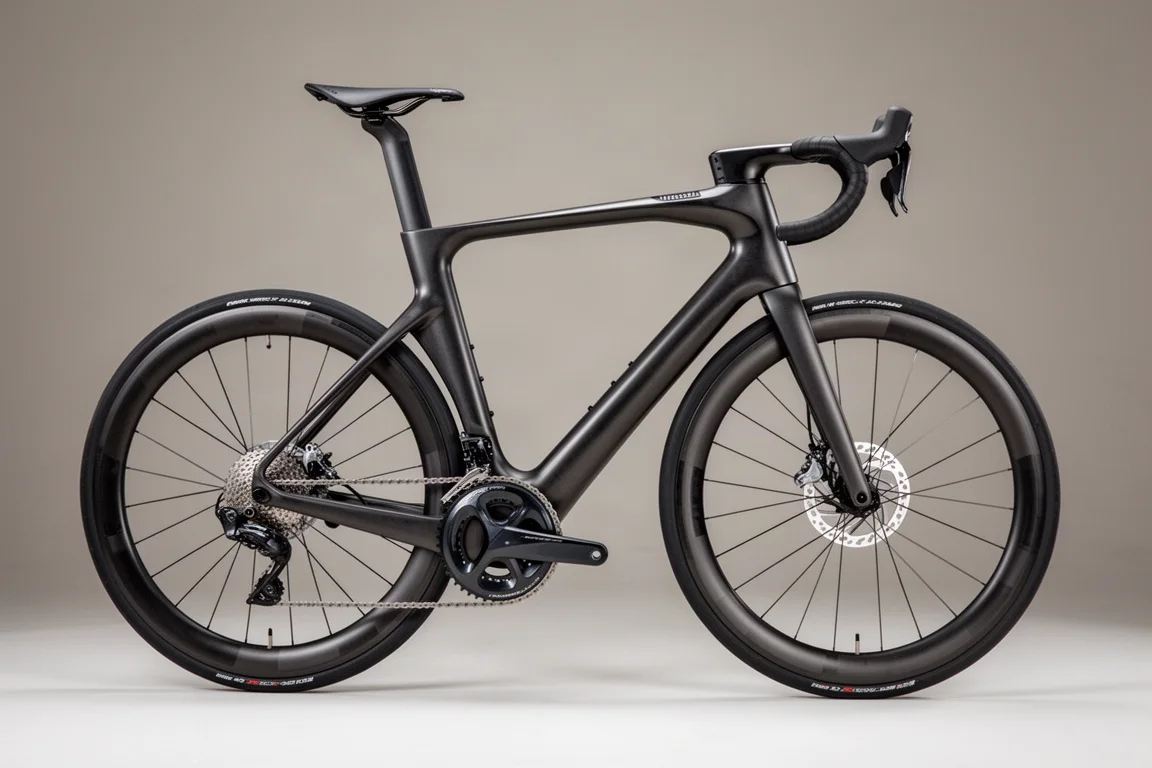
The current S5 builds on the strengths of the previous generation. Head tube and fork leg chords have grown deeper, while the head tube, seat tube, and seat post have been slimmed down. A new Reserve wheelset was developed to work with the frame’s asymmetrical layout, contributing to that claimed 6.3 W saving at 50 km/h. Cervélo also claims a net frameset weight saving of 124 g, although the fork gained 57 g because of the deeper leg profiles. The cockpit drops the bolt-together design of the previous model, and the Shimano battery is stored in a port on the underside of the bottom bracket. The curved seat tube hugs the rear wheel closely.
The build package is where the S5 pulls ahead. Reserve wheels measure 25.4 mm and 24.4 mm internally front to rear and 34.3 mm and 32.5 mm externally, with different front and rear depths to balance aerodynamic efficiency, stability, and weight. They are claimed at 1,554 g and use ceramic bearings. A dual-sided power meter comes as part of the package. Cervélo also sells the S5 in second-tier Ultegra Di2 and Force AXS builds with DT Swiss 240 hubs laced to Reserve wheels, which lowers the entry point to £9,200.
Specification and Value Differences
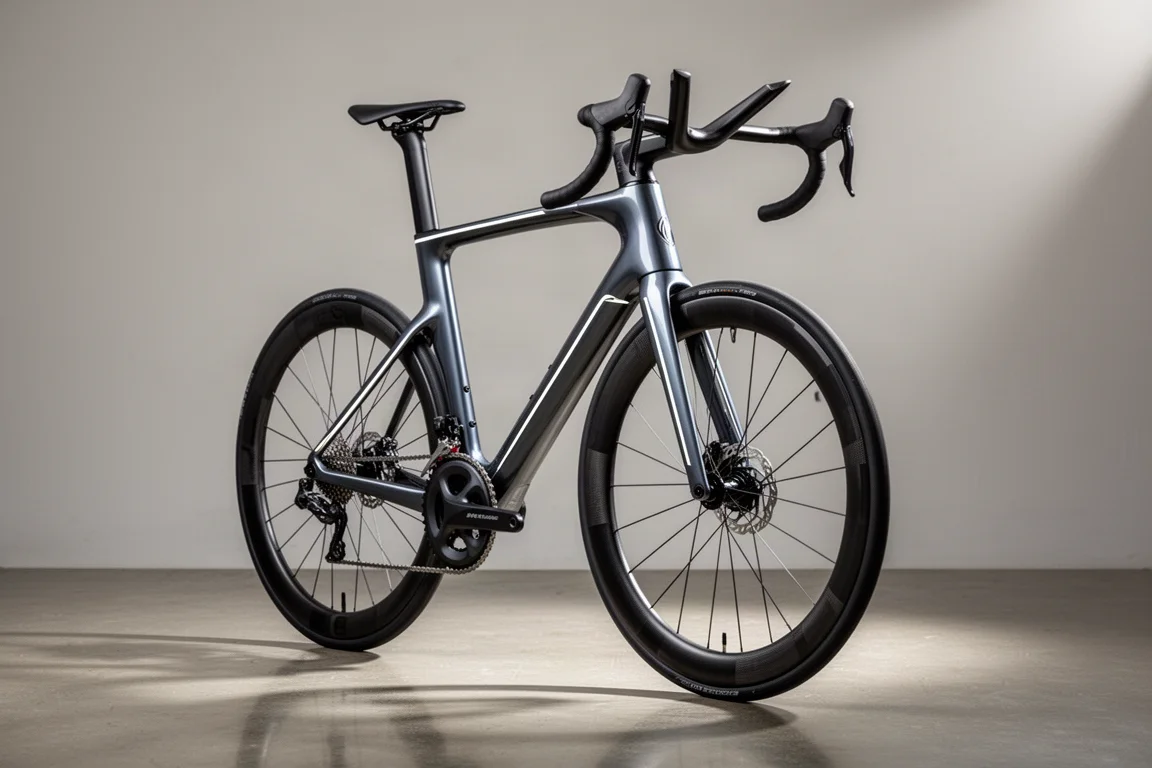
In these builds, the two bikes cost close to the same figure, around £12,000 each, and at that level the Cervélo simply gives you more. The power meter is the clearest example: it is standard equipment on the S5 and absent from the Y1 RS. The Reserve wheelset is wider, deeper, and lighter than the Vision SC45 set fitted to the Colnago, which measures 21 mm internally and 31 mm externally and runs steel bearings rather than ceramic. Claimed weight is 1,590 g for the Vision set against 1,554 g for the Reserve pair.
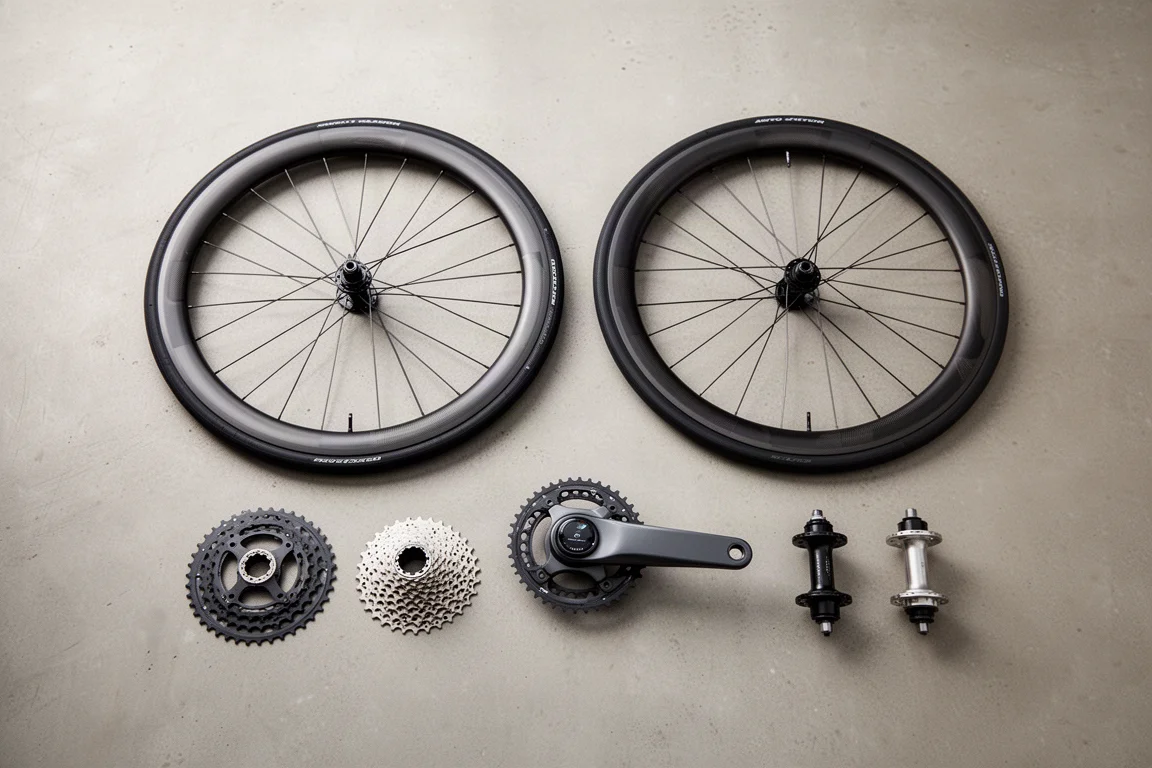
The Colnago counters with choice. You can select gearing, crank length, and seat post style, and the bike is built around those preferences. The S5’s 54/40 chainrings, for instance, suit a racer on a flat day but are likely a little big for most riders on most days. On the scales, the S5 came in at 7.53 kg in a size 58, with the Y1 RS at 7.66 kg in a size large.
How They Ride on the Road
Both feel genuinely fast, but what stands out more is how easy they are to handle. Aero bikes still carry a reputation for being harder work than all-rounders or lightweight bikes, with slab-sided tubes catching crosswinds and aggressive layouts blunting agility. Neither of these bikes suffers from those drawbacks, and both sit among the most stable and easy to ride race bikes out there, close in feel to a good all-rounder or a lightweight climbing bike.
The S5 feels slightly more sure-footed in windy conditions, which is likely down to its progressive rim depths rather than anything in the frame. The Y1 RS feels a touch more agile, with steering that takes slightly less effort to respond. On technical descents both are predictable and confidence inspiring, with a business-like front end that never becomes twitchy.
Tire Clearance and Comfort Details
When you ride these bikes hard, they make the most sense. The S5’s large bottom bracket area delivers a tangible sense of stiffness under power, and while the Y1 RS is stiff enough, it is arguably not quite as unyielding. Neither bike offers much in the way of compliance, but neither feels harsh either, and here the S5 holds a small edge: 29 mm Vittoria Corsa Pro tires on wide Reserve rims give a little more volume than the 28 mm Pirelli P Zero tires on the narrower Vision rims, and the difference is noticeable on chip seal surfaces.
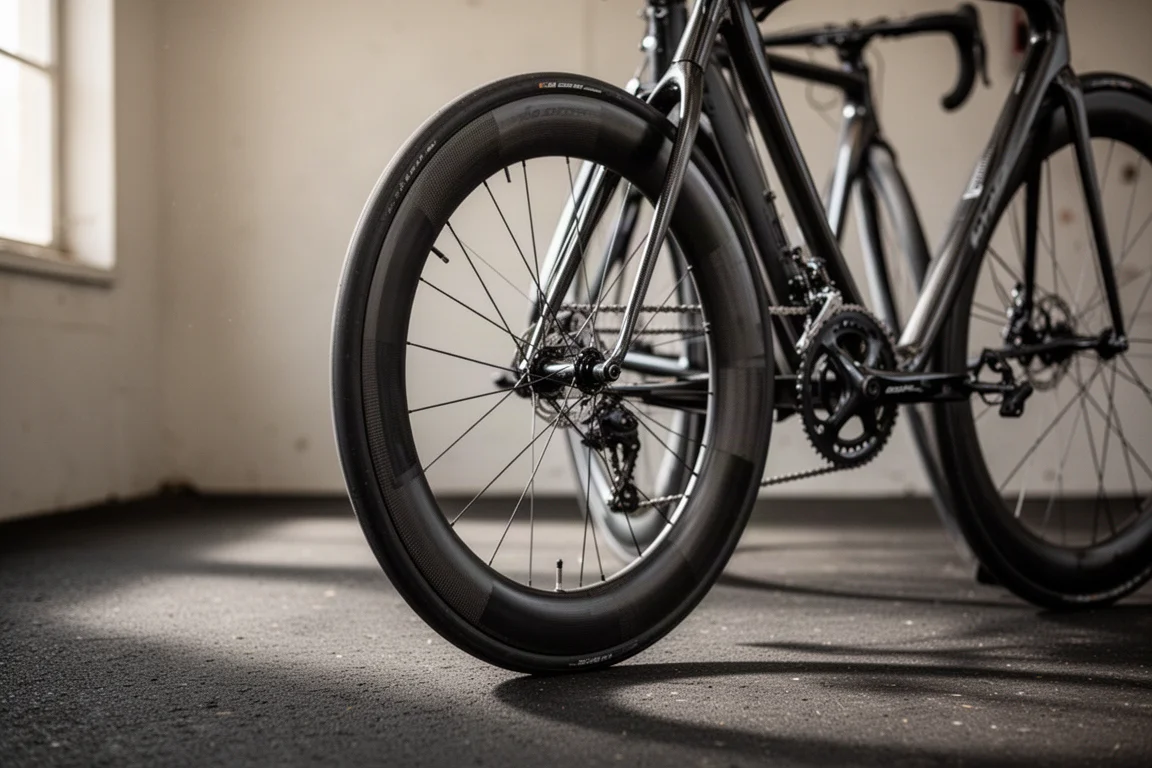
Tire clearance is also higher on the S5 at 34 mm, against 32 mm on the Y1 RS. Even if you never intend to run tires that wide, the extra room is useful. It is worth knowing that both frames limit how far the seat post can sit inside the frame, so posts generally need to be cut to size.
Customization and Ownership
Ownership details separate the two further. Colnago’s dealer program lets you swap between inline and setback seat posts free of charge and adjust chainring size, crank length, and cassette. Cervélo allows a cockpit size swap so the bike fits you properly, but the default seat post cannot be changed to an inline or setback version at no cost.
Buying Advice
If you want the most complete race package for the money, the S5 is the straightforward answer. It arrives with a power meter, a wider and deeper wheelset with ceramic bearings, and tires that take advantage of the rim width, all of which add up to a slightly lighter and more polished ride. The lower-tier builds also bring the entry price down considerably.
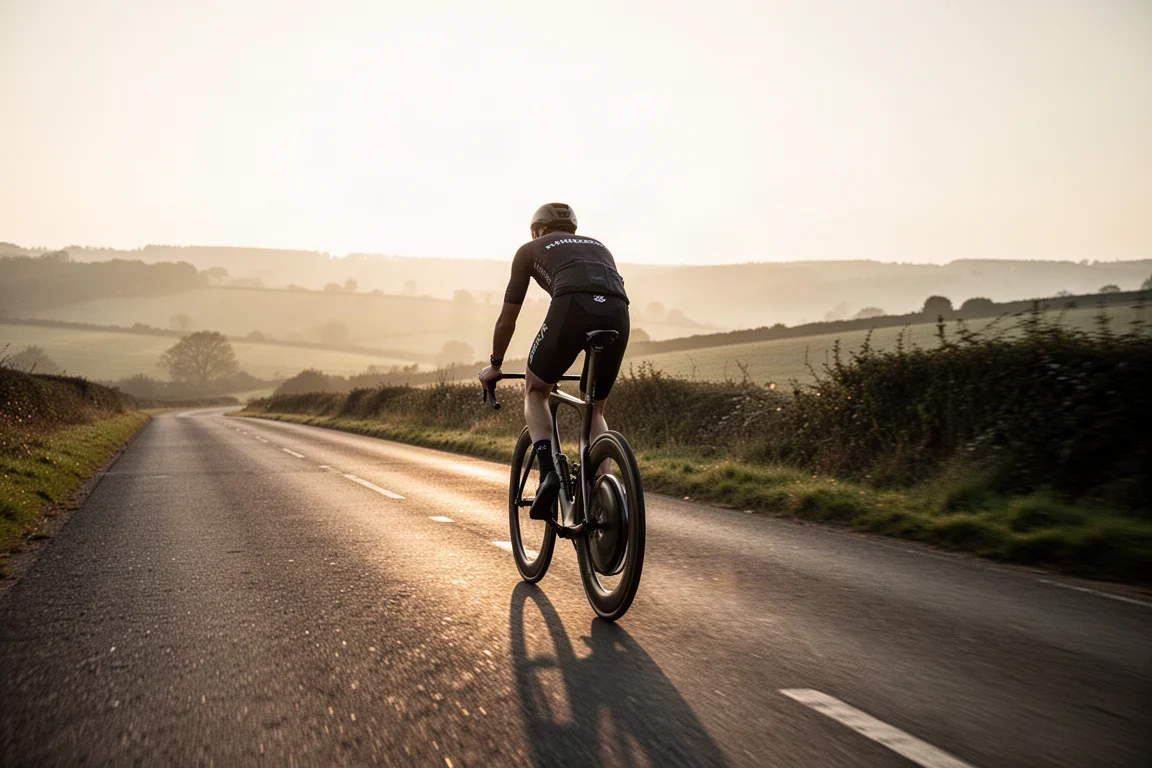
The Y1 RS is the better choice for riders who value the ability to specify the bike around their own position and gearing, and who want a marginally more agile front end. Budget for a wheel upgrade if you want to match the Cervélo’s rolling stock, and factor in the cost of adding a power meter separately. Both are race bikes at the very front of current design, so the decision comes down to how you want the bike configured rather than outright performance.
Conclusion
Both of these bikes sit at the cutting edge of aero race bike design, and the sense of speed is tangible on either. They also ride enjoyably on hilly roads as much as on the flat, which says a lot about how far aero bikes have come. The difference is in the detail: the Cervélo S5 is the better value, more rounded package, while the Colnago Y1 RS offers more freedom to build the bike around the rider.
Further reading
Related Reviews
Road Bikes
10 New Road Bikes Worth Watching: Aero, Titanium, Steel and Endurance Standouts
A practical roundup of 10 new road bikes, from aero flagships chasing single-watt gains to titanium, steel and endurance platforms built for real roads.
Road Bikes
2026 Tour de France Road Bikes: Six Race Machines Worth a Closer Look
Six race bikes from the 2026 Tour de France grid, reviewed for paint, silhouette, wheels and the specification details that matter to buyers.
Road Bikes
3T Strada Italia Review: A Radical Aero Road Bike That Rides Smooth
A made in Italy carbon aero road bike with a deep head tube, wide tire clearance and a genuinely comfortable ride. Here is what to know before buying.