Road Bikes
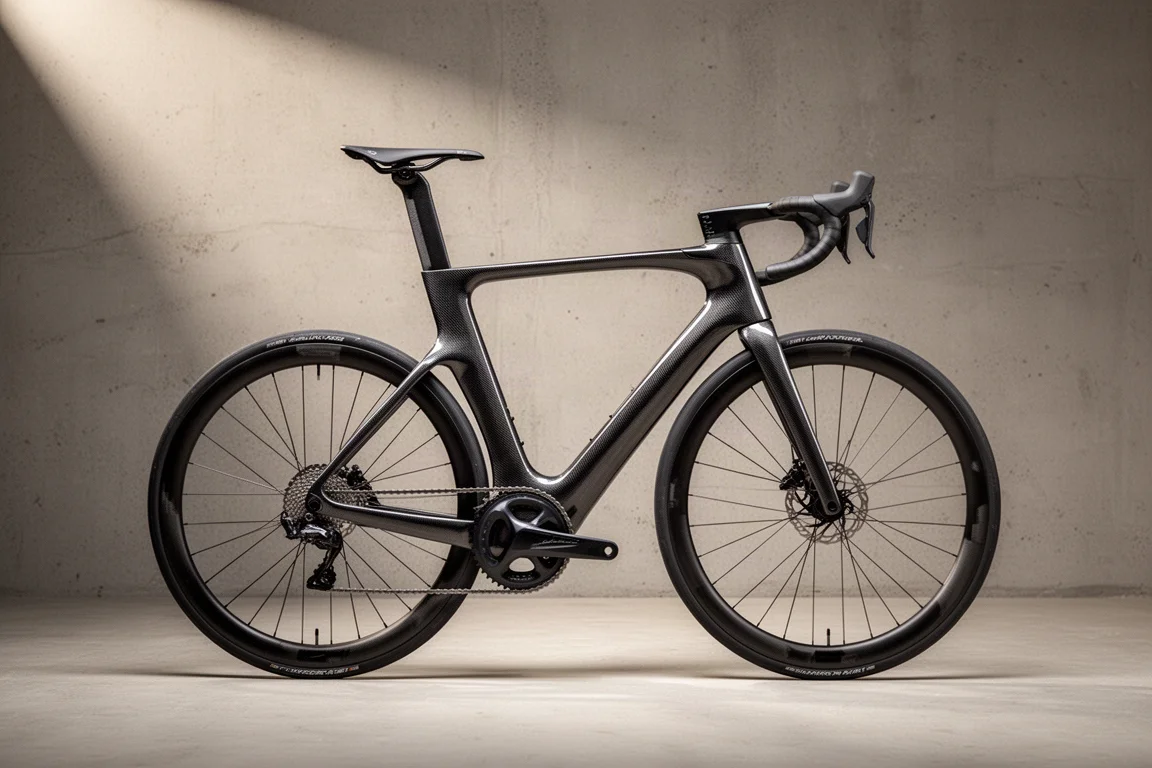
Cervélo S5 Review: A Race Bike With a 1x13 Option Worth Thinking About
The newest Cervélo S5 is more aero, more comfortable and lighter, but its optional 1x13 drivetrain is the real talking point for road riders.
Introduction
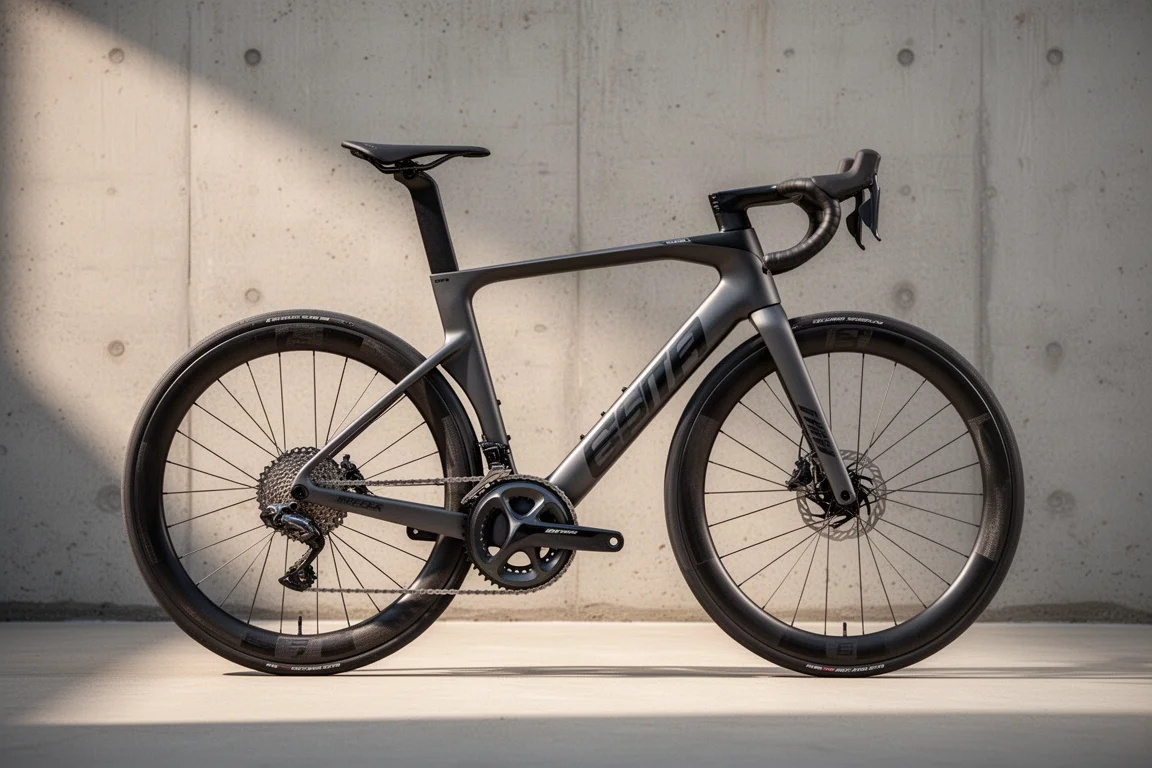
The Cervélo S5 has always been a single-minded race bike, and the newest version has been refined in three ways that matter. It is more aerodynamic than the previous generation, it is more comfortable, and it is lighter. Those are the headline claims, and they hold up over extended time on the road.

The frame is only part of the story, though. The new S5 can be ordered with a Shimano Dura-Ace groupset, a Shimano Ultegra groupset, a SRAM Red groupset, a SRAM Force groupset, or a 1x13 gravel groupset running a 10-46 cassette. On a bike this focused on speed, that last option is a genuine surprise. It raises an obvious question: does a single-ring 13-speed setup belong on a road race bike at all?
Who the Cervélo S5 Is For
This is a bike for riders who want to go fast and are willing to accept the priorities that come with that. It suits criterium racers, fast group riders and anyone who spends their time on rolling terrain where a responsive, aerodynamic platform pays off.
The 1x13 option widens the audience slightly. A single-ring setup appeals to riders who like the simplicity of not switching between front chainrings mid-climb, and to riders who prefer the cleaner look of a bike without a front derailleur. It is also an easy recommendation for newer riders who tend to cross-chain, and for anyone who dislikes carrying around gear combinations that overlap and never get used.
Riders who care about tight, predictable cadence across the whole cassette are the ones most likely to prefer one of the two-by options instead.
Main Strengths: Aero, Comfort and Lower Weight
The generational improvements are the easiest part of the S5 to appreciate. A more aerodynamic frame is faster in the situations the bike was built for. A more comfortable ride makes long days and rough road surfaces less punishing than they once were. Lower weight helps everywhere, but it is most noticeable when the road tilts upward.
The gearing story is more interesting than it first appears. With a 50-tooth chainring paired to a 10-46 cassette, the single-ring setup delivers 13 distinct gear combinations. Spinning at 100 RPM, the easiest gear produces roughly 14 km/h and the hardest produces about 64.3 km/h.
Compare that with a two-by Dura-Ace build using a 54-tooth big ring, a 40-tooth small ring and an 11-34 cassette. At the same 100 RPM, its hardest gear gives about 63.1 km/h and its easiest gives about 15.1 km/h. In other words, the single-ring setup actually covers a wider range of speeds than the conventional two-by alternative.
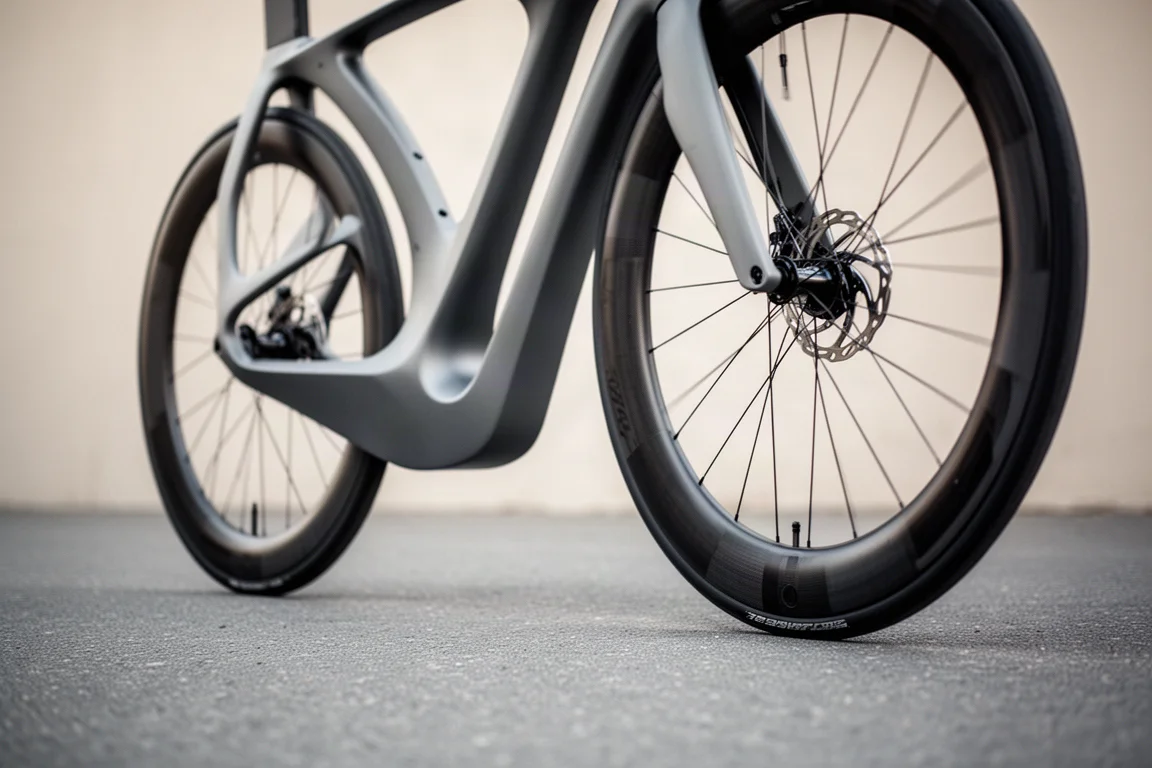
That range figure is genuinely meaningful, and it is the strongest argument in favour of the 1x13 arrangement.
The 1x13 Drivetrain Question
The case for a single ring is not only about range. A two-by system spreads its 24 combinations across two chainrings, and nine of those combinations overlap. Some of them, like the extreme cross-chain positions, are combinations most riders will simply never use, and certain combinations are avoided altogether because the chain line becomes too compromised to run.
So why does two-by remain the default? Three reasons stand out.
First, weight. A single-ring setup is not automatically lighter. Adding a front derailleur and a second chainring is offset by a much smaller and lighter rear derailleur on a two-by system, and the 13-speed cassette here is not especially light for its size. It comes in around 100 g heavier than the equivalent cassette on a comparable two-by drivetrain.
Second, efficiency. Large cogs are more efficient than small ones, and a straight chain line is more efficient than a crossed one. That is why time trial bikes run such large chainrings. Looked at purely from an efficiency standpoint, a single-ring system does not appear to hold an advantage.
Third, and most importantly, gear spacing. The jumps between gears are larger on a single-ring setup than on a two-by one, and that shapes the riding experience more than any other factor.
Real-World Riding and Gear Jumps
Over just over a month of use across slow rides, races, fast group rides and chain gangs, the character of the 1x13 setup becomes clear.
Towards the lower end of the cassette, things feel fairly normal. That should not be a surprise, because many of the ratios sit close together: 10 against 11, 11 against 12, 12 against 13, 13 against 14, 15 against 17, 17 against 19, 19 against 21, 21 against 24 and 24 against 24. The differences are small enough to go unnoticed.
It is the middle of the cassette that changes the feel. Around 30 km/h and below, the gaps between gears start to feel like too much. The result is that you stay in a gear longer than you otherwise would, sometimes churning a bigger gear and sometimes spinning a smaller one. That is not an efficient way to ride, and on rides where you are close to your limit, thinking about cadence is the last thing you want to be doing.
There is also a noticeable dragginess in the easiest gear. Spin the cranks in that gear and the resistance is audible and palpable, while lower gears run quieter and freer. If the difference is detectable by hand, it is likely to be measured in whole watts rather than fractions of one.

A professional team ran this groupset through the 2025 Spring Classics, including Paris-Roubaix, and was openly positive about it, saying it would not return to a two-by setup for those races. Even so, for flatter events the team chose a more conventional 10-33 cassette and modified its derailleurs to suit. Tailoring gearing to terrain makes sense, but swapping cassettes is not a cheap habit, and it is not something a two-by setup demands nearly as often.
Things to Consider Before Buying
Before choosing the single-ring build, weigh a few practical points.
Cassette size matters more than the headline range figure suggests. Below roughly a 10-36 cassette, the changes in cadence stay tolerable for road use. Above that, the gaps become a real sacrifice for performance riding, which is exactly the trade-off this 10-46 cassette makes in exchange for its wide spread.
The intended terrain matters too. If your riding is mostly steady endurance pace on mixed surfaces, the simplicity and range of a single ring can be a genuine benefit. If your riding is fast, punchy and cadence-sensitive, a two-by build will feel more natural.
Finally, consider the cost of experimentation. Cassettes are not inexpensive, so the ability to fine-tune gearing by swapping them is a convenience with a price attached.
Buying Advice
The most useful thing Cervélo has done here is offer the choice in the first place, and to spec the two-by version with chainring sizes that suit the bike’s purpose: going fast.
For most riders shopping for a bike like the S5, one of the two-by options from Shimano or SRAM is the more sensible pick. That keeps cadence steps tight, keeps the drivetrain efficient, and avoids the extra fuss of cassette swaps. The 1x13 arrangement remains worthwhile for endurance and all-road bikes, and for select rides it is a genuinely enjoyable way to ride.
It is also worth noting that Cervélo is not alone in offering this kind of setup. Other brands, including Trek with the Madone, make a similar single-ring specification available, so the decision is increasingly a mainstream one rather than a curiosity.
Conclusion
The new Cervélo S5 delivers exactly what it promises: more speed, more comfort and less weight than the version before it. The single-ring option adds a wider spread of gears than the equivalent two-by build and a cleaner, simpler riding experience.
What it does not add is smoother progression through the middle of the cassette, and that is the detail that matters most on a performance road bike. Riders who value range and simplicity will find a lot to like. Riders who value cadence will likely be happier with the two-by build.
Product link
View more details for Cervélo S5
This product is mentioned in the review. Check the specifications, options, and compatibility before buying.
View more details for Cervélo S5Further reading
Related Reviews

Road Bikes
10 New Road Bikes Worth Watching: Aero, Titanium, Steel and Endurance Standouts
A practical roundup of 10 new road bikes, from aero flagships chasing single-watt gains to titanium, steel and endurance platforms built for real roads.
Road Bikes
2026 Tour de France Road Bikes: Six Race Machines Worth a Closer Look
Six race bikes from the 2026 Tour de France grid, reviewed for paint, silhouette, wheels and the specification details that matter to buyers.
Road Bikes
3T Strada Italia Review: A Radical Aero Road Bike That Rides Smooth
A made in Italy carbon aero road bike with a deep head tube, wide tire clearance and a genuinely comfortable ride. Here is what to know before buying.