Indoor Cycling
Caveworks Rivet Review: A Dedicated Indoor Bike Frame Built for Permanent Trainer Setups
A hands-on look at the Caveworks Rivet production frame, covering build options, app compatibility, ride feel, and whether it beats a smart bike or a used road bike.
Introduction
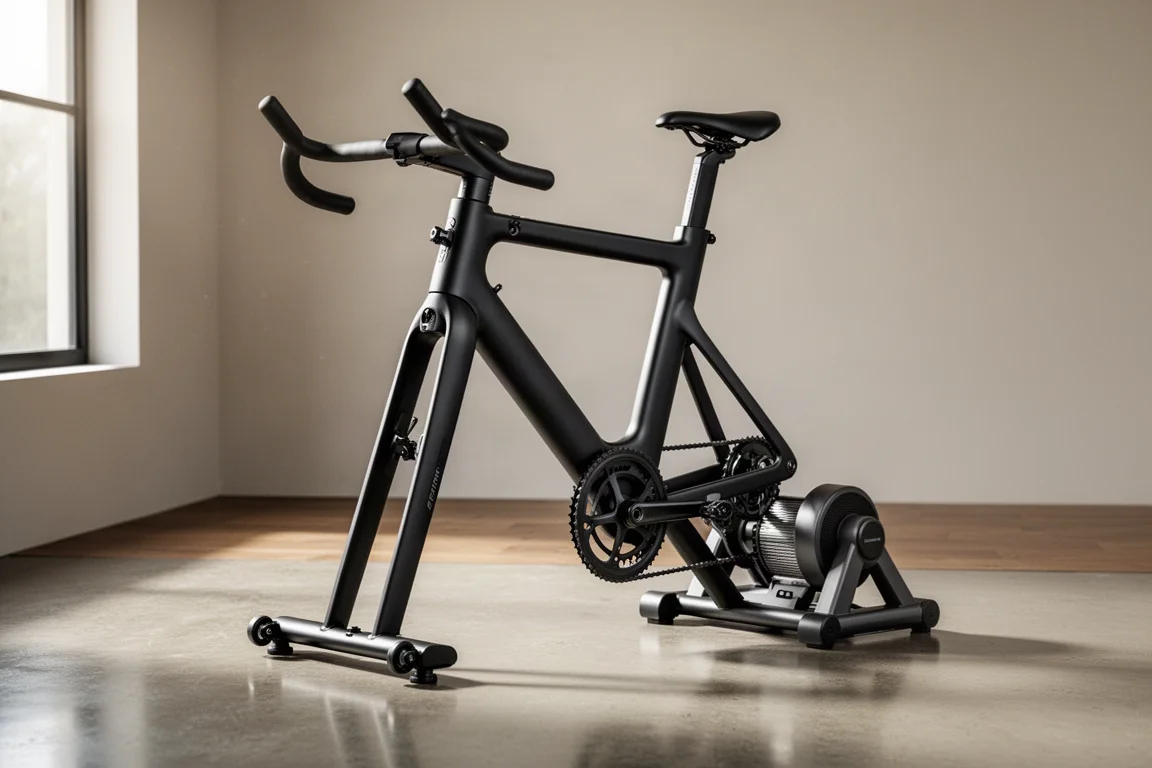
Indoor bike frames are the next natural step in indoor cycling. Many riders want a permanent indoor setup without mounting and remounting a real bike every time they switch between riding inside and outside. The Caveworks Rivet is a purpose-built answer to that problem, and after plenty of long saddle time on the production model, it has held up well.
What Is the Caveworks Rivet?
The Rivet is a dedicated indoor bike frame: a permanent home for your trainer that is designed specifically for indoor riding rather than adapted from a road bike. The category was popularized by the Zwift Ride, which offers a turnkey solution for Zwift riders, and Elite has since released its own square-frame option. The Caveworks Rivet joins that group as a third approach, and all three can make sense depending on your needs.
The production model reviewed here ships in black, a change made after early feedback on the prototype. With consistent rides of two-plus hours through a long Colorado winter, the frame has seen serious sweat exposure, and the experience has been largely positive.
Build Options: Frame Only, Single Speed, or Geared
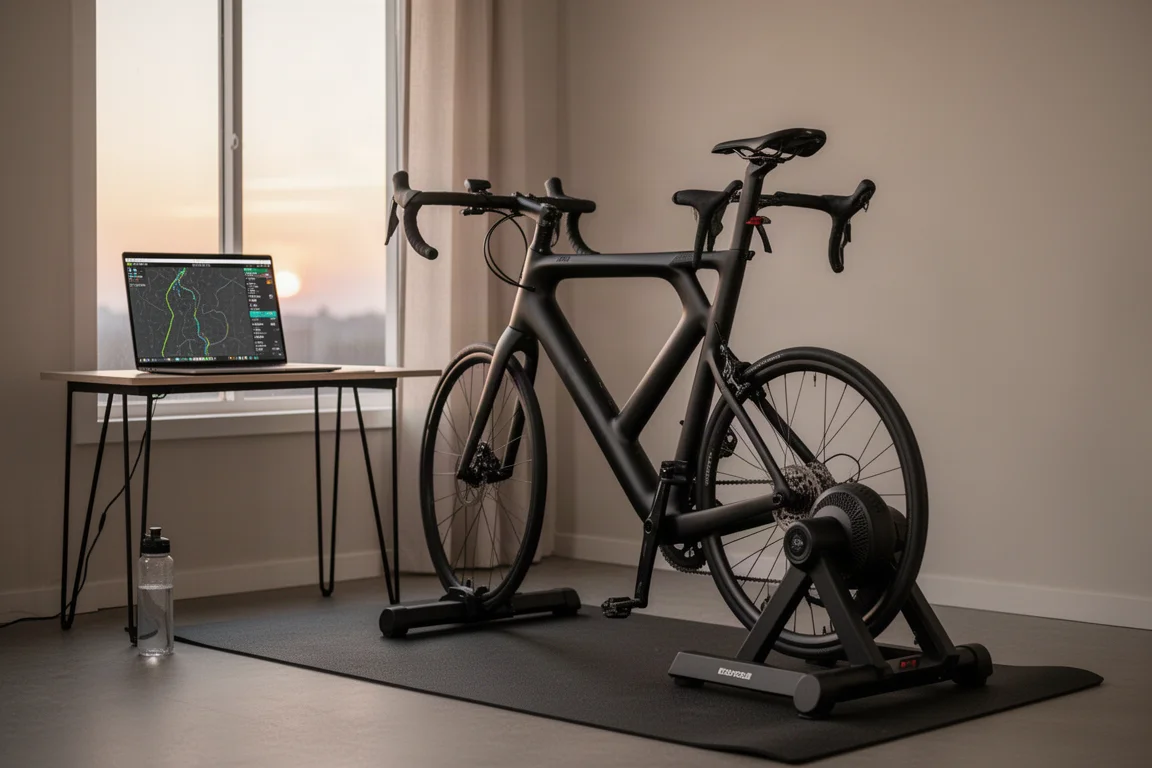
There are three versions of the Rivet. The frame-only option suits riders with spare parts on hand or anyone who wants to spec every component themselves. The single speed option, the one used most for this review, works really well with Zwift virtual shifting and with any ERG mode-based training platform such as TrainerRoad. Finally, a fully geared Shimano GRX version is the most flexible and also the most expensive, working with any platform you wish.
With the single speed and geared versions, you can choose your crank length: 170, 172.5, or 175 mm. That is more choice than the Zwift Ride, which comes in only one length, though the Elite square frame does allow crank adjustment. The geared GRX option has its drawbacks, which are covered below.
Setup and Assembly
Setup is straightforward. The single speed option ships in a reasonably sized box weighing around 40 lb, with a lid that lifts off so you never have to wrestle the frame out of the box. The fully assembled single speed frame weighs right around 27 lb, noticeably lighter than the Zwift Ride at roughly 38 lb.
A hang tag with a QR code links to a setup guide, and all the tools you need are included, including an inexpensive torque wrench. The frame arrives partially assembled: you install the bars, the front stabilizing feet, and your pedals. Mounting the frame on the trainer first, using the included 12x142 mm through axle, stabilizes everything during assembly.
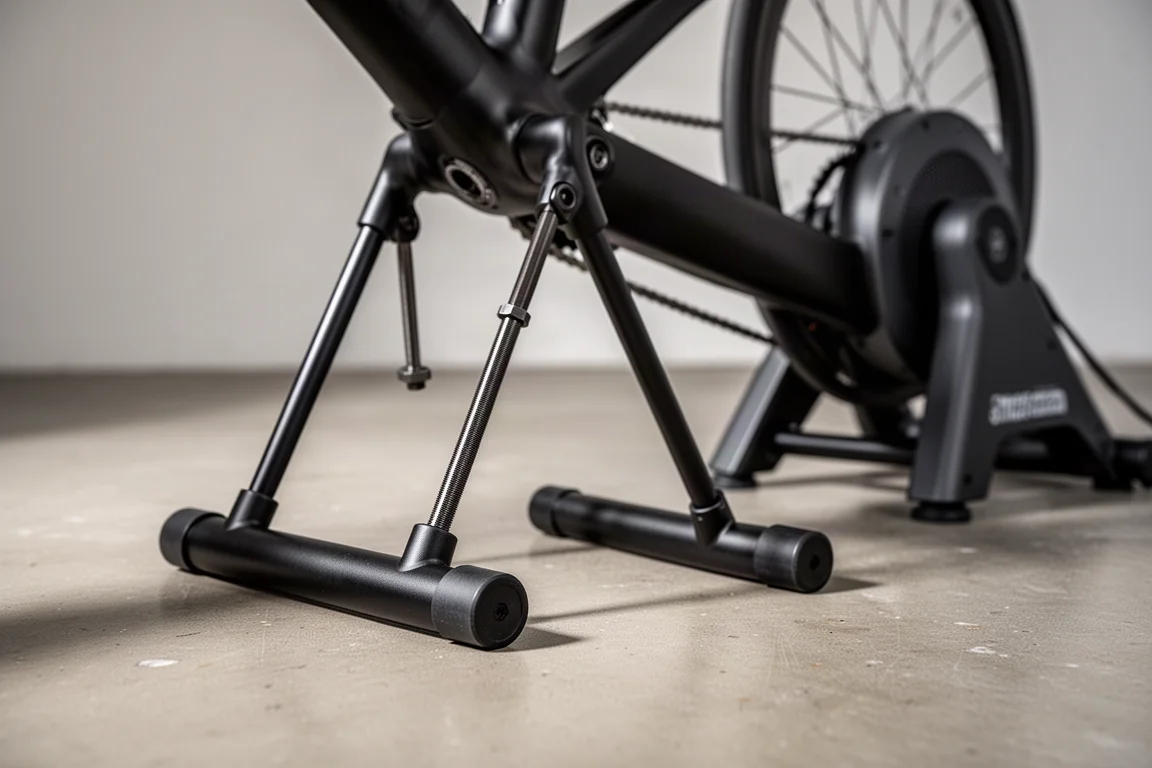
The front feet come with two spacer lengths depending on your trainer: taller spacers for trainers designed to sit behind a front wheel block, shorter ones for trainers that do not need a block. Once the feet are installed and the frame is back on the floor, the axle can be tightened fully. The handlebars install with the included wrenches, then the chain is lined up with the chain tensioner.
One note for Zwift Cog users: the single speed version works best with the V2 Cog, which has chain line adjustment. Setting it to the outermost position gives the ideal chain line and the quietest running. With the original Cog or Cog 1.5, the chain line is less ideal due to the chainring and bottom bracket spacing. It still works, but it is not as quiet. If you already have a cassette on your trainer, you can simply skip the Cog entirely and place the chain on the most appropriate cog.
Fit and Adjustability
The included tools cover fit adjustments, and all bolts use standard Allen heads. The stem has markings for both reach and height, though the seatpost is unmarked. The frame accommodates riders from 4’10” all the way to 6’6”, a broad range that makes it a strong choice for households with more than one rider. There is also a step-through element that makes getting on and off easy.
Almost everything on the Rivet is an off-the-shelf component, with the stem being the one proprietary piece, chosen to make fit adjustment easy. You can swap the seatpost for more setback, change the cranks for a different length, and it even uses a standard 68 mm threaded bottom bracket. The saddle and bars can be switched too, and unlike the Zwift Ride, the brake levers can also be replaced. The stock saddle proved genuinely comfortable for long rides, though saddle fit is always personal.
App Compatibility
Compatibility is one of the biggest reasons to look at the Rivet: it works with any indoor cycling app depending on your setup. The single speed version pairs well with Zwift virtual shifting using a Zwift Click or Zwift Play controllers, and it works with any ERG mode-based platform like TrainerRoad without needing those controllers at all, since the trainer handles resistance. No Zwift Cog is required either if a cassette is already mounted.
If you want an app without virtual shifting support and need physical gears, the geared option exists, but it is a curious spec. GRX feels like too high-end a group for an indoor bike, and the large 48-tooth chainring could be too tall even in the easiest gear for steep gradients in some apps. Some platforms offer a trainer difficulty setting to work around this, but if you are on Zwift anyway, virtual shifting makes the point moot. If you truly need gears, the frame-only option with your own parts, or a single speed conversion with a different rear derailleur and shifter, may make more sense.
Ride Feel and Long-Term Impressions
The ride experience has been genuinely enjoyable. The two front feet make the frame incredibly stable, and the fixed handlebars that do not turn side to side add a level of steadiness some riders will appreciate, especially anyone bothered by bars that are slightly out of alignment.

Compared to the Zwift Ride, which is stable despite its single front leg, the Rivet stands out with trainers that have side-to-side movement: you do not feel that sway here. The flip side is a genuine Rivet highlight: it is compatible with the Wahoo KICKR CLIMB and the Elite Riser, something the Zwift Ride cannot do.
The stem, which showed some flex on the prototype, has been beefed up in production with little to no play. Noise is similar to the Zwift Ride, perhaps a touch quieter without that frame’s chain tensioner resonance, and the quietest results come from the Zwift Cog V2 with chain line adjustment or a well-chosen cassette cog.
On corrosion: this early unit showed some rust inside the seat tube and quite a bit inside the head tube. Frames shipping now are treated with frame saver inside the tubes before shipping, which prevents this. On this unit, cleaning the tubes and applying grease solved it. All the exterior hardware, including the proprietary stem, held up perfectly with no rust on any bolts.
Why Choose an Indoor Bike Frame Over a Used Road Bike?
A used road bike can be cheaper, but the Rivet’s advantage is customizability. It fits nearly any rider, which matters enormously if multiple people share one indoor setup, whereas a used road bike is effectively sized for one person and may take a long search to get right.
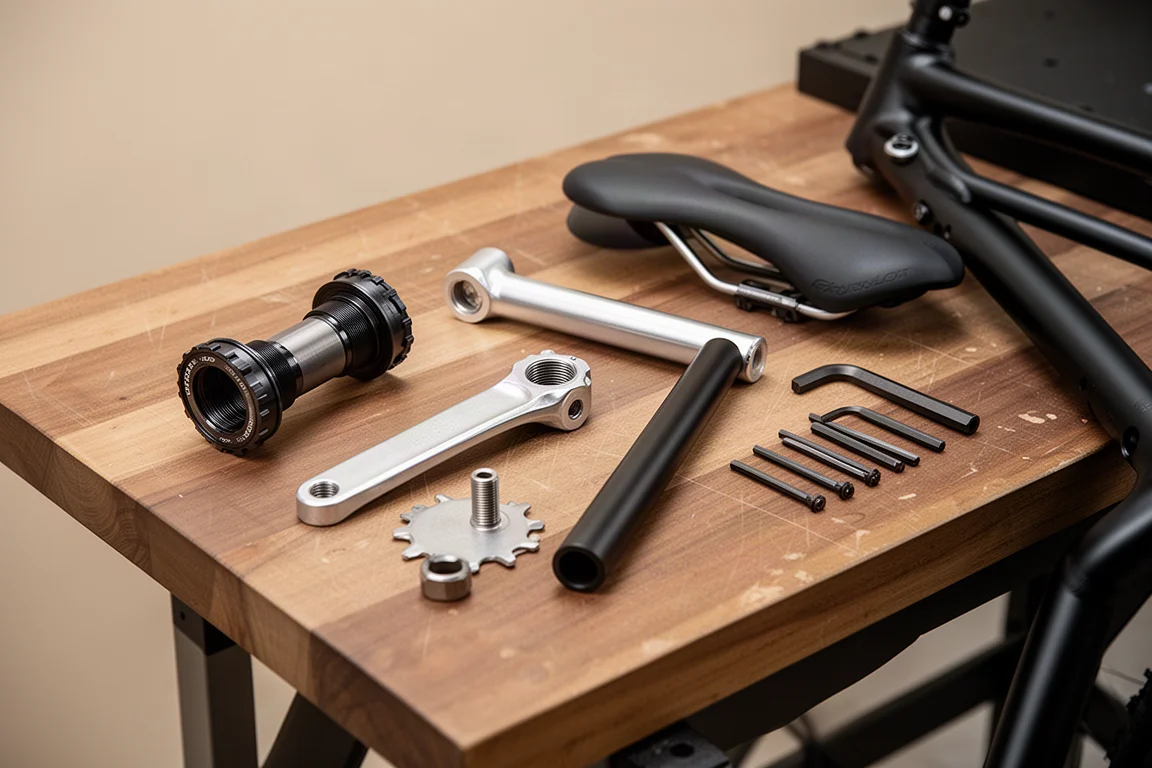
The Rivet’s off-the-shelf parts are another long-term strength. The bottom bracket, cranks, seatpost, and handlebars are all standard. The Zwift Ride is cheaper, but its components are proprietary, so anything that fails must go through Zwift, and crank length is not selectable. Even the Zwift Play controllers are all-or-nothing replacements, while the Rivet’s simpler Click-based setup is more modular and easier to live with.
Is the Rivet Right for You?
It depends on your setup, but the Rivet has worked very well with both Zwift and TrainerRoad. A small Zwift Click on the bar is all this reviewer needed for a clean, uncluttered cockpit, and the included levers feel good in use. If you value standard components, broad fit range, gradient hardware compatibility, and the freedom to spec the bike your way, the Rivet makes a compelling permanent indoor platform.
Conclusion
The Caveworks Rivet proves the dedicated indoor bike frame concept is here to stay. It is stable, quiet enough, highly customizable, and flexible across apps, with a few smart production fixes already applied. If you want a permanent indoor setup that adapts to any rider in your household and any training platform, it deserves a serious look.
Product link
View more details for Caveworks Rivet
This product is mentioned in the review. Check the specifications, options, and compatibility before buying.
View more details for Caveworks RivetFurther reading
Related Reviews
Indoor Cycling
Best Budget Smart Indoor Trainer Setups: Six Options Worth Considering
Smart indoor trainers keep getting better while prices come down. Six setups and components worth considering, from the cheapest Zwift-ready option upward.
Indoor Cycling
Best Budget Smart Indoor Trainers for Immersive Cycling in 2026
A practical guide to affordable smart indoor trainer setups, including budget and mid-range options with virtual shifting.
Indoor Cycling
Best Indoor Cycling Apps and Smart Trainers: A Winter Buying Guide
A practical look at the indoor training platforms and smart trainers that matter this season, from a new challenger to Zwift to the entry-level trainer that stands out on value.