Indoor Cycling
Cave Works Rivet vs Zwift Ride: Choosing a Dedicated Indoor Trainer Bike
Two trainer bikes take the hassle out of indoor riding. We compare the Cave Works Rivet and the Zwift Ride on flexibility, compatibility, and value.
Introduction
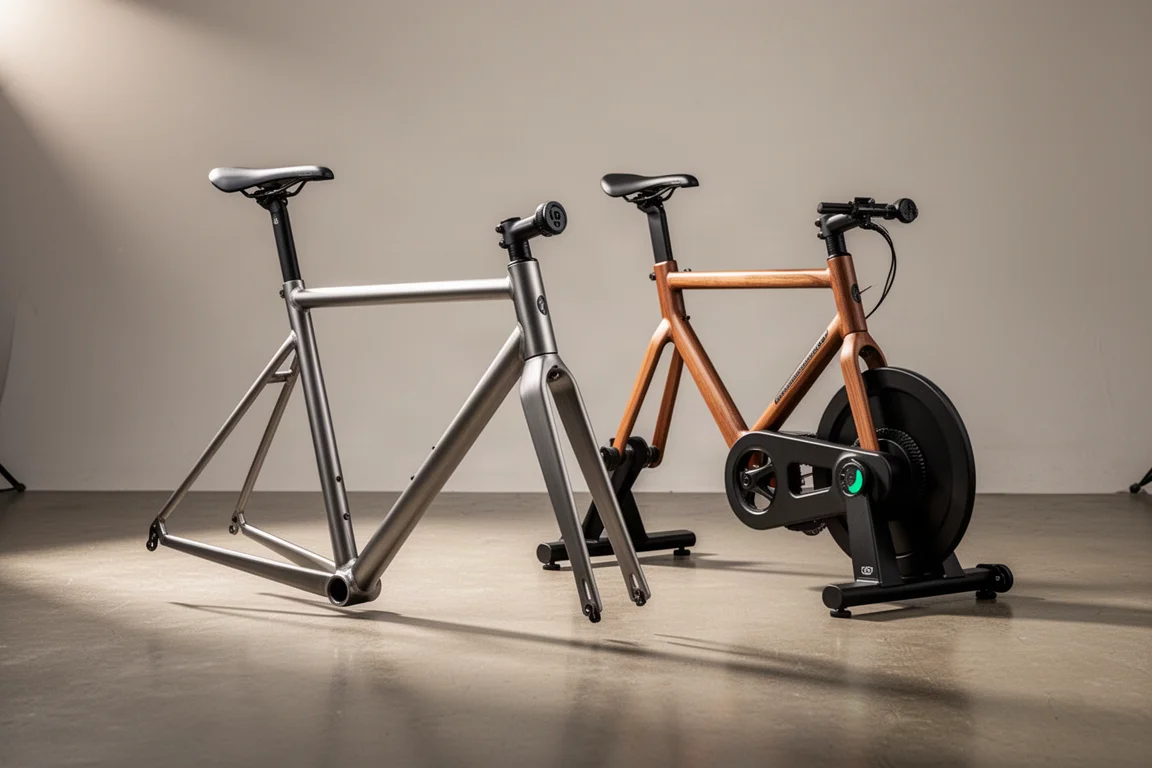
If you ride indoors regularly, you already know the friction: pulling your good road bike on and off the trainer, sweating all over it, and repeating the whole process every time you want to ride outside. A dedicated trainer bike solves that, and two options have emerged as the most interesting answers: the Cave Works Rivet and the Zwift Ride.
Both aim at the same idea, a permanent indoor riding setup, but they go about it differently. The Rivet is a flexible, app-agnostic trainer bike built around traditional bike components, while the Zwift Ride bundles hardware and software into one tidy package. Here is how they compare and who each one suits.
What the Cave Works Rivet Actually Is
The Rivet is designed to permanently sit on your trainer, so you never have to swap bikes between indoor and outdoor riding. That saves the hassle of installing and removing your bike, reduces wear and tear on your outdoor bike, and protects components from sweat corrosion. It also lets multiple riders in a household ride without swapping bikes, since everything adjusts per rider.
The project comes from a creator who spent years riding indoors and did not want the inconvenience of switching bikes or the high cost of a dedicated smart bike. The result is a dedicated trainer bike frame that stays inside, ready to ride at any time. For many riders whose old road bike has not seen daylight in years, this fills a very specific gap.
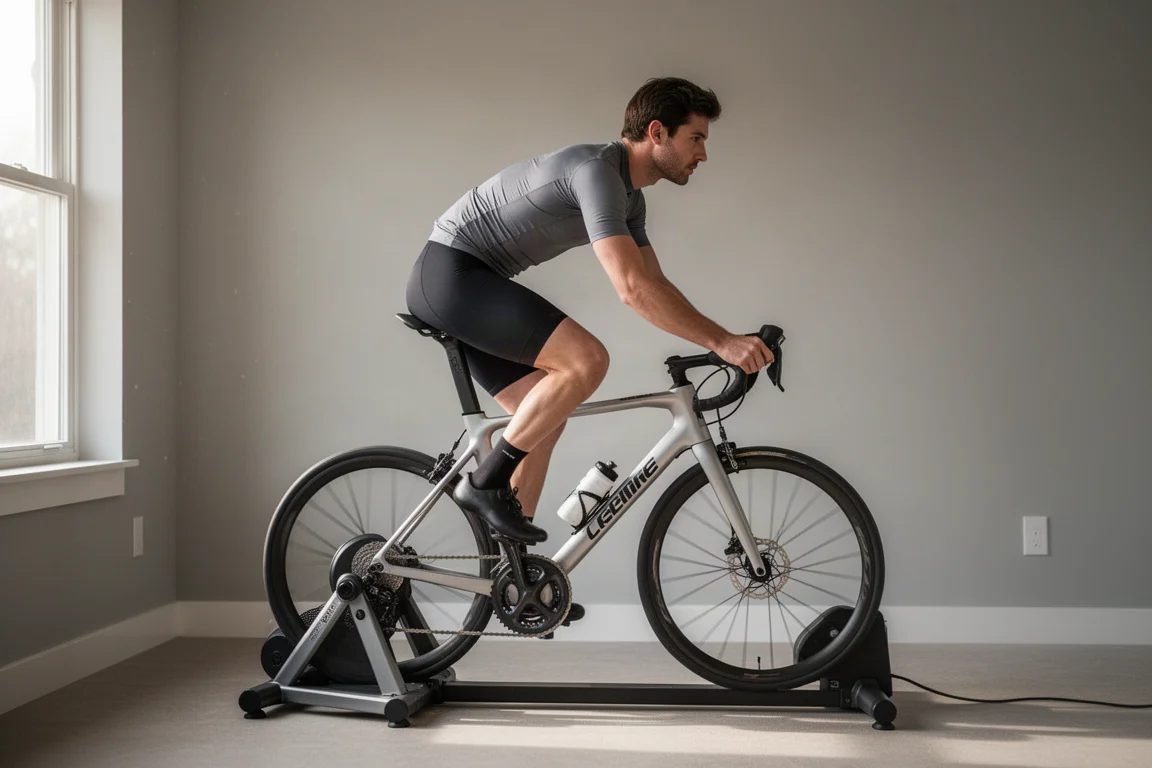
The obvious question is why not just use an old road bike or pick up a used bike for the trainer. That gets to the heart of what the Rivet offers over a repurposed bike, which we cover below.
Design, Fit, and Frame Details
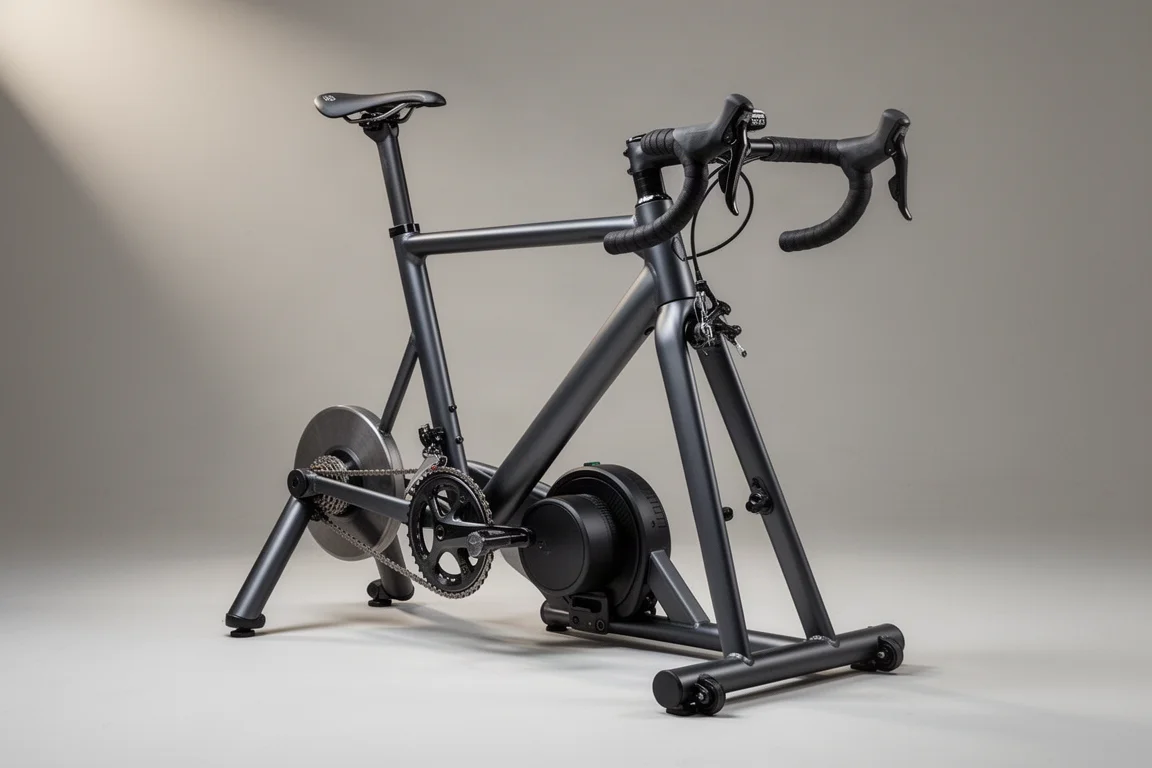
The Rivet frame is a custom steel design that fits riders from 4’10” to 6’6”. That makes it a strong solution for households where more than one person rides indoors: each rider just adjusts the seat post and handlebars and goes.
The frame uses traditional components throughout, which is one of its biggest strengths:
- 142 mm rear through axle, so it fits basically any modern smart trainer
- Traditional 30.9 mm seat post
- 68 mm threaded bottom bracket
- Traditional handlebar
- 12x110 mm front through axle for gradient simulator compatibility
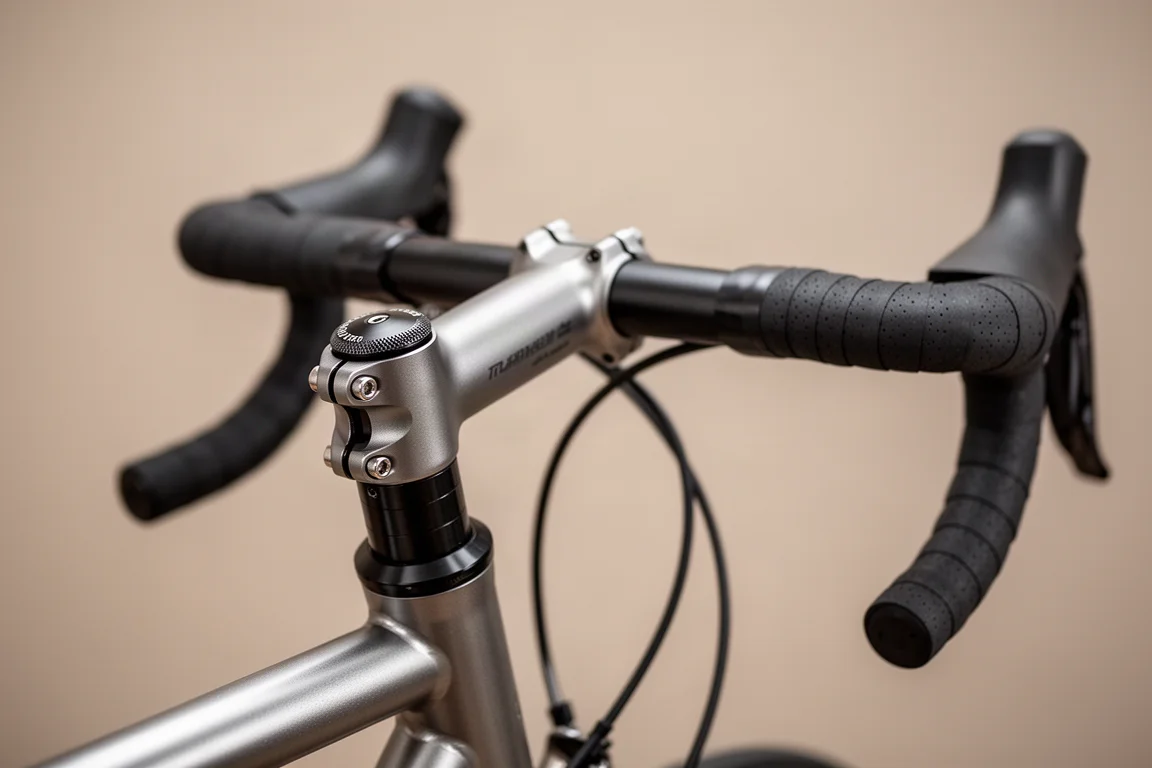
The only non-off-the-shelf part besides the frame is the stem. Instead of swapping stems to change reach, the Rivet’s stem adjusts to add up to 120 mm of forward and back movement with a simple knob, in addition to a head tube that adjusts height and also affects reach.
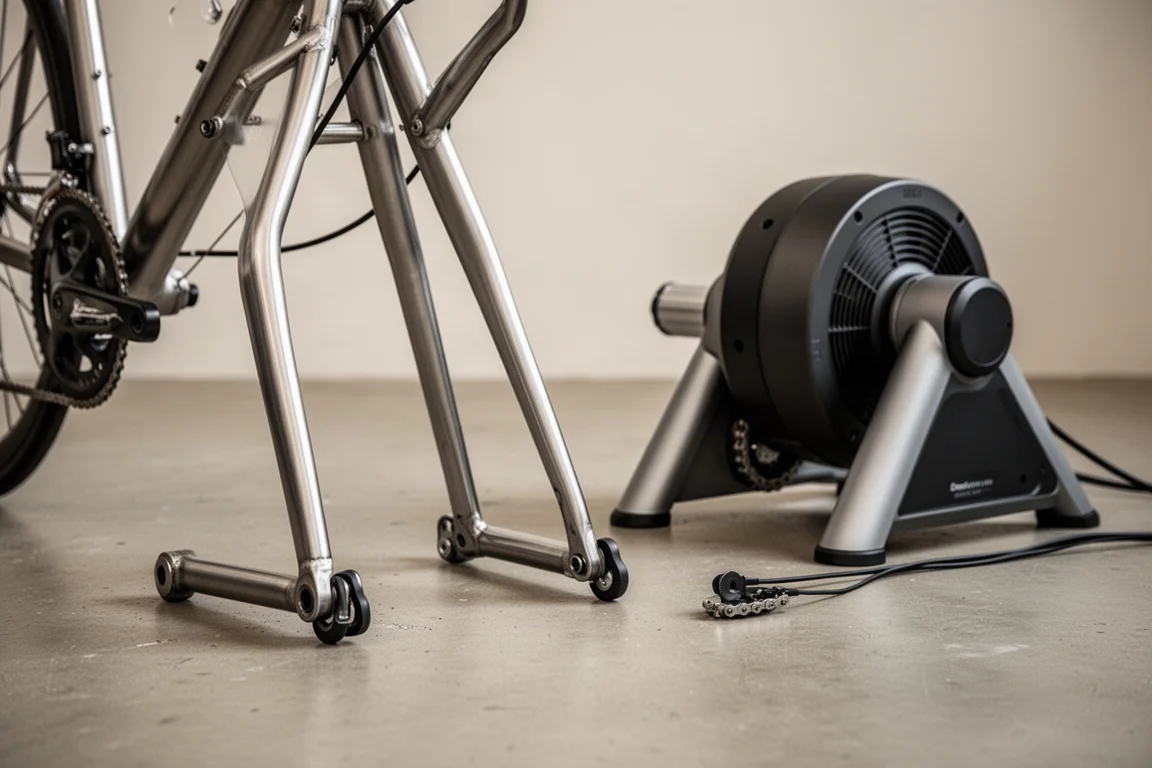
At the front, the frame sits on two feet, making it very stable. The included standard feet work with trainers that do not require a front wheel block, like Wahoo trainers, and spacer kits will be offered for trainers that do require one, such as Elite or Tacx trainers.
Compatibility and Setup Options
The Rivet is Kicker Climb and Elite Riser compatible thanks to its 12x110 mm front through axle, and the Climb or Riser simply works like it would with any other bike. One current limitation: it is not yet Kicker Move compatible, at least without the Kicker Climb, though the team is exploring an accessory that would allow forward and backward movement.
Compatibility is a genuine highlight because the Rivet works with all cycling apps depending on the setup, not just Zwift. Three purchase options cover different needs:
- Frame only: build it up however you like, from scrounged garage components to your exact preferred cranks, seat post, saddle, and handlebar, even a mountain bike bar.
- Single-speed setup: a plug-and-play configuration with cranks, bottom bracket, chain tensioner, chain, seat post, saddle, adjustable stem, dummy brake levers, and a nicely flared handlebar with flat tops, pre-wrapped with bar tape. It is meant for virtual shifting.
- Fully geared GRX 1x12 setup: for training apps that do not support Zwift virtual shifting with a single cog.
For the single-speed option, you only need a trainer that supports Zwift virtual shifting plus Zwift Click or Zwift Play controllers. You do not need the Zwift Cog; if you already have a cassette on your trainer, it is actually recommended to use that and find the cog with the best chain line.
One note on the drivetrain: the included cranks do not have the ideal chain line with the Zwift Cog specifically. It works, but it is not as quiet as with the best chain line. On a double crank setup, the smaller chain ring actually works better with the Zwift Cog.
Noise Levels
This is a genuinely quiet setup. It is easily one of the quietest chain-driven configurations you will find, with the chain tensioner running extremely smoothly. Most of what you hear is just freewheeling from your trainer.
It is slightly quieter than the Zwift Ride, which is quiet but produces a little sound from the plastic components on the cog and the ride chain tensioner.
Pricing Breakdown
The Rivet is offered in three configurations:
- Frame only: $749, with an introductory special at $699. Includes the frame, adjustable stem, front and rear through axles, UDH derailleur hanger, seat post clamp, and front clamp.
- Single-speed setup: $999, with an introductory special at $949. Includes everything needed for a virtual shifting setup apart from the trainer and controllers.
- Fully geared GRX 1x12: $1,399, with an introductory special at $1,329.
The geared option is the hardest to justify on its own, since once you add the price of a smart trainer you start approaching dedicated smart bike territory.
How the Rivet Compares to the Zwift Ride
The Zwift Ride costs $1,299, and that includes a Kicker Core trainer, which is simply a very good deal. If you do not already own a smart trainer and you will primarily ride on Zwift, it is hard to pass up.
The picture changes if you already own a smart trainer. At the time of writing, Zwift is not offering the Ride as a frame-only option, so existing trainer owners cannot easily buy just the bike part. The Rivet, by contrast, costs a bit more than the Ride would theoretically cost as a frame-only option, but there are reasons for that. Zwift is a large company producing the Ride at large scale, and it does not necessarily need to profit much on the frame itself since its ultimate goal is selling subscriptions. Cave Works is a small, passionate team that needs to make money on the frame and does not sell software on the side.
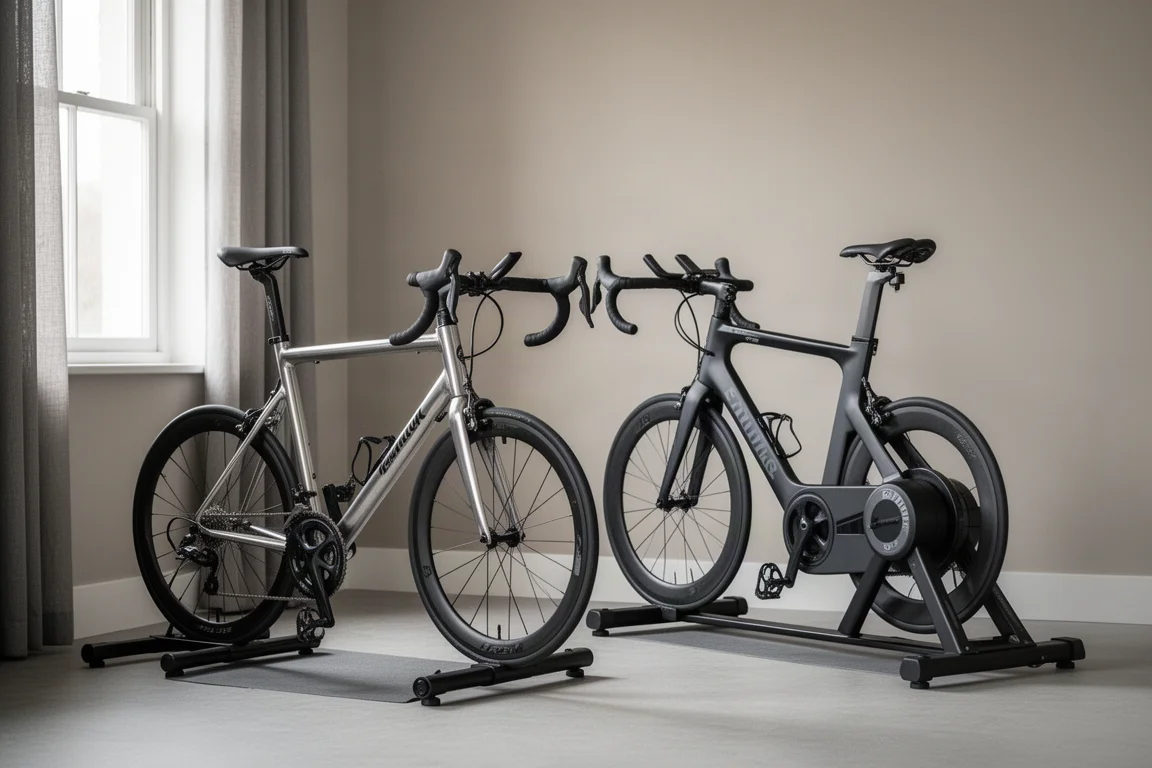
Both the Rivet and the Ride arguably represent the future of indoor cycling better than dedicated smart bikes do. Smart bikes are expensive, heavy, and hard to repair when something breaks. The Rivet and the Ride are modular, so when something goes wrong, it is usually something small and fixable.
Things to Consider Before Buying
A few caveats are worth knowing about the Rivet:
- The fully geared options come with a 48-tooth chain ring, which is larger than ideal. It can be too steep for some of the really steep climbs and trainer workouts, though trainer difficulty settings in some apps help work around it.
- Trainer accuracy can matter at higher flywheel speeds with very large chain rings, but a 48-tooth ring is not in that extreme territory, so accuracy is probably not a big concern here.
- The single-speed crank chain line is not ideal with the Zwift Cog specifically, as noted above.
Buying Advice
The decision largely comes down to your trainer and app situation:
- No trainer yet, mostly ride on Zwift: the Zwift Ride with its included Kicker Core is the stronger value.
- Already own a smart trainer, want flexibility across any training app: the Rivet is the clear fit, with the option to swap components like crank lengths and handlebars.
- Want to build exactly the bike you want: the Rivet frame-only option opens up everything from budget garage builds to fully bespoke setups.
Conclusion
The Cave Works Rivet is a flexible, well-thought-out trainer bike that works with any app and nearly any modern trainer, and it fills the gap that used road bikes and expensive smart bikes have left open. The Zwift Ride remains the best entry point if you are starting from zero and live in the Zwift ecosystem. Whichever way you lean, a dedicated trainer bike is a genuinely convenient upgrade for anyone who rides indoors often.
Further reading
Related Reviews
Indoor Cycling
Best Budget Smart Indoor Trainer Setups: Six Options Worth Considering
Smart indoor trainers keep getting better while prices come down. Six setups and components worth considering, from the cheapest Zwift-ready option upward.
Indoor Cycling
Best Budget Smart Indoor Trainers for Immersive Cycling in 2026
A practical guide to affordable smart indoor trainer setups, including budget and mid-range options with virtual shifting.
Indoor Cycling
Best Indoor Cycling Apps and Smart Trainers: A Winter Buying Guide
A practical look at the indoor training platforms and smart trainers that matter this season, from a new challenger to Zwift to the entry-level trainer that stands out on value.