Sports Watches
Casio G-Shock GBD-H2000 First Look: Smaller, Lighter, and Smarter
The second-generation G-Shock Move trims size and weight, adds new sport profiles, and brings Polar's training algorithms to the G-Shock line.
Introduction
The G-Shock GBD-H2000 is Casio’s second-generation G-Shock Move, following the original GBD-H1000 from a few years back. The first generation made an impression with sport features like a heart rate sensor, GPS, and activity tracking, plus impressive battery life, but it had its quirks: sport profiles and training feedback were largely built around running, daily health tracking was limited, and the sheer size made it one of the biggest sports watches around.
The GBD-H2000 addresses those issues head-on. It is smaller and lighter, it supports more sport profiles, and perhaps most interesting of all, Casio partnered with Polar to license over 25 of Polar’s health and training algorithms. Here is what the second generation brings to the table.
First Look: Design and Hardware
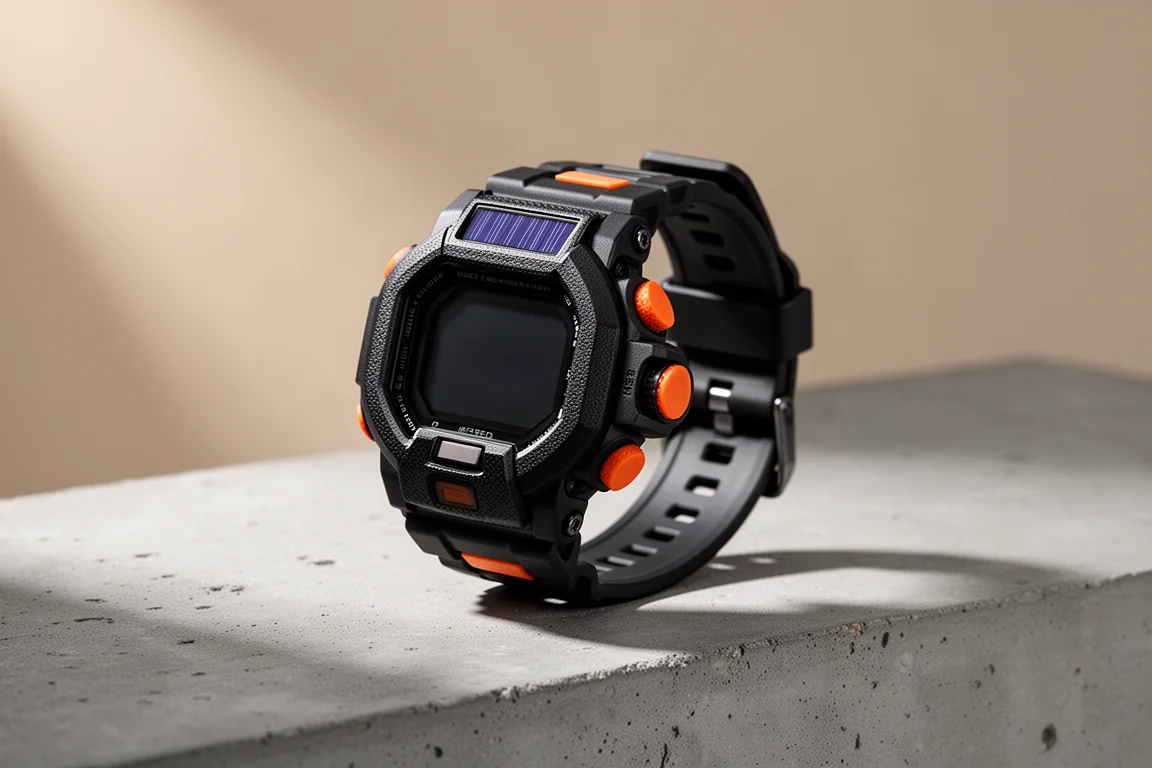
Out of the box, the GBD-H2000 looks every bit the G-Shock. Protective elements frame the case, orange accents surround the textured buttons, and the lugs overhang the display so the watch cannot easily damage its screen when laid down. There is a dual-layer frame, a tried-and-true LCD display with a backlight, and a solar panel on the outside of the bezel for solar charging.
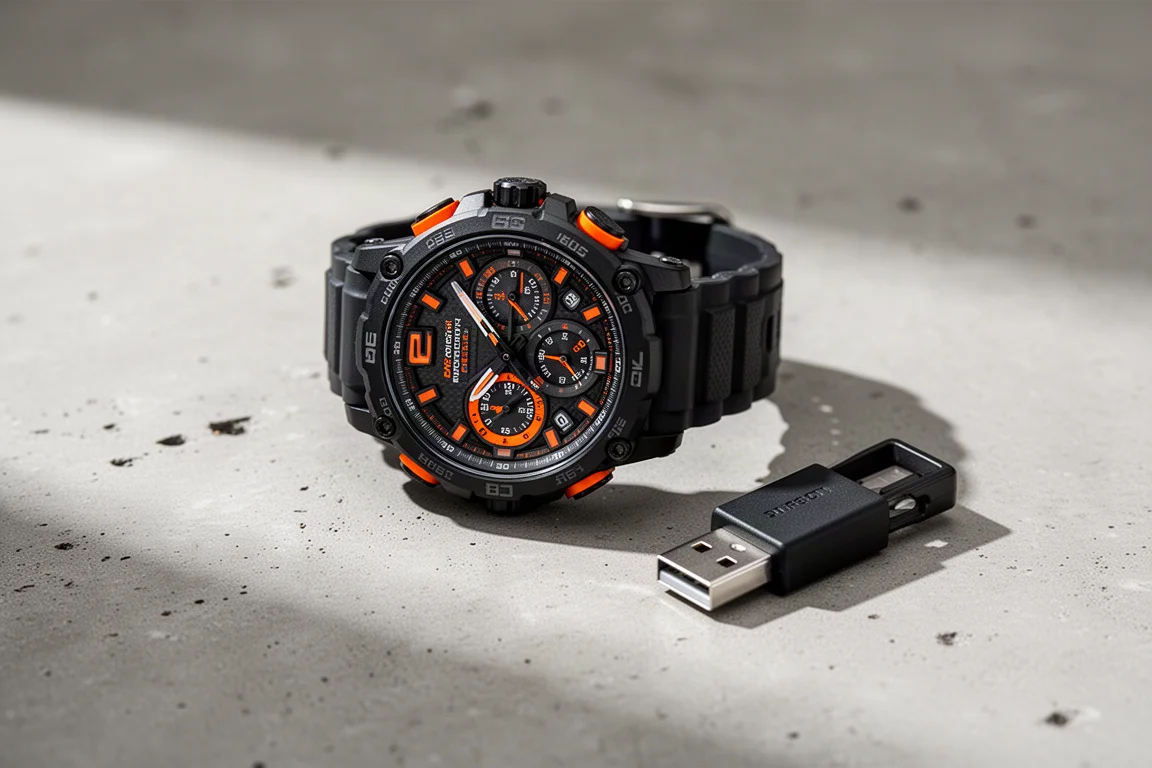
The back uses resin instead of the metal construction of the original. Metal may look more premium, but resin makes the watch noticeably lighter and far more wearable. The case and band are made from eco-friendly biomass plastics, and the band itself is more flexible than before. It also rotates at the case, which lets the watch lie flat on a table, something the stiff strap of the original made awkward. The orange wedge-shaped lugs help the watch conform to the wrist, keeping it secure, which matters both for comfort and for heart rate accuracy.
Size and Weight Comparison
Casio lists the case at 59.6 x 52.6 x 19.4 mm, and caliper measurements came in right on target, at just under 52 mm wide, about 59 mm tall, and 19.27 mm thick. That is a real step down from the original, which measured around 55 mm by roughly 60 mm.
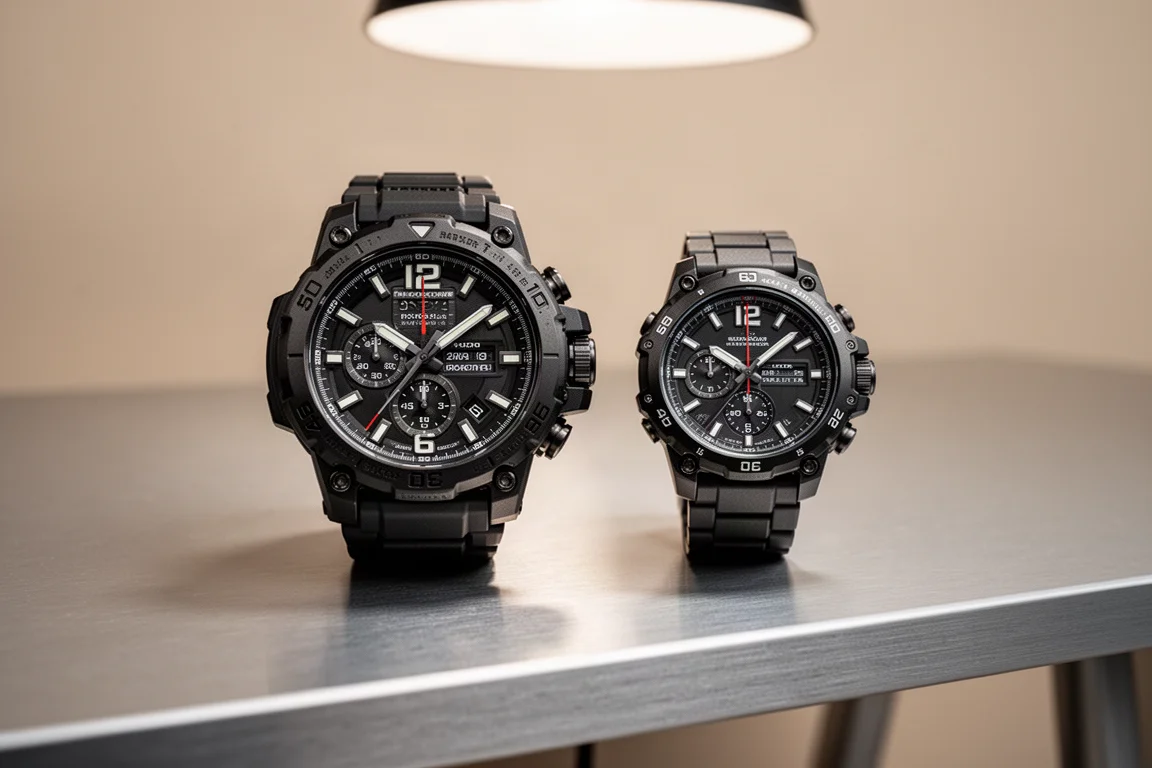
The weight difference is even more striking: the GBD-H2000 weighs 61.8 grams on the scale, compared to 100.3 grams for the GBD-H1000 and 102.5 grams for the GSW-H1000. For context, a Fenix 7X sits around 97 grams and a Coros Vertix 2 around 90 grams, while an Instinct 2 Solar comes in at just 53 grams. The GBD-H2000 clearly belongs in the lighter group now.
This matters more than it might seem. Smaller and lighter watches are more comfortable for sports and for sleeping, and optical heart rate sensors dislike movement, so a lighter watch that sits closer to the wrist generally delivers more accurate readings. The original was uncomfortable enough to wear overnight that sleep tracking suffered; the smaller size here makes it realistic to wear the GBD-H2000 around the clock, which is exactly what you need to get the most out of those Polar algorithms.
Sensors and GPS
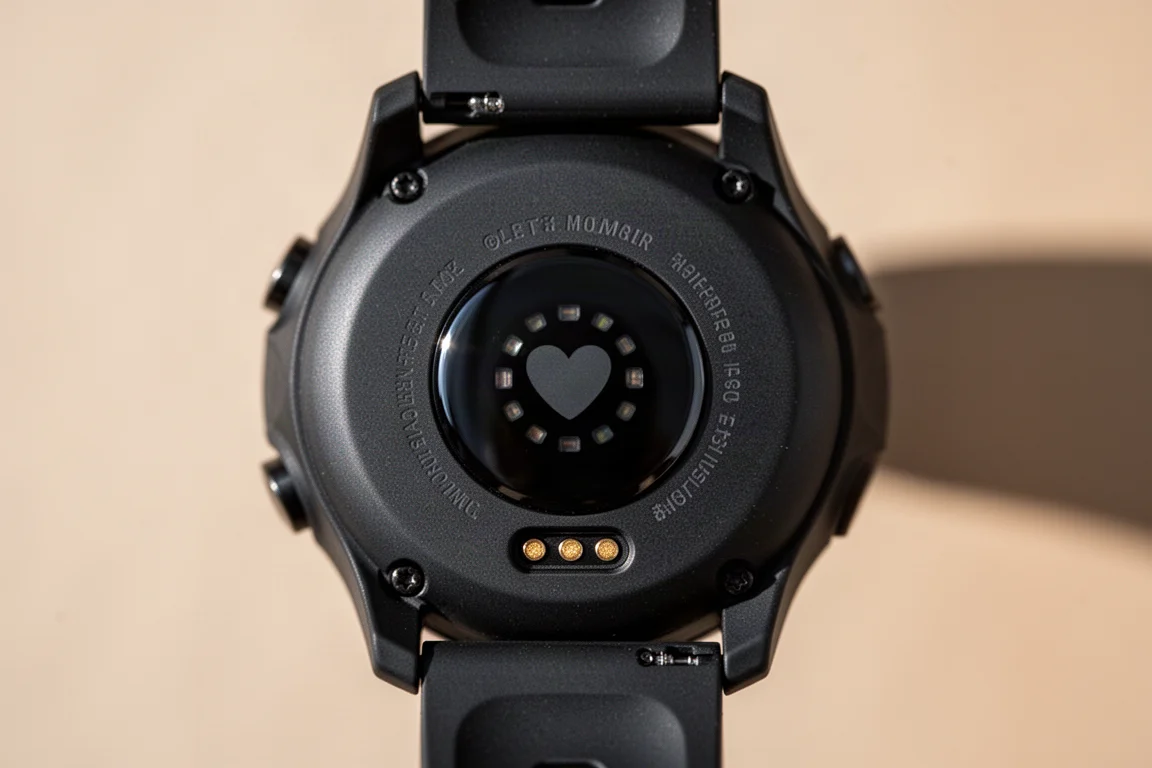
The GBD-H2000 carries an updated heart rate sensor on the back along with a full sensor suite: an accelerometer, a gyroscope, a magnetic compass, a barometer, and a thermometer. It also uses a new multi-band dual-frequency chipset that can access five satellite systems: GPS, GLONASS, QZSS, Galileo, and BeiDou. This class of GPS hardware has been spreading across mid-level and high-end sports watches, and the goal is better accuracy in challenging environments like tall buildings, rock faces, and heavy tree cover.
Polar Algorithms and Training Feedback
Casio is the first manufacturer to partner with Polar, licensing around 25 of its algorithms for sleep tracking, recovery tracking, and performance feedback. Polar has been in heart rate tracking and performance analysis for over 50 years, supporting pro sports teams and scientific lab testing, so the pairing makes a lot of sense: Casio brings the hardware know-how, Polar brings the sports science.
On the health side, you get sleep tracking with Polar’s Sleep Plus Stages, which breaks down deep sleep, light sleep, REM, and wake time, plus Nightly Recharge, which indicates how well your body recovered overnight from exercise and daily activity. On the training side, expect insights based on heart rate zones and Polar’s Training Load Pro, which analyzes cardio load and assigns a status such as productive, maintaining, detraining, or overreaching. Performance feedback includes a running index or VO2 max estimate, and the watch can also break down the energy sources used during a workout, including fats, carbohydrates, and proteins.
One caveat: the hardware has to be accurate for all this feedback to be meaningful. The original GBD-H1000’s VO2 max estimate was thrown off by any non-running activity, since its algorithm was really designed for running only. How the second generation implements these metrics under real training load is something worth verifying before committing.
Battery Life
Battery life varies with settings. Casio’s baseline spans roughly seven days up to two months without solar charging. With the heart rate sensor on continuously, including during sleep, expect around seven days. If heart rate tracking is limited to activities and sleep only, around two weeks is possible, and with the sensor off entirely the watch can stretch to roughly two months.
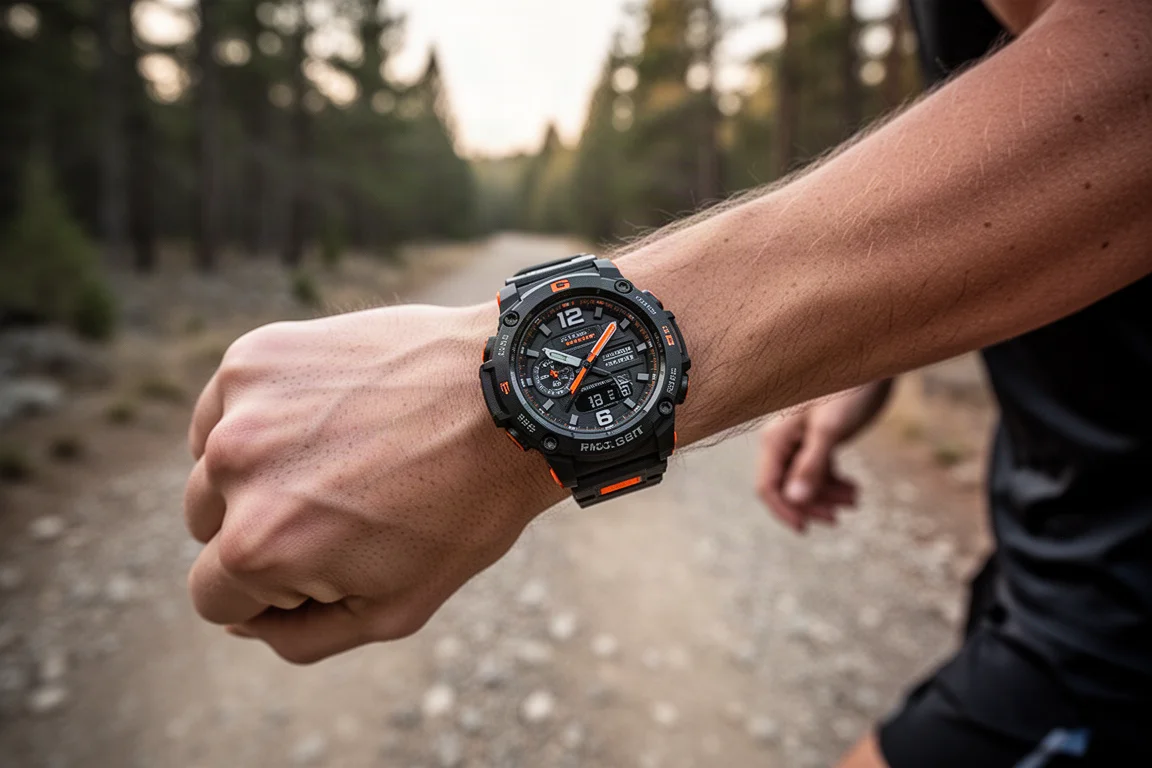
Solar charging adds to that, and there is a low-power mode that strips the watch back to basic timekeeping when the battery runs low. The original GBD-H1000 was outstanding on battery, especially with solar, so the second generation has a high bar to clear.
Interface and Sport Profiles
The GBD-H2000 uses a five-button layout: up and down keys on the left, a back button and backlight button on the right, and an enter/start button. Pressing enter opens the sport profiles, which now include running, biking, gym workout, interval timer, pool swimming, open water swimming, trail running, and walking. That is a meaningful expansion over the original, which was effectively running-focused.
Menu items cover time and date, a heart rate widget, blood oxygen saturation, breathing exercises, cardio status, a lifelog with steps, active time, and calories, nightly recharge, an activity log, an almanac with sunrise and sunset times, a compass, an altimeter, a barometer, world time, a timer, a stopwatch, and smartwatch notifications. Settings include heart rate tracking modes that map to the battery expectations above, notifications, a nighttime do-not-disturb option, units, step reminders, tones and vibrations, backlight behavior, power saving mode, and physical profile settings like weight, height, date of birth, and gender.
First Impressions and Buying Advice
Casio has clearly learned from the first generation. The smaller, lighter design makes the GBD-H2000 dramatically more wearable for sports, daily use, and overnight tracking, and it should fit a much wider range of wrists. More sport profiles and licensed Polar algorithms give it the most advanced training feedback of any G-Shock to date.
If you have wanted a tough G-Shock that can also deliver serious training insights, this looks like the most convincing option yet. The main open question is how well the hardware holds up under the demands of those Polar algorithms, so it is worth waiting on accuracy testing before making a final call. For G-Shock fans who have been waiting for a genuinely capable sports watch in this form, the GBD-H2000 is a promising step forward.
Conclusion
The GBD-H2000 fixes most of what held the original back: it is smaller, lighter, more comfortable, and far more versatile, and the Polar partnership adds real substance to its health and training feedback. With strong claimed battery life and solar charging on top, it shapes up as a compelling choice for anyone who wants G-Shock toughness with modern sports science behind it.
Product link
View more details for Casio G-Shock GBD-H2000
This product is mentioned in the review. Check the specifications, options, and compatibility before buying.
View more details for Casio G-Shock GBD-H2000Further reading
Related Reviews
Sports Watches
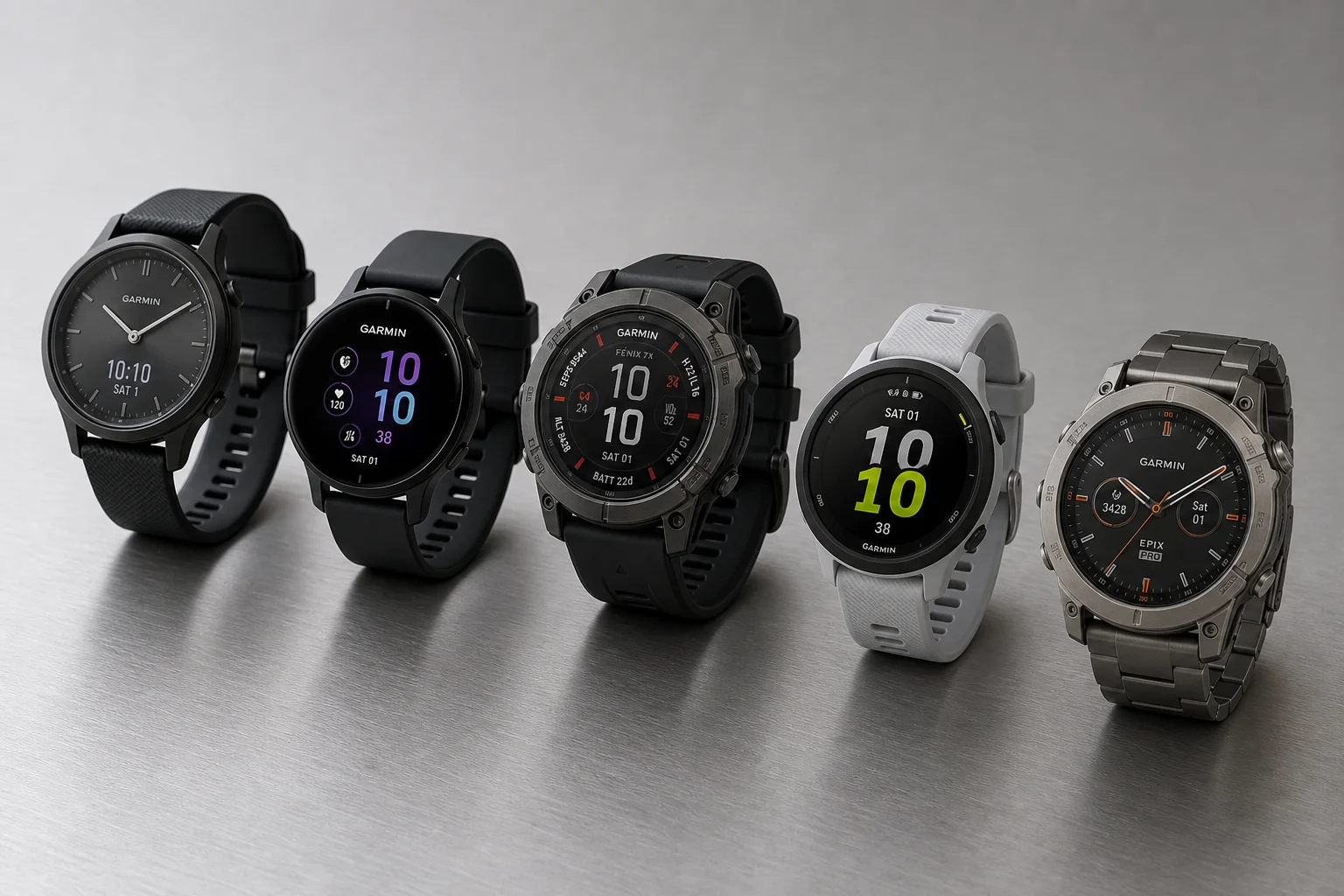
Garmin Sports Watch Guide: Finding the Right Model for Your Fitness Level
A comprehensive overview of Garmin's sports watch lineup, from casual fitness trackers to advanced multisport devices, helping you choose the right model for your needs and budget.
Sports Watches
Coros Pace Pro Review: A Complete Overhaul That Finally Feels Premium
Coros rebuilt the Pace Pro from the ground up with an AMOLED display, onboard maps, and a new heart rate sensor. Here is how it all holds up in real use.
Sports Watches
Polar Vantage M3 Review: The Sweet Spot in Polar's New Watch Lineup
A closer look at the Polar Vantage M3, which brings an AMOLED display, dual-frequency GPS, offline maps and the same software platform as Polar's flagship watches at a friendlier price.