Road Bikes
Canyon Aeroad CFR vs Canyon Aeroad CF SLX: Does the Pricier Build Actually Make You Faster?
A back-to-back comparison of Canyon's top-tier Aeroad CFR and the value-focused Aeroad CF SLX, covering build differences, measured weight, and real-world speed and power data.
Introduction
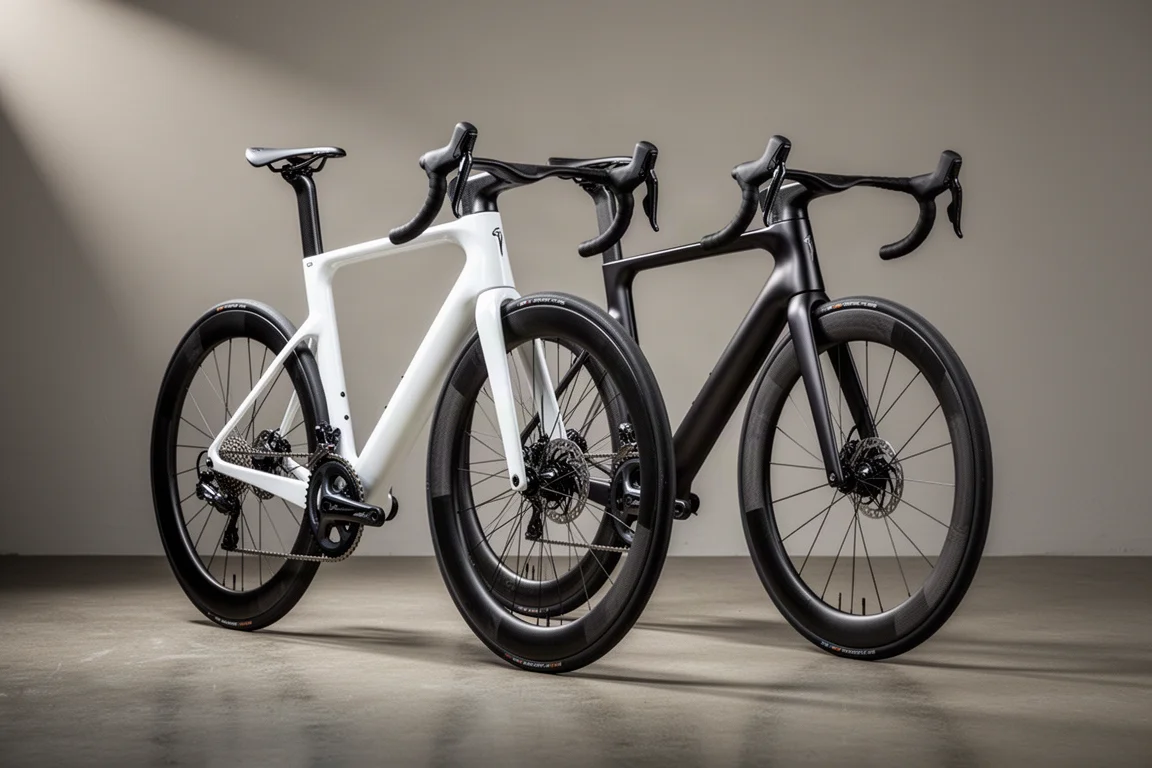
The Canyon Aeroad CFR sits at the very top of the Aeroad range, built up with the best components Canyon offers. The Canyon Aeroad CF SLX sits at the opposite end, as the most affordable Aeroad currently available. Both share the same frame shapes, the same one-piece carbon handlebar and stem, the same aero seat post with an internal gear groove, and the same tire clearance, so the real question is simple: what does the extra money actually buy?
This comparison covers the build differences, the measured weights, and the results of a back-to-back speed test on the same route.
How the Two Models Differ
On the surface the two bikes are nearly indistinguishable. Both run a SRAM wireless groupset with hydraulic disc brakes, and both roll on deep-section carbon wheels. The frame profiles, cockpit, seat post, and tire clearance are shared across the range.
The differences sit underneath the paint and in the parts bolted to the frame. Canyon describes the CFR as using a cutting edge carbon layup, which translates into a lighter frame and fork. The larger gap, however, comes from the components, and that is where most of the weight and cost difference lives.
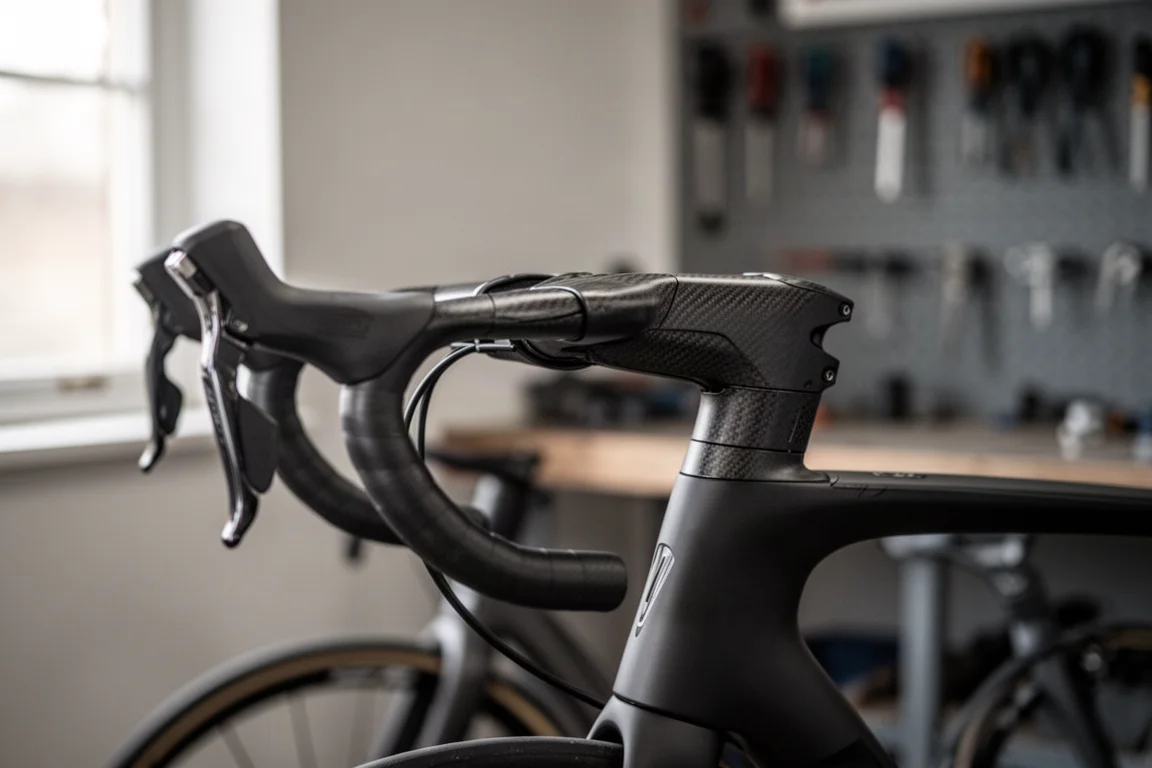
Both builds also use the same adjustable-width handlebar, so the front-end fit can be tuned in the same way regardless of which version you choose.
Canyon Aeroad CFR: The Top-of-the-Range Build
The CFR carries the top-tier SRAM Red AXS groupset, the lightest version of the platform. It keeps the same 12-speed configuration as the cheaper bike, but the gearing is set up for racing, with a smaller cassette and a larger chainring aimed at the higher speeds this bike is likely to reach.
The wheels are the other headline item. The Zipp 454 NSW wheelset weighs 1,358 g and uses a distinctive rim profile designed to balance aerodynamics with crosswind stability, and it proved very impressive in a strong crosswind. Those wheels alone cost over £3,000, which is almost as much as the entire CF SLX build.
The CFR also ships with a dual-sided power meter, a piece of kit that would cost up towards £1,000 on its own and is genuinely useful for high-level racing and training. Tires are Pirelli P Zero in 28 mm front and rear, and the build is finished with a 3D printed saddle.

On the scales, a size medium CFR came in just over the 6.8 kg weight limit with no pedals fitted, which is competitive for this category of aero road bike.
Canyon Aeroad CF SLX: The Value Build
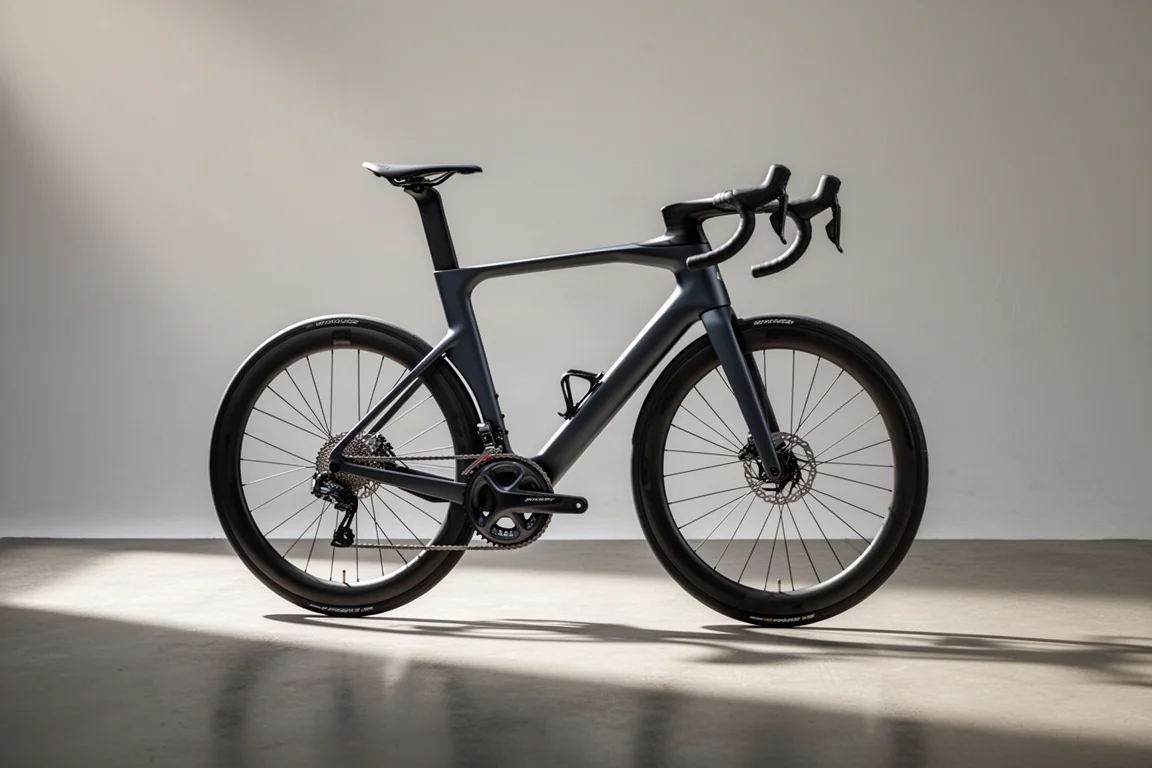
The CF SLX is the cheapest Aeroad you can currently buy at just under £4,000, but the specification is far from basic. It runs the entry-level SRAM Rival AXS groupset, which in practice works extremely well, is reliable, and comes with a low range of gears that helps on steep climbs.
Tires are Continental GP 5000 S tubeless in a 25 mm front and 28 mm rear combination. The narrower front is intended to improve aerodynamics while the wider rear adds comfort, though a matched wide setup front and rear would be preferable on rough roads.
The DT Swiss ARC 1600 wheels are a good quality carbon deep-section set, but at around 1,730 g on the scales they are not especially light. There is no power meter as standard, although a left-sided power meter can be added to the Rival groupset for a few hundred pounds.
On the scales, the same size medium CF SLX was just under 1 kg heavier than the CFR, which is impressive given the specification and leaves clear room for weight savings through upgrades.
Real-World Speed Test Results
Both bikes were ridden back to back on the same route in the same size medium, with the same handlebar width and the same riding position as far as could be controlled, targeting an average speed of around 31 km/h and roughly 250 watts.
The CFR completed the route at an average speed of 31.8 km/h in 21 minutes and 25 seconds, with a normalized power of 213 watts. The CF SLX covered the same route at an average speed of 31.9 km/h, but required a normalized power of 227 watts to do it.

That is the central finding: the speeds and times were effectively identical, yet the CFR demanded substantially less power to achieve them. The wheels are likely to account for much of that difference, alongside the lighter frame and fork.
It also underlines how strong the mid-range frame is. The gap between the two bikes comes mostly from what is bolted to them rather than the frames themselves.
Ride Quality and Handling
Both bikes share the same race geometry, so the fast steering and responsiveness feel familiar on either. The CFR felt firmer and more planted, particularly at around 40 km/h, where it tracked straight and calm even in a strong crosswind. It is smoother over rough surfaces than a number of its aero rivals, with less feedback coming through the hoods and saddle.
The CF SLX is more lively and less predictable in crosswinds, and it moves around more over bumps, which can feel unsettled on rougher tarmac. On the climbs the lower weight of the CFR is noticeable, with a more spritely and responsive feel under acceleration and out of the saddle.
One detail worth noting for anyone who spends long hours on the hoods: the Red AXS hoods are smaller, longer, and noticeably more comfortable than the chunkier Rival hoods. Both bikes are, however, genuinely comfortable for aero machines, which says a lot about how far this category has come.
Overall Buying Advice
The CFR is the faster bike, but the margin is small and it costs nearly £10,000. If the budget allows and the goal is to extract maximum performance, the lighter frame, the Zipp wheels, the Red AXS groupset, and the dual-sided power meter add up to a cohesive package that still represents reasonable value at the very top of the range.
The CF SLX is the better value by a wide margin at just under £4,000. It gives away surprisingly little in outright speed, works with a reliable groupset, and competes strongly against other bikes in its price range. It is worth being honest about how much the extra kilogram matters to you before spending the difference.
Conclusion
The Aeroad CFR and Aeroad CF SLX look almost identical and ride in a very similar way, but they are built for different buyers. The CFR rewards riders who want the lightest, most responsive build and the strongest component set, while the CF SLX delivers most of the same speed and composure for roughly half the money.
If you can only stretch to the CF SLX, you will not feel short-changed. If you have the budget for the CFR, you will get a lighter, smoother, more stable bike that requires less power to hold the same pace.
Further reading
Related Reviews
Road Bikes
10 New Road Bikes Worth Watching: Aero, Titanium, Steel and Endurance Standouts
A practical roundup of 10 new road bikes, from aero flagships chasing single-watt gains to titanium, steel and endurance platforms built for real roads.
Road Bikes
2026 Tour de France Road Bikes: Six Race Machines Worth a Closer Look
Six race bikes from the 2026 Tour de France grid, reviewed for paint, silhouette, wheels and the specification details that matter to buyers.
Road Bikes
3T Strada Italia Review: A Radical Aero Road Bike That Rides Smooth
A made in Italy carbon aero road bike with a deep head tube, wide tire clearance and a genuinely comfortable ride. Here is what to know before buying.