Endurance Road Bikes
Cannondale Synapse 4 Review: An Endurance Road Bike Built for Ultra Distance
A close look at the Cannondale Synapse 4 as an ultra-distance endurance road platform, covering wide tire clearance, gearing for loaded climbing, contact point choices, and the lighting and luggage setup for a 1,000 km route.
Introduction
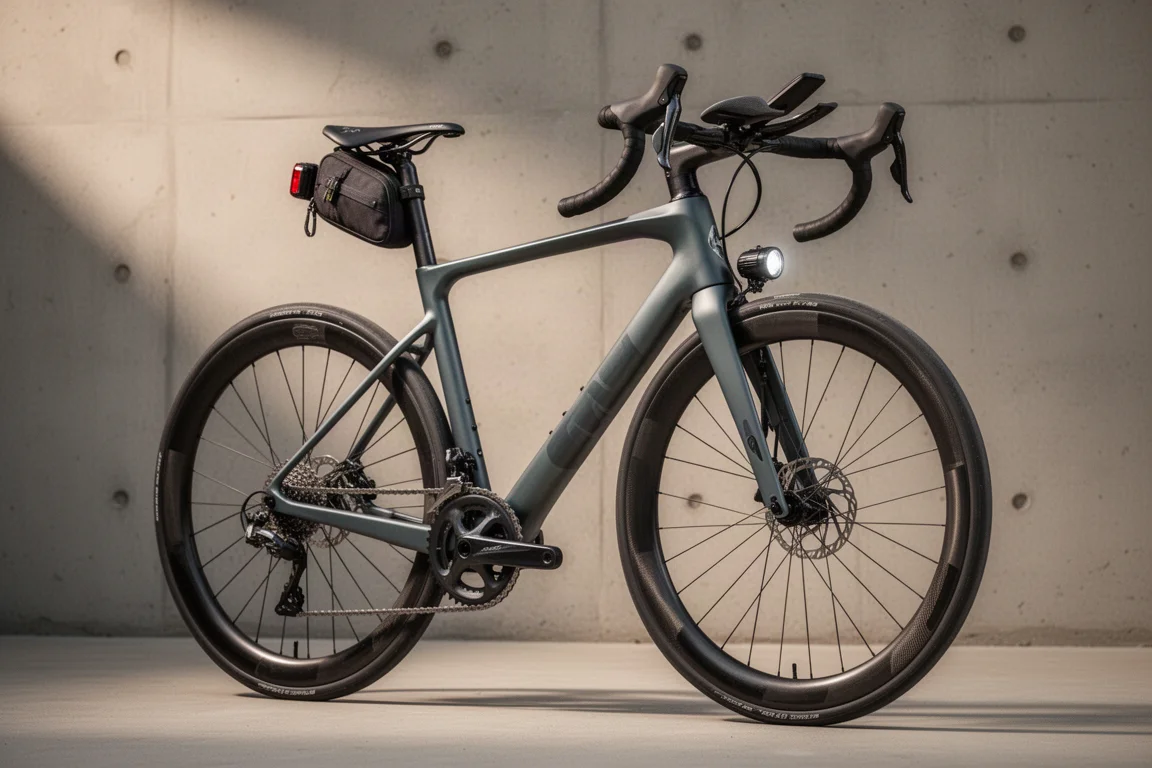
Endurance road bikes have been moving toward wider tires and more compliance for years, and the Cannondale Synapse 4 pushes that idea further than most. This particular build was assembled for an ultra road event along Ireland’s west coast, roughly 1,000 km with around 12,000 m of climbing, ridden self-supported over several days. That brief explains almost every decision on the bike. The frame needs to accept tires wide enough to smooth out rough coastal tarmac, the gearing needs to stay usable when the legs are empty, and the contact points need to hold up over long hours rather than short efforts.
The Synapse 4 is interesting because it sits where an endurance road bike starts to overlap with a gravel bike, while keeping road geometry and road efficiency as the priority.
Who the Cannondale Synapse 4 Is For
This bike suits riders whose goals are measured in days rather than minutes. If your riding involves long audax routes, multi-day bikepacking with a light load, or simply long weekend rides where comfort matters as much as speed, the Synapse 4’s priorities line up well.
It is also a sensible choice for riders who want a single bike that can run 40 mm tires on rough surfaces and narrower rubber on faster road days. The frame’s clearance keeps that choice open.
It is less suited to riders chasing the sharpest possible race feel. Wide tires and a compliance-focused rear end trade a little of that edge for all-day usability.
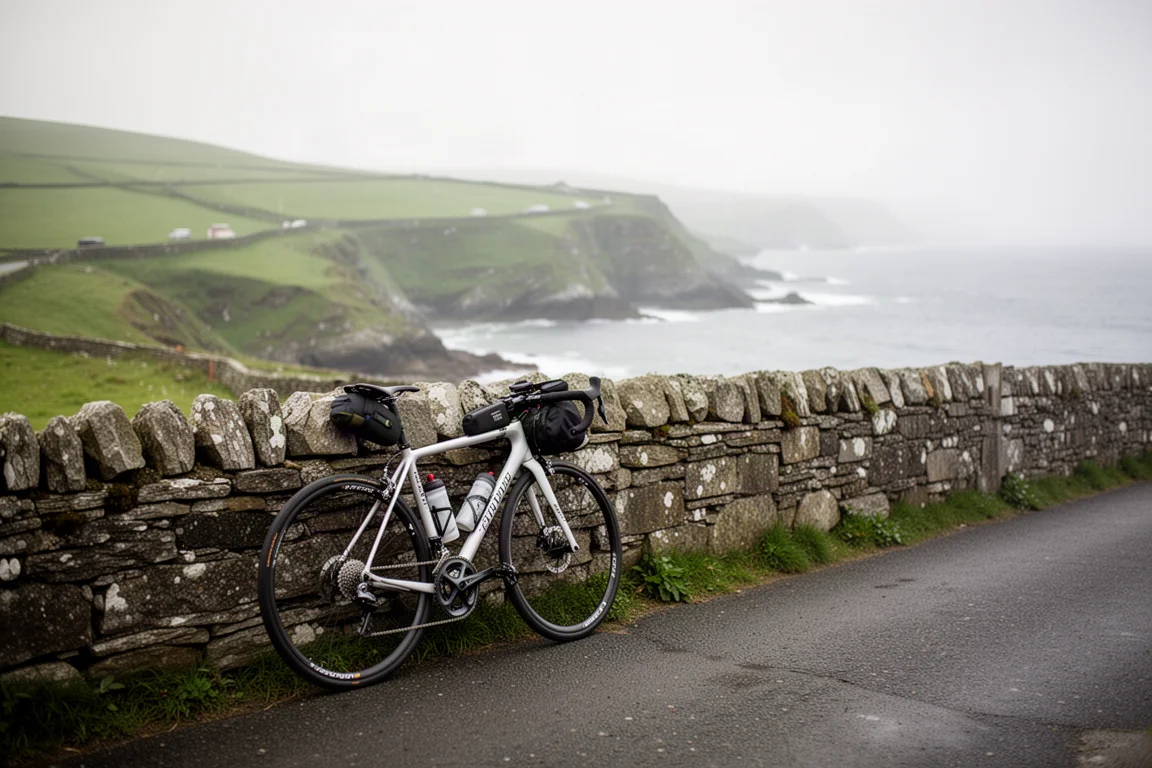
The build here leans fully into that brief, with luggage, dynamo lighting, and a fit that favors a less stretched position over a long, low racing stance.
Frame, Tire Clearance and Aero Design
The headline number is clearance: 48 mm at the front and 42 mm at the rear. That is generous for a road frame, and it is the reason this build can run 40 mm tires without a fight. Most endurance road frames stop well short of that, which makes the Synapse 4 one of the more progressive options in the category.
Cannondale has also shaped the frame with aerodynamics in mind. There is a chunky down tube and aero-influenced tube profiles, balanced by a rear end designed with some built-in compliance. The result is a frame that tries to be efficient without turning harsh.
Practical details matter on a bike like this. There is storage inside the down tube, accessed by a lever under the bottle cage, which holds a mini pump, tire levers, and a tubeless repair kit. Cables are routed internally for a clean look and a small aerodynamic benefit. The trade-off is that changing a stem or handlebar is more involved than on a bike with external routing. The Synapse platform also took a bike of the year title in the previous season.
Gearing and Shifting for Loaded Riding
The Synapse 4 comes with Shimano’s 105 Di2 12-speed groupset, the most affordable road-specific Di2 option in Shimano’s range. Electronic shifting is a real advantage on long rides, because the shift buttons take very little effort to press, which matters when hands are cold and tired after many hours.
Stock gearing is a 50/34 chainset with an 11-34 cassette, which is fine for general road riding. On a loaded bike heading up steep climbs, lower gears help. This build swaps the 105 crankset for a Shimano GRX crankset with 48/31 chainrings, and moves to an 11-36 cassette, which is the largest the rear derailleur can handle.
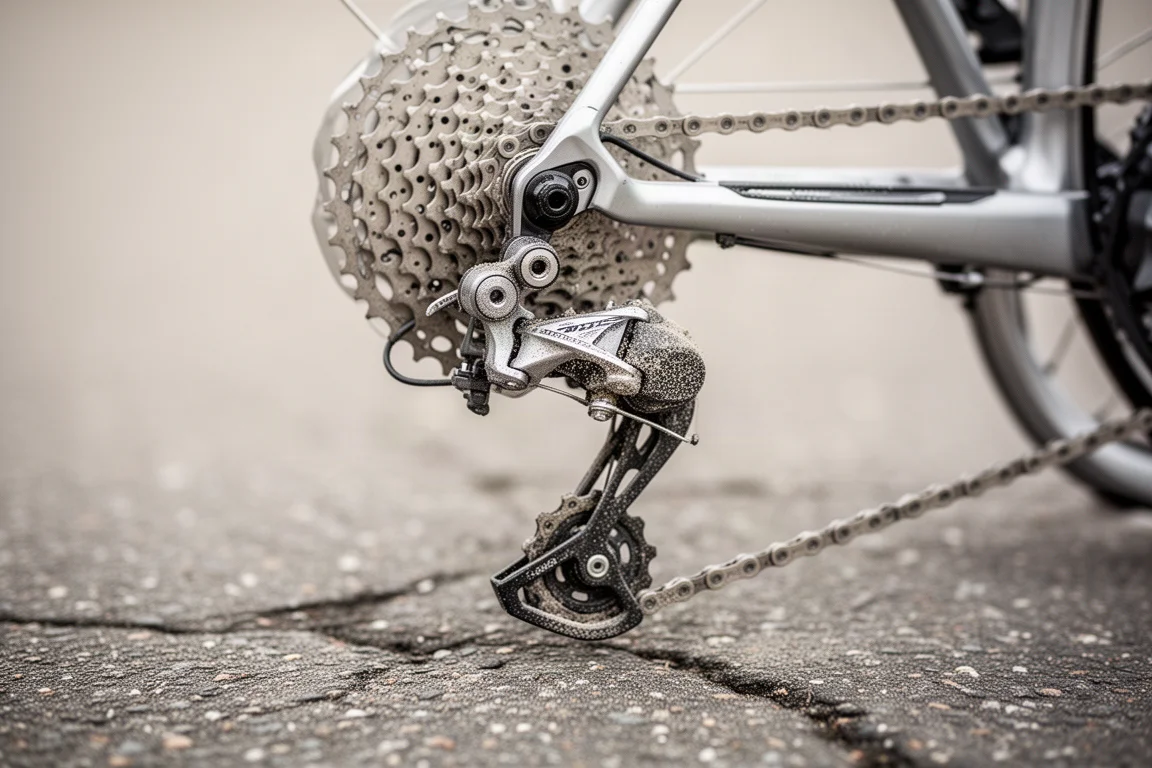
One detail worth knowing if you plan something similar: changing between Shimano road and gravel cranksets means changing the front derailleur as well, because the chainline differs between the two. Aftermarket chainrings smaller than 34 teeth for the 105 crankset are also difficult to source, so the crankset swap is the more practical route to genuinely low gears.
Contact Points, Comfort and Control
The stock bike felt long, with the rider reaching further forward than was comfortable for multi-day riding. The fix was a shorter 60 mm stem with a +6 degree rise, replacing the original 100 mm stem, along with a switch from the stock bars to a Zipp Service Course SL Ergo bar. That bar has a shorter reach and a more compact shape, which brings the controls closer without changing the frame.
Carbon aero extensions add another hand position for long straight sections and a slightly more aerodynamic posture. Because the new bar is wider, the extensions could be spaced further apart, and the GPS computer sits between them on a dedicated mount.
The saddle is a WTB Volt, chosen for its curved profile. That curve holds the rider in one place rather than letting them slide around, which is a different feel from flatter saddles and one that suits long days in the saddle.
Wheels, Lights and Luggage
Wheels are a Hunt 40 carbon gravel wheelset, with rims optimized for tires between 35 mm and 50 mm. Claimed weight is 1,834 g and rim depth is 40 mm, so there is a modest aerodynamic benefit on top of the durability. These wheels have been on the market for several years and have been used in some of the hardest bikepacking events, which is reassuring for a build heading into remote terrain.
Tires are 40 mm Pirelli P Zero Race TLR, a fast road race tire in an unusually wide size. Pressure tuning took some work: 40 PSI felt harsh over small bumps, and the final setting was 28 PSI at the front and 30 PSI at the rear. Whether a race-oriented tire has the puncture resistance to survive 1,000 km of rough coastal roads is the open question.
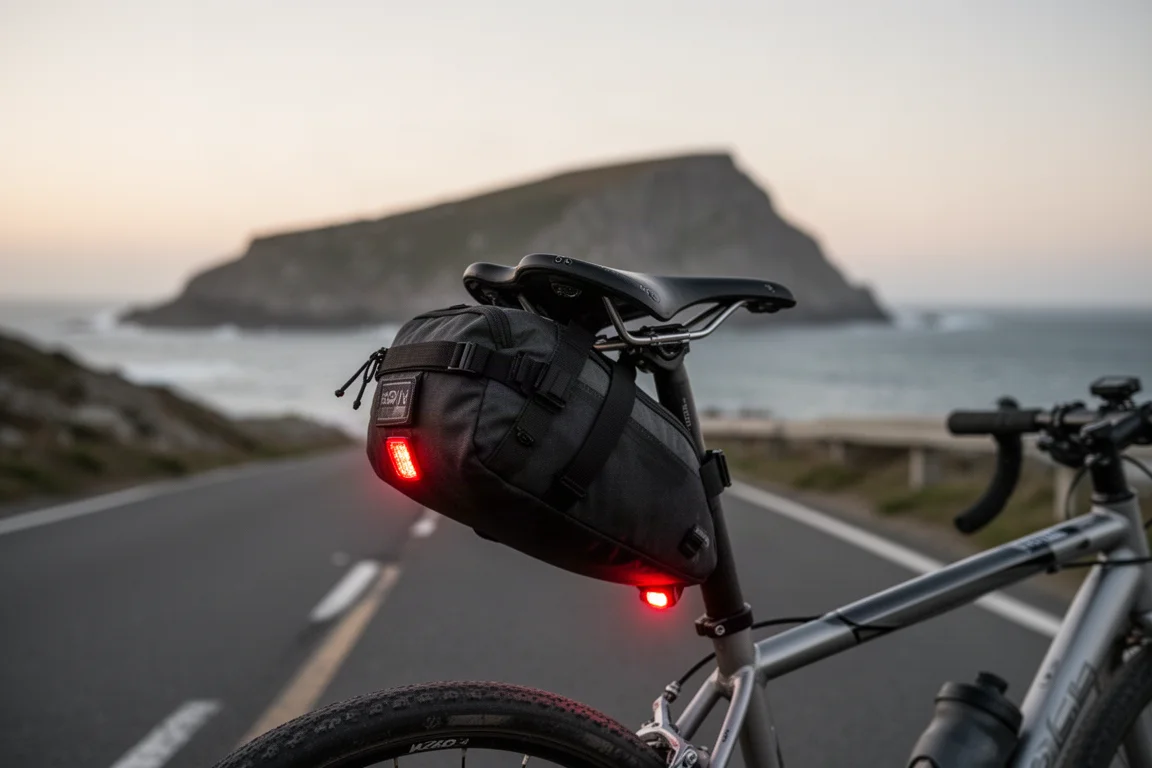
The front light is an Exposure Revo 5 dynamo unit. It has a larger internal battery than earlier versions, can be charged by USB-C or by the dynamo itself, and puts out 2,000 lm, which is enough for faster riding or off-road sections. It can also pass charge through to a phone or GPS while riding, a genuinely useful feature on multi-day routes. At the rear, an Exposure Boost light mounts directly to the saddle bag’s light mount, keeping it high and visible.
Luggage is mostly Apidura Racing Series, which is deliberately minimal, lightweight, and small in pack size. The exception is an Apidura Expedition Saddle Bag, chosen because the smaller racing bag could not hold a sleep system of bivy, down quilt, and a fairly thick mat. That bag includes side pockets for snacks and drinks and a mount for a rear light on the underside. A 2.5 L aero bar bag carries a down jacket, and because the frame has no down tube bolts, a small Tailfin bag handles tools and spares.
Things to Consider Before Buying
A few points are worth weighing before committing to this platform.
Tire choice and pressure matter more than usual. Running 40 mm tires on a road bike opens up comfort and grip, but getting pressure right takes experimentation, and a race-oriented tire may not be the best match for long distances over rough surfaces.
Gearing changes have knock-on effects. Swapping a Shimano road crankset for a gravel crankset requires a matching front derailleur, and smaller aftermarket chainrings for the 105 crankset are hard to find.
Integrated cable routing looks clean but makes cockpit changes more laborious, so it is worth settling on fit before rather than after.
The frame is long enough that some riders will want a shorter stem or a more compact bar to feel comfortable over many hours. Finally, if your event falls during long daylight hours, a 2,000 lm dynamo light is more capability than most riders will need.
Buying Advice
The Synapse 4 makes the most sense for riders whose priority is finishing long, hard routes comfortably rather than chasing outright speed. Its wide clearance is the standout feature, allowing a 40 mm setup that would not fit many endurance road frames while keeping the door open to narrower tires for faster days.
Buyers should plan for fit. Allow time for a proper position check and be prepared to change stem length, bar shape, or saddle profile, since those choices affect long-ride comfort more than most component upgrades. Riders who expect to carry a sleep system should also check bag compatibility early, because bulkier loads call for a larger saddle bag.
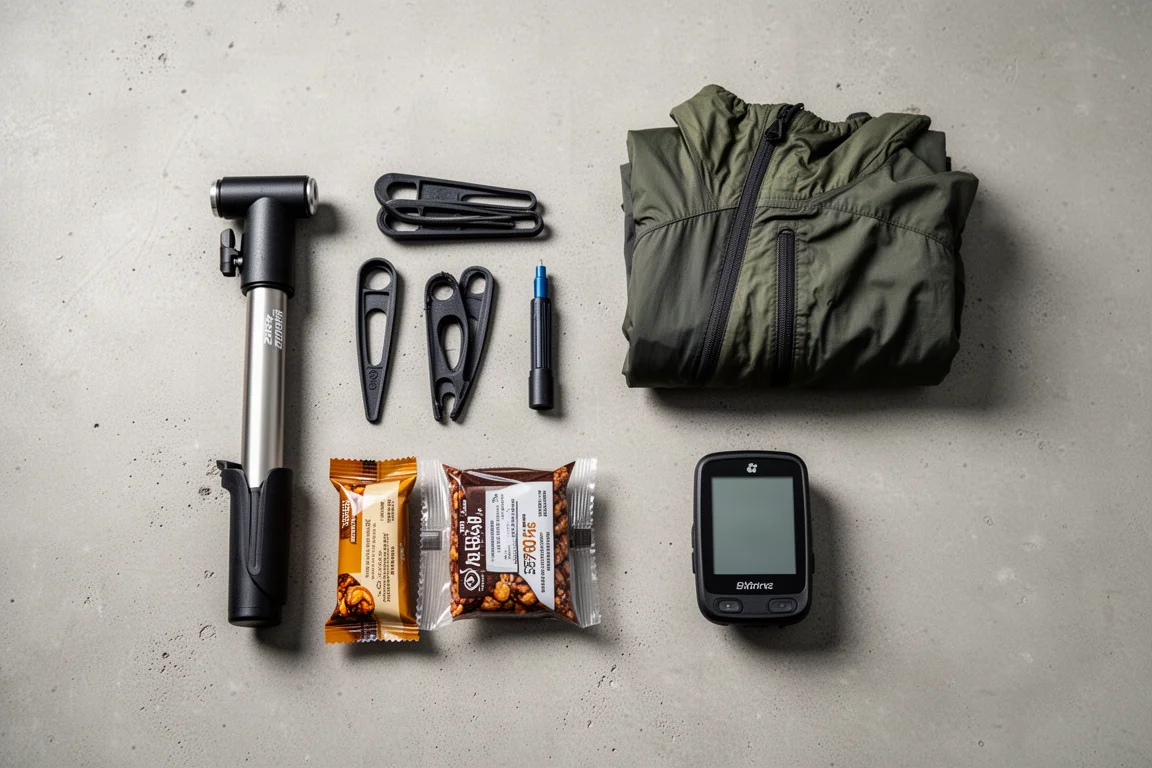
For a bike that will spend its life covering mixed surfaces over long distances, the Synapse 4 offers a coherent package: a compliant, aero-influenced frame, generous clearance, and modern details such as down tube storage and electronic shifting.
Conclusion
The Cannondale Synapse 4 is a convincing answer to a specific question: what does an endurance road bike look like when it is designed around long days rather than short efforts? Wide tire clearance, a frame that balances aero shaping with rear-end compliance, and a groupset that stays easy to operate when tired all point in the same direction. Paired with sensible gearing changes, comfortable contact points, and luggage that stays out of the way, it forms a platform that can handle a 1,000 km route with 12,000 m of climbing.
Riders who want a sharper, more race-focused feel may prefer something narrower and stiffer. For everyone else, the Synapse 4 is a strong foundation to build on.
Product link
View more details for Cannondale Synapse 4
This product is mentioned in the review. Check the specifications, options, and compatibility before buying.
View more details for Cannondale Synapse 4Further reading
Related Reviews
Endurance Road Bikes
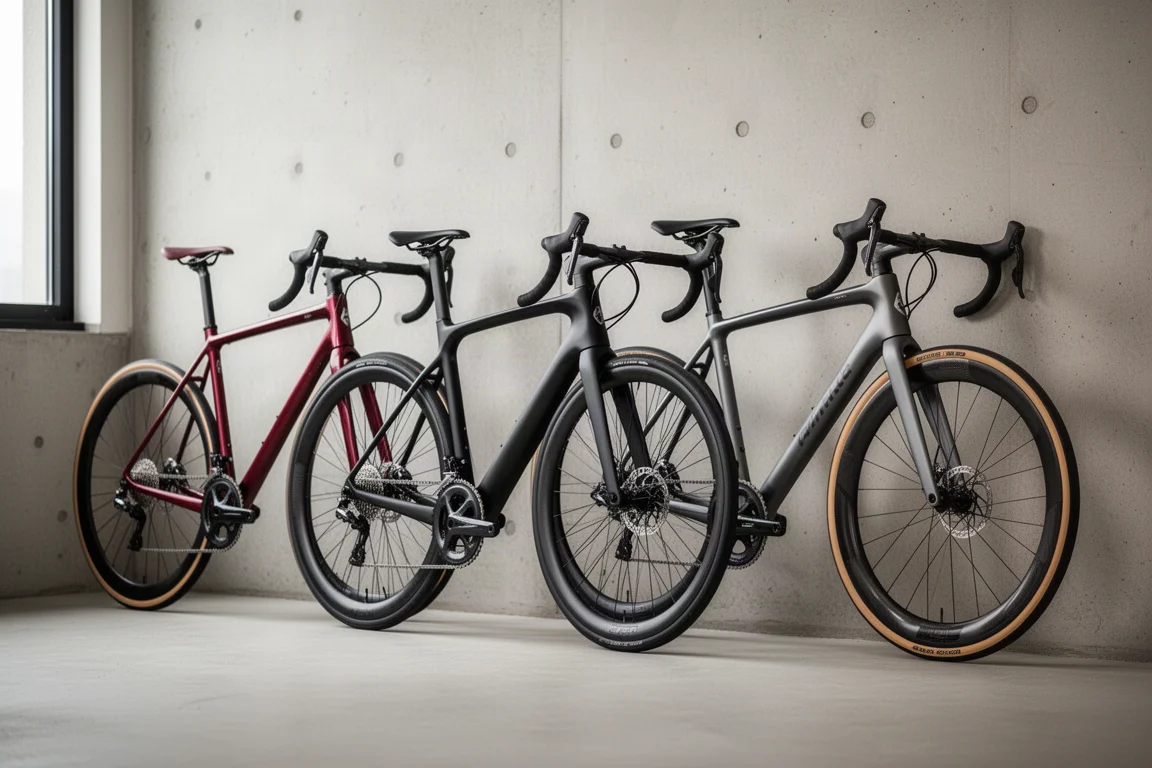
Best Endurance Bikes Compared: Merida Scultura Endurance, Cervélo Caledonia and Vitus Venon Evo RS Aero
Three endurance road bikes tested on long, wet road loops: relaxed classic comfort, sporty road pace, and an all-road machine with genuine gravel room.
Endurance Road Bikes
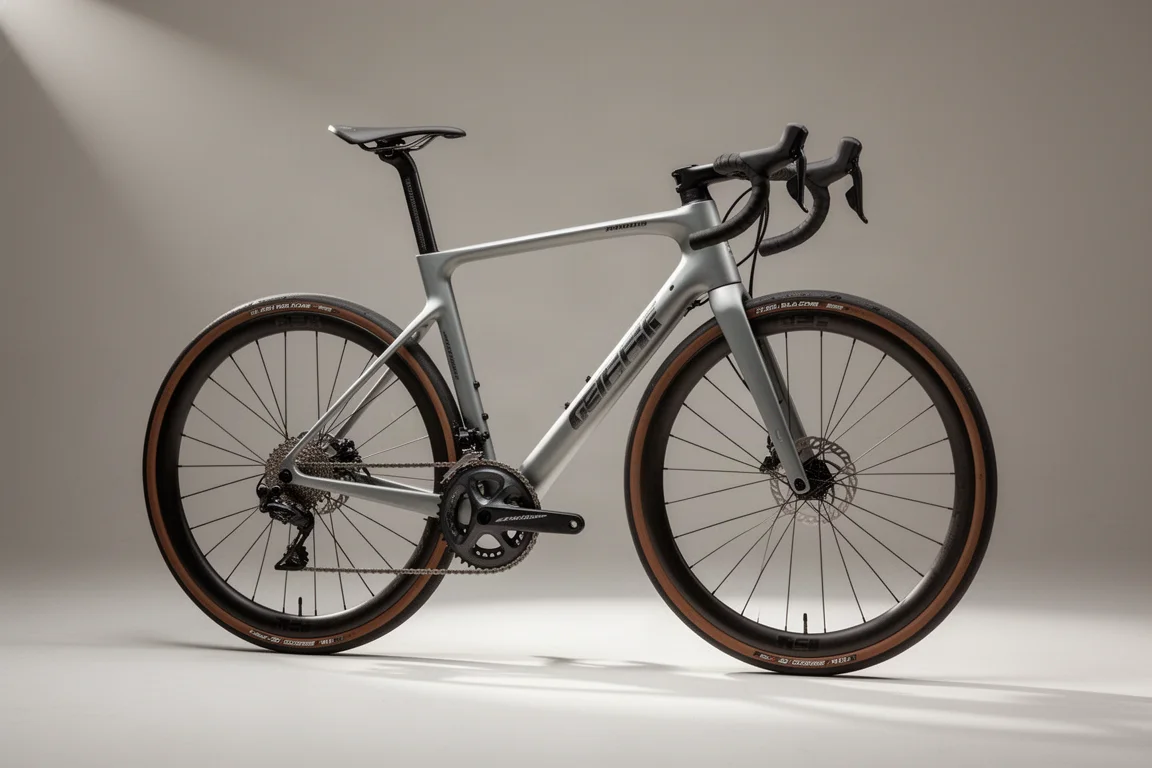
Best Endurance Road Bikes: Eight Comfort-Focused Picks for Speed and Stability
Eight endurance road bikes compared on fit, comfort features, tire clearance, storage and value, from the smoothest carbon options to steel and titanium alternatives.
Endurance Road Bikes
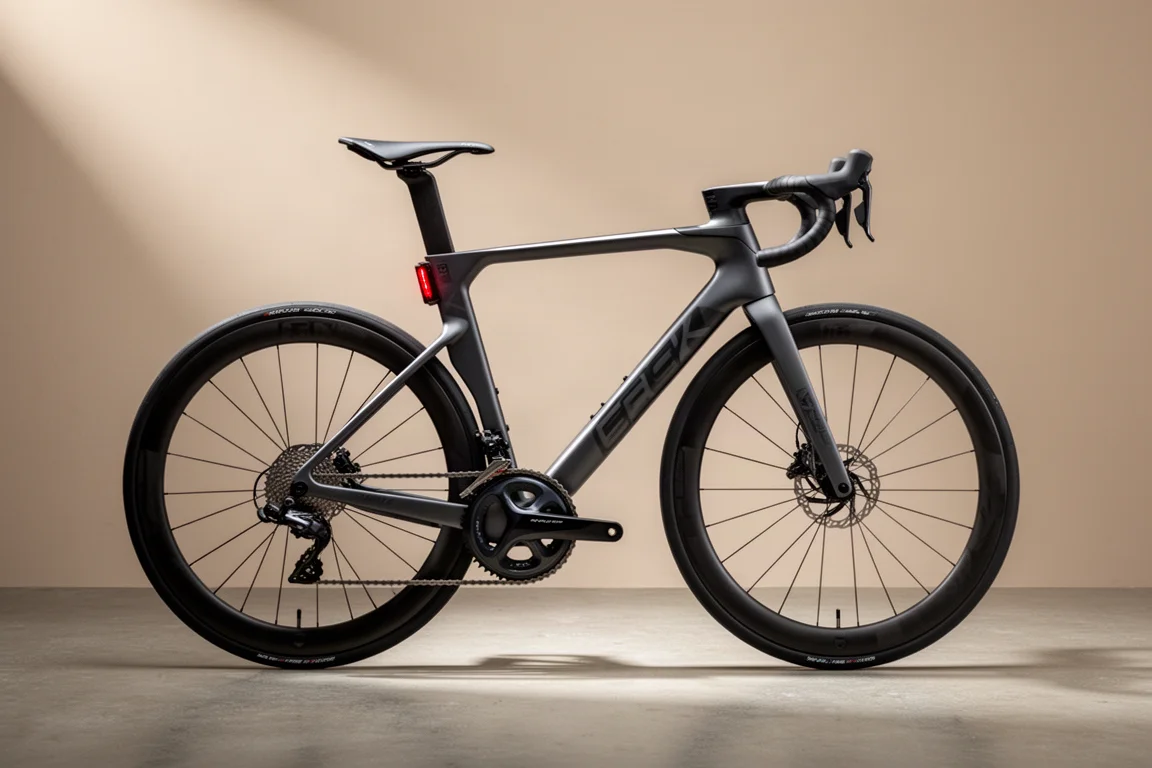
BMC Roadmachine Review: An Endurance Road Bike Built Around 40mm Tires
A closer look at the updated BMC Roadmachine, from its 40mm tire clearance and down tube storage to the trade-offs of its integrated rear light.