Camping Sleep Gear
How to Sleep Better While Camping: Six Pieces of Gear Worth Packing
The gear that fixes the real reasons camping sleep goes wrong, from a thick comfort mattress to a blackout tent and a mask that blocks light and noise at once.
Introduction
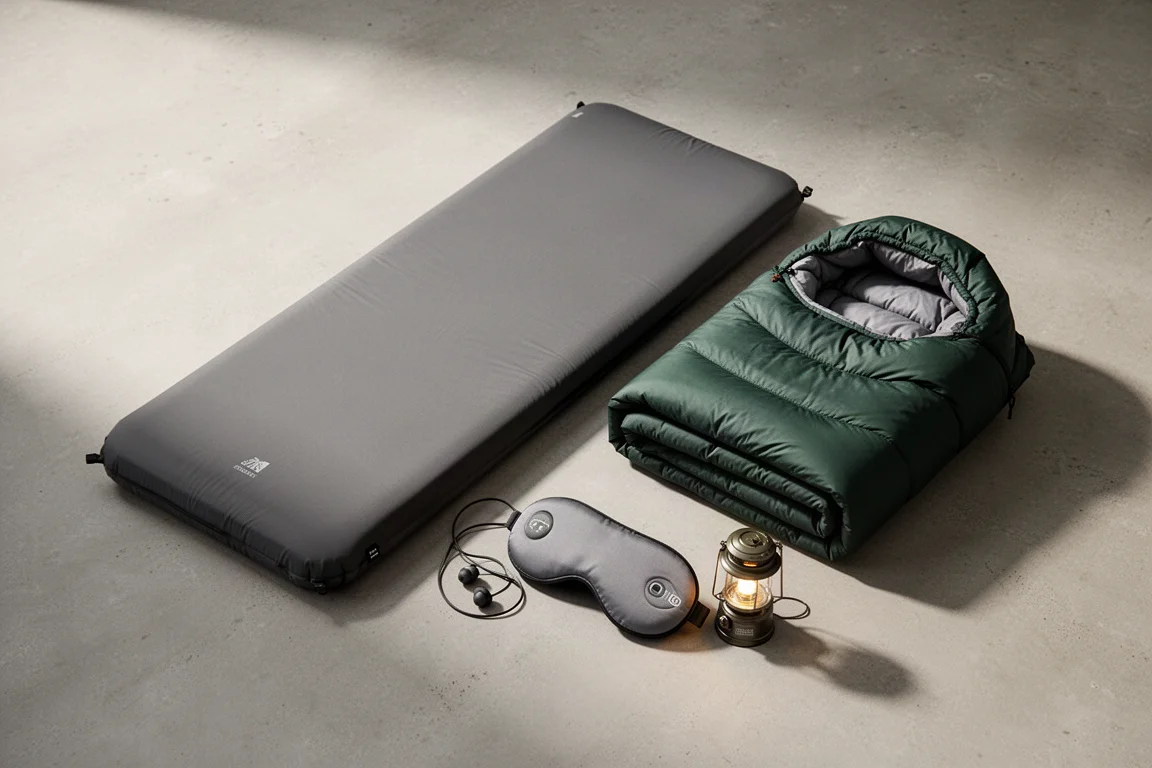
Camping sleep problems are rarely mysterious. The mattress is uncomfortable, the tent is too warm or too cold, light and noise leak in from outside, or a condition such as sleep apnea makes an ordinary night hard and a tent night harder. Each of those has a practical answer, and most of them cost far less than people expect.
This guide works through the gear that addresses each problem in turn, starting with the one purchase genuinely worth spending real money on and finishing with the small accessories that quietly fix everything else.
Why Camping Sleep Goes Wrong
Four issues come up again and again. An unsupportive mattress leaves you bottoming out on the ground. Warm and cold nights are harder to manage in a tent than in a bedroom, because there is no thermostat to adjust. Light and noise behave differently outdoors, with early summer sunrises and neighbouring campers who stay up later than you do. And for anyone who uses a CPAP machine, the question of power can decide whether a trip happens at all.
Two fixes cost nothing. Bring your pillow from home rather than an inflatable travel pillow, because you sleep better with the pillow you use every night. In summer, a blanket or comforter from home often does the job. Pair those with a genuinely comfortable mattress and most warm-weather trips are solved.
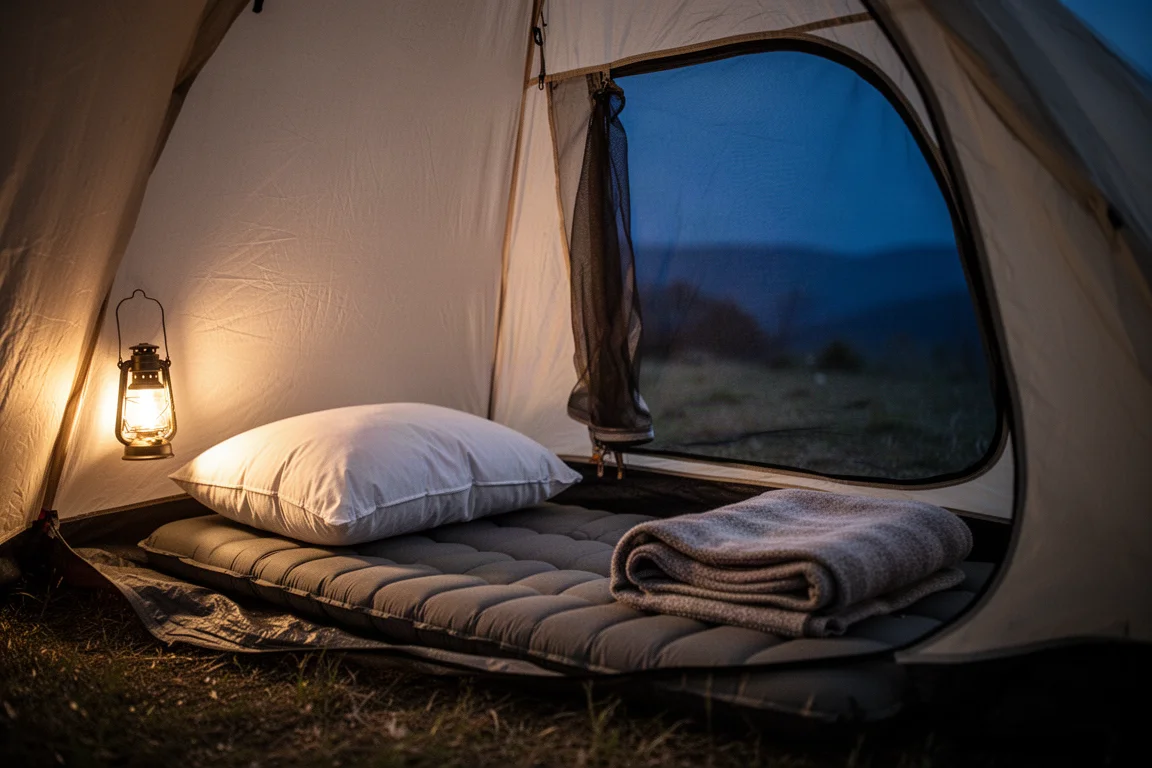
The problems start in the shoulder seasons and in serious heat. Cold spring and autumn nights call for a camping-specific sleeping bag, and a tent that traps heat will ruin a summer trip no matter how good your mattress is.
Start With the Mattress: Nemo Roamer Sleeping Pad
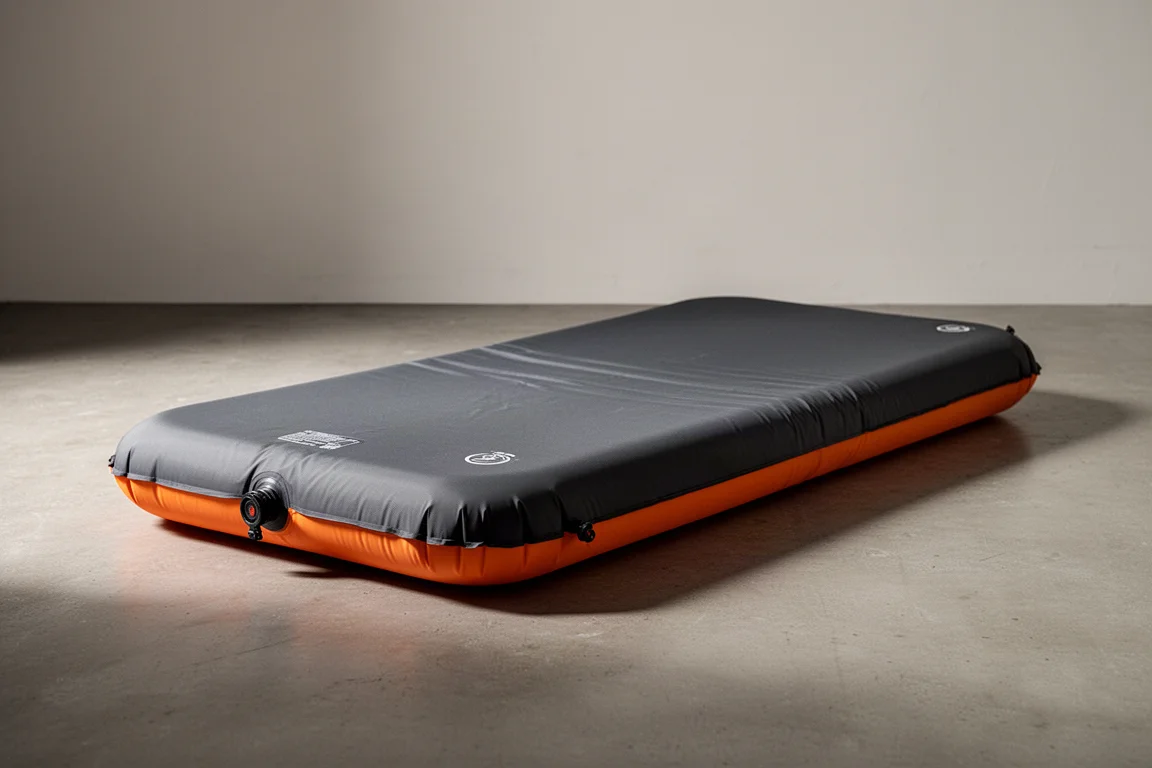
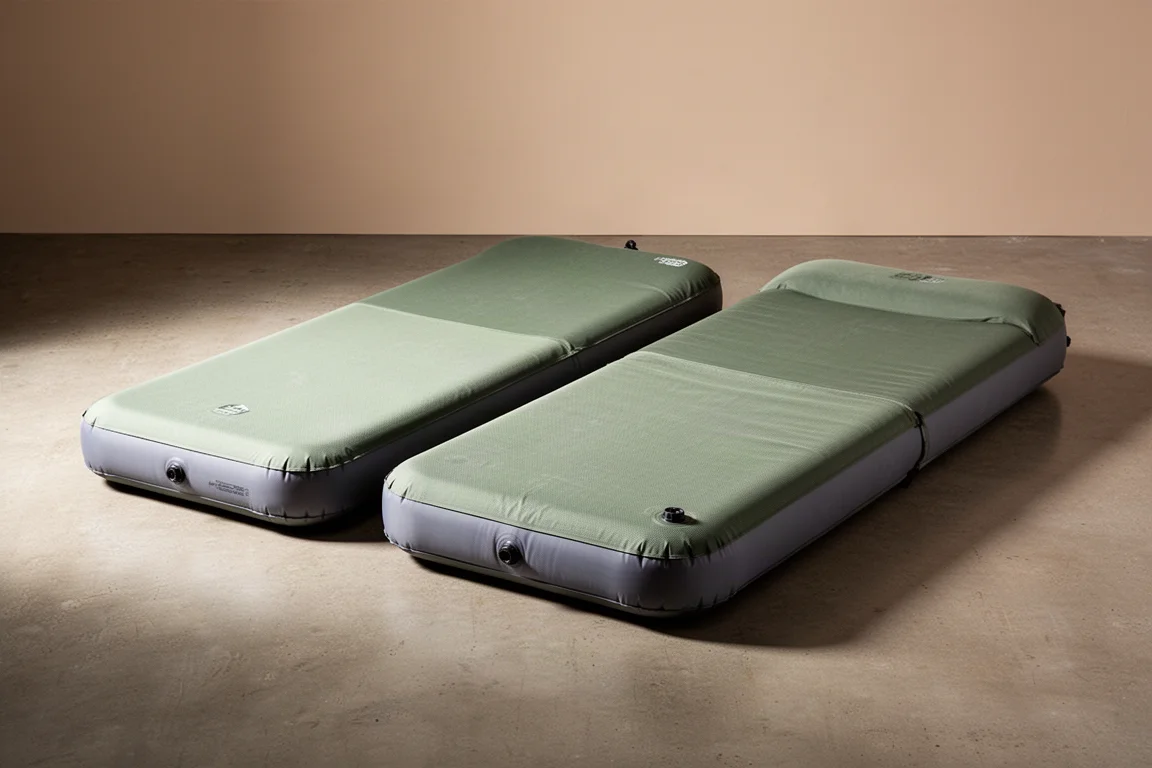
If there is one place to spend real money, it is here. The Nemo Roamer is 4 inches thick, so you never bottom out on it, and the single version is 30 inches wide, which is generous for one person. Its foam-and-air hybrid construction is supportive rather than bouncy, and it stays comfortable through a full night.
The Roamer also comes in an XL version and a double version for sharing. The single is the more modular choice: take one on solo trips, or buy a second and use the toggles at the corners to join the two into a double-width mattress.
The Comfort Alternative: Exped MegaMat
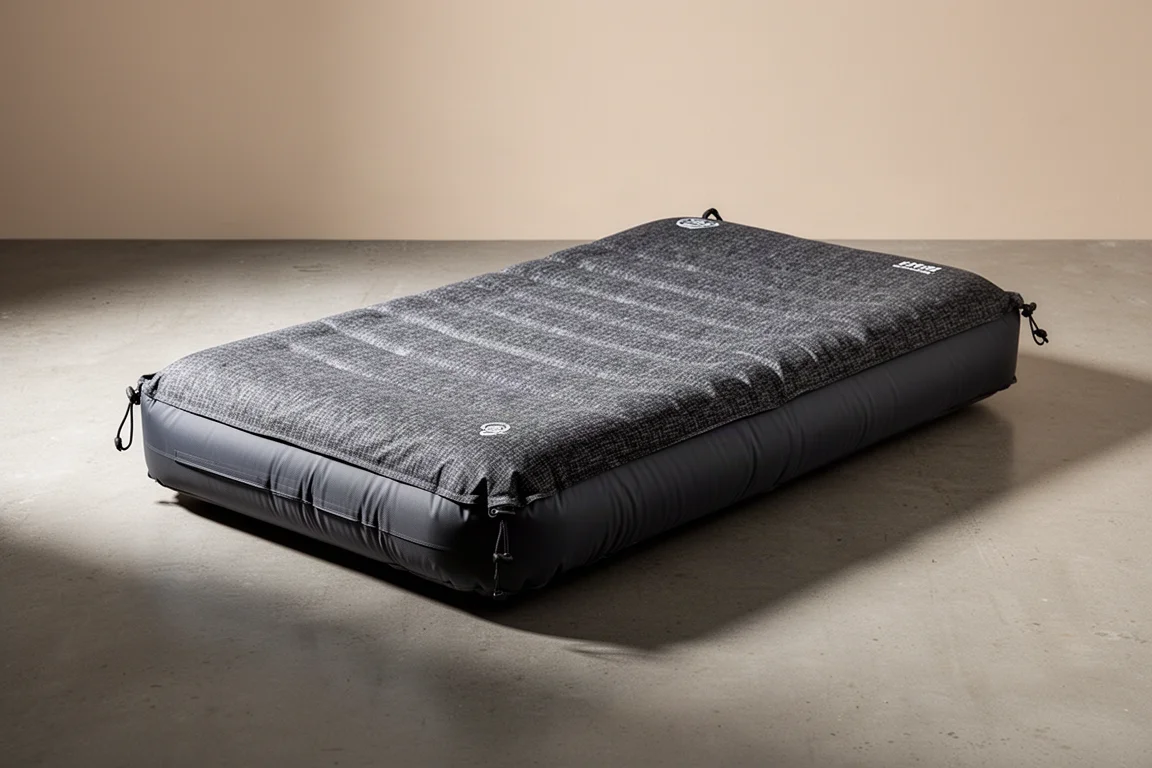
The Exped MegaMat is the other strong option in this category, and it is a very comfortable mattress in its own right. The choice between the two usually comes down to how you want to use it. The Roamer’s advantage is that two single pads can be toggled together, so one purchase works for solo trips and can grow into a double later.
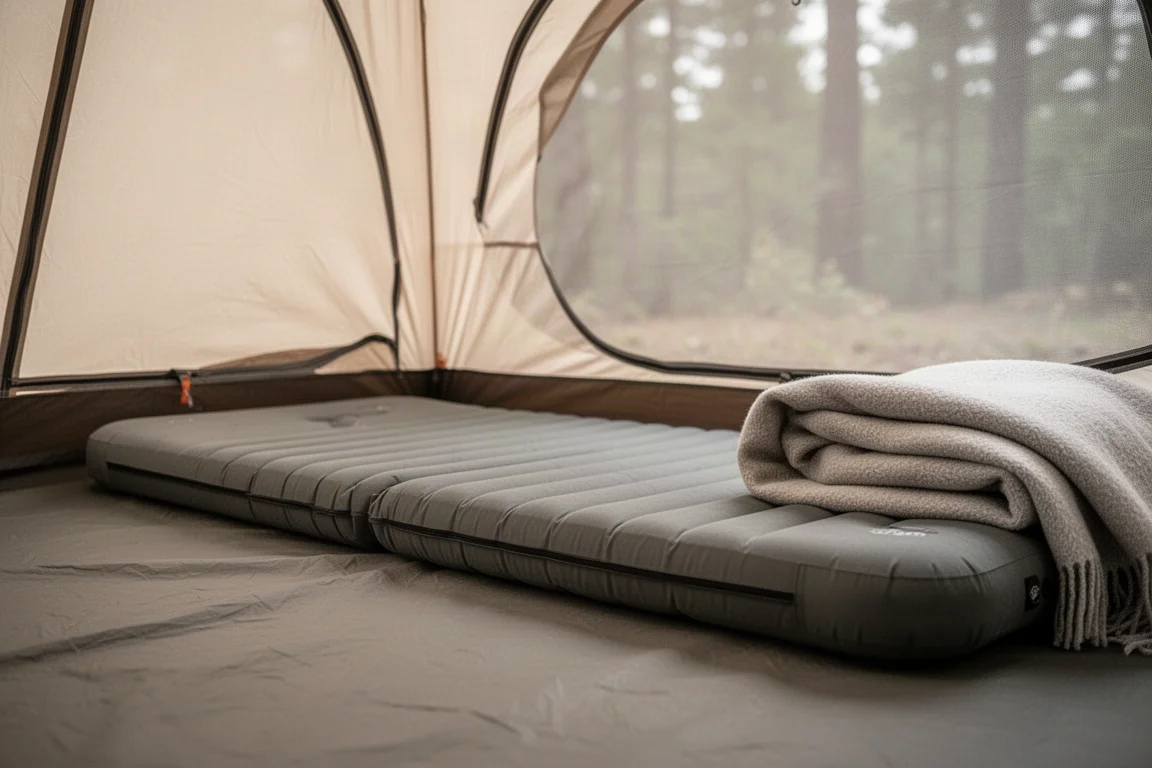
If you mostly camp as a couple and want one wide surface from the start, the MegaMat is worth trying before you decide. Either way, a thick comfort mattress is the foundation that the rest of your sleep setup builds on.
Shoulder-Season Warmth: Nemo Jazz Sleeping Bag
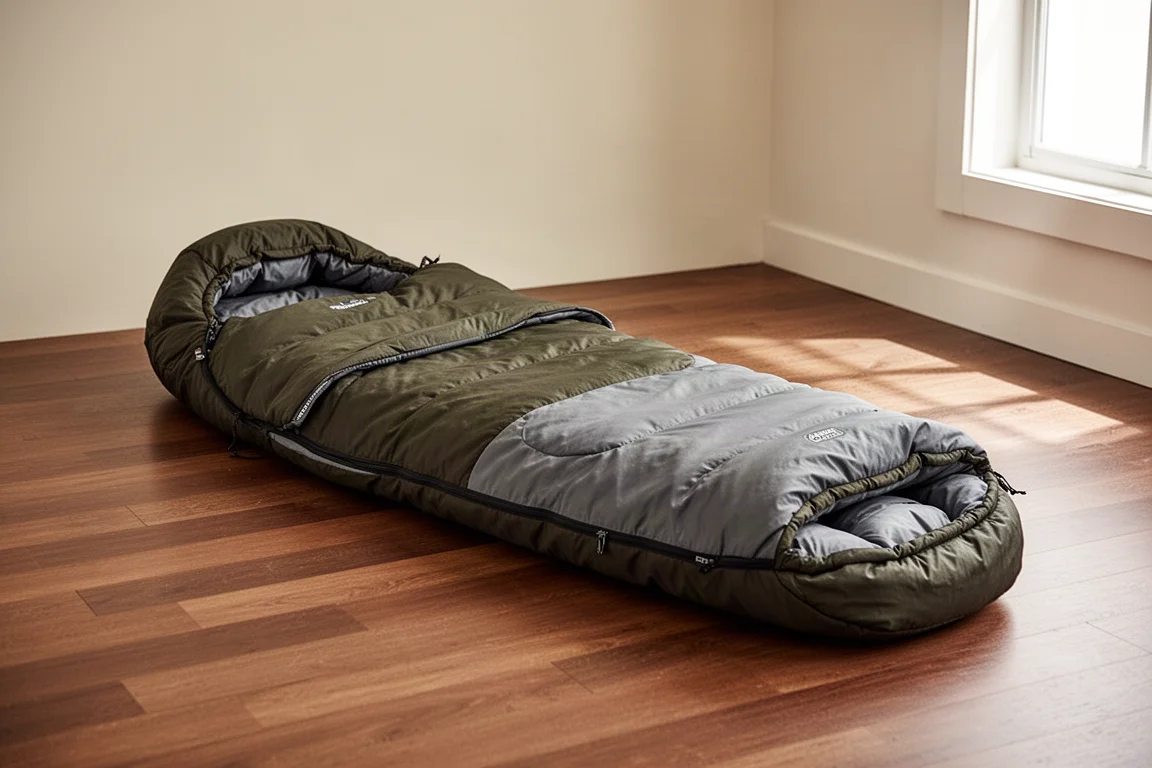
Summer is easy. Spring and autumn are where a camping-specific sleeping bag earns its place, and the target is a bag that can take you down to around the freezing mark. The Nemo Jazz is built for that job.
Its most useful detail is the sleeve on the back, which attaches the bag to the Roamer sleeping pad so it does not slide off during the night. The hood keeps your head warm and gives your pillow somewhere to sit. The bag opens wide like a large sleeping bag, so you can toss and turn underneath it and stay covered. A neck flap tucks around your shoulders to lock in heat. Like the pad, it comes in a double-wide version, or you can zip two single bags together into one large bag.
Staying Cool: Ventilation and the Nemo Aurora High-Rise Tent
Staying warm is fairly simple. Staying cool takes more thought. Tent air conditioners exist, but they are overkill for most trips. Ventilation does most of the work, and the Nemo Aurora High-Rise is a good example: windows on both sides open directly to the outside air, so you get a genuine cross breeze instead of air trapped behind a fly.
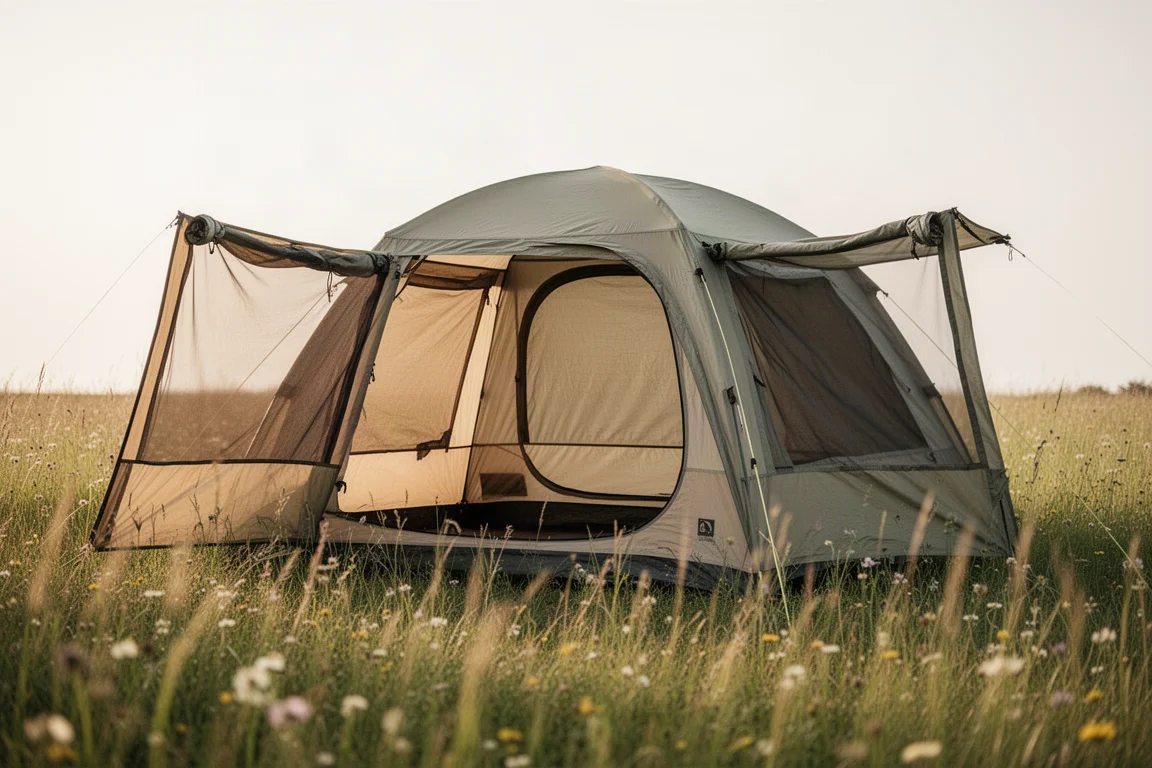
Plenty of tents ventilate well, so this is a feature worth checking before you buy if you camp in hot summer conditions. The Aurora High-Rise is a standard tent without a blackout lining, which means it brightens early on summer mornings.
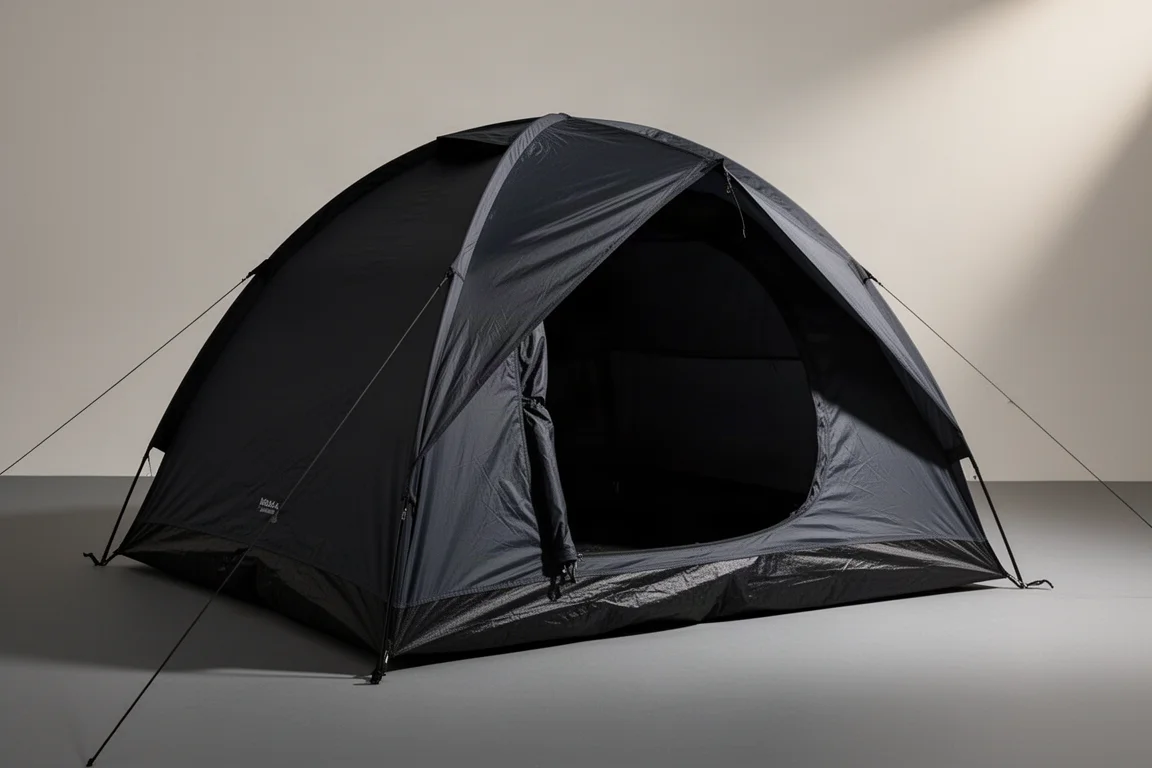
Blocking Light and Heat: Decathlon Fresh and Black Tent
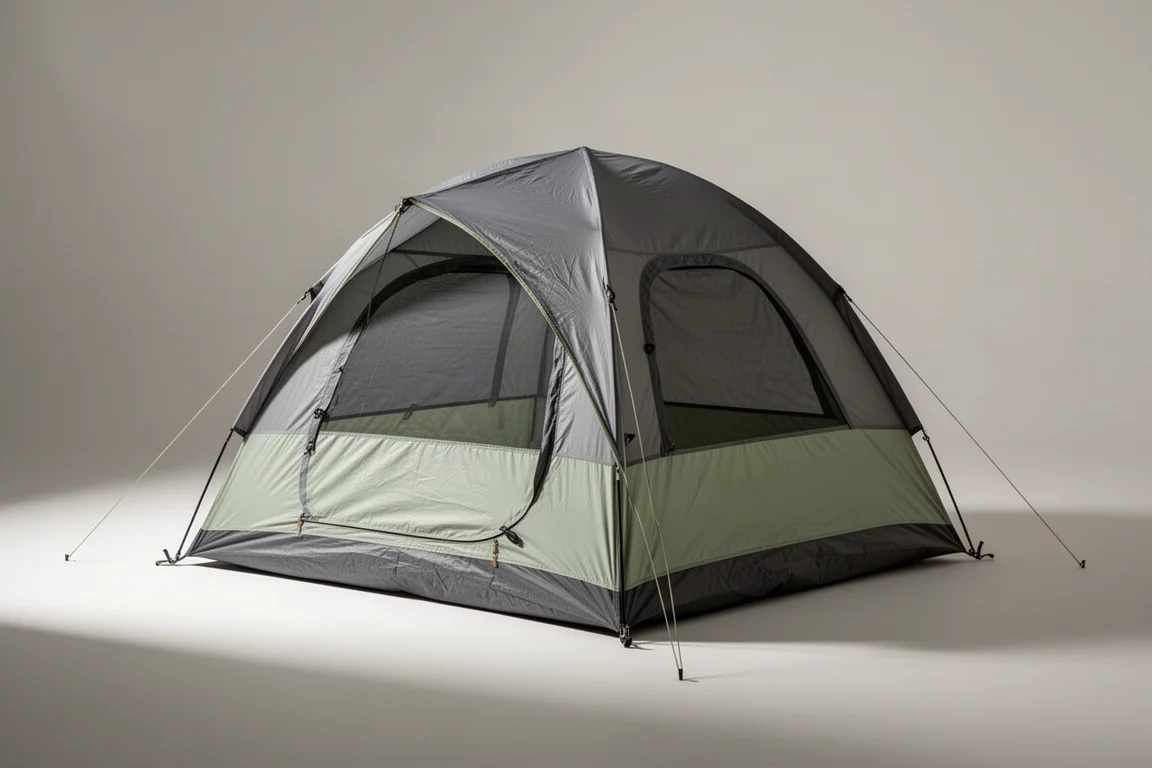
Blackout tents solve two problems at once. The solid fly and inner block almost all light, and because sunlight is not streaming into the interior, you avoid the greenhouse effect that turns a tent into an oven by mid-morning.
The light control matters more than it sounds. In summer it can be bright by 5 a.m. and stay light until 10 or 11 p.m., which is not enough darkness for most people to sleep well. In a direct comparison the difference between a blackout tent and a standard tent is dramatic, and it makes daytime naps realistic, whether you are at a campsite or at a festival.
Light and Noise Together: Manta Sleep Mask
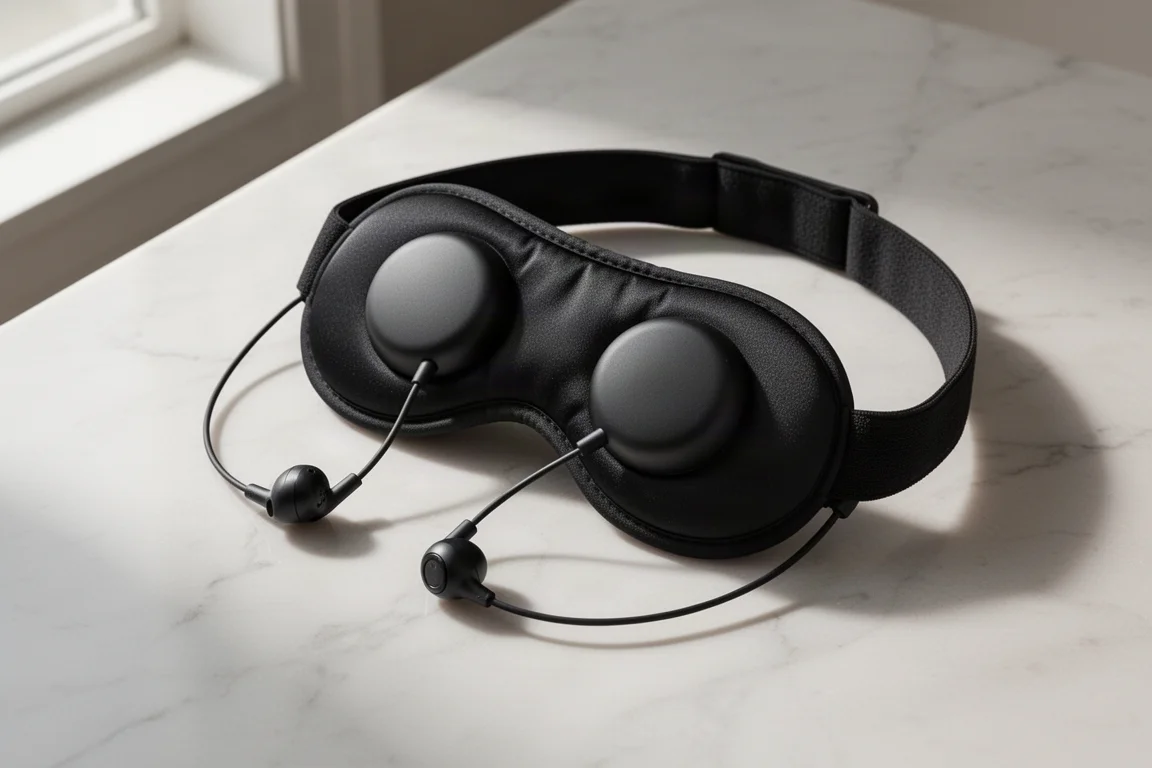
If you would rather not commit to a blackout tent, an eye mask handles the light anywhere you pitch. The Manta Sleep Mask goes further by building earbuds into the mask, so it deals with noise at the same time, including the neighbouring campsite that will not quiet down.
It costs more than the budget masks that sell for roughly $3 to $50, and the difference shows in two specific ways. On cheaper designs the earbuds dig into your head when you lie on your side; the Manta’s earbuds are low profile enough that you do not feel them. The eye cups also seal properly over the eyes without pressing on them, which is why the mask can shut out bright sun completely. The earbuds double as a way to play white noise, which makes the mask useful at home as well as outdoors.
Which Setup Fits Which Camper
Build the setup around the conditions you actually camp in.
For warm-weather trips, a comfortable mattress plus your pillow from home and a blanket from home covers most nights. Cold sleepers, and anyone camping in spring or autumn, should add a bag like the Nemo Jazz. If you camp in serious summer heat, prioritise ventilation or a blackout tent, and consider a fan. A portable power station is a bigger purchase, but it can run a fan all night or keep a CPAP machine going for a full eight hours, which opens camping back up for people who depend on one.
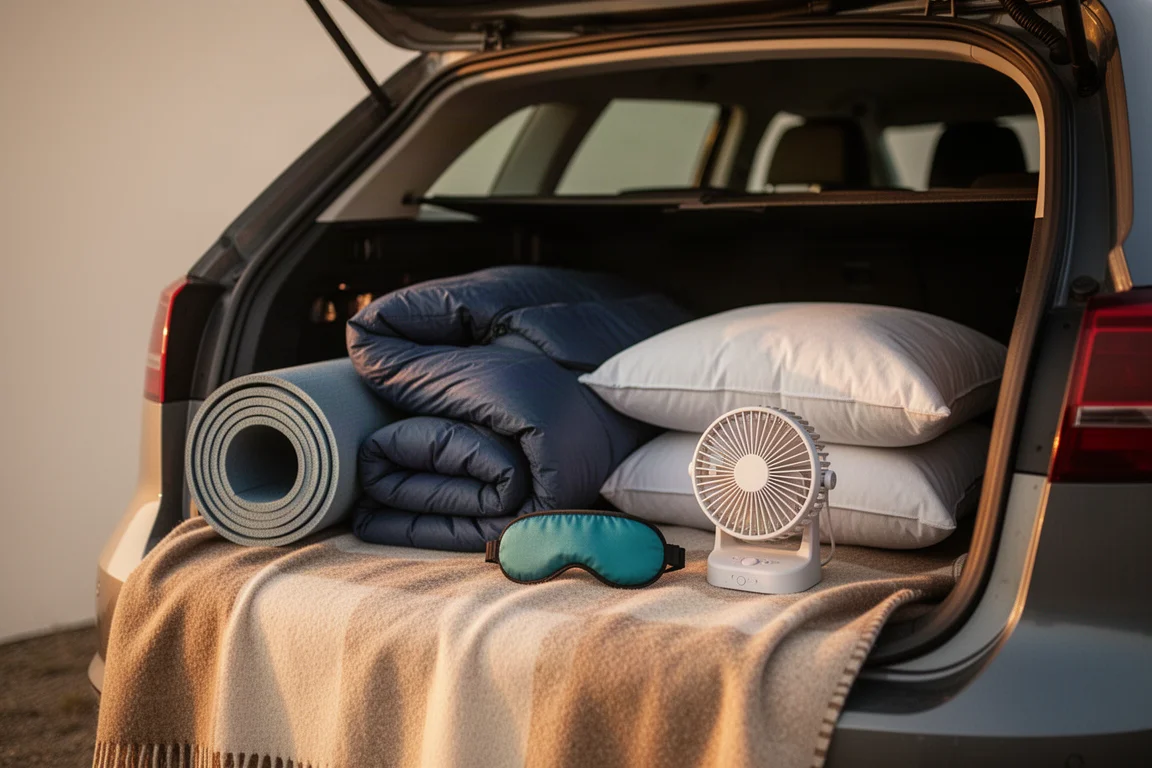
If light and noise are your main obstacles, or if you want the same dark, quiet conditions in a hotel room or at home, the sleep mask is the smallest and most portable fix of the group. None of these items is complicated on its own. Together they cover the mattress, the temperature, the light and the noise, which is the whole list.
Conclusion
Better camping sleep is mostly a matter of matching gear to the problem. Start with the mattress, because comfort is the hardest thing to fake. Add warmth for the shoulder seasons, ventilation or blackout fabric for hot weather, and a mask for light and noise. Bring your own pillow. Do those things and the tent stops being the reason you wake up tired.
Further reading
Related Reviews
Camping Sleep Gear
How to Sleep Better While Camping: Six Pieces of Gear Worth Packing
A practical guide to the camping sleep problems that keep people awake, and the mattress, bag, tent, and mask choices that solve them.
Camping Sleep Gear
SkyMac Air Mattress Long-Term Review: One-Person and Two-Person After a Year
A year of regular use answers the biggest question about the SkyMac self-inflating air mattresses: how well they hold up. Here is how the one-person and two-person versions perform.
Camping Sleep Gear
Teton Sports Adventurer Cot Pad Review: Comfort for Cot Camping
A practical cot pad that makes sleeping and sitting on a cot far more comfortable, with clear limits on insulation and ground use.