Camping Sleep Gear
SkyMac Air Mattress Long-Term Review: One-Person and Two-Person After a Year
A year of regular use answers the biggest question about the SkyMac self-inflating air mattresses: how well they hold up. Here is how the one-person and two-person versions perform.
Introduction
The SkyMac self-inflating air mattress earned a following among car campers by delivering the feel of a premium insulated pad at a price well below the premium tier. The open question was always durability. The manufacturer does not publish the exact materials used, so long-term wear was difficult to predict, and the brand is not a household name. After roughly a year of regular use across dozens of trips, that question now has a practical answer.
This article covers both sizes: the one-person pad and the wider two-person version. They share the same construction and the same self-inflating design, and both have now been used enough to say something meaningful about how they hold up.
What Both SkyMac Pads Have in Common
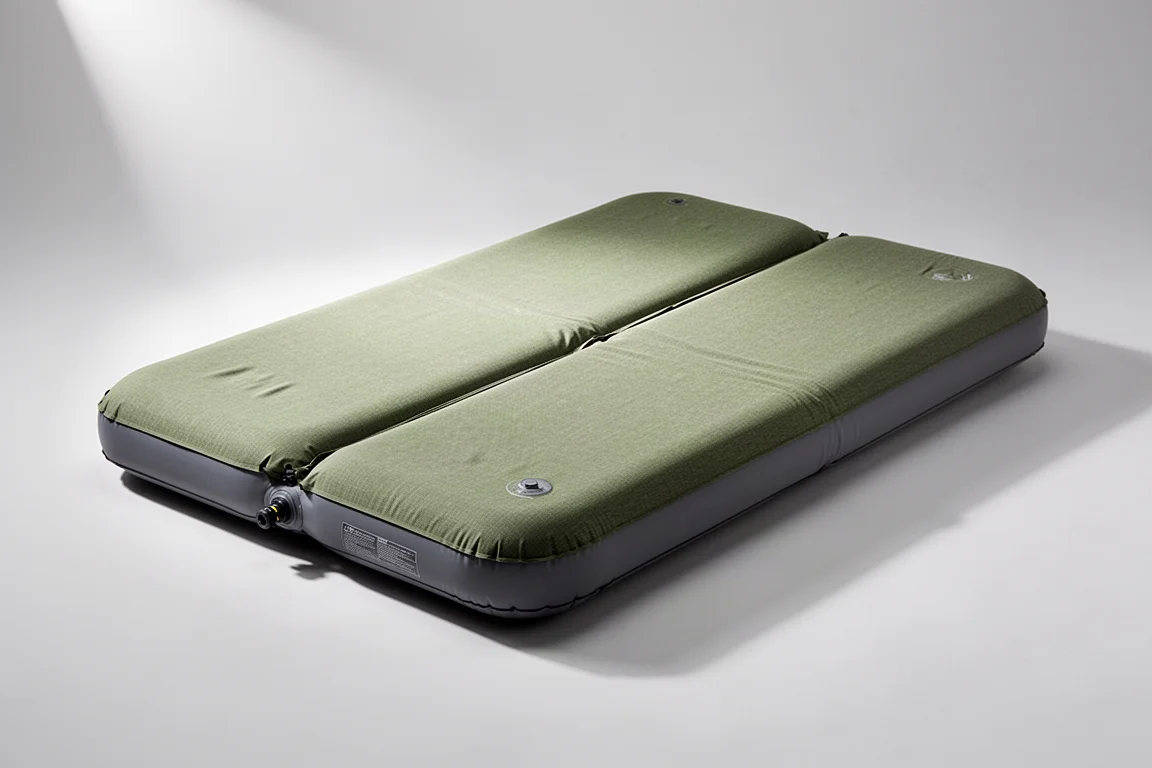
Both sizes use a self-inflating design with a foam core inside a fabric shell. The manufacturer does not state which materials are used. The outer surface behaves like a polyester-type fabric over an open-cell foam layer. In practice the surface feels softer and more premium against the skin than a basic PVC inflatable mattress, and the foam core is what gives each pad its structure and its resistance to bottoming out.
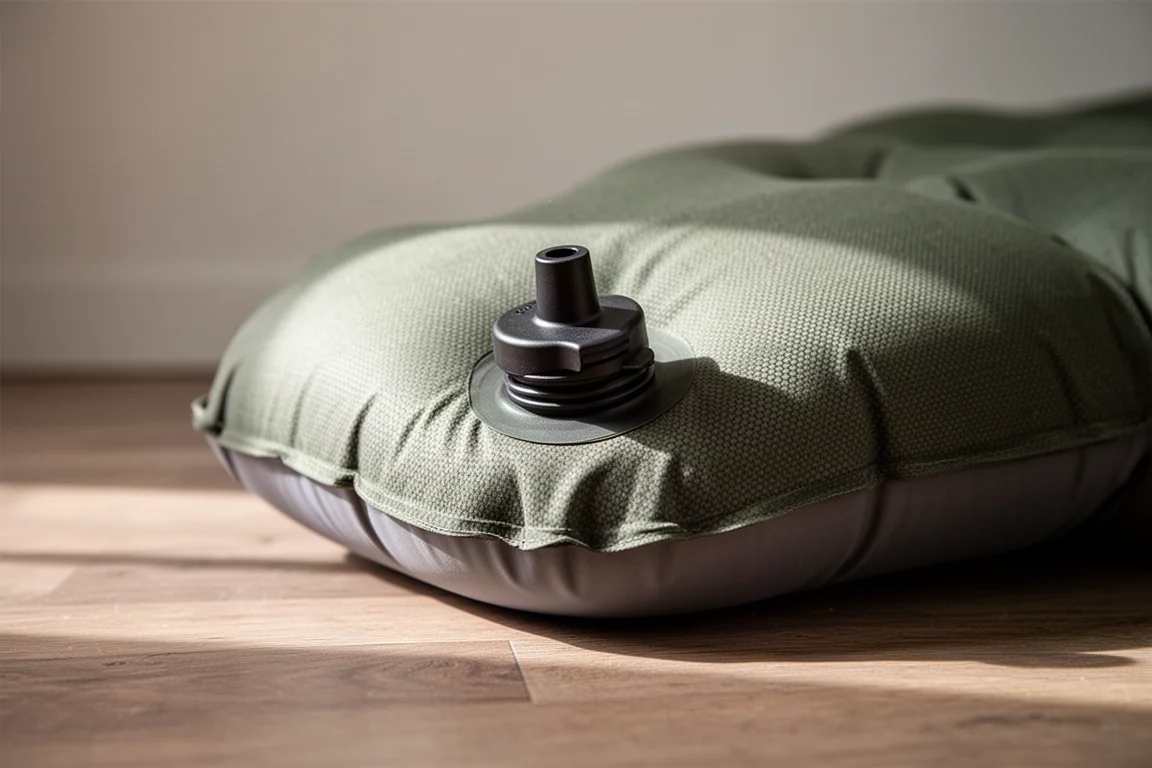
Setup is straightforward. Open the valve, let the pad draw in air on its own for three or four minutes, then close the two-stage valve and top it up by mouth to reach the firmness you prefer. Self-inflation gets the pad to roughly 70 percent, which is normal for this category, and the remaining air is what lets you dial in a softer or firmer feel.
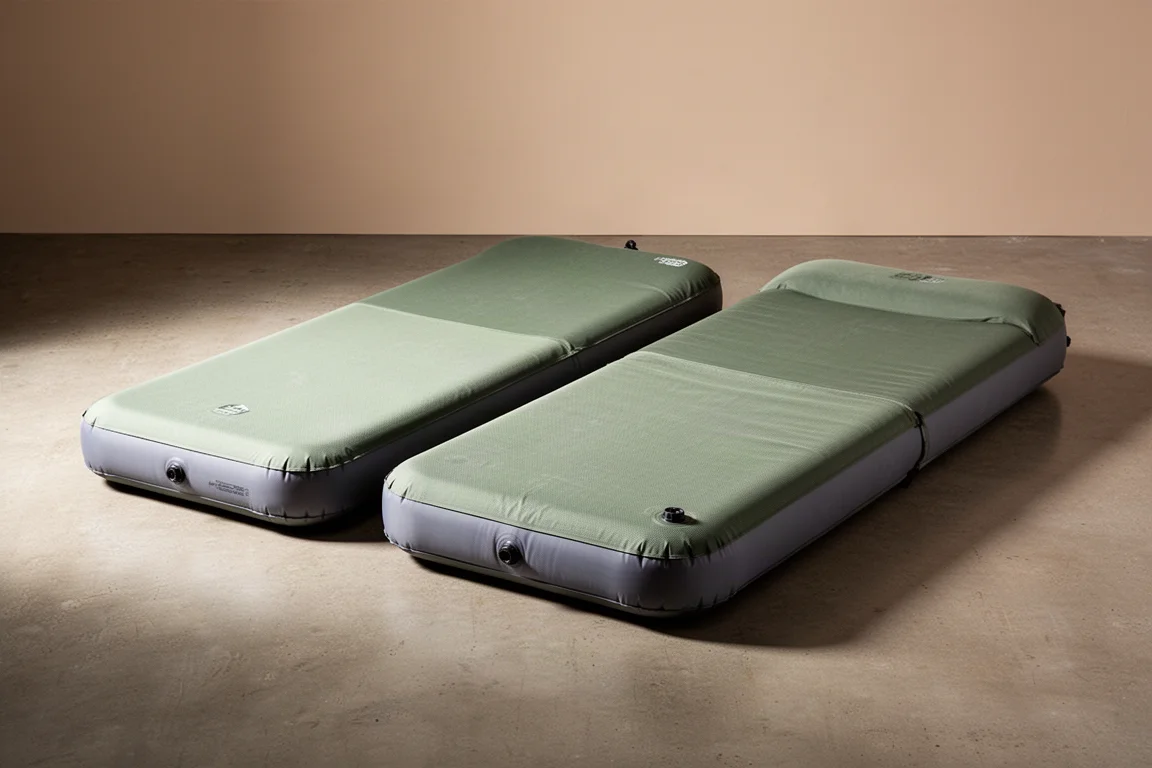
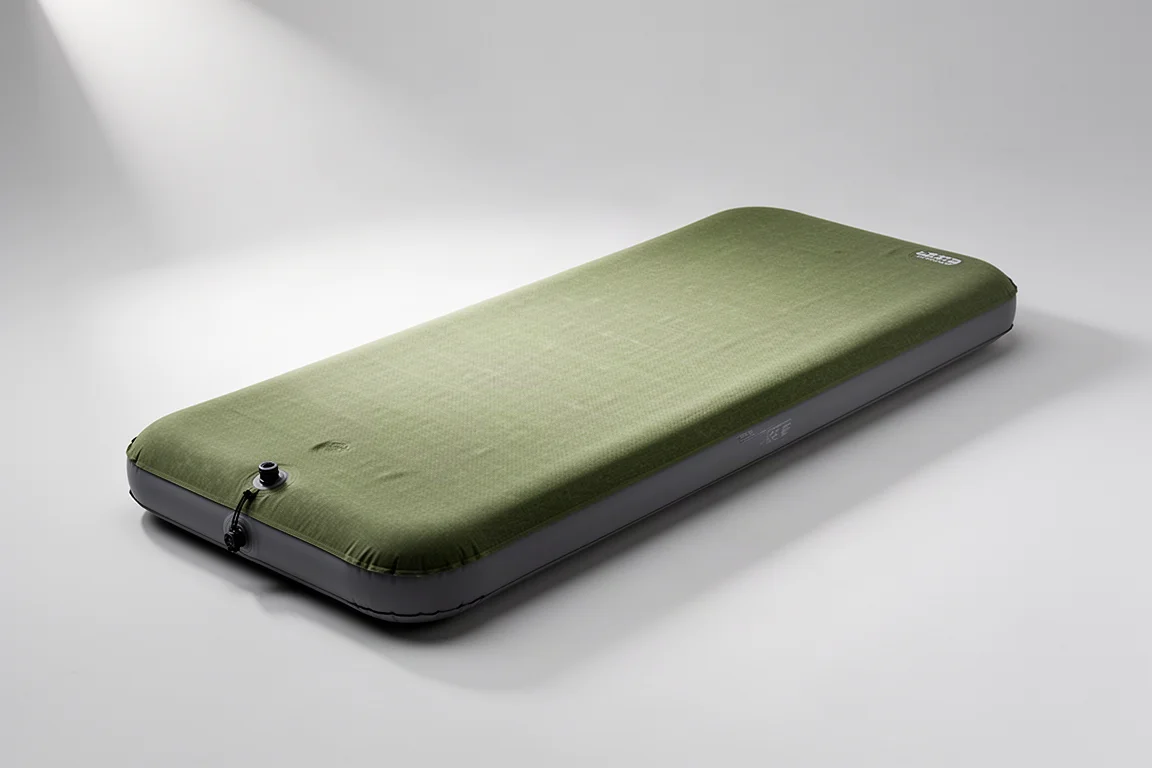
The shell is green on top and gray on the underside on both sizes. The one-person version measures 79 inches long, 28 inches wide and 4 inches thick, and weighs 7 pounds. The two-person version is essentially twice as wide and weighs 14 pounds. Neither is a backpacking pad. The thickness and the weight place both firmly in the car camping, truck camping and trailer category.
SkyMac One-Person Air Mattress: A Year of Regular Use
The one-person pad has been used on dozens of trips over the past year, in the back of a truck in both warm and cold weather, in an SUV, and inside a trailer. It has held up with no leaks, no holes and no loss of shape. The 4-inch thickness does real work in cold conditions by keeping ground chill from reaching the sleeper, which makes it a sensible choice for three-season and winter car camping.
Comfort is the strongest argument for this pad. It is thick enough that side sleepers do not push through to the ground, and the foam core keeps the surface stable rather than bouncy. Firmness is adjustable through the valve, so the same pad can feel plush or supportive depending on how much air is added.
The main trade-off is packing. Rolling the one-person pad takes some effort. It has to be rolled tightly by hand with body weight pressed down on it to push out trapped air. It is manageable, but it is not a five-second job.
SkyMac Two-Person Air Mattress: Space for Two
The two-person version is essentially two pads joined together, roughly twice as wide as the single. At 14 pounds it stays in the car camping category, but the extra width makes it a comfortable shared sleeping surface for couples or for two people who would rather not sleep on separate pads.
One practical advantage of the joined construction is stability. The foam core is thick enough that the pad stays rigid when one person gets up during the night, so a partner is unlikely to be disturbed. Firmness adjusts the same way as on the single version, and the pad holds that firmness through the night without leaking.
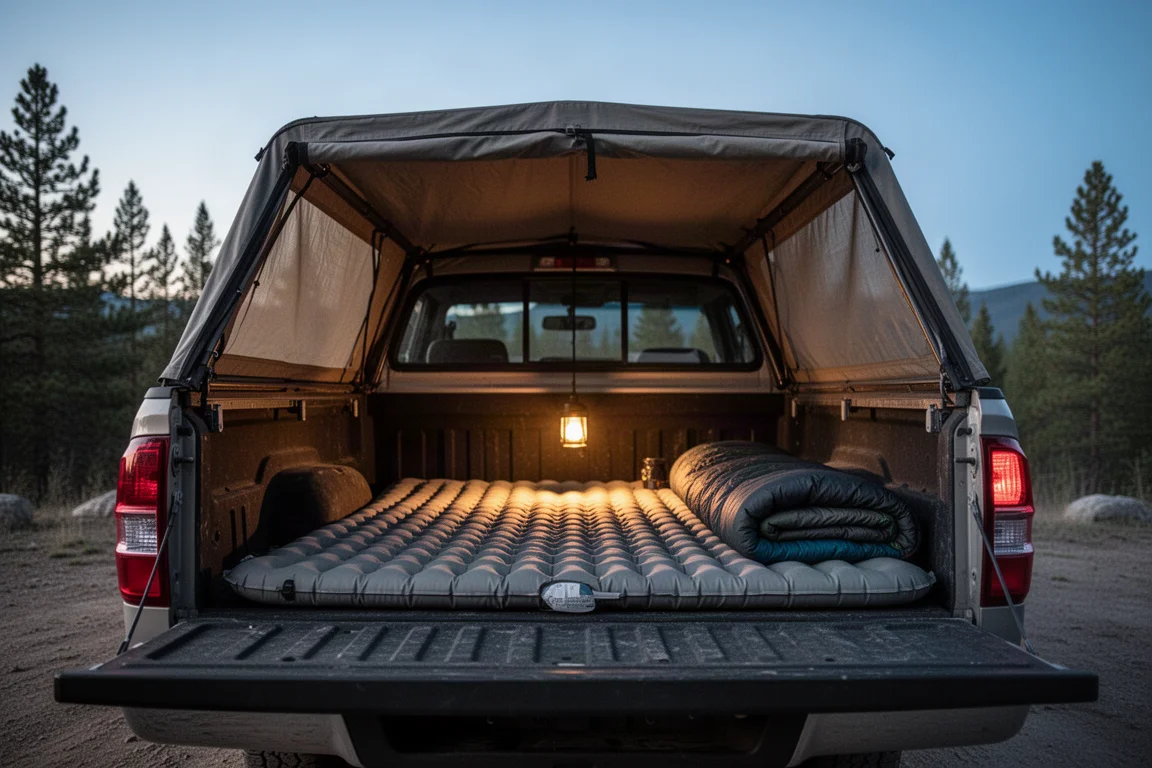
It has been used for roughly a dozen trips and has shown the same durability as the single version, with no leaks and no punctures.
The two-person pad is much harder to roll up. Because it is two connected sections, it has to be folded in the middle before it can be rolled, and the included storage bag is on the small side, so the pad has to be rolled very tightly to fit. Two people working together makes the job noticeably easier than one person working alone. This is the biggest drawback of the larger size, and it is worth knowing before buying.
Durability and Build Quality After a Year
The original concern with these pads was simple. The materials are not published and the brand is not a well-known name, so buyers had no reference point for how the fabric and foam would age. A year of use across many trips has not produced any leaks, holes or seam failures on either size. Both pads still inflate, hold pressure and deflate as they did when new.
That does not make them indestructible. This is still an air mattress built from fabric and foam, and it rewards reasonable handling. Keep it away from sharp objects and rough ground, use a ground sheet where possible, and store it dry. Treated with basic care, the durability record so far is reassuring rather than fragile.
Comfort, Warmth, and Sleeping Position
Comfort is where these pads separate themselves from inexpensive inflatable mattresses. The foam core and 4-inch thickness mean sleepers do not push through to the ground, and side sleepers in particular can sleep through the night without pressure points. The surface also feels better against skin than a bare PVC mattress.
Warmth is the other practical benefit. No R-value is published, so there is no official insulation figure to quote, but the thickness of the pad does a good job of blocking cold from below. Used in a truck bed or an SUV in winter conditions, it kept the cold from coming through the base of the pad.
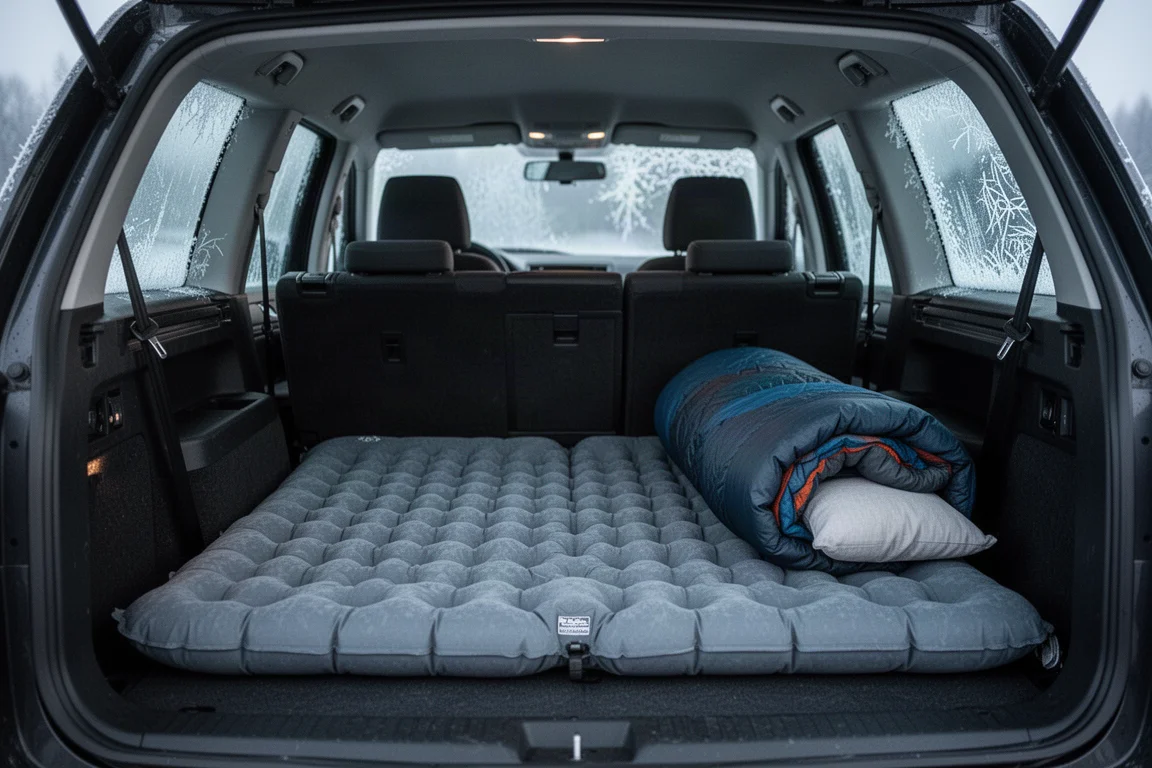
That combination of comfort and cold-weather performance is what makes these pads worth considering for anyone who camps beyond the warmest months, and it holds true for the single and the double alike.
Packing, Rolling, and Storage
Deflating and packing is the weakest part of the experience. Open the valve, let the air out, close the valve, then start rolling from the foot end. Pressing down with the knees as you roll pushes out the remaining air and compresses the foam, which makes the roll tighter and smaller. The one-person pad needs this technique but cooperates reasonably well.
The two-person pad is a genuine struggle. Folding it in half first helps, and the tightest possible roll is required to get it into the storage bag. Expect to spend more time packing up the double than you spent setting it up.
Value and Buying Advice
Value is the reason these pads have such a strong following. Comparable insulated self-inflating pads from premium brands often sell for $300 or more, while the SkyMac one-person version is priced around $120 and the two-person around $165. For that money you get a comfortable, thick, cold-weather-capable pad that has demonstrated it can survive a year of regular use.
Choose the one-person pad if you camp solo, want the easier packing process and value a lighter 7-pound pad. Choose the two-person version if you sleep with a partner and want one shared surface, and accept that packing it away takes real effort. Both versions sell out regularly, so availability can be unpredictable.
Conclusion
After a year of use, the SkyMac air mattresses have answered the main question that surrounded them. The materials remain unpublished, but durability has been solid across dozens of trips on the single and roughly a dozen on the double, with no leaks and no punctures. Add strong comfort, useful cold-weather performance and a price well below comparable premium pads, and both sizes make sense for car camping, truck camping and trailer trips. The one-person pad is the easier one to live with. The two-person pad is the more comfortable shared option, provided you are prepared to wrestle it back into its bag.
Further reading
Related Reviews
Camping Sleep Gear
How to Sleep Better While Camping: Six Pieces of Gear Worth Packing
A practical guide to the camping sleep problems that keep people awake, and the mattress, bag, tent, and mask choices that solve them.
Camping Sleep Gear
Teton Sports Adventurer Cot Pad Review: Comfort for Cot Camping
A practical cot pad that makes sleeping and sitting on a cot far more comfortable, with clear limits on insulation and ground use.
Backpacking Tents
3F UL Lanchan Pro 1 Review: A 1 lb 8 oz Single-Wall Trekking Pole Tent
A practical look at the 3F UL Lanchan Pro 1, a single-wall trekking pole shelter with a 1 lb 8 oz weight, 20D silnylon fabrics, and a roomy 90 x 31 x 49 inch interior.