Road Bike Groupsets
Campagnolo Super Record Wireless vs SRAM Red: Two Flagship Road Groupsets Compared
A category by category look at Campagnolo Super Record Wireless and SRAM Red, covering braking, shifting, ergonomics, features, power meters and cost.
Introduction
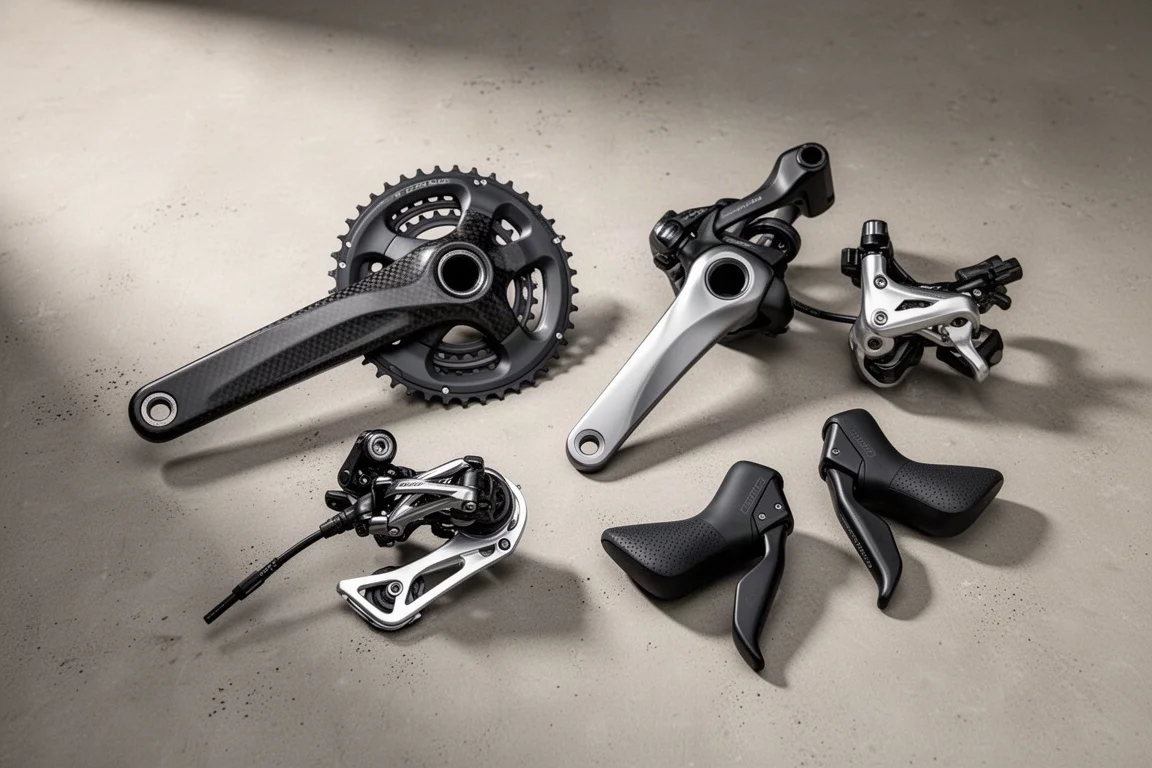
Campagnolo’s flagship wireless groupset and SRAM’s top-tier road group occupy the same part of the market, and on paper they look remarkably close. The claimed weights differ by two grams, both brands offer app-based customisation, and both have moved to cassettes that start from 10 teeth. The differences appear once you actually ride them.
This comparison works through the categories that matter most when choosing between the two: weight and charging, braking, shifting, design, ergonomics, features, gearing, power meter options and total cost.
Where Campagnolo and SRAM Agree
Weight is the simplest place to start, and it lands almost level. Campagnolo claims 2,520 grams for Super Record Wireless, while SRAM claims 2,518 grams for Red. The power meter version of Red adds 36 grams. Both figures are claimed rather than independently measured, so it is fair to call this a tie until the scales settle the argument.
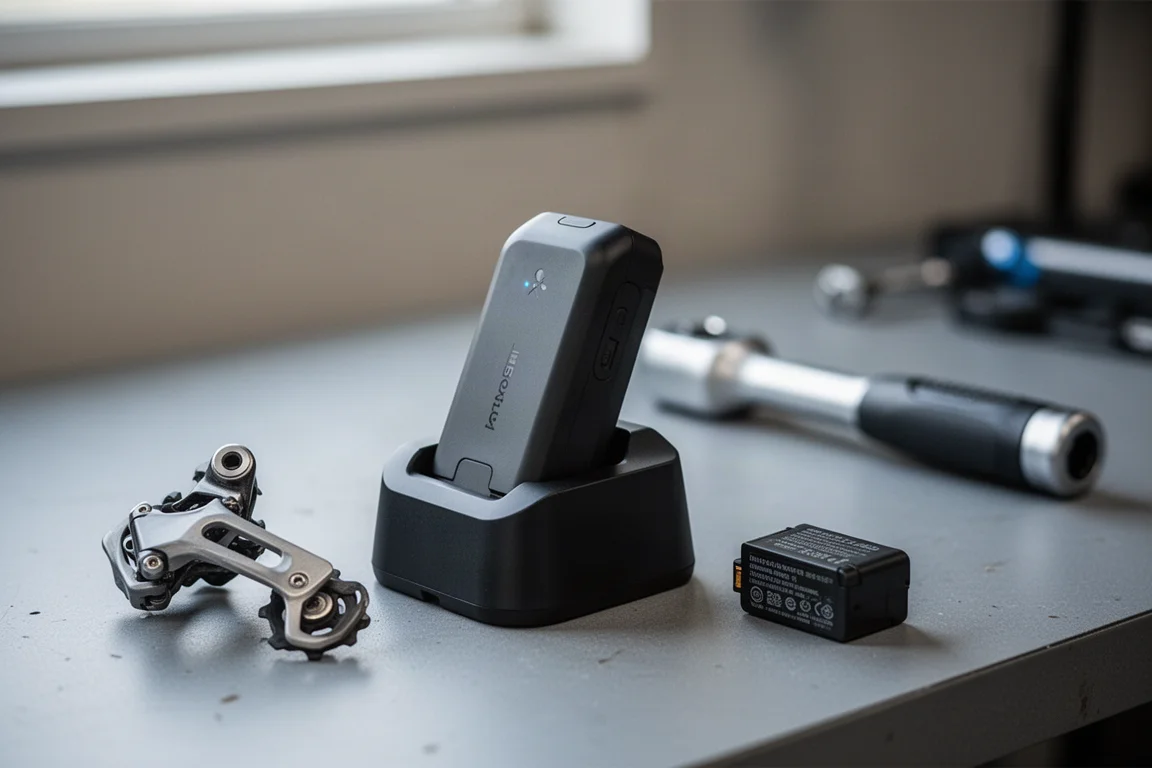
Charging is equally practical on both. The batteries can be removed and charged at home, and Super Record Wireless also allows charging in place without removing the battery. Both brands claim a full charge in around an hour when connected to an AC power source, and both offer companion apps for updates and customisation.
Maintenance is another area where neither groupset asks much of a workshop. Super Record Wireless does not require any new tools, and the tools needed for SRAM are no different from what a normal workshop already keeps on the bench.
Gearing philosophy has converged as well. Campagnolo has joined SRAM in offering cassettes that start from 10 teeth, with the stated aim of helping riders find a comfortable cadence. Both offer the same hardest and easiest possible gears, though the middle of the range differs slightly: Campagnolo gives a little more range in a go-far setup, while SRAM gives a slightly wider range in a climbing setup. The jumps between gears follow the same pattern on both, with one-tooth increments at the small end of the cassette and jumps of two to three teeth at the large end.
Braking: Campagnolo Keeps Its Advantage
Campagnolo’s brakes carried over from the previous generation with aesthetic updates and a few changes to internal components, which says plenty about how little the brand felt needed improving. The result is a brake that feels smooth and progressive while still offering a high level of power and control.
SRAM’s brakes are not a weak point, but they do not deliver the same level of feel and modulation. For riders who read brake lever feedback on long descents or in traffic, that difference is noticeable. This is the clearest category where Campagnolo comes out ahead.
Shifting: SRAM Holds the Edge
Both groupsets shift quickly at the rear, but consistency separates them. Super Record Wireless was slightly more prone to mis-shifts, with occasional moments where a gear felt like it was slipping or had not properly engaged with the cassette. More than 90 percent of shifts were fast, smooth and reliable, but SRAM had the higher hit rate.
At the front, neither is especially quick, and both trail the fastest front shifting on the market. Super Record Wireless carries some of the same vague feel into the front derailleur, and at lower cadence the change can take a little longer. SRAM takes this category on overall consistency.
Campagnolo Super Record Wireless: Strengths and Trade-offs
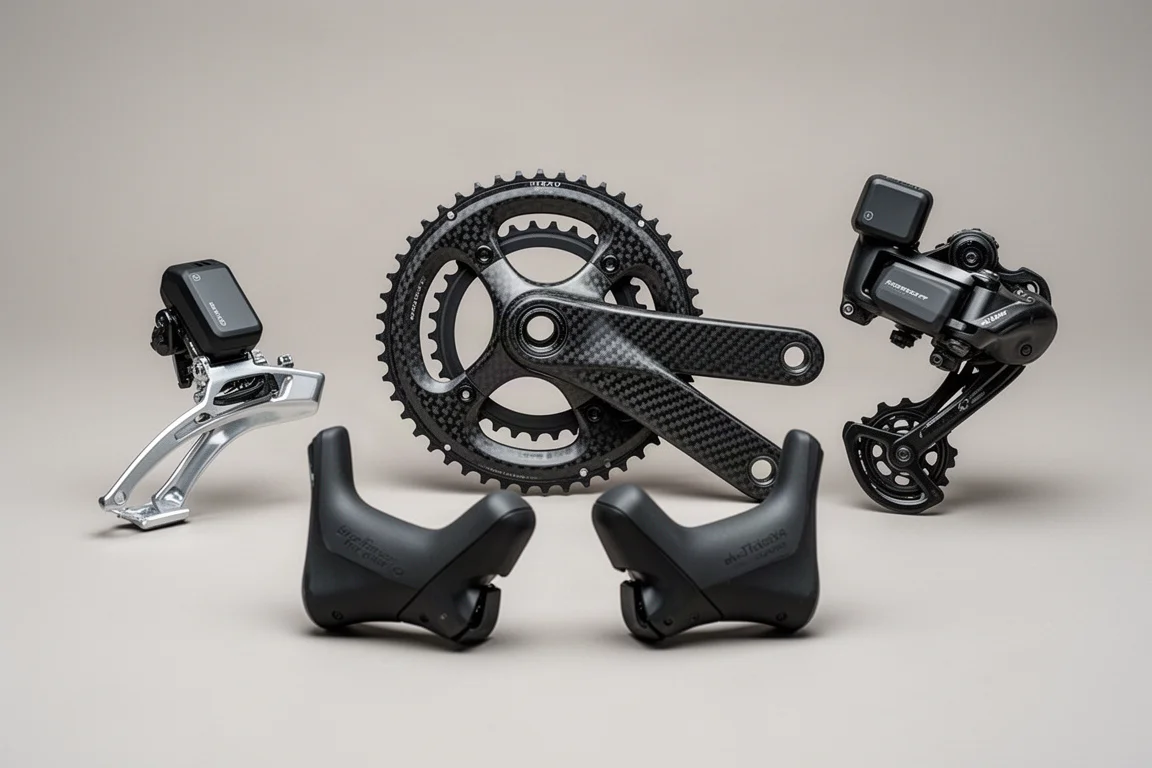
The shifter is a complete ground-up redesign, and it is the part of the groupset Campagnolo’s engineers are most proud of. The hoods are comfortable for casual riding. Under harder efforts, particularly when pulling on the shifters during a climb, the gap behind the brake levers and the main shifter body dug into the fingers, and the shape is likely to suit riders with larger hands.
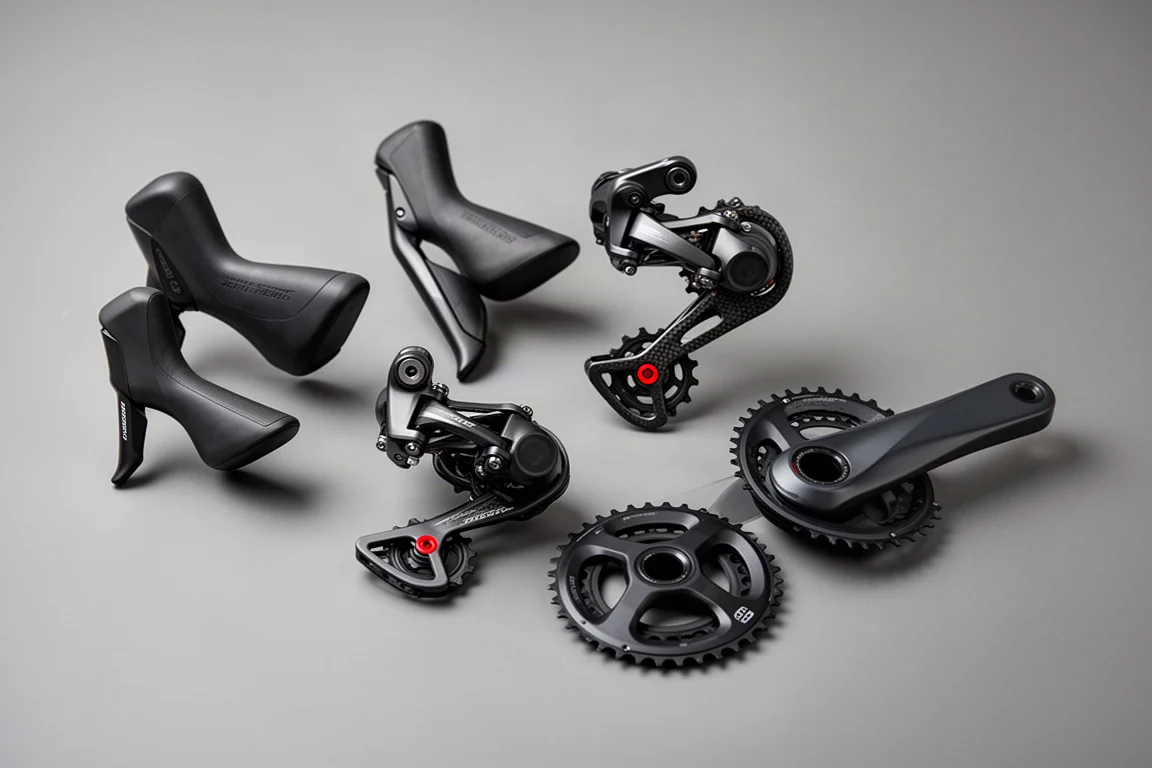
Campagnolo also does not currently offer satellite shifters, and the batteries cannot be swapped between the two derailleurs. There is a manual power-off function through buttons on the shifters, which exists mainly to stop the batteries draining when the bike is moved, since the system wakes whenever it is in motion. A power meter is not available yet, and Campagnolo has said one is coming without giving a date. The groupset’s visual identity is also more restrained than its position at the top of the range suggests, with bulkier derailleurs and no single design feature that reads as flagship.
SRAM Red: The More Complete Package
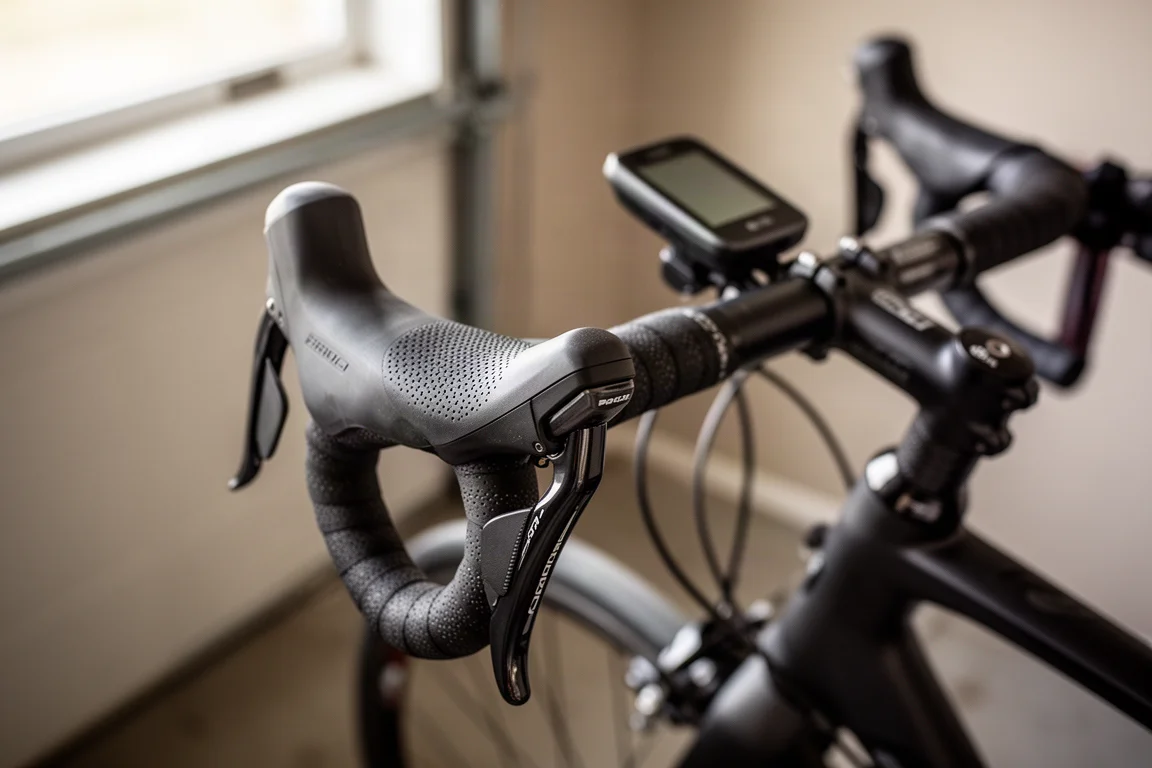
SRAM’s hood design has softer curves, a grippier rubber compound and single-button actuation, which makes the shifter easier to interact with. The shape now appears across Force, Rival and Apex, giving the range a clear design language, and Red itself looks like a top-of-the-range groupset in a way Super Record Wireless does not.
Feature support is stronger too. SRAM offers satellite shifters, and batteries can be swapped between derailleurs. Power measurement is integrated into the chainring, drawing on technology from Quarq and PowerTap, which SRAM owns, and the result is accurate and cleanly integrated. The brand has been building power meters for a long time, and it shows.
Red was last updated in 2019, which makes its position in this comparison notable. It remains the more complete package despite its age, and that is worth keeping in mind for anyone weighing up the two today.
Power Meters, Pricing and Full-Bike Costs
The power meter gap is straightforward. SRAM has one, Campagnolo does not. Anyone adopting Super Record Wireless early will need to look elsewhere for power data.
Price is where the two diverge most. In the UK, the gap between comparable groupsets is around 1,150 pounds, narrowing to about 705 pounds when the power meter version of Red is compared with the only available version of Super Record Wireless.
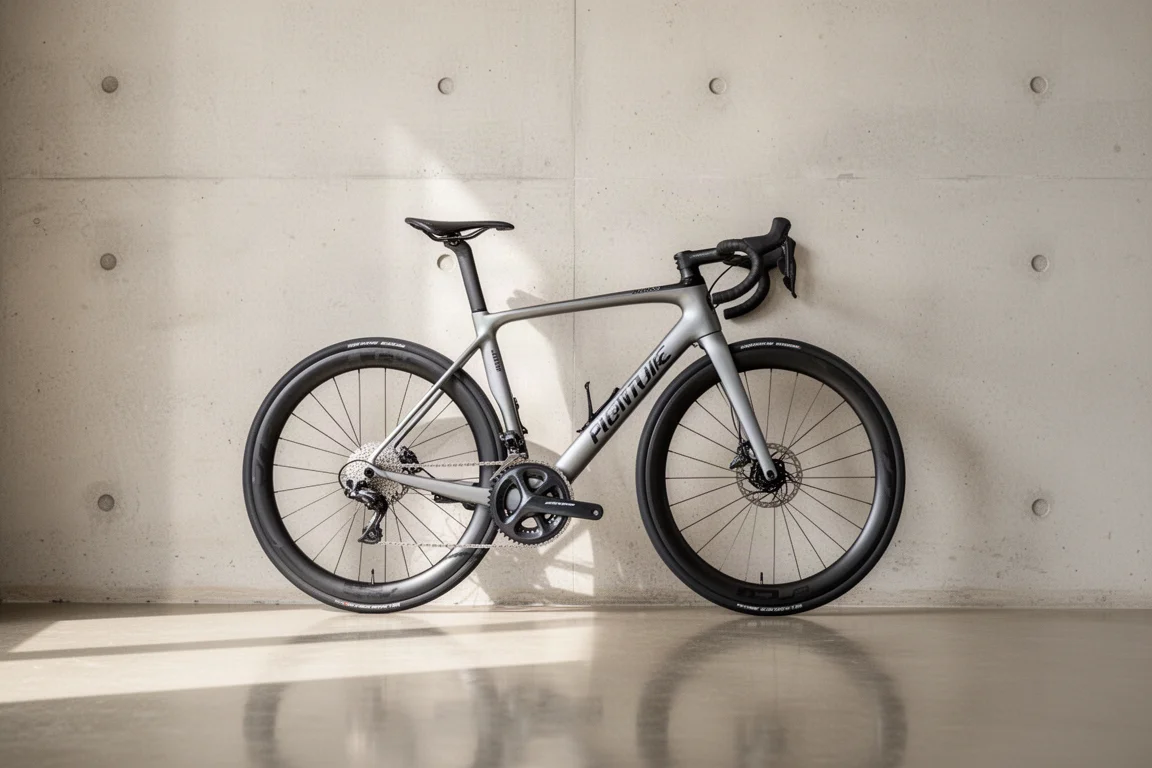
Few riders buy a groupset on its own, so full build costs matter more. In the UK, the Specialized S-Works Aethos with a full SRAM Red setup including the power meter is listed at 13,000 pounds, while the Campagnolo build is offered at 15,000 pounds. That extra 2,000 pounds is not entirely down to the groupset, since the Campagnolo bike also runs Campagnolo’s own Hyperion Ultra wheels, which would cost more to fit than an in-house wheelset. Even so, a similar pattern is likely to appear across other builds.
Buying Advice: Which Groupset Fits Your Riding
Choose Campagnolo Super Record Wireless if braking feel is your priority and you value the option to charge batteries in place. It is the better brake of the two, and the smooth, progressive lever feel is a genuine strength. Be prepared to accept a slightly lower shifting hit rate, hoods that suit larger hands, no power meter for now, and a higher price.
Choose SRAM Red if you want the more complete package: stronger shifting consistency, satellite shifters, swappable batteries, a cleanly integrated power meter and a lower cost. Its braking does not match Campagnolo’s, but the overall ownership picture is easier to justify. Riders who rarely ride at the limit of brake modulation will get more from Red’s broader feature set.
Conclusion
These two flagship groupsets are far closer on paper than their results suggest in practice. Campagnolo Super Record Wireless wins on braking feel and matches SRAM on weight, charging convenience and gearing philosophy. SRAM Red wins on shifting consistency, ergonomics, features, power meter integration and price.
For most riders, SRAM Red is the easier recommendation today, because it does more of the practical things well. Campagnolo Super Record Wireless makes sense for riders who put brake feel first and are comfortable paying more for it.
Further reading
Related Reviews
Road Bike Groupsets
Campagnolo Record 13 and Super Record 13 Review: Wireless 13-Speed, Two Ways
Campagnolo's new wireless 13-speed groupsets answer the criticism of the previous generation. Here is how Record 13 and Super Record 13 differ, and which one suits your riding.
Road Bike Groupsets
Campagnolo Record 13 vs Super Record 13: Which 13-Speed Wireless Groupset Is Worth It?
A practical look at Campagnolo's new 13-speed wireless groupsets, what separates Record 13 from Super Record 13, and which one suits your build.
Road Bike Groupsets
Campagnolo Super Record 13 Review: Wireless 2x13 With the Thumb Shifter Back
Campagnolo's first 2x13-speed wireless groupset brings back the thumb shifter, adds a wider gear range, and lands at a price that finally lines up with Shimano and SRAM.