Road Bike Groupsets
Campagnolo Super Record Wireless vs Shimano Dura-Ace vs SRAM Red: Component Weights Compared
A component-level breakdown of Campagnolo Super Record Wireless, with complete weight figures for Shimano Dura-Ace and SRAM Red eTap AXS for context.
Introduction
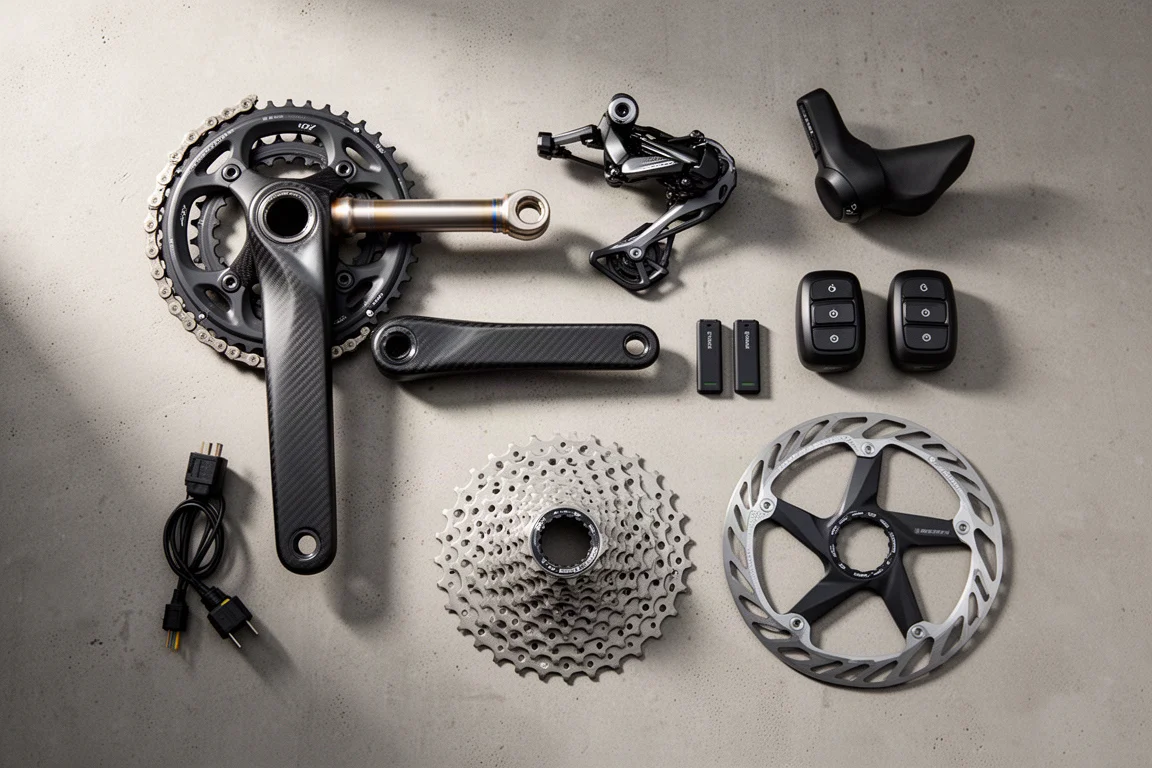
Campagnolo Super Record Wireless is a fully wireless road groupset that replaces the wired EPS generation and, more noticeably, removes the thumb shifter that has defined Campagnolo controls for decades. The group spans the whole drivetrain: rear and front derailleurs, two removable batteries, redesigned shifters, flat-mount disc brake calipers, cassettes that begin with a 10-tooth cog, a carbon crankset with a titanium axle, chain and rotors.
For anyone weighing up a flagship groupset, the interesting part is not only how it shifts but what each component contributes to the build. Every part of Super Record Wireless has a listed weight, and those numbers make more sense next to two reference points: 2,514 g for a complete Shimano Dura-Ace build and a claimed 2,518 g for SRAM Red eTap AXS.
This article works through the Campagnolo components one by one, then sets the complete figures for the other two groupsets alongside them, with a clear note on where the comparison is and is not like for like.
What to Look For in a Wireless Groupset
Shifting logic is the first thing to understand. Campagnolo’s default layout uses two separate buttons on each shift paddle rather than a single paddle with a multi-function action. On the right shifter, the upper button moves the rear derailleur into an easier gear and the lower button into a harder gear; on the left, the upper button shifts to the big chainring and the lower button to the small one. Campagnolo calls the logic one lever, one action, and it can be customised in the myCampy 3.0 app if the default does not suit.
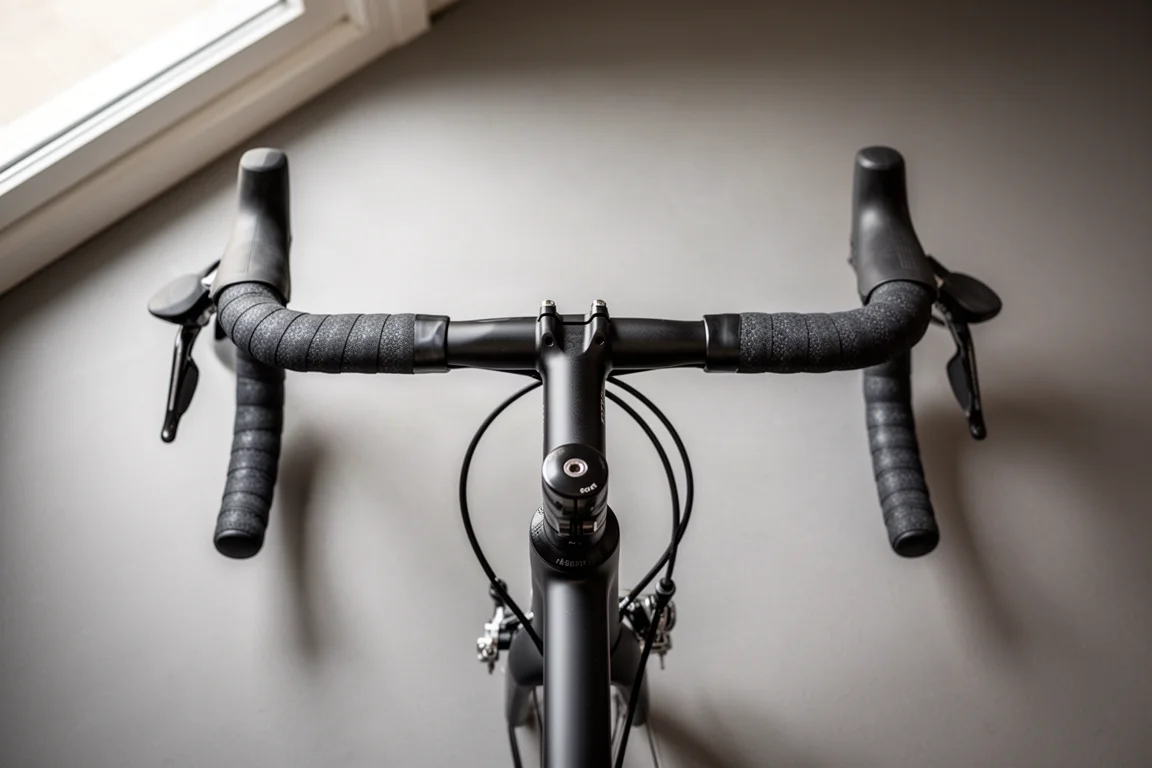
Chain management is the second. Super Record Wireless has no clutch mechanism to manage the chain, unlike SRAM’s Red groupset, which uses an Orbit clutch damper. Riders who spend time on rough surfaces often care about that distinction, so it is worth knowing before comparing prices.
Gearing and frame fit matter next. A 10-tooth smallest cog allows smaller chainrings, and Campagnolo offers three chainring combinations. Crank arm profiles have been slimmed to suit modern frame standards, and Q factor has grown from 145.5 mm to 147.5 mm compared with the previous 12-speed cranksets. Tyre clearance is another constraint: Campagnolo states that a 34 mm road tyre works with the front derailleur on a 410 mm chainstay, and that larger tyres may interfere with the derailleur body.
Batteries round out the picture. Both batteries are removable and use a magnetic charging port, and the mode buttons on the shifters are used to monitor battery life.
Campagnolo Super Record Wireless: Component by Component
Campagnolo builds the rear derailleur from technopolymer and carbon fibre, uses carbon fibre for the crank arms and pairs them with a titanium axle. The weights below cover the group as it ships, with batteries noted separately where relevant.
Rear Derailleur
The rear derailleur uses technopolymer and carbon fibre construction, and the cage has been redesigned in carbon fibre. The pulley wheels now run on bushings. Campagnolo states that shifting speed has increased over Super Record EPS. There is no clutch mechanism, so chain management is handled without the kind of damper SRAM fits to Red. Campagnolo did not publish an official maximum cassette tooth capacity, but says the derailleur will work with a 32-tooth sprocket while noting that using one is not recommended. A safety mechanism temporarily disengages the derailleur if it takes a knock. The unit weighs around 256 to 257 g.
Front Derailleur and Batteries
The wireless front derailleur is considerably wider than its predecessor, with a chunky body and an outer carbon cage plate. It has a capacity of up to a 16-tooth difference between chainrings. Campagnolo says a 34 mm road tyre can be run with the front derailleur on a 410 mm chainstay, and that larger tyres may interfere with the derailleur body. Without its battery, the front derailleur weighs 125 g. Both batteries are removable and use a magnetic charging port; the smaller front battery weighs 33 to 34 g and the rear 39 g, for 72 g combined.
Shifters and Controls
The most significant change is the removal of Campagnolo’s thumb shifter. Each shift paddle now carries two separate buttons, and Campagnolo describes the shifting logic as one lever, one action. By default, the uppermost button on the right shifter shifts the rear derailleur into an easier gear and the lower button into a harder gear; on the left shifter, the uppermost button shifts into the big chainring and the lower button into the small chainring. The logic can be customised in the myCampy 3.0 app.
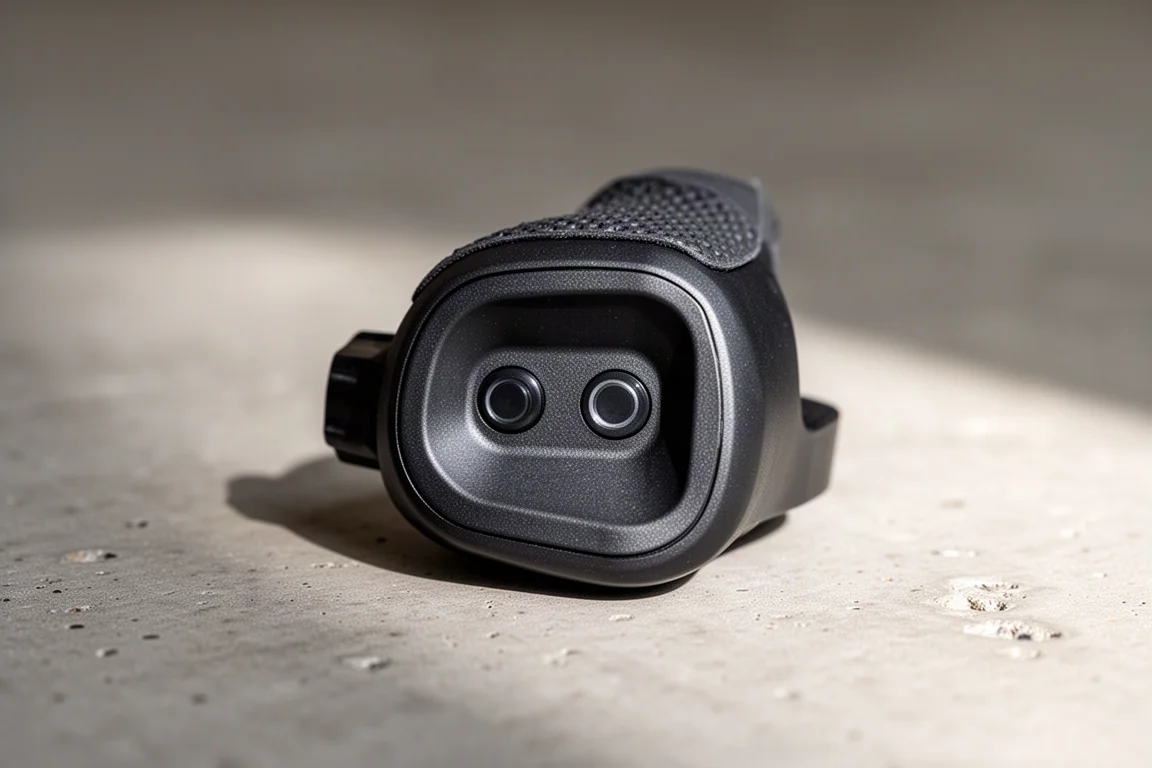
The shifter body and lever shape have also been redesigned. Campagnolo says the new hood offers extra grip and cushioning for better comfort and more efficient braking, although the hood surface still feels firm. Inside the body, where the thumb paddle used to sit, there are two mode buttons used to set and index gears and to monitor battery life. Campagnolo has also removed the bump where the hood transitions into the handlebar. The right shifter weighs 241 to 242 g and the left 263 g.
Calipers and Brake Pads
The calipers are flat mount only and use the same internals as the previous generation, with cosmetic revisions that place the Campagnolo logo on the inside face so it is visible from the drive side. The new DB410 disc brake pads use an aluminium backing plate and are around 12 g lighter per pad than the previous 41 g pad. With the mounting bolt removed, the front caliper weighs 130 g; the rear comes in at about 119 g with a short length of hose attached. A set of Campagnolo bolts adds 20 g.
Cassette
Campagnolo’s road cassettes start with a 10-tooth cog and are CNC machined from steel. Three sizes will be offered: 10-25, 10-27 and 10-29. On each cassette the largest cogs form a single cluster, with the remaining cogs supplied individually. The 10-29 cassette weighs 229 g including the lockring.
Crankset, Chain and Rotors
The crankset uses carbon fibre arms and a titanium axle in a split-axle design, and retains the carbon bracing used for stiffness. The crank arms are slimmer than the outgoing Super Record to suit modern frame standards. To complement the 10-tooth cog at the back, chainrings are smaller: 50/34, 48/32 and 45/29. All cranksets share a 121.88 mm asymmetric bolt circle diameter and a 45.8 mm chainline, and are available in 165, 170, 172.5 and 175 mm lengths. Campagnolo says larger chainring sizes may be introduced for professionals, but for now some riders are reverting to the older Super Record crankset. A pod on the crank arm looks like a future power meter location, though Campagnolo is not saying anything for now. A 172.5 mm crankset with 48/32 chainrings weighs 436 g on the drive side; the non-drive side with its split axle weighs 194 g. The chain uses a new quick link, arrives with factory grease and weighs 225 g. The rotors are unchanged: the 140 mm version weighs around 99 to 100 g and the 160 mm version 121 g.
Shimano Dura-Ace: The Weight Benchmark
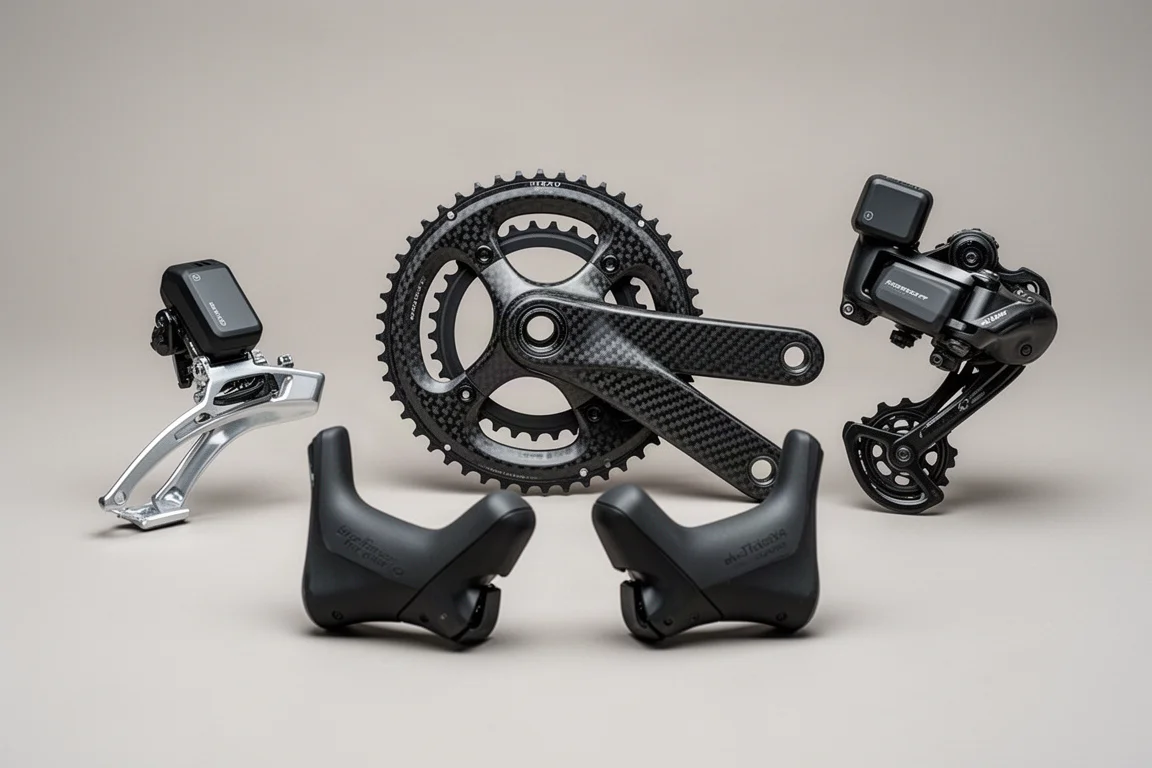
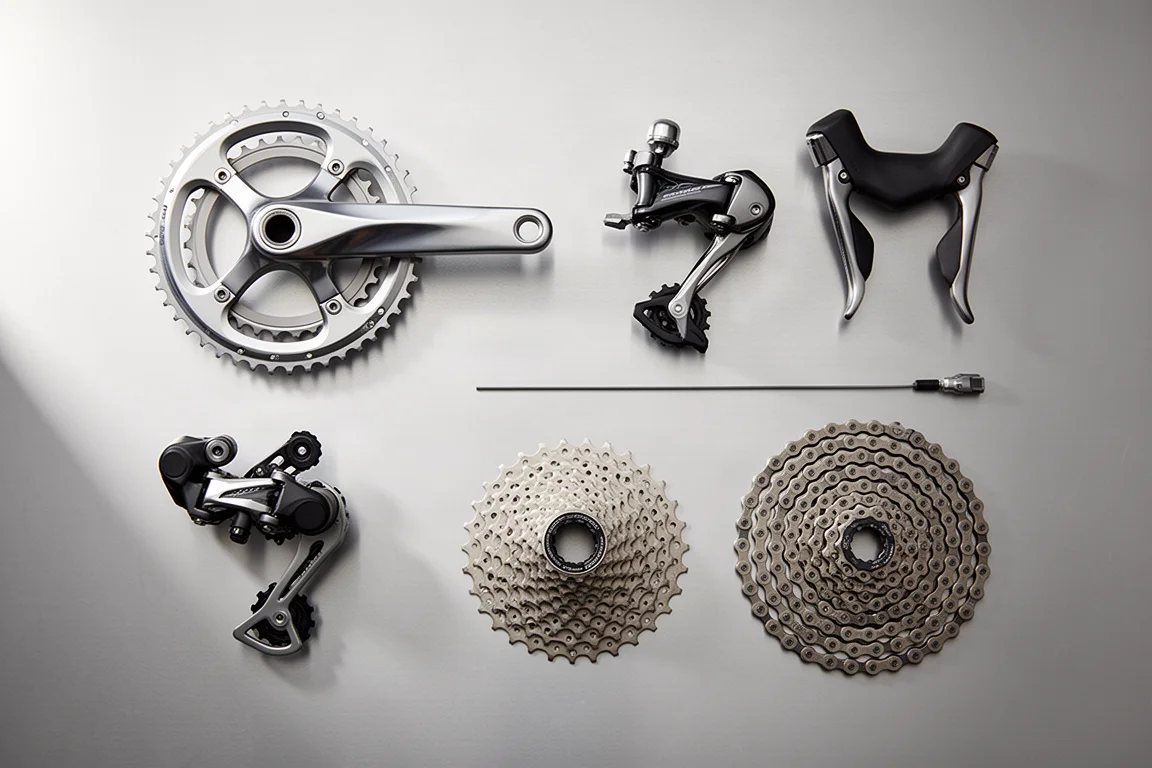
Dura-Ace provides the complete-build reference point in this comparison at 2,514 g. Because the build specification differs from the Campagnolo and SRAM groupsets listed here, the figure is best read as a benchmark rather than a strict like-for-like result.
A complete groupset weight is only part of the picture for most riders. Frame, wheels and finishing kit usually matter more to the overall ride, and the gap between the two complete figures here is small enough that specification, gearing and ergonomics are likely to matter more than a handful of grams.
SRAM Red: A Clutch Damper and a Claimed 2,518 g
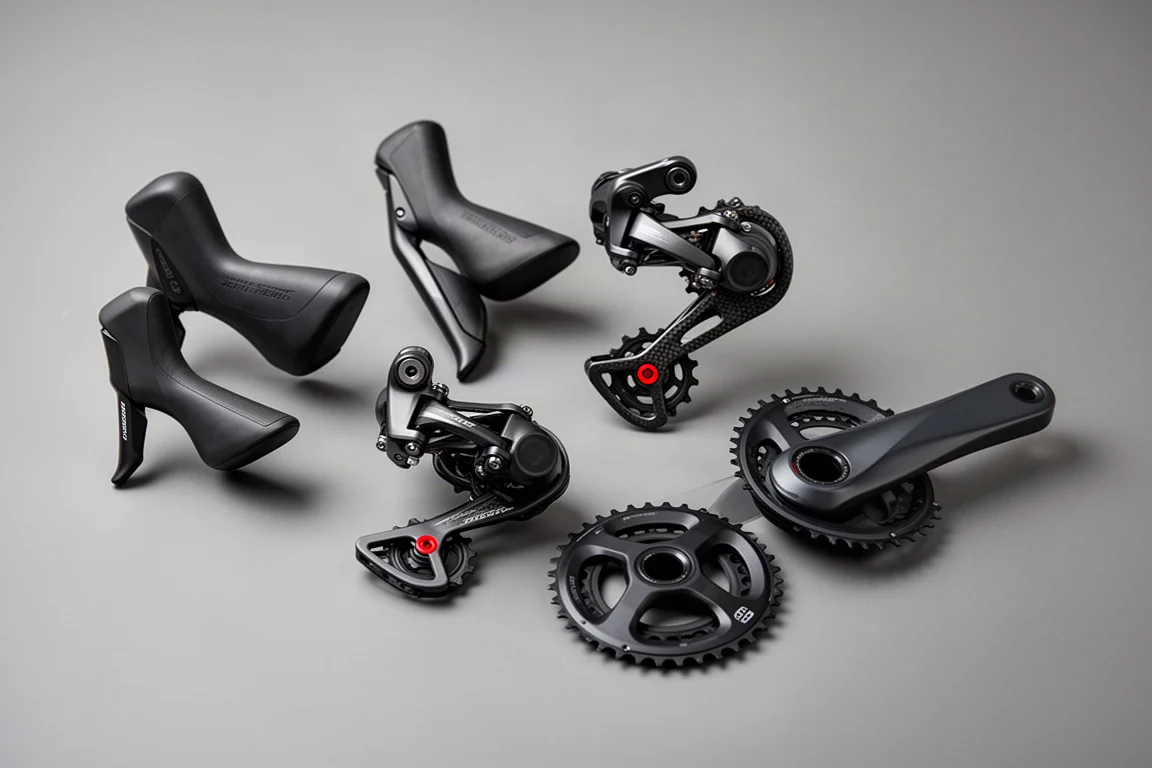
SRAM claims a complete weight of 2,518 g for Red eTap AXS. The groupset also uses an Orbit clutch damper to manage the chain, a different approach from Super Record Wireless, which has no clutch mechanism at all.

As with Dura-Ace, the build specification behind that figure differs from the Campagnolo group, so the number is a useful reference rather than a direct comparison. The more meaningful difference for many riders is the clutch: it changes how the drivetrain behaves over rough surfaces and how much chain movement reaches the frame.
Weight Comparison: What the Numbers Say
| Groupset | Figure |
|---|---|
| Campagnolo Super Record Wireless | Component weights listed above; no complete figure is given |
| Shimano Dura-Ace | 2,514 g complete |
| SRAM Red eTap AXS | 2,518 g claimed complete |
The two complete figures sit within a few grams of each other, and both builds use different specifications, so neither should be treated as a definitive verdict on which groupset is lighter. What the Campagnolo numbers show is where the weight sits: a 436 g drive-side crank and 194 g non-drive side, a 229 g cassette, a 125 g front derailleur and a 225 g chain.
Overall Buying Advice
Riders considering Super Record Wireless get a group with customisable shifting logic, removable batteries with magnetic charging, a carbon and titanium crankset, and gearing that starts at a 10-tooth cog with chainring options down to 45/29. Several details are worth checking against your own bike before buying: the calipers are flat mount only, tyre clearance is quoted at 34 mm with a 410 mm chainstay, the derailleur will work with a 32-tooth sprocket but Campagnolo does not recommend it, and there is no clutch mechanism.
Dura-Ace and SRAM Red make sense for riders who want a complete figure to compare against, and SRAM’s Orbit clutch damper is the clearest functional difference between the two approaches to chain management.
Whichever way you lean, compare like-for-like configurations. Crank length, chainring sizes, cassette range and rotor diameter all shift the total, and a single figure without that context tells only part of the story.
Conclusion
Super Record Wireless is a substantial redesign: the thumb shifter is gone, the shifting logic is customisable, the crankset pairs carbon arms with a titanium axle, and the gearing moves to a 10-tooth smallest cog with smaller chainrings. Its listed component weights put it in the same territory as the complete figures for Dura-Ace and SRAM Red eTap AXS, with the caveat that the three builds are not specified identically. Riders who want wireless Campagnolo shifting, granular control over button behaviour and a light crank assembly have a clear reason to look closely; riders who want a clutch damper or a simpler complete-weight comparison have equally clear alternatives.
Further reading
Related Reviews
Road Bike Groupsets
Campagnolo Record 13 and Super Record 13 Review: Wireless 13-Speed, Two Ways
Campagnolo's new wireless 13-speed groupsets answer the criticism of the previous generation. Here is how Record 13 and Super Record 13 differ, and which one suits your riding.
Road Bike Groupsets
Campagnolo Record 13 vs Super Record 13: Which 13-Speed Wireless Groupset Is Worth It?
A practical look at Campagnolo's new 13-speed wireless groupsets, what separates Record 13 from Super Record 13, and which one suits your build.
Road Bike Groupsets
Campagnolo Super Record 13 Review: Wireless 2x13 With the Thumb Shifter Back
Campagnolo's first 2x13-speed wireless groupset brings back the thumb shifter, adds a wider gear range, and lands at a price that finally lines up with Shimano and SRAM.