Cycling Backpacks
CamelBak Mule 22L and HAWG 30L: Choosing the Right Commuting Backpack
A practical look at two CamelBak commuting backpacks, the 22-litre Mule and the 30-litre HAWG, plus packing tips that make the morning ride easier.
Introduction
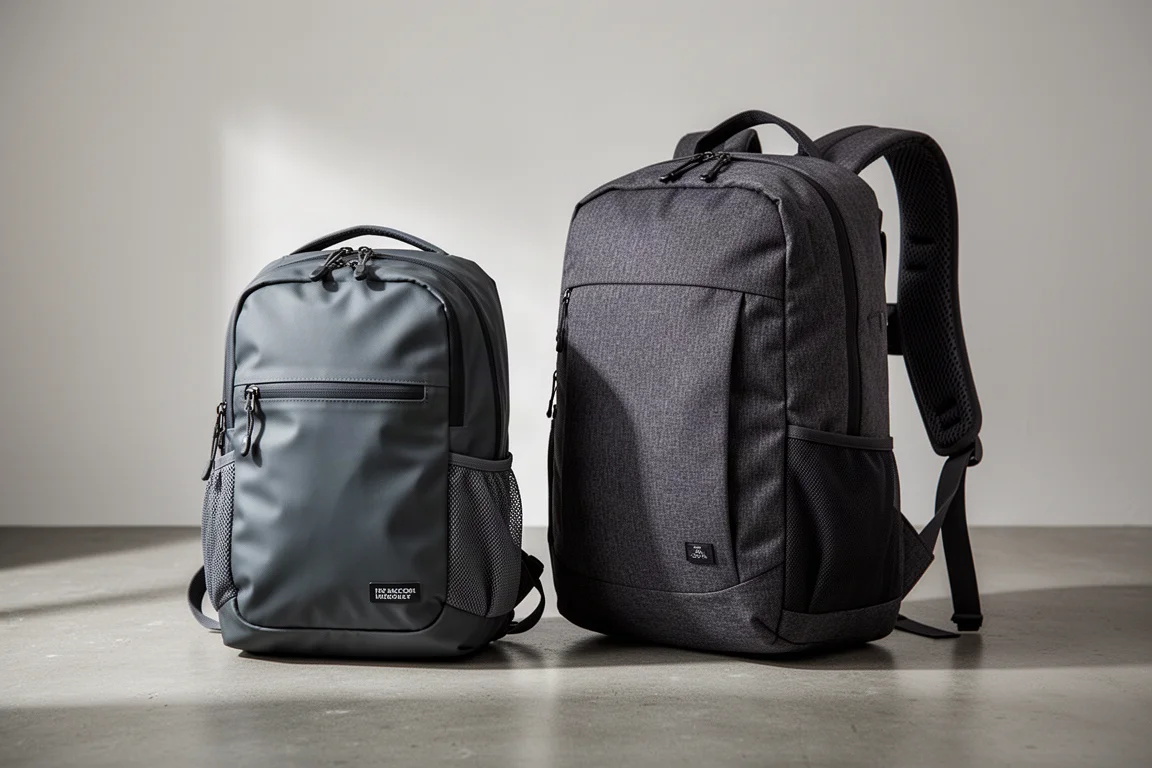
Commuting by bike raises one very practical question: how do you carry everything you need without making the ride harder than it has to be? CamelBak’s Mule and HAWG are built specifically for that job. Both are designed as commuting backpacks, and both are packed with features that make loading them for the working day straightforward.
Choosing between them comes down mostly to volume and how you like to pack. The 22-litre Mule suits riders who travel fairly light. The 30-litre HAWG makes more sense if you have more to carry, or if you simply prefer a generously sized lunch. They share the same approach to organisation, weather protection, ventilation and visibility, so the decision is rarely about features alone.
How to Pack a Commuting Backpack Well
Packing a commuter bag is not complicated, but a few minutes of preparation the night before removes the last-minute rush. Start with the heaviest items and work upwards, so the weight sits low and close to your back rather than pulling on your shoulders.
For most commuters, the heaviest item is a laptop. The Mule has a weatherproof sleeve at the back of the pack where the laptop slides in. The HAWG goes further with a waterproof sleeve and an independently accessible laptop compartment, which holds the laptop against your back. That position is the best place for it in any backpack, because it stops the load shifting as you ride.
A heavy-duty lock goes in early as well. If it does not weigh the same as a small car, the side pockets are an ideal place to carry it, and stashing it there frees up space inside the main compartment.
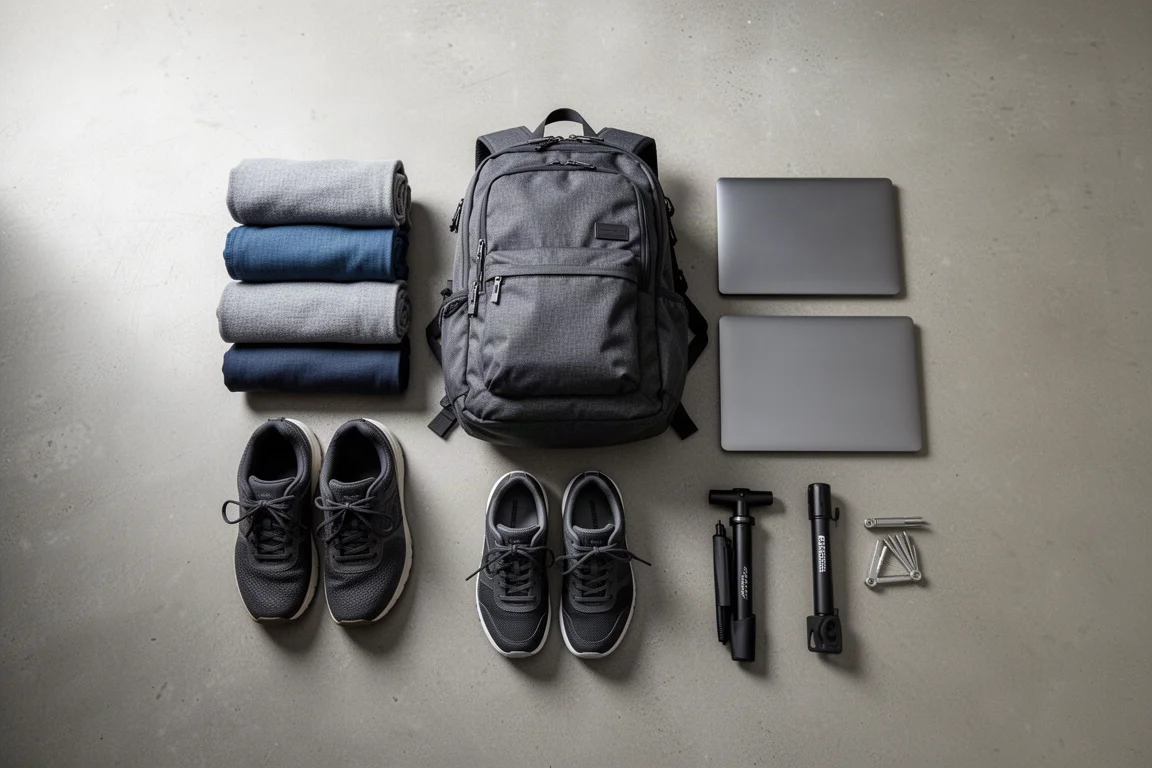
Shoes come next. Stuff socks and underwear inside them if they are small enough, then place the shoes heel to toe to save space. A plastic bag is worth having, since shoes pick up muck on the way in. For clothing, rolling is the better option in a backpack: it takes up less space, and a tight roll helps limit creasing. In really bad weather you may still want a separate bag for clothes, but both packs are coated in Cordura N330D, a water-resistant coating that helps protect the contents.
A packed lunch can go in at this stage, and in the larger HAWG a hard plastic bento box sits neatly on top of the rest of the load.
Punctures happen, so maintenance gear belongs towards the top of the bag where you can reach it. At a minimum, carry a pump, a spare tube and a multi-tool, plus a pair of latex gloves to keep your hands clean if you have to work around wheels and chains. A set of small spare lights is a sensible addition to that kit.
CamelBak Mule 22L: Compact Everyday Capacity
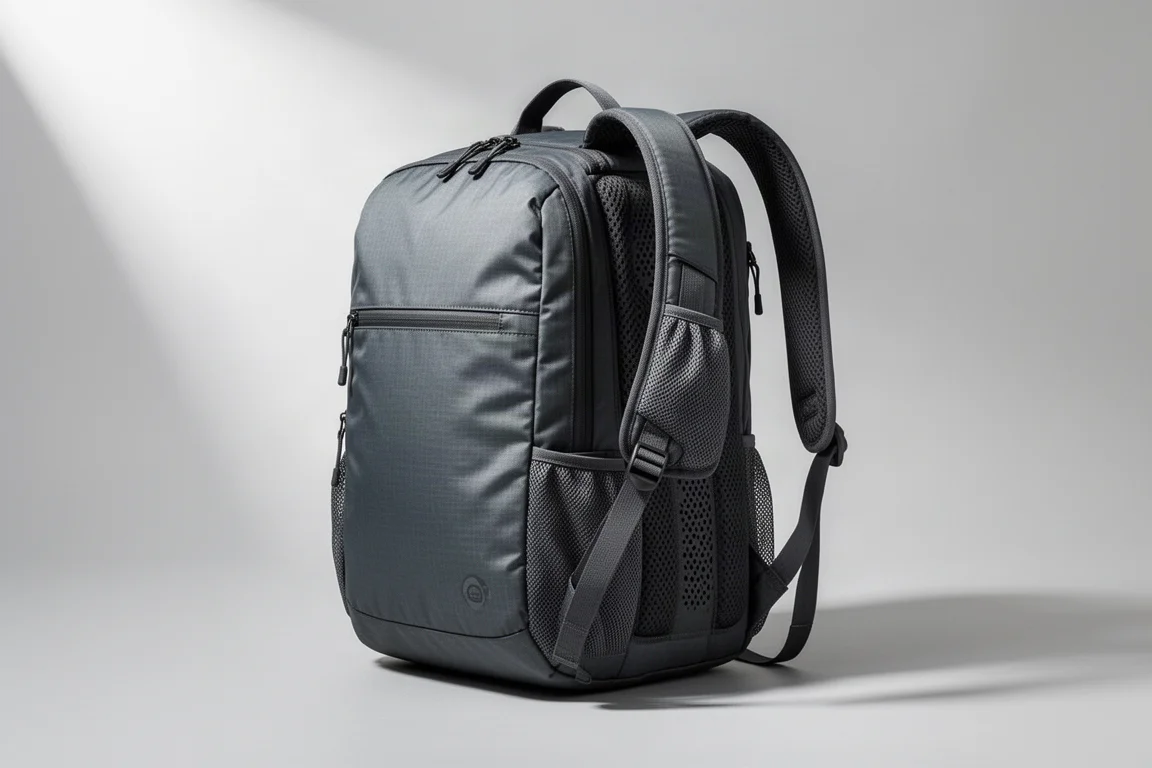
The Mule is the smaller of the two at 22 litres, aimed at riders who travel light. Its weatherproof laptop sleeve sits at the back of the pack, and the overall layout keeps the essentials close without encouraging you to overpack.
It still carries the features that matter for a daily commute. The side pockets take a water bottle, a D-lock, a maintenance kit or lightweight rain gear, and the front pocket offers extra room when the main compartment is full. Like the HAWG, it can hold a three-litre reservoir, so you can ride with water on board rather than relying on a bottle.
CamelBak HAWG 30L: Room for a Bigger Load
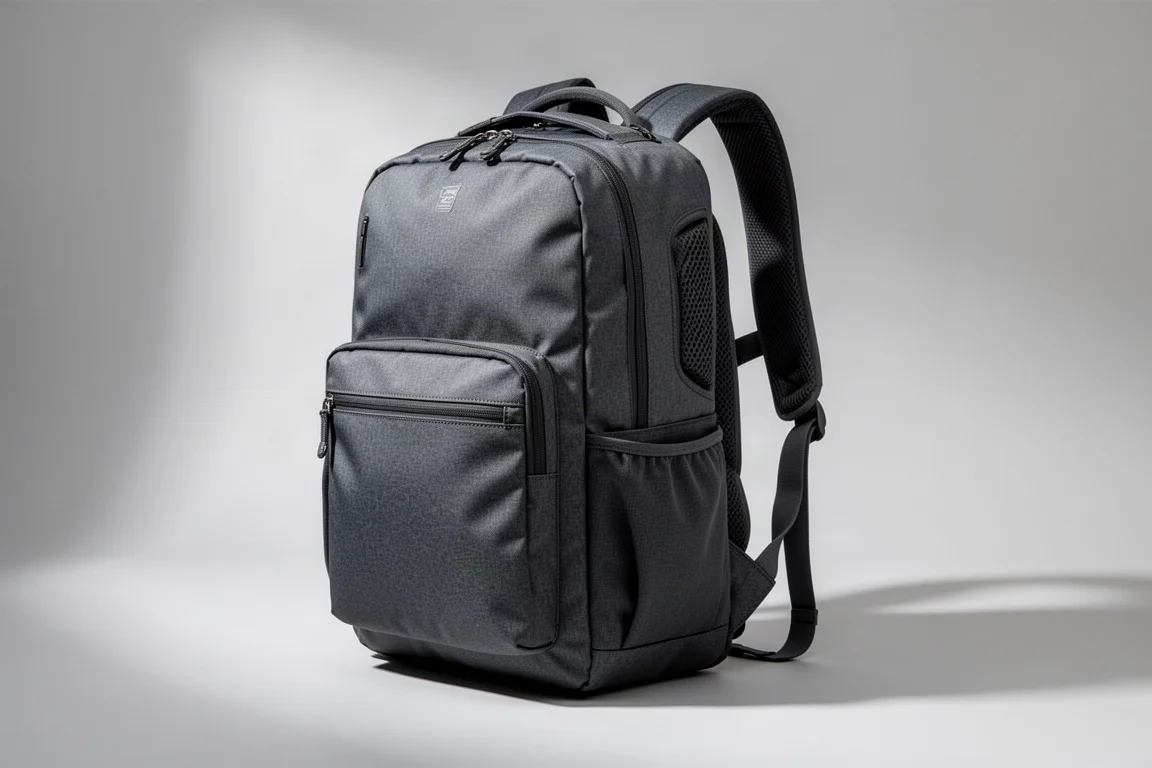
The HAWG adds eight litres over the Mule and is the better choice when you have more to carry. Its laptop storage is more elaborate: a waterproof sleeve plus an independently accessible compartment that holds the laptop flat against your back.
The extra volume shows up in practical ways. A larger lunch, a change of clothes and a bulky lock all go in without a fight, and a hard bento box will sit on top of the load. The side and front pockets work the same way as on the Mule, so the organisation feels familiar if you move up from a smaller bag.
Carrying Comfort and Ventilation
The most common complaint about commuting with a backpack is a sweaty back, particularly if you ride in the clothes you plan to wear all day. Both packs address this with body-mapping technology: the Air Support back panel is shaped to allow maximum ventilation over the hottest areas of the back.
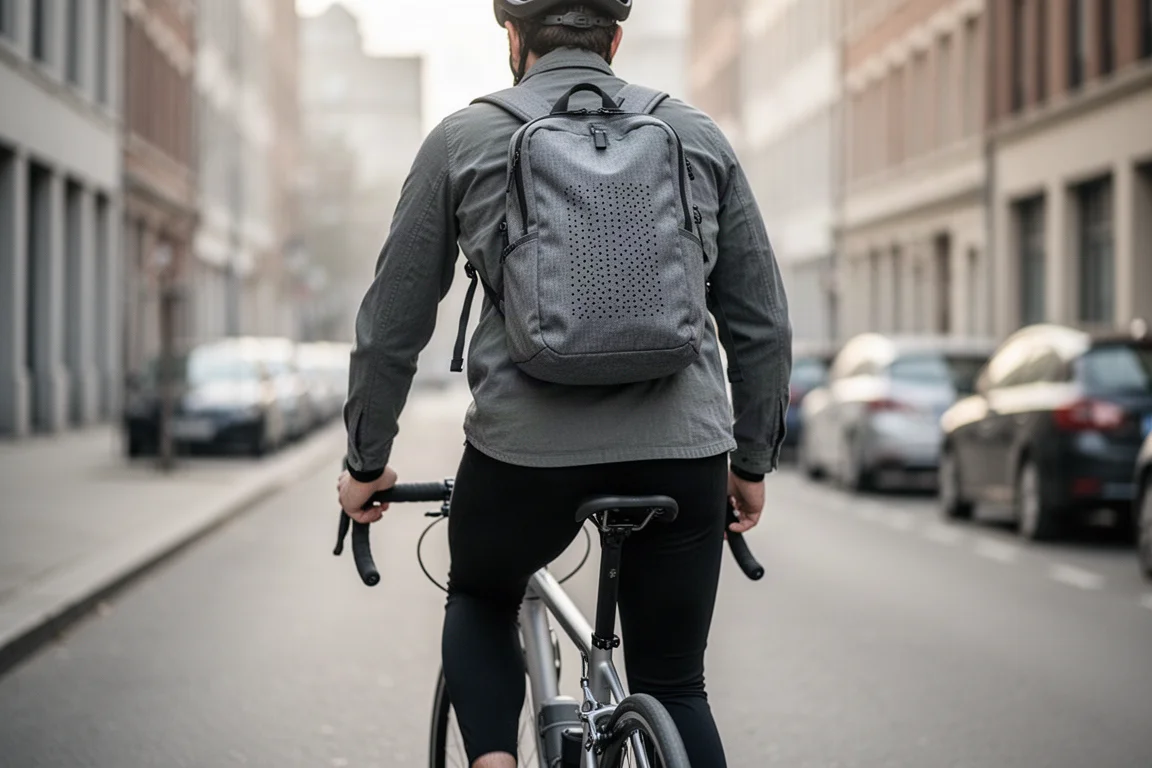
Both bags also use a harness inspired by running vests, which keeps everyday items within reach without stopping. On the right strap there is a stretch mesh pocket with a key loop, sized for keys or an office ID. On the left strap there is a zip pocket that suits a phone or a couple of cards. It is a small detail, but it means the things you reach for most are not buried in the main compartment.
Visibility and Reflectivity on the Road
Commuting often means riding in low light, so both packs include a loop for attaching a rear light. Each bag also has 360-degree multi-directional reflectivity built in, which helps you stay visible from the side as well as from behind.
A rear light on the bag is a useful complement to lights mounted on the bike, and a set of small spare lights in your maintenance kit adds another layer of security if one runs out of charge on the way home.
Hydration and Everyday Organisation
Both the Mule and the HAWG can take a three-litre reservoir, which is more capacity than most commuters need but useful on longer or hotter rides. Internal storage compartments handle the smaller items that otherwise migrate to the bottom of a bag.
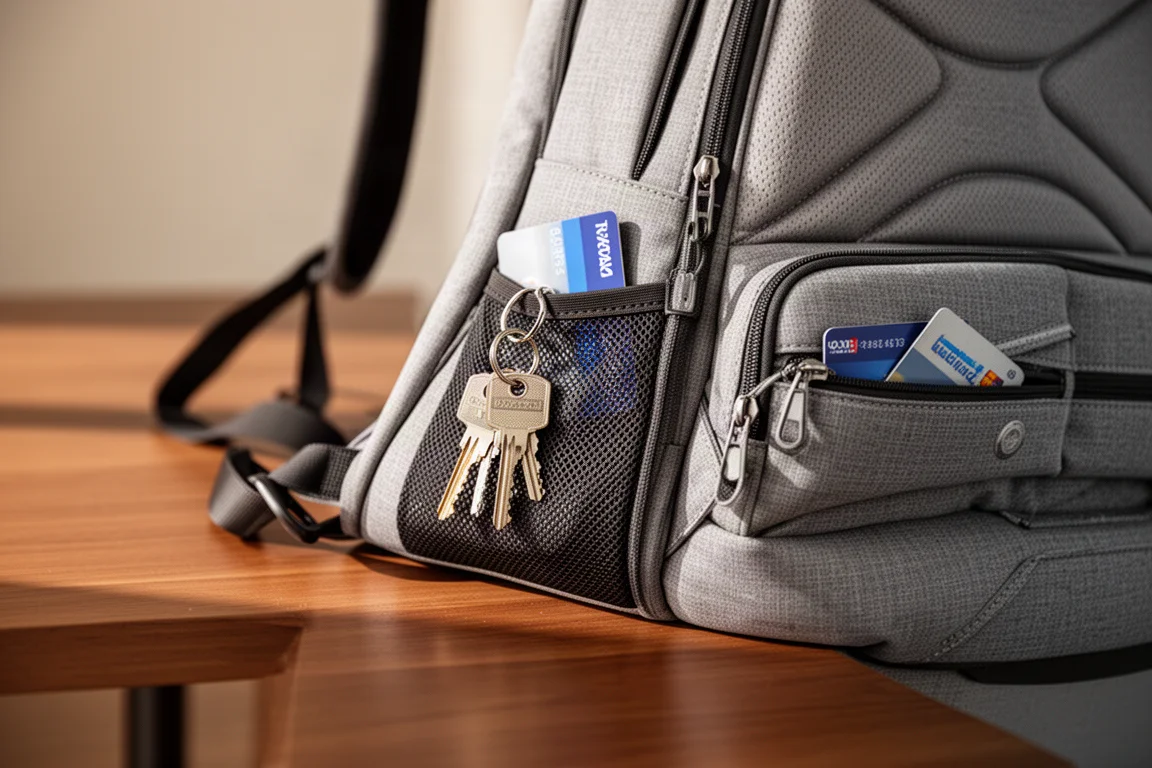
Between the reservoir sleeve, the laptop storage, the side pockets and the strap pockets, there is a defined place for almost everything a commute involves. That structure is what separates a commuting backpack from a general-purpose one.
Weather Protection and Durability
Both packs are coated in Cordura N330D, a water-resistant coating that helps keep contents dry in wet conditions. The laptop sleeves differ: the Mule’s is weatherproof, while the HAWG’s is waterproof and independently accessible.
That distinction matters if you ride in persistent rain or carry a laptop you cannot afford to get damp. For occasional showers, the coating on either bag should be enough.
Buying Advice: Mule 22L or HAWG 30L?
The choice is mostly about volume. If you travel light, the 22-litre Mule keeps the load compact and covers the essentials: a weatherproof laptop sleeve at the back, side pockets for a lock, bottle or rain gear, a front pocket, reservoir compatibility, reflectivity and a rear light loop.
If you regularly carry more, the 30-litre HAWG is the more comfortable answer. It offers the same organisation with more space, plus the waterproof, independently accessible laptop compartment and room for a bigger lunch or a full change of clothes.
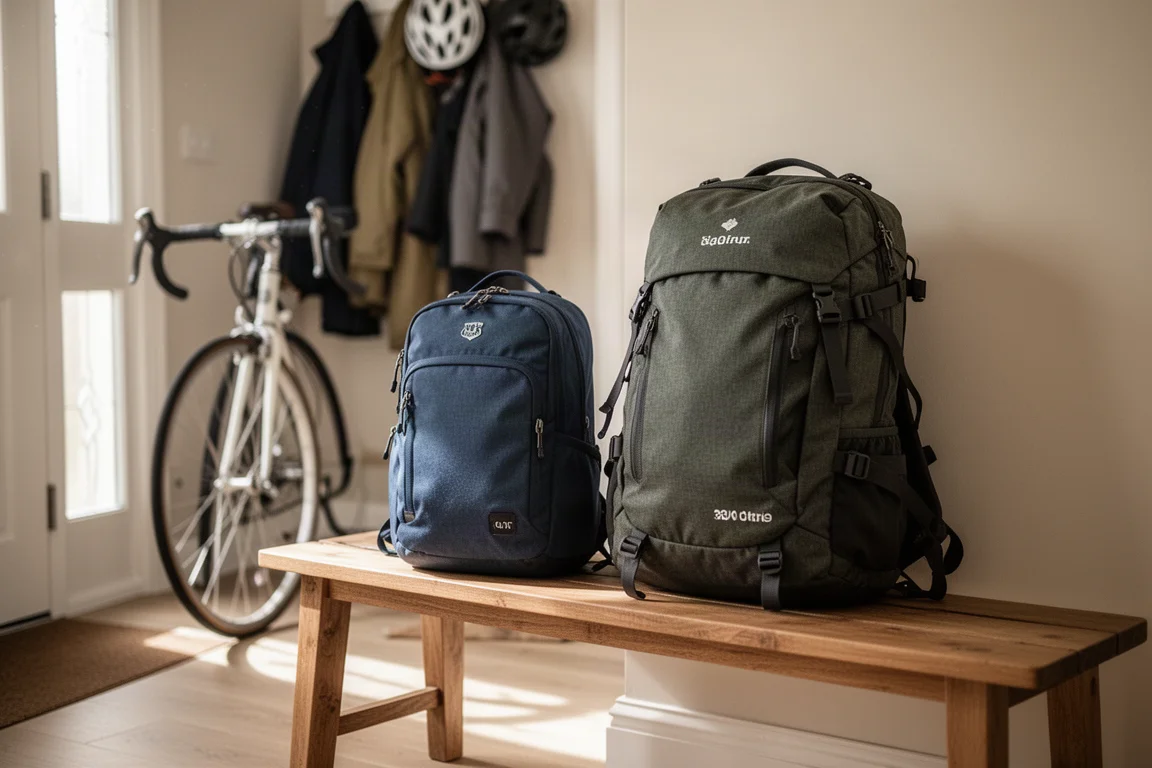
Either way, the packing routine matters as much as the bag. Heavy items first, laptop against your back, lock in a side pocket if it is not too heavy, shoes heel to toe, clothes rolled, and maintenance gear near the top where you can reach it. Pack the night before and the morning becomes a matter of picking up the bag and riding.
Conclusion
The CamelBak Mule 22L and HAWG 30L are both built specifically for commuting, and they share the features that make daily riding easier: organised storage, water-resistant fabric, ventilation across the back, 360-degree reflectivity and a rear light mount. Choose the Mule for light loads and the HAWG when you need the extra room.
Further reading
Related Reviews

Backpacking Gear
Building a 10 lb Base Weight: An Ultralight Backpacking Gear List
A practical walkthrough of the ultralight pieces behind a 10 lb base weight, from a 765 g pack and a roomy one-person tent to a full camp chair and a dependable water filter.

Road Bikes
10 New Road Bikes Worth Watching: Aero, Titanium, Steel and Endurance Standouts
A practical roundup of 10 new road bikes, from aero flagships chasing single-watt gains to titanium, steel and endurance platforms built for real roads.
Saltwater Aquarium Setup
10 Questions About Cycling a Saltwater Aquarium: What You Need to Know
Essential questions and answers for cycling a reef tank or saltwater aquarium, from biome building to light management and bacterial supplements.