CD Transports
Cambridge Audio Evo CD Review: The Disc Transport Built for Evo Systems
A close look at the Cambridge Audio Evo CD, an all-metal CD transport made exclusively for the Evo 150 and Evo 75, and what it adds to a CD collection.
Introduction
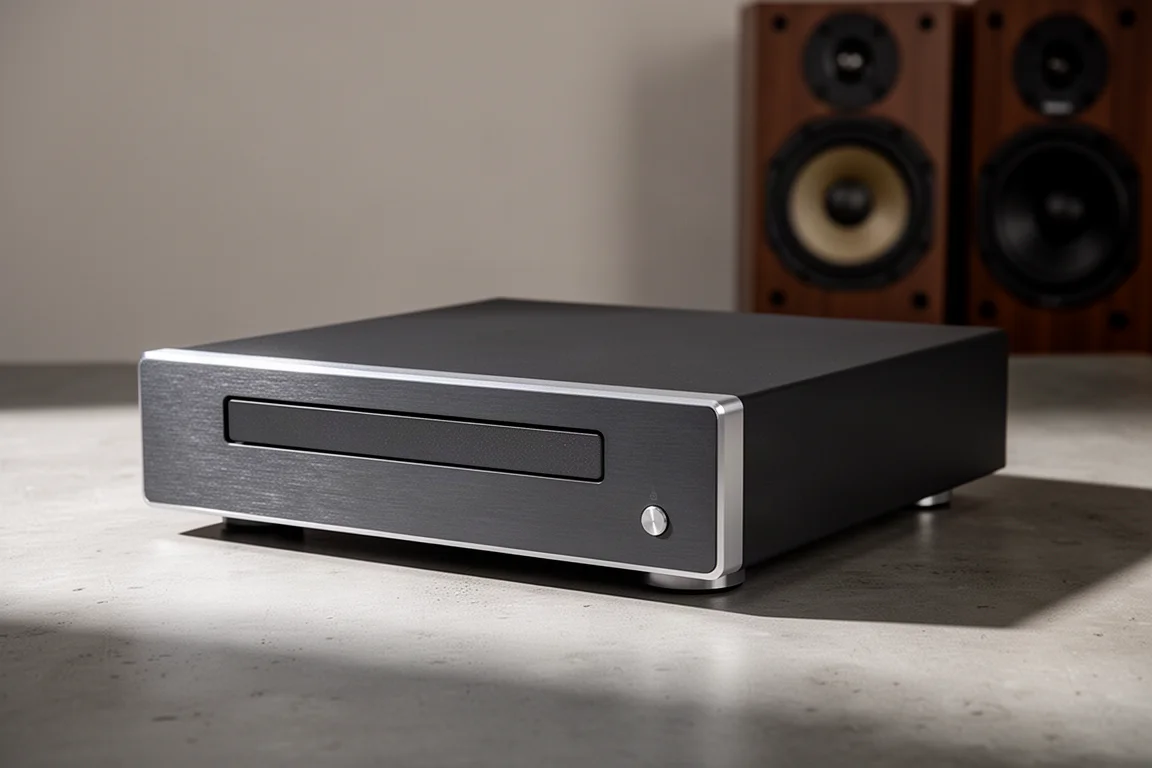
The Cambridge Audio Evo CD is a dedicated CD transport built for two specific amplifiers: the Evo 150 and the Evo 75. It reads compact discs and passes the digital stream to the Evo amplifier, which handles conversion through the same digital circuitry Cambridge Audio developed for the Evo range.
That one detail shapes everything about the product. The Evo CD is not a universal disc player, and it will not work with other amplifiers or standalone converters. What it offers instead is a tightly integrated way to bring a CD collection into an Evo system, with matching design, shared control, and a disc mechanism of unusually high quality.
Cambridge Audio has been building audio components since 1969, and the Evo family arrived in 2021 as an all-in-one streaming and amplification package with a large front display. The Evo CD extends that system to physical discs.
Who This Product Is For
This transport is aimed squarely at listeners who already own an Evo 150 or an Evo 75 and want their CDs played at the highest level the platform allows, rather than routed through an analog input. If that describes your system, the Evo CD is the piece Cambridge Audio designed to sit alongside it.
Because the transport communicates directly with the amplifier, its front panel stays extremely clean, with nothing more than an open and close button. Playback, track selection, and everything else are handled either by the controls on the Evo amplifier or through the StreamMagic app, which keeps operation in one place instead of spreading it across two remotes.
A dedicated umbilical cable links the transport and the amplifier and carries disc metadata across. The Evo then presents album artwork and track information on its large display, which turns a disc collection into something closer to the browsing experience of a streaming library.
Main Strengths: System Integration
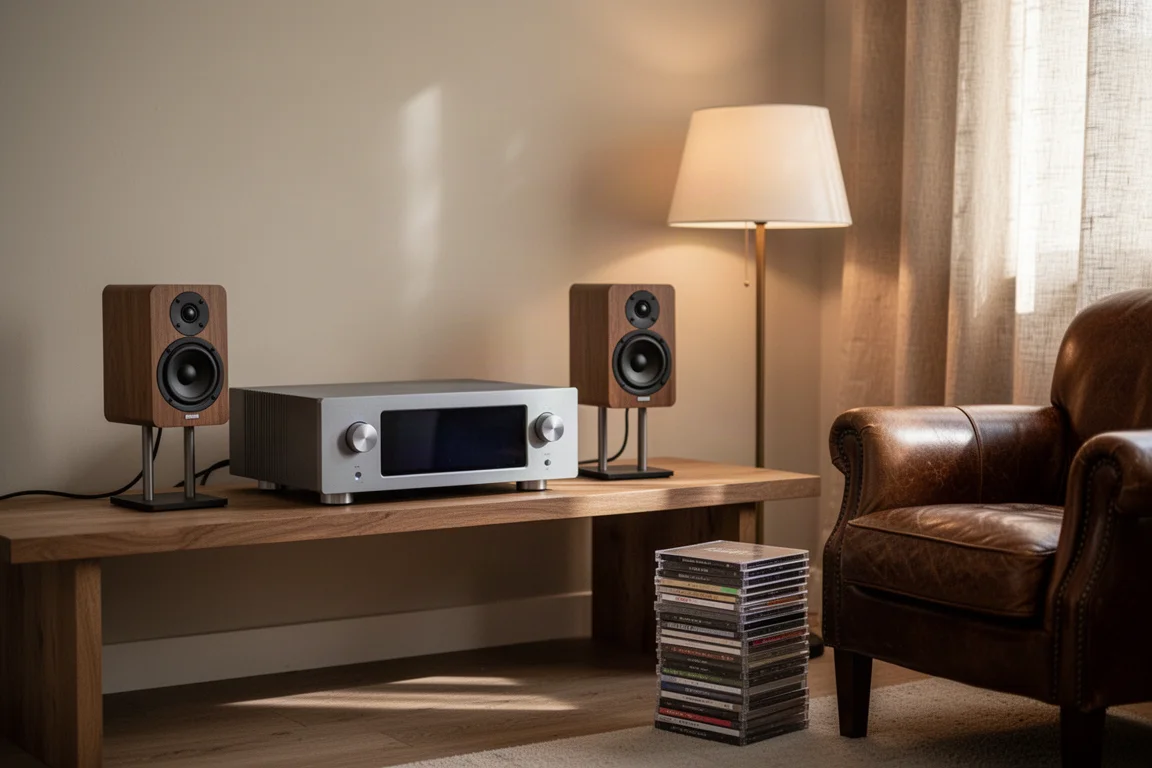
The most obvious strength is visual and functional harmony. The Evo CD is a cosmetic match for the Evo 75 and Evo 150, so an owner who cares about how a system looks on a shelf gets a coherent stack rather than an odd component out.
Control is the second advantage. With only an open and close button on the front face, the transport defers to the amplifier’s own controls and the StreamMagic app. There is no separate control scheme to learn and no second remote cluttering the room.
The third advantage is the conversion stage. Cambridge Audio has won numerous awards for its digital to analog converters and invested substantial research into the DACs and supporting circuitry used in the Evo amplifiers. Pairing the Evo CD with an Evo means the digital stream lands in conversion hardware that the brand clearly knows how to build.
Main Strengths: The All-Metal Transport Mechanism
The transport drawer is the part that will surprise most people. The assembly is entirely metal, with two metal rods on each side guiding the drawer in and out, and it feels substantial the moment a disc is placed in it. Compared with the plastic drawers found on even very expensive CD players, the difference in solidity is immediate.
This is not a mechanism chosen to hit a price. It is the same transport system used in a $33,000 dCS CD player, and the same one found in other high-priced players from around the world.
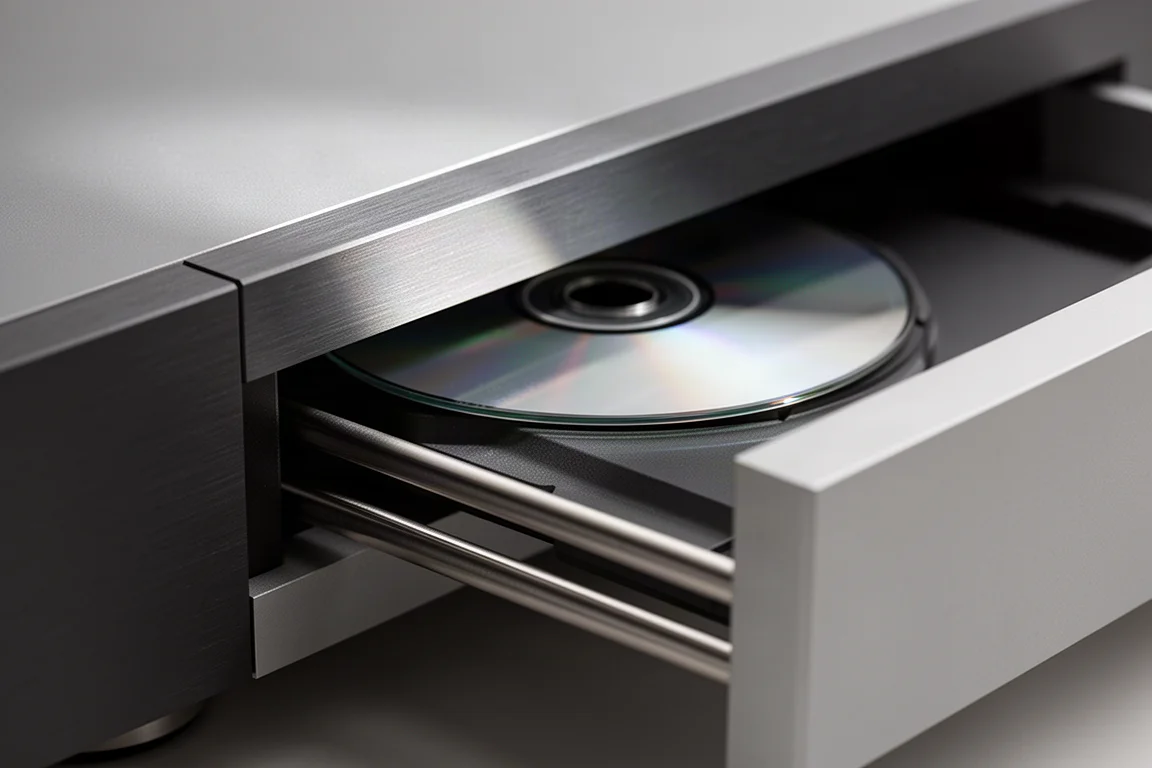
Mechanical stability matters more than it might appear. A drawer that holds a disc firmly means the laser reading the pits does not have to constantly refocus, and a mechanism that maintains an accurate spin speed reduces read errors because data retrieval is more reliable. Cambridge Audio also pays close attention to the support circuitry around the signal path, and the same care is visible here. The result is a mechanism that should hold its performance for a very long time.
Things to Consider Before Buying
Compatibility is the first thing to check. The Evo CD works only with the Evo 150 and the Evo 75. It cannot be connected to other amplifiers, and it does not offer a universal digital output path for use elsewhere in a system.
Because a transport has no converter of its own, it needs the Evo amplifier to turn the digital stream into sound. That is exactly how this product is intended to work, but it does mean the Evo CD is not a standalone solution and cannot be shared between two different systems.
Owners who already play CDs through an Evo should also weigh how often they actually spin discs. A CD collection that comes out a few times a year may not justify a dedicated transport, while a large, actively used collection is a much stronger case for adding one.
Sound Quality and Everyday Listening
Paired with an Evo 150, the Evo CD delivers tiny subtle details in the music with an effortless quality. The characteristic that stands out most is flow: the combination keeps the music moving with a sense of rhythm and pacing that rivals CD players costing many times more, including models well above the $20,000 mark.
There is a reasonable question about how a transport can affect sound at all, since its job is simply to spin a disc and read the digital stream. The answer sits in how much of the original recording is actually retrieved. A compact disc holds 44,100 samples for every second of music, and that figure applies to a single channel alone. When the CD system was designed, its creators understood that no disc reader would ever capture every sample perfectly while a disc wobbles in a tray, so error correction was built in to estimate what the missing bits should have been.
The less error correction a transport has to apply, the closer the output is likely to be to the original digital recording. An all-metal mechanism that holds the disc steady and spins it at an accurate speed reduces the need for that guesswork, and that is the practical argument for a well-built transport over a basic drive.
How the Evo CD Compares With Other CD Options
An Evo owner has more than one route to disc playback, and the differences are worth understanding before deciding.
The simplest option is a standard CD player connected to the analog inputs of the Evo. Cambridge Audio’s own AXC35 is an inexpensive way to do this, and it works fine, but the conversion happens inside the player rather than in the Evo.
A step up is the CXC, a highly regarded CD transport that connects to one of the Evo’s digital inputs with a digital cable. This keeps conversion inside the Evo while using a separate transport.
The Evo CD sits above both for Evo owners because of what it adds: a perfect cosmetic match, a clean single-button front panel, shared control through the amplifier and the StreamMagic app, and metadata that puts album artwork and track information on the Evo display. The all-metal drawer assembly is the final argument, and it is a genuine step beyond what the alternatives offer.
Buying Advice
For an Evo 150 or Evo 75 owner with an active CD collection, the Evo CD is the natural companion. It uses the conversion hardware already inside the amplifier, it looks like it belongs there, it shows album art on the display, and its mechanism is built to a standard rarely seen in disc players at any price.
If CDs are an occasional convenience rather than a core part of how you listen, the CXC transport over a digital cable or the AXC35 through the analog inputs will get you playing discs for considerably less. Neither matches the integrated experience or the drawer quality of the Evo CD.
The clearest way to decide is to ask what you want from physical media. If the goal is to hear a CD collection as close as possible to the original recording while keeping one tidy, coordinated system, the Evo CD is the intended answer. If the goal is simply to have a disc option available, the simpler routes make more sense.
Conclusion
The Evo CD is a specialised product, and it is honest about that. It works only with the Evo 150 and Evo 75, it relies on the amplifier’s converter, and it makes no attempt to be a universal transport.
Within that narrow brief, it is exceptionally well executed. The all-metal drawer mechanism, the metadata integration with the Evo display, the uncluttered front panel, and the musical flow it brings to a disc collection add up to a transport that punches far beyond the systems it is designed for. For Evo owners who still value compact discs, this is the piece that lets those discs sound their best.
Product link
View more details for Cambridge Audio Evo CD
This product is mentioned in the review. Check the specifications, options, and compatibility before buying.
View more details for Cambridge Audio Evo CDFurther reading
Related Reviews
Speakers
13 Under-the-Radar Speakers Still Worth Buying
Thirteen speakers that quietly stayed in production while newer models took the spotlight, from budget bookshelf pairs to a full-size tower.
Hi-Fi Speakers
1723 THX Tower vs 1528 Bookshelf: Which Speaker Fits Your Room?
Two speakers at roughly the same price, built very differently. How the 1723 THX tower and the 1528 bookshelf compare on construction, bass, power needs, and sound.
Hi-Fi Audio
Accuphase C-57 vs Allnic H-7000V: Two High-End Phono Stages Compared
A fully balanced solid-state phono stage with a pitch-black noise floor meets a tube design built for well-loved records. Here is how to choose between them.