Home & Kitchen
Caesarstone Quartz Countertops: A Long-Term Kitchen Upgrade Worth Considering
Why engineered quartz is such a practical countertop choice, and what makes Caesarstone Calacatta Nuvo stand out in a busy family kitchen.
Introduction
A kitchen countertop is one of those purchases you live with for years, so the material choice matters more than most people expect. Engineered quartz has quietly become one of the most popular options in modern kitchens, and after several months of daily family use, it is easy to see why. This review looks at Caesarstone quartz countertops, including the Calacatta Nuvo design, from the perspective of a busy household where cooking and baking happen constantly.
Why Quartz Works So Well in a Kitchen
Quartz is one of the most abundant minerals in the Earth’s crust, and it is genuinely hard, which is a big part of its appeal. Unlike marble or granite, it does not come out of the ground in usable slabs. Instead, it is crushed into small bits, mixed with resins and glues, poured into molds, and compressed, with heat, into large slab shapes.
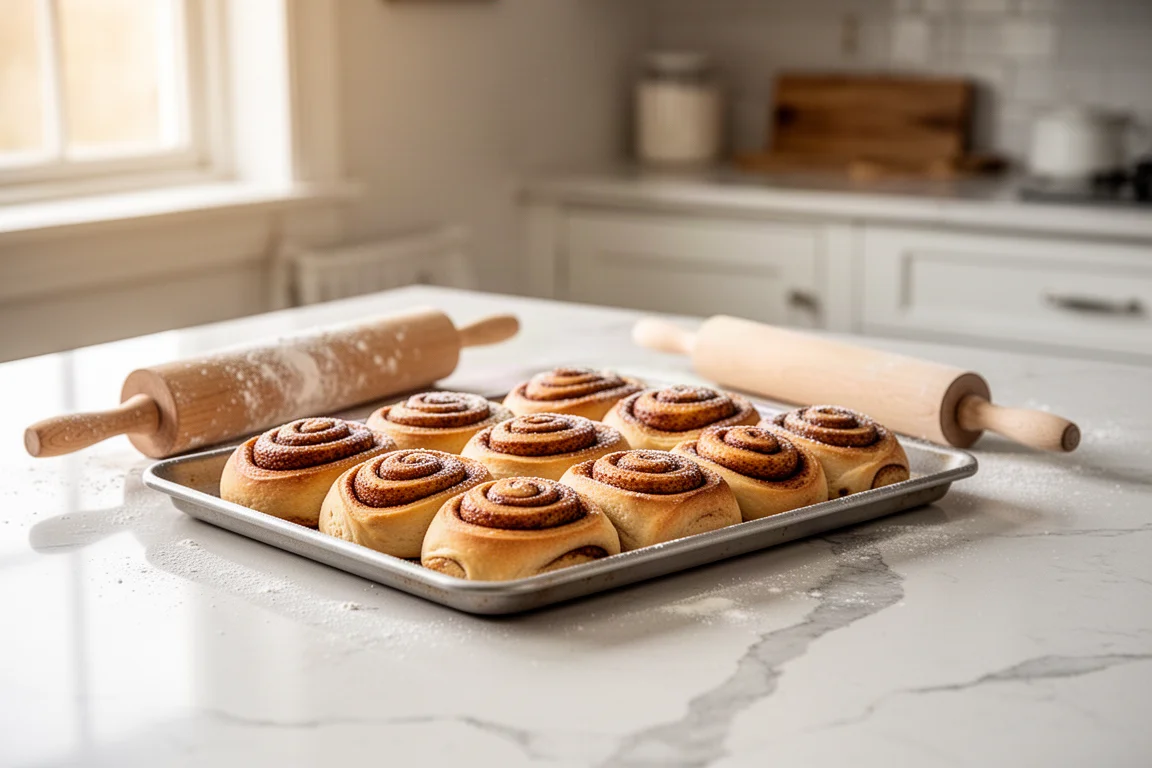
The result is a countertop material with real practical advantages. Finished slabs are very durable, heat resistant, and nonporous, so they do not need the regular sealing that granite or marble require, which is a genuinely annoying maintenance item. Quartz has also become popular because it can be produced in white, off-white, and very neutral colors that natural stone simply cannot match with the same precision.
How Quartz Becomes a Countertop
Fabrication is where the category gets interesting. Quartz cuts just like granite, typically on a large CNC saw, with all the cuts planned and optimized by software. The saw runs through the job with no supervision, which is a genuinely impressive bit of workflow automation.
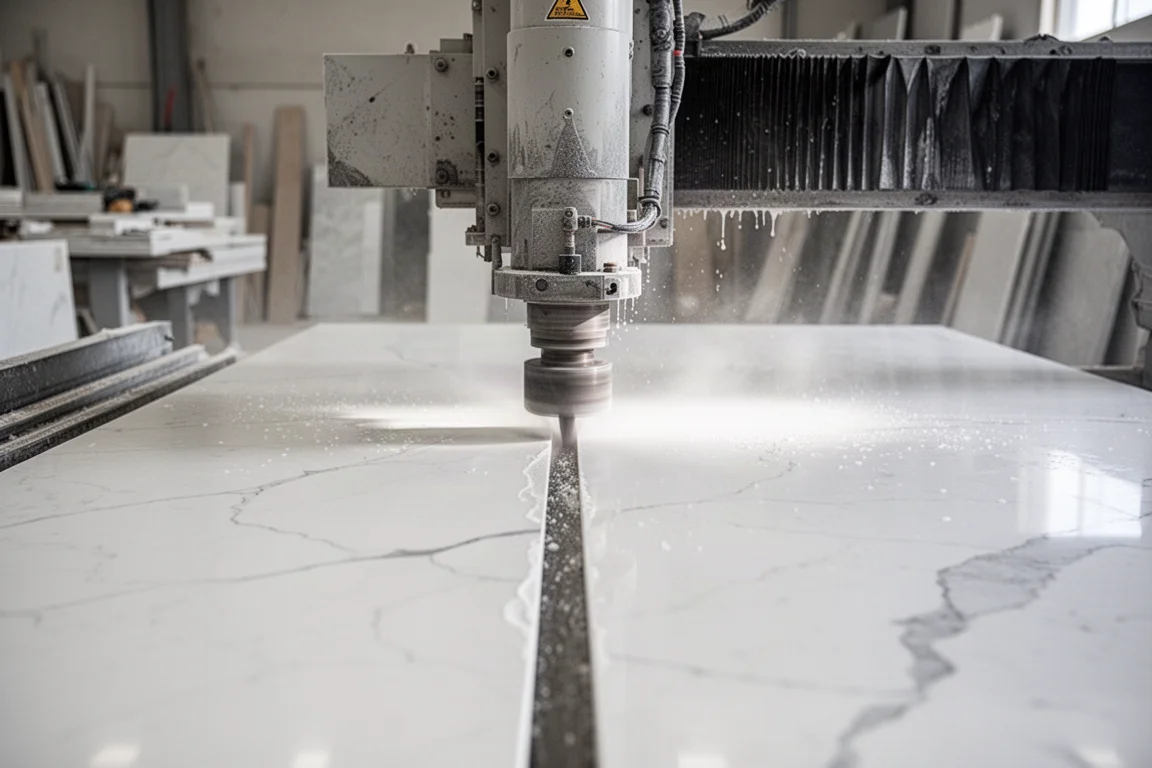
After cutting, the edges are polished and finished depending on the design and where the piece sits in the kitchen. Back edges may not need finishing, but an island needs polishing all the way around, handled by machines that route and polish edges automatically. These slabs are heavy, roughly 20 pounds per square foot, so shops use cranes to move them around.
Caesarstone: The Brand That Started the Category
Caesarstone invented this whole category of countertops, pioneering the process of turning loose quartz into slabs. The company offers over 100 designs with more coming out regularly, and its distribution reaches across the entire globe.
The brand also puts out a lot of material to assist installers, keeping the industry up to date with best practices and procedures. Quartz as a material has improved enormously over the last 10 to 20 years: earlier quartz countertops could look dated, but current designs look incredible, with better durability and heat resistance as well.
Caesarstone Calacatta Nuvo: A Closer Look
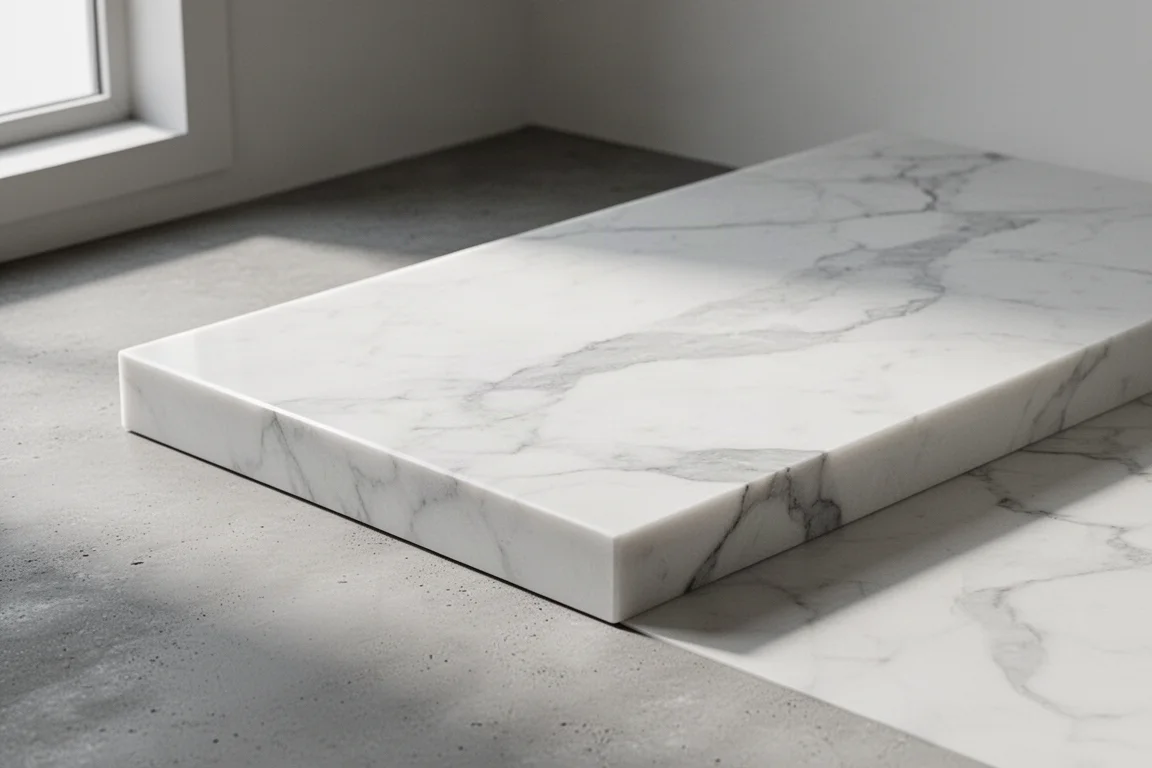
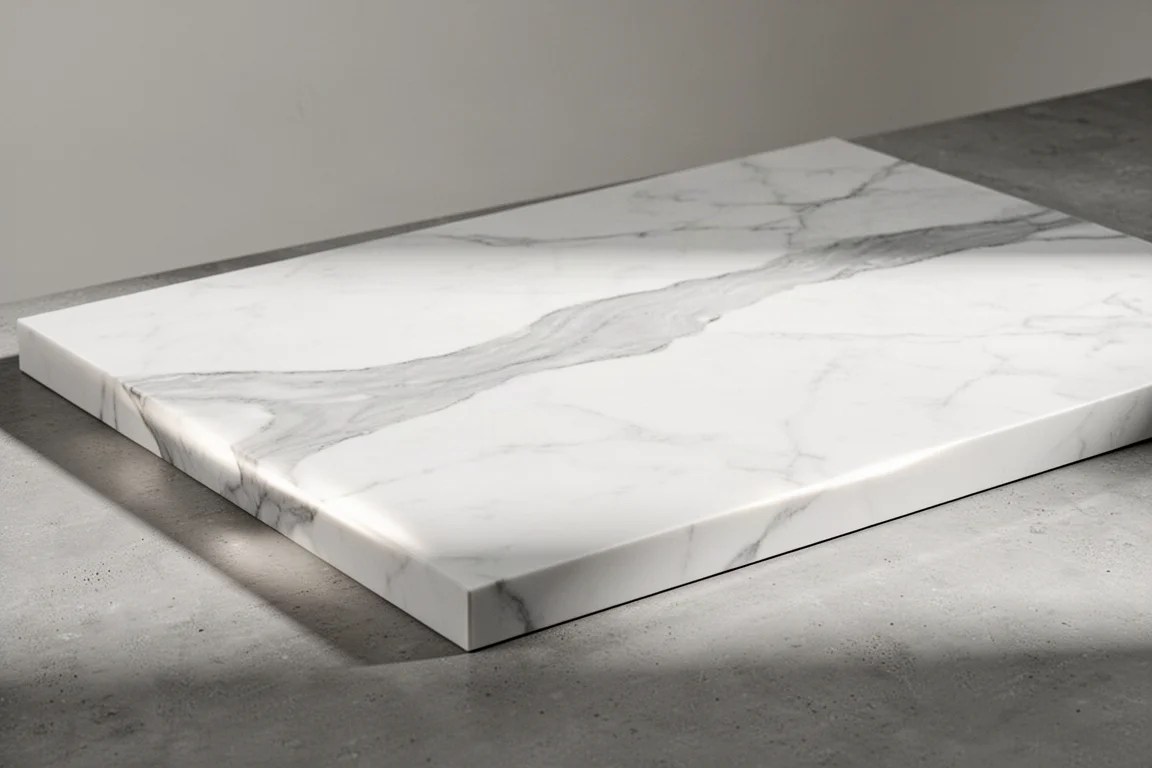
Calacatta Nuvo is the design installed in this kitchen, and it delivers a soft, marble-like look with gentle veining. One honest tip for anyone choosing a color: get a sample. This is not paint, where you can simply apply another coat if you dislike the result. Caesarstone sends generously sized samples that show more of the actual pattern, and they stay useful afterward, doubling as plant coasters or desk accessories for years.
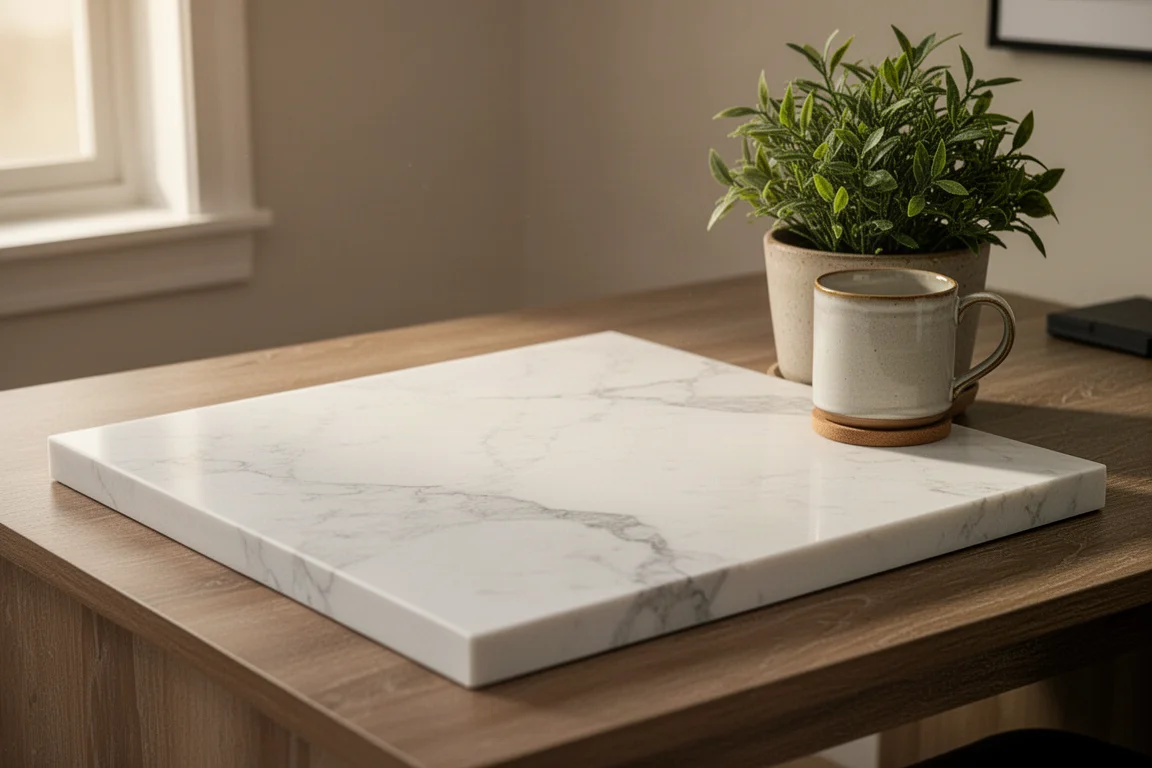
If you are ever trying to tell engineered quartz apart from natural stone at a slab yard, look at the edges. In natural stone, the color and detail move through the entire body of the slab. In quartz, the pattern typically sits only on the surface, though a mitered edge install can recreate the full-depth effect. This particular kitchen uses a straightforward 3 cm slab without a miter.
Craftsmanship Behind the Install
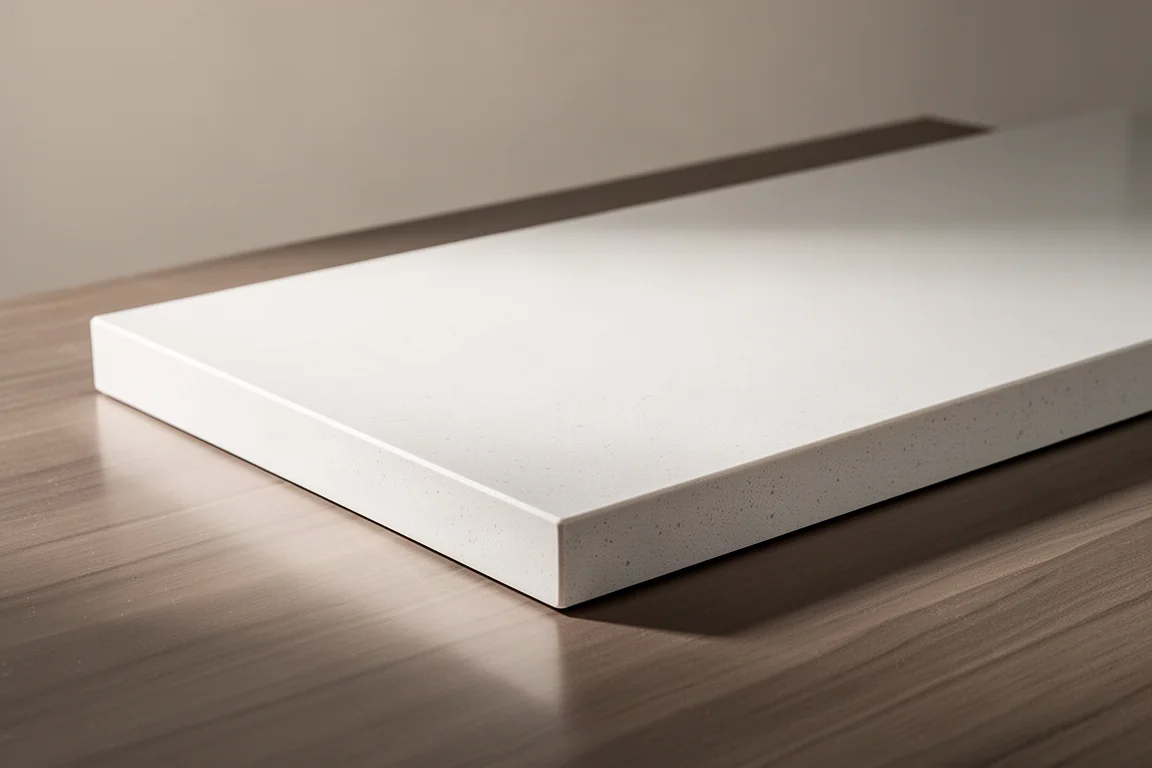
The fabrication and installation for this kitchen were handled by a shop that did all the stone, and the cabinets as well, for the same project. It is worth noting how much labor-saving technology sits behind a clean install: software-optimized cuts, automated edge polishers, and slab cranes all contribute to the finished result. Quality fabrication matters as much as the slab itself, so choosing an experienced local shop is part of the equation.
Things to Consider Before Buying
Quartz has a lot going for it, but a few points are worth weighing before committing. The material is heat resistant, though like any surface it deserves reasonable care around hot cookware. The nonporous surface means no regular sealing, which removes one of the most tedious recurring maintenance tasks compared with granite or marble. And because color control is precise with engineered quartz, it is easier to match a specific design vision, though fans of natural stone will miss the one-of-a-kind character of a true granite or marble slab.
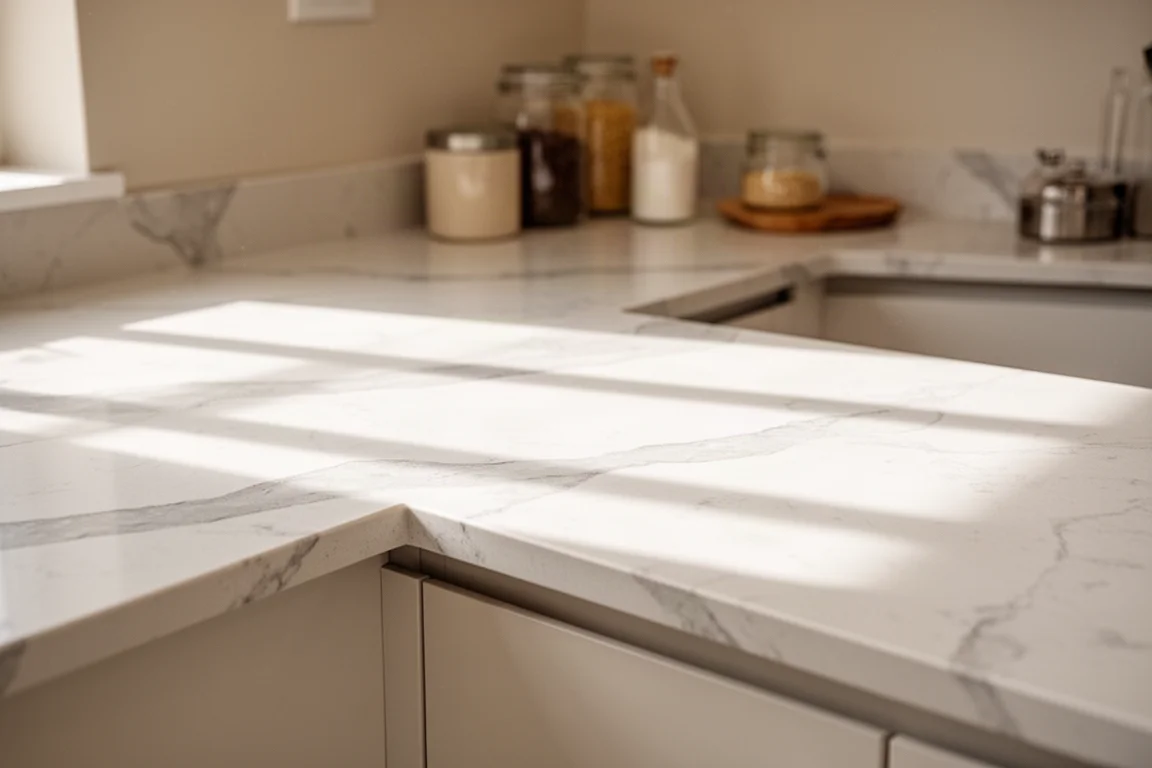
Getting a sample before deciding is genuinely important. Spend a few dollars, order a couple of designs, and look at them in your own lighting before making the call.
Conclusion
Several months of daily use in a busy four-kid household make the case for engineered quartz pretty clearly: it looks great, requires almost no maintenance, and handles constant cooking activity without complaint. Caesarstone’s Calacatta Nuvo specifically shows how far the category has come, with a refined marble-like appearance that earlier quartz products could not match. If you are planning a kitchen renovation, it is a material well worth shortlisting.
Further reading
Related Reviews
Home & Kitchen
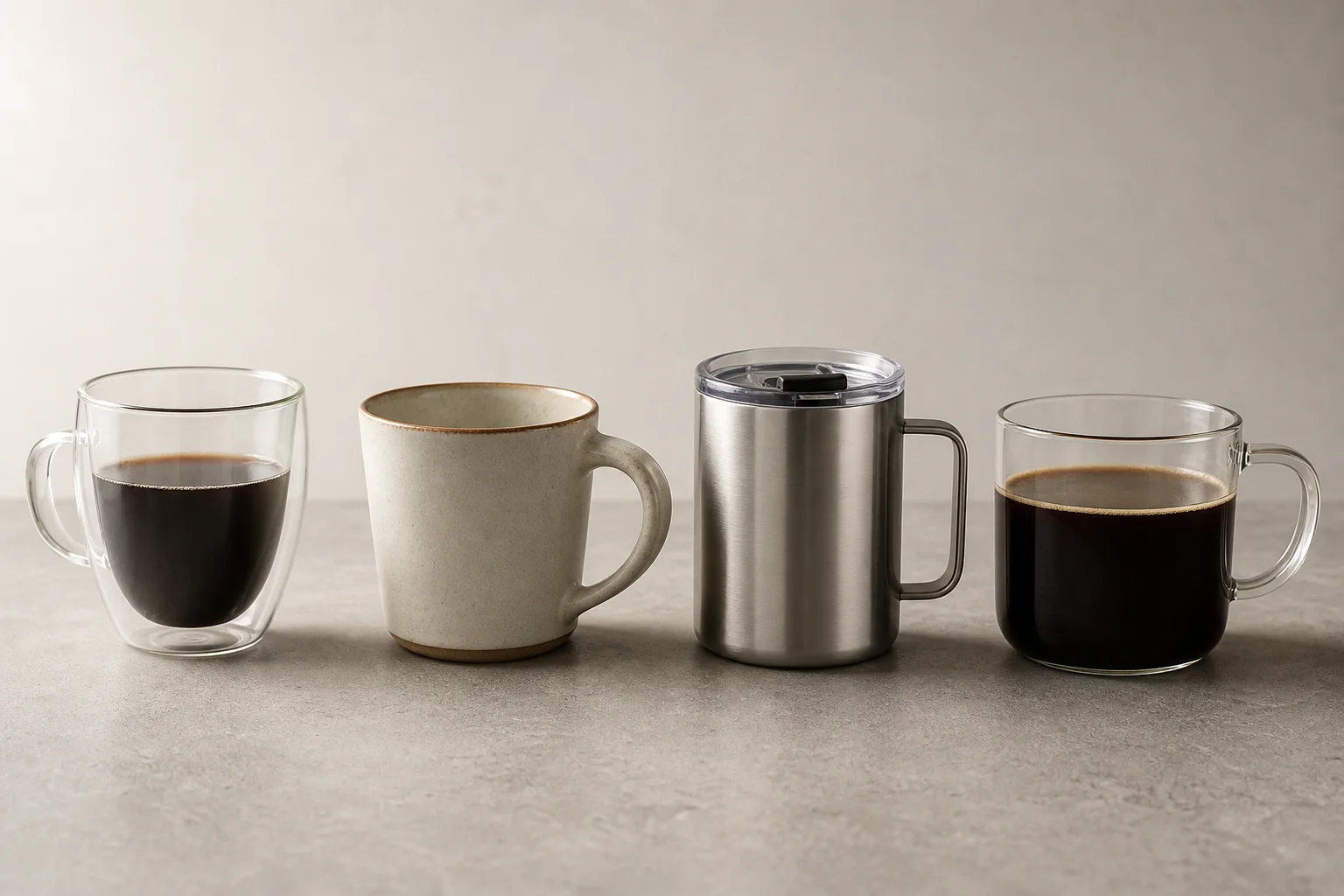
Best Non-Toxic Coffee Mugs: Four Safe Options for Daily Use
A practical guide to four non-toxic coffee mug options, each with distinct benefits for health-conscious drinkers seeking durability and comfort.
Home & Kitchen
Expensive Home Upgrades That Are Actually Worth It: 5 Picks We'd Buy Again
From a rubber cutting board to shallow drawer storage, five premium-priced household upgrades that earn their cost through daily use.
Home & Kitchen
Best Water Filter Pitchers and Countertop Systems: 12 Options Tested Side by Side
Twelve water filter pitchers, countertop systems, and a distiller compared on copper, chlorine, and fluoride removal, filtration speed, and build quality.