Speakers
Cabasse Murano Review: A Three-Way Standmount Built Around Imaging and Tone
The Cabasse Murano hides a coaxial three-way design inside a curved cabinet and asks for a 4-ohm-capable amplifier. Here is what it does well and what to check before buying.
Introduction
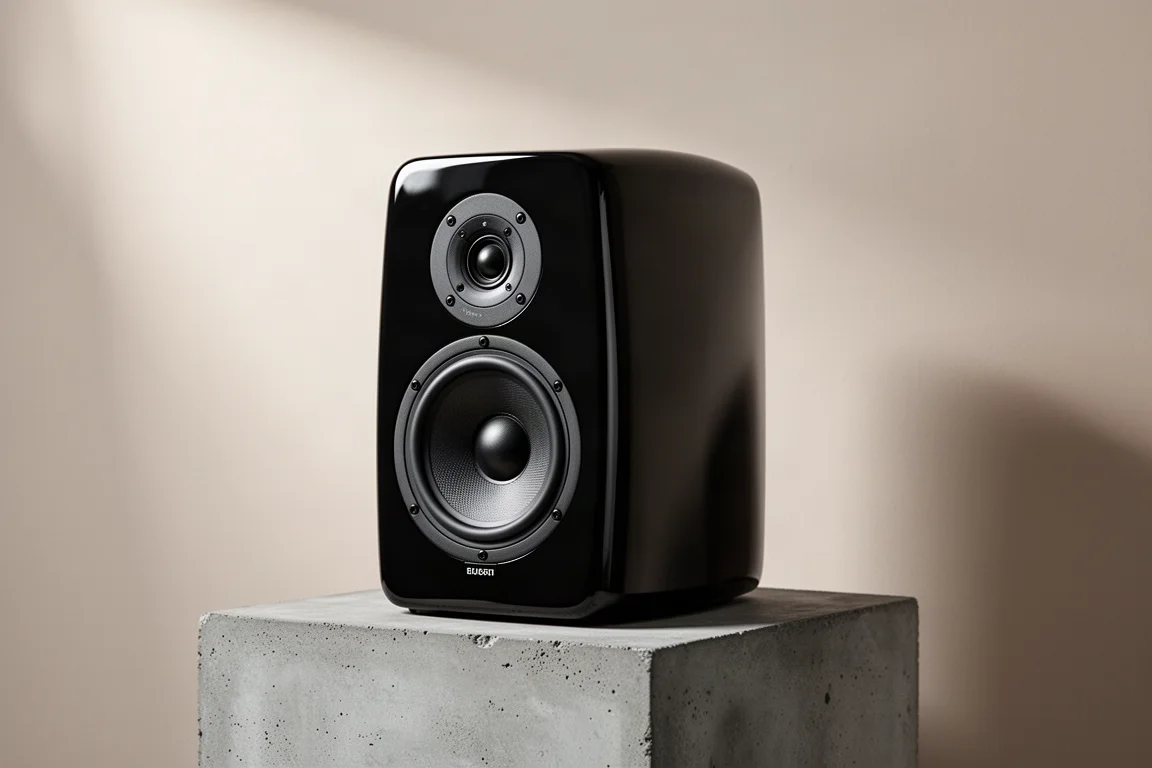
The Cabasse Murano is a compact standmount loudspeaker that packs more engineering into its curved cabinet than the front baffle suggests. At a glance it reads as a two-way design, but it is a genuine three-way: a coaxial driver handles the upper frequencies, and a separate woofer sits below it. Cabasse has a long history with coaxial drivers and unconventional cabinet shapes, and the Murano brings that thinking into a form that fits comfortably in a normal room.
The Murano sells for $3,998 per pair and is offered in gloss black, gloss white lacquer, and mahogany finishes. It carries a five-year warranty, administered in the United States by Upscale Audio. Cabasse also offers a floorstanding version of the same speaker for listeners who want this character in a taller enclosure.
Who the Cabasse Murano Is For
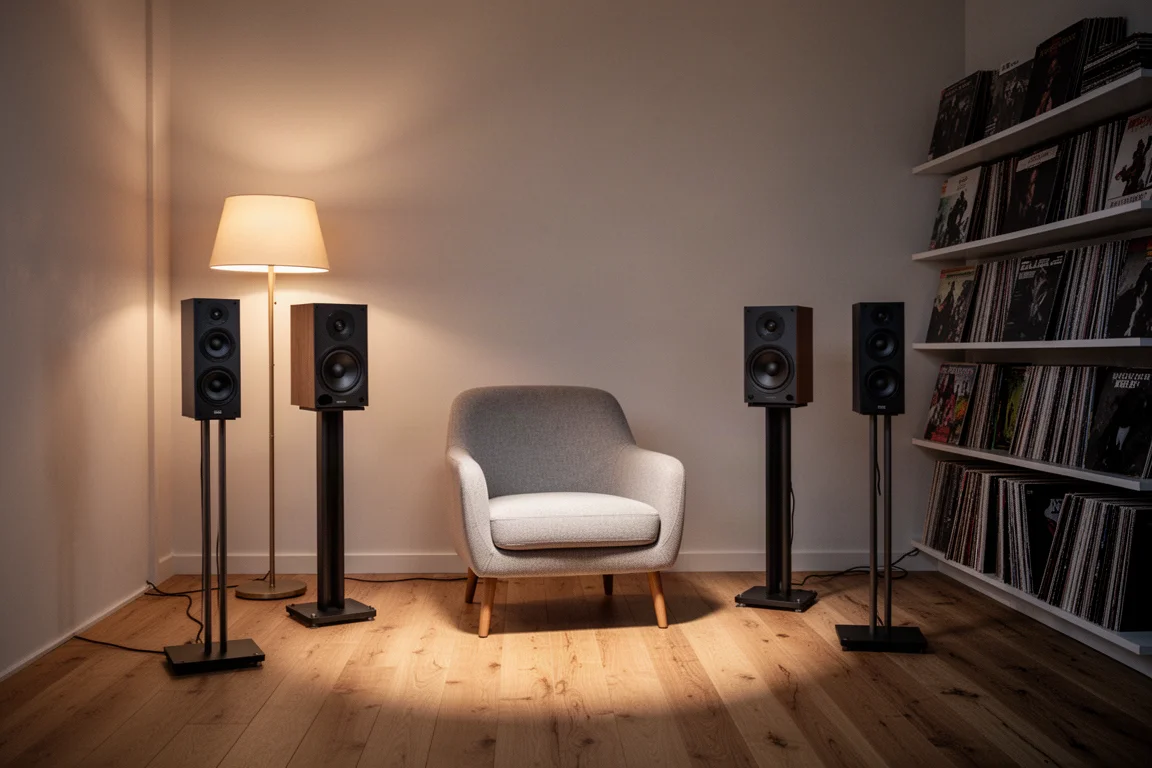
This is a speaker for listeners who put imaging and tone at the top of their priority list. The Murano builds a stable, three-dimensional picture of a recording: a firmly anchored centre image, with depth and height that make the space around each instrument feel tangible rather than merely suggested. If you have chased that quality in a compact cabinet before, this is the kind of presentation that rewards the search.
It also suits listeners who play a lot of piano, acoustic, and vocal material. The speaker gets the percussive nature of a piano right, so the sense of hammers meeting strings comes through, along with the small differences in how firmly a key is pressed. Systems built around solo instruments and small ensembles are where it feels most at home.
One system requirement shapes everything else: the Murano’s impedance drops to 3.6 ohms. That is a genuinely low figure, and it means the speaker needs an amplifier that is comfortable driving a 4-ohm load. Confirming that specification before buying is not optional advice. It is the first thing to check.
Design, Drivers, and Build
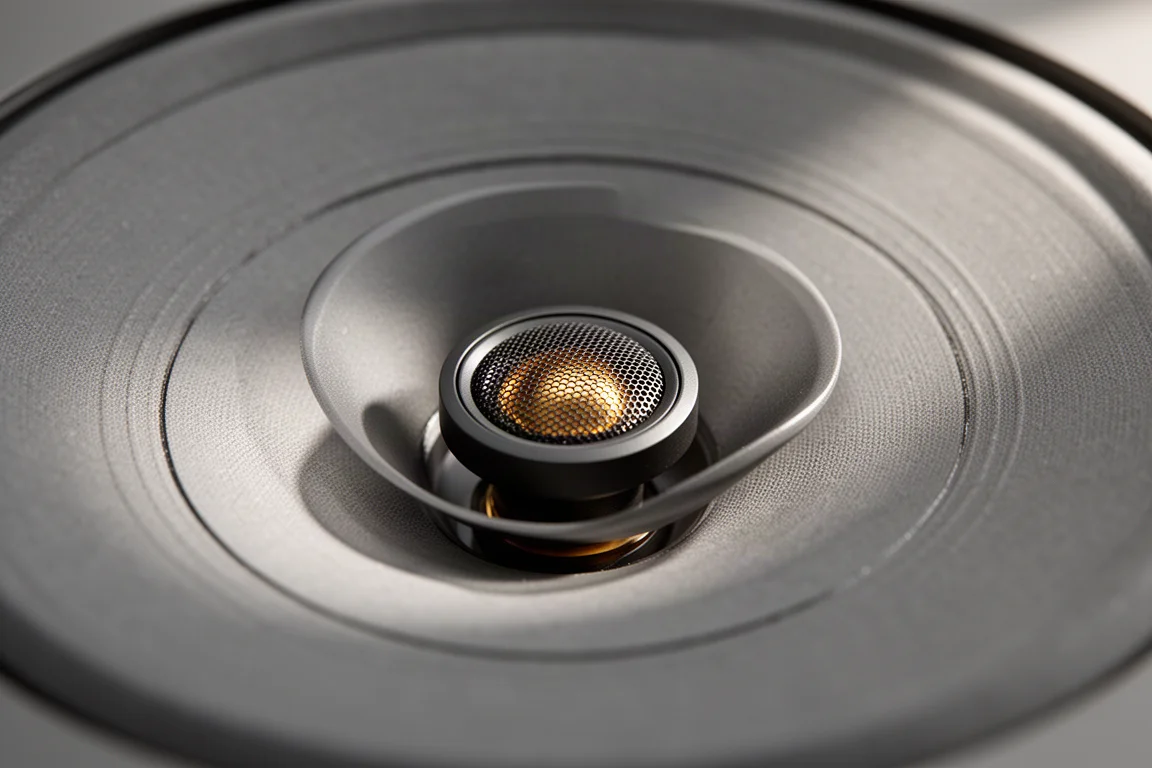
The three-way arrangement is built around a coaxial driver. A one-inch Kaladex film tweeter sits inside a waveguide, and a polypropylene midrange driver shares the same axis, which is why the baffle looks simpler than the driver count suggests. Below that assembly sits a seven-inch woofer using a fibreglass-skinned honeycomb sandwich cone. The driver geometry is unusual and does not closely resemble the coaxial designs most listeners will have encountered.
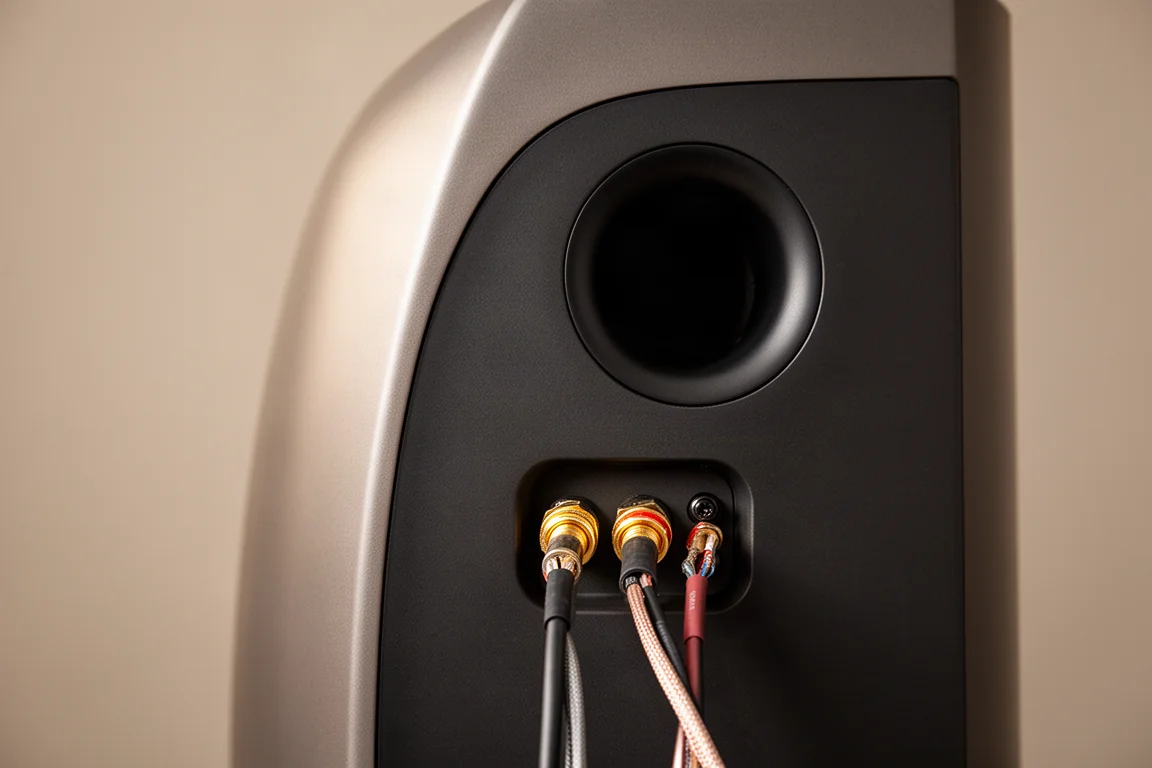
The drivers and the crossover are made in France. The cabinet, which is curved and feels solidly built, is manufactured in China. Around the back you will find a port and a set of substantial, carefully finished binding posts.
Main Strengths: Imaging and Tone
Two qualities define the Murano: imaging and tone, and they reinforce each other. The centre image is solid and precisely placed, and the speaker extends that precision across the width of the stage and into the depth of the recording. Height information comes through as well, so performers occupy a specific position rather than a general area. The result is a presentation with real presence.
Tone is the second pillar. The Murano has an organic, full-bodied character that makes solid-state amplification sound warmer and more believable than its specification alone would suggest, and it manages that without slowing the music down. The gap between analog and digital sources is obvious over this speaker, which says a great deal about how much tonal information it resolves.
Piano Recordings and Dynamic Shading
Piano material is where the Murano is most convincing. The percussive quality of the instrument comes through clearly, and so does dynamic shading: the subtle variations in how a player strikes the keys rather than the broad swings between quiet and loud. On close-miked recordings, the speaker conveys intimacy and room ambience at the same time, and the texture of damped strings and felt hammers becomes part of the performance instead of background detail.
Electronic Music and Dense Textures
The Murano is not limited to gentle acoustic material. On dense electronic recordings full of sputtering pops, odd noises, and layered soundscapes, it keeps the textures legible and tactile. It carries the grain and grit of distorted material while still resolving the structure underneath, which is a difficult balance to strike. When a recording calls for something sweeter, the speaker shifts character accordingly.
Weight and Midrange Body Compared With Leaner Designs
Where the Murano separates itself most clearly is in the weight it gives to the midrange. A slim planar panel can throw a larger, closer-to-life-size soundstage, but in direct comparison the Murano carried more body, better midrange tonality, and a greater sense of solidity. Against a leaner standmount at a lower price, pianos were rendered at a more realistic scale and with noticeably more dynamic range.
That combination of weight and tone is what makes the speaker feel substantial rather than merely detailed. It gives mass to voices and instruments without blurring the detail that sits on top of them.
Things to Consider Before Buying
The 3.6-ohm impedance is the headline caveat. An amplifier rated for 4-ohm loads is a practical requirement rather than a nicety, and matching the speaker to a capable amplifier belongs in the purchase planning. The Murano was driven during testing by amplifiers ranging from a compact unit rated at 45 watts into 4 ohms to one delivering 300 watts into 4 ohms, and it performed well across that spread.
The price of $3,998 per pair places the Murano in a crowded part of the market. The drivers and crossover are made in France while the cabinet is built in China, a split some buyers will want to know about. The speaker is also revealing enough that source differences are easy to hear, so it will not flatter a weak front end.
Buying Advice
Choose the Murano if imaging and tone matter more to you than raw scale, if your listening leans heavily on piano, acoustic, and vocal recordings, and if your amplifier is genuinely comfortable at 4 ohms. The five-year warranty and the three finish options, gloss black, gloss white lacquer, and mahogany, make it straightforward to live with from an ownership perspective.
Look elsewhere if you want the largest possible soundstage from a compact speaker, or if $3,998 per pair sits outside your budget for this stage of the system. The Murano’s appeal is concentrated in the quality of its tone and the precision of its imaging rather than in the size of the stage it throws.
Conclusion
The Cabasse Murano is a compact three-way standmount with a clear identity. Its coaxial driver layout, French-built drivers and crossover, and curved cabinet all serve two goals: a precisely placed, three-dimensional image and a rich, organic tonal character. Pair it with an amplifier that can handle a 4-ohm load, and it delivers the kind of presence that makes a recording feel like an occasion rather than background playback.
Product link
View more details for Cabasse Murano
This product is mentioned in the review. Check the specifications, options, and compatibility before buying.
View more details for Cabasse MuranoFurther reading
Related Reviews
Speakers
13 Under-the-Radar Speakers Still Worth Buying
Thirteen speakers that quietly stayed in production while newer models took the spotlight, from budget bookshelf pairs to a full-size tower.
Speakers
Arendal 1528 Monitor 8 Review: A Three-Way Standmount With Serious Dynamic Headroom
A three-way standmount speaker with extremely low distortion, high output capability, and deep bass for its size, plus the setup details worth knowing before buying.
Speakers
Arendal 1723 Monitor S Review: A Compact Monitor With Serious Ambition
A close look at the Arendal 1723 Monitor S, a compact MTM monitor with a waveguide-loaded tweeter, an HDF cabinet, and flexible ported or sealed operation for music and home theater.