Reef Aquarium Chemistry
Bulk Pharma Hybrid Balling Method: Five Components for Balanced Reef Chemistry
A practical three-part dosing approach that tackles excess salinity, low tank pH, and flexible trace element demand in reef aquariums.
Introduction
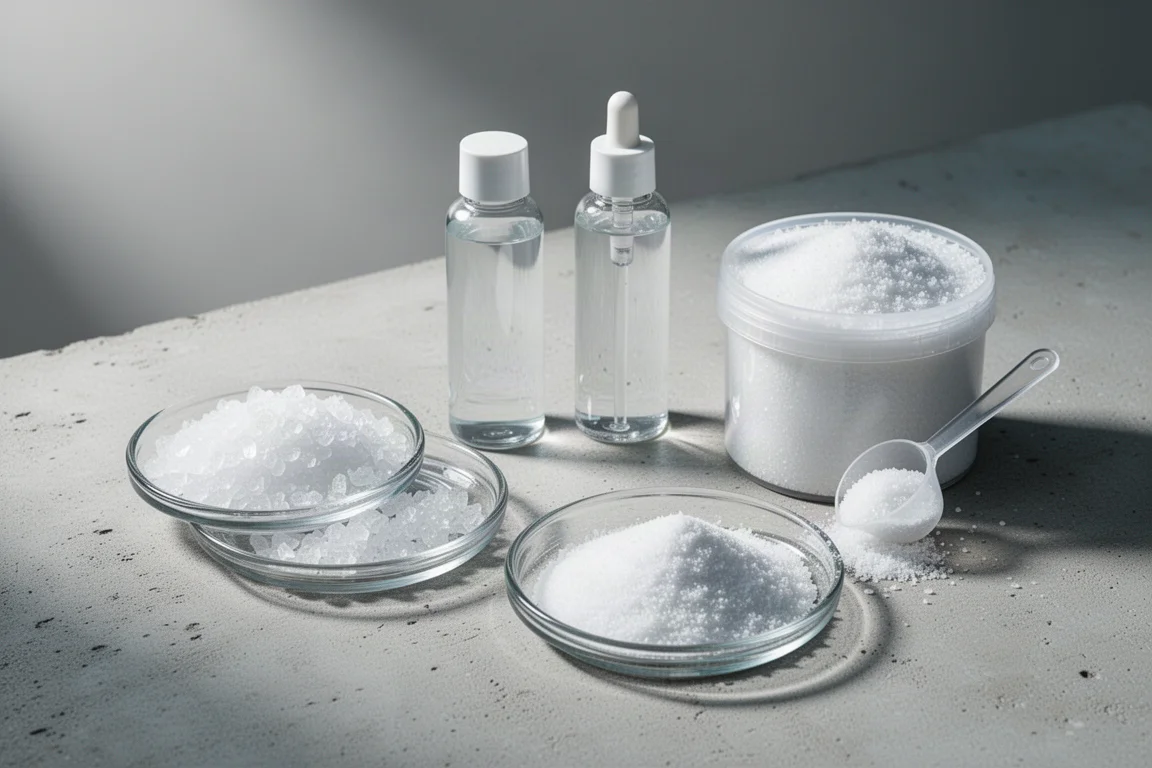
Most reef tanks begin on a simple calcium and alkalinity two-part, and for the first year or two that plan usually holds up well. The complications arrive later. Salinity drifts upward because every two-part dose adds sodium chloride. Tank pH settles below natural seawater levels in a closed home. And trace element demand gradually outgrows what a normal water change schedule can supply.
The Bulk Pharma Hybrid Balling Method is a three-part approach developed in collaboration between BRS and Tropic Marin to address those three issues together. It keeps affordable bulk chemistry at the centre, adds a third solution that corrects the salinity problem, and leaves trace element dosing adjustable rather than fixed.
This guide covers each of the five components in the method, what it contributes, and how to judge whether your tank needs it yet.
How the Hybrid Balling Method Works
The recipe keeps the familiar two-part shape. Part A is a calcium solution built from Bulk Pharma calcium chloride at two and a half cups, or one pre-measured tear strip pouch, per gallon of solution. Part B is the alkalinity half, made from Bulk Pharma soda ash at two and one third cups, or one pre-measured pouch, per gallon.
Part C works differently from anything in a standard two-part. It is Tropic Marin’s sodium chloride-free sea salt mix, dosed at four scoops per gallon.
Trace elements are the adjustable layer. Every gallon of the calcium solution can take between zero and 330 millilitres of Tropic Marin Pro-Coral K+ Trace 1, and every gallon of the alkalinity solution can take the same zero to 330 millilitre range of Tropic Marin Pro-Coral A Trace 2. That range is deliberate, and it is the part of the method that is easiest to get wrong if it is treated as a single fixed number.
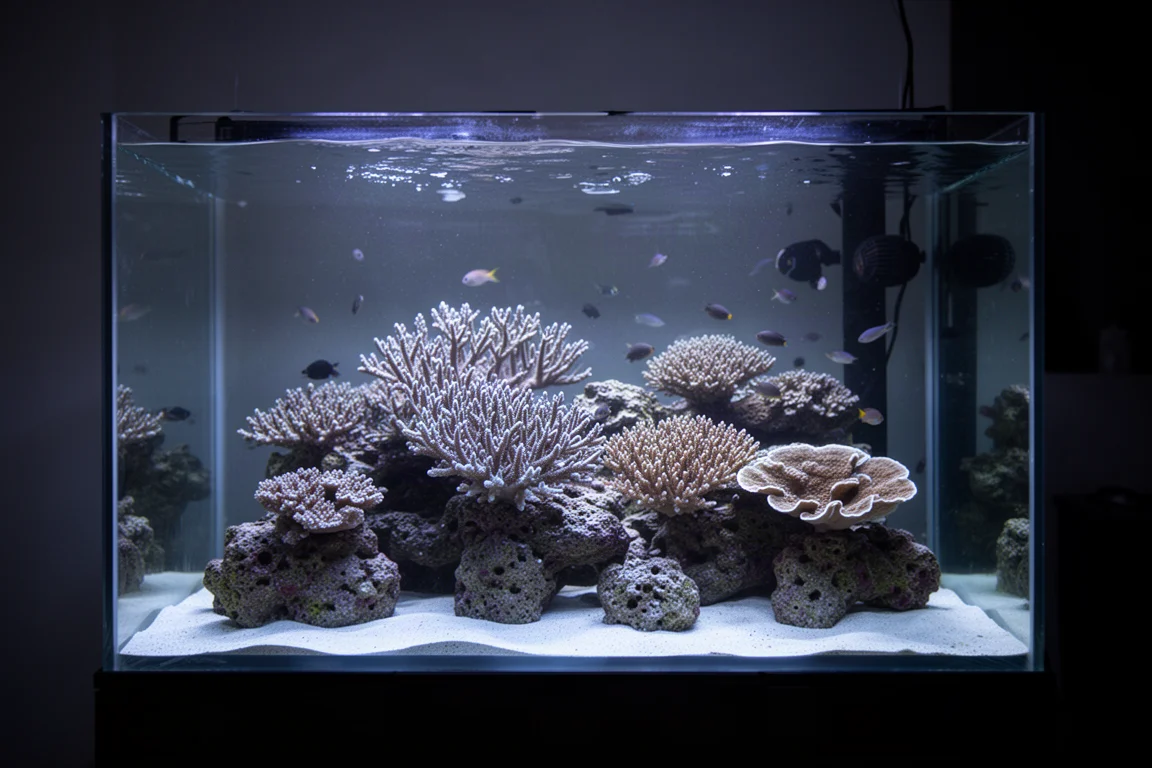
The combination solves three problems that a plain two-part leaves in place.
Sodium chloride accumulates daily with any two-part dose. Water changes slow the drift but do not resolve it, and when salinity is eventually diluted back down, the same dilution removes a portion of everything else in the tank. Adding Part C alongside the two-part means nearly every element is elevated slightly rather than sodium chloride alone, so the correction brings the whole balance back together.
Low pH is the second problem. Closed living spaces push dissolved carbon dioxide into tank water, which commonly holds reef aquariums in the 7.8 to 8.0 range against natural seawater at roughly 8.2 to 8.3. The method answers this by swapping the predominantly sodium bicarbonate alkalinity component of the standard approach, which has close to no pH effect, for sodium carbonate, which raises pH as it raises alkalinity.
The third is trace element demand, which varies with tank age, coral species and stocking level. Rather than assuming one ratio, the method allows trace additions to be scaled from nothing up to a full dose.
Mixing order is simple but worth following. Use an open-topped container such as a pitcher, fill it about two thirds with RODI water, dissolve the powder fully, add the trace element solution, then top off to one gallon before mixing and pouring into the dosing vessel.
BRS Bulk Pharma Calcium Chloride
Part A of the hybrid method is straightforward calcium chloride, and it is the lower cost half of the system per gallon of solution. Two and a half cups, or a single pre-measured tear strip pouch, makes a gallon.
Because the concentrate is set at standard Bulk Pharma strength, existing Bulk Pharma dosing calculators and drop-downs still apply, so the arithmetic does not change when the alkalinity component is swapped. Calcium chloride is also the solution that carries Trace 1 once trace elements are in use, which makes the calcium jug the first one to change as a tank matures.
It is dosed alongside the alkalinity solution in matched volumes, and for anyone assembling a dosing plan from scratch it is the natural place to begin.

BRS Bulk Pharma Soda Ash
Soda ash, or sodium carbonate, is the alkalinity component, dosed at two and one third cups or one pre-measured pouch per gallon. The reason it is soda ash rather than bicarbonate comes down to pH. A conventional alkalinity solution is largely sodium bicarbonate and has close to no effect on tank pH, which makes it easy to pour in by hand and easy to explain. Sodium carbonate does the opposite: it lifts pH as it raises alkalinity.
The trade-off is handling. A high pH alkalinity solution should not be dumped into the tank all at once. Results are best when it is dripped slowly into a high flow area, either with a simple dripper or, more commonly, with a dosing pump, ideally aimed into an inexpensive power head so the pH effect disperses quickly.
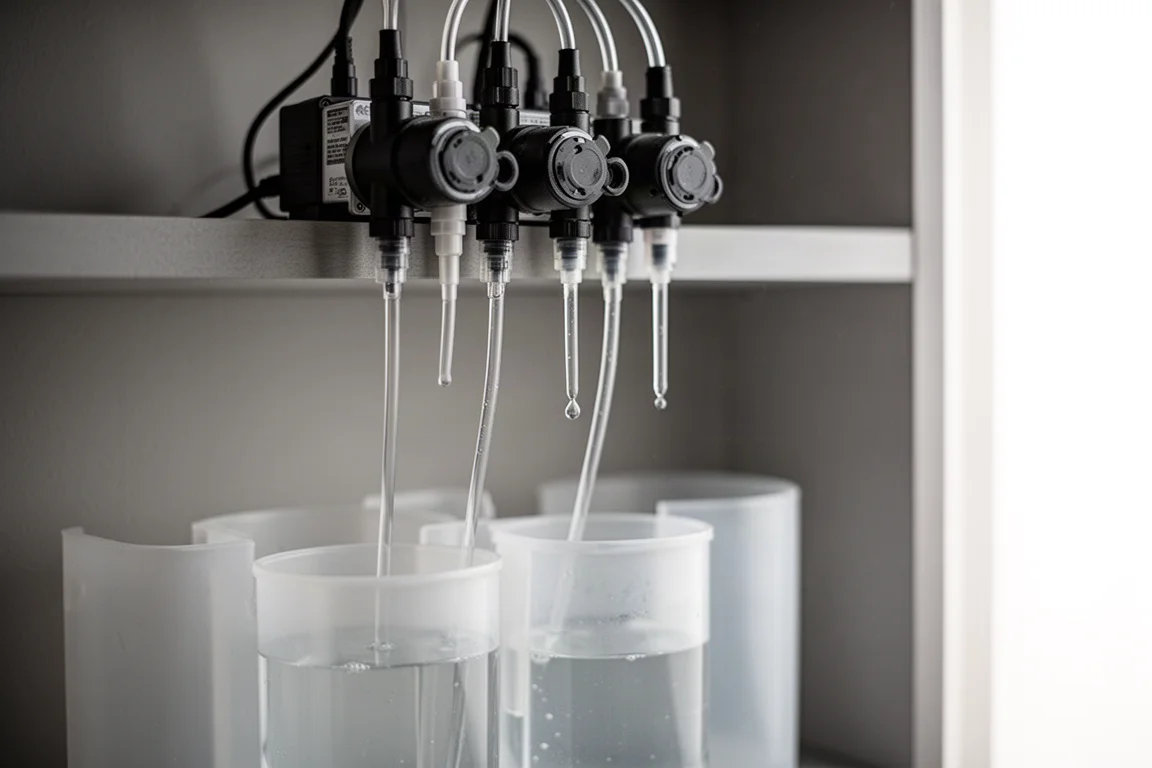
That single change in procedure is what allows a tank to run on a pH-supporting alkalinity solution rather than a neutral one, and it is the reason the retail shelf tends to favour the easier, lower pH formula.
Tropic Marin Pro-Coral K+ Trace 1
Trace 1 is added to the calcium solution and supplies barium, boron, chrome, cobalt, iron, copper, manganese, nickel, strontium and zinc. The dosing range runs from zero to 330 millilitres per gallon of calcium solution.
Zero is a legitimate setting. For roughly the first 12 to 18 months of a tank’s life, a reasonable water change schedule with a quality salt mix is generally an adequate source of trace elements, and adding more is neither necessary nor especially useful. Past that grow-out period the guidance scales with demand: about 80 millilitres per gallon for a low demand tank, around 160 millilitres for a medium demand system, and the full 330 millilitres for a tank packed with fast-growing colonies.
The reason for a range rather than a number is that trace element uptake is not identical across tank types. A new tank with limited coral and a mature system full of large colonies consume and deplete elements at different rates, and organisms such as coralline algae, algae, dinoflagellates, cyanobacteria and diatoms all draw on the same elements.

Tropic Marin Pro-Coral A Trace 2
Trace 2 goes into the alkalinity solution and adds bromine, fluorine, iodine, lithium, molybdenum, selenium and vanadium, again across a zero to 330 millilitre range per gallon.
Splitting the trace elements between two solutions is the practical advantage. If a periodic ICP test shows a group of elements trending up or down, the two bottles can be adjusted independently rather than moving the whole system at once. That is a level of refinement most two-parts do not offer.
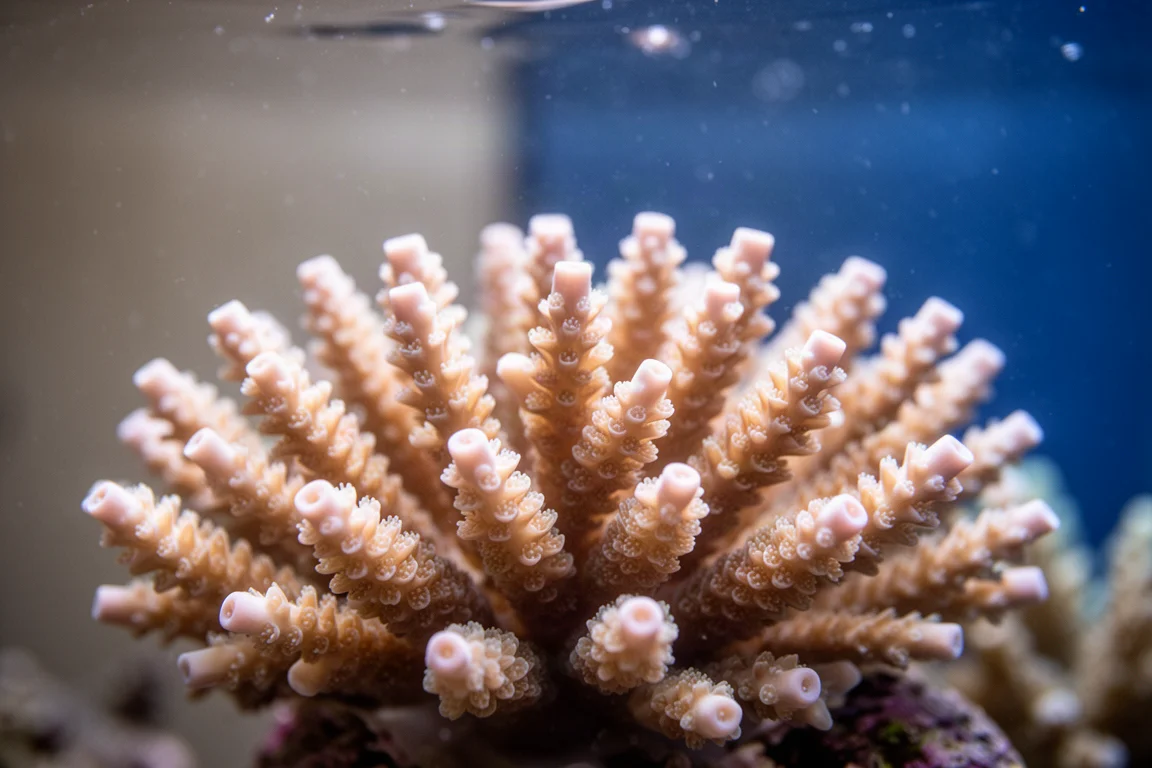
It is worth being clear about what this bottle is not. Part C adds a broad spread of elements as well, but it is not a trace element solution, because dilution removes those elements again in roughly the same ratio they were added. Trace 1 and Trace 2 are the components that actually replenish trace elements.
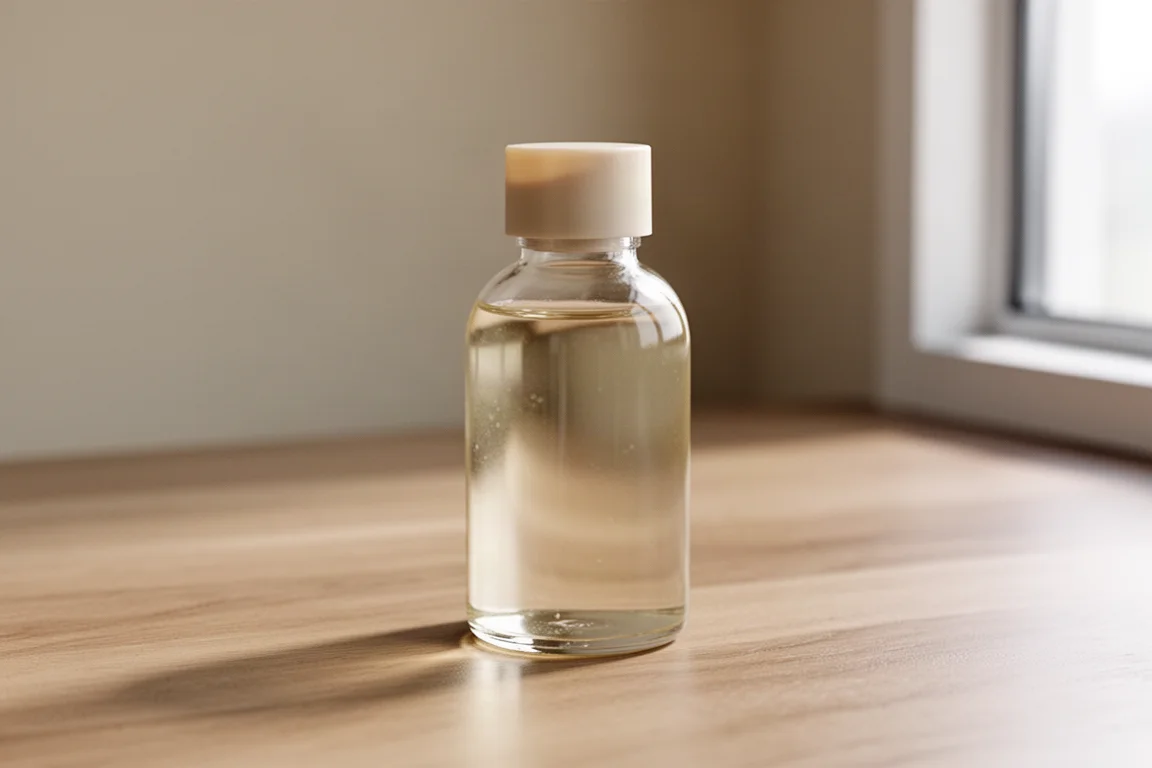
Tropic Marin Sodium Chloride-Free Sea Salt Mix
Part C is the piece that separates the Balling method from an ordinary two-part. It is effectively a complete reef salt mix with the sodium chloride, calcium and alkalinity removed, dosed at four scoops per gallon.
Its job is balance rather than supplementation. Every two-part dose adds sodium and chloride to the tank. Left unaddressed, that is comparable to adding a small amount of table salt every single day, and salinity climbs over time. Part C doses nearly everything else alongside, so when the tank is diluted back to the correct salinity, whether by manual saltwater removal and freshwater replacement, by skimmer export with top-off replacement, or by mixing change water at a slightly lower salinity, the remaining elements come back into line together instead of being progressively diluted away.
Two practical details matter. Part C cannot be concentrated beyond four scoops per gallon, so it has to be dosed at twice the volume of the calcium and alkalinity solutions. If the tank receives 100 millilitres each of Part A and Part B per day, it needs 200 millilitres of Part C. The second point is cost, and it is the encouraging one: at typical dosing volumes the additional expense is small.
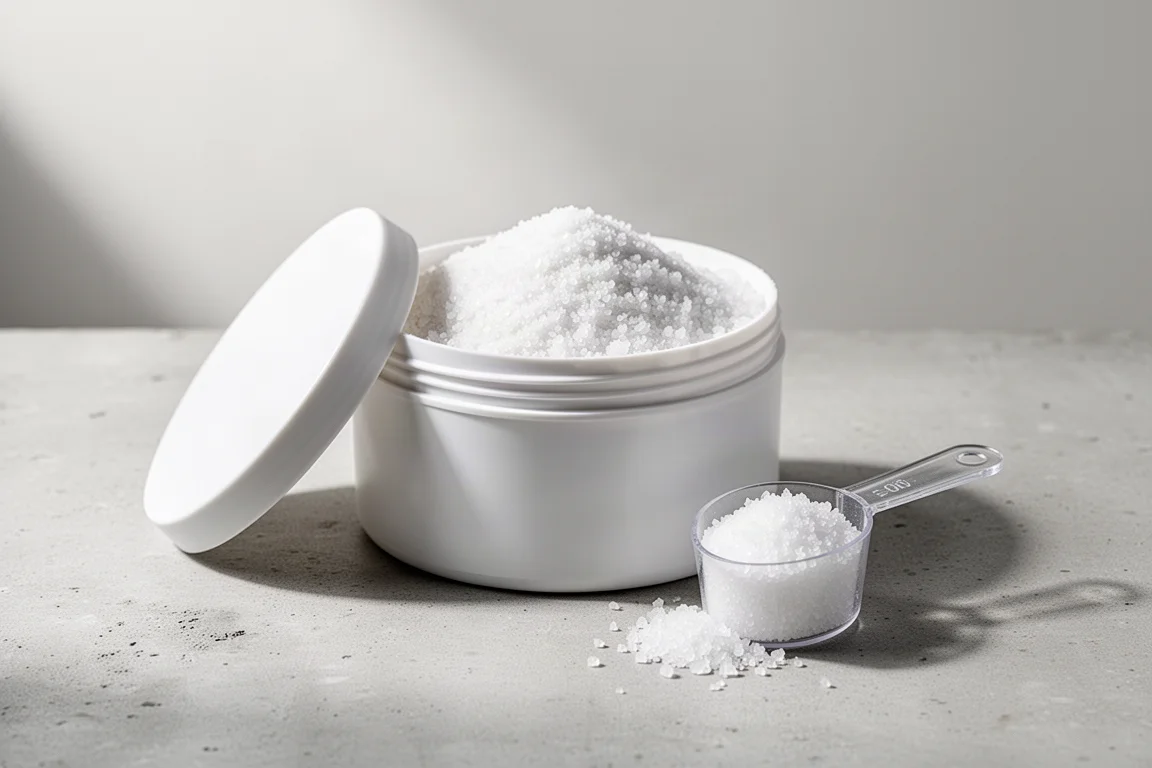
Overall Buying Advice
Where to start depends on where the tank is. Calcium chloride and soda ash are the core purchase for any tank running a two-part, and both are inexpensive enough to buy in bulk.
Part C is worth adding from the beginning rather than waiting for a salinity problem to appear. The chemistry supports it, the cost is low, and the issue it prevents is a slow, cumulative one that is difficult to identify without ICP testing, which is likely the main way a keeper would ever spot it. Avoiding it by design is simpler than correcting it later.
Trace 1 and Trace 2 can wait. If the tank is still inside its first year and the water change schedule is reasonable, holding at zero is often the sensible choice. Once element consumption scales up, adding the trace solutions to the two-part jugs turns the system into a fuller element management plan, and the dose can be worked upward over time toward the 330 millilitre maximum. Most keepers set that level by watching the corals, while the most engaged send an annual ICP test to confirm the trend.
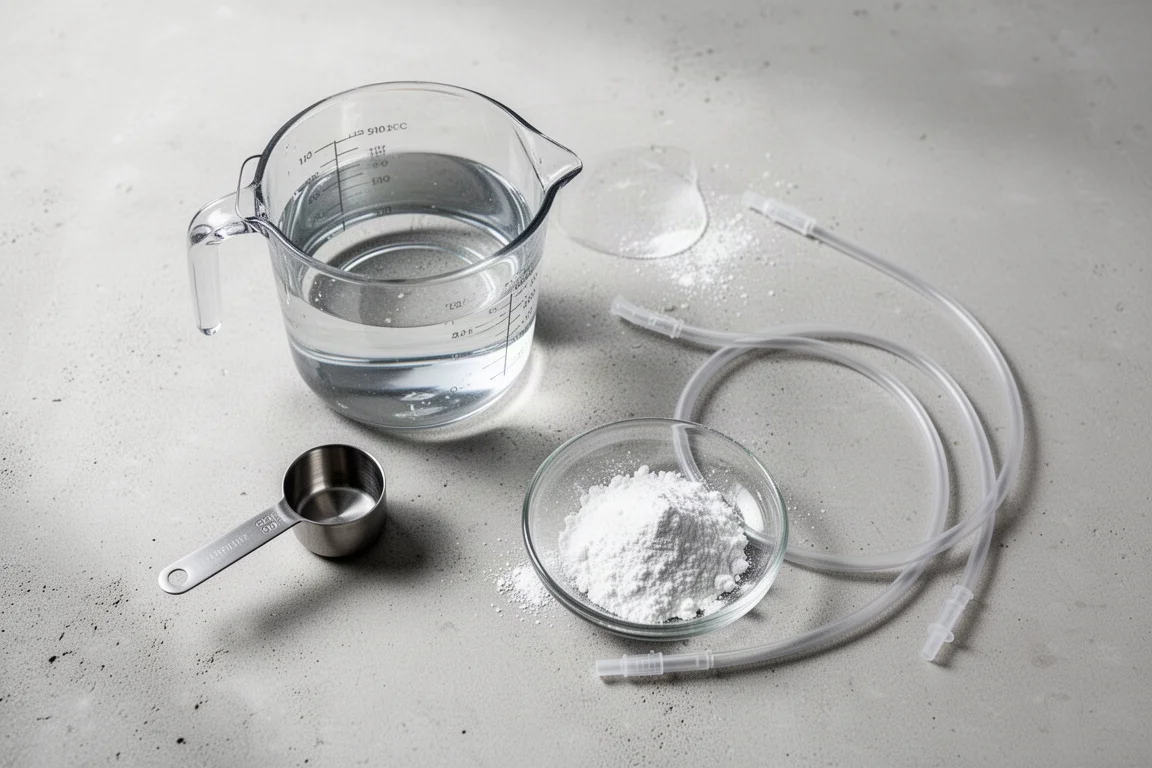
A few practical notes complete the picture. Mix in an open-topped container so the powder dissolves cleanly as it is poured. Add the trace solution before topping off to the final volume, since one gallon plus 330 millilitres would dilute the calcium or alkalinity below the intended concentration. Watch the trend rather than chasing individual numbers, and adjust the two trace bottles separately if a group of elements is drifting. Finally, note that the standard Balling method uses different measurements and a more dilute, sodium bicarbonate based formula, so its own instructions should be followed if that is the route you choose.
Conclusion
The Bulk Pharma Hybrid Balling Method is an unusual case where the more complete version of a dosing plan is also the cheaper one. Bulk calcium chloride and soda ash keep the ongoing cost of the two-part low, sodium carbonate alkalinity gives the tank a pH benefit that neutral solutions do not, Part C prevents a salinity problem that almost every two-part user eventually meets, and the trace elements stay adjustable to the tank in front of you.
For a tank in its first year, the essentials are calcium, alkalinity and Part C. For a tank moving past grow-out into a full colony load, Trace 1 and Trace 2 complete the system. Either way, the components are affordable, the recipe is documented, and the standard Bulk Pharma calculator still does the arithmetic.
Further reading
Related Reviews
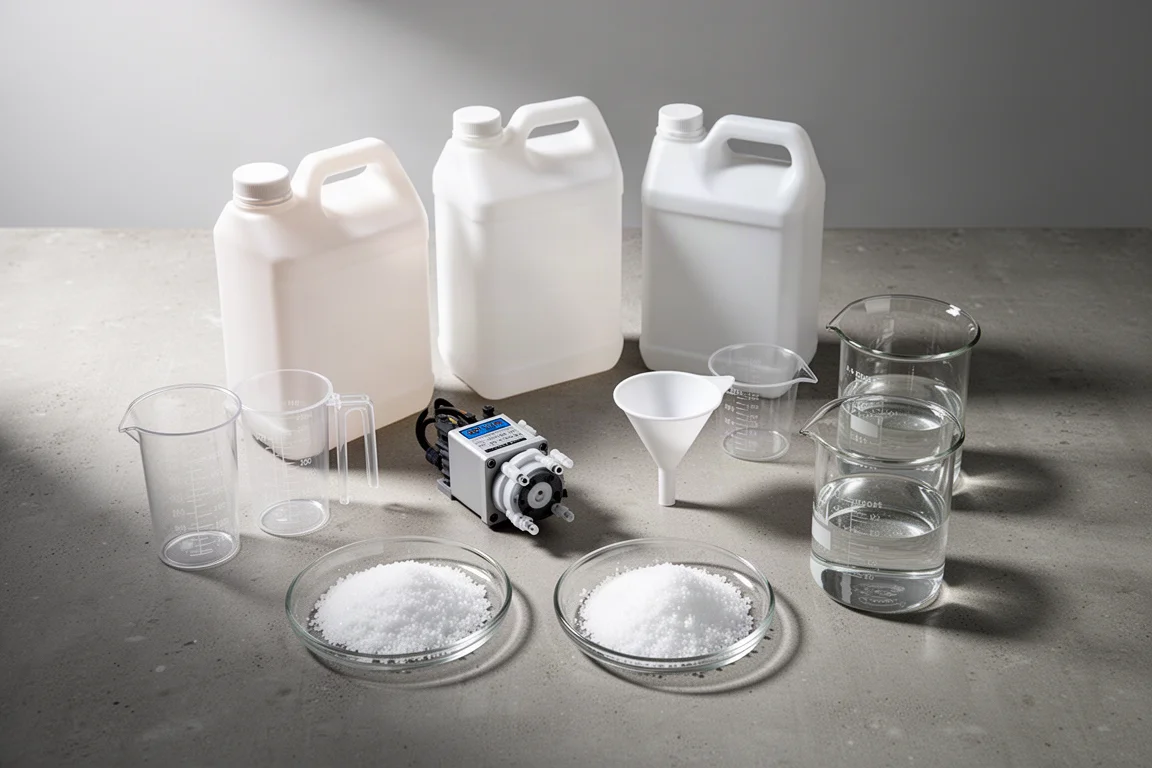
Aquarium Dosing
Best Reef Tank Dosing Methods Compared: Two-Part, Balling, and All for Reef
A practical look at reef dosing methods and five products that cover them, from budget dry kits to a one-part all-in-one solution.

Reef Aquarium Dosing
Best Reef Tank Dosing Solutions: All-in-One, Two-Part, and Complete Systems Compared
A practical guide to reef dosing categories, from single-bottle all-in-one solutions to two-part systems and complete multi-bottle regimens.
Aquarium Supplies
Best Saltwater Aquarium Mixes: A Beginner's Guide to Seawater Chemistry
Understanding seawater mixes and how to choose the right one for your reef tank, FOWLR setup, or beginner goals.