Indoor Cycling
How to Build a Budget Indoor Cycling Setup for Under £1,000
A complete indoor cycling setup built around Rouvy and the Van Rysel D900, with practical choices that keep the total under £1,000 without compromising on quality.
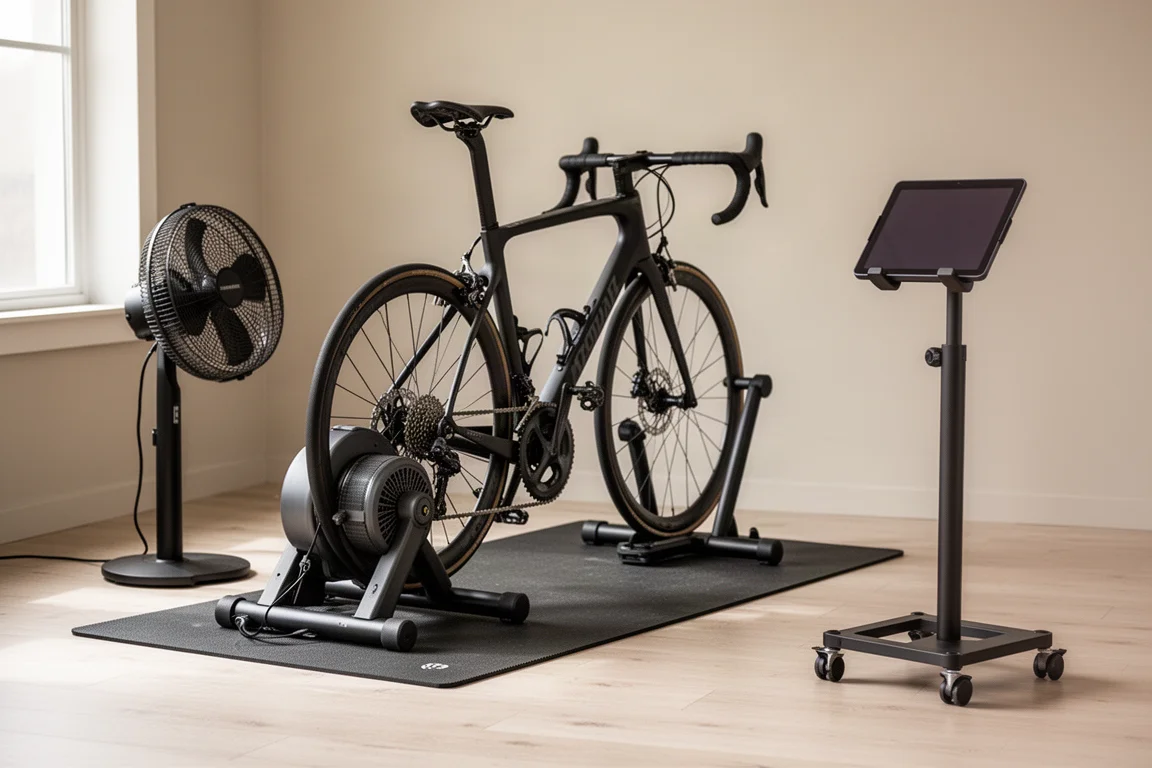
Introduction
Indoor training does not have to be expensive. A full setup built around a direct drive trainer and an indoor cycling platform can come in under £1,000, and it can still deliver quality where it counts. The trick is knowing which parts deserve the budget and which ones a cheaper, non-cycling alternative handles just as well.
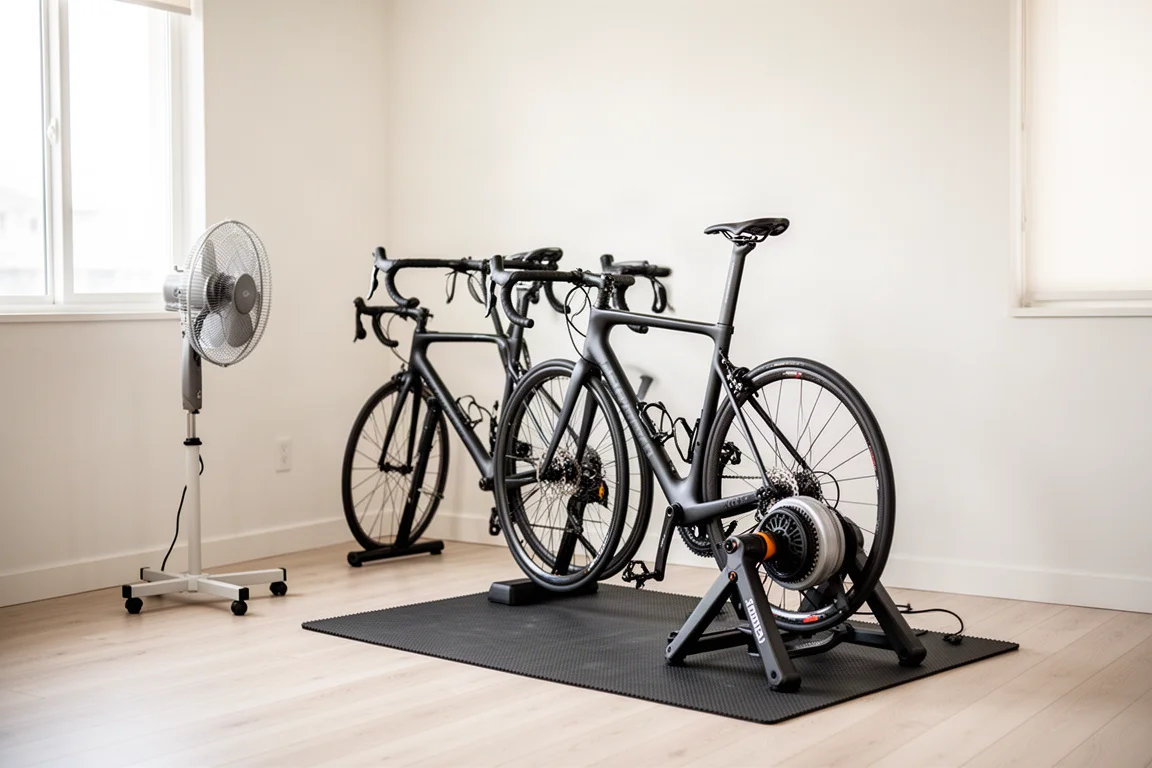
This guide covers the components that make the biggest difference, the places where a general-purpose product does the same job for less, and the small additions that protect both your bike and your floor. The aim is a setup that works from the first session, not one that needs upgrading after a month.
What Makes a Budget Indoor Setup Work
Four things decide whether a low-cost indoor setup feels good or feels like a compromise. Cooling comes first, because a rider working hard generates a lot of heat and a weak fan ruins the session. Stability comes second, since a trainer that moves under load makes every interval harder than it needs to be.
Software cost is the third factor. Subscription pricing has risen across the category, so flexibility in how and when you pay matters as much as the headline features. Protection is the fourth. Sweat and spilled drinks do real damage over time, and the cheapest accessories in the whole setup are usually the ones that prevent the most expensive repairs.
Rouvy: Indoor Cycling Software That Keeps Costs Down
Rouvy is the platform worth considering if value matters to you. It offers flexible subscription formats that let users pause their subscriptions, and it also allows riders to ride for free with a 20 km per month limit. Day passes start from less than $3, and those passes can be used by riders who have paused their subscriptions as well.
The route library has also grown. Rouvy recently added 25 routes from the 2024 edition of the Vuelta a España, so riders who want to ride the same roads the pros raced on can do exactly that. Given the recent price rises from competing platforms, this combination of pausing, free monthly kilometres, and low-cost day passes is what makes Rouvy stand out for indoor cyclists watching their spending.
Van Rysel D900: A Direct Drive Trainer for Most Riders
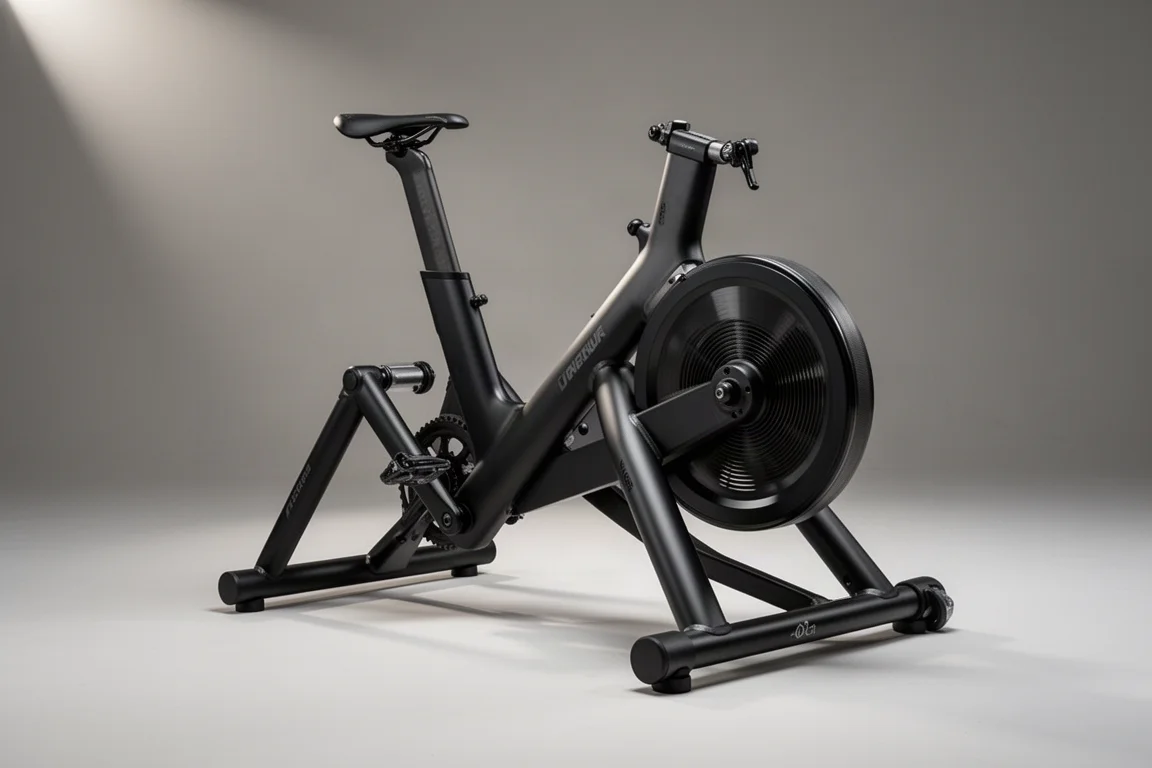
The trainer is usually the most expensive part of an indoor setup, and it is the component most worth getting right. The Van Rysel D900 is a direct drive unit that offers inherently good value, and it will cater for the vast majority of riders. Stability is really good, the pedal feel is pretty smooth, and its ERG mode behaves sensibly rather than sending you into a death spiral when your cadence drops.
The one place where it may start to let itself down is in higher-level esports racing, where riders chasing the sharp end of a virtual race will want more headroom. For everyone else, from steady endurance rides to structured intervals, it is an easy unit to recommend.
Cooling, Ventilation, and Screen Placement
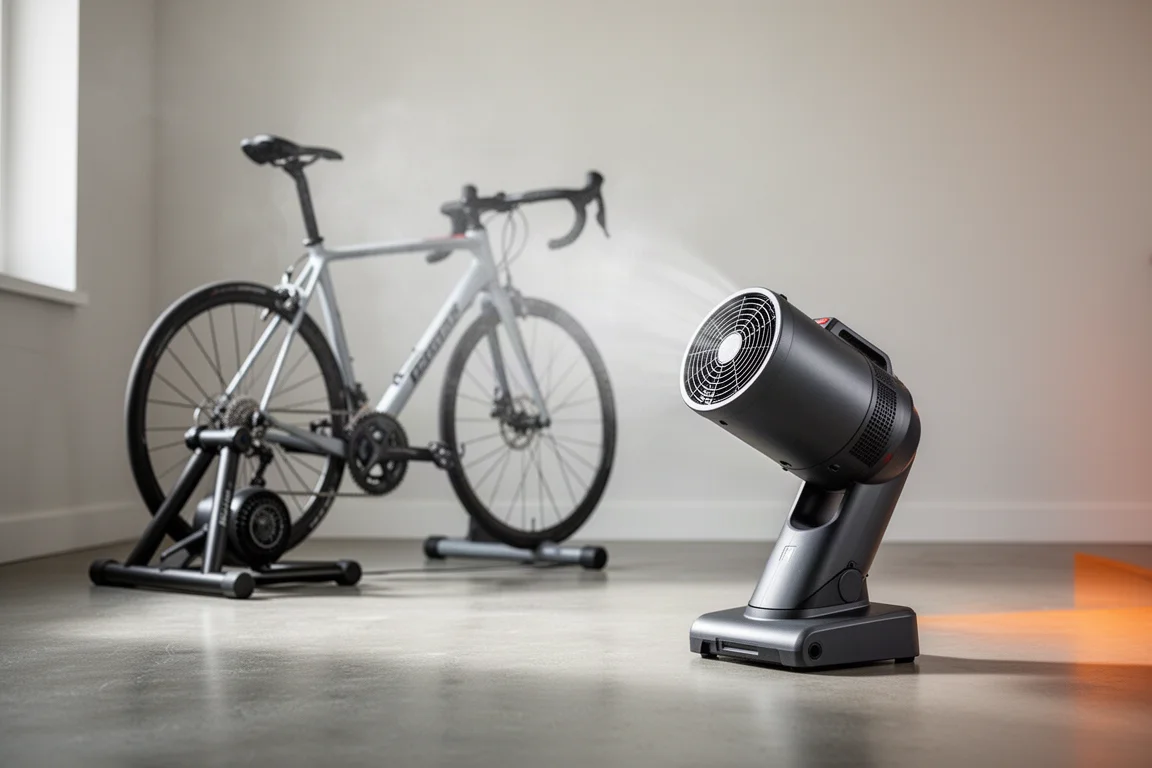
Ventilation is hugely important, and it is the area where most home setups cut the wrong corner. You get very hot once you get going, and office desk fans are nowhere near strong enough to keep you cool. Cycling-specific fans often cost a great deal because they bundle smart features that many riders never actually use, when all they really want is a fan running at full power.
Fans originally intended for home renovation projects solve this neatly. They were designed to help dry out walls by blowing large amounts of air in an upward direction, which is precisely the airflow a cyclist wants. A model with several power settings and a few different tilt positions covers the job perfectly, and it costs a fraction of a cycling-branded alternative.
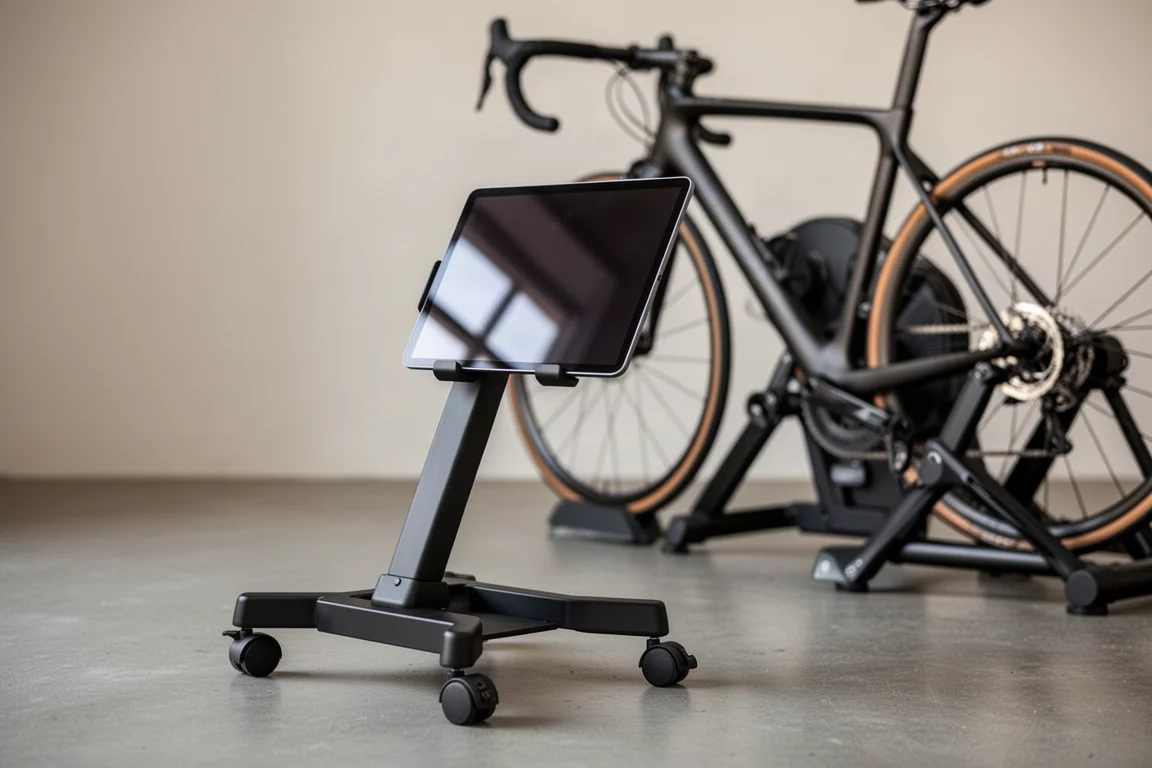
You also need somewhere to put your device. A handy shelf or a window sill is the best place to position a phone, tablet, or laptop. If you do not have anything suitable, a small stand that sits in front of the bike works well. One on wheels is easy to move around, and height adjustment means it will work for most sizes of bike. It is a simple, effective solution that does not need to cost the earth.
Floor Protection and Bike Care
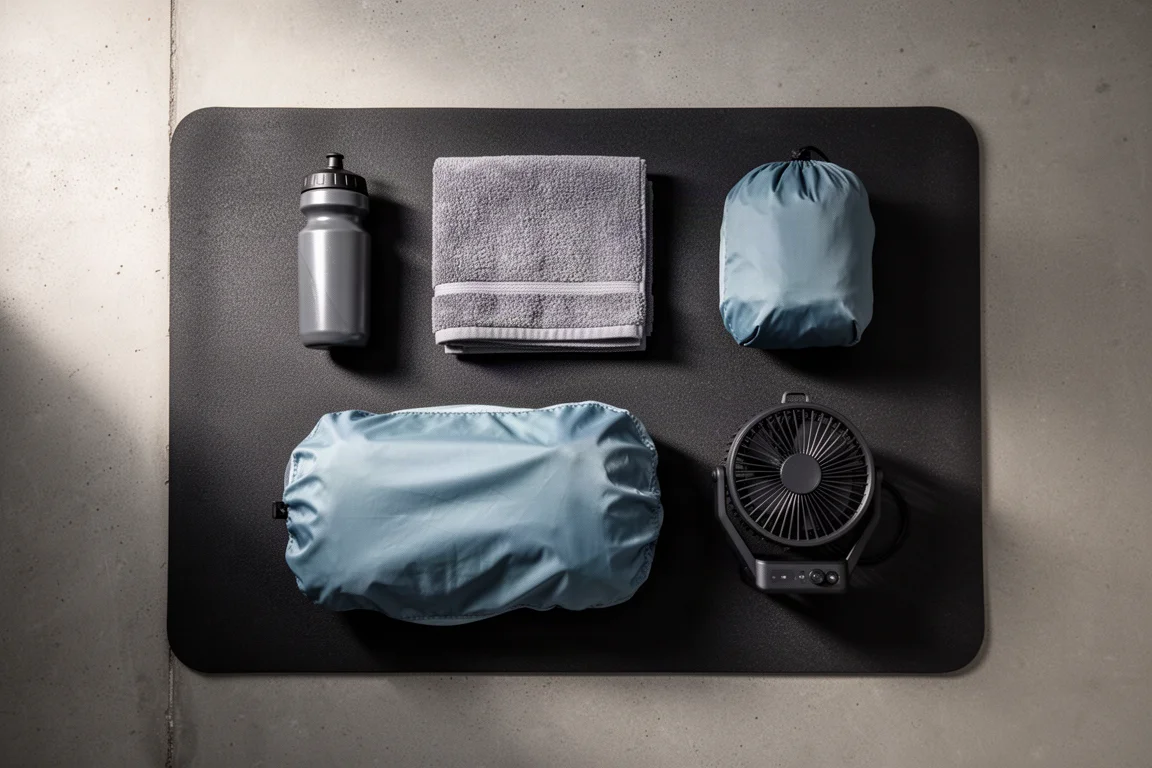
A training mat is worth having even if noise is not a concern, because it catches sweat and drink spills before they reach your flooring. It matters more still in a flat, where transmitting too much noise through the floor to the neighbours is a real worry. A general-purpose mat costs much less than the options sold by cycling-specific brands and, once set up, works in exactly the same way. The trade-off is that it is slightly softer and possibly slightly less hardwearing.
Protecting the bike is just as important as protecting the floor. A simple bike cover is inexpensive and stays in place during big efforts, unlike a towel that can fall off mid-interval. Stopping sweat from working its way into the headset is the real prize here, because the salt in sweat is incredibly corrosive and the resulting repair bill can be very expensive. Covering up saves both your bike and your mechanic a nightmare job.
Beyond that, the remaining items are things most cyclists already own: a drinks bottle for hydration, a towel for your face, kit to ride in, and of course the bike itself.
Total Cost, Buying Advice, and Who This Setup Suits
Add up the trainer, the software, a fan, a device stand, a mat, and a cover, and the whole setup can come in comfortably under £1,000. Nothing here requires compromising on quality, which is the point. The savings come from choosing a general-purpose fan over a smart cycling one, a plain mat over a branded one, and a low-cost cover over an expensive alternative.
The Van Rysel D900 is the sensible anchor for riders who want a stable direct drive trainer with a smooth pedal feel and do not plan to race at the sharp end of esports events. Rouvy keeps the running costs low for anyone who wants to pause between training blocks, ride free within a monthly limit, or buy a day pass occasionally.
This combination suits riders on a budget who still want dependable equipment, riders in flats who need to keep noise down, and anyone returning to indoor training who would rather not commit to a premium trainer and a full-price platform at the same time.
Conclusion
An indoor training setup under £1,000 is entirely achievable, and it does not have to feel like a compromise. The Van Rysel D900 handles the riding itself with good stability, a smooth pedal feel, and a well-behaved ERG mode, while Rouvy keeps the ongoing cost low through pausing, a free monthly allowance, and inexpensive day passes. Fill in the gaps with a strong utility fan, a wheeled stand, a mat, and a bike cover, and you have a setup that protects your bike, your floor, and your neighbours.
Further reading
Related Reviews
Indoor Cycling
Best Budget Smart Indoor Trainer Setups: Six Options Worth Considering
Smart indoor trainers keep getting better while prices come down. Six setups and components worth considering, from the cheapest Zwift-ready option upward.
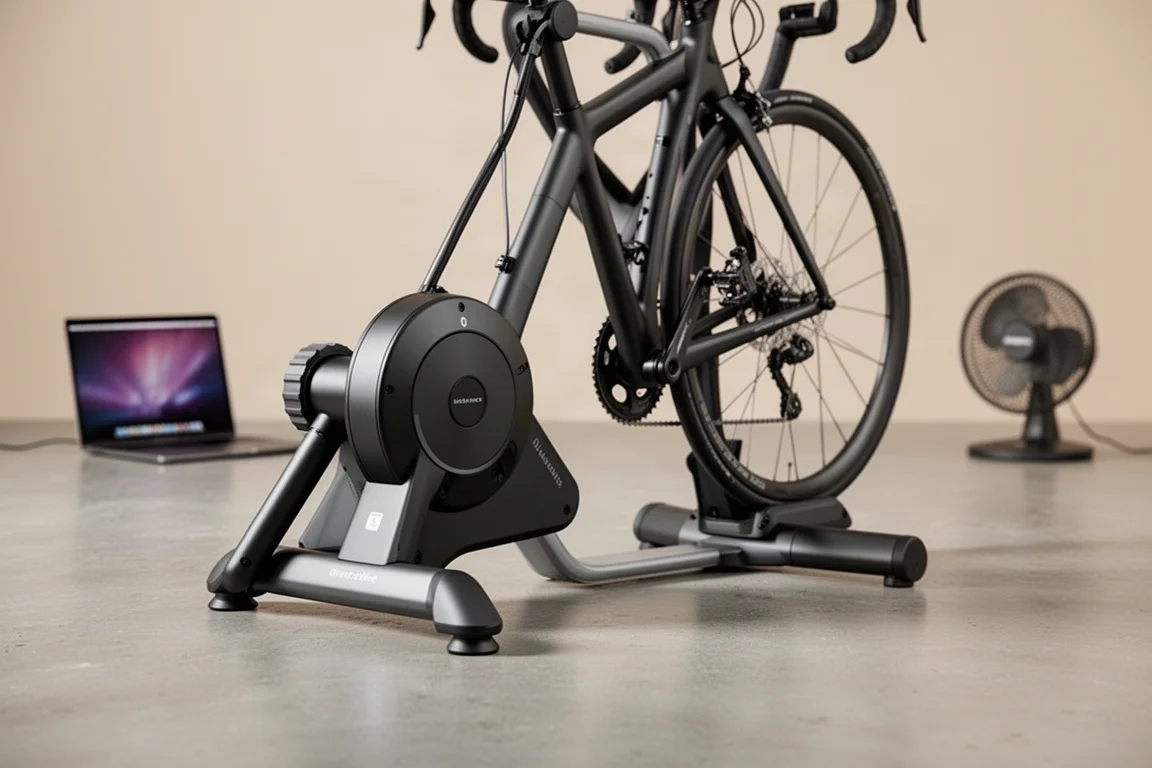
Indoor Cycling
Best Budget Smart Indoor Trainers for Immersive Cycling in 2026
A practical guide to affordable smart indoor trainer setups, including budget and mid-range options with virtual shifting.
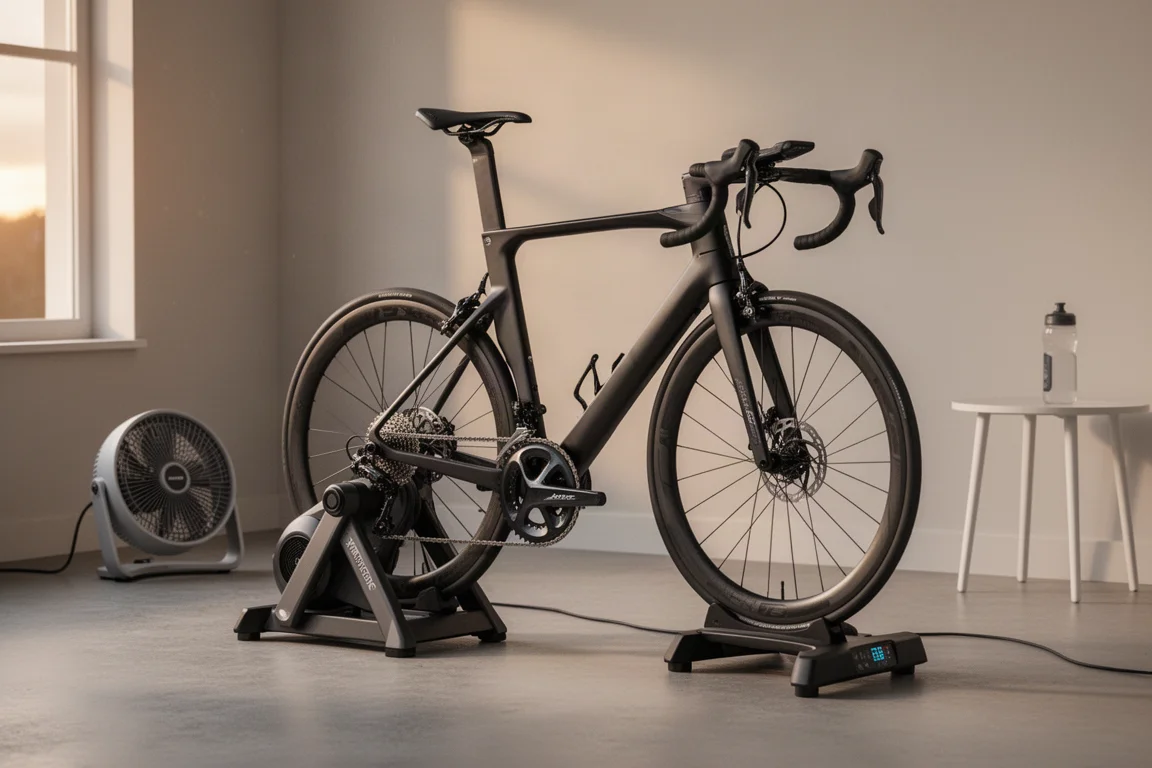
Indoor Cycling
Best Indoor Cycling Apps and Smart Trainers: A Winter Buying Guide
A practical look at the indoor training platforms and smart trainers that matter this season, from a new challenger to Zwift to the entry-level trainer that stands out on value.