Headphones
Budget Headphone Shootout: Five Closed-Back Pairs Compared
A close look at five wired closed-back headphones, from sub-$100 picks to a studio reference, with clear guidance on which pairs are worth buying for music.
Introduction
The sub-$100 headphone market is crowded with closed-back designs that look remarkably similar, and many of them borrow their styling from studio monitoring models that cost considerably more. That makes the category hard to shop by appearance alone, because two pairs with near-identical silhouettes can behave very differently once music starts playing.
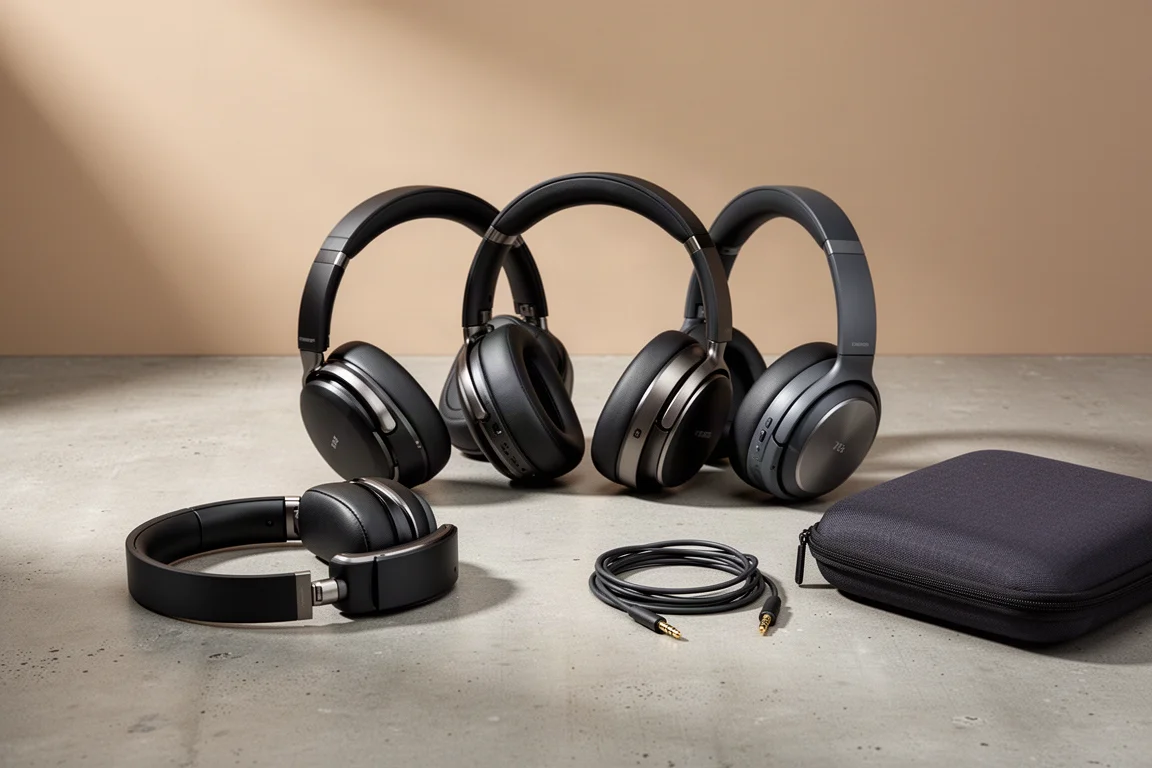
This comparison covers five wired, over-ear models: the Status Audio CB-1, the OneOdio Monitor 60, the AKG K361, the Sennheiser HD 280 Pro, and the Audio-Technica ATH-M50x. Four of them sit at or below the $100 mark, while the ATH-M50x sits above it and serves as a reference point for what the budget designs are imitating.
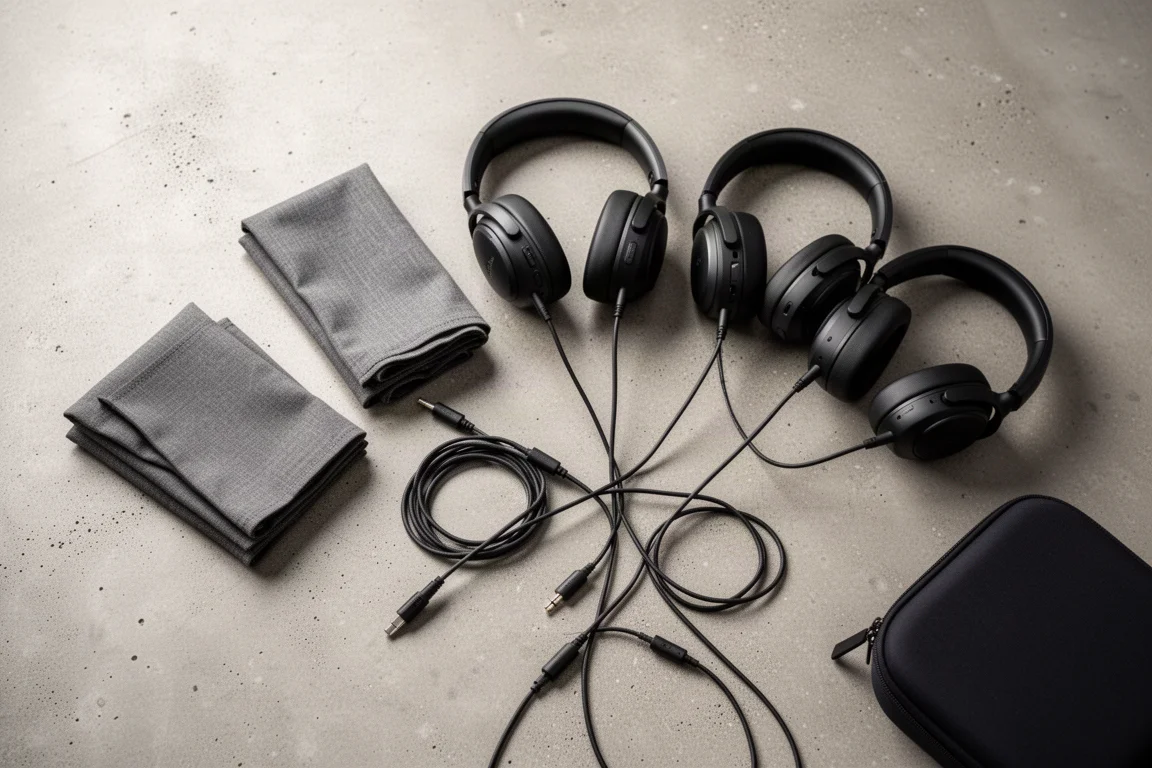
The pattern that emerged was consistent. One pair delivered a genuinely balanced tuning for the money, one was clearly built for studio work rather than casual listening, and several others looked the part until the volume came up.
How We Evaluated
Comfort, build, and tuning all matter, but the way a headphone behaves as volume rises matters just as much. Some designs sound perfectly acceptable at low levels and then lose composure the moment the level increases, which makes them poor choices for anyone who listens with intent rather than in the background.
Each pair here was assessed on materials and finish, the likelihood of weak points in the frame, pad depth and fit, cable connection type, and how the tuning holds together across a range of listening levels. Since all five are closed-back designs, isolation from outside noise is part of the package rather than a differentiator.
Status Audio CB-1: Comfortable Fit, Uneven Sound
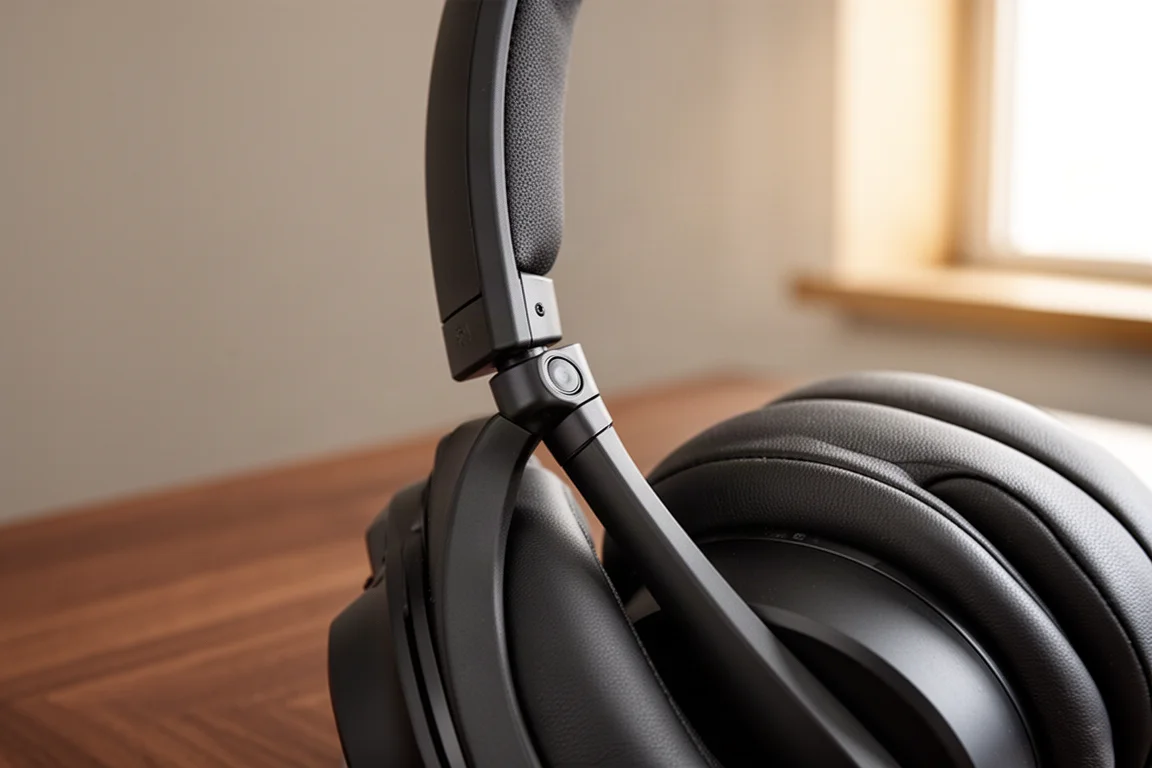
The CB-1 arrives folded in its box with two cables, and it makes a decent first impression. The ear pads are comfortable and the headband spreads pressure across a wide area of the head, which makes a hot spot less likely during long sessions. The ear cups feel solid, and the recessed 3.5 mm socket on the cup locks the cable in place, though it takes a little effort to reach.
Look closer and the frame is almost entirely plastic, with a yoke assembly that feels flimsy enough to be a likely failure point over time.
Sound is where the CB-1 struggles. There is a pronounced bass lift around 250 to 300 Hz that thickens the low end and covers up the mid-range, plus a spike around 1.5 to 2 kHz that adds an impression of detail while becoming fatiguing on longer listens. At higher volumes the presentation falls apart and the bass turns muddy. Bringing it closer to balance required cuts of more than 6 dB at both 300 Hz and 2 kHz.
At lower volumes the CB-1 is workable, and the tuning is not unpleasant for casual background listening. Anyone who wants to push the level up, or who listens for detail, will find it hard to live with. Pricing is often around $50 on sale, with a retail figure near $60.
OneOdio Monitor 60: A Friendlier Version of the Same Tuning
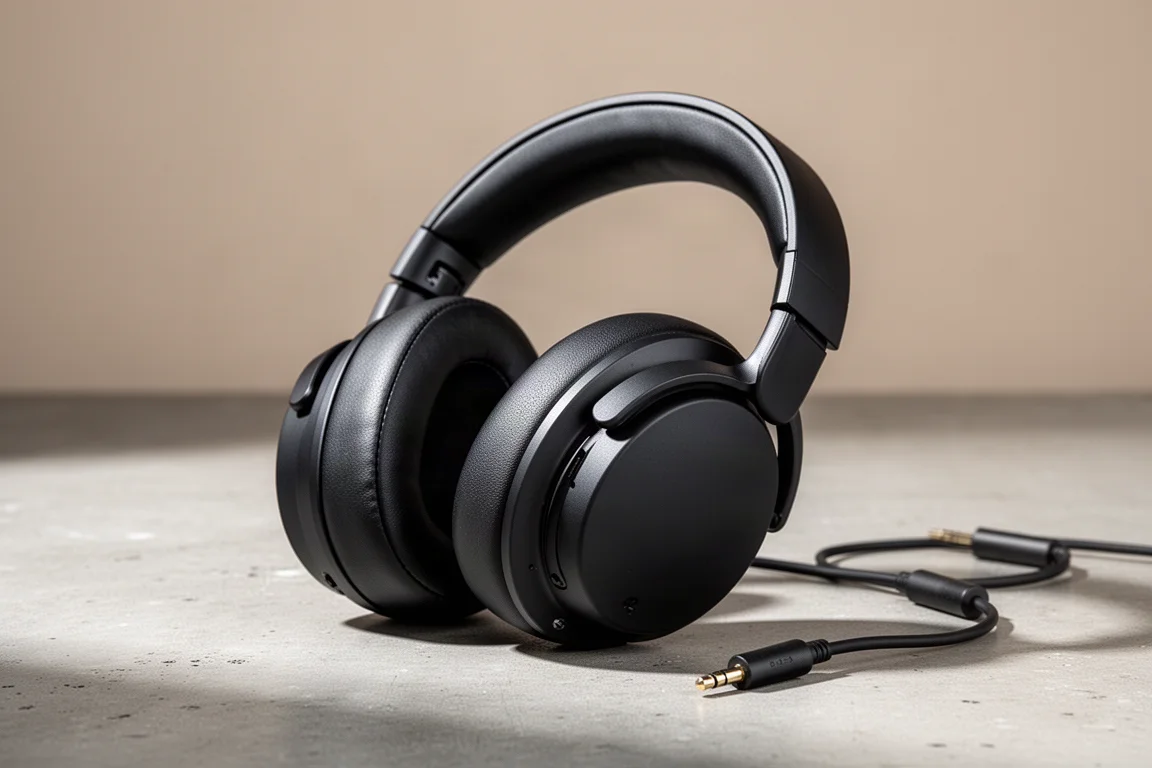
The Monitor 60 is lighter than the CB-1 and arrives with a cable, a second cable, and a leather-look carry case. The ear cups rotate freely, so they flop around until you straighten them, and the plastic frame feels slightly better finished than the Status pair even though the construction is broadly similar. A plate on the back of each cup looks like etched aluminium but is plastic underneath.
The pads are deeper than the Status pads, and the cable connection is a large 6.35 mm plug rather than the smaller 3.5 mm socket used elsewhere in this group. Styling cues, including the headband curve and the rotating cup holders, follow the same template used by Audio-Technica.
The sound signature is close to the CB-1, with a strong bass boost and a lift from roughly 2 kHz upward, but the excesses are less severe. At low volumes it is easy to listen to. Pushed louder, the same loss of composure appears, though it holds together a little better than the Status model. At $80, it is a reasonable low-volume companion rather than a serious listening tool.
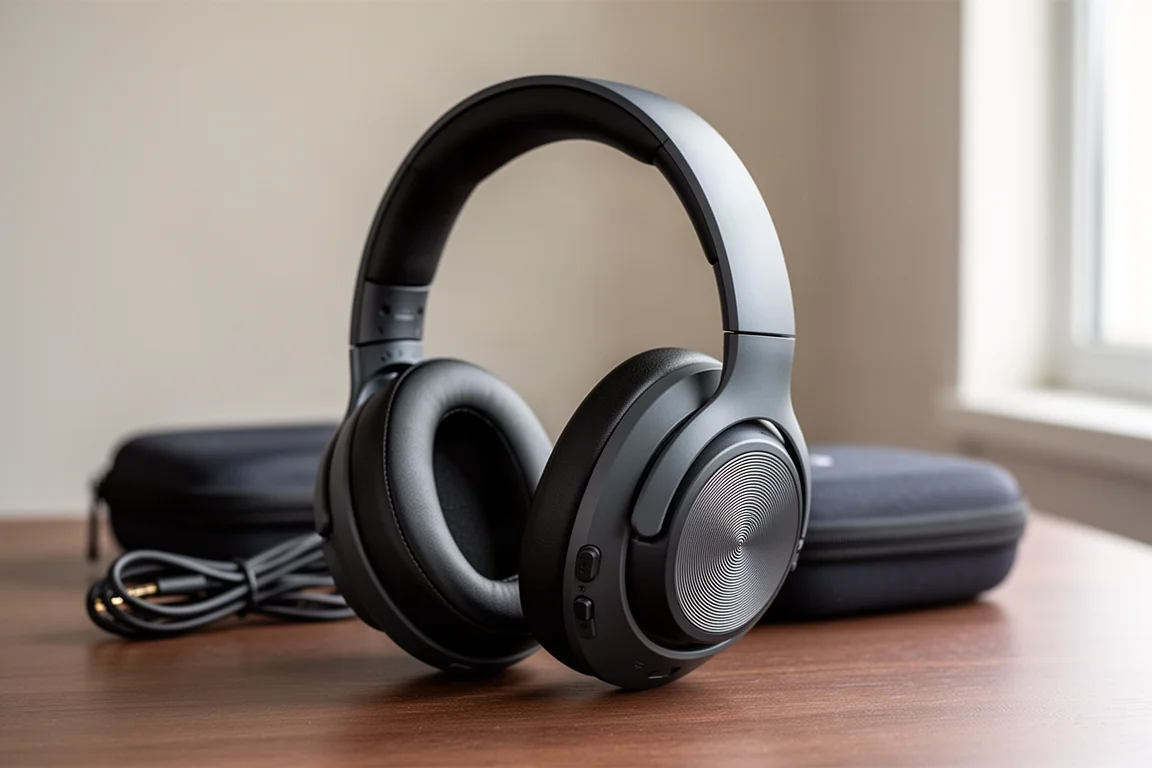
AKG K361: The Most Balanced Pair in the Group
The K361 is entirely plastic, yet it feels noticeably better built than the Status and OneOdio models and even better than the Audio-Technica reference pair. The pads are thick enough that ears do not press against the driver, and the cable uses a 3.5 mm connector. Only one cable is included, and the price sits just north of $100.
Its tuning is the standout. The bass is slightly boosted but handled tastefully, the mids are crystal clear, and the top end is restrained and well judged. Layering and texture come through cleanly. The mid-range is a touch light compared with fuller-sounding designs, and the headphones need a little time before they sound their best: as the pads break in and the seal improves, the low end fills out. In a direct comparison, this tuning was preferred over a far more expensive pair.

For music listening, the K361 is the most convincing option in this group, and it stays composed when the volume goes up.
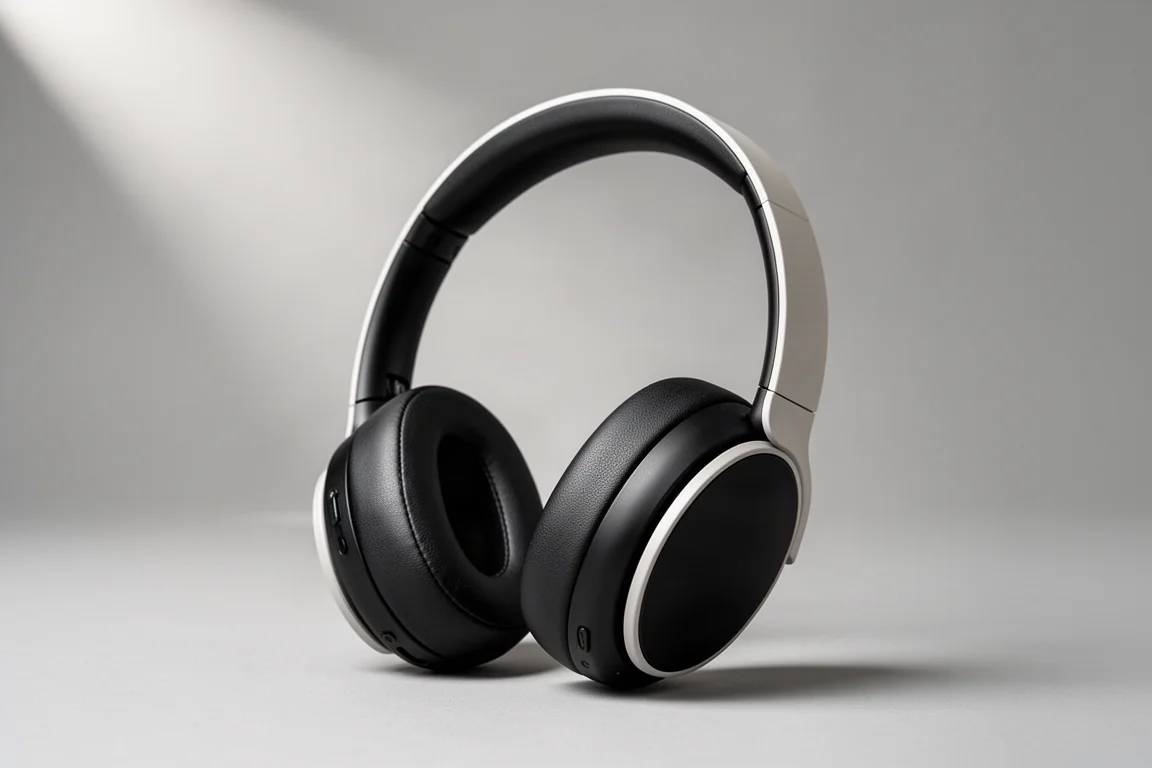
Sennheiser HD 280 Pro: A Studio Tool, Not a Music Headphone
The HD 280 Pro takes a different design approach. The pads are shallower, so ears touch the inside of the driver, and the headband uses small cushion pads to prevent hot spots. The cable is permanently attached and coiled, which suits studio use. This is the professional version of the model.
Sound is deliberately flat. There is very little bass and very little sparkle, with most of the emphasis placed on the vocal range, which comes through crystal clear. It is not fatiguing, but it is also not exciting, and for music listening it comes across as dull. With equalisation applied it can sound excellent, and it becomes genuinely enjoyable after a few songs. The intended use is monitoring: adjusting levels, mixing, and podcast or spoken-word work.
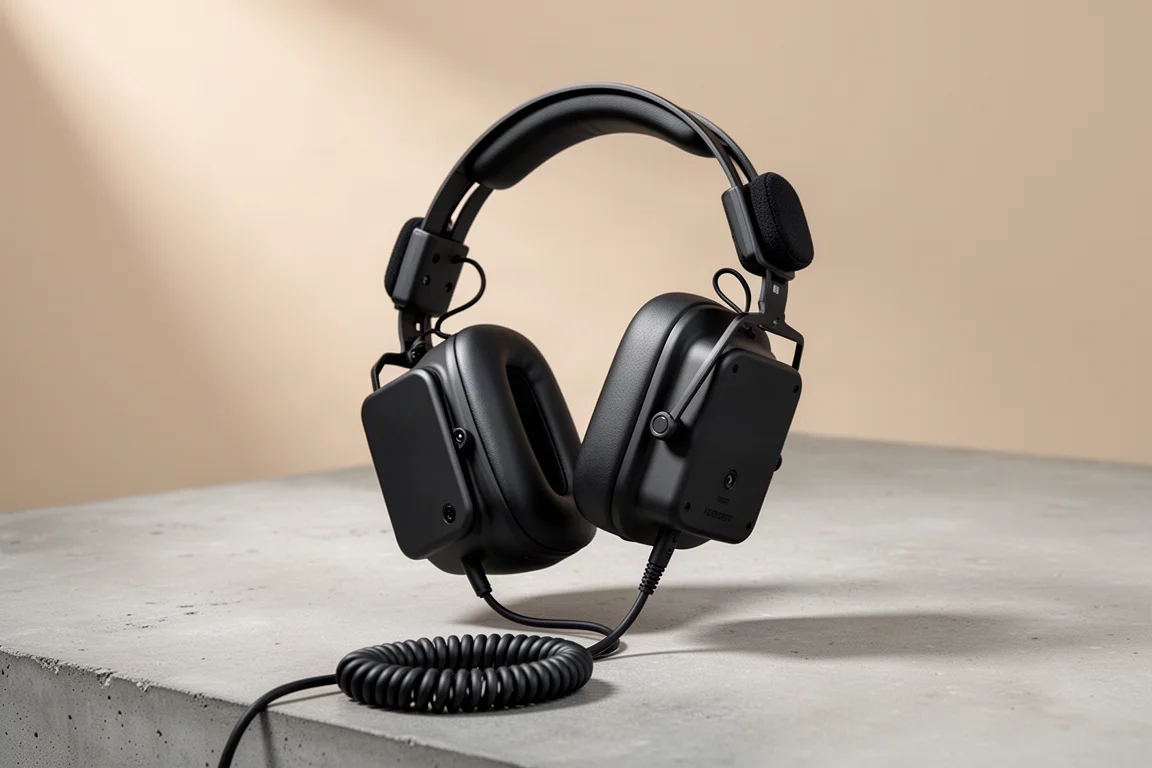
Audio-Technica ATH-M50x: The Reference Point
The ATH-M50x sits above the budget bracket at around $150 for the wired version, and it is included here as a comparison point. It is one of the most widely used headphones for both music and studio monitoring, and it is easy to see where the cheaper models took their cues: the rotating cup holders and the headband curve are near-identical across several of the pairs tested.
Its own tuning is harsh in the upper mid-range and forward in the treble, with a flat character and little sense of space or scale. At this price, that combination is hard to justify when the K361 offers a more balanced presentation for less.
Buying Advice
If music listening is the goal, the AKG K361 is the clear choice here. It is the only pair in the group that combines a balanced tuning with build quality that feels like it will hold up. Listeners who want more low-end presence have a bass-forward sibling in the same family to consider, though the K361 remains the more neutral option.
The OneOdio Monitor 60 makes sense mainly for quiet listening or for anyone willing to use equalisation. Android devices and streaming apps offer EQ controls that can tame the excess bass and the upper-mid lift, and that work does help, but the hardware still loses composure at higher volumes.
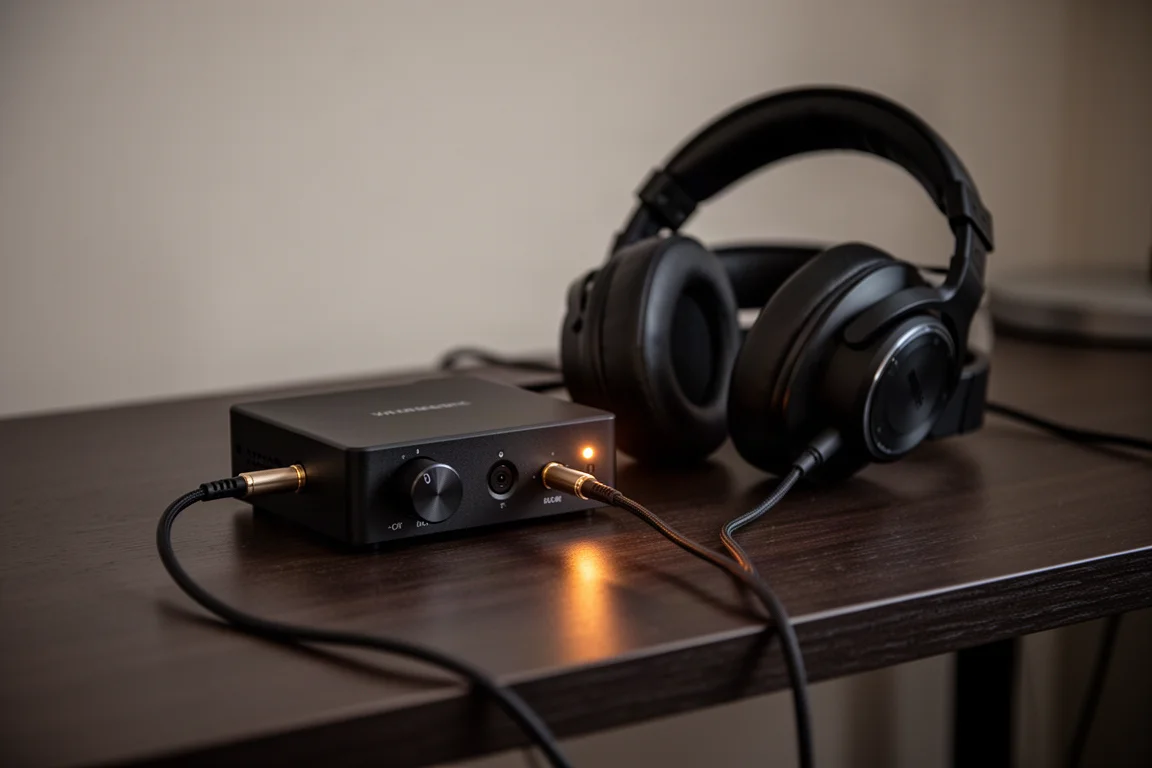
The Status Audio CB-1 is difficult to recommend, since the same money buys a better-built, better-tuned alternative. The Sennheiser HD 280 Pro earns its place only if the goal is making music or monitoring speech rather than enjoying it. The ATH-M50x is a known quantity, but its forward treble and lack of spaciousness make it hard to choose over the K361 at a higher price.
Conclusion
Budget headphones do not all sound alike, even when they look alike. The K361 shows what a well-judged tuning can do at this price, while the studio-oriented HD 280 Pro serves a different job entirely. The remaining pairs are best approached as low-volume, casual options, and the Status CB-1 is the one to leave on the shelf.
Further reading
Related Reviews
Headphones
Apos Audio Caspian Review: Warm Bass, Solid Build, and a Detail Trade-Off
The Apos Audio Caspian is an easy-to-drive open-back headphone with standout bass and a warm, relaxed tuning, though mid-range and treble detail trail the competition.
Headphones
Audeze LCD-X vs LCD-XC vs LCD-3: Which High-End Headphone Fits Your Setup
A practical comparison of three Audeze planar magnetic headphones under $2,000, covering the open-back LCD-X, the closed-back LCD-XC, and the wood-ringed LCD-3.
Headphones
Audeze LCD-X vs HiFiMan Edition XS: Two Open-Back Headphones Compared
A practical comparison of the Audeze LCD-X and the HiFiMan Edition XS, covering build quality, comfort, sound signature, and which listener each one suits.