Aquarium Filtration
BRS Rox 0.8 Carbon Review: A Low-Dust Reef Carbon That Goes Further
A practical look at BRS Rox 0.8 Carbon, a pharma-grade reef carbon that rinses fast, resists channeling, and doses at roughly half the usual amount.
Introduction
Activated carbon is one of the few pieces of reef equipment that almost every hobbyist already understands. It is affordable, simple to use, and flexible enough to address several different problems at once. The catch is that carbon is not a single uniform product, and two containers that look nearly identical can behave very differently once they are wet.
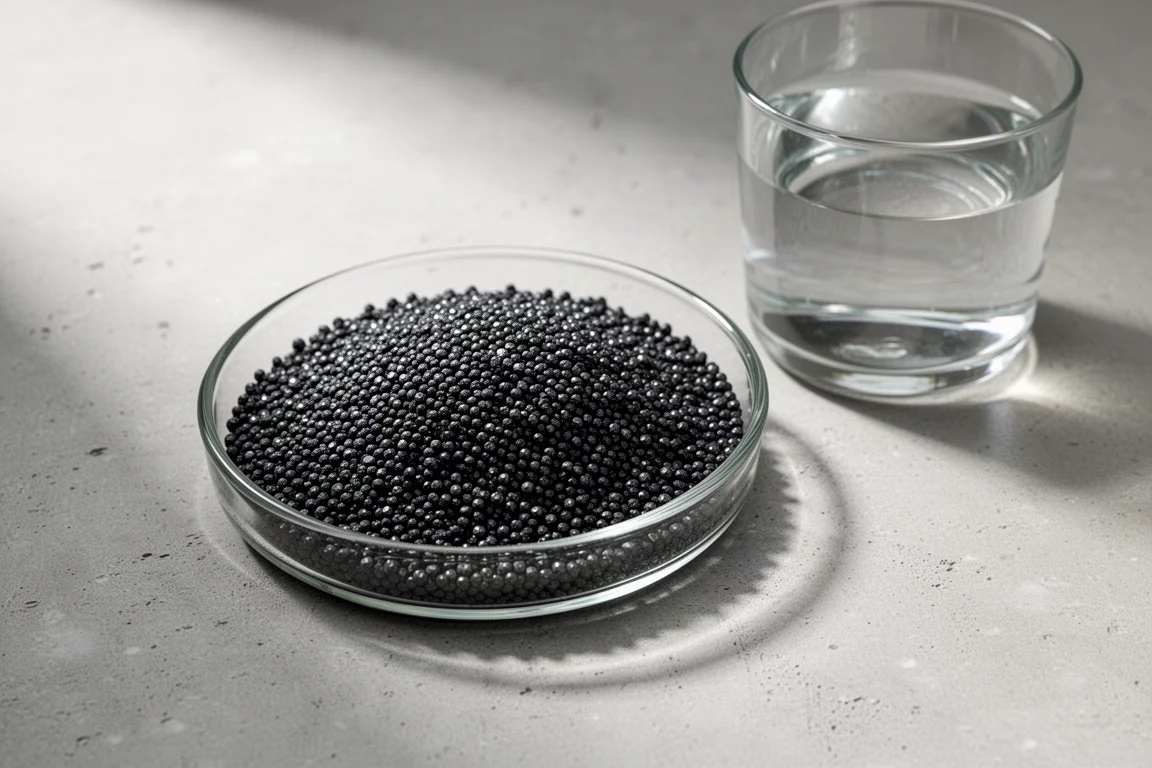
BRS Rox 0.8 Carbon sits at the more considered end of that spectrum. It is a pharma-grade, hard, pelletized carbon built specifically for use in water, and it is positioned as one of the easiest to use and highest performing carbons available to reef keepers. For anyone who runs carbon on a schedule rather than occasionally, the details that separate it from a generic standard-grade media matter more than the headline claim.
How Carbon Filtration Helps a Reef Tank
Reef keepers reach for carbon for a familiar list of reasons. It removes the yellowing pigments that accumulate in aquarium water and block a meaningful share of PAR from reaching corals. It helps eliminate tank odors. It also pulls out toxins and leftover medications, which is why it is often kept on hand for emergencies even by hobbyists who do not run it continuously.
Carbon has stayed a staple of chemical filtration across the aquarium hobby largely because of its affordability and its ease of use, and that is unlikely to change. What does change from product to product is how well a given carbon performs. Hardness, dust levels, how quickly it rinses clean, porosity, pore size, total surface area, granule shape, and how evenly water can move through the media all influence the result.
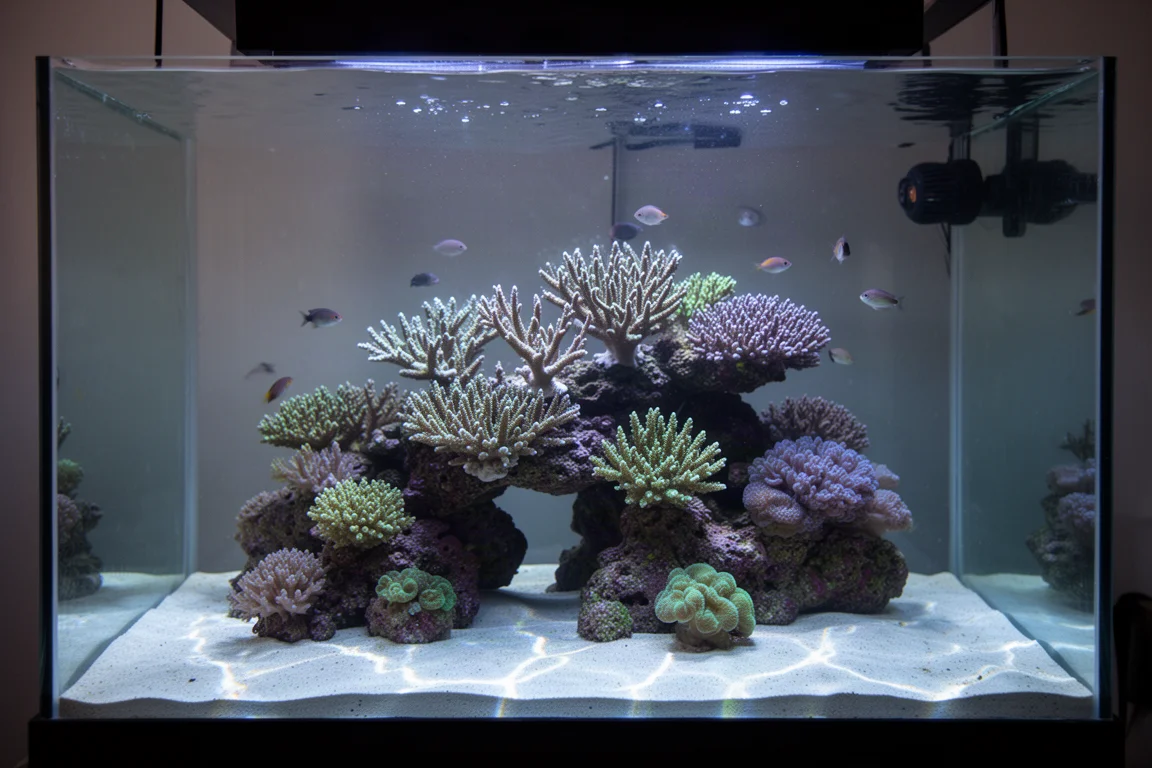
Those variables explain why two carbons dosed at the same volume can deliver noticeably different outcomes. A soft, dusty carbon sheds fines that need long rinsing and can cloud a tank, while a media bed that lets water find the easiest path through it will exhaust unevenly and leave much of the carbon unused. Both problems are addressed by how Rox 0.8 is manufactured.
Who This Product Is For
Rox 0.8 makes the most sense for reef keepers who already use carbon as a routine part of their filtration and want a media that is clean to handle and predictable in the sump. It is also a good fit for anyone who has grown tired of rinsing a dusty carbon for several minutes before it stops clouding a bucket of water.
It suits hobbyists running a reactor, where even flow through the media is the whole point, but it also works in a simple media bag for those who prefer a low-equipment approach. Because the recommended dose is lower than that of a standard-grade carbon, it appeals to aquarists managing larger systems who want each container to stretch further.
Main Strengths
The first advantage is physical. Rox 0.8 is a very hard carbon, which means it produces far less dust than softer grades and rinses clean in seconds rather than requiring repeated flushing. That single characteristic changes the chore of changing carbon from a messy job into a quick one.
The second advantage is how it is made. Rox 0.8 uses a proprietary blend of raw carbon materials with a range of pore sizes, which allows it to be effective against a wider spread of contaminants and toxins than carbons built around a narrower pore distribution. Instead of being tuned for one class of compound, it covers more of the ground a reef keeper actually cares about.
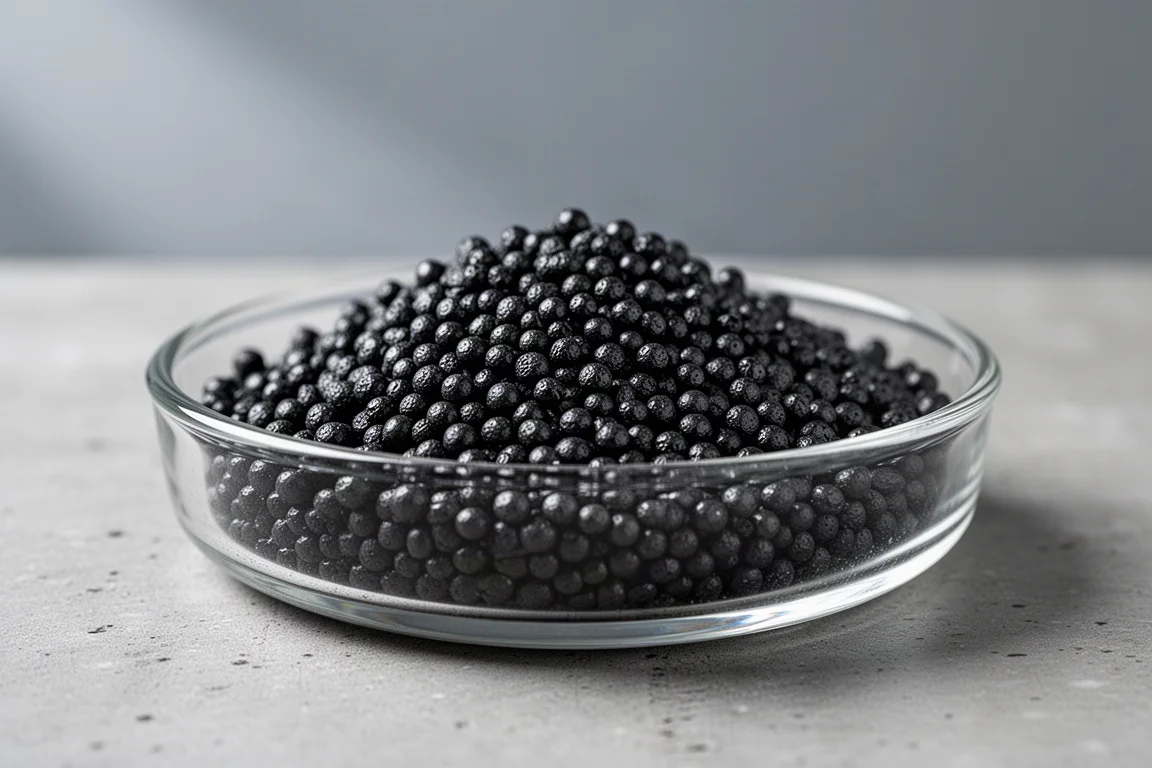
The third advantage is shape. The granules are pelletized into a tiny form designed specifically for use in water. That geometry helps water flow evenly through the media bed and works against channeling, the common failure mode where water carves a preferred path and leaves the rest of the carbon untouched.
Finally, there is dosage efficiency. BRS recommends one tablespoon per ten gallons of aquarium water, which is half the amount typically needed with a standard-grade aquarium carbon. Less media per water volume means a container lasts longer and, for many systems, the math works out in favor of the smaller investment.
How to Run Rox 0.8 in Your System
The simplest method is to place the carbon in a media bag, give it a quick rinse, and set it in a high-flow area of the sump. That approach works, but it is not where Rox 0.8 performs at its best.
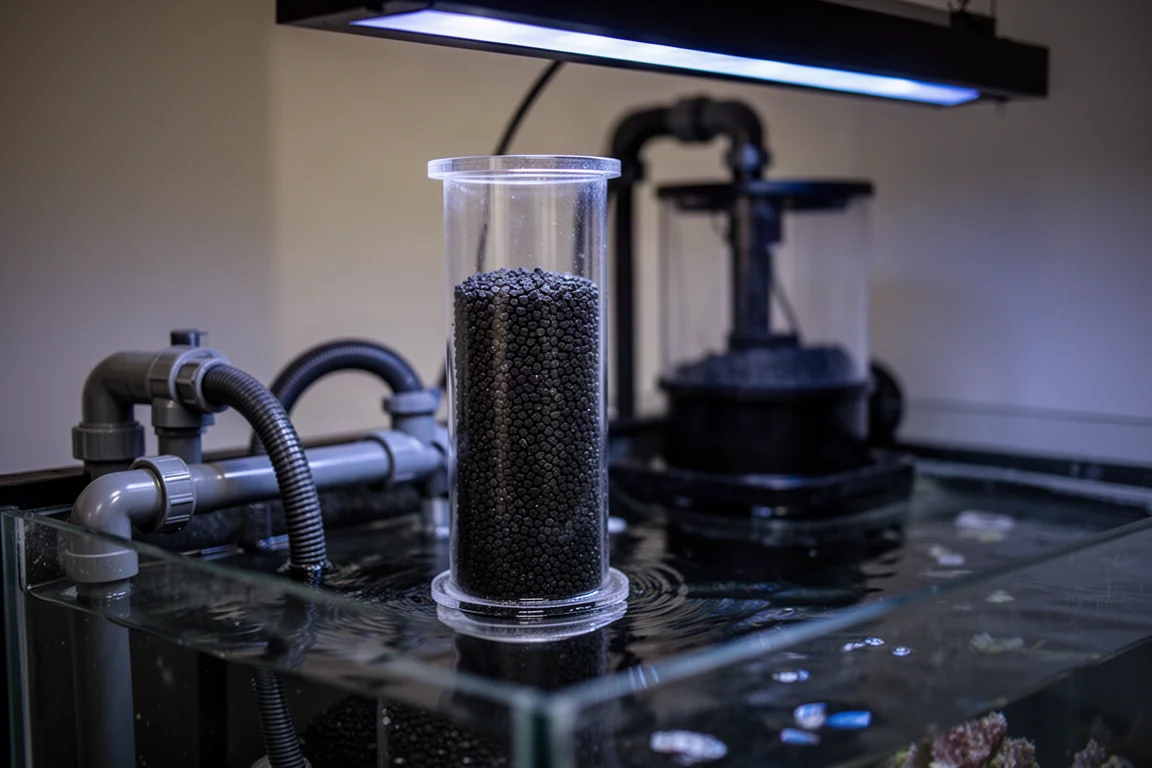
A media reactor that forces water through the carbon delivers stronger results, in part because the exterior of a media bag tends to clog with debris and biofilm over time, while a reactor keeps water moving through the media itself. The one requirement is that the reactor has to hold the carbon firmly enough that it cannot tumble. Movement grinds the granules against each other and creates additional dust, which defeats one of the main reasons to choose this carbon in the first place.
Maintenance and Replacement Schedule
How long any carbon lasts depends on bioload, water volume, and what the tank is dealing with, but a general schedule is more useful than waiting for visible signs of exhaustion. Changing carbon out every couple of weeks is a reasonable habit even when it has not been fully depleted.
After roughly two weeks in a running system, carbon begins to lose effectiveness as it becomes coated in debris and biofilm, which blocks access to the pores. That is also the reason to dose the recommended amount rather than piling in extra. Adding more carbon generally does not buy additional time before the media needs swapping, so the better practice is to use the correct amount and change it more often.
On that schedule, dosage and container size line up neatly. The recommended one tablespoon per ten gallons means a one gallon container will last an average 100-gallon reef roughly a year when the carbon is replaced every two weeks or so. That makes the purchase decision easier to plan for, since a single container maps cleanly onto a year of routine filtration for a mid-sized system.
Things to Consider Before Buying
Rox 0.8 rewards a little setup discipline. A reactor is where it performs best, and that reactor needs to keep the media stationary, so anyone intending to run it loose in a bag should manage expectations accordingly. The carbon itself holds up well, but tumbling will still generate fines.
It is also worth being honest about consumption. Buying the largest container only pays off if the carbon will realistically be used within a sensible timeframe. For hobbyists running smaller tanks or only using carbon occasionally, the bulk sizes represent storage rather than savings. And no carbon removes the need for regular replacement, so the ongoing cost is a schedule, not a one-time purchase.
Buying Advice: Container Sizes and Value
Rox 0.8 is sold in four formats: a quarter gallon container, a half gallon container, a one gallon container, and a five gallon bucket. Savings scale quickly as the container size increases. Using the quarter gallon as the reference point, the half gallon works out around 25 percent cheaper per unit, the one gallon around 35 percent cheaper, and the five gallon bucket around 43 percent cheaper.
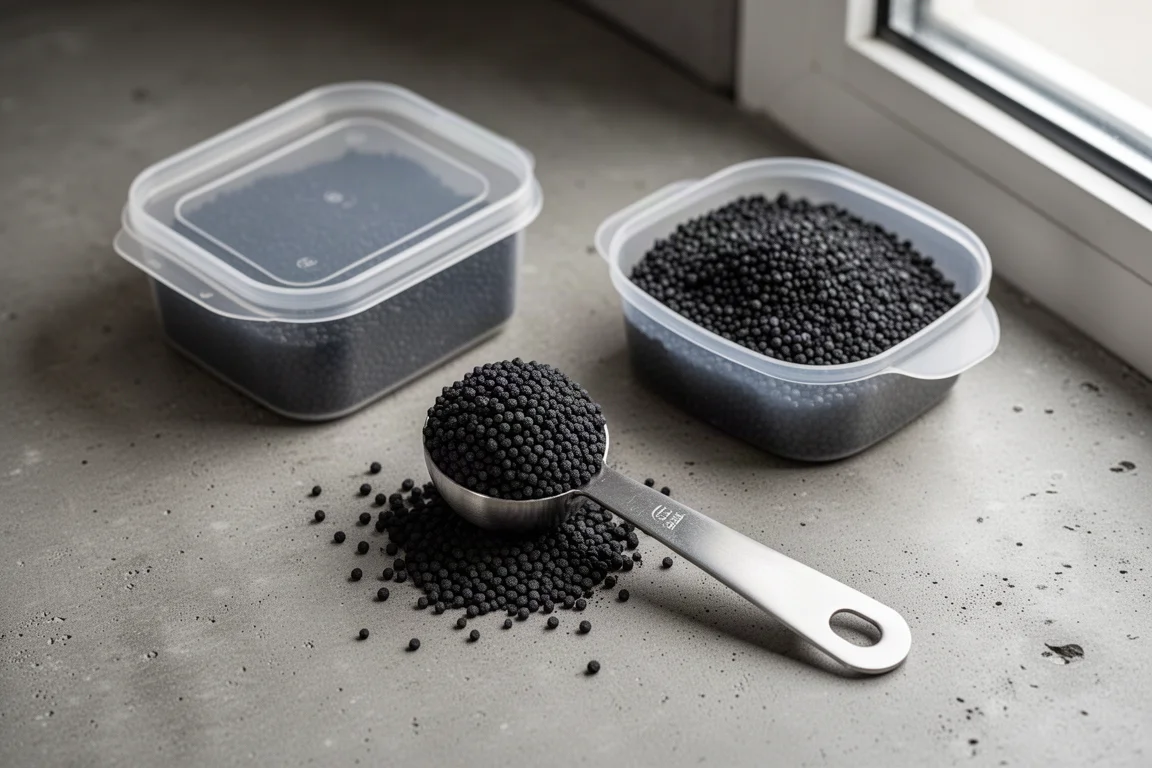
The one gallon container is the practical middle ground for most reef keepers. It captures a meaningful share of the bulk discount while staying within a volume that a typical hobbyist can actually work through, especially given that this carbon is dosed at half the usual rate. A five gallon bucket only makes sense for very large systems or for someone running carbon continuously across multiple tanks, since the quantity is substantial and the media does have a shelf life in practice.
Conclusion
BRS Rox 0.8 Carbon earns its reputation on the details that reef keepers deal with every time they change media: hardness, dust, rinse time, even flow through the bed, and how much carbon a given volume of water actually requires. It is pharma-grade, it is built from a blend of raw materials with a spread of pore sizes, and its pelletized form is designed to keep water moving evenly instead of carving channels through the media.
It is not a product that changes what carbon does. It changes how much hassle carbon involves and how efficiently each container is used. For reef keepers who run carbon on a regular schedule, that combination of low dust, broad contaminant coverage, and a lower dose per gallon is a straightforward upgrade over standard-grade media, and the one gallon container delivers most of the bulk savings without asking anyone to store five gallons of it.
Product link
View more details for BRS Rox 0.8 Carbon
This product is mentioned in the review. Check the specifications, options, and compatibility before buying.
View more details for BRS Rox 0.8 CarbonFurther reading
Related Reviews
Aquarium Filtration
Adaptive Reef Refugium Reactor Review: A Simple Way to Grow Nuisance Algae Outside Your Display
A vessel designed to grow nuisance algae in a controlled space so it stops taking over the display tank, with an adjustable stand, a removable basket, and a single LED light on top.
Aquarium Filtration
Affordable Aquarium Filter Media: Testing Budget Alternatives to Expensive Biomedia
Can cheap pot scrubbers replace expensive ceramic biomedia in a canister filter? One aquarist tests the theory on a heavily stocked 210-gallon tank.
Aquarium Filtration
AquaMaxx Bullet 2 and Bullet 3 Review: Hang-On Protein Skimmers Compared
A closer look at two larger AquaMaxx hang-on protein skimmers, covering capacity ratings, clearance needs, and the design details that separate the Bullet 3 from the Bullet 2.