Aquarium Filtration
BRS Reactor Review: Sizing, Setup and Maintenance Mistakes to Avoid
A practical look at the BRS Reactor for carbon and GFO, covering sizing, plumbing, sump placement, and the maintenance habits that protect water clarity.
Introduction
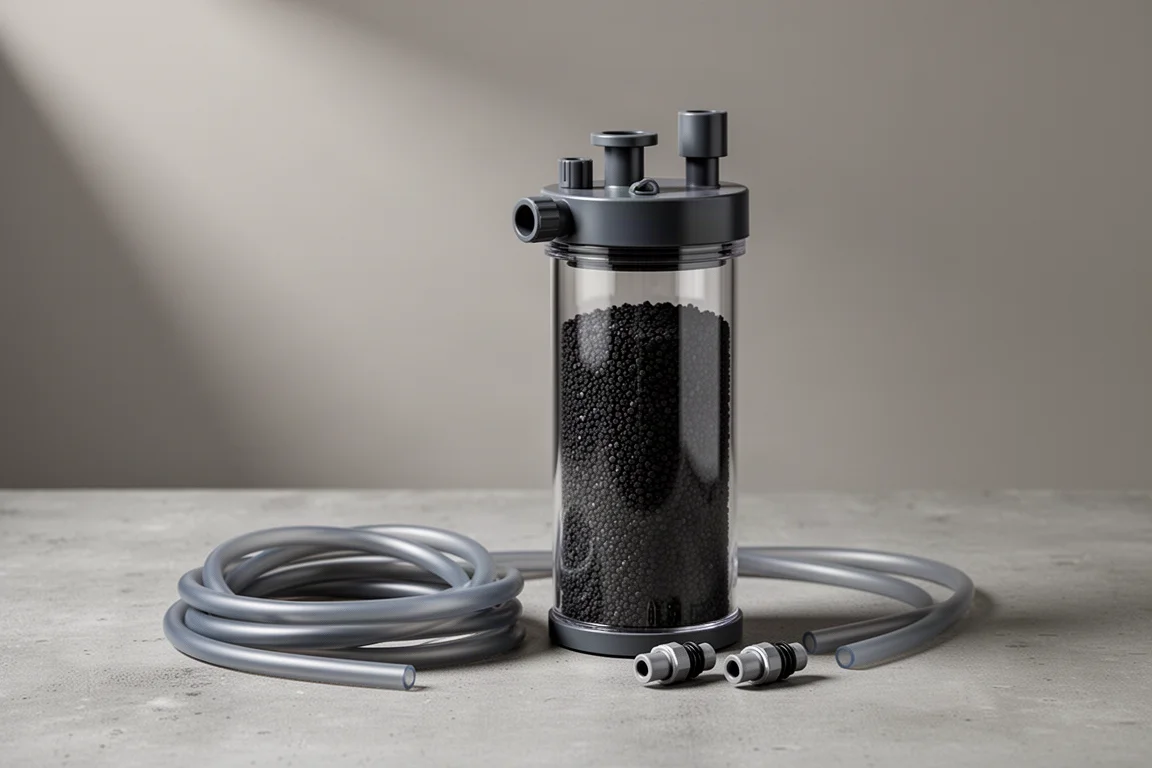
The BRS Reactor is a media reactor built to run carbon and granular ferric oxide in a reef aquarium sump. Installing one is not difficult, but the results depend heavily on how the unit is sized, plumbed, loaded and maintained. This review covers what the reactor does well, who gets the most from it, and the practical mistakes that most often undercut its performance.
Who This Reactor Is For
The reactor suits reef keepers who want clearer water and tighter control over phosphate without building out a complex filtration system. A compact cartridge is adequate for the vast majority of tanks, because roughly one cup of carbon is enough to polish the water volume most hobbyists run. It is equally relevant for anyone currently dealing with yellow water, rising phosphate readings or recurring algae who wants a tool that responds quickly.
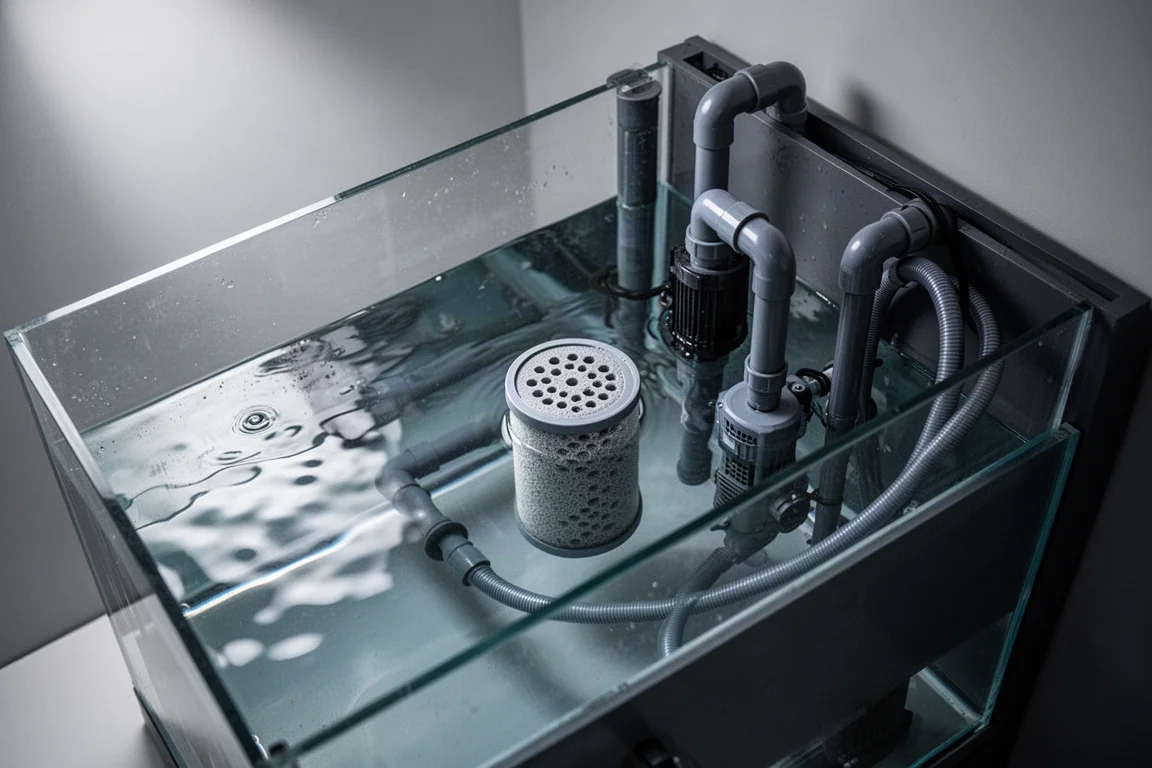
Placement flexibility is another reason this reactor appeals. Once it fills with water the body holds itself down, so it can sit directly in the sump instead of being bracketed to a wall with cords routed across the stand. With a short output run and a pump attached close by, the whole assembly can be submerged and positioned wherever maintenance is easiest.
The reactor asks for a little more attention than a set-and-forget device. Carbon has to be watched for depletion, and media needs periodic replacement and flow checks. It rewards a routine rather than a single install, so it fits best with aquarists who are comfortable with light weekly upkeep.
Main Strengths
Compact Cartridge Sizing
The smaller reactor body is the right starting point for most systems. Because about a cup of carbon filters a typical tank, a compact cartridge fills top to bottom and keeps the media settled instead of letting it shift around. The smaller footprint also fits into tighter sump spaces. Cost is not the deciding factor here, since the difference between the small and large plastic bodies amounts to only a couple of dollars, so the choice comes down to fit and function.
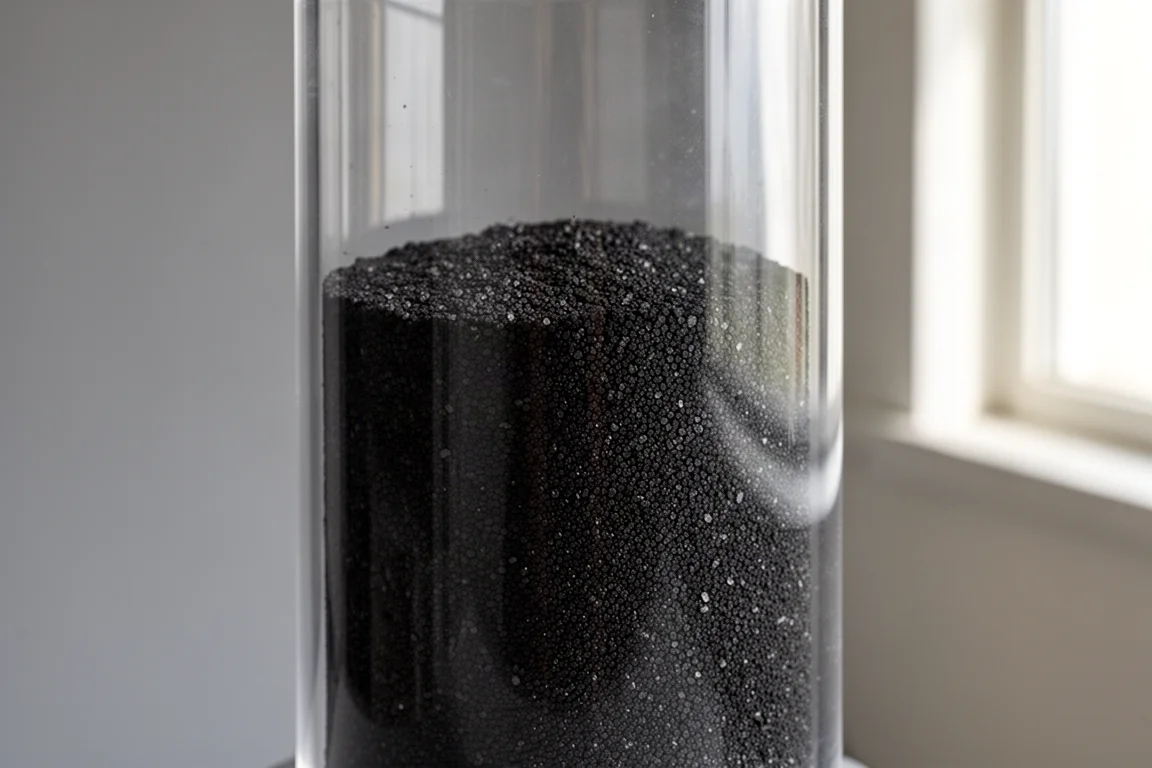
A full, evenly packed cartridge is easier to keep stable, and it avoids the unused dead space that appears when a larger body is only partly filled. For most hobbyists the small version is the more capable tool rather than a compromise.
Flexible Plumbing and Sump Placement
Rigid tubing works, but it can be awkward to route and it transfers noise when it touches other equipment or the inside of the stand. Silicone tubing is a straightforward improvement. Fitting a stem-by-barb fitting into the output and sliding silicone tubing over it reduces that noise and makes the reactor easier to maneuver during maintenance. Upgrade kits exist for exactly this purpose, and the swap is simple enough to do in one sitting.
Placement matters just as much as plumbing. The reactor does not have to hang on a wall with cords running everywhere. It can sit inside the sump, fill with water and hold itself in place, which keeps the equipment area tidier and shortens the distance between pump and reactor.
Quick-Disconnect Fittings
Quick-disconnect connectors let you push a button, separate the line, and lift the whole reactor out without disturbing anything else. Standard half-inch push fittings seal well, but repeatedly pulling and reinstalling them is harder work than snapping a connector apart. For a few dollars, quick disconnects turn a fiddly task into a fast one, and they are worth using on pumps and other gear you remove regularly, not only on reactors.
Common Mistakes to Avoid
Do Not Tumble Carbon
Media that moves looks busy and effective, but carbon that tumbles is grinding against itself continuously. That abrasion breaks the granules down and releases fine dust into the aquarium, where it does nothing useful. Carbon should sit still in the cartridge, which is one reason correct sizing matters so much.
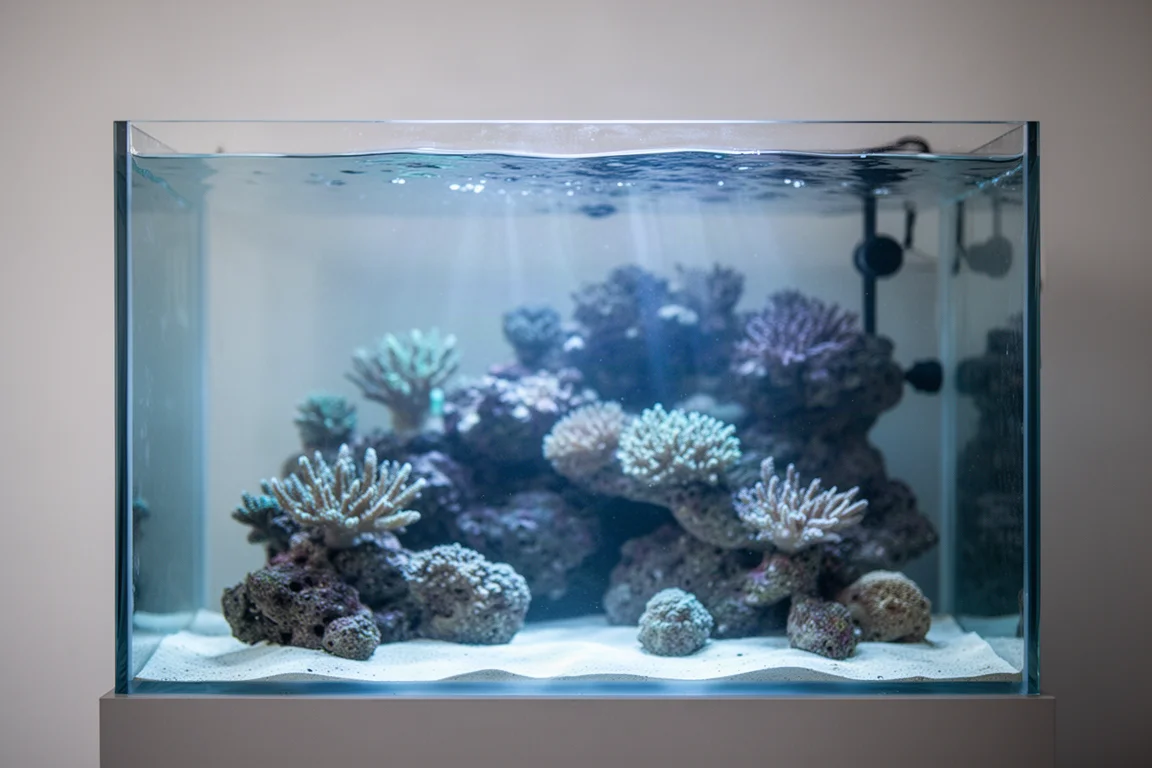
A settled bed also keeps performance predictable, because the media stays in place rather than migrating through the reactor. If carbon is visibly moving, the fix is usually a flow adjustment or a change of body size rather than more media.
Know When Carbon and GFO Are Depleted
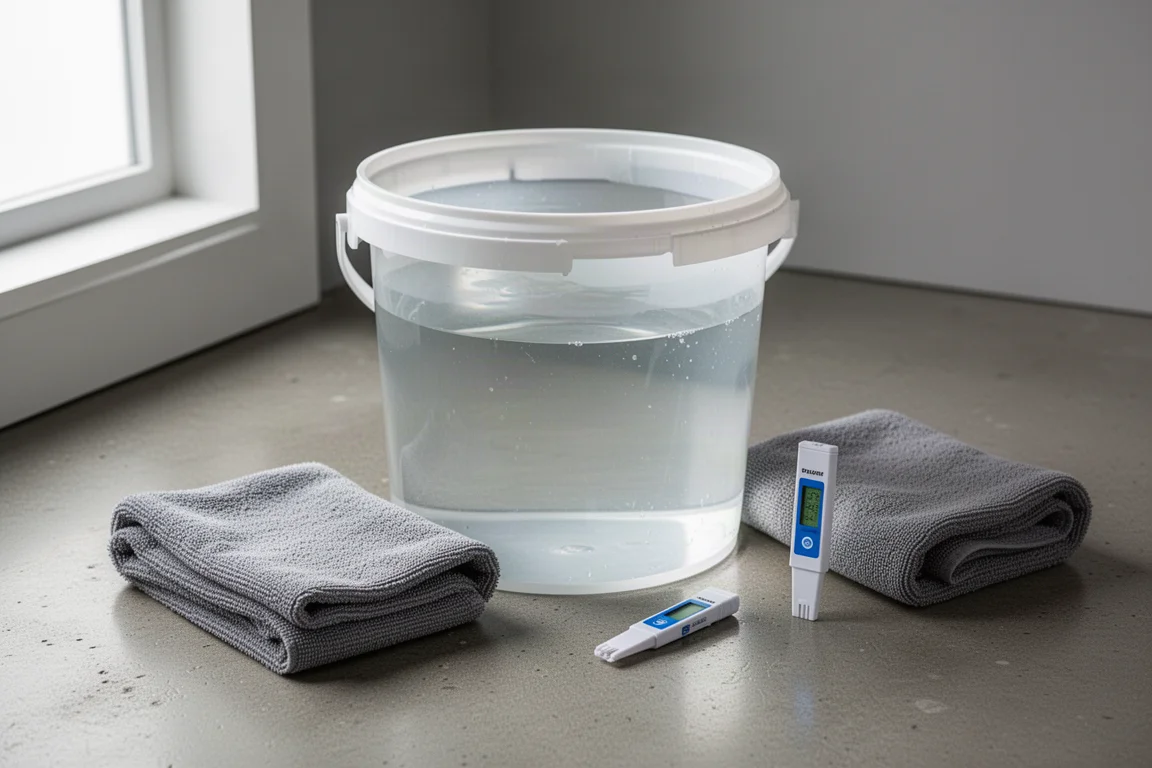
Carbon does not need replacing on a fixed calendar. A simple visual check works: turn off the room lights, look through the long end of the tank and read the water color. Yellow water means the carbon is exhausted. That tint reduces light penetration, particularly in the blue spectrum, and can cut PAR by as much as 30 percent while also dulling coral appearance. The same check can be done in a white bucket during a water change. Fresh carbon typically restores a clear blue look within about a day.
GFO depletion is measured rather than observed. A phosphate or phosphorus test kit shows when levels start to climb, and a digital checker is easier to read at the low ranges involved. There is no universal replacement interval, because feeding volume and tank size change the answer entirely. The signal to change media is a rising test result or visible algae growth.
Treatment Versus Prevention
GFO serves two different jobs. When algae is already established, the approach is aggressive: aim for the lowest phosphate reading you can, remove as much algae manually as possible, and push harder on media. Prevention calls for a lighter touch. Chasing zero phosphate constantly is difficult, so a periodic small dose of GFO is enough to keep levels from climbing, and it can be mixed with carbon and left untumbled. That approach deliberately allows a little phosphate to remain in the system.
Getting Levels Down Versus Keeping Them There
Bringing high phosphate down takes considerably more media than maintaining an already low level. A useful way to picture it is through food: thirty days of feeding requires roughly thirty days of media capacity. If no media was running during that period, the same amount of work has to happen all at once. Aquarists who already run low levels only need to process a small daily addition, so their media lasts considerably longer.
Do Not Strip Nutrients to Zero
Using GFO so aggressively that nitrate and phosphate both read zero can starve corals. One common pattern is an aquarium that looks pristine, shows no algae, and quietly reduces its maintenance routine. Nitrate climbs unaddressed behind the scenes. When the GFO is eventually not changed on time, phosphate rises and algae appears suddenly. GFO addresses only part of the nutrient picture, so it needs to be paired with a nitrate plan.
Things to Consider Before Buying
Single Versus Dual Reactor
A dual reactor runs GFO on one side and carbon on the other. It makes sense when you have only one pump to maintain or you need to run large media volumes in a big tank. It also demands more attention, because carbon can clog with debris and then the GFO side stops tumbling properly, which usually means weekly checks and flow adjustments. Two separate reactors with their own pumps tend to need less tuning: carbon flow is not critical, and GFO stays cleaner without carbon debris mixed in. For most systems, a pair of small single reactors is easier to live with long term.
Consumables and Spare Parts
The foam pads that hold media in place are inexpensive, but they wear out and compress over time. Keeping a spare set on hand avoids discovering the problem mid water change, when a special order is the last thing you want to place. Extra pads also let you pack a media bed more tightly or stack pads for a firmer hold.
Buying Advice
Start with the compact reactor body unless you run a very large system with heavy media volumes. Match the size to the amount of carbon you actually use, since roughly a cup handles most tanks. Set aside a few dollars for silicone tubing and quick-disconnect fittings, both of which make routine maintenance noticeably quicker.
Add a phosphate test kit so media changes are driven by measurements rather than habit, and keep spare foam pads in the cabinet. Plan how you will manage nitrate as well, because GFO alone will not keep a tank stable if nutrients build up elsewhere. A short weekly check of flow and media condition is far easier than reacting to a problem after it appears.
Conclusion
The BRS Reactor is a practical tool for carbon and GFO filtration when it is sized and plumbed to suit the tank it serves. Choose the smaller body, keep carbon still, test instead of guessing, and treat depletion as a maintenance signal rather than a surprise. Handled that way, the reactor earns its place in the sump and returns the modest attention it asks for.
Product link
View more details for BRS Reactor
This product is mentioned in the review. Check the specifications, options, and compatibility before buying.
View more details for BRS ReactorFurther reading
Related Reviews

Aquarium Filtration
Adaptive Reef Refugium Reactor Review: A Simple Way to Grow Nuisance Algae Outside Your Display
A vessel designed to grow nuisance algae in a controlled space so it stops taking over the display tank, with an adjustable stand, a removable basket, and a single LED light on top.
Aquarium Filtration
Affordable Aquarium Filter Media: Testing Budget Alternatives to Expensive Biomedia
Can cheap pot scrubbers replace expensive ceramic biomedia in a canister filter? One aquarist tests the theory on a heavily stocked 210-gallon tank.
Aquarium Filtration
AquaMaxx Bullet 2 and Bullet 3 Review: Hang-On Protein Skimmers Compared
A closer look at two larger AquaMaxx hang-on protein skimmers, covering capacity ratings, clearance needs, and the design details that separate the Bullet 3 from the Bullet 2.