Saltwater Aquarium Gear
Bring Your Own Aquarium Saltwater Starter Kit Review: A Full Setup Minus the Tank
A practical look at the Bring Your Own Aquarium Saltwater Starter Kit, what each size includes, how setup works, and what you still need to buy.
Introduction
A saltwater tank is a rewarding project, but the shopping list that comes before the first drop of water is the part that stops most people. The Bring Your Own Aquarium Saltwater Starter Kit is built around a simple idea: you choose the tank, and the kit supplies everything else needed to get the system running.
It comes in four sizes, one for a 10-gallon tank, one for 20 to 29 gallons, one sized specifically for a 40 breeder, and one for 55 to 75 gallons. That range covers everything from a compact nano reef on a desk to a roomier mixed setup with space for a larger aquascape.
What Comes in the Kit
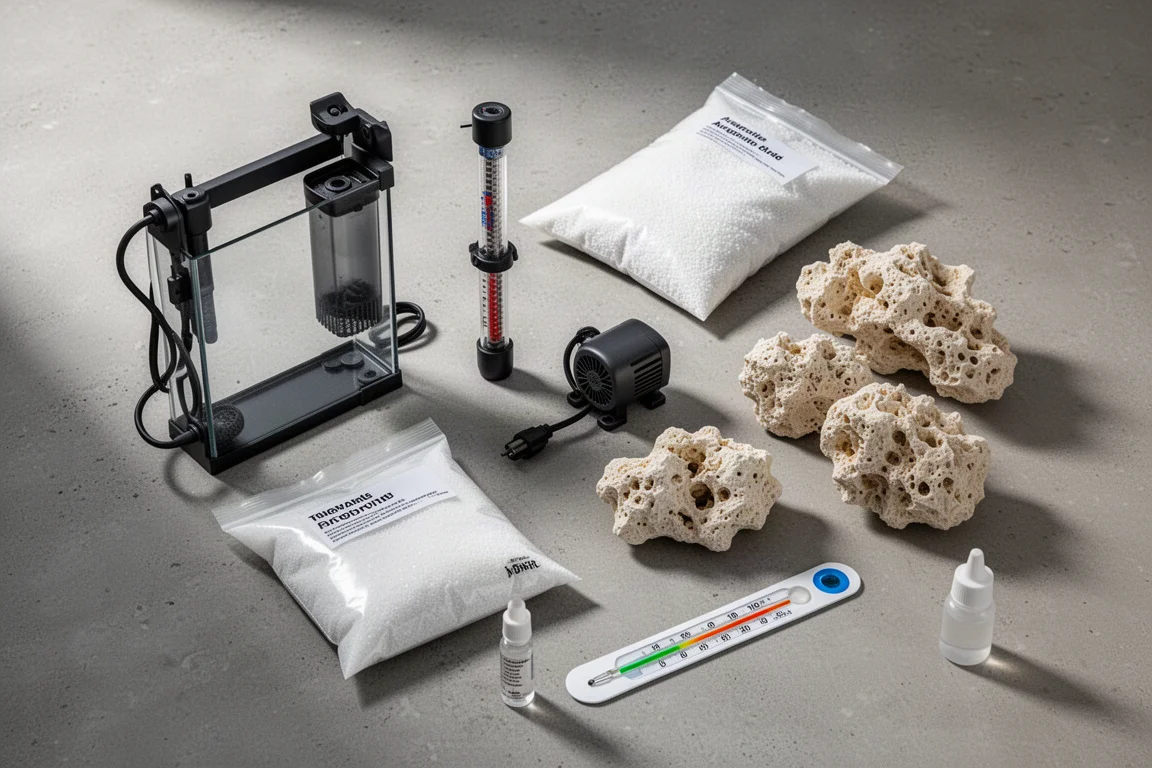
Each kit arrives packed with the essentials for getting a saltwater system up and running. At the centre is the Tidal hang-on-back filter, which handles mechanical, chemical, and biological filtration, and includes adjustable flow plus a built-in surface skimmer. Temperature is covered by an Aqua Ready heater preset to 77 degrees Fahrenheit.
For the aquascape, the kit includes Reef Saver dry rock, described as clean, eco-friendly, and offering plenty of surface area for beneficial bacteria to colonise. Sand comes in the form of Ocean Direct live sand, which carries natural bacteria that help cycle the tank while giving it a natural sandy reef look.
Biology gets a boost from a bottle of Microbacter7, intended to jumpstart biological filtration. Water movement comes from a CJ Voyager nano power head, positioned to create flow and eliminate dead spots. A simple stick-on thermometer helps monitor system temperature, and BRS pellet food means you are ready to feed your first fish as soon as the tank has cycled.
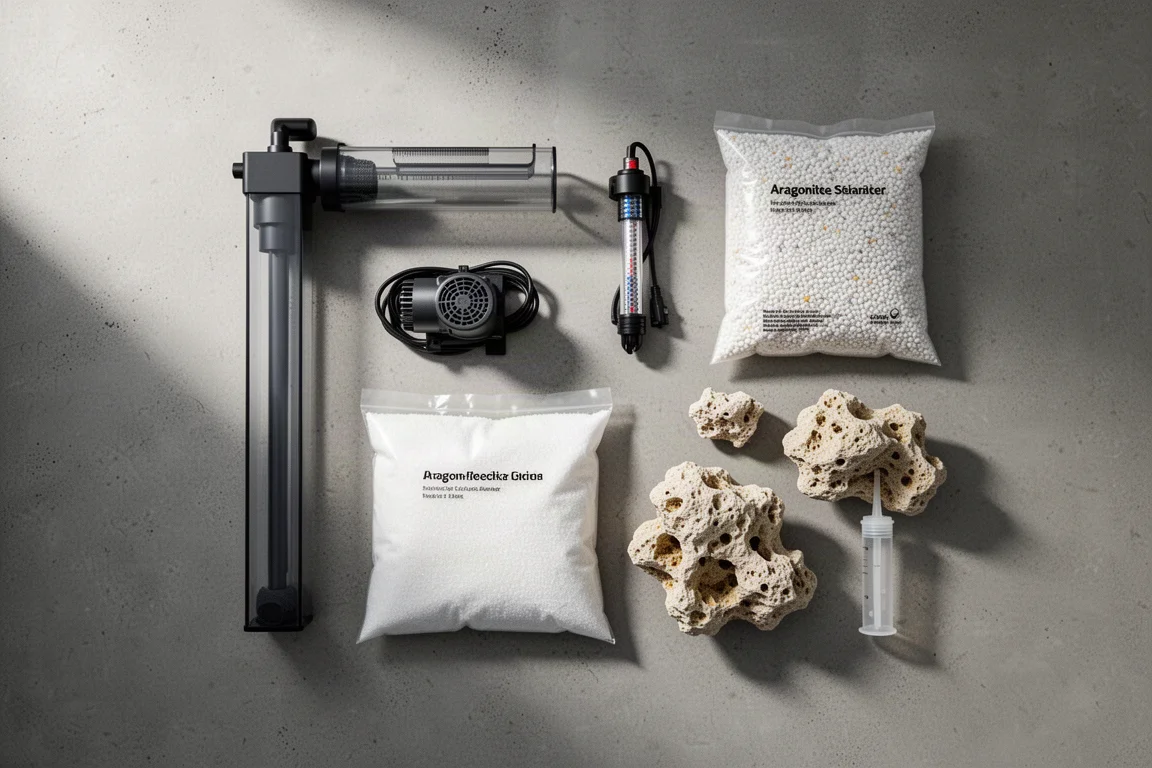
Taken together, the contents cover filtration, heating, flow, rock, sand, bacteria, and food in a single purchase. What is left to source separately is the tank itself, the saltwater, and a light.
Who This Starter Kit Is For
This kit makes the most sense for someone who already has a tank in mind, or already owns one, and wants the supporting equipment matched rather than assembled piece by piece. Because the kit is built around the tank you choose, it leaves room to pick a footprint that fits your space and your plans.
It also suits keepers who want a small reef. The 10-gallon version and the 20 to 29 gallon version are aimed at compact setups, while the 55 to 75 gallon option opens up more swimming space and a bigger aquascape. The 40 breeder version is sized specifically for that tank format.
If you are comfortable choosing a tank but less confident about which filter, heater, and substrate to pair with it, this is the gap the kit fills. The four sizes mean the equipment is matched to the water volume rather than guessed at.
Main Strengths
The strongest argument for the kit is that it removes guesswork. Filtration, heating, flow, substrate, bacteria, and food are all included and matched to the size of the system you are building.
The Tidal hang-on-back filter is a good example. It covers mechanical, chemical, and biological filtration in one unit, hangs on the back of the tank, and levels using the foot on the bottom. Adjustable flow and a built-in surface skimmer give you some control over how water behaves at the surface.
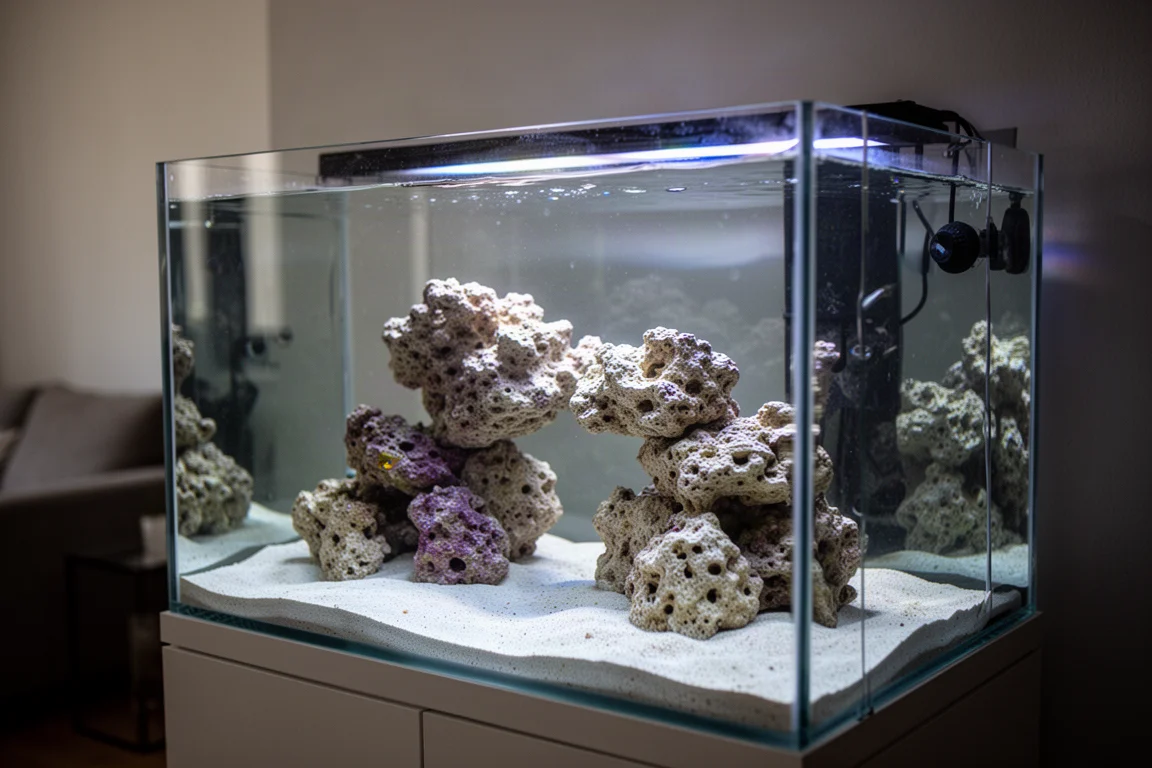
The biological side is handled with more than one tool. Reef Saver dry rock provides surface area for bacteria to colonise, Ocean Direct live sand introduces natural bacteria from day one, and Microbacter7 adds another dose of biological filtration support. Together they shorten the runway to a stable tank.
The CJ Voyager nano power head addresses a problem that is easy to underestimate: dead spots. Positioned to push water across the rockwork, it keeps detritus from settling in places you cannot easily reach.
How the Setup Process Works
Setup begins with a quick rinse of the aquarium using fresh water. No soap is needed. From there, the rock goes in first, and this is the creative part of the build. Think about where corals will eventually sit, how much open swimming space the fish will have, and how water will move through the structure. Plenty of negative space and interesting shapes help the tank feel larger than it actually is.
Next comes the sand. Pour it in gently so it does not cloud the whole tank. Live sand like Ocean Direct gives the system a head start by introducing beneficial bacteria from day one. Remove the clarification packet before adding the sand and set it aside, because you will need it later.
With the substrate in place, it is time for equipment. Start with the heater and place it where water movement is good, so heat distributes evenly through the tank. Then add the CJ Voyager nano power head, aimed across the rockwork to eliminate dead spots. The Tidal hang-on-back filter goes on the back of the tank and is levelled with the foot at the bottom. Finish by applying the stick-on thermometer to the outside glass in a spot you can easily see.
Then the water. Mix salt with clean RODI water until you reach 35 parts per thousand, or 1.025 specific gravity. Picking up premixed saltwater from a local fish store is the alternative. Once the tank is full, pour in the clarifying solution and add the Microbacter7.
The final step is adding a light. A slim fixture like the AI Blade is easy to mount and delivers good spread and spectrum for a small reef.
Things to Consider Before Buying
The kit is deliberately incomplete in a few important ways. You still need a tank, and you still need a light, since lighting is the last step of the build rather than something included in the box. You also need saltwater mixed to 35 parts per thousand or 1.025 specific gravity, which means access to clean RODI water or a local fish store that sells premixed water.
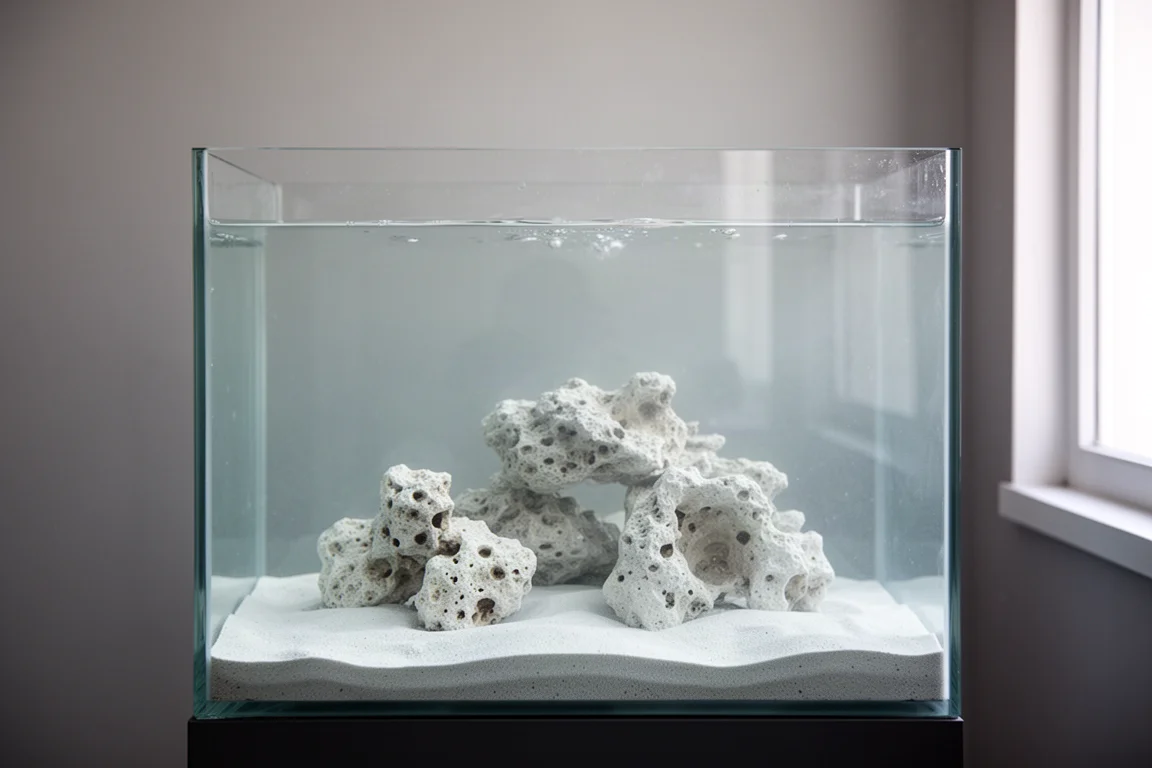
Cycling is the other thing to plan around. A new tank does not become fish-safe the moment it is filled. The bacteria on the rock, sand, and filter media need time to establish themselves, and that waiting period is part of the process rather than a sign that something has gone wrong.
The heater comes preset to 77 degrees Fahrenheit, which keeps setup simple and takes one decision out of the build.
How the Tank Cycles and What to Expect
Once everything is running, the tank enters its cycle. Beneficial bacteria colonise the rock, the sand, and the filter media, and as that population establishes itself, the water becomes safe for fish.
This is the waiting game, and it is worth resisting the urge to rush it. When the cycle completes, the payoff is visible: bare rock and sand become a thriving slice of the ocean, with the light picking out colour and texture across the aquascape.
Buying Advice
Start with the tank, then match the kit to it. The 10-gallon kit suits a compact nano setup, the 20 to 29 gallon kit fits the most common small tank sizes, the 40 breeder kit is sized for that specific format, and the 55 to 75 gallon kit is for a larger system with more room for rockwork and open swimming space.
Budget for the pieces the kit does not include: the tank itself, a light, and saltwater. If mixing your own water is impractical, factor in a local source of premixed saltwater at 1.025 specific gravity.
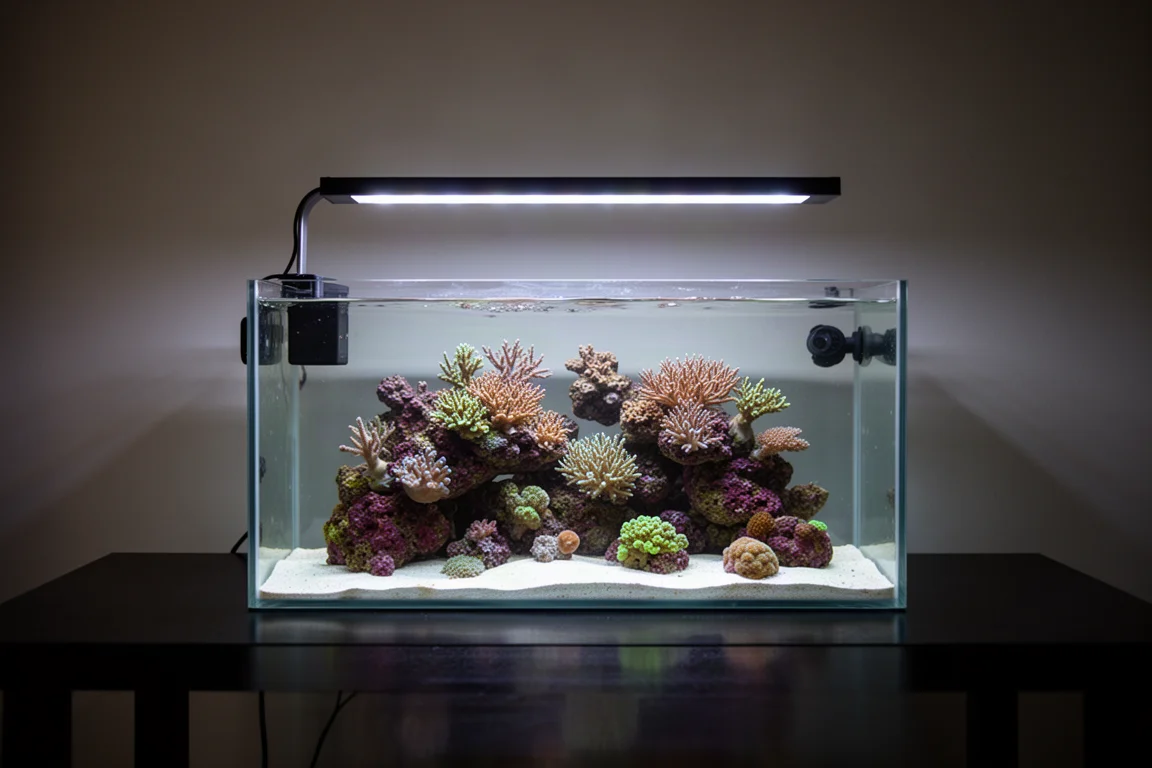
If you are new to the hobby, the value here is not only the equipment list, it is the order of operations. Rock first, then sand, then equipment, then water, then light. Following that sequence is what keeps a first build from turning into guesswork.
Conclusion
The Bring Your Own Aquarium Saltwater Starter Kit solves the most common starting problem in the saltwater hobby: knowing what to buy. By leaving the tank choice to you and supplying the filter, heater, rock, sand, bacteria, flow, thermometer, and food, it removes a long list of decisions from a project that already has plenty.
If you have a tank picked out and want a straightforward path to a running system, this kit is a sensible place to begin. Just plan for the light, the saltwater, and the weeks of cycling that stand between a bare glass box and a working reef.
Product link
View more details for Bring Your Own Aquarium Saltwater Starter Kit
This product is mentioned in the review. Check the specifications, options, and compatibility before buying.
View more details for Bring Your Own Aquarium Saltwater Starter KitFurther reading
Related Reviews

Backpacking Gear
Building a 10 lb Base Weight: An Ultralight Backpacking Gear List
A practical walkthrough of the ultralight pieces behind a 10 lb base weight, from a 765 g pack and a roomy one-person tent to a full camp chair and a dependable water filter.

Road Bikes
10 New Road Bikes Worth Watching: Aero, Titanium, Steel and Endurance Standouts
A practical roundup of 10 new road bikes, from aero flagships chasing single-watt gains to titanium, steel and endurance platforms built for real roads.
Saltwater Aquarium Setup
10 Questions About Cycling a Saltwater Aquarium: What You Need to Know
Essential questions and answers for cycling a reef tank or saltwater aquarium, from biome building to light management and bacterial supplements.